
Jesus Christ’ birth was the answer to the long-awaited prophecy of someone who would come to redeem God’s people (Isaiah 9:6-7; Luke 1:31-33). The Jews expected their savior, or Messiah, to be a powerful king who would overthrow their Roman oppressors.
But God had different plans.
He sent the Messiah in the most unexpected way. Instead of sending a conquering king, He sent His Son in the form of a helpless baby. And instead of sending Him to oppose the empire of Rome, He sent Him to provide a way for humanity to receive eternal life and overcome sin.
The story of Jesus’ birth is near and dear to Christians all over the world, so much so that it inspired the popular holiday Christmas.
So, what was significant about Jesus coming as a baby to a poor family in Bethlehem? And what do the New Testament and ancient history tell us about the events surrounding His birth?
Keep reading to learn:
- What the Bible and history tell us about Jesus’ birth
- How His birth became connected with Christmas
- Why His birth matters
What the Bible and history tell us about Jesus’ birth
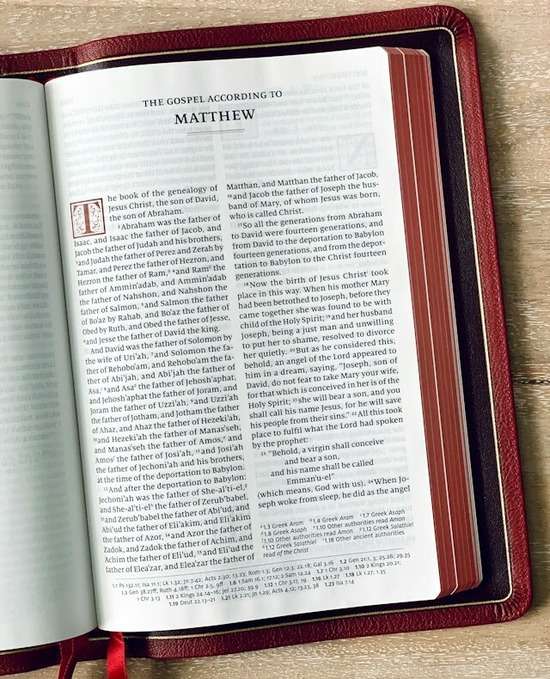
Photo by Tim Wildsmith on Unsplash
Jesus was born to a virgin named Mary in a Bethlehem stable sometime between 6 and 4 BC.1 Though we don’t have very many non-biblical sources discussing this event, the historical and cultural backdrop of the time period gives us more insight.
Follow along as we walk through the story of Jesus’ birth, the cultural context behind it, and how His birth fulfills the prophecies the Bible gave about the Messiah.
We’ll start with His conception.
The angel Gabriel appeared to Mary
Mary was a young woman from Nazareth with plans of marrying the local carpenter, Joseph (Matthew 1:18; Matthew 13:55). One day, God sent the angel Gabriel to tell her that God had chosen her to bear the Messiah (Luke 1:26, 31-33).
The fact that God chose her doesn’t make much sense from a human perspective. But the Bible demonstrates that God usually operates differently than we might expect. He doesn’t often work through the strong or rich but the weak and the poor (Corinthians 1:27).
There was just one problem, though.
Mary was a virgin. How could she expect to have a baby? Gabriel explained to her that:
“The Holy Spirit will come upon you, and the power of the Highest will overshadow you; therefore, also, that Holy One who is to be born will be called the Son of God” (Luke 1:35, NKJV).
The Messiah would be born of a virgin, just like Isaiah 7:14 prophesied.
What must have been running through Mary’s head when she heard this?
She might’ve been worried about how people would react to her pregnancy. Even though Mary and Joseph weren’t officially married yet, sleeping with another partner during the engagement period was seen as adultery according to the Jewish law of the Old Testament (Deuteronomy 22:23-24).2
If Joseph wanted to, he could break off their engagement and accuse her of adultery. And Mary knew the penalty for adultery in her society. She would be brought before her community as a public embarrassment and stoned to death (Leviticus 20:10-12).3
In this way, the angel wasn’t just asking Mary to bear the Messiah; he was asking her to face the possibility that her very life might be threatened. But in spite of it all, Mary gave a surprising answer:
“Behold the maidservant of the Lord! Let it be to me according to your word” (Luke 1:38, NKJV).
Predictably, Joseph didn’t believe her claims about the pregnancy (Matthew 1:18-19). But instead of condemning her, he decided to break their engagement quietly (Matthew 1:19). However, an angel came to him in a dream and told him not to do so. The angel explained that Mary was pregnant by the Holy Spirit and would give birth to the Messiah (Matthew 1:20-21).
Mary and Joseph journeyed to Bethlehem

Photo by Aaron Burden on Unsplash
The Gospel of Luke tells us that Caesar Augustus, the ruler of the Roman Empire, called for a census, requiring Jews like Mary and Joseph to return to their homeland for taxation purposes (Luke 2:1-3). As a descendent of King David, Joseph needed to bring himself and Mary to David’s birthplace in Bethlehem (Luke 2:4), a 90-mile trip from their hometown of Nazareth.4
Tradition assumes that Joseph and Mary journeyed to Bethlehem in the winter, but some scholars believe it’s more likely they traveled in the spring—mainly because it wouldn’t make much sense for Joseph to take a nearly due Mary on a long journey in cold winter weather.5
With so many Jews traveling to their ancestral homes, the small town of Bethlehem was packed with visitors from all over the country.
So much so that there wasn’t any room for Mary or Joseph at the inn (Luke 2:7).
Some suggest that they had to find shelter in a cave.6 Others hold on to the popular theory that they stayed in a stable. Whatever the case, the Bible hints that they had to spend the night with barnyard animals because they had a manger—an animal feeding box—nearby when Jesus was born.
The Savior was laid in a manger

Photo by Pro Church Media on Unsplash
Surrounded by animals and hay, the scene of Jesus’ birth is the last place you’d expect to find the “Lord of lords and King of kings” (Revelation 17:14, NKJV).
But Mary had nowhere to lay Jesus other than a manger filled with hay (Luke 2:7).
And instead of a grand reception from all the powerful families of Israel, Jesus was visited by neighboring shepherds.
Angels appeared to shepherds in Judea

Photo by Jaka Škrlep on Unsplash
Soon after Jesus’ birth, angels appeared to nearby shepherds, who were in the fields watching over their sheep that night (Luke 2:8-9).
Scholars suggest that this is further evidence that Jesus was born in the springtime.7 This is because shepherds guarded their sheep at night from spring to October8, but especially in spring to protect newborn lambs from predators.9
The shepherds were frightened by this supernatural appearance (Luke 2:9), but the angel told them not to be afraid:
“Do not be afraid, for behold, I bring you good tidings of great joy which will be to all people. For there is born to you this day in the city of David a Savior, who is Christ the Lord. And this will be the sign to you: You will find a Babe wrapped in swaddling cloths, lying in a manger” (Luke 2:10-12, NKJV).
The shepherds might’ve wondered why an angel would appear to them. See, shepherds were looked down on in Jewish society at that time—and often viewed with distrust.10 They weren’t educated, and they performed work that no one else wanted to do.11
But the hopeful message of Jesus’ birth was meant for all people.
And their humility and longing for a savior better prepared them to accept the news of Jesus. In fact, the shepherds were so excited about the message that they immediately went to visit Jesus (Luke 2:15). After they laid eyes on Him, they went on to spread the word that the promised Messiah had finally come (Luke 2:16-20).
They weren’t the only ones to see Jesus, though.
A group of foreigners also traveled a great distance to honor Him.
A star guided the wise men
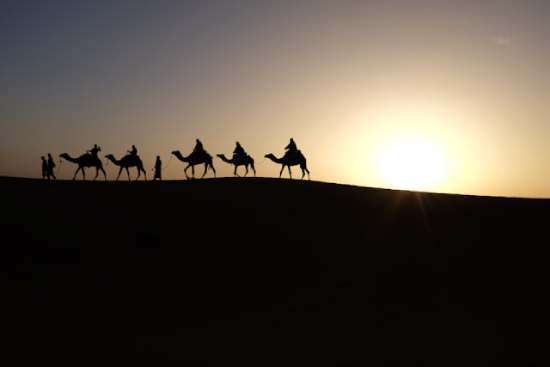
Photo by Inbal Malca on Unsplash
Besides the shepherds, “wise men” (also called magi) went out of their way to find the Messiah (Matthew 2:1-2). Tradition typically assumes there were three wise men (because the Bible mentions three gifts), but the Bible doesn’t actually specify the number.
The Bible does tell us that they’re from the East, meaning any country east of Jerusalem (Matthew 2:1). Scholars theorize that they could’ve come from former Babylon12, Persia, Arabia, Ethiopia, or India.13
The fact that they were called “magi” and “wise men” gives us a hint as to who these men were.
Magi is a Greek word, believed to mean “sage” or “astrologer.”14 In Bible times, pagan kings often relied on astrologers and wise men to act as counselors. This suggests that the wise men who visited Jesus were highly educated astrologers from pagan kingdoms. It also explains why they would’ve been interested in the appearance of the star that led them to Jesus (Matthew 2:2).
The wise men brought gifts with them that were traditionally only given to kings—gold, frankincense, and myrrh—as a way of honoring Jesus as king of the Jews (Matthew 2:11).15
They weren’t turned away by Jesus’ humble surroundings.
These foreigners, who may have only ever known pagan gods, worshiped Him when His own people didn’t even recognize Him (Matthew 2:1-5, 11). It again illustrates an important lesson—that Jesus came to save people from every tribe, tongue, and nation (Matthew 28:18-19).
How did Jesus’ birth become connected with Christmas?
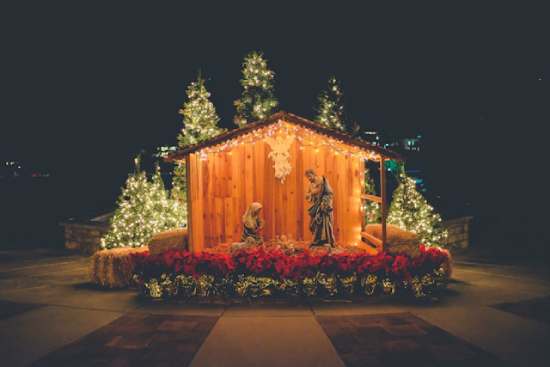
Photo by Kenny Eliason on Unsplash
Most people associate Jesus’ birthday with Christmas day. Some suggest this association started as a way to encourage pagans to adopt Christianity (since Christmas day was also a day of worship for a Roman sun deity).16 Others say ancient scholars calculate the date of Jesus’ birth based on the date of His death.17
However, as we mentioned earlier, Jesus may not have been born in December at all. It’s more likely He was born in the spring, though some scholars suggest He was born in September or October.18
But even though Jesus probably wasn’t born on December 25th, that doesn’t mean Christmas can’t help remind us of the miracle of Jesus’ birth. Many in the Adventist Church see Christmas as a wonderful time to tell others about the birth of Jesus and why it matters so much to us.
Why Jesus’ birth matters
Jesus’ birth is significant because it fulfilled the promise God gave His people so long ago to send a Messiah to save them. In the ultimate act of humiliation, Jesus left His home in heaven at the right hand of God to become a helpless baby with nowhere but a manger to lay His head.
He became Immanuel (Matthew 1:23), a name meaning “God with us.”19
Like Mary, like the shepherds, we wonder why Jesus would want to come like this and be with us.
Jesus’ humble beginnings and life give us the answer. They give us a glimpse of the heart of God for us—and what His plan of salvation is all about.
Throughout His ministry on earth, Jesus reached out to the unreachable and touched the untouchable (Matthew 9:10-13; Matthew 8:1-3). He defied cultural taboos to serve those that needed Him and gave hope and freedom to those who were hopeless. At the end of His ministry on earth, He took on total humility, surrendering His life at the cross to save us from our sins (Philippians 2:5-8).
It’s just like what the angels said to the shepherds: Jesus was born to bring peace on Earth and goodwill to all (Luke 2:14).
Now, we joyfully remember the good news of Jesus’ birth because it not only paved the way for salvation but also gives us hope that He will come again and deliver us from this sad, suffering world.
The Timeline of the Birth of Christ:
- Mary is betrothed to Joseph (Matthew 1:18; Luke 1:27).
- An angel appears to Mary and tells her she will give birth to the Messiah (Luke 1:30-33).
- Mary becomes pregnant (Matthew 1:18; Luke 1:39-41).
- Joseph plans on quietly breaking off his engagement with Mary (Matthew 1:19).
- An angel tells Joseph that Mary’s child is the Messiah (Matthew 1:20-21).
- Joseph decides to stay with Mary (Matthew 1:24).
- Caesar Augustus calls for a census, requiring every Jew to go to the land of their ancestors to pay taxes (Luke 2:1-3).
- Joseph and Mary travel to Bethlehem, the birthplace of their ancestor, King David (Luke 2:4).
- Mary gives birth to Jesus in a stable (Luke 2:6-7).
- Angels tell shepherds where to find the newborn Messiah (Luke 2:8-12).
- The shepherds go to Mary and Joseph to see Jesus for themselves (Luke 2:15-20).
- The wise men follow a star to find Jesus (Matthew 2:1-2, 9-11).
- King Herod hears about their quest and asks them to tell him Jesus’ location once they find him (Matthew 2:7-8).
- The wise men visit Jesus and bring him gold, frankincense, and myrrh (Matthew 2:11).
- An angel warns the wise men not to return to King Herod (Matthew 2:12).
- An angel warns Joseph to take Mary and Jesus and flee to Egypt to avoid King Herod’s scheme (Matthew 2:13).
- King Herod orders the death of every child two years old and younger in Bethlehem (Matthew 2:16).
- King Herod passes away (Matthew 2:19).
- Joseph, Mary, and Jesus leave Egypt and settle in Nazareth (Matthew 2:19-23).
Related Articles



- “Jesus,” Encyclopedia Britannica. [↵]
- Cohik, Lynn, “The Real Problem with Mary’s Baby Bump,” Christianity Today, Dec. 18, 2009. [↵]
- Ibid. [↵]
- “5 Things You Didn’t Know About the Christmas Story,” The Bell, Gordon College. [↵]
- Ibid. [↵]
- McGary, Mike, “Where Was Jesus Born: A Barn, A Cave, or House,” Youth Pastor Theologian. [↵]
- McGowan, Andrew, “How December 25 Became Christmas,” Biblical Archaeology Society. [↵]
- “When Was Jesus Born?” BibleInfo.com. [↵]
- McGowan, “How December 25 Became Christmas.” [↵]
- Boonstra, Jean, “Why Shepherds?” Voice of Prophecy. [↵]
- Ibid. [↵]
- Ibid. [↵]
- “Magi,” Encyclopedia Britannica. [↵]
- Jensen, Robin, M., “Witnessing the Divine,” Biblical Archaeology Society. [↵]
- “Why Did the Magi Bring Gold, Frankincense and Myrrh?” Biblical Archaeology Society. [↵]
- McGowan, “How December 25 Became Christmas.” [↵]
- Ibid. [↵]
- “When Was Jesus Born?” BibleInfo.com. [↵]
- “Immanuel,” Merriam-Webster Dictionary. [↵]
More Answers

¿Por qué muchos Adventistas del Séptimo Día eligen una dieta vegetariana?
¿Por qué muchos Adventistas del Séptimo Día eligen una dieta vegetariana?Puede que tengas un amigo adventista que sea vegetariano, o tal vez estés asistiendo a una Iglesia Adventista del Séptimo Día por primera vez y notes que en la comida compartida no hay carne....
What is Jesus’ Parable of the Sower About?
The parable of the sower is ultimately about how people responded to Jesus Christ and His message of the kingdom of God—the Gospel.

O que os Adventistas do Sétimo Dia acreditam sobre o Grande Conflito (Bem vs. Mal)?
O “Grande Conflito” é a frase que os Adventistas do Sétimo Dia normalmente usam para descrever o conflito espiritual cósmico entre as forças do bem (Deus) e as forças do mal ou do pecado (Satanás/o diabo).

Was Jesus Ever Hypocritical? Learn What the Bible Says.
Was Jesus Ever Hypocritical? Learn What the Bible SaysMany undesirable traits are associated with hypocrisy. But overall, hypocrites intentionally try to make others believe they uphold or represent a certain belief system, character trait, lifestyle, etc., when in...

Kukatishwa Tamaa Kukuu na Kile Tunachojifunza
Wafuasi wa Miller walitabiri kurudi kwa Kristo Oktoba 22, 1844, lakini Yesu hakuja kamwe. Tukio lingine lilitokea. Gundua kilichotokea kweli na Kukatishwa Tamaa Kukuu kunaweza kutufundisha leo.

When in Doubt: 7 Ways Christians Can Manage Uncertainty
When in Doubt: 7 Ways Christians Can Manage UncertaintyFew things in life are truly certain. And no matter how convinced some people can appear on the surface, no one is immune to doubt. And this isn’t a bad thing. Doubt has a purpose. A role to serve. (Just imagine...
El gran chasco y las lecciones que nos enseña
Los Milleritas predijeron el regreso de Cristo el 22 de octubre de 1844, pero Jesús nunca llegó. Ocurrió otro evento. Descubre lo que realmente sucedió y qué puede enseñarnos hoy El gran chasco.

Is Jesus the Same Being as Michael the Archangel?
Many Christians have wondered at the mysterious identity of Michael the Archangel.
A Grande Desapontamento e Lições que nos Ensina
Os Milleritas previram o retorno de Cristo em 22 de outubro de 1844, mas Jesus nunca chegou. Outro evento ocorreu. Descubra o que realmente aconteceu e o que o Grande Desapontamento pode nos ensinar hoje.
James Springer White, Co-Fundador da Igreja Adventista do Sétimo Dia
James Springer White (1821–1881) foi uma figura chave na Igreja Adventista do Sétimo Dia e marido de Ellen G. White.
James Springer White, cofundador de la Iglesia Adventista del Séptimo Día
James Springer White (1821–1881) fue una figura clave en la Iglesia Adventista del Séptimo Día y el esposo de Elena G. de White.

Kila Kitu Unachohitaji Kujua Kuhusu Chakula cha Siku ya Sabato
Kwa Waadventista Wa Sabato, kushiriki chakula cha Siku ya Sabato pamoja na marafiki na familia ni moja ya sehemu muhimu na ya kumbukumbu ya Sabato.
Nini Maana ya “Mwadventista”?
Waadventista wa Sabato ni dhehebu la Kikristo la Kiprotestanti wanaoshikilia Sabato ya siku ya saba kama ilivyoandikwa katika Biblia.

How to Have a Personal Relationship with Jesus: A 10-Step Guide
How to Have a Personal Relationship with Jesus: A GuideNo matter who you are, you’re surrounded by relationships. Friends, family, colleagues, acquaintances...they all play a part in our lives, for better or worse. So you’re surely aware of a lot of the components...

Biblia Ina Maana Gani Inaposema Yesu ni Mwana wa Mungu?
Biblia inapomwita Yesu Mwana wa Mungu inarejelea uungu wake. Jifunze ni nini kinachofanya hili kuwa muhimu na kinahusianaje na wokovu.

“Go and Sin No More”—What Did Jesus Mean?
These well-known words of Jesus Christ come from two New Testament stories in the book of John—a man healed by the Pool of Bethesda (John 5) and a woman caught in adultery (John 8).

Quais são as Mensagens dos Três Anjos em Apocalipse 14?
As mensagens dos três anjos em Apocalipse 14 advertem o mundo a adorar a Deus, deixar a confusão religiosa e evitar a adoração de tradições humanas em vez dos mandamentos de Deus.

Je! Tunaweza Kuitunza Siku Yoyote ya Wiki Kama Sabato?
Katika sura za kwanza kabisa za Biblia, tunamwona Mungu akianzisha kumbukumbu ya kila wiki na siku ya mapumziko, inayoitwa Sabato (Mwanzo 2:2-3).
¿Cuáles son los mensajes de los tres ángeles en Apocalipsis 14?
Los mensajes de los tres ángeles en Apocalipsis 14 invitan al mundo a adorar a Dios, abandonar la confusión religiosa y evitar la adoración de tradiciones humanas en lugar de los mandamientos de Dios.
Por que muitos Adventistas do Sétimo Dia escolhem uma dieta vegetariana?
Embora nem todo adventista seja vegetariano, muitos evitam completamente o consumo de carne para viver de forma mais saudável, buscando honrar a Deus física, espiritual e mentalmente.

Understanding the Miracles of Jesus Christ
Understanding the Miracles of Jesus ChristWhat do you think of when someone says something is “a miracle”? Maybe you think of an unexpected recovery, surviving a dangerous accident, or getting an answer to a seemingly impossible prayer. Simply put, miracles are...
O que significa “Adventista”?
O que significa "Adventista"?Os Adventistas do Sétimo Dia são uma denominação cristã protestante que observa o sábado bíblico do sétimo dia. A partir dessa crença, eles obtêm a primeira parte de seu nome. Mas e quanto à segunda parte - "Adventista"? “Adventista”...
¿Podemos guardar el sábado bíblico cualquier día de la semana?
En los primeros capítulos de la Biblia, encontramos a Dios estableciendo un memorial semanal y día de reposo, conocido como el sábado (Génesis 2:2-3).
Podemos guardar o Sábado em qualquer dia da semana?
Nos primeiros capítulos da Bíblia, encontramos Deus estabelecendo um memorial semanal e dia de descanso, conhecido como o Sábado (Gênesis 2:2-3).
O que significa a Bíblia quando chama Jesus de Filho de Deus?
Quando a Bíblia chama Jesus de Filho de Deus, está se referindo à Sua divindade. Saiba o que torna isso tão significativo e o que tem a ver com a salvação.
¿Qué creen los Adventistas del Séptimo Día acerca de la Biblia?
La Biblia forma la base de todo lo que los Adventistas del Séptimo Día creen y enseñan.
Legado Duradouro de Ellen G. White
Ellen G. White é um nome bem conhecido entre os Adventistas do Sétimo Dia, mas ela também teve um impacto em muitas outras partes da história, além de ser co-fundadora da Igreja Adventista.

What Does it Mean to Have Faith in Jesus?
What Does it Mean to Have Faith in Jesus?To have faith in Jesus means we place our spiritual hope, trust, belief, and priority in Him as our loving Savior. And that sounds great as an idea. That’s our goal, right? But when we go through difficult times, face...
James Springer White, Mwanzilishi wa Kanisa la Waadventista Wa Sabato
James Springer White (1821–1881) alikuwa mtu muhimu katika Kanisa la Waadventista wa Sabato na mume wa Ellen G. White.
Didn’t find your answer? Ask us!
We understand your concern of having questions but not knowing who to ask—we’ve felt it ourselves. When you’re ready to learn more about Adventists, send us a question! We know a thing or two about Adventists.