
Jesus Christ’ birth was the answer to the long-awaited prophecy of someone who would come to redeem God’s people (Isaiah 9:6-7; Luke 1:31-33). The Jews expected their savior, or Messiah, to be a powerful king who would overthrow their Roman oppressors.
But God had different plans.
He sent the Messiah in the most unexpected way. Instead of sending a conquering king, He sent His Son in the form of a helpless baby. And instead of sending Him to oppose the empire of Rome, He sent Him to provide a way for humanity to receive eternal life and overcome sin.
The story of Jesus’ birth is near and dear to Christians all over the world, so much so that it inspired the popular holiday Christmas.
So, what was significant about Jesus coming as a baby to a poor family in Bethlehem? And what do the New Testament and ancient history tell us about the events surrounding His birth?
Keep reading to learn:
- What the Bible and history tell us about Jesus’ birth
- How His birth became connected with Christmas
- Why His birth matters
What the Bible and history tell us about Jesus’ birth
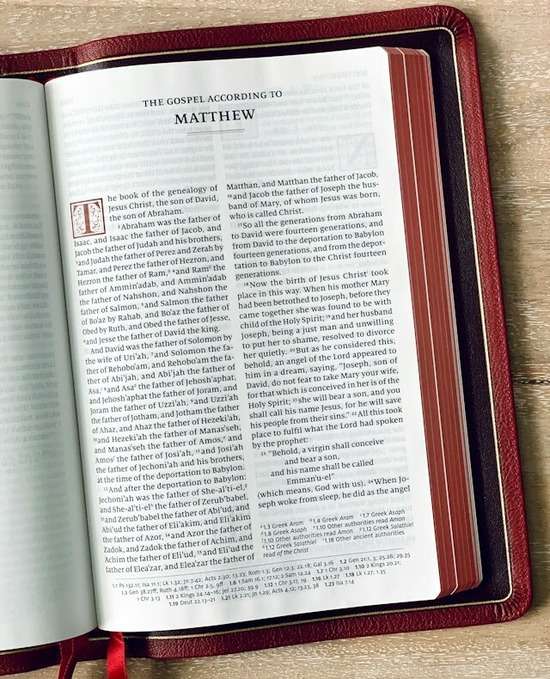
Photo by Tim Wildsmith on Unsplash
Jesus was born to a virgin named Mary in a Bethlehem stable sometime between 6 and 4 BC.1 Though we don’t have very many non-biblical sources discussing this event, the historical and cultural backdrop of the time period gives us more insight.
Follow along as we walk through the story of Jesus’ birth, the cultural context behind it, and how His birth fulfills the prophecies the Bible gave about the Messiah.
We’ll start with His conception.
The angel Gabriel appeared to Mary
Mary was a young woman from Nazareth with plans of marrying the local carpenter, Joseph (Matthew 1:18; Matthew 13:55). One day, God sent the angel Gabriel to tell her that God had chosen her to bear the Messiah (Luke 1:26, 31-33).
The fact that God chose her doesn’t make much sense from a human perspective. But the Bible demonstrates that God usually operates differently than we might expect. He doesn’t often work through the strong or rich but the weak and the poor (Corinthians 1:27).
There was just one problem, though.
Mary was a virgin. How could she expect to have a baby? Gabriel explained to her that:
“The Holy Spirit will come upon you, and the power of the Highest will overshadow you; therefore, also, that Holy One who is to be born will be called the Son of God” (Luke 1:35, NKJV).
The Messiah would be born of a virgin, just like Isaiah 7:14 prophesied.
What must have been running through Mary’s head when she heard this?
She might’ve been worried about how people would react to her pregnancy. Even though Mary and Joseph weren’t officially married yet, sleeping with another partner during the engagement period was seen as adultery according to the Jewish law of the Old Testament (Deuteronomy 22:23-24).2
If Joseph wanted to, he could break off their engagement and accuse her of adultery. And Mary knew the penalty for adultery in her society. She would be brought before her community as a public embarrassment and stoned to death (Leviticus 20:10-12).3
In this way, the angel wasn’t just asking Mary to bear the Messiah; he was asking her to face the possibility that her very life might be threatened. But in spite of it all, Mary gave a surprising answer:
“Behold the maidservant of the Lord! Let it be to me according to your word” (Luke 1:38, NKJV).
Predictably, Joseph didn’t believe her claims about the pregnancy (Matthew 1:18-19). But instead of condemning her, he decided to break their engagement quietly (Matthew 1:19). However, an angel came to him in a dream and told him not to do so. The angel explained that Mary was pregnant by the Holy Spirit and would give birth to the Messiah (Matthew 1:20-21).
Mary and Joseph journeyed to Bethlehem

Photo by Aaron Burden on Unsplash
The Gospel of Luke tells us that Caesar Augustus, the ruler of the Roman Empire, called for a census, requiring Jews like Mary and Joseph to return to their homeland for taxation purposes (Luke 2:1-3). As a descendant of King David, Joseph needed to bring himself and Mary to David’s birthplace in Bethlehem (Luke 2:4), a 90-mile trip from their hometown of Nazareth.4
Tradition assumes that Joseph and Mary journeyed to Bethlehem in the winter, but some scholars believe it’s more likely they traveled in the spring—mainly because it wouldn’t make much sense for Joseph to take a nearly due Mary on a long journey in cold winter weather.5
With so many Jews traveling to their ancestral homes, the small town of Bethlehem was packed with visitors from all over the country.
So much so that there wasn’t any room for Mary or Joseph at the inn (Luke 2:7).
Some suggest that they had to find shelter in a cave.6 Others hold on to the popular theory that they stayed in a stable. Whatever the case, the Bible hints that they had to spend the night with barnyard animals because they had a manger—an animal feeding box—nearby when Jesus was born.
The Savior was laid in a manger

Photo by Pro Church Media on Unsplash
Surrounded by animals and hay, the scene of Jesus’ birth is the last place you’d expect to find the “Lord of lords and King of kings” (Revelation 17:14, NKJV).
But Mary had nowhere to lay Jesus other than a manger filled with hay (Luke 2:7).
And instead of a grand reception from all the powerful families of Israel, Jesus was visited by neighboring shepherds.
Angels appeared to shepherds in Judea

Photo by Jaka Škrlep on Unsplash
Soon after Jesus’ birth, angels appeared to nearby shepherds, who were in the fields watching over their sheep that night (Luke 2:8-9).
Scholars suggest that this is further evidence that Jesus was born in the springtime.7 This is because shepherds guarded their sheep at night from spring to October8, but especially in spring to protect newborn lambs from predators.9
The shepherds were frightened by this supernatural appearance (Luke 2:9), but the angel told them not to be afraid:
“Do not be afraid, for behold, I bring you good tidings of great joy which will be to all people. For there is born to you this day in the city of David a Savior, who is Christ the Lord. And this will be the sign to you: You will find a Babe wrapped in swaddling cloths, lying in a manger” (Luke 2:10-12, NKJV).
The shepherds might’ve wondered why an angel would appear to them. See, shepherds were looked down on in Jewish society at that time—and often viewed with distrust.10 They weren’t educated, and they performed work that no one else wanted to do.11
But the hopeful message of Jesus’ birth was meant for all people.
And their humility and longing for a savior better prepared them to accept the news of Jesus. In fact, the shepherds were so excited about the message that they immediately went to visit Jesus (Luke 2:15). After they laid eyes on Him, they went on to spread the word that the promised Messiah had finally come (Luke 2:16-20).
They weren’t the only ones to see Jesus, though.
A group of foreigners also traveled a great distance to honor Him.
A star guided the wise men
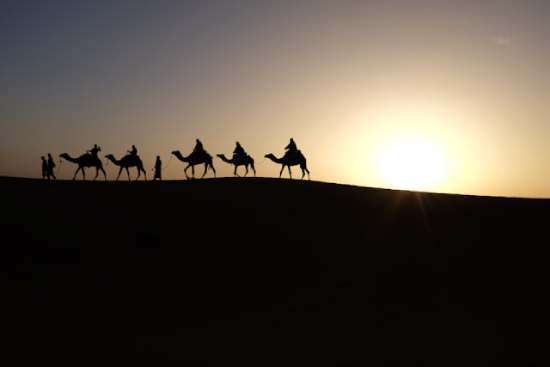
Photo by Inbal Malca on Unsplash
Besides the shepherds, “wise men” (also called magi) went out of their way to find the Messiah (Matthew 2:1-2). Tradition typically assumes there were three wise men (because the Bible mentions three gifts), but the Bible doesn’t actually specify the number.
The Bible does tell us that they’re from the East, meaning any country east of Jerusalem (Matthew 2:1). Scholars theorize that they could’ve come from former Babylon12, Persia, Arabia, Ethiopia, or India.13
The fact that they were called “magi” and “wise men” gives us a hint as to who these men were.
Magi is a Greek word, believed to mean “sage” or “astrologer.”14 In Bible times, pagan kings often relied on astrologers and wise men to act as counselors. This suggests that the wise men who visited Jesus were highly educated astrologers from pagan kingdoms. It also explains why they would’ve been interested in the appearance of the star that led them to Jesus (Matthew 2:2).
The wise men brought gifts with them that were traditionally only given to kings—gold, frankincense, and myrrh—as a way of honoring Jesus as king of the Jews (Matthew 2:11).15
They weren’t turned away by Jesus’ humble surroundings.
These foreigners, who may have only ever known pagan gods, worshiped Him when His own people didn’t even recognize Him (Matthew 2:1-5, 11). It again illustrates an important lesson—that Jesus came to save people from every tribe, tongue, and nation (Matthew 28:18-19).
How did Jesus’ birth become connected with Christmas?
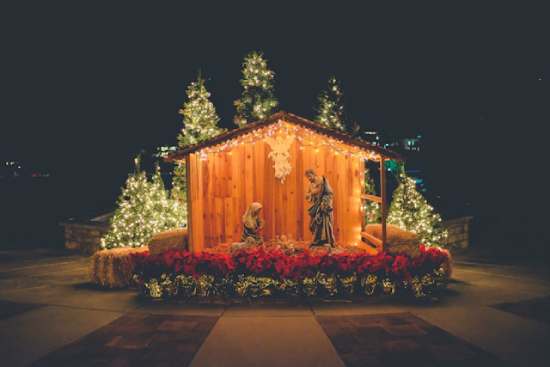
Photo by Kenny Eliason on Unsplash
Most people associate Jesus’ birthday with Christmas day. Some suggest this association started as a way to encourage pagans to adopt Christianity (since Christmas day was also a day of worship for a Roman sun deity).16 Others say ancient scholars calculate the date of Jesus’ birth based on the date of His death.17
However, as we mentioned earlier, Jesus may not have been born in December at all. It’s more likely He was born in the spring, though some scholars suggest He was born in September or October.18
But even though Jesus probably wasn’t born on December 25th, that doesn’t mean Christmas can’t help remind us of the miracle of Jesus’ birth. Many in the Adventist Church see Christmas as a wonderful time to tell others about the birth of Jesus and why it matters so much to us.
Why Jesus’ birth matters
Jesus’ birth is significant because it fulfilled the promise God gave His people so long ago to send a Messiah to save them. In the ultimate act of humiliation, Jesus left His home in heaven at the right hand of God to become a helpless baby with nowhere but a manger to lay His head.
He became Immanuel (Matthew 1:23), a name meaning “God with us.”19
Like Mary, like the shepherds, we wonder why Jesus would want to come like this and be with us.
Jesus’ humble beginnings and life give us the answer. They give us a glimpse of the heart of God for us—and what His plan of salvation is all about.
Throughout His ministry on earth, Jesus reached out to the unreachable and touched the untouchable (Matthew 9:10-13; Matthew 8:1-3). He defied cultural taboos to serve those that needed Him and gave hope and freedom to those who were hopeless. At the end of His ministry on earth, He took on total humility, surrendering His life at the cross to save us from our sins (Philippians 2:5-8).
It’s just like what the angels said to the shepherds: Jesus was born to bring peace on Earth and goodwill to all (Luke 2:14).
Now, we joyfully remember the good news of Jesus’ birth because it not only paved the way for salvation but also gives us hope that He will come again and deliver us from this sad, suffering world.
The Timeline of the Birth of Christ:
- Mary is betrothed to Joseph (Matthew 1:18; Luke 1:27).
- An angel appears to Mary and tells her she will give birth to the Messiah (Luke 1:30-33).
- Mary becomes pregnant (Matthew 1:18; Luke 1:39-41).
- Joseph plans on quietly breaking off his engagement with Mary (Matthew 1:19).
- An angel tells Joseph that Mary’s child is the Messiah (Matthew 1:20-21).
- Joseph decides to stay with Mary (Matthew 1:24).
- Caesar Augustus calls for a census, requiring every Jew to go to the land of their ancestors to pay taxes (Luke 2:1-3).
- Joseph and Mary travel to Bethlehem, the birthplace of their ancestor, King David (Luke 2:4).
- Mary gives birth to Jesus in a stable (Luke 2:6-7).
- Angels tell shepherds where to find the newborn Messiah (Luke 2:8-12).
- The shepherds go to Mary and Joseph to see Jesus for themselves (Luke 2:15-20).
- The wise men follow a star to find Jesus (Matthew 2:1-2, 9-11).
- King Herod hears about their quest and asks them to tell him Jesus’ location once they find him (Matthew 2:7-8).
- The wise men visit Jesus and bring him gold, frankincense, and myrrh (Matthew 2:11).
- An angel warns the wise men not to return to King Herod (Matthew 2:12).
- An angel warns Joseph to take Mary and Jesus and flee to Egypt to avoid King Herod’s scheme (Matthew 2:13).
- King Herod orders the death of every child two years old and younger in Bethlehem (Matthew 2:16).
- King Herod passes away (Matthew 2:19).
- Joseph, Mary, and Jesus leave Egypt and settle in Nazareth (Matthew 2:19-23).
Related Articles.



- “Jesus,” Encyclopedia Britannica. [↵]
- Cohik, Lynn, “The Real Problem with Mary’s Baby Bump,” Christianity Today, Dec. 18, 2009. [↵]
- Ibid. [↵]
- “5 Things You Didn’t Know About the Christmas Story,” The Bell, Gordon College. [↵]
- Ibid. [↵]
- McGary, Mike, “Where Was Jesus Born: A Barn, A Cave, or House,” Youth Pastor Theologian. [↵]
- McGowan, Andrew, “How December 25 Became Christmas,” Biblical Archaeology Society. [↵]
- “When Was Jesus Born?” BibleInfo.com. [↵]
- McGowan, “How December 25 Became Christmas.” [↵]
- Boonstra, Jean, “Why Shepherds?” Voice of Prophecy. [↵]
- Ibid. [↵]
- Ibid. [↵]
- “Magi,” Encyclopedia Britannica. [↵]
- Jensen, Robin, M., “Witnessing the Divine,” Biblical Archaeology Society. [↵]
- “Why Did the Magi Bring Gold, Frankincense and Myrrh?” Biblical Archaeology Society. [↵]
- McGowan, “How December 25 Became Christmas.” [↵]
- Ibid. [↵]
- “When Was Jesus Born?” BibleInfo.com. [↵]
- “Immanuel,” Merriam-Webster Dictionary. [↵]
More Answers

The Barren Fig Tree Parable: What It Means to Bear Fruit
Find out what the Parable of the Barren Fig Tree really means.

¿Qué son las reuniones evangelísticas adventistas?
¿Qué son las reuniones evangelísticas adventistas?La Iglesia Adventista del Séptimo Día pone un gran énfasis en compartir el evangelio mediante la evangelización, o compartir el evangelio a través de la predicación, la enseñanza y el testimonio. Una de las formas en...
O que são os Encontros Evangelísticos Adventistas?
O que são os Encontros Evangelísticos Adventistas?A Igreja Adventista do Sétimo Dia dá grande ênfase ao compartilhamento do evangelho por meio da evangelização, ou seja, compartilhar o evangelho através da pregação, ensino e testemunho. Uma das formas de realizarmos...

O Que os Adventistas Acreditam Sobre Fé e Obras?
O Que os Adventistas Acreditam Sobre Fé e Obras?Os adventistas acreditam que somos salvos pela fé, que é a crença e confiança que temos em Jesus Cristo para nos salvar dos nossos pecados. Jesus, então, nos capacita a viver em harmonia com os mandamentos de Deus e a...
¿Qué creen los Adventistas sobre la fe y las obras?
¿Qué creen los Adventistas sobre la fe y las obras?Los adventistas creen que somos salvos por la fe, que es la creencia y confianza que tenemos en Jesucristo para salvarnos de nuestros pecados. Jesús, entonces, nos capacita para vivir en armonía con los mandamientos...
Je, Ninahitaji Kuwa Mwadventista Ili Niokolewe
Je, Ninahitaji Kuwa Mwadventista Ili Niokolewe?Jibu la swali hili ni rahisi, “hapana.” Linapokuja swala la wokovu katika Yesu Kristo, kinachohitajika kwa mtu ni kukiri dhabihu ya Yesu kwa ajili yetu, kuamini kwamba Ametuokoa, na kudai zawadi ya bure ya wokovu ambayo...
¿Necesito ser adventista para ser salvo?
¿Necesito ser adventista para ser salvo?La respuesta a esta pregunta es simplemente, “no.” Cuando se trata de la salvación en Jesucristo, todo lo que se requiere de una persona es reconocer el sacrificio de Jesús por nosotros, creer que Él nos ha salvado y reclamar el...
Preciso ser Adventista para ser salvo?
A resposta para essa pergunta é simplesmente: “não.”

Lo que la Biblia dice sobre la Segunda Venida de Jesucristo
¿Tienes curiosidad sobre lo que la Biblia dice acerca de la Segunda Venida de Jesucristo? Cubriremos los versículos clave y su significado.

¿Quién fue Mateo, el apóstol, en la Biblia?
En el primer libro del Nuevo Testamento, encontramos la historia del Evangelio desde la perspectiva de Mateo.
2 Corinthians: An Overview of Paul’s Most Personal Letter
Discover Paul’s lessons on forgiveness, reconciliation, generosity, and more. It’s all in the book of 2 Corinthians!
Quem Foi Mateus, o Apóstolo, na Bíblia?
Quem Foi Mateus, o Apóstolo, na Bíblia?No primeiro livro do Novo Testamento, encontramos a história do Evangelho sob a perspectiva de Mateus. Ele era um coletor de impostos judeu de Cafarnaum, no primeiro século d.C., e provavelmente era desprezado pelos outros judeus...

The Pharisee and the Tax Collector Parable: Its Meaning Made Simple
The Meaning of the Pharisee and the Tax Collector ParableIn Luke 18:9-14, Jesus told a parable about two men who went to the temple to pray. One was a Pharisee and the other a tax collector. The Pharisee prayed (well, bragged) about his own good works compared to the...
Biblia Inasema Nini Kuhusu Ujio wa Pili wa Yesu Kristo
Unajuliza Biblia inasema nini kuhusu Kurudi kwa Yesu Kristo Mara ya Pili? Tutajadili aya kuu na maana zake.

The Story of the Widow’s Mite—What It Really Means
The Story of the Widow’s Mite—What It Really MeansPeople often assume bigger is better, but the Bible turns this concept on its head with the story of the Widow’s Mite. Of all the donations Jesus sees at the temple, the gift that draws His attention is not the...

Consejo de Elena G. de White sobre la Educación Universitaria
Consejo de Elena G. de White sobre la Educación UniversitariaElena G. de White, una cofundadora importante del Adventismo, es conocida a menudo por su orientación práctica y espiritual para la educación infantil adecuada. Pero también estuvo significativamente...
Mathayo Alikuwa Nani Katika Biblia?
Mathayo Alikuwa Nani Katika Biblia?Katika kitabu cha kwanza cha Agano Jipya, tunapata simulizi la Injili kutoka kwa Mathayo. Alikuwa mtoza ushuru Myahudi kutoka Kapernaumu katika karne ya kwanza MK, na huenda alichukiwa na Wayahudi wenzake kwa kuchagua kazi hiyo....

¿Cuáles son los beneficios de vivir en el campo?
¿Cuáles son los beneficios de vivir en el campo?Visitar el campo puede ofrecer un descanso muy necesario del típico ajetreo y bullicio de la ciudad. Muchos incluso han decidido mudarse a zonas rurales para disfrutar de un ritmo más lento, espacios amplios, aire...
Quais São os Benefícios de Viver no Campo?
Visitar o campo pode oferecer uma pausa muito necessária do típico agito da cidade.

¿Qué significa la parábola de la perla de gran precio?
Esto es lo que Jesús enseñó sobre el reino de los cielos a través de esta breve parábola sobre un comerciante que encuentra una perla invaluable.
O Que Significa a Parábola da Pérola de Grande Valor?
Aqui está o que Jesus ensinou sobre o reino dos céus por meio desta parábola curta sobre um comerciante que encontra uma pérola inestimável.

Por Que Muitos Adventistas Querem Viver no Campo
Por Que Muitos Adventistas Querem Viver no CampoViver em áreas rurais é algo que os adventistas têm valorizado historicamente, embora as necessidades da vida moderna nem sempre tenham tornado isso possível. Convenhamos, as vantagens da vida na cidade são bastante...
Uma Visão Geral de Romanos: Fé, Justiça, Relacionamentos
Uma Visão Geral de Romanos: Fé, Justiça, RelacionamentosO livro de Romanos é uma das 21 epístolas, ou cartas abertas, do Novo Testamento. E embora seja um texto bíblico antigo, ainda tem uma relevância significativa (até surpreendente) para nossas vidas hoje. O...

Jesus é o Mesmo Ser que Miguel, o Arcanjo?
Jesus é o Mesmo Ser que Miguel, o Arcanjo?Muitos cristãos têm se perguntado sobre a misteriosa identidade de Miguel, o Arcanjo. Desde os primórdios do cristianismo, muitos interpretaram Miguel como o Messias identificado com a figura do Anjo do Senhor. O reformador...
Je, Faida za Kuishi Vijijini ni Zipi?
Kutembelea maeneo ya vijijini kunaweza kutoa mapumziko yanayohitajika sana kutoka kwenye pilikapilika za kawaida za mijini.
Je, Mfano wa Lulu ya Thamani Kubwa Unamaanisha Nini?
Hivi ndivyo Yesu alivyofundisha kuhusu ufalme wa mbinguni kupitia mfano huu mfupi wa mfanyabiashara aliyepata lulu ya thamani isiyo na kifani.
Kwa Nini Waadventista Wengi Wanataka Kuishi Vijijini
Kwa Nini Waadventista Wengi Wanataka Kuishi VijijiniKuishi maeneo ya vijijini ni jambo ambalo Waadventista wamekuwa wakilithamini kihistoria, ingawa mahitaji ya maisha ya kisasa hayafanyi iwezekane kila wakati. Tukubali, faida za kuishi mjini zinaonekana wazi: fursa...
Muhtasari wa Kitabu cha Warumi: Imani, Haki, Mahusiano
Hapa kuna muhtasari na historia ya waraka mrefu zaidi wa Paulo.
Sobre o que é a Parábola do Semeador de Jesus?
A parábola do semeador é, em última análise, sobre como as pessoas responderam a Jesus Cristo e Sua mensagem do reino de Deus—o Evangelho.
Didn’t find your answer? Ask us!
We understand your concern of having questions but not knowing who to ask—we’ve felt it ourselves. When you’re ready to learn more about Adventists, send us a question! We know a thing or two about Adventists.