
Jesus and John the Baptist were relatives(Luke 1:36). But the significance of their relationship was far beyond the family tree. They were interconnected in prophecy, ministry, and mission.
Jesus Christ fulfilled Old Testament prophecies when He came to earth as the Messiah. But John the Baptist also had a role. He was the one who set the stage for Jesus’s arrival and prepared people to meet their Savior (Isaiah 40:3-5).
As far as direct interactions go, the Bible only documents a few. But there’s a lot we can learn about how Jesus and John regarded each other as co-laborers for a higher purpose. So let’s look at:
- The family ties of Jesus and John the Baptist
- Their relationship in prophecy
- Their relationship in mission
- Why their relationship is meaningful for us, even today
First, let’s confirm the family roots they had in common.
The family ties of Jesus and John the Baptist
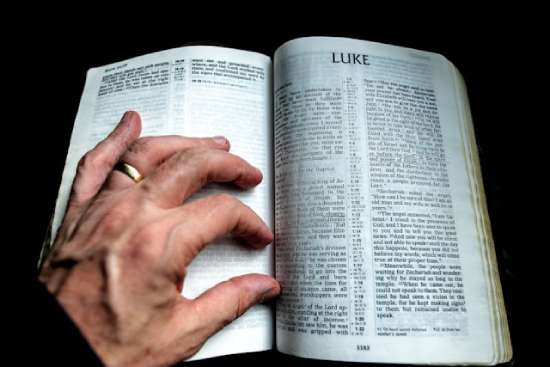
Photo by James Coleman on Unsplash
In Luke 1, we learn that Jesus and John were second cousins and close in age.
Not much else is documented about either of their childhoods, however, so we don’t know how much interaction they had in their younger years. It certainly is possible that they could’ve come in contact when they were growing up. Their families may have gathered together on occasion, or they might’ve seen each other on trips to Jerusalem for annual feast days. We just don’t know for sure.
But quite a bit was written about their births. Jesus and John the Baptist both came from divinely-blessed situations that set them up as significant spiritual figures.
Both of their births were foretold by angels (verses 13-20; 28-38), and both of them were a result of miraculous pregnancies.
Jesus was born to Mary, who was a virgin (verses 27, 34). And Mary’s relatives, Elizabeth, gave birth to John after she was well past childbearing age (verses 7, 36).
Before they were born, they did “meet” once. Mary traveled to visit Elizabeth when they were both pregnant. When she arrived, we’re told that Elizabeth was “filled with the Holy Spirit” and that her “leaped inside her” (verse 41, ESV).
It sounds like the two unborn babies, both destined for world-changing lives, already sensed each other’s presence. They were filled with the Holy Spirit right from the start (verses 15, 35, 41).
The relationship of Jesus and John the Baptist in prophecy
As we learned from their birth experiences, both Jesus and John the Baptist were prophetically linked. We see this in the prophecies that predict Jesus’ arrival as humanity’s Messiah, Savior, and sacrificial Lamb.
According to Matthew 3:3 and John 1:23, John the Baptist fulfilled Isaiah’s prophecy as “the voice of one crying out: Prepare the way of the Lord in the wilderness; make a straight highway for our God in the desert” (Isaiah 40:3, CSB)
So John’s foretold purpose was to inform and prepare people before Jesus showed up.
That might sound like a simple job, but considering the nature of humanity, it would be much needed. It’s likely that the people of John’s time had grown spiritually complacent, especially after being ruled by other nations for so long. So John’s objective was to remind the people about the prophesied Messiah and renew their hope. He called for everyone to believe, get baptized, and change their lives for the better “because the kingdom of heaven has come near!” (Matthew 3:2, CSB).
The prophet Malachi also gave John a description similar to Isaiah’s:
“Behold, I send My messenger, and he will prepare the way before Me. And the Lord, whom you seek, will suddenly come to His temple, even the Messenger of the covenant, in whom you delight. Behold, He is coming” (Malachi 3:1, NKJV).
Again, John is foretold to go ahead of Jesus and to be a messenger who lays the groundwork for His earthly ministry.
Prophecy also connects John the Baptist with the prophet Elijah, who had a close relationship with God and was also on a mission to help Israel repent from the influence of corrupted leadership (1 Kings 17–2 Kings 2). In Matthew 11:13-14, Jesus refers to John as “the Elijah” from prophecy:
“For all the prophets and the law prophesied until John. And if you’re willing to accept it, he is the Elijah who is to come” (CSB).
We can look back in the book of Malachi to find:
“Behold, I will send you Elijah the prophet before the great and awesome day of the Lord comes. And he will turn the hearts of the fathers to their children, and the hearts of the children to their fathers” (Malachi 4:5-6, ESV).
That same verse is referenced when the angel tells John’s father, Zacharias—or Zechariah, that he and Elizabeth will have a son:
“And he will go before Him in the spirit and power of Elijah, to turn the hearts of fathers to their children, and the disobedient to the understanding of the righteous, to make ready for the Lord a prepared people” (Luke 1:17, CSB).
So John the Baptist was linked to Jesus not just by a blood relationship, but through prophecy. And “in the spirit and power of Elijah,” John indeed fulfilled his predicted role of turning people’s hearts toward their Savior.
This gives us the framework for understanding how Jesus and John were so closely related in mission. Both their ministries were about restoring humanity’s hope—and helping them understand where (or through Whom) that hope comes from.
The relationship of Jesus and John the Baptist in mission

Photo by Pixabay
Now we get to look at how Jesus and John were united in the fulfillment of messianic prophecy. John’s ministry (messenger/preparer) complemented Jesus’ ministry (Messiah/Savior).
John was the forerunner. The primer. The stage setter. He helped re-establish people’s faith in their Redeemer so they could be ready to receive Him.
We can see John’s love and respect for Jesus in how seriously he took his role—it governed his whole life. He lived away from society, survived on locusts and honey, and dressed in camel hair and a leather belt (Matthew 3:4; Mark 1:6, and like Elijah in 2 Kings 1:8). His days were spent preaching and baptizing at the Jordan River (Mark 1:5; Luke 3:3), and also in Aenon (John 3:23).
And people came in droves to hear him. We read that “Jerusalem, all Judea, and all the region around the Jordan went out to him and were baptized by him in the Jordan, confessing their sins” (Matthew 3:5-6, NKJV).
Yet even with this important role and a throng of followers, John did not become proud. He knew his place. And he made sure the people understood his place, too:
“He proclaimed, ‘One who is more powerful than I am is coming after me. I am not worthy to stoop down and untie the strap of His sandals’” (Mark 1:7, CSB).
At one point, he even had to remind his own disciples that his whole purpose was to point to Jesus, not to gain authority or influence for himself.
“So they came to John and told him, ‘Rabbi, the one you testified about, and who was with you across the Jordan, is baptizing—and everyone is going to Him.’ John responded … You yourselves can testify that I said, “I am not the Messiah, but I’ve been sent ahead of Him.” … He must increase, but I must decrease’” (John 3:26-30, CSB).
John also understood that his mission for Jesus could be upsetting to the established religious leaders. Most of them were fixated on their heritage instead of maintaining loving, repentant hearts. Like Jesus, it would eventually cost John his life as a result of speaking truth to those in power.
But John’s message to these leaders highlighted some key aspects of Jesus’ ultimate mission for humanity.
“But when he saw many of the Pharisees and Sadducees coming to his baptism, he said to them, ‘Brood of vipers! Who warned you to flee from the coming wrath? Therefore produce fruit consistent with repentance. And don’t presume to say to yourselves, “We have Abraham as our father.” For I tell you that God is able to raise up children for Abraham from these stones’” (Matthew 3:7-9, CSB).
He wanted to make it clear to these pious religious leaders that, despite their lineage from Abraham, they had become an opposing force to the plan of salvation. And if they didn’t repent, they would be judged accordingly. He also pointed out that only Jesus is worthy and able to judge people’s hearts. Jesus is the one they should pay attention to.
“The ax is already at the root of the trees. Therefore, every tree that doesn’t produce good fruit will be cut down and thrown into the fire. I baptize you with water for repentance … He Himself will baptize you with the Holy Spirit and fire” (Matthew 3:10-11, CSB).
John was giving the Pharisees and Sadducees a wake-up call by comparing them to a tree bearing bad fruit, meaning they needed to change their self-serving ways. He was hoping to prepare them to receive Jesus and the purifying work of the Holy Spirit.
So John and Jesus went about their missions with clear awareness and acknowledgment of what the other was doing. But as for face-to-face interactions between the two, the only one recorded in Scripture is when Jesus approaches John for baptism (Matthew 3:13-17; Mark 1:7-11; Luke 3:21-22; John 1:26-37).
And this interaction happened to be an incredibly significant moment. John’s mission to preach about the Coming messiah was reaching its completion—just as Jesus’ public ministry as the Messiah was beginning.
John was initially surprised at Jesus’ request to be baptized by him. But Jesus affirmed John’s role as His forerunner and the initiator of His earthly ministry. “This is the way to fulfill all righteousness” (Matthew 3:15, CSB).
When Jesus came up out of the water from His baptism, a voice from heaven pronounced that He was indeed the Son of God, doing exactly what He was meant to do (Matthew 3:16-17).
John’s mission paved the way for Jesus to do His.
Why is Jesus’s relationship with John the Baptist important?
The story of Jesus and John reminds us that:
- Any person can be used by God for important things
- Serving God isn’t always easy
- Jesus is there for us, even when we’re having a hard time
While John the Baptist got to herald the arrival of Jesus Christ Himself, he’s not the only person in the Bible to serve as a messenger. He shares this role with other prophets like Noah, Jonah, Elijah, and Samuel. Throughout the Bible, we can see how God frequently used ordinary individuals as messengers to prepare people for a major event.
We can also be messengers for God, even today. And we can learn a lot from John’s life and his relationship with Jesus.

Image by simone gatterwe from Pixabay
Near the end of his life, John grew discouraged. He’d spoken out against powerful men and ended up in prison.
While locked away, John started to doubt if he’d done things right. Was this how things were supposed to work out? Announce the coming Messiah…and then get arrested and sentenced to death?
Even this great messenger had his low points. He felt the need to send a couple of his disciples to find Jesus and ask Him, “Are You the Coming One, or do we look for another?” (Matthew 11:2-3, NKJV).
But Jesus sent encouraging words back to John (much like He did for Elijah in 1 Kings 19:13-18).
“The blind are made to see. Those who could not walk are walking. Those who have had bad skin diseases are healed. Those who could not hear are hearing. The dead are raised up to life and the Good News is preached to poor people. He is happy who is not ashamed of me and does not turn away because of Me” (Matthew 11:5-6, NASB).
Jesus assured John that even though he wasn’t able to see it at that moment, miraculous things were happening. The Gospel was spreading. Their mission was being accomplished.
Jesus even said about John, “Assuredly, I say to you, among those born of women there has not risen one greater than John the Baptist” (Matthew 11:11, NKJV).
So when we’re going about our lives and sharing the love of God, we might also encounter hardship or opposition.
Now, this doesn’t mean we’re all destined to confront government officials and get thrown into prison. But being a representative of God in a world that can be uncaring and shallow…it will get hard sometimes.
So it can be easy to doubt if we’re on the right track, or if God really can use us to make good things happen.
But God alone sees the big picture. Our job is to yield to Him who does the real work of healing, forgiving, judging, and saving. As long as we aspire to live loving lives as His messengers, and as long as we make ourselves open to His Holy Spirit’s leading, we are indeed on the right track.
The call to be a messenger of the Gospel was given to all of us (Matthew 28:19-20; Acts 1:8; 1 Peter 3:15). Jesus will return one day soon (John 14:1-3), and we can share this Good News with a broken, disheartened world. By our words and actions, we can also turn people’s hearts toward Jesus—the One who sees all, loves all, and wants to save all.
Related Articles



More Answers

¿Por qué muchos Adventistas del Séptimo Día eligen una dieta vegetariana?
¿Por qué muchos Adventistas del Séptimo Día eligen una dieta vegetariana?Puede que tengas un amigo adventista que sea vegetariano, o tal vez estés asistiendo a una Iglesia Adventista del Séptimo Día por primera vez y notes que en la comida compartida no hay carne....

What is Jesus’ Parable of the Sower About?
The parable of the sower is ultimately about how people responded to Jesus Christ and His message of the kingdom of God—the Gospel.

O que os Adventistas do Sétimo Dia acreditam sobre o Grande Conflito (Bem vs. Mal)?
O “Grande Conflito” é a frase que os Adventistas do Sétimo Dia normalmente usam para descrever o conflito espiritual cósmico entre as forças do bem (Deus) e as forças do mal ou do pecado (Satanás/o diabo).

Was Jesus Ever Hypocritical? Learn What the Bible Says.
Was Jesus Ever Hypocritical? Learn What the Bible SaysMany undesirable traits are associated with hypocrisy. But overall, hypocrites intentionally try to make others believe they uphold or represent a certain belief system, character trait, lifestyle, etc., when in...

Kukatishwa Tamaa Kukuu na Kile Tunachojifunza
Wafuasi wa Miller walitabiri kurudi kwa Kristo Oktoba 22, 1844, lakini Yesu hakuja kamwe. Tukio lingine lilitokea. Gundua kilichotokea kweli na Kukatishwa Tamaa Kukuu kunaweza kutufundisha leo.

When in Doubt: 7 Ways Christians Can Manage Uncertainty
When in Doubt: 7 Ways Christians Can Manage UncertaintyFew things in life are truly certain. And no matter how convinced some people can appear on the surface, no one is immune to doubt. And this isn’t a bad thing. Doubt has a purpose. A role to serve. (Just imagine...
El gran chasco y las lecciones que nos enseña
Los Milleritas predijeron el regreso de Cristo el 22 de octubre de 1844, pero Jesús nunca llegó. Ocurrió otro evento. Descubre lo que realmente sucedió y qué puede enseñarnos hoy El gran chasco.

Is Jesus the Same Being as Michael the Archangel?
Many Christians have wondered at the mysterious identity of Michael the Archangel.
A Grande Desapontamento e Lições que nos Ensina
Os Milleritas previram o retorno de Cristo em 22 de outubro de 1844, mas Jesus nunca chegou. Outro evento ocorreu. Descubra o que realmente aconteceu e o que o Grande Desapontamento pode nos ensinar hoje.
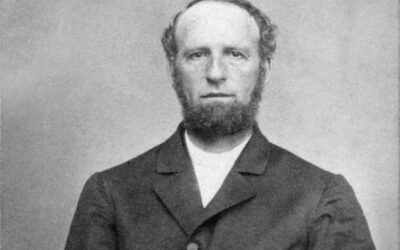
James Springer White, Co-Fundador da Igreja Adventista do Sétimo Dia
James Springer White (1821–1881) foi uma figura chave na Igreja Adventista do Sétimo Dia e marido de Ellen G. White.
James Springer White, cofundador de la Iglesia Adventista del Séptimo Día
James Springer White (1821–1881) fue una figura clave en la Iglesia Adventista del Séptimo Día y el esposo de Elena G. de White.

Kila Kitu Unachohitaji Kujua Kuhusu Chakula cha Siku ya Sabato
Kwa Waadventista Wa Sabato, kushiriki chakula cha Siku ya Sabato pamoja na marafiki na familia ni moja ya sehemu muhimu na ya kumbukumbu ya Sabato.

Nini Maana ya “Mwadventista”?
Waadventista wa Sabato ni dhehebu la Kikristo la Kiprotestanti wanaoshikilia Sabato ya siku ya saba kama ilivyoandikwa katika Biblia.

How to Have a Personal Relationship with Jesus: A 10-Step Guide
How to Have a Personal Relationship with Jesus: A GuideNo matter who you are, you’re surrounded by relationships. Friends, family, colleagues, acquaintances...they all play a part in our lives, for better or worse. So you’re surely aware of a lot of the components...

Biblia Ina Maana Gani Inaposema Yesu ni Mwana wa Mungu?
Biblia inapomwita Yesu Mwana wa Mungu inarejelea uungu wake. Jifunze ni nini kinachofanya hili kuwa muhimu na kinahusianaje na wokovu.

“Go and Sin No More”—What Did Jesus Mean?
These well-known words of Jesus Christ come from two New Testament stories in the book of John—a man healed by the Pool of Bethesda (John 5) and a woman caught in adultery (John 8).

Quais são as Mensagens dos Três Anjos em Apocalipse 14?
As mensagens dos três anjos em Apocalipse 14 advertem o mundo a adorar a Deus, deixar a confusão religiosa e evitar a adoração de tradições humanas em vez dos mandamentos de Deus.

Je! Tunaweza Kuitunza Siku Yoyote ya Wiki Kama Sabato?
Katika sura za kwanza kabisa za Biblia, tunamwona Mungu akianzisha kumbukumbu ya kila wiki na siku ya mapumziko, inayoitwa Sabato (Mwanzo 2:2-3).
¿Cuáles son los mensajes de los tres ángeles en Apocalipsis 14?
Los mensajes de los tres ángeles en Apocalipsis 14 invitan al mundo a adorar a Dios, abandonar la confusión religiosa y evitar la adoración de tradiciones humanas en lugar de los mandamientos de Dios.
Por que muitos Adventistas do Sétimo Dia escolhem uma dieta vegetariana?
Embora nem todo adventista seja vegetariano, muitos evitam completamente o consumo de carne para viver de forma mais saudável, buscando honrar a Deus física, espiritual e mentalmente.

Understanding the Miracles of Jesus Christ
Understanding the Miracles of Jesus ChristWhat do you think of when someone says something is “a miracle”? Maybe you think of an unexpected recovery, surviving a dangerous accident, or getting an answer to a seemingly impossible prayer. Simply put, miracles are...
O que significa “Adventista”?
O que significa "Adventista"?Os Adventistas do Sétimo Dia são uma denominação cristã protestante que observa o sábado bíblico do sétimo dia. A partir dessa crença, eles obtêm a primeira parte de seu nome. Mas e quanto à segunda parte - "Adventista"? “Adventista”...
¿Podemos guardar el sábado bíblico cualquier día de la semana?
En los primeros capítulos de la Biblia, encontramos a Dios estableciendo un memorial semanal y día de reposo, conocido como el sábado (Génesis 2:2-3).
Podemos guardar o Sábado em qualquer dia da semana?
Nos primeiros capítulos da Bíblia, encontramos Deus estabelecendo um memorial semanal e dia de descanso, conhecido como o Sábado (Gênesis 2:2-3).
O que significa a Bíblia quando chama Jesus de Filho de Deus?
Quando a Bíblia chama Jesus de Filho de Deus, está se referindo à Sua divindade. Saiba o que torna isso tão significativo e o que tem a ver com a salvação.
¿Qué creen los Adventistas del Séptimo Día acerca de la Biblia?
La Biblia forma la base de todo lo que los Adventistas del Séptimo Día creen y enseñan.

Legado Duradouro de Ellen G. White
Ellen G. White é um nome bem conhecido entre os Adventistas do Sétimo Dia, mas ela também teve um impacto em muitas outras partes da história, além de ser co-fundadora da Igreja Adventista.

What Does it Mean to Have Faith in Jesus?
What Does it Mean to Have Faith in Jesus?To have faith in Jesus means we place our spiritual hope, trust, belief, and priority in Him as our loving Savior. And that sounds great as an idea. That’s our goal, right? But when we go through difficult times, face...
James Springer White, Mwanzilishi wa Kanisa la Waadventista Wa Sabato
James Springer White (1821–1881) alikuwa mtu muhimu katika Kanisa la Waadventista wa Sabato na mume wa Ellen G. White.
Didn’t find your answer? Ask us!
We understand your concern of having questions but not knowing who to ask—we’ve felt it ourselves. When you’re ready to learn more about Adventists, send us a question! We know a thing or two about Adventists.