
Does Jesus Appear in the Old Testament?
Scripture reveals that Jesus Christ had a significant role in the Old Testament long before His incarnation as the Messiah.
You might be familiar with the idea that the Old Testament refers to Jesus in a variety of types, symbols, and Messianic prophecies (Luke 24:44-48). But some verses also suggest He appeared physically before His incarnation as a human.
Because He wasn’t given His earthly name until He was born to Mary, these appearances don’t mention Him by the name “Jesus” (Matthew 1:21). Instead, He is described by the way He appears or functions in a story—sometimes manifesting as an angel, a man, or even fire!
We’ll unpack these stories and see what they can tell us about Jesus’ role in the Old Testament:
- The Word at Creation
- The Angel of the Lord
- The Commander of the Lord’s Army
- The Son of God
- Jesus in prophetic visions
- Why Jesus’ presence in the Old Testament matters
Let’s start by talking about Jesus’ presence at Creation.
The Word

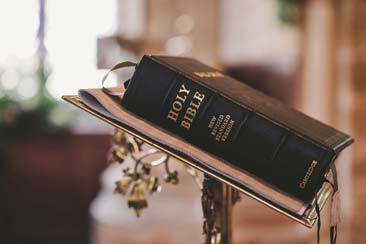
Photo by Muffin Creatives
The Bible first hints at Jesus’ involvement with humanity in Genesis 1:26, when God says, “Let Us make mankind in Our image” (NKJV). And again, after Adam and Eve sin and God says, “The man has become like one of Us, to know good and evil” (Genesis 3:22, NKJV).
The plural pronouns in these passages suggest the presence of at least two members of the Godhead.
Later, the book of John confirms Jesus’ role at Creation. It speaks of the presence of the Word, the flesh begotten by God (John 1:14):
“In the beginning was the Word, and the Word was with God, and the Word was God. He was in the beginning with God. All things were made through Him, and without Him nothing was made that was made” (John 1:1-4, NKJV).
This is precisely why some Bible scholars believe Jesus was present at the Creation of the world in His pre-incarnate form.1
He played a personal part in our creation and watched our fall (Colossians 1:15-17). He first loved us as His creation and then came to save us even when we sinned against Him.
But before He died on the Cross, He served humanity by acting as God’s messenger.
The Angel of the Lord
The Angel of the Lord is a mysterious figure who appears throughout the Old Testament to deliver messages from God.
While God has certainly sent various “angels of the Lord” to deliver messages for Him, “the Angel of the Lord” seems to be a special being.
The Angel is often referred to as God or Lord.2 And when people see the Angel of the Lord, they say they’ve seen God Himself.3 They even bow down to worship him (Joshua 5:14; Judges 13:17-21), which is something normal angels have refused to receive. After all, only God has the right to accept worship as our God and Creator (Revelation 22:8-9).
Strong’s Bible concordance supports the idea that this Angel may “indicate a manifestation of God Himself.”4 Many theologians believe this Angel is Jesus.5
To be clear, the word angel doesn’t refer only to a specific group of heavenly beings. The most general sense of the word means “messenger,” and that’s exactly what Jesus does as the Angel of the Lord.6
He appears in various stories, giving messages of comfort and guidance to the people of the Old Testament.
However, this doesn’t mean He was an angel or any kind of created being.
Like the rest of the Godhead, He has existed forever (Micah 5:2; John 1:1). No one has ever “made” God the Son.
But because He’s God, and because His pre-incarnate form wasn’t tied to a human body, He could appear in whatever form He chose.
Let’s look at passages that talk about the Angel of the Lord to see what they have to say.
The Angel appears to Hagar (Genesis 16:1-13)

Photo by Traolách Conboy on Unsplash
The first time the Bible mentions the Angel of the Lord is in the story of Hagar. In the story, she is running away from her mistress Sarah, Abraham’s wife, when Sarah becomes jealous of the child Hagar had with Abraham.
Hagar finds herself by a spring when the Angel of the Lord appears to her to comfort her. He tells her to return to Sarah and promises that God will make her son the father of a great nation.
Hagar is reassured by this news and seems to recognize this Angel as God, saying,
“You-Are-the-God-Who-Sees; for she said, ‘Have I also here seen Him who sees me?’” (Genesis 16:13, NKJV).
Many Bible scholars aren’t sure who this figure is.7 Some, though, believe this Angel is Jesus Himself.8
The Angel appears to Abraham (Genesis 18:2-33)
A figure appears to Abraham to announce the birth of his son, Isaac. Though this figure is described as a man instead of an angel, there seems to be something supernatural about Him.
He arrives accompanied by two other men. Many Bible scholars interpret the man’s companions to be angels, and the man Himself to be a member of the Godhead,9 possibly Jesus (Genesis 18:2-5; Hebrews 13:2).10 Jesus, acting as the Angel of the Lord, seems to have taken on the form of a man to appear to Abraham (Hebrews 13:2).
This is further suggested by the way “the Lord” is suddenly referred to in the story as though He had been one of the three messengers all along (Genesis 18:13).
The one referred to as the Lord continues to speak with Abraham, who attempts to bargain with Him about the fate of Sodom. This messenger amends His message as Abraham pleads with Him.
A mere messenger, even an angel, wouldn’t be able to make a decision on God’s behalf. It’s very likely this messenger was God Himself.
The Angel appears to Jacob (Genesis 32:24-26)
A figure, sometimes spoken of as a man (Genesis 32:24), and sometimes spoken of as an angel or God (Hosea 12:3-4), appears to Jacob as he prays for deliverance from his brother Esau.
The man wrestles him, beating him with one finger, and Jacob realizes that this is no ordinary man.11 He grabs onto Him, refusing to release the figure until He blesses him. The figure agrees to bless Jacob and make him a strong nation, which is something only God can promise.
Notably, Jacob says that in seeing this man, He has seen God (Genesis 32:30). All of this information points scholars to believe this figure is Jesus Christ.12
The Angel appears to Moses (Exodus 3:2-16; 13:21-22; 14:19)
The Angel of the Lord appears to Moses several times.
While other accounts might describe the Angel of the Lord as a man or angel, He appears to Moses as fire.
The first time is when God calls Moses to lead the Israelites. He sends the Angel of the Lord to appear to Moses as a burning bush.
While the Bible says the Angel of the Lord is in the bush, it also suggests that God is in the bush, hinting that the Angel of the Lord and God are one and the same (Exodus 3:2, 4-6).
When Moses asks God what He should be called, God describes His name as, “I AM WHO I AM” (Exodus 3:14). The fact that Jesus also describes Himself as the “I AM” when the Pharisees ask who He is further cements that this being is none other than Jesus (John 8:58), as many scholars suggest.13
Later on, the Angel of the Lord returns to help Moses lead the Israelites. He appears as a pillar of fire and cloud to guide them after they leave Egypt. This angel is also believed by scholars to be Jesus.14
The Angel appears to Gideon (Judges 6:1-24)
The Angel of the Lord appears to encourage a young man named Gideon to fight the nations oppressing God’s people.
It is here that Gideon addresses the Angel as “the Lord,” suggesting that the Angel is someone in the Godhead, namely, Jesus.
Gideon also makes a burnt offering, which this Angel accepts by creating fire to consume the sacrifice. Accepting a sacrifice and worship gives us more evidence of His identity as God.15
The Angel appears to Samson’s parents (Judges 13:2-22)
The Angel of the Lord appears to tell a barren woman that she will give birth to a son.
The woman and her husband gladly receive His news and ask for further instruction in raising their son, who would later be known as Samson.
In answer to their prayer, the Angel of the Lord appears to them again and repeats His instruction. He asks for a burnt offering and sends fire to consume it, disappearing from view by ascending into its flames.
This is another instance where an Angel accepts a burnt offering by consuming it with fire. This suggests this Angel is part of the Godhead, possibly Jesus.16
The possibility is further supported by the fact that when the couple sees the Angel accept the offering and disappear, the husband exclaims that he would die for seeing God (Judges 13:22).
The Commander of the Lord’s Army (Joshua 5:13-15)
In addition to the possibility that Jesus appeared as a messenger in the Old Testament, the Bible also seems to indicate that He came as a victor over the enemies of God’s people.
While this might seem like a different picture of the Jesus we’re familiar with, it’s important to point out that while Jesus is peaceful and gentle, Jesus is also a defender and a leader. He’s capable of protecting His people (Revelation 17:14).
Revelation even describes Jesus as a leader of the heavenly armies (19:11-16). So it really isn’t difficult to imagine Jesus’ taking on the role of the Commander of the Lord’s Army in the Old Testament.
This understanding may help explain the mysterious figure that appears to Joshua before the Battle of Jericho.
Joshua is preparing to attack the city when a man appears to him with a sword. He tells Joshua that He is the Commander of the Lord’s Army. In response, Joshua bows down to Him and calls Him Lord, seemingly recognizing Him as one of the Godhead.
The Commander even asks that Joshua take off His shoes because He is standing on holy ground. These clues offer further evidence that this figure is Jesus.17
The Son of God in the Fiery Furnace (Daniel 3:16-25)
A mysterious figure appears to Daniel’s Jewish friends, Shadrach, Meshach, and Abednego, when they’re thrown into a fiery furnace by the Babylonian King Nebuchadnezzar for refusing to worship a golden image.
Nebuchadnezzar is astonished to see that the Jews are unharmed by the flames, and as he looks closer he is even more surprised to find that someone else is standing in the flames with them:
“‘Look!’ he answered, ‘I see four men loose, walking in the midst of the fire; and they are not hurt, and the form of the fourth is like the Son of God’” (Daniel 3:25, NKJV).
The fact that Nebuchadnezzar compares this being to “the Son of God” (some versions say “Son of Man”) suggests that the figure standing in the flames is Jesus, who went by the same title.18
Jesus in prophetic visions (Daniel 10:4-6; Zecharaiah 3:1-7)
Aside from the physical appearances of Jesus, the Old Testament mentions instances in which individuals see visions of Him.
In Daniel 10, a heavenly man appears to Daniel in a vision to deliver a prophecy about Persia, Greece, and the fate of Israel. Like Jesus in Revelation 1, this man has priestly clothes, bronze skin, eyes like fire, a face of light, and a mighty voice. These similarities have led Bible scholars to believe this heavenly man is Jesus.19
He appears in yet another vision, where He defends the High Priest Joshua against Satan (Haggai 1:12; Zechariah 3:1-7).
The vision features the Angel of the Lord, presumed by scholars to be Jesus,20 who offers forgiveness and redemption to Joshua. The Angel does this by taking away his filthy clothes (sin) and replacing them with clean clothes (righteousness) (Zechariah 3:2-5; Job 29:14).
And as only Jesus can cover our sins with His righteousness (Galatians 3:27), it makes sense that this Angel would be Jesus.
Why Jesus’ presence in the Old Testament matters

Photo by Priscilla Du Preez 🇨🇦 on Unsplash
Jesus’ presence in the Old Testament demonstrates Jesus’ involvement in our salvation from the very beginning. The story of Jesus is not limited to the New Testament. The entire Bible speaks of His role and consistent character.
In this way, studying the entire Bible can give us a better understanding of who He is.
Here are some ways to start looking for Jesus in the Old Testament:
1. Pray for God to guide your study.
2. Use a Bible concordance to find passages with names that refer to Jesus (Son of Man, Son of God, the Angel of the Lord).
3. Read those passages to discover the context in which Jesus is mentioned.
4. Write down what the passages teach you about the character of Christ.
The more you study, the more you’ll be reminded that the New Testament simply echoes what the Old Testament already tells us about Him (John 5:46; Luke 24:27).
Jesus genuinely cares and provides for us like Hagar (Matthew 14:13-21). He’s a personal God, open to talking to us as He did with Abraham and Sarah (John 4:7-10; John 3:1-21). He fulfills His promises to free us from sin, just like He promised to free Moses and His people from their captors (Luke 8:26-39).
He’s patient with us and gives us confidence when we’re afraid like Gideon was (Luke 5:8-10). He promises to guide us like He guided Samson’s parents in the raising of their son (John 14:25-27). And He gives Christians victory over sinful pasts just as He gave Joshua victory over Jericho (John 8:10-11).
He’s our creator, commander, protector, counselor, messenger, and intercessor.
Jesus has always had a crucial role in our redemption.
He had a special role in appearing to people in the Old and New Testaments. When He died on the Cross, He fulfilled His role as a sacrifice for our sins so we could have eternal life. And He continues His work of interceding for us today in the heavenly sanctuary.
Want to learn what the Bible says about Jesus’ work there?
Related Articles



- Nichol, F. D., Seventh-day Adventist Bible Commentary, 1978, vol. 1, p. 215. [↵]
- Exodus 3:2,5-6; Judges 6:11-15; Zechariah 12:8. [↵]
- Genesis 16:7,13; Judges 6:22; Judges 13:21-22. [↵]
- Strong, James LL.D, S.T.D., The Strongest Strong’s Exhaustive Concordance of the Bible, Zondervan, 2001, p. 1665. [↵]
- Ackland, William, “The Angel of the Lord,” Adventist News Network, June 23, 2021; “Is Michael Another Name for Jesus?” Biblical Research Institute, Feb. 13, 2012. [↵]
- “Angel,” Merriam-Webster Dictionary. [↵]
- Nichol, Seventh-day Adventist Bible Commentary, vol. 1, p. 318. [↵]
- Royo, Daniel, “A God Who Sees and Hears the ‘Other’: Hagar’s Theophany as an Illustration of the Lord’s Benevolence Toward Those Outside the Covenant,” Journal of the Adventist Theological Society, p. 101. [↵]
- Nichol, Seventh-day Adventist Bible Commentary, vol. 1, p. 326. [↵]
- White, Ellen Gould, Patriarchs and Prophets, Review and Herald Association, 1890, p. 139. [↵]
- Ibid., pp.196-197. [↵]
- Nichol, Seventh-day Adventist Bible Commentary, vol. 1, p. 406; White, Ellen Gould, The Truth About Angels, Pacific Press Publishing Association, 1996, p. 86. [↵]
- Nichol, Seventh-day Adventist Bible Commentary, vol. 1, p. 509. [↵]
- Ibid., p. 562. [↵]
- White, The Truth About Angels, p. 113. [↵]
- Nichol, Seventh-day Adventist Bible Commentary, vol. 2, 1976, p. 383; White, The Truth About Angels, p. 115. [↵]
- Nichol, Seventh-day Adventist Bible Commentary, vol. 2, p. 195; White, Patriarchs and Prophets, p. 487. [↵]
- Nichol, Seventh-day Adventist Bible Commentary, vol. 4, 1977, p. 785; White, Ellen Gould, Prophets and Kings, Pacific Press Publishing Association, 1917, p. 508. [↵]
- Nichol, Seventh-day Adventist Bible Commentary, vol. 4, p. 858; Mueller, Ekkehardt, “Lessons from Daniel 10,” Biblical Research Institute, p. 2. [↵]
- Nichol, Seventh-day Adventist Bible Commentary, vol. 4, p. 1092; White, Prophets and Kings, p. 584. [↵]
More Answers

Kwa nini Ukoo wa Yesu Kristo ni muhimu sana?
Je, umewahi kufuatilia ukoo wako nyuma ya vizazi kadhaa? Je, umewahi jaribu kujua kama mababu zako walifanya jambo lolote maarufu (au la kusikitisha)?
Por que a genealogia de Jesus Cristo é tão importante?
Já rastreou sua genealogia por várias gerações? Já tentou descobrir se seus antepassados fizeram algo famoso (ou infame)?

Can God Forgive Me?
In one way or another, every single one of us has made a sizeable mistake that we’re ashamed of.
Waadventista Wasabato wanaamini nini kuhusu Biblia?
Biblia ndiyo msingi wa kila kanuni na mafundisho ya Waadventista wa Sabato.
¿Por qué es tan importante la genealogía de Jesucristo?
¿Alguna vez has rastreado tu genealogía varias generaciones atrás? ¿Alguna vez intentaste descubrir si tus ancestros hicieron algo famoso (o infame)?

El camino a Cristo: Una guía para tener una relación con Jesús
El camino a Cristo: Una guía para tener una relación con JesúsYa sea que estés comenzando tu camino con Jesucristo, estés regresando después de algún tiempo lejos, o hayas tenido una relación con Jesús durante años, usar un libro, además de la Biblia, para guiar o...
Rey David: ¿Cómo fue un hombre conforme al corazón de Dios?
Guerra, derramamiento de sangre, asesinato, adulterio: todos estos crímenes ensombrecieron la vida de un hombre del Antiguo Testamento llamado David.

Mfalme Daudi: Alikuwaje Mtu Ambaye Aliupendeza Moyo wa Mungu?
Vita, umwagaji damu, mauaji, uzinzi—maovu haya yote yalifunika maisha ya mtu wa Agano la Kale aliyeitwa Daudi.

Quem é o “Filho do Homem” na Bíblia?
Ao se chamar de Filho do Homem, Jesus confirmou seu papel como salvador da humanidade. Saiba o que mais esse título nos diz sobre Jesus.

Wafahamu Watoto wa Ellen White
Ellen White, ambaye ni mmoja wa waanzilishi maarufu zaidi wa Kanisa la Waadventista wa Sabato, alikuwa na watoto wanne na mumewe, James: Henry Nichols, James Edson, William Clarence, na John Herbert.
“Caminho a Cristo”: Um Guia para um Relacionamento com Jesus
Quer você esteja apenas começando sua jornada com Jesus Cristo, esteja retornando após algum tempo afastado, ou tenha tido um relacionamento com Jesus por anos, usar um livro
Rei Davi: Como Ele Foi um Homem Segundo o Coração de Deus?
Rei Davi: Como Ele Foi um Homem Segundo o Coração de Deus?Guerra, derramamento de sangue, assassinato, adultério - todos esses crimes lançaram sombra sobre a vida de um homem do Antigo Testamento chamado Davi. No entanto, ele foi chamado de homem segundo o coração de...

The Book of Acts: A Simple Guide
The Book of Acts: A Simple GuideThe book of Acts is the fifth book in the New Testament. It’s a continuation of one of the Gospel accounts and an intimate look into the eventful early history of the Christian church. The four accounts of the Gospel (Matthew, Mark,...

O que Ellen White diz sobre a oração?
O que Ellen White diz sobre a oração?Você já teve um fardo que precisava contar a alguém, mas tinha medo de ser julgado se o fizesse? Não precisamos ter esse tipo de medo quando se trata de falar com Deus - uma prática espiritual chamada oração. Ellen G. White, uma...

Pumziko na Kuunganishwa Tena: Maana Halisi ya Kutunza Sabato
Biblia inatuambia kwamba tunatunza Sabato kwa kuepuka kazi. Mungu alitoa sheria hii kwa sababu alijua itatuimarisha na kutuletea furaha, pamoja na kutupa muda wa kuungana naye na kujipatia nguvu kutokana na maisha yetu yenye shughuli nyingi.

Jinsi Mafundisho ya Ellen White Yanavyoweza Kuboresha Afya Yako
Matibabu katika karne ya kumi na tisa yalisemekana kuacha “ugonjwa zaidi kuliko yalivyotibu” kwa matumizi yake ya kutoa damu na “dawa” kama zebaki na arseniki.
“Mwana wa Adamu” ni nani katika Biblia?
Kwa kujiita Mwenyewe Mwana wa Adamu, Yesu alithibitisha jukumu lake kama mwokozi wa wanadamu. Jifunze jambo jingine jina hili linachosema kuhusu Yesu.
Quem foram os filhos de Ellen White?
Ellen White, que é provavelmente a co-fundadora mais conhecida da Igreja Adventista do Sétimo Dia, teve quatro filhos com seu marido, James: Henry Nichols, James Edson, William Clarence e John Herbert.

Cómo Elena G. de White influenció el mensaje de salud adventista
Cómo Elena G. de White influenció el mensaje de salud adventistaLos Adventistas del Séptimo Día son conocidos por su énfasis en la vida saludable. Y Elena G. de White fue una influencia significativa en el desarrollo de esta prioridad y práctica entre los adventistas....
Como os Ensinos de Ellen White Podem Melhorar Sua Saúde
Como os Ensinos de Ellen White Podem Melhorar Sua SaúdeAssistência médica no século XIX era dito deixar "mais doenças do que levava embora" com o uso de sangrias e "remédios" como mercúrio e arsênico.1 À medida que as pessoas questionavam esses métodos, novas...
Cómo las enseñanzas de Elena G. de White pueden mejorar tu salud
La atención médica en el siglo XIX se decía que dejaba “más enfermedades de las que eliminaba” con su uso de sangrías y “medicamentos” como el mercurio y el arsénico.

All About the Gospel of Matthew
The Book of Matthew is one of the four Gospel narratives in the Bible
Descanso e Reconexão: O Que Realmente Significa Guardar o Sábado
A Bíblia nos diz que guardamos o Sábado evitando o trabalho. Deus fez essa lei porque sabia que ela nos fortaleceria e nos traria alegria, além de nos dar tempo para nos reconectar com Ele e recarregar das nossas vidas ocupadas.
Descanso y reconexión: lo que realmente significa guardar el sábado
La Biblia nos dice que guardamos el sábado evitando el trabajo. Dios hizo esta ley porque sabía que nos fortalecería y nos traería alegría, además de darnos tiempo para reconectarnos con Él y recargar energías de nuestras vidas ocupadas.

Todo lo que necesitas saber sobre la Escuela Sabática
La Escuela Sabática es el componente de estudio bíblico del programa de la iglesia en la mayoría de las Iglesias Adventistas del Séptimo Día.

O que os Adventistas do Sétimo Dia acreditam sobre a autoridade da Bíblia?
Saiba como um livro realmente antigo (a Bíblia) é o único fundamento para todas as crenças dos Adventistas do Sétimo Dia.
¿Qué creen los Adventistas sobre la autoridad de la Biblia?
Puede hacerte sentir intimidado o frustrado. Podrías pensar en un líder de iglesia que parecía arruinar toda tu diversión cuando eras niño, o un jefe que supervisa cada uno de tus movimientos en el trabajo…

¿Qué es un médico misionero adventista?
Un médico misionero en la Iglesia Adventista es alguien que cuida de las necesidades médicas de las personas como una forma de mostrar el amor de Jesús. Pueden viajar a otro país, o incluso simplemente servir en su ciudad natal.
Ni nini Mtaalam wa Matibabu wa Kiadventista?
Mmishonari wa matibabu katika Kanisa la Waadventista ni mtu anayejali mahitaji ya matibabu ya watu kama njia ya kuonyesha upendo wa Yesu.
Didn’t find your answer? Ask us!
We understand your concern of having questions but not knowing who to ask—we’ve felt it ourselves. When you’re ready to learn more about Adventists, send us a question! We know a thing or two about Adventists.