
So what’s behind the similarity—and the key difference—between a “son of man” in the Old Testament and the “Son of Man” in the New Testament?
The Bible has numerous names for Jesus: Son of God, Prince of Peace, Lamb of God, and King of Kings (and that’s just naming a few). But even with all these names, “Son of Man,” seems to be Jesus’ favorite nickname. He uses it to refer to Himself over 80 times in the Bible.1
So what did Jesus mean by calling Himself this? What does this self-designation say about Him?
Find out as we take a deep dive into:
- What “son of man” means in the Bible
- What prophecy can tell us about the “Son of Man”
- What this title tells us about Jesus
- The Son of Man’s role as judge and intercessor
Let’s start by looking more closely at how this title is used throughout the Bible.
Bible verses that tell us about the Son of Man:
- The humility of the Son of Man: Matthew 8:20
- The suffering of the Son of Man: Matthew 12:40; Mark 8:31; Matthew 17:22; Luke 24:6-7; Matthew 20:18-19; Luke 9:22; Mark 14:21; Matthew 17:9; Matthew 17:12; Matthew 26:2; Matthew 26:45, Mark 9:12
- The service of the Son of Man: Luke 19:10; Mark 10:45; John 6:27; John 6:53; Matthew 13:37; Matthew 20:28
- The authority of the Son of Man: Luke 5:24; John 5:19; Luke 6:5; Psalm 80:17; Matthew 9:6; Mark 2:10; Luke 22:69; John 6:27; John 8:28
- The divinity of the Son of Man: John 3:13; John 6:62
- The promised rule of the Son of Man: Daniel 7:13-14; Mark 14:62; Matthew 26:64; Matthew 19:28; Matthew 25:31; Acts 7:56; Luke 18:31; Mark 14:62; Luke 22:69; Matthew 13:41; Matthew 16:13-16
- The judgment of the Son of Man: John 5:27; Revelation 14:14; Matthew 24:30; Matthew 24:26-27; Luke 21:27; Matthew 16:27; Matthew 19:28; Mark 13:26; Revelation 14:14-16
What does “son of man” mean in the Bible?

Photo by Gift Habeshaw on Unsplash
In the Old Testament, when the Bible refers to a “son of man” it’s usually referring to a human being (Job 25:6; 35:8; Psalm 8:4; 146:3; Isaiah 51:12). We first come across the designation in Numbers 23:19:
“God is not a man, that He might lie, or a son of man, that He might change His mind. Does He speak and not act, or promise and not fulfill” (CSB)?
This verse makes a distinction between God and humans, so a “son of man” would be any fallen human person in contrast to a perfect God.
We also see this title used directly to a specific human person. God repeatedly addresses the prophet Ezekiel as a “son of man” (Ezekiel 2:1).
The Hebrew word that is translated to create the English phrase “son of man” in Ezekiel is ben -‘adam,2 which is similar to saying “of Adam.” Ezekiel is also called by the Hebrew word ’enosh (’enash in Aramaic), which is typically used to refer to humans in general.
So the purpose of using this designation emphasizes the status of a person’s humanity, noting the weaknesses and helplessness that come with being human.3
But there is one instance later on in the Old Testament where the phrase “son of man” (not capitalized) does not seem to refer to any old human being. We can find this in a Messianic prophecy in Daniel 7 when the text refers to keber ’enash, or “one like a son of man,” who Bible scholars believe to be Jesus (verse 13, CSB).4
The other times we see “Son of Man” referring to a specific person and not emphasizing fallen human characteristics is in the New Testament, using the Greek phrase huios anthrōpos.5 This is the phrase Jesus used (capitalized) to refer to Himself during His earthly ministry. It’s also used to describe Him in Acts 7:56, Revelation 1:13, and Revelation 14:14.
So what’s the meaning behind the two very different uses of the phrase “son of man”?
Let’s first look more closely at the Messianic prophecy in the book of Daniel, as well as some other prophetic passages that use this title.
What prophecy tell us about “the Son of Man”
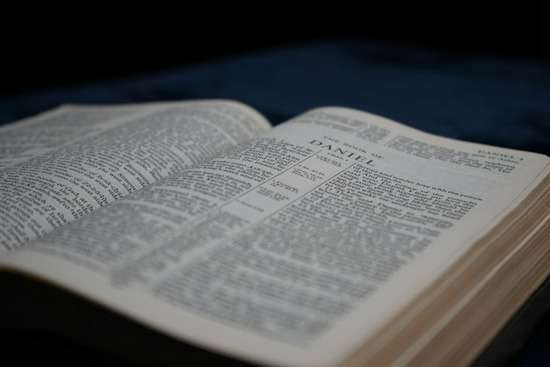
Photo by Ben Burkhardt on Unsplash
Daniel 7:13 is the first use of “son of man” to describe divine, rather than human, characteristics. This special figure is mentioned in a vision given to the prophet Daniel.
This vision involved four strange beasts, each representing a powerful nation that would, at one point, be the predominant world power (Daniel 7:17).
But when Daniel is shown the final beast, he watches as it’s destroyed and its reign of power comes to an end (Daniel 7:7-11). In its place, someone “like a son of man” arrives on the clouds of heaven to assume eternal rule of the earth (Daniel 7:13-14). This authority to rule earth is given to this “son of man” by the Ancient of Days, otherwise known as the Most High, or God the Father.6
This scene described in Daniel’s vision aligns with other Scriptural descriptions of Christ’s Second Coming, which can be found in Mark 13:26; Matthew 25:31; 1 Thessalonians 4:16-17; Revelation 1:7.
What’s more, Jesus references this prophecy as He’s on trial before Jewish leaders shortly before His death on the Cross. He said:
“‘It is as you said. Nevertheless, I say to you, hereafter you will see the Son of Man sitting at the right hand of the Power, and coming on the clouds of heaven’” (Matthew 26:64, NKJV).
Jesus publicly claims to be the Son of Man spoken of in the prophecy, the one who will gain eternal rule over the earth.
In response to this claim, the Jewish religious leaders, the chief priests, and the high priest became angry. They refused to believe that Jesus had this divinity and prophetic significance, so they accused Him of blasphemy, or trying to assume the authority of God (Matthew 26:65).
So the Jews must have already believed that the “Son of Man” in prophecy referred to God in some way, or this claim wouldn’t have gotten them so riled up.
We also see the “Son of Man” identity for Jesus show up in Revelation 1, when John describes a vision of “one like the Son of Man” (verse 13), who was dead but was resurrected, is “the First and the Last, and the Living One,” and holds the keys to eternal life (verses 17-18, CSB). Which describes Jesus perfectly.7
But what does Daniel 7 mean when it talks about Jesus ruling eternally over earth? Wouldn’t He already have control of this world as the Son of God?
Let’s rewind to Genesis. Back to the very first prophecy to reference Jesus Christ and His role in humanity’s salvation.
God made the world for humanity. Earth wasn’t just for them to dwell upon— God gave it to them to have dominion over (Genesis 1:27-28). But when Adam and Eve yielded to sin, they forfeited their rule. In listening to Satan, who appeared in the form of a serpent, they lost their dominion to him (Luke 4:5-6).8
And with Satan’s dominion came the kind of world we see today—one fueled by selfishness, power struggles, pain, and confusion.
But God didn’t abandon Adam and Eve to the ultimate fate of their actions. Ever a merciful Creator, God wanted to give Adam and Eve (and all of humanity) an opportunity for salvation from this sin-corrupted existence.
So God issued the first-ever Messianic prophecy, speaking of a savior that would come to earth, walk among us, and provide a way to deliver us from sin.
He tells the serpent:
“And I will put enmity
Between you and the woman,
And between your seed and her Seed;
He shall bruise your head,
And you shall bruise His heel” (Genesis 3:15, NKJV).
This passage predicted that humanity’s Messiah would come out of humanity’s seed, to be a human descendent, from the line started by Adam and Eve.
This human savior would be none other than Jesus, the Son of God given human form, born to a human woman named Mary to become the (capitalized) “Son of Man.”9
So Jesus died on the Cross as a sacrifice for our sins. And through this perfect sacrifice, with the perfect, sinless life He led, God gave Him ultimate dominion over the earth (Ephesians 1:20-21).
What does the title “Son of Man” tell us about Jesus?
Photo by Rodolfo Clix
The title “Son of Man” reveals the special relationship between Jesus and humanity. Instead of an ordinary, sin-corrupted “son of man,” like any of us, Jesus, became the “Son of Man,” living in our sinful world as a human—but one who resisted falling into sin. And in doing this, He became humanity’s promised redeemer and demonstrated how to live a life of love.
And as the Son of Man, Jesus demonstrated His power to forgive sin:
“‘But that you may know that the Son of Man has power on earth to forgive sins’—He said to the man who was paralyzed, ‘I say to you, arise, take up your bed, and go to your house’” (Luke 5:24, NKJV).
He also showed that his role as the Son of Man means He wants everyone to understand what it means to live a sin-free life:
“‘I tell you that something greater than the temple is here. If you had known what these words mean, ‘I desire mercy, not sacrifice,’ you would not have condemned the innocent. For the Son of Man is Lord of the Sabbath” (Matthew 12:6-8, CSB).
Jesus’ claim to be the Lord of the Sabbath further verifies His authority as God, the creator of the Sabbath.
Our Lord Jesus is indeed the king who will one day reign over the New Earth—and who we can invite to reign over and shape our lives when we accept Him as our Savior.
And the beauty of this title, “Son of Man,” reminds us that Jesus is not just a king. He isn’t distant and wrapped up in His own greatness like many fallen human kings throughout history. Instead, He’s our Savior who intimately understands us. He’s gone through the same kinds of things we have (Hebrews 4:15), and is interested in having a personal relationship with us.
Jesus invites each of us to come to Him and share our burdens and joys with Him like we would a friend—because that’s who He is (Matthew 11:28; John 15:12-15).
His earthly ministry, His death, and His resurrection allow us to see that the Son of Man is not a king who rules at a distance, but one who acts as a servant-leader, reaching people where they’re at.10 Jesus didn’t shy away from all the ugliness and pain humanity faced. He was born right into the thick of it.
He came with the intention of loving others and helping them rebuild the connection they’d once had with God. To accomplish this, He was even willing to face the humiliation and pain of the Cross (Philippians 2:8).
But despite all the difficulties that came with being a human, Jesus didn’t mind being identified as one.
If the number of times Jesus called Himself the “Son of Man,” a title associated with being a human, is any indication, Jesus truly values the humanity He took on for the way it has brought Him closer to us.
It was, after all, Jesus’ experience as a human that enabled Him to become the perfect candidate for building the bridge between humanity and God (Hebrews 2:17).
The judgment and intercession of the Son of Man

Photo by Wesley Tingey on Unsplash
As the Son of Man, Jesus has the authority to judge the world (John 5:27; Matthew 16:27).
Scripture shows us how Jesus is currently performing this role. It reveals that, until He returns, He ministers in the heavenly sanctuary, going through every moment with us, searching our hearts, hearing our prayers, and following our thoughts and actions. It only makes sense for the judge of all humanity to be the God who knows us fully, inside and out (2 Corinthians 5:10; Hebrews 4:14).
The concept of judgment, unfortunately, has been twisted by sin and tainted by our human methods of judgment. After all, no one really looks forward to facing a judge in a courtroom. It’s so easy to worry that something won’t work out fairly, or that the judge won’t understand your situation, or that the opposing side will say something untrue or inaccurate about you.
But we don’t have to fear the judgment of Jesus like we would a human legal system. He is the most fair judge there could possibly be. He knows what it’s like to be human because He became human Himself.
While Adam and Eve led humanity into sin, the apostle Paul re-emphasizes Jesus’ role as the Son of Man, the second Adam (1 Corinthians 15:45), who intercedes on our behalf to save us from sin and repair our relationship with God.
While there’s nothing we can do to acquit ourselves, Jesus offers to deliver us from sin and its destructive consequences. He died for us, as a son of man, so we wouldn’t have to die for our sins (Hebrews 2:17). And, in facing every temptation we’ve faced, He can serve as our High Priest, fully prepared to help us resist temptation and choose a better way of life (Hebrews 4:15).
The Son of God became the Son of Man because He cares about us more than we could ever imagine. Jesus went through all He did so we can still have the opportunity to live with Him for eternity (John 15:13; 1 Thessalonians 5:10).
Now that we’ve learned about Jesus’ role as the Son of Man,
Related Articles



- “Lesson 2: The Son,” General Conference of Seventh-day Adventists, p.15. [↵]
- Nichol, F.D., Seventh-day Adventist Bible Commentary And Bible Students’ Source Book Volume 4, Seventh-day Adventist Church, 1977, p.580. [↵]
- Ibid. [↵]
- Nichol, Seventh-day Adventist Bible Commentary And Bible Students’ Source Book Volume 4, p. 829. [↵]
- Strong, James LL.D, S.T.D., The Strongest Strong’s Exhaustive Concordance of the Bible, Zondervan, 2001, pp. 1592,1650. [↵]
- Daniel 7:14; John 5:19; Psalm 80:17. [↵]
- Revelation 1:13-18; Romans 10:9; John 3:16. [↵]
- Nichol, F.D., Seventh-day Adventist Bible Commentary And Bible Students’ Source Book Volume 1, Seventh-day Adventist Church, 1978, p.232-233. [↵]
- Romans 8:3; John 3:16; Philippians 2:5-8. [↵]
- John 13:1-5; Mark 1:40-42; Luke 5:27-32. [↵]
More Answers

¿Por qué muchos Adventistas del Séptimo Día eligen una dieta vegetariana?
¿Por qué muchos Adventistas del Séptimo Día eligen una dieta vegetariana?Puede que tengas un amigo adventista que sea vegetariano, o tal vez estés asistiendo a una Iglesia Adventista del Séptimo Día por primera vez y notes que en la comida compartida no hay carne....

What is Jesus’ Parable of the Sower About?
The parable of the sower is ultimately about how people responded to Jesus Christ and His message of the kingdom of God—the Gospel.

O que os Adventistas do Sétimo Dia acreditam sobre o Grande Conflito (Bem vs. Mal)?
O “Grande Conflito” é a frase que os Adventistas do Sétimo Dia normalmente usam para descrever o conflito espiritual cósmico entre as forças do bem (Deus) e as forças do mal ou do pecado (Satanás/o diabo).

Was Jesus Ever Hypocritical? Learn What the Bible Says.
Was Jesus Ever Hypocritical? Learn What the Bible SaysMany undesirable traits are associated with hypocrisy. But overall, hypocrites intentionally try to make others believe they uphold or represent a certain belief system, character trait, lifestyle, etc., when in...

Kukatishwa Tamaa Kukuu na Kile Tunachojifunza
Wafuasi wa Miller walitabiri kurudi kwa Kristo Oktoba 22, 1844, lakini Yesu hakuja kamwe. Tukio lingine lilitokea. Gundua kilichotokea kweli na Kukatishwa Tamaa Kukuu kunaweza kutufundisha leo.

When in Doubt: 7 Ways Christians Can Manage Uncertainty
When in Doubt: 7 Ways Christians Can Manage UncertaintyFew things in life are truly certain. And no matter how convinced some people can appear on the surface, no one is immune to doubt. And this isn’t a bad thing. Doubt has a purpose. A role to serve. (Just imagine...
El gran chasco y las lecciones que nos enseña
Los Milleritas predijeron el regreso de Cristo el 22 de octubre de 1844, pero Jesús nunca llegó. Ocurrió otro evento. Descubre lo que realmente sucedió y qué puede enseñarnos hoy El gran chasco.

Is Jesus the Same Being as Michael the Archangel?
Many Christians have wondered at the mysterious identity of Michael the Archangel.
A Grande Desapontamento e Lições que nos Ensina
Os Milleritas previram o retorno de Cristo em 22 de outubro de 1844, mas Jesus nunca chegou. Outro evento ocorreu. Descubra o que realmente aconteceu e o que o Grande Desapontamento pode nos ensinar hoje.
James Springer White, Co-Fundador da Igreja Adventista do Sétimo Dia
James Springer White (1821–1881) foi uma figura chave na Igreja Adventista do Sétimo Dia e marido de Ellen G. White.
James Springer White, cofundador de la Iglesia Adventista del Séptimo Día
James Springer White (1821–1881) fue una figura clave en la Iglesia Adventista del Séptimo Día y el esposo de Elena G. de White.

Kila Kitu Unachohitaji Kujua Kuhusu Chakula cha Siku ya Sabato
Kwa Waadventista Wa Sabato, kushiriki chakula cha Siku ya Sabato pamoja na marafiki na familia ni moja ya sehemu muhimu na ya kumbukumbu ya Sabato.

Nini Maana ya “Mwadventista”?
Waadventista wa Sabato ni dhehebu la Kikristo la Kiprotestanti wanaoshikilia Sabato ya siku ya saba kama ilivyoandikwa katika Biblia.

How to Have a Personal Relationship with Jesus: A 10-Step Guide
How to Have a Personal Relationship with Jesus: A GuideNo matter who you are, you’re surrounded by relationships. Friends, family, colleagues, acquaintances...they all play a part in our lives, for better or worse. So you’re surely aware of a lot of the components...

Biblia Ina Maana Gani Inaposema Yesu ni Mwana wa Mungu?
Biblia inapomwita Yesu Mwana wa Mungu inarejelea uungu wake. Jifunze ni nini kinachofanya hili kuwa muhimu na kinahusianaje na wokovu.

“Go and Sin No More”—What Did Jesus Mean?
These well-known words of Jesus Christ come from two New Testament stories in the book of John—a man healed by the Pool of Bethesda (John 5) and a woman caught in adultery (John 8).

Quais são as Mensagens dos Três Anjos em Apocalipse 14?
As mensagens dos três anjos em Apocalipse 14 advertem o mundo a adorar a Deus, deixar a confusão religiosa e evitar a adoração de tradições humanas em vez dos mandamentos de Deus.

Je! Tunaweza Kuitunza Siku Yoyote ya Wiki Kama Sabato?
Katika sura za kwanza kabisa za Biblia, tunamwona Mungu akianzisha kumbukumbu ya kila wiki na siku ya mapumziko, inayoitwa Sabato (Mwanzo 2:2-3).
¿Cuáles son los mensajes de los tres ángeles en Apocalipsis 14?
Los mensajes de los tres ángeles en Apocalipsis 14 invitan al mundo a adorar a Dios, abandonar la confusión religiosa y evitar la adoración de tradiciones humanas en lugar de los mandamientos de Dios.
Por que muitos Adventistas do Sétimo Dia escolhem uma dieta vegetariana?
Embora nem todo adventista seja vegetariano, muitos evitam completamente o consumo de carne para viver de forma mais saudável, buscando honrar a Deus física, espiritual e mentalmente.

Understanding the Miracles of Jesus Christ
Understanding the Miracles of Jesus ChristWhat do you think of when someone says something is “a miracle”? Maybe you think of an unexpected recovery, surviving a dangerous accident, or getting an answer to a seemingly impossible prayer. Simply put, miracles are...
O que significa “Adventista”?
O que significa "Adventista"?Os Adventistas do Sétimo Dia são uma denominação cristã protestante que observa o sábado bíblico do sétimo dia. A partir dessa crença, eles obtêm a primeira parte de seu nome. Mas e quanto à segunda parte - "Adventista"? “Adventista”...
¿Podemos guardar el sábado bíblico cualquier día de la semana?
En los primeros capítulos de la Biblia, encontramos a Dios estableciendo un memorial semanal y día de reposo, conocido como el sábado (Génesis 2:2-3).
Podemos guardar o Sábado em qualquer dia da semana?
Nos primeiros capítulos da Bíblia, encontramos Deus estabelecendo um memorial semanal e dia de descanso, conhecido como o Sábado (Gênesis 2:2-3).
O que significa a Bíblia quando chama Jesus de Filho de Deus?
Quando a Bíblia chama Jesus de Filho de Deus, está se referindo à Sua divindade. Saiba o que torna isso tão significativo e o que tem a ver com a salvação.
¿Qué creen los Adventistas del Séptimo Día acerca de la Biblia?
La Biblia forma la base de todo lo que los Adventistas del Séptimo Día creen y enseñan.

Legado Duradouro de Ellen G. White
Ellen G. White é um nome bem conhecido entre os Adventistas do Sétimo Dia, mas ela também teve um impacto em muitas outras partes da história, além de ser co-fundadora da Igreja Adventista.

What Does it Mean to Have Faith in Jesus?
What Does it Mean to Have Faith in Jesus?To have faith in Jesus means we place our spiritual hope, trust, belief, and priority in Him as our loving Savior. And that sounds great as an idea. That’s our goal, right? But when we go through difficult times, face...
James Springer White, Mwanzilishi wa Kanisa la Waadventista Wa Sabato
James Springer White (1821–1881) alikuwa mtu muhimu katika Kanisa la Waadventista wa Sabato na mume wa Ellen G. White.
Didn’t find your answer? Ask us!
We understand your concern of having questions but not knowing who to ask—we’ve felt it ourselves. When you’re ready to learn more about Adventists, send us a question! We know a thing or two about Adventists.