
To have faith in Jesus means we place our spiritual hope, trust, belief, and priority in Him as our loving Savior.
And that sounds great as an idea. That’s our goal, right?
But when we go through difficult times, face unexpected doubts, or worry about our salvation… we might hear several iterations of the well-intentioned (yet vague) advice to simply “have faith in Jesus.”
“Keep the faith.” “Just hold onto Jesus.” “Lean on your faith in Christ.”
Of course, these phrases are meant to be encouraging. (And let’s be real—some people might say it because they’re not sure what else to say!) But when common ambiguous phrases crash into life’s chaos, it can bring up more questions than answers.
To have real faith… it must be more than just believing something exists, or accepting something as reasonable or logical. It also involves trust and devotion.
But then how do we obtain this faith? Is it something we have to conjure up ourselves?
Fortunately, faith in Jesus can grow even if we aren’t certain of things. Even if our specific beliefs are still forming. Even if we’re struggling. Faith can grow, as Jesus Himself explained, from a starting point as tiny as a mustard seed (Matthew 17:20).
So let’s take a step back from all the swirling ideas, “shoulds,” and “supposed-to’s” and break things down into digestible parts. Everyone’s faith has to be built from the inside out (no one can grow your faith for you), so let’s go over:
We’d better start by clarifying what faith itself actually is.
What is faith?

Photo by Alex Shute on Unsplash
Faith is more than a set of beliefs or ideas. It’s about having a profound trust in someone or something bigger than yourself.1
Strong’s Bible concordance says that the Old Testament talks about faith as belief, hope, and trust all together.2
So it’s beyond just recognizing, acknowledging, or even accepting that something is possible.
Think about it like this. If someone says, “C’mon, have a little faith in me!” They’re not saying, “Please believe I exist!” They’re asking for your trust.
And this kind of trust isn’t unreasonable or unfamiliar to us. In fact, we place this kind of trust in various people and things all the time.
Generally speaking, we trust our alarm clocks to wake us up on time. We trust our GPS to lead us in the right direction. We trust our parents to take care of us when we’re young, and we trust our spouse to stay by our side through sickness and health.
And this isn’t blind trust. It’s based on information that was already accepted or agreed upon. (i.e., we wouldn’t trust our alarm clocks to cook us dinner, or trust our GPS to choose for us where we want to go.)
In short, we have faith that the people or things we trust are who they say they are and will do what they say they will do.
We must also acknowledge two fundamental truths about faith:
1. Faith doesn’t require complete understanding or certainty3
3. Faith is revealed by our actions4
Now let’s flesh this out a bit more.
Faith doesn’t require complete understanding or certainty
Let’s say, like most people, you use GPS to help you get to new places. You’ve trusted it to get to your friend’s wedding venue, your child’s classmates’ birthday parties, or the nearest gas station when you’re on a road trip, etc.
But why did you trust it?
Well, for one, you’re familiar with it. You knew you could trust it because it’s worked for you before, and for so many other people. You trust that it’s been through the right stages of technological development, testing, and improvement over the years. And you haven’t run into big enough problems because of it, or you would have stopped using it.
Generally, when we put our faith in things, it’s because we have sufficient reason to. People wouldn’t rely on alarm clocks to wake them up if they weren’t confident they would work.
But at the same time, faith doesn’t require a total understanding of the things we put our trust in.
Most of us probably didn’t study how satellites and phone signals work before we ever used our map apps to get us somewhere. And we don’t take our clocks apart to inspect them before trusting them to keep the time.
All in all, we can’t do everything and know everything on our own. So to get through any given day, we’re almost required to trust in things we can’t control or fully understand. A normal human existence involves several mini exercises of faith each day.
It seems that faith is less about certainty or being able to explain things, and more about familiarity, experience, relationship, and the willingness to think beyond our own limitations.
For instance, what if a stranger handed you a GPS device… but it’s 50 years ago? If they told you this gadget could guide you anywhere, would you have the same trust in it that you would today? Not likely. You wouldn’t have had any familiarity or experience with it.
The exceptions might be if the person who gave it to you was not a stranger, but someone you already trusted, or someone you knew was a brilliant scientist and engineer who was way ahead of their time.
So even when familiarity and experience are low, faith can also grow from the quality of a relationship or trust in someone/something greater.
Faith is revealed by actions
Faith is only faith if it brings about an effect.
For example, what would you think if someone said over and over that they trusted their phone’s GPS, but were always double-checking its directions with a printed road map?
Probably the same thing a child would think if a parent told them they had faith in their ability to help make breakfast, but won’t let them do anything more than set the table.
They don’t have faith in me because the way they act shows that they don’t trust me.
Because when we do trust something, we act like it.
With hardly a second thought, we fill out medical forms or loan applications, trusting employees to follow protocol and not leak our Social security numbers in other places. We sign up for email newsletters or text alerts, trusting the organization’s promise that they won’t sell our data to third parties. We go on trips, trusting the drivers, conductors, or pilots to transport us safely. And while we’re gone, we trust the friends or neighbors we’ve asked to house sit bring in our mail or feed our pets.
And it’s perfectly reasonable to trust these processes. The point is that our trust is made evident by our actions.
So now let’s think about what it would look like to have faith in Jesus specifically.
What does it mean to have faith in Jesus Christ?
Having faith in Jesus means trusting that He is who He says He is in the Bible. The Son of God, the Messiah, our Lord and Savior who created us and loves us beyond measure (Romans 8:38-39). He loved us enough to willingly take on the pain and struggle of a human life and then die for us (John 3:16-18; Romans 5:8, 12; 1 Peter 3:18). He is love (1 John 4:8).
And if we trust that He really is who He says He is, we can also trust that He’ll follow through on what He promises to do: To be present with us (Psalm 139; Matthew 28:20), guide us (Isaiah 30:21; 58:9-11; John 16:13; James 1:5-6) help us overcome sin (John 8:34-36; Romans 6:1-14; 1 John 1:9), and to one day return for us to save us from sin and death completely (John 14:1-3; Acts 1:11; 1 Thessalonians 4:16-17). Just to name a few.
And here’s how this can look like in the context of the two truths of faith:
Faith in Jesus doesn’t require complete understanding
By putting our faith in Jesus, we are acknowledging and accepting that He is God, transcending anyone or anything else, and trusting in His character—His limitless power, love, and wisdom—no matter the circumstances.
As we’ve covered, faith isn’t supposed to be blind or baseless. Faith means using our intellect, our free will, and any of the abilities Jesus gave us to be functioning humans.5 He wants us to discover Him for ourselves as we search for truth and meaning. He calls us to test and experience His goodness (Psalm 34:8).
And yet, faith in Jesus does not mean that we will always understand His ways, or that we’ll be able to see everything from His all-encompassing, infinite, divine perspective (Isaiah 55:8-9; Job 11:7; Romans 11:33).
Even the most faithful people will experience challenges and failures, so having faith in God also doesn’t mean that every decision we make will be the right one, or that every path we take will succeed.
It’s not about elevating ourselves, but humbling ourselves as we see more and more of who He is and allowing ourselves to each become a unique reflection of Him.
So even when we do fail or make regrettable decisions in weak moments, we can trust that God can still use us, teach us, shine through us, and move His plans forward, no matter what we face.
In some ways, that can take pressure off of us. We aren’t required to know it all, comprehend it all, or see it all. Instead, we can rest in the relationship and trust we have with Him (Hebrews 11:1-3).
We can trust Him to always be the Savior He promises to be, and to always be guiding us toward truth (John 16:13).
Our faith in Jesus is revealed by our actions
And just like the little ways we exercise faith each day, we demonstrate our faith in Jesus when we aspire to go about our days in alignment with His principles and character.
Otherwise, is it really faith at all?
James 2, often called the “Faith and Works” chapter, talks about how faith is shown by works. It wouldn’t really make sense to claim to believe something if there’s no intention of connecting it to daily life (James 1:22; 2:18).
Faith in Him also means that we trust what He says about us—the children of God. We can take comfort in the knowledge that each one of us is loved, cherished, unique, and priceless (Psalm 139:13-16; Jeremiah 29:11; Matthew 10:31; 1 Corinthians 6:19-20).
And when we live knowing that, it makes a difference in how we see and treat ourselves and how we see and treat others.
Jesus Himself told His disciples that the primary way people would know they follow Him is “if you love one another” (John 13:34-35, CSB).
So, while everyone’s faith journey is unique, the common denominator is love. Faith in Christ means aspiring to reflect His character in everything we do, which can be seen through the fruits of the Spirit:
“But the fruit of the Spirit is love, joy, peace, patience, kindness, goodness, faithfulness, gentleness, and self-control. The law is not against such things” (Galatians 5:22-23, CSB).
But even though these “fruits” are things we certainly would want to have… it can be hard. Patience is hard. Self-control is hard. Even joy and peace can feel out of reach at times.
But the good news is faith in Jesus is not something we have to muster up on our own. Our part is to be willing—to choose to have faith in Jesus. Then He, as “the author and finisher of our faith,” helps us grow from there (Hebrews 12:2, NKJV).
He can do amazing things even when our faith is tiny or when we feel like we don’t have any at all (Matthew 17:20). That’s because faith isn’t about how much faith you have, but the God you have faith in.
Now let’s look at some things we can do to start growing our faith in Christ.
4 ways to develop your faith
As we’ve covered, faith grows through familiarity, experience, relationship, and trusting in something bigger than ourselves.
Naturally, this process will look and feel different for each individual. But here are some things you can do that will point you in the right direction (toward Jesus).
1) Make the choice
The one part of faith that relies solely on us is the decision about where to place our faith.
Using our God-given free will, this has to be the first step.
Anything new can feel like a big change, but take comfort in knowing that this is all that is required of us. As long as we stick to our choice to stay on this path, Jesus will continually be working with us.
2) Bible study—get to know Him better
Establishing any relationship starts with getting to know the other person. To learn about Jesus, we can look to the Word of God (Romans 10:17).
Some faith-boosting passages or themes can be:
- Hebrews 11: Written by the Apostle Paul, this is known as the “faith chapter” in the Bible because it explains the faith journeys of some of Scripture’s most faithful people, including Noah, Abraham, Jacob, Joseph, Moses, and more.
- Miracle stories: Various miracle stories are scattered throughout the Old and New Testaments. God frequently worked through ordinary people to accomplish incredible things, and Jesus’ miracles in the New Testament were especially timely and touching. These stories are fun to study, and they offer the encouragement that anything is possible through God..
- Psalms: The book of Psalms records King David’s personal messages to God. There, David expresses his worries, struggles, and doubts. But he also acknowledges the triumph, joy, and peace he experienced only because of God. Many psalms are like reminders that ups and downs are just a normal part of the Christian journey.
- Christ’s character: God is love (1 John 4:8), and we can find different reflections of His loving character all over Scripture. This can help us understand how to recognize Jesus’ influence and how to reflect His love to others (see Philippians 2:5-11; Matthew 12:15-21; 15:32; Mark 1:40-42; John 8:1-11; 13:1-17; 15:12-13; Titus 3:3-7; and many more).
3) Prayer
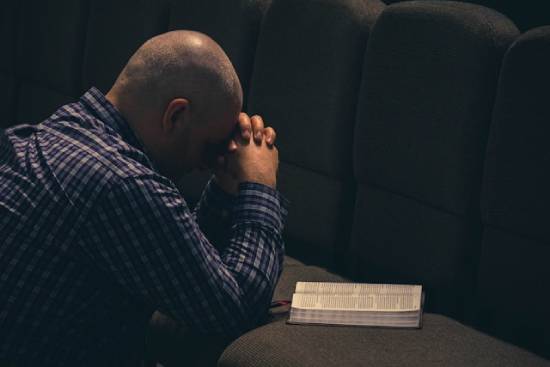
Photo by Billy Leivon on Unsplash
Another way to get to know Jesus is to talk to Him through prayer.
Jesus is our friend and advocate, so of course He wants to connect with and commune with us. We don’t have to feel like we’re a bother or an inconvenience. He’s always listening.
And remember that prayer doesn’t have to follow a template. While there are many tips and acronyms out there that can help us understand all the elements of prayer, the whole point is to intentionally open our minds to Him. Express it all. Ask questions. Ask for help. Sort through your thoughts while in His presence.
And if you’re looking for some new things to try, here are a few ideas:
- Prayer journaling: Writing down your prayers can help you stay focused if you find your mind drifting. This will also allow you to keep a record of your prayers, which you can look back on to see how God has been leading you.
- Prayer walks: If you struggle with sitting still for prayer, try being active while praying. Taking a walk while putting your mind in prayer mode can improve your focus, help release stress, and put your energy to good use.
- Have a special prayer spot: Dedicating a space, or even a certain chair, for prayer time can help in building a habit and help the mind transition out of the day’s distractions and into a more focused state. You could even try positioning an empty chair across from you as a physical reminder that Jesus is there with you.
4) Follow His lead
Since faith is action-based, make a point to live out what you learn about Jesus’ character.
He promised us guidance through His Holy Spirit (John 14:26) as we “continue to walk in Him, being rooted and built up in Him and established in the faith” (Colossians 2:6-7, CSB).
And the more you get to know Him through Bible study and personal experiences, it can reframe how you make your day-to-day decisions. Be intentional about looking for glimpses of His character or ways that you can reflect it.
Some things you could try might be:
- Choose to treat someone with love, even if they’re acting selfish or hurtful toward you or others.
- Trust God to guide you when faced with a new responsibility that feels overwhelming.
- Keep your eyes open for opportunities to give, serve, or help. Look for things that might almost go unnoticed.
- Make an effort to “stop and smell the roses,” or to enjoy and appreciate the little things—small joys, subtle beauty, fun little quirks, etc. You might be surprised at how God’s creation can sometimes reveal its magnificence in quiet, unexpected ways that let us see different facets of who He is.
- Attend church or check out local faith communities or Bible study groups.
- Seek out and talk with others who are also learning about faith in Jesus.
- Share your thoughts or questions with a pastor, Bible study leader, or spiritual mentor.
The idea is to put your faith to the test, in both small and big ways. Try out what it’s like to live out the fruits of the Spirit or act out the compassion of Christ.
By stepping out in faith, our character can be transformed (Romans 12:2; 1 Peter 1:7). And it’s not about reaching a certain “level” of faith—it’s about enjoying the ride.
Want to learn more about faith and its relationship to our actions?
Key Bible Verses About Faith:
- It’s about knowing God on a personal level: James 2:19.
- It’s about trusting in God’s goodness and providence: Hebrews 11:6; James 1:5-8; Romans 4:20-21.
- It means believing that God can do the impossible: Matthew 19:26; Luke 1:37; Mark 9:23.
- It grows from spending time with God in prayer and Scripture: Romans 10:17.
- It means trusting God even when you don’t have all the answers: Hebrews 11:1; 2 Corinthians 5:7; Proverbs 3:5-6; 1 Corinthians 2:5; Philippians 4:13.
- God can do great things with the smallest amount of faith: Matthew 21:22; Mark 11:22-24; Matthew 17:20; Luke 17:6.
- It comes from God. We can’t generate it all on our own: Ephesians 2:8-9; Luke 17:5; Romans 12:3; Hebrews 12:2; Ephesians 3:16-17; Mark 9:24.
- We are justified through our faith in Jesus: Galatians 2:16; Romans 10:9; Romans 5:1.
- Faith is active: James 2:14-26; Galatians 2:20; 5:22-23.
- It can help us overcome anything: 1 John 5:4; Ephesians 6:16.
- It will change us to be more like Jesus: James 1:3-4; Romans 1:17; Ephesians 3:17-19; Psalm 119:30; Galatians 2:20.
- It is a growth process that lasts a lifetime: 2 Timothy 4:7; 1 Timothy 6:12; 1 Peter 1:7.
- Christians can live as examples of faith, showing people how following Jesus has changed their lives for the better: Romans 1:17; 1 Timothy 4:12.
Related Articles



- “Faith,” Merriam-Webster. [↵]
- Strong, James LLD, STD, The Strongest Strong’s Exhaustive Concordance of the Bible, Zondervan, 2001. p. 1501. [↵]
- Hebrews 11:1; 2 Corinthians 5:7; Proverbs 3:5-6; 1 Corinthians 2:5; Philippians 4:13. [↵]
- James 2:14-26; Galatians 2:20. [↵]
- Isaiah 1:18;1 Thessalonians 5:21; 1 John 4:1; John 20:24-29. [↵]
More Answers

“Go and Sin No More”—What Did Jesus Mean?
These well-known words of Jesus Christ come from two New Testament stories in the book of John—a man healed by the Pool of Bethesda (John 5) and a woman caught in adultery (John 8).

What is the Difference Between Grace and Mercy in the Bible?
Even in day-to-day life, we can see glimpses of grace and mercy—like when someone offers an angry, impatient person their spot in a line or when a parent hugs their child after a heated argument.

Can God Forgive Me?
In one way or another, every single one of us has made a sizeable mistake that we’re ashamed of.

All About the Old and New Covenants in the Bible
When God promised a Messiah to Adam and Eve, He established an everlasting covenant that reaches down to us. This includes both the old and new covenants.

Legalism in the Bible: Definition, Dangers, and Examples
Find out what the Bible says about legalism, why it’s dangerous, and how we can avoid it today.

Sin
While this might seem like a complicated question, there’s a simple way to look at it. Sin is a failure to love God and love others. It is the opposite of love.

How Does Forgiveness Really Work? What Does the Bible Say?
Forgiveness—a familiar word but often-misunderstood concept. Learn how the Bible defines it, how it’s supposed to work, and what it shows us about God.

The New Covenant—What It Is and What It Means for Us Today
The Bible talks about the covenant, or promise, God made to save us from sin. Learn more about the old and new covenants and why they matter to us.

Why Does God Allow Suffering?
Poverty, genocide, a school shooting. A tsunami or earthquake that wipes out thousands of lives and leaves behind mourning family members.

Does the Bible Teach Predestination?
your choices, actions, and habits really matter to your eternal destiny? Or is the path you choose in life predetermined, and your life is just following a script that’s been laid out for you?

How Do I Know God Has Forgiven My Sins?
Knowing you’re forgiven is a big part of finding freedom in Christianity. The Bible tells us that after we’ve prayed for God’s forgiveness, we can believe we’re forgiven and accept His gift of pardon.

How Does Jesus Christ Help Us Overcome Sin?
You might have heard the phrase somewhere about “gaining victory over sin” through “the power of Jesus Christ” or “through the blood of Jesus,” etc. But what does that mean exactly, and how does it all work…especially if we’re still having to live out our lives in a world that’s still full of sin?

What You Need to Know About Temptation and How to Resist It
Ever felt like you face the same temptation day after day? The one temptation that always seems to resurface?
It can be frustrating, yes. But be encouraged—being tempted doesn’t mean you have done anything wrong! And even if you give in to temptation, you are never too imperfect to come before God.

Faith and Works—Do Both Matter in the Christian Life?
In so many religions all throughout time, individuals work toward enlightenment, salvation, or the favor of a deity. People are taught subtly—or not so subtly—that if you only do enough good deeds, you’ll be worthy/ascended/redeemed/approved, etc.
What Is Salvation, and How Do I Get Saved?
Salvation, or being saved, is what God wants for all of us. And since God created us with free will, this salvation is ultimately our choice. We become “saved” by accepting that Jesus Christ died on the cross, taking the punishment meant for sinners upon Himself.

What the Bible Says About Tattoos (Are They a Sin?)
Only one Bible verse speaks directly to permanent, symbolic markings on the skin. It’s Leviticus 19:28, and it’s one item in a list of ways God told Israel to distance themselves from the pagan practices of the people they lived among.

Why is There Good and Evil in the World?
Human nature is capable of the most self-sacrificing and heroic acts—a soldier risking his life for his country, a mother protecting her children from harm, a man jumping into a swirling current to save someone who is drowning.

What is the Great Controversy?
The Great Controversy is a battle between good and evil that began when a beautiful angel rebelled in heaven. It’s the cause of the evil and suffering in our world today.