
From early on in Christianity, many have interpreted Michael as the Messiah identified with the Angel of the Lord figure. Reformer John Calvin believed that Michael was Christ, and the well-known British minister and commentary author, Matthew Henry, believed the same.1
Other interpreters, however, have argued that Michael is simply the most highly exalted angel.2
Understandably, this discussion can bring up many questions, especially regarding Jesus’ divinity.
How can Jesus Christ, the Son of God, be Michael the Archangel? Wouldn’t that mean He was a created being instead of an equal and eternal member of the Godhead?
This takes some study to answer fully. But if you go over the similarities in the roles and capabilities of Jesus and Michael—and also take a closer look at what the title “archangel” really means—it can be easier to see how they could be names for the same member of the Trinity.
So let’s get into it and see what we find.
We’ll cover:
- How the Bible uses the word “angel”
- What the Bible says about Michael
- Whether Jesus and Michael could be the same person
Let’s start with definitions from Scripture.
How does the Bible use the word “angel”?
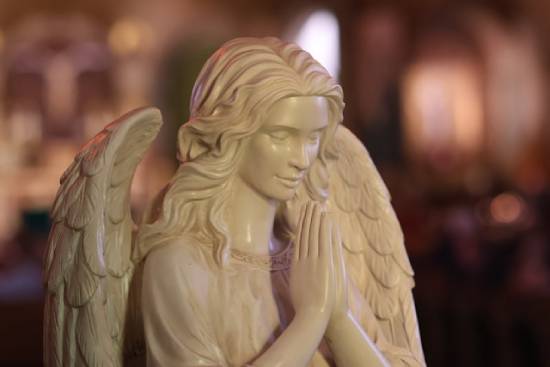
Photo by Hannah Tu on Unsplash
When we think of angels, we might picture winged heavenly beings sent by God to do His bidding. But the literal meaning of the Hebrew word for “angel” says nothing about wings. It’s mal’ak, simply meaning, “messenger.”3
This is an apt description for beings who are largely responsible for sharing messages of warning or good news with humankind (Revelation 14:6-12; Luke 1:26-33).
However, this term is not reserved for heavenly beings like the famous Gabriel (Luke 1:19). There are several occasions when Scripture uses the word more broadly—like to describe anyone who acts as a servant or messenger of God.4
For example, in 1 Samuel 29:9, King David is compared to an angel for his trustworthy character.
In Galatians 4:14, Paul was thanking the community for welcoming him “as an angel of God, as Christ Jesus Himself” (CSB).
And in Malachi 3:1, Jesus is called the “Messenger of the covenant,” a phrase otherwise understood by Bible scholars to mean “Angel of the Covenant.”5
So if we put the other meaning of this title in the version, it would read as:
“‘Behold, I send My messenger,
And he will prepare the way before Me.
And the Lord, whom you seek,
Will suddenly come to His temple,
Even the [Angel] of the covenant,
In whom you delight.
Behold, He is coming,’”
Says the Lord of hosts” (Malachi 3:1, NKJV, emphasis added).
This verse doesn’t use this comparison to speak on the nature of the Son of God (Jesus), nor is it saying that He is a created being. It simply speaks of His role as a messenger.
We can certainly call Jesus an “angel” if we’re using it to refer to Jesus’ mission in serving God in human form, speaking on behalf of Him to humans, and spreading the message of the Gospel.
Being in a messenger role in no way contradicts that Jesus is the eternal Son of God. He can be divine and still be compared to an angel—not to mean that He was created or that He is subordinate in some way—but for the simple fact that He’s serving the function of mal’ak.
We can also see this concept demonstrated in how the Bible speaks of the mysterious figure known as “The Angel of the Lord.”
“The Angel of the Lord”
Translated from the phrase mal’āḵ Yᵊhōvâ,6 we find several Old Testament mentions of the divine entity bearing this title. In these instances, the Angel of the Lord is delivering messages from God to humans, appearing to people like Moses, Jacob, and the parents of Samson.7
Except some things are strikingly different about this particular “angel.”
Not only was this angel addressed as “Lord,”8 but it also does two things no created being can:
- Make promises on behalf of God (Genesis 18:2-33)
- Accept worship (Joshua 5:14; Judges 13:17-21; Revelation 4:11).
So this must be more than just any messenger.
When prophets or angelic beings would speak messages from God, they spoke with representative authority, not with their own authority. For instance, prophets’ messages were usually preceded with phrases like, “This is what the Lord says…”9 And if an angelic being, like Gabriel, spoke, he still would acknowledge God as the One making things happen (see Daniel 9:21-23; Luke 1:19, 30-33).
But the Angel of the Lord made promises, blessings, and directives in first-person language.10

Photo by Alex Woods on Unsplash
And if prophets or angels received any praise or worship in response to the message they just delivered, they would reject any exaltation and redirect that worship to God alone (Revelation 19:10; 22:9).
But the Angel of the Lord accepted worship from Gideon (Judges 6:19-23), Samson’s parents (Judges 13:19-22), Moses (Exodus 3:2-6), and Joshua (Joshua 5:13-15).
For these reasons in particular, it makes sense to identify the Angel of the Lord as an appearance of a member of the Godhead (Trinity).11 And it’s most likely to be pre-incarnate Jesus, or the Son of God, serving as a perceivable form of God Himself in order to interact with humanity.
The Bible even hints at the connection when it says the Angel of the Lord’s name is “Wonderful” (Judges 13:18), which is another name for Jesus, “Wonderful Counselor” (Isaiah 9:6).
The Angel of the Lord also appeared as a human man, as fire, and as smoke. But because these appearances also refer to the divinity of this being, this being is certainly something more than a mere man, flame, or plume of smoke.12
Before Jesus’ incarnation, He wouldn’t be limited to the created physical body of a human being. As God, He could appear as anything, without actually taking on the nature of it.
There’s even a logical reason as to why Jesus would appear in all of these forms.
Early on, Scripture tells us that sinful humans can’t safely look upon the fullness of God’s glory (Exodus 33:18-23). So, in order for the pre-incarnate Jesus to commune and communicate with humankind face-to-face, He’d need to appear in a form human beings could perceive, process, and safely view without being overcome by the “unapproachable light” of His full glory (1 Timothy 6:16).
Archangel
Now that we understand that “angel” can refer to someone’s function or appearance instead of their nature as a created being,13 let’s explore what the Bible means by the title of “archangel.”
If the word “angel” is often used to describe a role or function, is “archangel” speaking of a being’s nature, or just their role?
The literal translation of the prefix “arch” means to rule or reign over.14
So an arch-angel is one who rules over all angels, or messengers. It does not, by definition, mean that the archangel must also be a created being like the angels it commands.
Now that we’ve covered these definitions, let’s look at what Scripture tells us about the only name identified as the Archangel, Michael.
What does the Bible say about Michael?
Michael the Archangel is only mentioned by name five times in the Bible.15
With so few mentions, it makes sense that there’d be gaps in what we know about Him. But the information the Bible does give is significant.
It gives us a glimpse of Michael’s crucial role in the ages-long conflict between good and evil (God and Satan), or the “great controversy.”
It also gives us some hints about Michael’s character and nature.
The name of Michael

Photo by Jametlene Reskp on Unsplash
The name Michael translates to the Hebrew word mika’el, which means, “Who is like God.”16
In the Bible, names are significant. They often say something about the person they’re given to (Genesis 30:3-13), and many of them mention God in some way, honoring God’s faithfulness, power, and love (Genesis 16:11; Genesis 32:28).
Some believe the meaning of Michael’s name, “Who is like God,” is more of a rhetorical question that answers itself.17 In other words, it could be saying “Who is like God?” with the answer being, “Michael the Archangel is.” The face of God that humanity can perceive.
Of course, the name “Michael” wasn’t exclusive to the Archangel, as many people in the Bible had that name. But if Jesus and Michael are the same person, it would be fitting that the name of His angel form would praise or reflect the unique identity of God.
That being said, Michael isn’t the only angel spoken of in relation to the phrase, “like God.”
This exact language is used by Lucifer, the created angel who allowed his desire to be “like God” turn him against God the Creator.
“How you are fallen from heaven,
O Lucifer, son of the morning!
How you are cut down to the ground,
You who weakened the nations!
For you have said in your heart:
‘I will ascend into heaven,
I will exalt my throne above the stars of God;
I will also sit on the mount of the congregation
On the farthest sides of the north;
I will ascend above the heights of the clouds,
I will be like the Most High’” (Isaiah 14:12-14, NKJV).
It was through his jealousy that the angel Lucifer became God’s adversary, Satan.
In this way, we see that Lucifer wasn’t looking to become “like God” to emulate His character or honor Him. He wanted to be “like God” in the sense that he would possess God’s power, authority, and right to receive worship.
Lucifer had the ambition to be “like God,” whereas Michael’s name functions as praise—possibly even a label of someone “like God,” but not fully appearing as the entirety of God.
This would fit the role of the Angel of the Lord, who interacted with humans with the authority of God, but not in fullness of form.
This is further suggested by Exodus 23:20-21, in which the Angel of the Lord is sent to represent God because God can’t appear in His full glory to the Israelites:
“Behold, I send an Angel before you to keep you in the way and to bring you into the place which I have prepared. Beware of Him and obey His voice; do not provoke Him, for He will not pardon your transgressions; for My name is in Him” (NKJV).
Here we see the “Angel” working on behalf of the fullness of God to guide God’s people. The fact that the Angel has such authority suggests He is part of the Godhead,18 as only God can grant or withhold forgiveness (Matthew 12:31-32). And God directly says His name is in this Angel.
Who’s the only angel whose name speaks of the identity of God? That would have to be Michael.
Michael’s divinity is further hinted at when the Bible describes Him as a prince.
Michael the prince
Michael’s position as Archangel already tells us that he rules over the angels. But the Bible also calls him a prince.
In Daniel 10:13, Michael is called, “one of the chief princes” (NKJV).
This is in harmony with a well-known description of Jesus, the Prince of Peace and lord of Lords (Isaiah 9:6; Revelation 17:14).
But the fact that he’s called “one of the chief princes” can be a little confusing. Would that suggest that there are other princes like him?
However, the original word for “one” in this verse is echad, which also translates to “first.”19
So the verse may instead be read to mean Michael is “the first of the chief princes.”
Even if he’s being talked about as part of a group, it’s worth noting that Michael is’ the only archangel named in the Bible.20 He is also referred to as a Great Prince, perhaps suggesting a higher station than your typical angelic leader (Daniel 12:1).21
He also does some things no other angel is said to do.
Daniel 12:1 says Michael will stand up to deliver God’s people:
“At that time Michael shall stand up,
The great prince who stands watch over the sons of your people;
And there shall be a time of trouble,
Such as never was since there was a nation,
Even to that time.
And at that time your people shall be delivered,
Every one who is found written in the book” (ESV).
This role of delivering God’s people belongs to Jesus.22 In speaking about the names written in the book, this verse also refers to God’s judgment, which Jesus presides over as our High Priest (Revelation 20:12; 2 Corinthians 5:10; Hebrews 7:25).23
Scholars believe Michael’s act of standing up for God’s people refers to Jesus.24 Particularly, His role in standing in as a sacrifice for our sins, and defending us from Satan’s condemnation as He intercedes for our salvation (Matthew 10:32).
Michael also occupies Christ’s role in delivering His people in the end times at His Second Coming.25
So if Michael and Jesus Christ are different entities, then Christ would take a passive role while Michael acts as the great warrior-deliverer. And that just doesn’t fit with the context of Daniel 12, or the rest of Scripture that describes Christ’s role in standing for His people.26
It instead seems that there are numerous roles and characteristics Michael and the Son of God share.
They both have a higher station than angels.27 They both rule and command angels28 and they both act as intercessors.29
Let’s look at the commander role first, then intercessor.
Michael the commander
As the chief or ruler of the angels, Michael also acts as their tactical commander, leading the angels in spiritual warfare against Satan and his evil forces:
“And war broke out in heaven: Michael and his angels fought with the dragon; and the dragon and his angels fought, but they did not prevail, nor was a place found for them in heaven any longer. So the great dragon was cast out, that serpent of old, called the Devil and Satan, who deceives the whole world; he was cast to the earth, and his angels were cast out with him” (Revelation 12:7-9, NKJV).
First, let’s note the fact that the angels under Michael’s command are called “his” angels. While this could simply mean that the other angels are his subordinates, it might also suggest that the other angels belong to him, which would certainly be true if Michael were the Son of God, the Creator, who would later be given the human name of Jesus.
More significantly, this verse shows us how Michael’s commander role coincides with that of “the commander of the Lord’s army,” which is what the Angel of the Lord called Himself when speaking to Joshua, right before Joshua removes his sandals and submits to him (Joshua 5:13-15, CSB).30
Jesus is also described in prophecy as leading armies of angels against Satan in the end times.
“He was clothed with a robe dipped in blood, and His name is called The Word of God. And the armies in heaven, clothed in fine linen, white and clean, followed Him on white horses. … And I saw the beast, the kings of the earth, and their armies, gathered together to make war against Him who sat on the horse and against His army” (Revelation 19:13-14, 19, NKJV).
Jesus is the one to defeat Satan and his followers once and for all (Hebrews 2:14-15). This makes sense, considering Jesus’ sacrifice is the very reason we’re able to find victory over sin (Hebrews 9:12).
So if Jesus has historically led and commanded the angels throughout humanity’s history, it seems likely that Michael in Revelation 12 would refer to pre-incarnate Jesus.31
And if Jesus was the one to defeat Satan at the beginning of his rebellion, defeating him for good at the end of time would mean Jesus’ fight against sin ends in victory.
This is further reinforced by the way Revelation 12 refers to the blood of Jesus.
It is mentioned after describing Michael’s battle and Satan’s fall, citing that “the blood of the Lamb” is the only means by which Satan could be defeated:
“Then I heard a loud voice saying in heaven, ‘Now salvation, and strength, and the kingdom of our God, and the power of His Christ have come, for the accuser of our brethren, who accused them before our God day and night, has been cast down. And they overcame him by the blood of the Lamb…’” (Revelation 12:10-11, NKJV).
Now let’s look at the similar intercessory role descriptions for Jesus and Michael.
Michael the intercessor

Photo by www.kaboompics.com
To “intercede” means to be a go-between. Similar to a mediator. And “intercession” means to do something on another’s behalf.32 So the role of a divine intercessor would be one who stands between humanity and the fullness of God, working to reconcile what has driven them apart (sin).
First and foremost, 1 Timothy 2:5 is clear that Jesus, the Son of God, is humanity’s intercessor:
“For there is one God and one mediator between God and mankind, the man Christ Jesus” (CSB).
Yet we saw one instance of Michael being described as an intercessor in Daniel 12:1, standing up as prince and deliverer to intercede for God’s people.
We see another example of this when Michael struggles with Satan for the body of Moses.
Jude 1:9 says:
“Yet when Michael the archangel was disputing with the devil in an argument about Moses’ body, He did not dare utter a slanderous condemnation against him but said, “the Lord rebuke you!’” (CSB)
Why would Michael and Satan be fighting over Moses’ body?
The Seventh-day Adventist Bible Commentary explains it this way:
“From the fact that Moses appeared with Elijah on the Mount of Transfiguration it may be concluded that the Lord triumphed in the contest with the devil and raised Moses from his grave, making him the first known subject of Christ’s resurrecting power (see on Deut. 34:6; Matt. 17:3…).”33
So this conflict was against Moses being resurrected, as opposed to remaining in the grave on earth. Michael was interceding that Moses be given new life.
Only Jesus has the power of resurrection and salvation, so this verse would signify that Michael is Jesus (1 John 5:11-12; Acts 4:12).
We can also look at 1 Thessalonians 4:16, describing how at the Second Coming, “the Lord Himself will descend from heaven with a shout, with the archangel’s voice…” (CSB, emphasis added). Given that Michael is the only archangel stated in Scripture, and only God can raise the dead, it stands to reason “the Lord Himself” and “the archangel” are talking about the same person (John 5:25-29).34
But Jude 1:9 is a strange-seeming verse. Why would Jesus and Satan be in some sort of conflict or argument about Moses’ body?
There are several who believe that Michael can’t be Jesus because in this verse, he doesn’t dare to bring accusation against Satan, and rebukes Satan in the Lord’s name instead of His own.
Let’s further break down what this verse is telling us.
- “Disputing” with the devil: This situation was the first time a human who died on the earth was to be resurrected into heaven. So this was an argument over jurisdiction, so to speak. Satan contended that Moses’ body belonged to him and the realm of the earth, not to the realm of heaven—where Michael would resurrect Moses to be (as seen at the Transfiguration in Matthew 17).
- As for the word “dispute,” different translations use other words or phrases for this action that can help inform our perspective. The NKJV and several more say Michael “contended” with Satan, while others used words like “argued,” “took issue with the Adversary,” “strove against,” “debated,” etc.
- Doesn’t bring “reviling” accusation: In the NKJV, Jude 1:9 says Michael doesn’t dare bring “reviling” (or criticism with the intent of insult or abuse35) accusation against Satan. Meanwhile, CSB says “slanderous,” ESV says “blasphemous judgment,” and NASB says “abusive judgment.” Now the Son of God has full authority to judge over Satan, but He also has no interest in engaging in a corrupted debate with the “father of lies” (John 8:44). So He essentially puts His foot down and rebukes Satan.36
- Rebuking in the name of the Lord doesn’t disprove his divine authority or identity: In the vision of the prophet Zechariah, the Angel of the Lord rebukes Satan “in the name of the Lord” (Zechariah 3:1-4). Here, the Angel of the Lord removes Joshua’s filthy clothes and replaces them with clean clothes, a metaphor for how Jesus takes away our sins and clothes us with righteousness.37 As the Son of God is the only one capable of removing sin, it stands to reason that the Angel of the Lord mentioned here is Him. If Jesus rebukes Satan in the name of the Lord as the Angel of the Lord, there’s no reason He wouldn’t do the same as Michael.
What’s more, in the New Testament, Jesus said He had come in the Father’s name (John 5:43) and would heal and teach in His Father’s name (John 10:25). Jesus is equal to the Father, but in His messenger and intercessor role, He obeys, serves, and gives honor to God the Father, or the fullness of His divinity (John 5:16-30). Jesus may speak in the Lord’s name to defer to His Father’s wishes, which are one with His (John 10:30). And He may have done the same as Michael. It’s also possible that Michael is speaking in third person when he rebukes Satan—something else Jesus was known to do.
Are Jesus and Michael the same person?
The Bible doesn’t make an outright statement to say that Jesus is the same being as the archangel Michael, but it does hint at it.
With Jesus and Michael possessing so many of the same characteristics and roles, it makes sense that they’d be the same person.
In fact, it’d probably raise more questions if we thought of them as different people.
What if Michael and the Son of God were different entities? What would that mean?

Photo by jaikishan patel on Unsplash
Assuming Michael is a completely separate entity, why would God need two commanders for His angelic army?
Why would there be two princes? Or two intercessors when the Bible says Jesus is our sole mediator (1 Timothy 2:5)?
Maybe it feels unusual for Jesus to go by another name. But if we think about it, is this concept really unbiblical?
On the contrary, the Bible has lots of names to describe Jesus.
(And He didn’t even have the name “Jesus” until He was born a human in the New Testament.)
He’s called the Lamb of God, the Son of Man, Immanuel, and the Light of the World…just to name a few.38
It’s also worth noting that many of these names are not literal. Jesus is called the Lion of Judah, but that doesn’t mean He’s a lion. He’s also called the Bread of Life, but that doesn’t mean He’s a piece of bread. They’re metaphors used to describe Jesus’ role and character as our powerful defender and sustainer.
The same could be true of the name Michael. As explained earlier, when the Bible calls him an archangel, it could just be referring to his role as God’s commander of angels and His representative form to humanity (Hebrews 1:1-3).
And the fact that Michael’s name means “Who is like God” could refer to the idea that Michael is just one of the many forms God appears in when interacting with humanity. This is in harmony with Hebrews 1:3, which describes the Son of God as the reflection of God’s glory, and the exact representation of His nature.
And the Son of God, as part of the Godhead, has always existed. Before He was given a human body, it’s possible that He would appear in different pre-incarnate forms, as related to His intercessory role from the beginning.
Similarly, if Michael doesn’t represent the fullness of God’s glory, as one of the forms of God, He’d still be “like God.”
What difference does it make if Jesus is Michael?
The idea of Michael being Jesus has been a controversial one in many Christian circles. This is primarily because some are concerned that it downplays or discredits the divinity of Jesus Christ.
But, as we’ve studied together, this doesn’t seem to be the case. Jesus, the Son of God, is fully divine and can appear in different forms or be called a variety of names that describe His character or role, one of them being Michael the archangel.
While the shared divinity and humanity of Jesus Christ is one of the Adventist Church’s fundamental beliefs, the teaching that Michael is Jesus is not.
That doesn’t necessarily mean we don’t believe Jesus is Michael. Many Adventists do. But it’s not part of the Seventh-day Adventist 28 Fundamental Beliefs, because believing it or not doesn’t affect a person’s saving relationship with Jesus. But studying this can give us a bigger picture of what the Son of God is like.
Just as the names Prince of Peace and Lion of Judah can tell us more about the character and role of Jesus, the title “Michael the archangel” can help us better understand how Jesus has been fighting and interceding for us since the very beginning.
Want to keep learning more about Jesus?
Related Articles



- Calvin, John, Commentaries on the Book of the Prophet Daniel; Henry, Matthew, “Daniel—Daniel 10, Verse 10-21,” Matthew Henry’s Commentary on the Whole Bible. [↵]
- For further information, see Anderson, Lewis O., “The Michael Figure in the Book of Daniel,” (PhD. diss., Andrews University (1997), pp. 4-84. [↵]
- Strong, James LL.D, S.T.D., The Strongest Strong’s Exhaustive Concordance of the Bible, Zondervan, 2001, p. 1526. [↵]
- “Is Michael Another Name for Jesus?” Seventh-day Adventist Church Biblical Research Institute (Feb. 13, 2012) [↵]
- Nichol, F.D., Seventh-day Adventist Bible Commentary And Bible Students’ Source Book, vol. 4, Review & Herald Publishing Association (1955), p. 1130. [↵]
- Translation of phrase “mal’āḵ Yᵊhōvâ: “Ma’lak, Strong’s H4397”, “Yhvh, Strong’s H3068.” [↵]
- Exodus 3:1-5; Genesis 32:24-30; Judges 13:2-22. [↵]
- Genesis 22:11-16; Judges 2:1-5; 6:11-24; Acts 7:30-35; and many more. [↵]
- Exodus 4:22; 5:1; Joshua 7:13; 24:2; 1 Samuel 10:18; Jeremiah 1:4; Amos 1:3; and many more. [↵]
- See Genesis 16:10-13; 22:11-18; Exodus 3:2-6; Judges 2:1-4; 13:3-22. [↵]
- “Is Michael Another Name for Jesus?”; Strong, James LL.D, S.T.D., The Strongest Strong’s Exhaustive Concordance of the Bible, Zondervan (2001), p. 1665. [↵]
- Genesis 32:24-30; Exodus 3:1-5; Exodus 13:21. [↵]
- “Is Michael Another Name for Jesus?” [↵]
- https://biblehub.com/greek/strongs_757.htm. [↵]
- “Is Michael Another Name for Jesus?” [↵]
- Nichol, F.D., Seventh-day Adventist Bible Commentary And Bible Students’ Source Book, Vol. 7, Philippians to Revelation, Seventh-day Adventist Church, p. 809. [↵]
- “Lesson 13-The Time of the End,” General Conference of Seventh-day Adventists. [↵]
- Nichol, F.D., Seventh-day Adventist Bible Commentary And Bible Students’ Source Book, Vol. 1, Genesis to Deuteronomy, Seventh-day Adventist Church, p. 628. [↵]
- Ibid.; “Are Michael and Jesus the Same Person?” Present Truth Fellowship (Nov. 12, 2014). [↵]
- “Are Michael and Jesus the Same Person?” [↵]
- “Is Michael Another Name for Jesus?” [↵]
- Galatians 5:1; Luke 19:10; John 3:17; Nichol, F.D., Seventh-day Adventist Bible Commentary, vol. 4, Isaiah to Malachi, p. 878. [↵]
- “Is Michael Another Name for Jesus?” [↵]
- Seventh-day Adventist Bible Commentary, p. 878. [↵]
- Ibid. [↵]
- Anderson, p. 291. [↵]
- Matthew 16:27; Matthew 25:31; 2 Thessalonians 1:7. [↵]
- Revelation 12:7-12; Joshua 5:13-15; Revelation 19:11-16. [↵]
- Jude 1:9; Zechariah 3:2. [↵]
- Nichol, F.D. Seventh-day Adventist Bible Commentary And Bible Students’ Source Book, vol. 2, Joshua to Kings, p. 195. [↵]
- Nichol, F.D., Seventh-day Adventist Bible Commentary And Bible Students’ Source Book, vol. 7, Philippians to Revelation, p. 809. [↵]
- “Intercede,” and “Intercessor,” Merriam-Webster. [↵]
- Nichol, F.D., Seventh-day Adventist Bible Commentary And Bible Students’ Source Book, Vol. 7, Philippians to Revelation, Seventh-day Adventist Church, p. 706. [↵]
- “Is Michael Another Name for Jesus?” [↵]
- “Revile/Reviling,” Merriam-Webster. [↵]
- Nichol, F.D., Seventh-day Adventist Bible Commentary And Bible Students’ Source Book, vol. 4, Isaiah to Malachi , p. 1093. [↵]
- Ibid. [↵]
- John 1:29; Matthew 25:31; Matthew 1:23; John 8:12. [↵]
More Answers

Why Are the Temptations of Christ So Important?
These 3 temptations are a well-known part of His earthly ministry. But what’s the real significance of this confrontation with Satan? Why did it have to happen?

Was Jesus Ever Hypocritical? Learn What the Bible Says.
Was Jesus Ever Hypocritical? Learn What the Bible SaysMany undesirable traits are associated with hypocrisy. But overall, hypocrites intentionally try to make others believe they uphold or represent a certain belief system, character trait, lifestyle, etc., when in...

Understanding the Miracles of Jesus Christ
Understanding the Miracles of Jesus ChristWhat do you think of when someone says something is “a miracle”? Maybe you think of an unexpected recovery, surviving a dangerous accident, or getting an answer to a seemingly impossible prayer. Simply put, miracles are...

All of Jesus’ Warnings and Encouragements in the Bible
Here’s a comprehensive list of every warning and encouragement from the words of Jesus, as well as how they can benefit our lives today.

Does Jesus Really Care About Me?
Does Jesus Really Care About Me?Short answer: yes, Jesus really does care about you, specifically (1 Peter 5:7, ESV). But if you’re wondering whether Jesus Christ really, truly cares about you, you aren’t alone. Gideon, Abraham and Sarah, Job, Jeremiah, Elijah, even...

Jesus and the Pharisees and Sadducees (Why They Opposed Jesus)
The Pharisees and Sadducees hated Jesus and wanted Him dead. This page looks at who they were and what motivated them to oppose Jesus.

The Many Names of Jesus in the Bible and What They Mean
The Many Names of Jesus in the Bible and What They MeanThe Bible includes a lot of names for Jesus, and they all reveal different facets of His identity, power, character, and mission. We’ve all had nicknames throughout our lives. They might be shortened versions of...

When Is Jesus Coming Back?
The Bible doesn’t tell us exactly when the Second Coming will occur, but learn about the signs that point to the nearness of the return of Christ.

After Jesus’ Ascension: What He Did Throughout the New Testament
After Jesus’ Ascension: His work Throughout the New TestamentWe first get to know Jesus, the Son of God and our Messiah, by reading the Gospel accounts of His earthly ministry. And after He died for our sins and was resurrected, He returned to heaven. This is known as...
Who is Jesus
Who Is Jesus, and Why Is He So Important to Us? Jesus Christ is the central figure of Christianity. Not only is He God’s Son and our Savior, He: Is who the Bible is all about Can give us eternal life Is part of the Trinity with God the Father and the Holy Spirit Is...
Jesus and John the Baptist: Their Relationship and Ministry
John the Baptist and Jesus were cousins, friends, and close coworkers in ministry. Learn the lasting significance of their relationship.

Why Did Jesus Have Disciples and Who Were They?
During Jesus’ ministry on earth, He selected certain individuals to help with and continue His work. They would be referred to during that time as His “disciples.”

Does Jesus Appear in the Old Testament?
Before His incarnation, Jesus also played an active role in the redemption and salvation of humanity. Discover the different ways He appeared in Old Testament stories.

Jesus’ Baptism: What It Means and Why It Matters
Jesus’s baptism marked the beginning of His earthly ministry. It was God’s big reveal regarding who Jesus is.

Why Is the Genealogy of Jesus Christ So Important?
Have you ever traced your genealogy back several generations? Did you ever try to find out if your ancestors did anything famous (or infamous)?

Jesus and the Woman at the Well: Breaking Down Barriers
Jesus’ meeting with the woman at the well reveals His heart for hurting people and His desire to break down prejudice. This page looks at how Jesus reached out to her.

Who is The Son of Man in the Bible?
In calling Himself the Son of Man, Jesus confirmed His role as humanity’s savior. Learn what else this title tells us about Jesus.

Who Was Mary, the Mother of Jesus Christ?
Mary, Jesus’ mother, was a humble woman, deeply committed to following God’s will for her life. Learn what the Bible says about Mary and what we can learn from her.

What Does the Bible Mean When It Calls Jesus the Son of God?
When the Bible calls Jesus the Son of God it’s referring to His divinity. Learn what makes this so significant and what it has to do with salvation.

The True Events Surrounding the Birth of Jesus
Jesus’ birth involved many strange events: a pregnant virgin, a stable birth, angels appearing to shepherds, and wealthy visitors. These help us understand His supernatural yet incredibly humble life.

An In-Depth List of the Prophecies About Jesus
How many prophecies of Jesus are in the Old Testament?

Can We Find Jesus Christ In the Old Testament?
Yes, you might be surprised to know that there are hundreds of verses in the Old Testament about Jesus.

The Parables of Jesus: What They Teach Us About Life
Have you ever been on the verge of sleep in the middle of a long lecture or sermon when suddenly the speaker takes a turn and begins to tell a story?