
Jesus’ mother Mary, often called the Virgin Mary, is known around the world for her miraculous conception of Jesus without a human father. She is respected for her humility and motherly love and is featured heavily in Western literature, art, and music.
The Bible doesn’t say much about her, but what it does say is significant. It shows her as a thoughtful woman who was deeply committed to God’s will for her—not only as the mother of Jesus but also as His follower during and after His ministry on earth.
In this article, we’ll look at key mentions of Mary in the Bible and what they tell us about her and her role as the mother of the Messiah. We’ll include:
- Who Mary was before she became Jesus’ mother
- Significant events in the Bible that include Mary
- What we can learn from her
Let’s take a closer look at her background first.
Who Mary was before she became Jesus’ mother
What we don’t know about Mary is far greater than what we do know. We don’t know how old she was when Jesus was born, although she was likely just a teenager, perhaps as young as 12 or 13.1
Scripture describes her as an average girl living a life just like any of us. Because of this, Adventists don’t believe she was divine or sinless, nor do we worship her. She was a human, subject to the same struggles as any other human. And yet, God selected her for a special purpose, just like He did other men and women in the Bible.
From clues scattered throughout the New Testament narrative, we can gather these biographical details about her:
- She was from Nazareth (Luke 1:26-27)
- She was a relative of Elizabeth, the mother of John the Baptist (Luke 1:36)
- She may have had a sister named Mary of Clopas (John 19:25)
- She was a descendant of King David (Luke 1:32)
We’ll unpack these details a bit more.
She was from Nazareth (Luke 1:26-27)
Nazareth was a town of little consequence in Galilee, a region north of Jerusalem. At the time Jesus was born, it had a population of just a few hundred.2 The residents were all Jewish, and many were part of a lower class in society.3
It’s not surprising, then, that Mary and her husband Joseph were poor, as indicated by the offering they brought to the temple when Jesus was dedicated—two doves rather than a lamb, which was allowed for those who couldn’t afford to bring a lamb (Luke 2:24; Leviticus 12:8).
She was a relative of Elizabeth, the mother of John the Baptist (Luke 1:36)
Mary was related to Elizabeth, who through a miracle gave birth to John the Baptist. Luke 1 records that Mary went to visit Elizabeth for a few months when both of them were pregnant (Luke 1:56).
This connection makes Jesus and John the Baptist relatives as well.
She may have had a sister named Mary of Clopas (John 19:25)
Mary could have been related to Mary of Clopas, who was present at Jesus’ Crucifixion. But the phrasing of John 19:25 makes it difficult to tell for sure. Notice how it reads:
“Now there stood by the cross of Jesus His mother, and His mother’s sister, Mary the wife of Clopas, and Mary Magdalene” (NKJV).
With the punctuation as it is, it’s not clear whether “His mother’s sister” and “Mary the wife of Clopas” refer to the same individual.
She was a descendant of King David (Luke 1:32)
Mary’s place in the lineage of David is necessary to fulfill many prophecies written about Jesus, like the one found in 2 Samuel 7:12, 16, in which the prophet Nathan tells David his kingdom will last forever (compare with Luke 1:32-33).
Significant events in the Bible that include Mary
The Bible mentions Mary several times during events surrounding Jesus’ birth and childhood. Though we don’t see her in as many stories during Jesus’ ministry, she was present at His death and after His resurrection.
Let’s look in more detail at these accounts.
Jesus’ birth

Photo by Pro Church Media on Unsplash
The narrative of the birth of Jesus introduces us to Mary and shows us her resilience and determination to obey God.
Luke begins the saga with the angel Gabriel’s visit to Mary, called the Annunciation. He brought the news that Mary “will conceive in [her] womb and bring forth a Son, and shall call His name Jesus” (Luke 1:31, NKJV).
Imagine the emotions Mary would’ve felt—the awe, the overwhelm, the nervousness.
Here she was a young woman, engaged to a man, and now suddenly informed she was going to have a baby who would save the world—the Messiah whom Her people, the Jews, had longed for through the centuries.
Yet the Bible seems to indicate that Mary remained calm. She asked one question: “How can this be, since I do not know a man?” (Luke 1:34, NKJV). When Gabriel answered, she replied, “Let it be to me according to your word” (Luke 1:38, NKJV).
While it was all so new and miraculous, Mary did not make excuses or doubt the angel. She simply submitted to his news—and her new future—trusting in God.
But Mary’s pregnancy prior to her marriage to Joseph created a problem.
To him, it would’ve looked like Mary had been unfaithful to him, a sin punishable by death (Leviticus 20:10-12; Deuteronomy 22:23-24). Joseph had every right to accuse her of adultery and break off their engagement.4
We don’t know if she explained the situation to him or not, but we do know Joseph had decided to divorce her quietly. Only when an angel came and told him about Mary did he go on with the marriage (Matthew 1:20-25).
When the Roman emperor of the time called for a census, Joseph had to travel to the town of his family line, Bethlehem, to register (Luke 2:1-5). Mary went with him, and there gave birth to Jesus in a stable since none of the inns had room for them.
On the night of Jesus’ birth, shepherds heard about the arrival of the Savior from angel messengers and came to worship Him. Mary listened to everything they said and Luke records that she “treasured up all these things, pondering them in her heart” (Luke 2:19, ESV).
The Greek phrase for “pondering them in her heart” means literally to “bring them together.” She thought about what the shepherds and wise men had said, perhaps trying to make sense of all these events in her mind and reconcile them with her own expectations of the Messiah.
Not long after, wise men from the east visited Joseph, Mary, and Jesus in Bethlehem. After they left, an angel warned Joseph in a dream that Herod, the ruler at the time, would seek to kill Jesus (Matthew 2:16).
We can only imagine what must’ve been going through Mary’s mind. The Messiah had just been born—was He to be killed already? And yet, with all the ways God had been leading them so far, Mary had reason to trust God’s protection. With the angel’s warning, she and Joseph took Jesus and migrated to Egypt, living there until Herod died several years later (Matthew 2:13-21).
Some people believe in the perpetual virginity of Mary—that she remained a virgin for the rest of her life. The Bible, though, suggests otherwise.
Matthew 1:24-25 states that Joseph “took to him his wife [Mary], and did not know her till she had brought forth her firstborn Son” (NKJV, emphasis added). “Know her” is ancient modesty for having intimacy with someone, so this verse implies that Mary didn’t remain a virgin. She may even have had other children with Joseph since other biblical accounts speak of Jesus having brothers (Matthew 12:47).
Jesus’ dedication
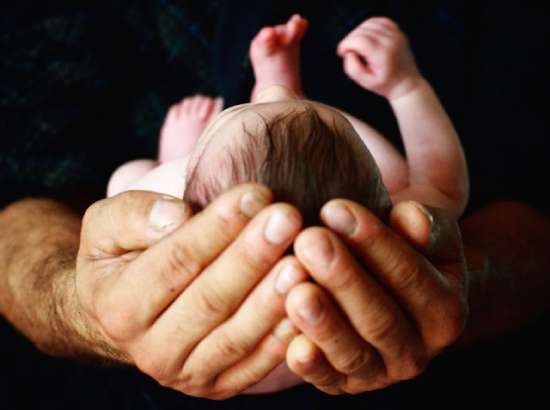
Photo by Jill Sauve on Unsplash
A custom according to the law of Moses involved dedicating firstborn children at the temple eight days after they were born. When Joseph and Mary brought Jesus there for this ceremony, they encountered Simeon, a godly man who had been waiting for the Messiah and had received an assurance from the Holy Spirit that he wouldn’t die until he saw the Messiah.
When Simeon saw Jesus, he recognized Him as the one he’d been waiting for.
Simeon took Him into his arms and “blessed God” (Luke 2:28, NKJV). He also spoke these prophetic words specifically to Mary:
“Behold, this Child is destined for the fall and rising of many in Israel, and for a sign which will be spoken against (yes, a sword will pierce through your own soul also), that the thoughts of many hearts may be revealed” (Luke 2:34-35, NKJV).
These words foretold the way Jesus’ life would cause a crisis of decision for many people. It would reveal the thoughts of their heart, leading some to fall by rejecting Him and some to rise by accepting Him.5
But they also included a warning for Mary: she would experience pain and bitterness, as though a sword were piercing through her soul. To some extent, she’d already experienced that pain, especially with having to flee to protect Jesus from King Herod.
But the greatest piercing would no doubt occur when she stood beneath the Cross and watched her Son die:
“Like all other Jews, Mary doubtless expected Jesus to reign gloriously upon the earthly throne of David ( cf. ch. 1:32 ). This expectation, shared even by the disciples of Christ, could only make the disappointment of the cross more bitter. But God in His mercy gave her this intimation of what to expect.”6
Jesus’ childhood

Photo by Mahdi Bafande on Unsplash
The Bible doesn’t give much information about Mary during Jesus’ childhood, but we can assume she taught Him everything she could about God and the Scriptures (the Old Testament at the time). This is because Luke 2 tells us Jesus “grew and became strong, filled with wisdom. And the favor of God was upon Him” and He “increased in wisdom and in stature and in favor with God and man” (verses 40, 52, ESV).
When Jesus was 12, He went with His parents to Jerusalem for the Passover, a Jewish feast celebrating the Israelites’ deliverance from Egypt. On the way home, though, Mary and Joseph realized Jesus wasn’t with their caravan as they had thought He was (Luke 2:43-44).
Mary and Joseph would’ve no doubt been concerned, especially after the previous threat to Jesus’ life when He was a baby. They returned to Jerusalem, searching for Jesus for three days.
At last, they found Him in the temple, talking intelligently with the priests about the Scriptures (Luke 2:46-47).
Mary’s words hint at frustration:
“Son, why have You done this to us? Look, Your father and I have sought You anxiously” (Luke 2:48, NKJV).
Jesus’ reply showed Mary that He was beginning to recognize His call:
“Why did you seek Me? Did you not know that I must be about My Father’s business?” (Luke 2:49, NKJV).
Mary and Joseph didn’t understand what Jesus was talking about, but Mary continued to ponder all these things in her heart (Luke 2:50-51). Like the other Jews of her time, she would’ve expected Jesus to be a conquering Messiah. It would take time for her to understand Jesus’ true mission.
The wedding at Cana
The wedding at Cana is significant because, there, Mary witnessed Jesus’ first miracle.
When the hosts of the wedding ran out of wine to serve the guests, Mary told Jesus about this predicament. He replied,
“Woman, what does your concern have to do with Me? My hour has not yet come” (John 2:4, NKJV).
In our day and culture, calling someone “woman” might seem disrespectful or sharp. But the Seventh-day Adventist Bible Commentary tells us that in Jesus’ day, this word was a title of respect.7 Jesus would address Mary like this again when He was dying on the Cross (John 19:26).
But back to Cana. What Mary said next highlights her trust in God—and her Son. She turned to the servants and said, “Whatever He says to you, do it” (John 2:5, NKJV).
As a result of her faith, Jesus performed a miracle, transforming water into wine and astonishing everyone, even the master of the wedding feast (John 2:9-10).
This is the last account in the Gospels in which Mary is present until Jesus’ crucifixion.
Jesus’ death and afterward
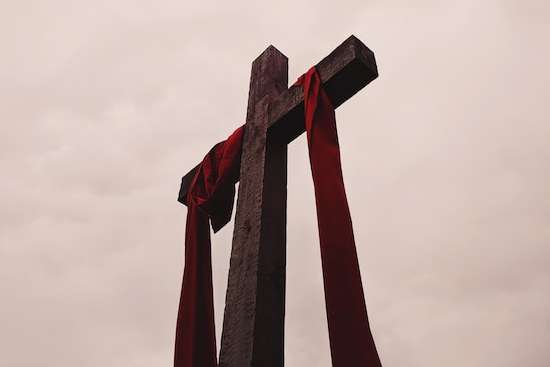
Photo by Alicia Quan on Unsplash
As Jesus was dying on the Cross, Mary and some other followers of Jesus gathered there to mourn. Her heart must’ve wrenched as she watched her Son dying, unable to do anything to soothe His agony.
Despite all that Jesus was going through at that moment, He didn’t forget about His mother. Some of His last words on the Cross were to ensure that His mother was cared for:
He had one last instruction for Mary and His disciple John:
“When Jesus therefore saw His mother, and the disciple whom He loved [John] standing by, He said to His mother, ‘Woman, behold your son!’ Then He said to the disciple, ‘Behold your mother!’ And from that hour that disciple took her to his own home” (John 19:26-27, NKJV).
Many scholars agree that Joseph had probably died by this point.8 This is why Jesus told one of His closest disciples to care for His mother instead.
Mary may have been among the women who came to anoint Jesus at the tomb. The Bible mentions that Mary, the mother of James and Joses, was there (Matthew 27:56). Since Jesus had brothers named James and Joses (Matthew 13:55), who could’ve been Mary’s children, it’s possible that this was a reference to her.
The next—and last—time we definitely read of Mary is in the book of Acts. All the disciples and other followers of Jesus are gathered together, praying and waiting for the outpouring of the Holy Spirit that Jesus had promised. Mary is listed among these Christians (Acts 1:14).
This indicates that Mary believed Jesus’ message and had become one of His followers, a Christian. Through everything she’d witnessed of her Son’s life and pondered in her heart (Luke 2:19), she knew Him to be the true Messiah.
We don’t know how Mary died, or when—the Bible doesn’t tell us. Some traditions believe she died and went to heaven (called the Assumption),9 but the Bible’s teachings on death suggest that she is resting in the grave.
Mary was an ordinary woman, just like us. But her humble, submissive spirit to God’s plan leaves us a beautiful legacy. Let’s look at some of the lessons her life can teach us.
What we can learn from Mary
Mentions of Mary in the New Testament are comparatively brief, but they teach some important lessons for our lives and relationship with Jesus.
Mary’s faith in God

The sudden appearance of the angel Gabriel and the mind-blowing news he brought undoubtedly shocked Mary to the core. She could have doubted this encounter or worried about its implications and the enormous role she was accepting. She could have refused the angel.
But instead, she chose to trust God.
Even if she felt like there were many questions and unknowns, she didn’t allow fear to control her decisions. Instead, she allowed God to guide her and lead her to become the mother of God—the promised Messiah of the Hebrews.
At times, we may find ourselves in situations that tempt us to doubt God’s leading in our lives. Maybe all we see is questions and unknowns.
And yet, like Mary, we can move forward despite uncertainty, trusting what we do know about God and His faithfulness. We can gather strength from the ways in which we’ve already seen Him at work, even when it feels messy and difficult.
God can use anyone
Mary’s calling demonstrates that God doesn’t pick the most experienced, wealthiest, or most powerful person for the job.
He chooses people from all walks of life to carry out His will. Mary was young, inexperienced, and poor, yet God used her to do the miraculous job of bringing His Son into the world.
Though Mary didn’t have any special credentials, the Bible says she was “highly favored” (Luke 1:28, NKJV). She was willing to submit to God’s call.
Mary’s story reminds us that none of us are too inexperienced, too young, or too poor to be used by God.
All He needs from us is our willingness. Then, He’ll do great things in us and through us, as highlighted in 1 Corinthians 4:26-27:
“Brothers and sisters, consider your calling: Not many were wise from a human perspective, not many powerful, not many of noble birth. Instead, God has chosen what is foolish in the world to shame the wise, and God has chosen what is weak in the world to shame the strong” (CSB).
Faithfulness in parenting

Photo by Oleksandr P
The Bible doesn’t say much about Mary’s role as Jesus’ mother. Did she struggle with the idea of parenting the Son of God? Did she feel inadequate? It’s possible.
What we do know is that Mary was faithful to her duty in helping Jesus to grow physically, mentally, spiritually, and socially (Luke 2:52). She taught Jesus to love the Word of God and live by its principles. We see this in the way Jesus turned to Scripture when faced with the temptations of Satan or when teaching the people (Matthew 4:1-11; Mark 12:10).
Mary was also faithful to allow Jesus to follow the call of His Father. Though she didn’t understand it completely at the time, she recognized its importance and sought to equip Jesus for that calling.
Was Mary a perfect mother?
It’s unlikely. After all, she was human and no doubt made mistakes.
Yet God entrusted her, as He does each parent, with the privilege of raising children and leading their hearts to Him. If you are a parent, you can be encouraged that God doesn’t leave you to do this task alone. He will be with you to guide you each step of the way, just as He guided Mary.
Faith carried Mary through
Western culture often hones in on Mary and her role in giving birth to Jesus. As we’ve seen, she did have a monumental task, both in overcoming the stigma surrounding His birth and preparing Him for His important calling.
Raising a child already comes with its challenges, so knowing that she was raising the Son of God and wanting to do it right must have felt overwhelming.
But Mary had a firm belief in God that carried her through the responsibilities, challenges, and painful moments. As Simeon had prophesied, a sword did indeed pierce through her own soul, especially when she watched Jesus suffer and die on the Cross. But ultimately, her faith carried her through that experience and to the hope of Jesus’ resurrection.
She became one of Jesus’ early followers, experiencing the outpouring of the Holy Spirit, spreading the good news of salvation, and helping establish the Christian church.
Related Articles.


- Weitzel, Eugene, quoted in “What is the Minimum Age for Marriage According to the Bible?” Biblical Gender Roles. [↵]
- “What Was Nazareth Like in the First Century?” Christ.org. [↵]
- Ibid. [↵]
- Cohik, Lynn, “The Real Problem with Mary’s Baby Bump,” Christianity Today, Dec. 18, 2009. [↵]
- Seventh-day Adventist Bible Commentary, vol. 5, comments on Luke 2:35. [↵]
- Ibid. [↵]
- Nichol, F. D. Commentary on Luke 1:28, Seventh-day Adventist Bible Commentary, Internet Archive. [↵]
- Nichol, F. D., Commentary on John 19:26, Seventh-day Adventist Bible Commentary, Internet Archive. [↵]
- Pelikan, Jarosalv Jan, “Mary,” Encyclopedia Britannica, February 28, 2024. [↵]
More Answers
Quem Foram os Juízes de Israel no Antigo Testamento?
Quem Foram os Juízes de Israel no Antigo Testamento?Tempos de crise exigem homens e mulheres de ação. Os israelitas, recém-estabelecidos na Terra Prometida, encontraram-se nesses tempos. À medida que nações inimigas atacavam e oprimiam as tribos, eles clamavam a Deus...

¿En qué se diferencian los Adventistas del Séptimo Día de otros protestantes?
¿En qué se diferencian los Adventistas del Séptimo Día de otros protestantes?Como denominación cristiana protestante, la Iglesia Adventista del Séptimo Día considera la Biblia como la regla suprema de fe y a Jesucristo como el único camino a la salvación. Tenemos...
Como os Adventistas do Sétimo Dia São Diferentes de Outros Protestantes?
Como os Adventistas do Sétimo Dia São Diferentes de Outros Protestantes?Como uma denominação cristã protestante, a Igreja Adventista do Sétimo Dia considera a Bíblia como o guia supremo e vê Jesus Cristo como o único caminho para a salvação. Temos algumas diferenças...

O que é ASI (Associação de Empresários e Profissionais Adventistas)?
O que é ASI (Associação de Empresários e Profissionais Adventistas)?ASI, que significa Associação de Empresários e Profissionais Adventistas (tradução adaptada), é uma organização baseada em associação que oferece apoio aos membros adventistas (profissionais...
Jesús y la Mujer en el Pozo: Derribando Barreras
El encuentro de Jesús con la mujer en el pozo revela su sentir por las personas heridas y su deseo de derribar prejuicios. Esta página analiza cómo Jesús se acercó a ella.

Revealing The True Meaning of The Parable of The Rich Man & Lazarus
Learn the real point behind one of Jesus’ most vivid parables.
O que são as Bem-Aventuranças (E o que significam)?
O que são as Bem-Aventuranças (E o que significam)?As Bem-Aventuranças, encontradas no início do Sermão da Montanha de Jesus no Evangelho de Mateus, são o manifesto do reino de Jesus. Elas descrevem a maneira como Seu reino funciona e o que significa ser um de Seus...

Líderes de la iglesia: ¿Cuál es el rol de un pastor Adventista?
Líderes de la iglesia: ¿Cuál es el rol de un pastor Adventista?¿Cuál es el rol de un pastor en la iglesia Adventista? La posición en sí misma, al menos en lo que respecta a una congregación local, no es muy diferente de la de los pastores en otras denominaciones...
ASI ni Nini (Huduma na Viwanda vya Waadventista vya Kibinafsi)?
ASI ni Nini (Huduma na Viwanda vya Waadventista vya Kibinafsi)?ASI, ambayo inayofupisha maneno (Huduma na Viwanda vya Waadventista vya Kibinafsi), ni shirika la uanachama linalotoa msaada kwa wainjilisti wa Kiadventista (wataalamu wa Kanisa la Waadventista wa Sabato...

Ellen White Alisema Nini Kuhusu Unabii wa Nyakati za Mwisho?
Tunaweza kusoma katika Maandiko kuhusu mfululizo wa matukio na dalili zinazoongoza hadi Ujio wa Pili wa Yesu Kristo.

Safari na Utume wa Ellen G. White Ulimwenguni
Safari na Utume wa Ellen G. White UlimwenguniIngawa Ellen White, mwanzilishi mwenza wa Kanisa la Waadventista wa Sabato, anajulikana zaidi kwa huduma yake nchini Marekani, pia alisafiri kwenda nchi nyingine kumi na mbili katika maisha yake—hili lilikuwa jambo kubwa...
Yote Kuhusu Wainjilisti wa Vitabu wa Kiadventista
Kanisa la Waadventista wa Sabato hutumia mbinu mbalimbali kusambaza tumaini la injili duniani.
¿Qué es ASI (Servicios e Industrias de Laicos Adventistas)?
¿Qué es ASI (Servicios e Industrias de Laicos Adventistas)?ASI, que significa Servicios e Industrias de Laicos Adventistas, es una organización basada en membresía que brinda apoyo a los laicos adventistas (profesionales Adventistas del Séptimo Día que no son...
¿Qué dijo Elena G. de White sobre la profecía de los últimos tiempos?
¿Qué dijo Elena G. de White sobre la profecía de los últimos tiempos?Podemos leer en las Escrituras acerca de la serie de eventos y señales que conducen a la segunda venida de Jesucristo. Y suena bastante intenso, por decir lo menos. La naturaleza simbólica del...
O que Ellen White disse sobre a profecia dos tempos finais?
O que Ellen White disse sobre a profecia dos tempos finais?Podemos ler nas Escrituras sobre a série de eventos e sinais que antecedem a segunda vinda de Jesus Cristo. E, para dizer o mínimo, isso soa bastante intenso. A natureza simbólica da linguagem da profecia...

Meaning of the Parable of the Two Sons in Matthew 21
Meaning of the Parable of the Two Sons in Matthew 21The parable of the two sons in Matthew 21:28-32 is about a father who instructs his sons to work in the family vineyard. The first son refuses to work but later has a change of heart and obeys. The second son says...
Viagens e Missão Mundial de Ellen G. White
Viagens e Missão Mundial de Ellen G. WhiteEmbora Ellen White, cofundadora da Igreja Adventista do Sétimo Dia, seja mais conhecida por seu ministério nos Estados Unidos, ela também viajou para outros doze países durante sua vida — uma grande conquista no século XIX,...
Joseph Bates na Nafasi Yake katika Kanisa la Waadventista
Joseph Bates na Nafasi Yake katika Kanisa la WaadventistaJoseph Bates alikuwa baharia aliyegeuka kuwa mhubiri ambaye alijiunga na Harakati ya Miller na kusubiri Ujio wa Pili wa Yesu kutokea mwaka 1844. Licha ya kukatishwa tamaa wakati hili halikutokea, Bates...

Je, Wasabato Husherehekea Sikukuu?
Je, Wasabato Husherehekea Sikukuu?Je unajiuliza ikiwa mwanafunzi mwenzako au mfanyakazi mwenzako Mwadventista husherehekea sikukuu kama wewe? Labda ungependa kumshirikisha kwenye sherehe fulani, lakini pia unataka kuheshimu imani yake. Kwa hiyo, huna uhakika wa jinsi...

O Que a Bíblia Diz Sobre a Segunda Vinda de Jesus Cristo
Curioso para saber o que a Bíblia diz sobre a Segunda Vinda de Jesus Cristo? Vamos abordar os versículos-chave e o que eles significam.

Waadventista Wanaamini Nini Kuhusu Imani na Matendo?
Waadventista Wanaamini Nini Kuhusu Imani na Matendo?Waadventista wanaamini tunaokolewa kwa imani, ambayo ni imani na tumaini tulilonalo kwa Yesu Kristo kutuokoa kutoka dhambini. Yesu, basi, anatupa uwezo wa kuishi kwa utii wa amri za Mungu na kuwahudumia wengine kwa...
Todo sobre los colportores Adventistas del Séptimo Día
Todo sobre los colportores Adventistas del Séptimo DíaLa Iglesia Adventista del Séptimo Día utiliza una variedad de métodos para difundir la esperanza del evangelio al mundo. Una de estas formas es a través del colportaje, también llamado “venta puerta a puerta” o...
Tudo Sobre Colportores Adventistas do Sétimo Dia
A Igreja Adventista do Sétimo Dia usa uma variedade de métodos para espalhar a esperança do evangelho ao mundo.
Los viajes y la misión mundial de Elena G. de White
Los viajes y la misión mundial de Elena G. de WhiteAunque Elena G. de White, cofundadora de la Iglesia Adventista del Séptimo Día, es más conocida por su ministerio en los Estados Unidos, también viajó a otros doce países durante su vida, un gran logro en el siglo XIX...

Mikutano ya Injili ya Waadventista ni Nini?
Kanisa la Waadventista wa Sabato linaweka mkazo mkubwa katika kushiriki injili kupitia uinjilisti, yaani kushiriki injili kupitia mahubiri, mafundisho, na ushuhuda.
Joseph Bates y su papel en la Iglesia Adventista del Séptimo Día
Joseph Bates y su papel en la Iglesia Adventista del Séptimo DíaJoseph Bates fue un marinero que se convirtió en predicador, se unió al Movimiento Millerita y esperó que ocurriera la Segunda Venida de Jesús en 1844. A pesar de sentirse decepcionado cuando esto no...
Joseph Bates e Seu Papel na Igreja Adventista do Sétimo Dia
Joseph Bates foi um marinheiro que se tornou pregador, juntou-se ao Movimento Millerita e esperou pela Segunda Vinda de Jesus em 1844.
¿Los Adventistas del Séptimo Día celebran las fiestas?
¿Los Adventistas del Séptimo Día celebran las fiestas?¿Te preguntas si tu compañero de clase o de trabajo adventista celebra las mismas fiestas que tú? Tal vez quieres incluirlo en algunas festividades, pero también deseas respetar sus creencias. Entonces, no estás...
Os Adventistas do Sétimo Dia Celebram Feriados?
Está se perguntando se seu colega de classe ou de trabalho adventista celebra os mesmos feriados que você?
Didn’t find your answer? Ask us!
We understand your concern of having questions but not knowing who to ask—we’ve felt it ourselves. When you’re ready to learn more about Adventists, send us a question! We know a thing or two about Adventists.