
We’ve all felt it before—the ball in your stomach, the panic of having lost something precious, the urgency of the search. It’s a desperate feeling, and it’s hard to think of anything else except for what you’ve lost.
And then…the rush of relief when you finally find what you’re looking for. You can breathe again.
The intense concern and yearning involved in finding what’s lost is a big part of the stories found in a 3-part parable series Jesus told to help us understand the depth of God’s love: the Parable of the Lost Sheep, the Parable of the Lost Coin, and the Parable of the Prodigal Son. You could even think of these parables of Jesus as one longer story meant to illustrate the same theme in different ways.
Similar to the other stories in the series, the Parable of the Lost Coin in the Gospel account of Luke 15 is all about God’s joy, human value, and God’s kingdom.
As we look at this parable together, we’ll learn:
- What happens in the parable
- Why Jesus told this parable
- The meaning of the parable
- What we can learn from the parable
This simple story is only a few verses long, but it is powerful and has deep spiritual meaning. Let’s dive in with what happens in the story.
What happens in the parable of the lost coin?

Photo by Thomas K.
“Or what woman, having ten silver coins, if she loses one coin, does not light a lamp and sweep the house and seek diligently until she finds it? And when she has found it, she calls together her friends and neighbors, saying, ‘Rejoice with me, for I have found the coin that I had lost.’ Just so, I tell you, there is joy before the angels of God over one sinner who repents” (Luke 15:8-10, ESV).
The parable begins with a woman who has ten valuable silver coins (or drachmas, as they were called). Each coin is worth a whole day’s wages.1 Some scholars say the coins may have been part of a marriage dowry or family inheritance. Whatever the case, it’s clear that they’re very valuable to her.2
So when she loses one of the coins, she is understandably distressed and searches diligently for it. Even though it’s only one piece of silver and she also has nine others, that doesn’t matter. Each one of those coins is deeply important to her.
She lights a lamp and sweeps her home, hoping the fibers of her broom will ensnare the coin so she can hear it and sweep it back toward her.3
Finally, she finds the coin and is so overcome with joy that she celebrates with her friends and neighbors.
It’s short, it’s sweet, and it has a happy ending. So why did Jesus tell this story?
Why did Jesus tell this story?
Jesus told the parable of the lost coin to help His audience understand just how much He valued them. They were precious to God because every single person is precious to God.
Jesus always drew a crowd wherever He went, and this instance was no different.
Tax collectors and other “sinners,” as the scribes and Pharisees called them, started to gather around Jesus. They were considered the dregs of society, and the religious elite avoided them at all costs. They didn’t want to be associated with people they didn’t consider worthy of God’s favor.
The religious elite believed that touching these types of people, or simply being around them—especially if they’re sick or injured—would make them “unclean” and unfit to represent the holiness of God.
So when the scribes and Pharisees saw this crowd surrounding Jesus, they started to complain.
“This man receives sinners and eats with them,” they grumbled (Luke 15:2, ESV).
Jesus knew that hanging out with tax collectors and the like would also make Him an outcast in the minds of the religious elite.
But Jesus’ entire mission was to bring all people closer to Himself, or as He put it, “to seek and to save the lost” (Luke 19:10, ESV).
He wasn’t afraid of or concerned about whether or not He fit in with the religious elite, or any other prestigious group. Instead, He wanted to unite all people with God through His love because each of us are infinitely valuable to Him.
So Jesus was intentional about welcoming those deemed as outcasts. He loved them and spent quality time with them, showing how much He valued them.
We know those interactions worked because there was always a crowd following Jesus. He spent sincere and attentive time with people, and in turn, people wanted to spend time with Him.
But Jesus also knew the hearts of the scribes and Pharisees. He knew they’d written off the people He was interacting with.
Ironically, looking down on others is part of what made the religious elite in need of Jesus, too. They favored people like themselves and often mistreated others by avoiding or or outright shunning them.
Yet they were part of the “lost” Jesus was trying to save.
So in an effort to save them, too, He shared this parable series to highlight God’s love for all people.
In particular, the lost coin story emphasizes that God values each of us individually, puts forth great effort to reach us when we go astray, and rejoices when we return to Him.
The meaning of the parable
The meaning of the parable of the lost coin is most fully grasped when we group it with the parable of the lost sheep and the prodigal son story. It helps us understand the fullness of its meaning.
So here’s a list of the main ideas from each story before we look more closely at the lost coin:
- The Parable of the Lost Sheep – Every person is of value to God, even when they wander away from Him naturally, like sheep.
- The Parable of the Lost Coin – Every person is of value to God, even if they’ve stumbled and become lost.
- The Parable of the Lost Son – Every person is of value to God, even if they initially reject Him.
Each parable focuses on saving, or finding, or welcoming home something (or someone) of great worth that’s been lost.
The parable of the lost coin tells us that God values us even while we’re lost and separated from Him. And this is a big deal.
We might be “lost” because we’re just not paying that close attention to Him. We aren’t doing it on purpose, but maybe we haven’t completely committed to God, and we find ourselves lost nonetheless. The world has a way of keeping us preoccupied and distracted.
And we know the woman lost her coin accidentally because…well…who loses money on purpose?
Bottom line, it isn’t anyone’s “fault” that this coin became lost. Because that’s hardly the point here.
If we think of how the woman represents God and the coin represents us, then we have another perspective. It’s not so much that God accidentally loses us…it’s more like we haven’t fully found Him.
And notice that the coin is lost in the woman’s own house.
This shows us that we can go to the “right” church and be around the “right” people in the “right” environment, as we’re taught to do, but we can still not totally give our lives to God or accept Jesus as our Lord. We can go through the motions of being religious without having a real spiritual connection with Christ.
Or, put another way, we can be lost by accident because we might prioritize the procedure of church or religion without fully committing to an authentic relationship with Jesus and living a Christian life, no matter where we are or who we’re with.
We might go to church every week but comfortably mistreat others who aren’t like us, like the Pharisees did. Or we might be really kind to others at church functions, but we don’t show that same kindness to our family at home.
We might enjoy hearing the Bible read at church but never pick it up to read it ourselves. (One of the best ways to get to know Jesus is to read about Him, right? And the Bible is all about Jesus.)
We might talk about God to other people but rarely talk with Him in private prayer.
Our fallen nature means we’re vulnerable to all these kinds of things and more.
But this parable shows us that there’s hope for us, even if these things happen.
The beauty is that God loves, values, and knows us, inside and out. And He wants to help us be more real with Him in a genuine way.
And so, He searches in His own home for the hearts that haven’t fully committed to Him.
We don’t have to become perfect or even serious about Him before He searches for us. He loves us first (1 John 4:19), while we’re separated, and He searches diligently for us as an active expression of that love.
John Nixon II, PhD, shares that “[God] goes to drastic measures to make sure that we are found when we are lost mistakenly.”4

How you respond to losing something tells a secret about you…it shows how much you value the thing you’ve lost.
Have you ever gotten down on your hands and knees in your living room, looked under the couch, tossed aside the couch cushions in search of something valuable?
Or maybe even stooped down in a puddle or in mud to look for something you’d lost?
You sneezed your way through dust, or ruined an outfit, or got filthy searching for the thing that was valuable to you. Because your clothes or even easy breathing (anyone else allergic to dust?) aren’t worth more than being apart from the thing you value.
Think about the stories of parents who have ventured into dangerous areas or who kept searching through the night, despite extreme exhaustion, simply because all they could think about was finding their lost child.
That’s what this woman did to find her coin. She didn’t just stand and lackadaisically glance around and then shrug it off when she didn’t see it anywhere. She moved things. Maybe even heavy things that weren’t meant to be moved. She dropped onto her hands and knees to increase her reach into tight, dark spaces in hopes of finding what she’d lost.
God does the same for us. He sometimes tries to reach us in ways we don’t expect—through a person we aren’t getting along with right now. Maybe through someone who happens to sit next to us in a waiting room. Or through an acquaintance we’re familiar with, but have never really talked to before.
We might even feel His presence through sickness, or success, or triumph, or heartache.
He performs miracles for us. He speaks to us in whispers that we can’t ignore. Even in our dreams, or when our thoughts drift. It might even give us a nagging feeling.
But really, that’s Him tapping our shoulder, trying to get our attention. He’ll do whatever it takes, as long as it doesn’t violate our free will.
There is no situation or place that God won’t go to find us. And He’ll even reach for us when we’re sitting right under His nose in His own house…all while we thought we were completely hidden in a dark corner.
We were all created in the image of God, born into God’s existing love for us. That immeasurable love is what drives Him to reconnect with us. Just like how we’d search cluttered areas, or empty out drawers, or get on the floor to look under the oven, even willing to reach into that oily, dusty residue to reclaim what’s precious to us. He’ll even boldly push aside the dark curtains that surround our hearts to find us—curtains we put up because of hurt or shame or guilt.
He still searches for us because we are worth that much to Him.
Every single one of us—no exceptions—are of high value to God. Let’s keep that in mind as we talk about other lessons from the story.
How does the parable of the lost coin apply to me?
Knowing that you’re highly valued can change…well, everything.
It can change the way you take care of yourself and the way you show up in relationships. It can change how you spend your time and your entire perspective on life.
It can even change whether or not you decide to pursue God.
So here are some things to consider.
God is worth looking for
A God who loves us, who knows everything about us and still wants to be with us, even if it costs His Son’s life…that’s a God worth searching for.
No matter how lost you may feel, God is worth looking for. And He can be found…because He’s already pursuing you!
- “Draw near to God, and He will draw near to you” (James 4:8, ESV).
- “Ask, and it will be given to you. Seek, and you will find. Knock, and the door will be opened to you. For everyone who asks receives, and the one who seeks finds, and to the one who knocks, the door will be opened” (Matthew 7:7-8, CSB).
- “Behold, I stand at the door and knock. If anyone hears My voice and opens the door, I will come in to him and eat with him, and he with me” (Revelation 3:20, ESV).
Yep, God already wants to be connected with you. In relationship and communion with you.
And when you grasp that He wants to be with you…when you really cling to it, you might realize that you matter more than you might feel like you do. Even if your sense of self-worth is already strong.
As this parable illustrates, God is already fervently searching. And when we turn around to see that He’s found us again, we can know for sure that He experiences so much joy in this reconnection.
And just like He finds joy in us, we can find our joy in Him.
God’s joy is complete in you
When the woman finally found her lost coin, she celebrated. And not just by herself. She invited her friends and family over so they could share in her joy, too.
God experiences joy when He’s in a relationship with you. In fact, “there will be more joy in heaven over one sinner who repents than over ninety-nine righteous people who don’t need repentance” (Luke 15:7, CSB).
Think about it like a parent/child relationship. Even before a child is born, they can spark joy in their parents’ hearts.
When they’re infants and completely dependent…when they’re curious toddlers touching and disturbing everything around them…when they’re inquisitive teens and start making choices that make you worry about where they’re headed in life.
Even when children aren’t thinking straight, or don’t live with intention, or make all kinds of mistakes, or when they become adults themselves…parents can still find joy in their children. They still want nothing but good for them.
God finds joy in being in a relationship with us because we’re His children. He wants all of His family to be together again.
That’s why He sent His Son, Jesus, to die for us. In His sinlessness, Jesus still chose to experience the full, natural consequences of our sin in our place. And that’s what true selflessness looks like (Romans 6:23; John 15:13).
Jesus’ sacrifice on the Cross means a lot of things, but it especially means there is no price He wouldn’t “pay” for us because we are priceless.
Jesus says that God’s joy—and our joy—is complete when we cling to Christ…so that “my joy may be in you and your joy may be complete” (John 15:11, CSB).
Have you ever experienced complete joy? The kind of joy that knows no bounds, that bursts from you and can’t be held in? The kind of joy that isn’t swayed by circumstances because it’s grounded in Him?
That joy—the joy that doesn’t need anything else—is in God. And when we find it in Him, we’ll want to celebrate it with everyone we know.
God’s kingdom is fulfilled in finding the lost
It’s odd to think about something missing from the kingdom of God. Or to think about God actively searching, working, to bring us closer to Him.
But He wouldn’t be searching for the lost if they weren’t missing…if some of us weren’t missing from His kingdom.
And remember, that was Jesus’ mission…“to seek and to save the lost” (Luke 19:10).
And when we’re all safely back in the fold with Him, His kingdom will be fulfilled, and we’ll all celebrate that victory together.
This New Testament parable reminds us that there is no such thing as being “too lost.” God will always welcome us back simply because we’re His children. It doesn’t matter what we did before we turned to Him or how long it took for us to be found.
All He wants is us.
Want a relationship with Jesus but don’t know where to start?
Check out the other stories in this parable series—Understanding the Parable of the Lost Sheep, and What Does the Story of the Prodigal Son Really Mean?
- Grudem, Wayne, PhD, and Schreiner, Thomas R., PhD, “Notes on Luke,” ESV Study Bible, 2008, p. 1988. [↵]
- “Notes on Luke,” New Living Translation Life Application Study Bible, 2019, pg. 1761. [↵]
- Keener, Craig S. PhD. “Notes on Luke,” NIV Cultural Background Study Bible, 2016, pg. 1779. [↵]
- Nixon, John II, DMin, “Seeking the Lost,” Takoma Park SDA Church, October 2018. [↵]
More Answers

Parable of the Wedding Feast: Lessons From a Royal Invitation
Discover the beautiful Gospel invitation behind this parable of Jesus.

The Lamp on a Stand Parable—What Does it Mean?
Going through the main points, major themes, and takeaways for this parable.

Understanding the Parable of the Hidden Treasure (Matthew 13:44)
Here’s what the “Hidden Treasure” parables shows us about God’s love.

The Parable of the Persistent Widow—What it Means for Your Prayer Life
Find out what the Persistent Widow parable actually means.

What the Parable of the Mustard Seed is All About
This parable shows us how God is always at work, even if we can’t always see it.

The True Meaning of the Friend at Midnight Parable
Uncovering the real message at the heart of the Parable of the Friend at Midnight

What the Two Builders Parable Actually Means
A walkthrough and breakdown of the Parable of the Wise and Foolish Builders.

What Does the Parable of the Dishonest Manager Really Mean?
Here’s a breakdown of what the “Parable of the Dishonest Manager” actually means.

Parable of the Rich Fool (Luke 12)—A Walkthrough
Here’s what the Parable of the Rich Fool in the Bible really means.

What the Good Samaritan Parable Really Teaches Us
The parable of the good Samaritan is a story familiar to religious and secular audiences alike.

What Does the Parable of the 10 Virgins Teach Us?
The story of the 10 virgins found in Matthew 25:1-13 is a well-recognized parable of Jesus, and one with a profoundly important message for all of humanity.

The Parable of the Unforgiving Servant—A Walk-through
Through this somewhat alarming story, Jesus teaches us about forgiveness, mercy, and human nature.

What Does the Parable of the Pearl of Great Price Mean?
Here’s what Jesus taught about the kingdom of heaven through this short parable about a merchant who finds a priceless pearl.

What is Jesus’ Parable of the Sower About?
The parable of the sower is ultimately about how people responded to Jesus Christ and His message of the kingdom of God—the Gospel.

Understanding The Parable of The Lost Sheep
The parables of Jesus teach object lessons about the kingdom of God. And three parables in particular, the parable of the lost sheep, the parable of the lost coin, and the parable of the prodigal son, specifically teach about God’s unconditional, redemptive love.
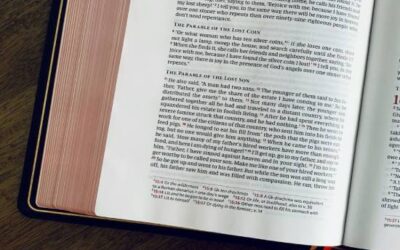
What Does the Story of the Prodigal Son Really Mean?
The Parable of the Prodigal Son tells the story of a wayward son, a jealous brother, and a father with unconditional love. Let’s see what we can learn from it today.

The Parables of Jesus
Have you ever been on the verge of sleep in the middle of a long lecture or sermon when suddenly the speaker takes a turn and begins to tell a story?