
The three temptations the devil presented to Jesus in the wilderness are a well-known part of the Gospel story (Matthew 4:1-11; Mark 1:12-13; Luke 4:1-13). But how often do we really think about the significance of this encounter? Why would Satan tempt the Son of God? And does this part of the story have much significance for us today?
Let’s go through the passages that document this difficult beginning to Jesus’ earthly ministry. Because this was more than just Satan trying to give Jesus a hard time. The entire plan of salvation hung in the balance. And it gives us a window into “the great controversy,” or the ultimate struggle between good and evil, or God and Satan.
Why Jesus went into the wilderness

Photo by Callum Hilton
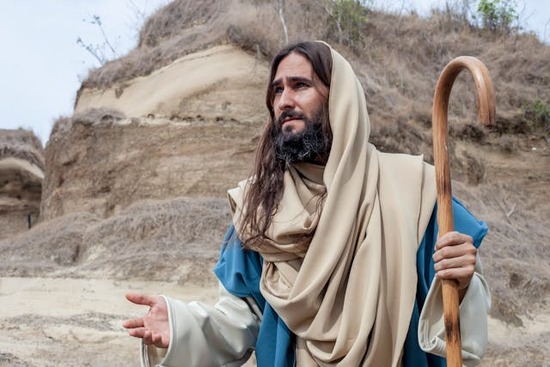
Directly following His baptism, Jesus went off by Himself so He could have dedicated prayer and communion with God, and to meditate on the ministry He was about to begin. The Bible tells us that the Holy Spirit led Jesus into the wasteland, or wilderness, where He could be alone (Matthew 4:1; Mark 1:4; Luke 4:1).
The word “wilderness” is significant. The original Greek word is eremos. It can be used as a noun or an adjective, and it can refer to a deserted or desolate place, the desert itself, or a solitary, lonely, quiet place.1
So, whether or not Jesus went to a physical desert or some other type of landscape, the use of this word is mostly to indicate that He sought a solitary place, away from distractions, away from people, away from anything that would interrupt His time with God.
The whole reason Jesus had come to earth was to save humanity from the inevitable consequences of sin. Death. Now that He was 30 years old, it was time for Him to begin His ministry, fulfilling Old Testament prophecy and following God’s timing.
Just a little while earlier, John the Baptist, a prophet and Jesus’ cousin, baptized Him in the Jordan River (Matthew 3:13-17; Mark 1:9-11; Luke 3:21-22). John had been baptizing scores of people there already and proclaiming the coming of the Messiah.
When Jesus came up from the water after His baptism, a voice from heaven announced, “This is My beloved Son, in whom I am well pleased” (Matthew 3:17, CSB).
Then we find Jesus in the wilderness. Matthew and Luke record that He fasted for 40 days and nights (Matthew 4:1-2; Luke 4:1-2). He wanted to depend solely on God to sustain Him.
Why Satan came to tempt Jesus
And then we read that “the tempter” (Satan) shows up. If he could convince Jesus to stray from His mission and yield to his requests (which turned out to be more like challenges or dares), this could foil the whole plan of salvation. Ever since Satan rebelled in heaven long ago (Revelation 12:7-9), he’s worked hard to deceive humanity and lead them away from the influence of God’s love.
He succeeded with our first parents, Adam and Eve, by crafting an enticing lie that got them to disobey God (Genesis 3).
And since then, he’s worked nonstop to draw others away from Him, too. Attempting to fool us into thinking God is somehow holding out on us (Revelation 12:9, John 8:44). That’s there’s more this world has to offer than what God provides.
He knew Jesus had a plan of salvation that went into effect the moment Adam and Eve sinned (1 Peter 1:18-20). But in order for it to work, Jesus had to live as a “second Adam,” but to do so without sin (Romans 5:12-21; Corinthians 15:20-22; 42-46), the polar opposite of God’s unconditional love. Only a sinless sacrifice could cancel out the debt of sin (2 Corinthians 5:21).
So if Satan could get Jesus to sin—to go against His mission and act self-servingly—the whole plan would break. He’d have won the long war he’d started against God, Jesus, and His angels.
But then…why was Satan even allowed to tempt Jesus? Couldn’t God have just held up His all-powerful hand and said no?
That might sound safe and logical, but this temptation was necessary. If God prevented it, then Jesus would not be experiencing the life we do. And that is what He had to face, yet without sin.
God is all about freedom of choice. It’s necessary for unconditional love to exist.
We can choose to love and obey His law of love, or we can choose not to. It’s up to us. And within that choice, He is transparent, allowing us to fully see His character and to fully see Satan’s character. These temptations of Jesus allow us to see the characters of both.
These temptations also dispel the common lie Satan spreads relentlessly—that God is a tyrant. If God protected Jesus from temptation, Satan could argue that God doesn’t really give us a free choice. We’d just be pawns on His chessboard. And Satan could argue that since Jesus never had the true chance to be tempted…how do we know he wouldn’t have given in to Satan instead of sticking with His mission?
By bringing God’s character into question during the temptations, Satan revealed his true character. And Jesus revealed His loving character: that we do have a choice, and choosing God means choosing a life lived in love and trust, as opposed to selfishness and fear.
When we read through the interaction, we can see the way Satan twists Bible verses around to give them a slightly different meaning, attempting to trick us into worshiping him, and to lead us to sacrifice trust in God for trust in earthly things. (Sounds a lot like when he deceived Eve, too, doesn’t it? But more on that in a minute.)
Breaking down Jesus’ temptations
Satan came to Jesus with three temptations:
1. Turning stones into bread
2. Casting Himself down from the pinnacle of the temple in Jerusalem
3. Bowing down to Satan to gain every kingdom of the world
These were similar to the types of temptations Adam and Eve faced and failed. They were tempted by the fruit from the Tree of the Knowledge of Good and Evil. So both temptations began with food (stones to bread and forbidden fruit).
They also both test the truth of God’s Word. Satan leads Adam to doubt God’s Word (Genesis 3:1-6). But Jesus remains confident in God’s promises and doesn’t listen to Satan.
The temptations in Eden and in the wilderness show us the identity of Adam and Jesus as well. Adam is God’s son (Luke 3:38), but he was human and fell to temptation, plunging the entire race of humanity into sin. Jesus was also God’s Son, but He did not succumb to temptation. Instead, He redeemed humanity from sin’s ultimate consequence: everlasting death (Matthew 25:46; Romans 6:23; 2 Thessalonians 1:9; James 1:15; Revelation 21:8).
Let’s study each temptation more closely.
Temptation 1: Stones into bread (Matthew 4:3-4; Luke 4:3-4)

Photo by Nick Night on Unsplash
This first temptation, which would have involved Jesus performing a miracle to convert desert stones into delicious bread, spoke to Jesus’ physical need for nourishment.
He had just been fasting for 40 whole days, which is enough to make anyone beyond famished. He likely had little energy and perhaps wanted nothing more than to eat.
For Jesus—who would later turn water into wine—those stones would’ve instantly become food.
Just as food was the first trap Satan set for Jesus, we often think of our physical needs first: food, clothes, shelter. Lacking these, we can sometimes make rash decisions in order to obtain them. And that was exactly what Satan wanted Jesus to do.
But what’s wrong with Jesus performing a miracle for Himself? There’s nothing wrong with eating when you need food. And the Bible is full of miracles Jesus performed for other people, including feeding 5000 people, healing the sick, and even raising the dead. How was this different?
The difference was that Satan was asking Jesus to perform a miracle based on His own will and desires—not God’s. All the other miracles He performed during His ministry were done in harmony with God’s will. This one wasn’t.
Think of the stereotypical mean kid on the playground who would taunt, “I bet you can’t….” The kid probably didn’t doubt your ability to do whatever it was he said. He just wanted to control you like a puppet.
The Seventh-day Adventist Bible Commentary provides some additional insight:
“The temptation consisted in Satan’s suggestion that Christ satisfy His hunger in a wrong way, that is, without regard to what the Father’s will might be. Satan’s proposal covertly insinuated that God must be unkind to leave His Son alone to suffer hunger, particularly when it was entirely unnecessary.”2
By yielding to His immediate, physical needs rather than keeping His focus on the very mission He came to earth to complete, Jesus would have demonstrated that He was willing to waver, to let Satan distract Him from the plan in front of Him in the name of an earthly need of food. It would have demonstrated that, despite being in the holy presence of God, He required food to sustain Him, rather than trusting in His Father God to continue sustaining Him, which is a big part of the idea of fasting.
This was the same train of thought the angel Lucifer developed—placing His own desires over those of the Almighty God who made him. And this led to rebellion and his banishment from heaven, when he then assumed another name: Satan (Revelation 12:7-9).
So Satan was actually asking Jesus to make the same deadly mistake he made. And as Adam did, in believing that what Satan was offering was better than what God was providing (Genesis 3:4-6).
If Jesus made this mistake as well, the plan of salvation would lose its power. Jesus would have yielded to a created being who was inherently subject to Him.
But Jesus could see through Satan’s ruse, hungry and tired as He was. He knew His purpose, and the will of His Father, was better than anything Satan had to offer. No matter how appealing it was in the moment.
He responded with a quotation from Deuteronomy 8, that food isn’t always the most important thing:
“That [God] might make you know that man shall not live by bread alone; but man lives by every word that proceeds from the mouth of the Lord” (Deuteronomy 8:3, NKJV).
Like Adam and Eve, Jesus was tempted to stop what He was doing and satisfy His immediate, material desire for food. Adam and Eve unfortunately succumbed to this temptation because the fruit looked “good for food” (Genesis 3:6, NKJV). But Jesus set aside the idea of food, and instead let God sustain Him.
Temptation 2: Leaping from the temple (Matthew 3:5-7, Luke 4:9-12)
For the second temptation, Satan challenged Jesus to throw himself down from the temple, with the assumption that angels would catch Him. Satan even quoted Psalm 91 to back his claims:
“He will give his angels orders concerning you, and they will support you with their hands so that you will not strike your foot against a stone” (Matthew 4:6, CSB).
Like the first temptation, this also sounds somewhat reasonable. Jesus is God, so He could easily ask the angels to catch Him, and He wouldn’t be harmed.
The thing is, what purpose would it serve to cast Himself down? He’d only be trying to prove Himself to Satan and the evil angels—who were well aware of His abilities. It was unnecessary. It was another challenge from a bully who wanted to appear in control. Who wanted Jesus to pay attention to him instead of staying the course.
We also get a glimpse of another deceitful tactic of Satan’s. He manipulated the word of God to sound convincing in his proposal to Jesus. He appeared to quote from a Psalm, but left out the phrase, “To keep you in all your ways” (Psalm 91:11, NKJV). And what’s more, he pulled the verse completely out of context and remodeled it to say something else. He did this in Genesis, too, when he tempted Eve (Genesis 3:1).
Let’s explore that further.
Satan wanted Jesus to presume that God would act on His behalf if He chose to do something rash and self-serving. But this was a sly attempt to cover up Satan’s deeper motive: getting Jesus to follow his diversions instead of staying on the path He had already committed to be on, despite being subject to human frailty and needs. It’s similar to the first temptation, but in a different form.
Jesus could have thrown Himself down, sure. But in doing so, He again would have been yielding to Satan’s influence and allowing this power play to proceed—even though it would serve no real purpose because Satan wasn’t trying to “figure out” if Jesus would die if He jumped. He just wanted to play puppeteer and make Jesus jump on command.
But what are we told to do when a bully taunts us, trying to convince us to do something unnecessarily risky to “prove” something about ourselves? The advice is usually to ignore them. To dismiss their demands. After all, we don’t need to care what they think of us because they certainly don’t have our best interests in mind.
And that’s pretty much what Jesus did. He responded, also with a quote from Scripture (Deuteronomy 6), “It is written, ‘You shall not tempt the Lord your God’” (Matthew 4:7, NKJV).
He knew what His purpose was, and He didn’t owe Satan any sort of explanation or proof.
But Satan hadn’t used every trick up his sleeve yet. He had one more test, which he hoped would be the clincher.
Temptation 3: Yielding allegiance (Matthew 4:8-10; Luke 4:5-8)

Photo by Yudha Dwiyoko Putra
Satan’s third temptation was the climax. He proposed that if only Jesus would bow down to him, He could have all the kingdoms of the world. And as a visual aid, Satan took Jesus up on a high mountain peak (Matthew 4:8; Luke 4:5), where Jesus could see the splendor of the kingdoms below.
Satan was likely tugging on the love Jesus had for His children who had all gone astray. And the world that became corrupted with sin. He surely desired to have all that back.
And again, it’s interesting because Satan tries to mimic something from Scripture. Doesn’t it remind you of when God takes Moses high on a mountain to show him Israel’s future inheritance? (Deuteronomy 34:1-4)
It’s easy to think that since Jesus was the Son of God, such an allurement would not effect Him. He was already the ruler of everything. But, Satan received authority over the world after the fall of humanity.3 And Jesus was now walking among humanity. He was a part of this picture.
And humans, as we all know, are prone to wanting things now, and even settling for less if we can get it right now.
Satan proposed that Jesus could forfeit His heavenly position, the Son of God, to have all those kingdoms now. He was likely hinting that Jesus should settle for a political victory, similar to what the Jews of that time were hoping for. Someone who would deliver them from Roman oppression.4
“It was as if Satan said, ‘You came to earn title to this world, did You not? Accept it as a gift from me. Power and honor will be Yours for the taking.’ In return, all Satan asked was a transfer of personal allegiance from the Father to himself.5
But that perception of the Messiah was what He would work so hard to show people that He was not. His mission wasn’t at all about human power or politics. His kingdom is not of this corrupted world (John 18:36). Instead, He was rescuing the whole world from being in the forever grasp of sin and its ultimate consequence.
But Satan was going to try everything he could. If this worked, he would “win” the war over this world, throwing a big wrench in the plan of salvation. And to add to this, if Jesus would bow down to him, He would commit the highest form of blasphemy against God the Father. Against the other members of the trinity He belongs to. And it would signify total allegiance to Satan.
But Jesus was in perfect communion with the Father. He knew that Satan didn’t actually “own” the world, and whatever he could “give” Jesus would be fleeting and fake. So He responded, once and for all, “Away with you, Satan! For it is written, ‘You shall worship the Lord your God, and Him only you shall serve’” (Matthew 4:10, NKJV).
After this, Satan vanished, knowing he’d been defeated. And Jesus, exhausted by this ordeal, allowed Himself to be cared for by angels—those who truly had His best interest at heart.
Even in human form, He had defeated the deceiver, the devil. And He upheld the plan of salvation.
And how exactly did He accomplish this?
How Jesus was victorious over these temptations
Jesus had three key pillars that formed the foundation for His life, and these helped Him overcome the tests presented to Him.
But before we discuss those, it’s important to note that Jesus did not have any supernatural power at His disposal. He gave that up when He took on the role of the Messiah. He conquered these with the same abilities any of us have, as the apostle Paul highlights in Hebrews:
“For we do not have a High Priest [Jesus] who cannot sympathize with our weaknesses, but was in all points tempted as we are, yet without sin” (Hebrews 4:15, NKJV).
“For in that He Himself has suffered, being tempted, He is able to aid those who are tempted” (Hebrews 2:18, NKJV).
Jesus defeated temptation with the same resources we have available to us: trust in God, fasting and prayer, and reliance on what the Bible says. Let’s take a closer look at these.
Trust in God
Throughout these tests, Jesus trusted that this was still the best plan. He could have asked, “Why is Satan even allowed to tempt Me when I’ve already been without food for over a month?” Or “Why now…at my weakest point?”
But Jesus didn’t question His mission. He didn’t question His Father that He relied on while living as a human. This plan, this path, was what Jesus wanted! And after all, He had just been in the wilderness all this time and God had taken care of Him. Why should He doubt this provision now?
The Bible says that God led Jesus into the wilderness to be tempted (Matthew 4:1; Mark 1:12-13; Luke 4:1). Jesus knew that this was coming, even if He didn’t know exactly what Satan would say or how he’d approach Him. Just like He knew Adam and Eve would be tempted by the knowledge of good and evil that would result from eating the fruit of that tree.
But temptation, while it’s a bridge to action…isn’t an action. A law isn’t broken just because you were tempted to break it. Adam and Eve still had a choice, even though they were tempted. And so did Jesus. He very likely felt the full strength of temptation, but He chose the will of the Father.
Fasting and prayer

Photo by Ngọc Gabriel
The Gospel accounts say Jesus fasted for the entire 40 days He spent in the wilderness. And during this time, He was undoubtedly praying to His Father—both for the ministry He was about to begin, and for the help and courage to carry Him through it.
Fasting was a common practice at the time. It was designed to remove all less-important desires from one’s mind so a person could focus on close communion with God. It placed reliance on God for sustenance, rather than food. It demonstrated faith.
People fasted for many different reasons, as evidenced in the Bible. People fasted to demonstrate repentance, like the people of Nineveh (Jonah 3:5). People fasted while praying for wisdom and guidance, like the Israelites after Saul and his sons were killed (1 Samuel 31:13). People fasted while praying for discernment and protection, like Esther and the Jews (Esther 4:16). And many other reasons.
Scripture doesn’t record a specific reason for Jesus fasting in the wilderness, but in doing so, He drew close to His Father, and drew strength for His coming ministry. And this closeness helped Him emerge from His temptations as the victor.
Jesus also spent considerable time in prayer. This includes both short prayers and longer, more personal prayers.
For example, He prayed all night before calling the 12 disciples (Luke 6:12).
Luke also writes that Jesus “often” went into the wilderness to commune with God (Luke 5:16). These moments of reconnection with His heavenly Father helped refuel Him for the difficult things ahead.
Even when faced with impending capture and crucifixion, Jesus had intense prayer sessions in the Garden of Gethsemane (Matthew 26:36-46; Mark 14:32-42; Luke 22:39-46). It strengthened Him for the ultimate trial ahead.
Reliance on God’s Word
When Satan tried to smooth-talk Jesus into falling for his traps, Jesus didn’t allow His emotions or His physical weaknesses to control His answers. Instead, He relied on Scripture to supply the answers. He quoted from the Old Testament, specifically Deuteronomy 8:3, Deuteronomy 6:13, and Deuteronomy 6:16.
Mary and Joseph likely taught Jesus Scripture early in life, which we can deduce because of how He could hold His own in discussions about God’s law at a young age (Luke 1:41-42, 46-55).
And because He was well-versed in the Scriptures, He was also aware of the prophecies about Him. One day, He would die on the Cross and redeem all humanity from their sins. His ministry, not yet begun, couldn’t end like this. He wouldn’t allow Satan to win the war and destroy all His children.
What we can learn from this story
The temptations of Jesus teach us a lot about His character and of the greater plan of salvation. It’s about the willful decision Jesus made to step into the role as our Savior.
Jesus stepped into our place
He knew that we humans could never successfully resist temptation forever. At some point, every person takes the bait. Again. And again.
“For all have sinned and fall short of the glory of God” (Romans 3:23, NKJV).
Because of this, we can never save ourselves. We’ll repeatedly fall to temptation, despite our best efforts.
Enter Jesus. He knew we could never redeem ourselves. And He loves us. So He stepped into our place. By choosing to become a human and live in our corrupted world, He allowed Himself to face all the same temptations we face and overcame them in our place—saving us from death (1 John 3:16).
Jesus as the second Adam
The Bible calls Jesus the second Adam (1 Corinthians 15:45-49). Adam was the son of God, in that God created him as the first human being—perfect (Luke 3:38). But Adam was tempted by the devil and fell for the lies, plunging the world into the fearful, painful existence of selfishness.
Then Jesus came to earth as the Son of God. Like Adam, He also was perfect. And He underwent the same types of temptations, directly with Satan, as Adam and Eve had.
But Jesus, unlike Adam, resisted temptation. He dealt with Adam’s fall by not falling, all because He held onto the connection with God the Father. And in doing so, allowed the plan of salvation to continue, which led to Jesus’ sacrificial death on the Cross and resurrection.
And these events allow us to have eternal life with Jesus, if we want it.
We can resist temptation, too—through Jesus

Photo by cottonbro studio
Jesus’ victory over temptation shows us how we can resist and become victorious. It’s certainly not enough to say, “I’ll be fine, I’m a Christian.” Jesus trusted in God and talked regularly with His Father through prayer and fasting. And His responses to Satan’s traps were firmly rooted in the Bible. He knew it because He spent time studying it.
Studying the Bible and taking regular time throughout the day to talk with God in a personal way helps to strengthen our relationship with Him. And this arms us with powerful ammunition of defense against the devil’s attacks.
Just like resisting a schoolyard bully, it might take some practice and building of habits. It might take the support of others who care about you. It might take a bit to truly accept that we have all we need in Jesus Christ, and it doesn’t matter what any human person taunts us with or demands that we prove, explain, or test. We don’t owe the devil a comeback, we don’t owe him an explanation. While clinging to Jesus, it’s okay to just ignore the temptations he throws at us (James 4:7).
And while this can sound intimidating, remember—Jesus said we can pray for the Holy Spirit to help us handle temptations that come our way (John 14:26).
Jesus’s temptation in the wilderness was only the start of His ministry and all the challenges He would face on earth. But He had just one mission in mind, and He fulfilled it, both in the encounter with the devil and during His ministry: the salvation of all humanity.
Want to learn more about why this battle between God and Satan matters?
Related Articles


More Answers

Signs of the Second Coming of Jesus Christ
Here’s what the Bible says about how to recognize when Jesus’ return is near.

Was Jesus Ever Hypocritical? Learn What the Bible Says.
Was Jesus Ever Hypocritical? Learn What the Bible SaysMany undesirable traits are associated with hypocrisy. But overall, hypocrites intentionally try to make others believe they uphold or represent a certain belief system, character trait, lifestyle, etc., when in...

Is Jesus the Same Being as Michael the Archangel?
Many Christians have wondered at the mysterious identity of Michael the Archangel.

Understanding the Miracles of Jesus Christ
Understanding the Miracles of Jesus ChristWhat do you think of when someone says something is “a miracle”? Maybe you think of an unexpected recovery, surviving a dangerous accident, or getting an answer to a seemingly impossible prayer. Simply put, miracles are...

All of Jesus’ Warnings and Encouragements in the Bible
Here’s a comprehensive list of every warning and encouragement from the words of Jesus, as well as how they can benefit our lives today.

Does Jesus Really Care About Me?
Does Jesus Really Care About Me?Short answer: yes, Jesus really does care about you, specifically (1 Peter 5:7, ESV). But if you’re wondering whether Jesus Christ really, truly cares about you, you aren’t alone. Gideon, Abraham and Sarah, Job, Jeremiah, Elijah, even...

Jesus and the Pharisees and Sadducees (Why They Opposed Jesus)
The Pharisees and Sadducees hated Jesus and wanted Him dead. This page looks at who they were and what motivated them to oppose Jesus.

The Many Names of Jesus in the Bible and What They Mean
The Many Names of Jesus in the Bible and What They MeanThe Bible includes a lot of names for Jesus, and they all reveal different facets of His identity, power, character, and mission. We’ve all had nicknames throughout our lives. They might be shortened versions of...

When Is Jesus Coming Back?
The Bible doesn’t tell us exactly when the Second Coming will occur, but learn about the signs that point to the nearness of the return of Christ.

After Jesus’ Ascension: What He Did Throughout the New Testament
After Jesus’ Ascension: His work Throughout the New TestamentWe first get to know Jesus, the Son of God and our Messiah, by reading the Gospel accounts of His earthly ministry. And after He died for our sins and was resurrected, He returned to heaven. This is known as...

Who is Jesus
Who Is Jesus, and Why Is He So Important to Us? Jesus Christ is the central figure of Christianity. Not only is He God’s Son and our Savior, He: Is who the Bible is all about Can give us eternal life Is part of the Trinity with God the Father and the Holy Spirit Is...

Jesus and John the Baptist: Their Relationship and Ministry
John the Baptist and Jesus were cousins, friends, and close coworkers in ministry. Learn the lasting significance of their relationship.

Why Did Jesus Have Disciples and Who Were They?
During Jesus’ ministry on earth, He selected certain individuals to help with and continue His work. They would be referred to during that time as His “disciples.”

Does Jesus Appear in the Old Testament?
Before His incarnation, Jesus also played an active role in the redemption and salvation of humanity. Discover the different ways He appeared in Old Testament stories.

Jesus’ Baptism: What It Means and Why It Matters
Jesus’s baptism marked the beginning of His earthly ministry. It was God’s big reveal regarding who Jesus is.

Why Is the Genealogy of Jesus Christ So Important?
Have you ever traced your genealogy back several generations? Did you ever try to find out if your ancestors did anything famous (or infamous)?

Jesus and the Woman at the Well: Breaking Down Barriers
Jesus’ meeting with the woman at the well reveals His heart for hurting people and His desire to break down prejudice. This page looks at how Jesus reached out to her.

Who is The Son of Man in the Bible?
In calling Himself the Son of Man, Jesus confirmed His role as humanity’s savior. Learn what else this title tells us about Jesus.

Who Was Mary, the Mother of Jesus Christ?
Mary, Jesus’ mother, was a humble woman, deeply committed to following God’s will for her life. Learn what the Bible says about Mary and what we can learn from her.

What Does the Bible Mean When It Calls Jesus the Son of God?
When the Bible calls Jesus the Son of God it’s referring to His divinity. Learn what makes this so significant and what it has to do with salvation.

The True Events Surrounding the Birth of Jesus
Jesus’ birth involved many strange events: a pregnant virgin, a stable birth, angels appearing to shepherds, and wealthy visitors. These help us understand His supernatural yet incredibly humble life.

An In-Depth List of the Prophecies About Jesus
How many prophecies of Jesus are in the Old Testament?

Can We Find Jesus Christ In the Old Testament?
Yes, you might be surprised to know that there are hundreds of verses in the Old Testament about Jesus.

The Parables of Jesus: What They Teach Us About Life
Have you ever been on the verge of sleep in the middle of a long lecture or sermon when suddenly the speaker takes a turn and begins to tell a story?