
Ellen White is an important part of the Seventh-day Adventist Church: she played a significant role in its founding, provided biblical support for several key doctrines, and continues to inspire church members today with her insightful counsel.
But if you’re just becoming familiar with what Adventism is and what it’s all about, it might feel strange to find that so much attention is placed on one particular person of our history.
It might even bring you to wonder, can I still be an Adventist if I don’t “believe” in Ellen White or Ellen White’s teachings?
Simply put, the answer is, “yes!” And we’ll get into why.
Jesus and the Bible have always been, and still are, the foundation of the Adventist Church. No individual or man-made creed will change that.
This page will discuss how Adventists regard Ellen White, answering questions like:
- What does it mean to “believe” in Ellen White
- Can I be an Adventist if I don’t believe in Ellen White?
- Why do Adventists hold Ellen White in such high regard?
Let’s start off by establishing what it even means to believe in Ellen White.
What does “belief” in Ellen White mean?
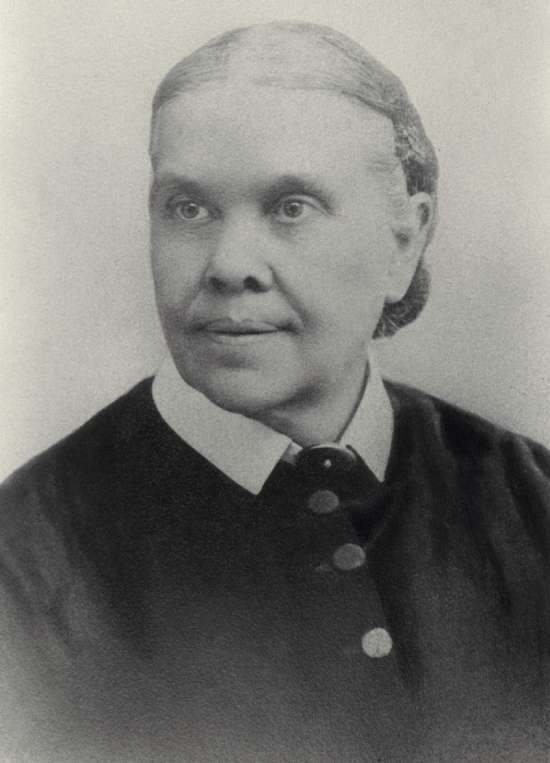
Courtesy of the Ellen G. White Estate, Inc.
When Adventists talk about belief in Ellen White, they aren’t referring to it in the same way that a person would ”believe” in Jesus Christ.
Ellen White is not, and should never be, held in the same regard as God.
So, instead of asking if someone believes in Ellen White, it’s more accurate to ask if someone believes that she had the spiritual gift of prophecy.1
This doesn’t mean unwaveringly adhering to all of her writings, as many of them were written in a specific context to a specific audience. She also wrote ordinary letters about everyday things, just like many people did in those days when they didn’t live in close proximity.
Rather, believing in Ellen White is more about recognizing her as a servant of God and acknowledging her prophetic gift (just as we’d say that we “believe” in the prophets we read about in the Bible).
But how do Adventists know that Ellen White exhibited the gift of prophecy?
Well, she passes the tests of a prophet as outlined in the Bible:
- Glorify God and not themselves (John 16:13)2
- Testify that Jesus became human and is from God (1 John 4:2)3
- Must align with the Bible (Isaiah 8:20)4
- Lives a life that bears good fruit [habits] (Matthew 7:15-16)5
- Prophecies must come true (Jeremiah 28:9)6
Her writings and instructions that concern Adventist doctrine and theology are always compared to biblical instruction. Nothing she wrote contradicts or amends the instructions of the Word of God.
Many Adventists who know Ellen White’s teachings well feel confident that her writings align with the Bible and can supplement their spiritual life.
That being said, Seventh-day Adventism is a global church, so there are certainly varying degrees of knowledge about or application of Ellen White’s teachings from congregation to congregation, and even Adventist to Adventist.
These differences ensure that Adventists are not Adventist simply because they “check the box” of believing in Ellen White’s inspired counsel. Not only that, but an individual’s beliefs shape over time depending on their experiences. Each is on their own unique walk with God.
Now, let’s break down the primary question of this article a little bit more.
Can I be an Adventist if I don’t believe in Ellen White?
There are several reasons why the answer to this question is yes, including:
- Jesus and the Bible are the foundation of the Adventist Church.
- The early Adventist Church pioneers themselves, including Ellen White, would answer this question with a “yes.”
- Ellen White embraced the fact that her special gift was to point people toward Scripture, upholding its importance.
- The Fundamental Beliefs are descriptive and not prescriptive.
By going over each of these reasons, we can gain a better understanding of the Church and why someone can still be an Adventist, even if they don’t fully believe in or know everything about Ellen White’s prophetic gift.
Jesus Christ and the Bible are the foundation of the Adventist Church
From its beginning, the Adventist Church has placed a lot of emphasis on careful Bible study. The Word of God and the life of His Son, Jesus, make up the cornerstone of the Church. Without those things, the Church would not exist.
The Bible is also the foundation of all Adventist doctrines and beliefs, including the Sabbath, the Trinity, Creation, the Great Controversy, and the second coming of Christ.
Furthermore, God is the only being that Adventists worship. Adventist fellowship, then, is dependent on one’s belief in and view of God.
Belief in Jesus, His gift of salvation, and the Bible are far more important than knowing all about Ellen White. Believing in Jesus and His gift of eternal life is actually a salvational issue. In other words, you certainly do not need to believe in Ellen White’s prophetic gift to be saved.
Early church founders’ position on this question

photo to indicate that this is James White, Ellen White’s husband?
The founders of the Adventist Church, including Ellen White herself, denied that belief in her writings and visions should be a necessity for Adventist church membership.
On several occasions, she made it clear that her role is merely that of a servant of God. She is not necessary for salvation, and her writings are reflections on concepts that are already in Scripture.
Her spiritual gift was meant to remind fellow believers of what they should already know, to give them insight on perplexing concepts, to provide insight about the end times, and to encourage her fellow believers to live according to the Bible’s principles.
The clearest example of Ellen White’s opinion on this point comes from the first volume of her book, Testimonies of the Church:
“There were some who were God’s children, and yet doubted the visions…Some were skeptical, and they had sufficient cause to make them so…There should be no trial or labor with those who have never seen the individual having visions, and who have no personal knowledge of the influence of the visions. Such [people] should not be deprived of the benefits and privileges of the church, if their Christian course is otherwise correct, and they have formed a good Christian character.”7
Another founder of the Church—and Ellen White’s husband—James White, similarly opposes the use of Ellen White’s spiritual gift as a test of faith:
“It is well known that we have been charged with testing all men by the visions, and of making them the rule of our faith. This is bold untruth, of which those who uttered it were not ignorant. This I have denied, and deny it still.”8
It’s clear based on these quotes that believing in Ellen White’s visions and writings is not necessary for church membership.
However, because the Adventist Church does accept Ellen White as an inspired messenger, if one joins the Church who actively opposes this belief and seeks to create disunity, that can become a problem that needs to be addressed.
If, however, members and congregations are treated with love and respect, then these differing perspectives don’t have to cause any unrest.9
The fundamental beliefs are descriptive, not prescriptive
The fundamental beliefs are often taken as a check-box of what an Adventist should or should not believe and how an Adventist should or should not live.
This would make the fundamental beliefs prescriptive, meaning that they are prescribing a set of beliefs or lifestyle for members to follow.
However, it’s much more useful and accurate to look at the fundamental beliefs as descriptive instead.
Rather than having the fundamental beliefs be a series of boxes you need to check in order to be an Adventist, they are better seen as describing what the majority of Adventists believe.
However, if someone wishes to join the Adventist Church but disagrees with most of its members’ perspectives of Scripture and its application, one might simply question the reasoning. It may be that “Seventh-day Adventist” isn’t the most accurate description of their faith. (But that still would not make them unwelcome in the faith community, unless they intended to create discord. And that’s a different issue altogether.)
Those wishing to join the Adventist Church are introduced to the 28 fundamental beliefs and to Ellen White and her writings, so that they can judge for themselves why Adventists believe she had the prophetic spiritual gift.
Why do many Adventists hold Ellen White in high regard?

Photo by Emmanuel Phaeton on Unsplash
Ellen White, along with other founding members of the Church, shaped the Church for the better.
Many key Adventist doctrines, which were founded on biblical principles, were confirmed by insights that Ellen White received from God, such as the investigative judgment, righteousness by faith, and the Great Controversy.
Not only that, but many of Ellen White’s writings and lifestyle guidelines have enriched fellow believers’ study of the Bible and their application of it to their lives.
She adds detail and reflection to the story of the Bible in a way that makes studying the Word of God so much more insightful and lovely.
Also, believing in Ellen White’s spiritual gift of prophecy gives church members insight into God’s ability to reveal truth to His children, even today (Acts 2:17-18).
While acceptance of Ellen White’s gift is not a prerequisite for membership in the Adventist Church, getting acquainted with her writings can certainly be helpful in terms of spiritual growth and application.
You can attend and worship in an Adventist church no matter what you believe
Whether or not you are interested in joining the Adventist Church, you are always welcome to attend a church and worship there.
You don’t have to know anything about Adventist doctrine or the Bible, and you certainly won’t be turned away or discriminated against for any belief or lack of knowledge.
At the end of the day, sharing the love and welcoming heart of Jesus is the whole point of the Adventist Church. But we do believe that Ellen White’s writings provide valuable insights into God’s Word and help us to better live out His mission in this world.
Jesus is the essential piece. He is where we can all find eternal life and peace while on this earth.
Read this page about Ellen White’s visions and prophecies if you are interested in learning more about Ellen White, her prophetic gift, or why so many Adventists hold her in high regard.
- Romans 12:6; 1 Corinthians 12:28, 29; 13:1-3, 8; 14:6; Ephesians 4:11 [↵]
- https://ellenwhite.org/faq/18 [↵]
- https://ellenwhite.org/faq/18 [↵]
- https://ellenwhite.org/faq/18 [↵]
- https://ellenwhite.org/faq/18 [↵]
- https://ellenwhite.org/faq/18 [↵]
- https://egwwritings.org/read?panels=p648.867&index=0#highlight=648.852%7C0 [↵]
- White, James. Review and Herald, Feb 14, 1856, pp. 158 [↵]
- White, Ellen. Testimonies of the Church, volume 1, pp 327-329 [↵]
Related Articles



More Answers

Do Seventh-day Adventists Believe in the Secret Rapture
The secret rapture belief asserts that the followers of Jesus will be suddenly and stealthily “raptured” from earth and taken to heaven. Then, any people left on earth will face a period of great difficulty—before Christ’s second coming actually happens.

Do I Need to be an Adventist to be Saved?
The answer to this question is simply, “no.”
When it comes to salvation in Jesus Christ, all that is required of a person is to acknowledge Jesus’ sacrifice for us, believe that He has saved us, and claim the free gift of salvation that is always available to us. Salvation is not based on denomination.

Do You Have to Be Vegetarian to Be Adventist?
Of course not. Membership in the Seventh-day Adventist Church has never included any dietary requirements. However, there might be some reasons people might think that. So many Adventists are vegetarians or even vegan, and a plant-based lifestyle has many health benefits.

What Does the Bible Say About the End Times?
First of all, when we say “end times,” this refers to the period of time that precedes the second coming of Jesus—and the end of this sinful world before it’s recreated into the new earth. And several passages of Scripture provide us with clues and guidelines to help us recognize when these times are near, what kinds of things we can expect, and what it might mean for our daily lives and priorities.

All About Seventh-day Adventist Colporteurs
The Seventh-day Adventist Church uses a variety of methods to spread the hope of the gospel to the world. One of these ways is through colporteuring, also called “canvassing” or “literature evangelism.”

How Ellen White Influenced the Adventist Health Message
Seventh-day Adventists are known for their emphasis on healthy living. And Ellen G. White was a significant influence in the development of this priority and practice among Adventists.

Does Prayer Work? If So, How Are Prayers Answered?
Prayer is how human beings reach out to a higher power. For Christians, it’s how we communicate with God. But does it really work? Is it true that God actually intervenes in situations when we call out to Him for help? And why are some prayers answered immediately, while others seem to go unanswered or not get answered for a long time?

What Did Ellen White Teach About Vegetarianism?
One thing you might have heard about Seventh-day Adventists is their emphasis on a vegetarian lifestyle. If you’re wondering why that is, it goes back to our church’s humble beginnings:
Steps to Christ: A Guide to a Relationship with Jesus
Whether you’re just starting your journey with Jesus Christ, are coming back after some time away, or have had a relationship with Jesus for years, using a book—in addition to the Bible—to guide or supplement that relationship can be helpful, comforting, and joyful.

What Is an Adventist Book Center (ABC)?
When you walk into any one of the many Adventist Book Center (ABC) locations, chances are you’ll be greeted by pleasant gospel music in the background, friendly employees, and row after row of Christian books, movies, Bibles, study guides, kids’ games, and more.

Prayer—How Do I Do It?
Prayer is intentional communication with God. And the way you go about it is much like how you’d communicate with your best friend. You can reach out anytime and anywhere, in the way that’s most natural between the two of you.

15 Examples of Prayer in the Bible
Prayer is the primary way we maintain our relationship with God. It’s our method of communication, and He miraculously hears every word that comes from our hearts.

Do Seventh-day Adventists Celebrate Holidays?
Wondering whether your Adventist classmate or coworker keeps the same holidays you do? Perhaps you want to include them in some festivities, but you also want to respect their beliefs. Thus, you’re unsure of how to navigate the holiday question. Will they accept your invitation to the office Christmas party?

Ellen White and Adventist Healthcare—Ahead of Their Time
Medical care in the mid-1800s was primitive, to say the least. Basic concepts we take for granted—such as proper handwashing or recognizing the dangers of bloodletting—were nonexistent. And doctors often had little more than nine months of training!

How Ellen White’s Teachings Can Improve Your Health
Healthcare in the nineteenth century was said to leave “more disease than it took away” with its use of bloodletting and “medicines” like mercury and arsenic. As people questioned these methods, new approaches popped up. But which ones were reliable?

Do Adventists Worship Ellen White?
Ellen White was a co-founder and leader in the Seventh-day Adventist Church from its beginning. Adventists believe that she had the prophetic gift (Ephesians 4:14; 1 Corinthians 12:28) and passes the biblical tests of a prophet.

The Adventist Haystack (It’s Not What You Think) + 4 Recipes
Haystacks are basically a taco salad—with an Adventist spin on it! Most versions are vegetarian and offer an endless combination of tasty toppings. We eat them often because they’re healthy, scrumptious, and easy to make.

Do Seventh-day Adventists Believe in Medical Care?
The Seventh-day Adventist Church believes in and supports evidence-based medical care. In fact, medicine has played a significant part in our history, and today we run a major health system with hospitals, medical schools, and clinics throughout the world.

Why do Adventists Emphasize Religious Liberty?
Adventists see religious liberty as an essential human right. After all, God endowed humanity with freedom of choice from the very beginning. So we believe it’s best for governments to also support their citizens’ rights to worship based on their convictions.

All about Adventist Elementary Schools
The Seventh-day Adventist Church operates the largest Protestant education system in the world. A big part of this system is our K-8 elementary schools, or primary schools, as they’re known in other parts of the world.

What Are Pathfinder and Adventurer Clubs?
Like the boy or girl scouts, Pathfinders and Adventurers learn about nature and life skills. But what makes these clubs special is their purpose to bring young people closer to Jesus.

13th Sabbath Offering: What It Is and Why It Matters
While the previous 12 Sabbaths of the quarter feature an established Adventist ministry and its current giving needs, the 13th is a rotating spot reserved for current mission projects.

A Look at Adventist Colleges and Universities
On the outside, Seventh-day Adventist universities may not look much different than other college campuses. But the real differences are beneath the surface.

What Is ASI (Adventist-Laymen’s Services and Industries)?
ASI, which stands for Adventist-laymen’s Services and Industries, is a membership-based organization that provides support for Seventh-day Adventist laypeople (Adventist professionals who aren’t pastors).

What Are Adventist Evangelistic Meetings?
The Seventh-day Adventist Church puts a huge emphasis on sharing the gospel through evangelism, or sharing the gospel through preaching, teaching, and testimony. One of the ways we accomplish this is by organizing public events called evangelistic meetings.

Rest and Reconnection: What It Really Means to Keep the Sabbath
The Bible tells us that we keep the Sabbath by avoiding work. God made this law because he knew it would strengthen us and bring us joy, as well as give us time to reconnect with Him and recharge from our busy lives.


The Parables of Jesus: What They Teach Us About Life
Have you ever been on the verge of sleep in the middle of a long lecture or sermon when suddenly the speaker takes a turn and begins to tell a story?

The Story of Moses in the Bible: What His Life Teaches Us
A baby on death row, an outcast prince, a humble shepherd, and an unlikely deliverer. All these titles describe the individual that led Israel out of slavery in Egypt to the borders of the Promised Land.
Didn’t find your answer? Ask us!
We understand your concern of having questions but not knowing who to ask—we’ve felt it ourselves. When you’re ready to learn more about Adventists, send us a question! We know a thing or two about Adventists.