
A baby on death row, an outcast prince, a humble shepherd, and an unlikely deliverer. All these titles describe the individual that led Israel out of slavery in Egypt to the borders of the Promised Land.
This was the story of Moses in the Bible—a man who wasn’t even supposed to be alive, who allowed God to use him in mighty ways.
To understand him better and know why God fought so hard for him, we’re going to discuss:
You’ll learn about an incredible man—who may not be as different from you as you’d think!
Let’s dive in.
Who was Moses?
Moses is one of the most prominent figures in the Old Testament of the Bible. Scholars believe he lived during the 15th century BC.1 Best known for leading the Hebrew nation, or the Israelites, from Egypt to Canaan. Though he is also credited as the primary author of the first five books of the Bible, also called by the Jewish people as the Torah or Pentateuch. His story is one of God fighting for him and his people, and molding him into a patient, self-sacrificing, faithful leader.
Here are some of the important highlights from his unique life.
Escaping death as an infant

Photo by Annie Spratt on Unsplash
Moses’ life started in hiding from the ruler of Egypt, who declared that all Hebrew baby boys be killed. But through the ingenuity of Moses’ mother, he survived and became part of the royal family.
Here’s how it happened.
A few hundred years before, the Pharaoh at the time allowed the Israelites to settle in Goshen, Egypt during a famine (Exodus 12:40). As time passed, they remained there as sheepherders and grew into a nation.
The next Pharaoh, however, felt threatened by this growth. So he found a way to enslave the people (Exodus 1:7–11).
But they continued to increase (verse 12).
Fearful of a revolt, Pharaoh turned to drastic measures. That’s when he commanded the murder of all male Israelite babies.
It was under this death threat that a Levite woman—named Jochebed—gave birth to a son and was determined to hide him (Exodus 2:1–2; 6:20).
She was successful for three months. But as her baby grew, she knew she’d have to do something else. So she weaved a little basket, placed her son in it, and hid the basket in the reeds by the Nile river bank (Exodus 2:3).
Who would discover the baby?
None other than the Egyptian princess (verse 4)! She recognized that the baby was “one of the Hebrews’ children” (verse 6, NKJV) and decided to adopt him, paying his mother to nurse him until he was older (verses 7–9).
The Egyptian princess “named him Moses, ‘because,’ she said, ‘I drew him out of the water’” (verse 10, ESV).
An outcast prince
Moses grew up in the Egyptian royal family with access to life’s best—a university education, the finest cuisine, and all the honor attributed to royalty (Acts 7:22). Above all, he was in line to the throne of Egypt.2
But this was not to be.
Hebrews 11:24–25 recounts:
“By faith Moses, when he was grown up, refused to be called the son of Pharaoh’s daughter, choosing rather to be mistreated with the people of God than to enjoy the fleeting pleasures of sin” (ESV).
He wanted to share the sufferings of his people and free them from slavery. Perhaps he could use his position to do so.
One day, enraged over the poor treatment of a Hebrew slave, he murdered an Egyptian taskmaster and buried him in the sand.3
Since Moses had taken matters into his own hands, he soon had to hide from Pharaoh again (Exodus 2:15).
A humble shepherd
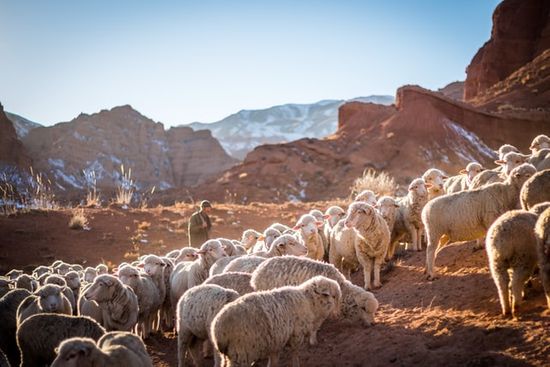
Photo by Patrick Schneider on Unsplash
At this point, Moses’ life had taken a different turn than he intended. A fugitive in the wilderness of Midian, he married Zipporah the daughter of Jethro, and spent 40 long years tending sheep (Exodus 2:15–21; 3:1). God knew that he needed those quiet years to prepare him to be an effective leader.
And it was as a shepherd that he would receive His special calling and mission.
An unlikely deliverer
God had big plans to redeem the Israelites from their wrongful enslavement. When the next Pharaoh was instated, God called Moses as the deliverer of His people (Exodus 2:23–25).
While tending sheep near a mountain called Horeb, Moses noticed something strange: a bush that was on fire but wasn’t burning up.
God spoke to him out of this burning bush, instructing him to lead the Israelites out of the land of Egypt and promising to be with him and guide him (Exodus 3:4–12).
Little did he know what that would entail. He accepted the position with great humility and even self-distrust.
A leader of Israel
At 80 years of age, Moses accepted God’s call to lead the Israelites out of Egyptian bondage. It would be no small feat, considering that Pharaoh was not going to easily give up his nation’s workforce. But God promised to use Moses and work miracles on behalf of the Hebrew people.
He worked through Moses in many ways, including:
- To confront Pharaoh and perform miracles through God’s power (Exodus 5:1–3; 7:10–13)
- To declare ten different plagues that God would bring on the Egyptians (Exodus 7–11)
- To part the Red Sea and lead the Israelites across (Exodus 14:13–22)
- To guide the Israelites in their wilderness wanderings and mediate between them and God (Exodus 16–17; 19:9; 20:19; 32:30–35)
- To act as a judge when disputes came up among the people (Exodus 18:13–16)
- To relay the Ten Commandments and God’s other instructions (Exodus 20–31)
- To direct the building and set-up of the sanctuary/tabernacle (Exodus 40; Leviticus 9)
They were tasks that required Moses to be intimately connected with God.
What kind of relationship did Moses have with God?
Moses had a very close relationship with God—one that he developed over his lifetime as he learned to trust God more and to trust himself less. He had to let go of pride in his own ideas so that he could depend completely on God’s plan.
The following are three facets of his relationship with God:
Communication with God

As Moses came to know God better, he approached God in a way that showed he was in harmony with Him. He longed to know God and was willing to put himself on the line for the people of Israel. His communication with God reflected this attitude.
The first communication between him and God that is mentioned in the Bible takes place at the burning bush. Moses was caring for a flock of sheep when he encountered a bush on fire that wasn’t burning up. As he pondered the strange phenomena, God spoke to him from the burning bush, calling him to lead the people of Israel out of Egypt (Exodus 3:1–7).
But there’s more.
Exodus 33:11 tells us that “the LORD would speak to Moses face to face, as a man speaks to his friend” (ESV).
Moses had the opportunity to approach God on Mount Sinai—the “mountain of God”—and spend 40 days there communing with Him (Exodus 20:21; 24:1–2, 18). He even made a bold request to be able to see God’s glory (33:15–23).
Speaking of boldness, we can’t forget how Moses interceded on behalf of the Israelites when they rebelled against God (Exodus 32:30–34; Numbers 7:89):
He even went so far as to beg God to let him take on the consequences Israel deserved. And God preserved both Moses and the Israelites (Psalm 106:23).
Trust in God

Photo by Ezra Jeffrey-Comeau on Unsplash
Trusting God wasn’t easy for Moses, especially in the beginning. But his faith grew over time, and through many challenging circumstances.
At the burning bush, Moses questioned his own ability to speak and lead, even though God had promised to go with him and had given him miraculous signs to prove it (Exodus 4:1–9). Moses went so far as to say:
“Please send someone else” (verse 13, ESV).
But God was patient with his lack of faith and gave him his brother Aaron as a spokesperson (verses 10–17).
And his faith grew as he:
- Went before Pharaoh, demanding the release of the Israelites and declaring the plagues that would come (Exodus 7:19–20; 8:1)
- Parted the Red Sea with his rod when it seemed like the Egyptians would capture the Israelites (Exodus 14:13, 21)
- Cried out to Him in moments of distress (Exodus 15:25)
- Dealt with the people’s complaints and struggles (Exodus 15:22–26; 16–17)
- Lifted his rod in faith to God so that the Israelites would be victorious over the Amalekites (Exodus 17:11–12)
Even so, Moses was human. He struggled too. One of the biggest examples of this is the way he distrusted and disobeyed God in a moment of anger (Numbers 20:2–13).
The Israelites had been complaining about not having water, so God told Moses to speak to a rock and water would come out. Instead, he angrily struck the rock and “spoke rashly with his lips” (Psalm 106:33, ESV).
Because of his lack of faith, God didn’t allow Moses to enter the Promised Land (Numbers 20:12). But He had something greater in store for Moses: After his death, He resurrected him and took him to heaven—to the ultimate Promised Land (Matthew 17:1–3).
Despite Moses’ shortcomings, God helped him overcome many obstacles to become the man of faith that he was. We’ll look at those next.
Obstacles Moses overcame
Pride, impatience, and self-reliance were persistent obstacles Moses had to face during his lifetime.
When he was 40 years old, he thought God was going to use his military might and royal position to deliver the people of Israel (Acts 7:23–25).
Little did he realize how much he had to learn! He would have to wait 40 years in the wilderness as a shepherd, learning to trust God’s plans more than his own.
Those 40 years did their work. When God appeared to him at the burning bush (Acts 7:30), he recognized his smallness and incapability without God (Exodus 4:10).
He also became a servant leader—one who was willing to give his very life for those he was leading (Numbers 14:13; Exodus 32:30–34). He came to care about the people and God’s honor more than about himself.
This change in his attitude may be the very reason that the Bible says he “was a very humble man, more so than anyone on the face of the earth” (Numbers 12:3, CSB).
The legacy of Moses
Moses left behind a great legacy for the nation of Israel by leading them to the Promised Land. But he also left us a legacy in the many lessons we can learn from his experiences and relationship with God.
These lessons include:
- God has a plan for our lives from the very start.
- Delay and apparent failure aren’t necessarily the end of the story. They can be God’s ways of preparing us for greater things.
- God needs humble people.
- A true leader is a servant.
- Leaders need support.
And above all, his life pointed forward to the greatest servant-leader—Jesus Christ—who would come and sacrifice Himself for His people.
God has a plan for our lives from the very start
God was watching over Moses from babyhood, giving his mother wisdom to hide her son so that he could be preserved for God’s purpose.
Similarly, God has a purpose and calling for each one of our lives (Isaiah 43:1). And as we trust Him, He will guide us into that purpose.
Delay and failure aren’t obstacles for God. He can use every situation to strengthen us

Photo by Joshua Earle on Unsplash
Moses may have thought he was a failure when it came to delivering Israel. Even his own people didn’t support his attempts at first (Exodus 2:11–14). It wouldn’t be until after 40 years of herding sheep in the wilderness that God would call him to be Israel’s leader (Acts 7:30).
But in God’s eyes, that failure was not a dead end. And those 40 years were certainly not wasted.
If you find yourself at a point of failure, wondering why it’s taking so long to reach success, be encouraged by Moses’ experience. God hasn’t given up on you. In fact, He may be using the current circumstances to make you into the person the situation calls for.
God needs humble people
God used Moses’ 40 years in the wilderness to teach him the important lesson of humility. As he cared for sheep, he learned to trust in God’s plans instead of trusting his way of doing things. He also learned the importance of being teachable and taking advice from others (Exodus 18:14, 17).
God is likewise looking for us to be humble and teachable. James 4:10 promises:
“Humble yourselves before the Lord, and He will exalt you” (CSB).
When we’re humble, then God can help and empower us.
A true leader is a servant
Moses learned that true leadership is not about force and power; it’s about service and sacrifice. This lesson became so real in his life that he was willing to sacrifice himself when God had to confront the Israelites’ rebellion and disobedience.
When we seek leadership positions, do we have the same attitude of self-sacrifice?
Leaders need support
Leading a nation of people through the wilderness was a heavy burden for Moses to carry. But he didn’t do it alone. God provided him with people to support and counsel him in his work.
His brother Aaron was one of those individuals.
For example, when the Israelites fought against the Amalekites, Moses stood on a hill above the battle and held up his rod. As he kept his rod up, the Israelites were victorious. But as he would begin to grow tired, Aaron and another man named Hur “supported his hands, one on one side and one on the other so that his hands remained steady until the sun went down” (Exodus 17:12, CSB). Together, they were victorious.
Another support to Moses was his father-in-law, Jethro. When Jethro saw the burdens Moses had taken upon himself, he encouraged Moses to delegate his work to save his strength (Exodus 18:14–23).
The moral of these stories?
We were not meant to face life’s challenges alone. And so, God places us in communities where we can support one another—and be even more effective than if we tried to handle everything solo.
Moses’ life pointed to Jesus Christ

Photo by Pro Church Media on Unsplash
The greatest legacy Moses left behind was the way his life and character pointed to Christ. Notice what he said about the coming Messiah:
“The LORD your God will raise up for you a Prophet like me from your brethren. Him you shall hear in all things, whatever He says to you” (Acts 3:22, NKJV, see also Deuteronomy 18:15).
As a faithful servant of God in caring for the Israelites, he exemplified how Christ would be a faithful servant over all God’s people. An author of the New Testament reflects on this symbolism:
“Moses was faithful as a servant in all God’s household, as a testimony to what would be said in the future. But Christ was faithful as a Son over His household” (Hebrews 3:5–6, CSB).
Continuing the legacy of Moses
After hearing of near-death scenarios, the parting of the Red Sea, and encounters with God, you may think that Moses’ experience is far from your day-to-day.
Yet it’s not.
He was a human being—just like any of us—who struggled with doubts, fears, and failure. If God could use him, then God can use us!
The key is complete humility and trust in God. When we choose to depend completely on Him, He will:
- Bring us into that ever-deepening connection with Him
- Part the seas of impossibility in our lives
- Gain victories over the sins that attack us
- Use us to lead others out of the bondage in their lives
So take some time to get to know Moses in the Bible.
Immerse yourself in the lessons he learned.
Because you can continue the legacy he started.
1. DeCanio, Frank, “2. Analysis and Synthesis of Exodus,” Bible.org, March 27, 2012. [↵]
2. Ritenbaugh, Richard T., “What the Bible says about Moses as Part of Royal Family,” Forerunner Commentary, BibleTools.org. [↵]
3. Magonet, Jonathan, “Raised as an Egyptian, How Does Moses Come to Identify as a Hebrew?” TheTorah.com, 2021; Nelson, Ryan, “Moses: The Old Testament’s Greatest Prophet,” OverviewBible, July 27, 2020. [↵]
More Answers
Quem Foram os Juízes de Israel no Antigo Testamento?
Quem Foram os Juízes de Israel no Antigo Testamento?Tempos de crise exigem homens e mulheres de ação. Os israelitas, recém-estabelecidos na Terra Prometida, encontraram-se nesses tempos. À medida que nações inimigas atacavam e oprimiam as tribos, eles clamavam a Deus...

¿En qué se diferencian los Adventistas del Séptimo Día de otros protestantes?
¿En qué se diferencian los Adventistas del Séptimo Día de otros protestantes?Como denominación cristiana protestante, la Iglesia Adventista del Séptimo Día considera la Biblia como la regla suprema de fe y a Jesucristo como el único camino a la salvación. Tenemos...
Como os Adventistas do Sétimo Dia São Diferentes de Outros Protestantes?
Como os Adventistas do Sétimo Dia São Diferentes de Outros Protestantes?Como uma denominação cristã protestante, a Igreja Adventista do Sétimo Dia considera a Bíblia como o guia supremo e vê Jesus Cristo como o único caminho para a salvação. Temos algumas diferenças...

O que é ASI (Associação de Empresários e Profissionais Adventistas)?
O que é ASI (Associação de Empresários e Profissionais Adventistas)?ASI, que significa Associação de Empresários e Profissionais Adventistas (tradução adaptada), é uma organização baseada em associação que oferece apoio aos membros adventistas (profissionais...
Jesús y la Mujer en el Pozo: Derribando Barreras
El encuentro de Jesús con la mujer en el pozo revela su sentir por las personas heridas y su deseo de derribar prejuicios. Esta página analiza cómo Jesús se acercó a ella.

Revealing The True Meaning of The Parable of The Rich Man & Lazarus
Learn the real point behind one of Jesus’ most vivid parables.
O que são as Bem-Aventuranças (E o que significam)?
O que são as Bem-Aventuranças (E o que significam)?As Bem-Aventuranças, encontradas no início do Sermão da Montanha de Jesus no Evangelho de Mateus, são o manifesto do reino de Jesus. Elas descrevem a maneira como Seu reino funciona e o que significa ser um de Seus...

Líderes de la iglesia: ¿Cuál es el rol de un pastor Adventista?
Líderes de la iglesia: ¿Cuál es el rol de un pastor Adventista?¿Cuál es el rol de un pastor en la iglesia Adventista? La posición en sí misma, al menos en lo que respecta a una congregación local, no es muy diferente de la de los pastores en otras denominaciones...
ASI ni Nini (Huduma na Viwanda vya Waadventista vya Kibinafsi)?
ASI ni Nini (Huduma na Viwanda vya Waadventista vya Kibinafsi)?ASI, ambayo inayofupisha maneno (Huduma na Viwanda vya Waadventista vya Kibinafsi), ni shirika la uanachama linalotoa msaada kwa wainjilisti wa Kiadventista (wataalamu wa Kanisa la Waadventista wa Sabato...

Ellen White Alisema Nini Kuhusu Unabii wa Nyakati za Mwisho?
Tunaweza kusoma katika Maandiko kuhusu mfululizo wa matukio na dalili zinazoongoza hadi Ujio wa Pili wa Yesu Kristo.

Safari na Utume wa Ellen G. White Ulimwenguni
Safari na Utume wa Ellen G. White UlimwenguniIngawa Ellen White, mwanzilishi mwenza wa Kanisa la Waadventista wa Sabato, anajulikana zaidi kwa huduma yake nchini Marekani, pia alisafiri kwenda nchi nyingine kumi na mbili katika maisha yake—hili lilikuwa jambo kubwa...
Yote Kuhusu Wainjilisti wa Vitabu wa Kiadventista
Kanisa la Waadventista wa Sabato hutumia mbinu mbalimbali kusambaza tumaini la injili duniani.
¿Qué es ASI (Servicios e Industrias de Laicos Adventistas)?
¿Qué es ASI (Servicios e Industrias de Laicos Adventistas)?ASI, que significa Servicios e Industrias de Laicos Adventistas, es una organización basada en membresía que brinda apoyo a los laicos adventistas (profesionales Adventistas del Séptimo Día que no son...
¿Qué dijo Elena G. de White sobre la profecía de los últimos tiempos?
¿Qué dijo Elena G. de White sobre la profecía de los últimos tiempos?Podemos leer en las Escrituras acerca de la serie de eventos y señales que conducen a la segunda venida de Jesucristo. Y suena bastante intenso, por decir lo menos. La naturaleza simbólica del...
O que Ellen White disse sobre a profecia dos tempos finais?
O que Ellen White disse sobre a profecia dos tempos finais?Podemos ler nas Escrituras sobre a série de eventos e sinais que antecedem a segunda vinda de Jesus Cristo. E, para dizer o mínimo, isso soa bastante intenso. A natureza simbólica da linguagem da profecia...

Meaning of the Parable of the Two Sons in Matthew 21
Meaning of the Parable of the Two Sons in Matthew 21The parable of the two sons in Matthew 21:28-32 is about a father who instructs his sons to work in the family vineyard. The first son refuses to work but later has a change of heart and obeys. The second son says...
Viagens e Missão Mundial de Ellen G. White
Viagens e Missão Mundial de Ellen G. WhiteEmbora Ellen White, cofundadora da Igreja Adventista do Sétimo Dia, seja mais conhecida por seu ministério nos Estados Unidos, ela também viajou para outros doze países durante sua vida — uma grande conquista no século XIX,...
Joseph Bates na Nafasi Yake katika Kanisa la Waadventista
Joseph Bates na Nafasi Yake katika Kanisa la WaadventistaJoseph Bates alikuwa baharia aliyegeuka kuwa mhubiri ambaye alijiunga na Harakati ya Miller na kusubiri Ujio wa Pili wa Yesu kutokea mwaka 1844. Licha ya kukatishwa tamaa wakati hili halikutokea, Bates...

Je, Wasabato Husherehekea Sikukuu?
Je, Wasabato Husherehekea Sikukuu?Je unajiuliza ikiwa mwanafunzi mwenzako au mfanyakazi mwenzako Mwadventista husherehekea sikukuu kama wewe? Labda ungependa kumshirikisha kwenye sherehe fulani, lakini pia unataka kuheshimu imani yake. Kwa hiyo, huna uhakika wa jinsi...

O Que a Bíblia Diz Sobre a Segunda Vinda de Jesus Cristo
Curioso para saber o que a Bíblia diz sobre a Segunda Vinda de Jesus Cristo? Vamos abordar os versículos-chave e o que eles significam.

Waadventista Wanaamini Nini Kuhusu Imani na Matendo?
Waadventista Wanaamini Nini Kuhusu Imani na Matendo?Waadventista wanaamini tunaokolewa kwa imani, ambayo ni imani na tumaini tulilonalo kwa Yesu Kristo kutuokoa kutoka dhambini. Yesu, basi, anatupa uwezo wa kuishi kwa utii wa amri za Mungu na kuwahudumia wengine kwa...
Todo sobre los colportores Adventistas del Séptimo Día
Todo sobre los colportores Adventistas del Séptimo DíaLa Iglesia Adventista del Séptimo Día utiliza una variedad de métodos para difundir la esperanza del evangelio al mundo. Una de estas formas es a través del colportaje, también llamado “venta puerta a puerta” o...
Tudo Sobre Colportores Adventistas do Sétimo Dia
A Igreja Adventista do Sétimo Dia usa uma variedade de métodos para espalhar a esperança do evangelho ao mundo.
Los viajes y la misión mundial de Elena G. de White
Los viajes y la misión mundial de Elena G. de WhiteAunque Elena G. de White, cofundadora de la Iglesia Adventista del Séptimo Día, es más conocida por su ministerio en los Estados Unidos, también viajó a otros doce países durante su vida, un gran logro en el siglo XIX...

Mikutano ya Injili ya Waadventista ni Nini?
Kanisa la Waadventista wa Sabato linaweka mkazo mkubwa katika kushiriki injili kupitia uinjilisti, yaani kushiriki injili kupitia mahubiri, mafundisho, na ushuhuda.
Joseph Bates y su papel en la Iglesia Adventista del Séptimo Día
Joseph Bates y su papel en la Iglesia Adventista del Séptimo DíaJoseph Bates fue un marinero que se convirtió en predicador, se unió al Movimiento Millerita y esperó que ocurriera la Segunda Venida de Jesús en 1844. A pesar de sentirse decepcionado cuando esto no...
Joseph Bates e Seu Papel na Igreja Adventista do Sétimo Dia
Joseph Bates foi um marinheiro que se tornou pregador, juntou-se ao Movimento Millerita e esperou pela Segunda Vinda de Jesus em 1844.
¿Los Adventistas del Séptimo Día celebran las fiestas?
¿Los Adventistas del Séptimo Día celebran las fiestas?¿Te preguntas si tu compañero de clase o de trabajo adventista celebra las mismas fiestas que tú? Tal vez quieres incluirlo en algunas festividades, pero también deseas respetar sus creencias. Entonces, no estás...
Os Adventistas do Sétimo Dia Celebram Feriados?
Está se perguntando se seu colega de classe ou de trabalho adventista celebra os mesmos feriados que você?
Didn’t find your answer? Ask us!
We understand your concern of having questions but not knowing who to ask—we’ve felt it ourselves. When you’re ready to learn more about Adventists, send us a question! We know a thing or two about Adventists.