
2 Corinthians is different from Paul’s other New Testament books of the Bible. It’s personal, passionate, and open. And it shows how much Paul’s ministry tried to mirror the ministry of Christ.
2 Corinthians tends to get overshadowed by 1 Corinthians in familiarity. But its themes like forgiveness, reconciliation, and generosity make it a hidden gem well worth exploring:
- Basic facts of 2 Corinthians
- Important themes and passages
- Why this message matters today
- How 2 Corinthians inspires transformation
All in all, this will help us understand the real purpose for Paul’s heartfelt letter to the Corinthians. And we’ll see how it emulates Jesus’ plea to all of us today.
*Note: Bible passages are from 2 Corinthians, unless stated otherwise.
Basic facts of 2 Corinthians
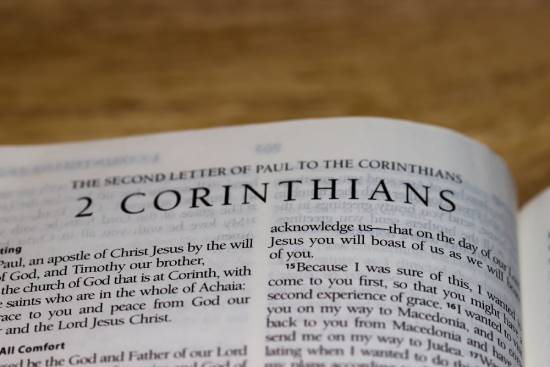
2 Corinthians is the eighth book in the New Testament. It makes up at least one letter from Paul to the Corinthian church. And it follows a season of tension between them.1
It’s also unlike any other letter he wrote because of how deeply personal and emotional it is.2
Paul’s tone changes based on who he’s addressing. In the first nine chapters, his tone of gratitude seems written for the majority. They were the ones who accepted his advice and correction. But the more stern tone of the last four chapters sounds like it’s for the minority who fought his guidance. Both parts were necessary to bring unity and peace back to this church community.3
But even with Paul’s intense tone, he wants to comfort them:
“Blessed be the God and Father of our Lord Jesus Christ, the Father of mercies and the God of all comfort. He comforts us in all our affliction, so that we may be able to comfort those who are in any kind of affliction, through the comfort we ourselves receive from God” (1:3-4, CSB).
Here’s a quick overview of the book as a whole:
- Introduction and greeting (1:1-11)
- Recent relations with the church at Corinth (1:12-7:16)
- The collection for needy Christians (8:1-9:15)
- Paul’s defense of his apostleship and appeal to unrepentant members (10:1-13:10)
- Conclusion (13:11-14)
Now let’s break down the who, what, when, where, and why of this epistle.
Who: The first verse tells us who wrote it, and who received it:
“Paul, an apostle of Christ Jesus by the will of God, and Timothy our brother, to the church of God that is at Corinth, with all the saints who are in the whole of Achaia” (2 Corinthians 1:1, ESV).
Scholars agree that Paul, an apostle of Christ, was the author of 2 Corinthians.4 And in it, we get “the clearest and most complete picture of Paul’s nature and personality.”5
Of course, Timothy’s name was also mentioned in the greeting, but the part he played remains unclear.
Paul wrote 2 Corinthians to Christians both in Corinth and in the surrounding region. And many of them, Paul had baptized into Christianity himself (Acts 18:1, 8).
What: 2 Corinthians is an epistle, which is a fancy word for “letter” (often a lengthy one). Some epistles (Iike Philemon) were written to one person. But Paul addressed books like 2 Corinthians and Galatians to entire faith communities.
2 Corinthians isn’t considered Paul’s second letter to the Corinthians. Some believe it’s made up of his third and fourth message to them. And others believe it’s made up of the pieces of several letters.6
Other books of the Bible show it was common to have epistles read aloud (Colossians 4:16; 1 Thessalonians 5:7). So it was likely the same for this one.
When: Paul wrote 2 Corinthians within a year of writing 1 Corinthians, sometime between 55-57 A.D.7
Where: Paul wrote from Macedonia, after arriving from Ephesus (2 Corinthians 7:5, Acts 20:1).8 And he sent the second letter to Corinth and the surrounding region of Achaia.
Corinth was a Greek city colonized by the Romans in 44 BCE.9 The worship of many Roman deities, like Apollo and Aphrodite,10 was the norm for most citizens. And Christianity would’ve been in the minority.
We don’t know exactly how Paul got the letter to them. But since Titus brought news from Corinth to Paul in Macedonia, many believe Titus brought it (8:16-27).
Why: Paul wrote 2 Corinthians to:
- Settle claims against him “for the sake of the truth of the Gospel”
- Make peace with the majority
- Encourage their generosity and faith
- Warn about false apostles
- And confront those who continued to rebel.
Paul saw himself in the role of father and guide to the young Corinthian church (1 Corinthians 4:15). In his first book to the Corinthians, he counseled them on conflicts and wrong behavior in the church.
After that, many believe Paul made a visit to the Corinthians that didn’t go well. He calls it a “painful visit” in 2 Corinthians 2:1 (ESV).
The Corinthians were questioning Paul’s position as an apostle. And he felt it was due, in part, to the influence of false teachers who called themselves “super apostles” (2 Corinthians 11:5-6; 12:11-12, ESV).
But here’s the good news. Titus met Paul in Macedonia with news that most of the Corinthians were sorry and wanted to reconcile (7:6-12).
Paul still felt it necessary to follow up with the book of 2 Corinthians. He wanted the Corinthians to understand the importance of their conflict in connection with their whole walk with God.
Major themes and passages of 2 Corinthians
As Paul settles the charges against his authority, we see deeper ideas emerge, such as forgiveness, restored relationships, generosity, and Christlike living and leadership.
Let’s walk through some key themes and passages.
Forgiveness and healing relationships

Photo by Ketut Subiyanto from Pexels
Paul’s relationship and ministry with the Corinthians reflected Christ’s own ministry. It was one of suffering, forgiveness, and reuniting with blatant, habitual sinners.
2 Corinthians gives us a good idea of the untrue charges leveled against Paul. He provided defense for the following criticisms:
- Being fickle and inconsistent for changing his travel plans back and forth (1:15-23)
- Lacking ministerial credentials (3:1-3)
- Favoring the Macedonians over the Corinthians (11:7-11)
- Being weak and lacking spiritual experiences like visions and revelations (12:1-10)
- Lacking personal charisma when he spoke (10:1-2)
- Stealing money (12:14-18)
Paul gives a solid defence of his ministry in 2 Corinthians 10 and 11. But he doesn’t defend his reputation for his own sake (5:12-15). Here’s how one Bible commentary describes Paul’s motives:
“He knows that his message, the gospel, will be rejected if he allows his character and credibility to be undermined. In fact, Paul cares little how he is viewed in the end. He is fully aware that he is a mere earthen vessel (4:7); he defends himself for the sake of the truth and of the gospel (13:7-8).”11
Paul has every reason to feel offended and cut ties with the Corinthians. And more often than not, this is what a typical person would do. But he looks for a solution to reunite, just like Jesus did with humanity:
“Everything is from God, who has reconciled us to himself through Christ and has given us the ministry of reconciliation. That is, in Christ, God was reconciling the world to Himself, not counting their trespasses against them, and He has committed the message of reconciliation to us” (2 Corinthians 5:18-19, CSB).
At the same time, he was teaching the Corinthians how to make peace with others.
In 1 Corinthians, Paul told new believers to stop worshipping with a man who was openly doing something that didn’t align with Christlike behavior or the good of the community (1 Corinthians 5:11). But he also made it clear it was in hopes of alerting the man to his need for repentance—to change his ways.
In 2 Corinthians, we see that they followed Paul’s advice. And in this letter, Paul guides them on how to still love this man and influence him with the love of Jesus (2:5-11).
Paul both taught and lived out healthy Christian forgiveness and restoration.
He restored the Corinthians’ trust in him by reminding them of their trust in Jesus. Since Paul’s foundation was in Jesus, he could be trusted as well:
“For every one of God’s promises is ‘Yes’ in Him. Therefore, through Him we also say ‘Amen’ to the glory of God” (2 Corinthians 1:20, CSB).
Paul didn’t aim to glorify himself, but was a servant to the glory of God. And he reminded the people in Corinth and Achaia of their mutual hope in the promises of God.
Life in Christ and the new covenant
Paul’s life didn’t appear glamorous compared to the rival “super apostles” in Corinth. But Jesus’ life was also one of suffering and humility. So, Paul reminds the people that a humble life in God’s service is a true reflection of the life of Christ (11:16-33).12
Paul points the Corinthians back to what matters—their new life in Christ. As Christians living under the New Covenant, they received the Holy Spirit.
Allowing Christ’s Spirit to work in us brings transformation and a radical new way of thinking:
“Therefore, if anyone is in Christ, he is a new creation; the old has passed away, and see, the new has come!” (2 Corinthians 5:17, CSB).
“He has made us competent to be ministers of a new covenant, not of the letter, but of the Spirit. For the letter kills, but the Spirit gives life” 2 Corinthians 3:6, CSB).
But the Corinthians hadn’t let the Spirit transform them completely. They judged between true vs. false teachers based on appearances.
True Christians are often called to share in the sufferings of Christ (1:5). But Paul wanted them to understand that weakness and trials give us strength when it causes us to rely on God:
“But He said to me, ‘My grace is sufficient for you, for my power is made perfect in weakness.’ Therefore I will boast all the more gladly about my weaknesses, so that Christ’s power may rest on me” (2 Corinthians 12:9, ESV).
Paul reminds the Corinthians of their need for Spirit-filled transformation, for two reasons:
1. To protect them from false teachers
2. To help them grow in their faithfulness to Jesus
With this transformation comes the spirit of generosity—the final topic we’ll cover.
Generosity

Photo by https://kaboompics.com/
In 2 Corinthians 8 and 9, Paul reminds them about a collection for the poor Christians in Jerusalem (Judea). This was a project close to Paul’s heart because it would help unite the Jewish and gentile Christians. But because of the recent disharmony, the Corinthians hadn’t collected the funds.13
Paul highlights:
- The generosity of the Macedonian church by the grace of God, despite their poverty (8:1-5)
- The connection between grace and giving (8:7)
- The importance of following through with their commitment to give (8:10-11)
- How giving reflects Christ:
“For you know the grace of our Lord Jesus Christ: Though He was rich, for your sake He became poor, so that by His poverty you might become rich” (8:9, CSB).
But in one of Paul’s most famous quotes, he reminds them that giving is a matter of the heart:
“Each person should do as he has decided in his heart—not reluctantly or out of compulsion, since God loves a cheerful giver” (9:7, CSB).
So what can we learn from all this?
Why Paul’s message matters today
There’s so much we can learn from this message, like how to:
- Rely on God’s strength instead of worrying about our weaknesses
- Recognize there’s no shame if God calls us to live humble lives for His sake
- Ask the Holy Spirit to help us discern whose counsel is trustworthy
- Attempt reconciliation with fellow believers or churches
- Let love for the spiritual growth of others win out over taking personal offense
- Believe that God doesn’t give up on us, as Paul didn’t give up on the Corinthians
- Live with a generous spirit, following the example set by Jesus Christ
Paul lived out Christlike qualities and taught the Corinthians to do the same. And the Bible preserves Paul’s words as a reminder for us, too.
2 Corinthians also teaches us that God will provide counsel when we need it. First, God gives us His Holy Spirit and His Holy Bible. But He also sends counsel through Spirit-filled teachers, friends, mentors, etc. Just like He sent Paul, Titus, Timothy, and Silvanus (1:19) to the Corinthians.
How we can experience transformation
2 Corinthians shows us the depth of Paul’s love for those he led to Christianity. He was a shepherd to his sheep, counseling them until the end of his ministry (2 Timothy 4:10). He counseled the Corinthians on forgiveness, reconciling, generosity, Spirit-led living, and more. And through this epistle of his, we can see he shows those traits himself.
Paul made a bold defense of his ministry. But his goal was to protect the Corinthians from deception and help them grow in Christ.
He recognized that the Corinthians needed continued transformation by the Holy Spirit:
“And we, who with unveiled faces all reflect the Lord’s glory, are being transformed into His likeness with ever-increasing glory, which comes from the Lord, who is the Spirit” (2 Corinthians 3:18).
In the same way, we can trust Jesus to continue transforming us when we accept Him into our lives.
All Christians are on a journey—just as the Corinthians were. That’s why we can take heart from Paul’s passionate message of caution, guidance, and hope!
Want to understand more about Paul’s ministry, including other books he wrote?
- Barton, John, and Muddiman, John, The Oxford Bible Commentary, 1st ed., Oxford University Press (2001), p. 1134; Metzger, Bruce M., and Coogan, Michael D., The Oxford Companion to the Bible, Oxford University Press (1993), p. 136. [↵]
- Nichol, Francis D. Seventh-Day Adventist Bible Commentary, vol. 6, Review and Herald Publishing Association (1957), p. 824. [↵]
- Ibid, p. 823. [↵]
- Oxford Companion to the Bible, p. 135. [↵]
- Seventh-Day Adventist Bible Commentary, vol. 6, pp. 821-822. [↵]
- Guthrie, George H., 2 Corinthians, Baker Academic (2015), p. xii.; Taylor, N.H., “The Composition and Chronology of Second Corinthians,” Journal for the Study of the New Testament, vol. 14, Issue 44 (1991). [↵]
- Andreasen, Niels-Erik A., and Dybdahl, John L., Andrews Study Bible. Andrews University Press (2010), p. 1515. [↵]
- Seventh-Day Adventist Bible Commentary, vol. 6, p. 822. [↵]
- Oxford Bible Commentary., 1st ed., p. 1134. [↵]
- Gilchrist, Scott. “Corinth [Ancient Greek and Roman Site],” MIT Libraries. [↵]
- Andreasen, Niels-Erik A., and Dybdahl, John L., Andrews Study Bible, Andrews University Press (2010), p. 1515. [↵]
- Oxford Bible Commentary, p. 1139. [↵]
- Seventh-Day Adventist Bible Commentary, vol. 6, p. 823. [↵]
More Answers

Every Bible Verse About Hell in the Bible
Find out where and how often the Bible talks about hell.

The Book of 1 Corinthians: A Topical Breakdown
Learn about the book of 1 Corinthians to support your Bible study.

Bible Verses That Mention “Heaven” (and How to Tell What They Mean)
Here’s every occurrence of the word “heaven” in the Bible, as well as the root words and original definitions.

A Guide to the Book of Galatians
A walkthrough and breakdown of Paul’s letter to the Galatian churches.

Understanding the Book of Mark (An Overview)
A walkthrough of the Gospel according to Mark, including background information and references.

An Overview of Romans: Faith, Righteousness, and Relationships
Here’s a breakdown and background of Paul’s longest epistle.

The Book of John: An Overview
Here’s a study companion for the Gospel according to John.

What Are the Synoptic Gospels? What About John?
What Are the Synoptic Gospels? What About John?The term “Synoptic Gospels” refers to the accounts of the Gospel story—the story of Jesus Christ’s earthly ministry and how it paved the way for salvation—written by Matthew, Mark, and Luke in the New Testament. The word...

The Book of Luke’s Message: Jesus’ Love for All
Learn all about the book of Luke—context, themes, differences, and takeaways.

The Book of Acts: A Simple Guide
The book of Acts is the fifth book in the New Testament. It’s a continuation of one of the Gospel accounts and an intimate look into the eventful early history of the Christian church.

All About the Gospel of Matthew
The Book of Matthew is one of the four Gospel narratives in the Bible

13 Bible Study Tools to Boost Your Daily Bible Reading
Bible study tools come in all types, including concordances, encyclopedias, downloadables, journaling, atlases, and more. Use these tools to enrich your study for a fuller understanding God’s Word.

What Does God Look Like According to the Bible?
What Does God Look Like According to the Bible?As human beings, it’s natural for us to wonder about God’s appearance. But the Bible says very little about it. It’s not hard to understand why, though. As the Creator of the entire universe, His existence transcends our...

How to Really Read and Understand the Bible
If you’re new to the Bible or haven’t picked it up in a while, how do you start? Find out 6 basic steps to read the Bible, plus some helpful reading plans to try.

Why Do Some Bibles Have More Books Than Others?
Christians consider the Bible as their sacred writings. But within Christianity, different denominations use Bibles with different numbers of books.

Bible Translations
Bible Translations—Which Version is “Best”?The most accurate Bible possible would be one that’s printed in its original languages—Hebrew and Greek. But since most of us are not Hebrew or Greek scholars, the next best option is an English Bible translation that most...

Is the Old Testament Important for Christians Today?
Yes, the Old Testament is important because it kicks off the story that is continued by the New Testament. Without it, we wouldn’t have the vital background to Jesus’ first coming and the other accounts of the New Testament.

Individual or Group Bible Study—Which Is Better?
They’re both great, of course! But depending on where you’re at and what your goals are, it’s worth looking into the different benefits of each.

The Ultimate Guide to Personal Bible Study
Ever felt that studying the Bible is challenging, and you’re just not sure where to start? Or looking for fresh ideas to improve your current Bible study habits? We’ve got you covered with simple techniques and plans to improve your Bible study experience.

What’s the History of the Bible?
The Bible is the number one bestseller in the world of all time.1 It’s translated into thousands of languages, read by people of all ages and backgrounds.

What is the New Testament? [About Each Book and Key Lessons]
The New Testament is the second section of the Bible, describing Jesus and how He came to this world to reveal the love of God. It tells about His ministry, His death and resurrection, and the church that resulted.

All about the prophets in the Bible
Prophets were individuals in the Bible who received messages from God and communicated those messages to the recipients—whether through speaking or writing. Their writings, known as prophetic books, comprise a huge part of the Bible.

Understanding Prophecy in the Bible
Seventh-day Adventists have emphasized Bible prophecy from the beginning. We have our roots in the study of God’s Word, especially the prophecies that have to do with the future.

All About the Old Testament
The Old Testament is the first section of the Bible and makes up about three-quarters of its material. It lays out the story of Creation, humanity’s fall into sin, and God’s promise to rescue us from sin.