
What do you think of when someone says something is “a miracle”?
Maybe you think of an unexpected recovery, surviving a dangerous accident, or getting an answer to a seemingly impossible prayer.
Simply put, miracles are unusual events that defy our understanding of the natural world.1 Because they are unexplainable, they are often attributed to a higher power.2
The Bible refers to miracles as a “power,” “sign,” or “wonderful” or “strange thing.”3
These descriptions certainly fit the bill when you consider the miracles of Jesus.
What could be more powerful than being able to calm a raging storm in two words? What could be more wonderful than the healing of an ill person, or more strange than casting out demons?
What are these miracles a sign of? And what do they tell us about Jesus?
Find out as we answer:
- How Jesus was able to perform miracles
- Why did He perform miracles?
- What kinds of miracles did He perform?
- Did Jesus ever refuse to perform miracles?
- What do His Miracles teach us?
Let’s get started.
How was Jesus able to perform miracles?

Photo by Josh Withers on Unsplash
As we explained, we often attribute miracles to a higher power. And even though Jesus, Himself, is God, the Bible also explains that during His ministry, Jesus performed miracles through the power of God the Father and the Holy Spirit (Acts 2:22).4
Jesus’ disciples also performed miracles through the Father and the Holy Spirit, just as Jesus had done in the New Testament and Moses had done in the Old Testament.5
In relying on the Father to perform miracles, Jesus’ miracles were evidence of His relationship with God and the authority the Father had given Him as the Son of God.6
Why did Jesus perform miracles?
Jesus performed miracles for several reasons.
He did them to:
- Alleviate sickness and suffering:7 Jesus healed the sick, blind, deaf, lame, and so on. He also cast out demons to free people from the suffering that comes with demonic possession.
- Provide and protect:8 Jesus’ miracles provided food, drink, and money when needed. He also performed miracles to protect people from harm.
- Verify His role as Messiah:9 Jesus’ miracles helped people see that He was the Messiah the prophecies foretold.
- Teach lessons:10 Some of Jesus’ miracles doubled as object lessons, meant to teach people about the Kingdom and character of God.
We’ll go deeper into these reasons as we explore the different kinds of miracles Jesus performed.
What kinds of miracles did Jesus perform?
The New Testament shows us that Jesus performed over 36 miracles.
But even that number is only a small glimpse of the miracles Jesus performed.
The Bible tells us:
“And there are also many other things that Jesus did, which if they were written one by one, I suppose that even the world itself could not contain the books that would be written. Amen.” (John 21:25, NKJV).
All in all, the miracles Jesus performed fall within the following categories:
- Providing for needs
- Controlling nature
- Healing
- Casting out demons
- Bringing people back to life
Let’s start with the first category.
Providing for needs
There were several instances where Jesus provided for people’s needs by performing miracles.
He:
- Turned water into wine for a wedding in Cana (John 2: 1-11)
- Helped the disciples make a large catch of fish (Luke 5:1-11)
- Fed 5,000 people (Mark 6:30-44)
- Fed 4,000 people (Matthew 15: 32-39)
- Made coins appear in a fish’s mouth to pay His and Peter’s temple tax (Matthew 17: 24-27)
- Helped the disciples catch a lot of fish again (John 21:1-23)
Jesus’ main purpose in performing these miracles was to offer provisions to people in need and to teach His followers lessons (Matthew 9:36).
In the story of the feeding of the 4,000, Jesus said:
“I have compassion on the multitude, because they have now continued with Me three days and have nothing to eat. And I do not want to send them away hungry, lest they faint on the way.” (Matthew 15:32, NKJV).
But Jesus’ miracles had an additional purpose besides attending to people’s needs. They were also given to teach people about who Jesus was and what He came to do.
The food He gave the multitudes was also meant to remind them that He, as the bread of life, can also satisfy their spiritual hunger (John 6:35).11 He used the fish to teach the disciples to have faith in His leading as He showed them how to fish for people’s hearts (Luke 5:9-10).12
These miracles were likely shared with the masses and disciples to show Jesus was a faithful and compassionate leader.
Understandably, people were awestruck by the miracles Jesus performed. Unfortunately, many of them got distracted.
They got so caught up in what Jesus could provide for them that they lost sight of the bigger picture—that Jesus had come to lead them into a better life, one free of sin and sadness (John 6: 26).
Fortunately, Jesus’ miracles of provision did stir the hearts of some faithful followers. Jesus helped a group of fishermen catch a miraculous amount of fish, which helped convince these fishermen to become His disciples (Luke 5:6-11).
However, that wouldn’t be the last miracle they’d see Jesus perform.
In joining Jesus’ ministry, they would have a front-row seat to Jesus’ extraordinary miracles— including the ones where He demonstrated authority over nature itself.
Controlling nature

Photo by Raychel Sanner on Unsplash
On top of providing for people’s needs, Jesus also controlled nature.
He:
- Calmed the storm over the Sea of Galilee (Matthew 8: 18- 27)
- Walked on water (Matthew 14:22-31)
- Cursed a fig tree (Mark 11:12-14, 20-21)
These miracles were performed to build the disciples’ faith and teach them lessons about Jesus’ kingdom.
He showed them He could keep them safe during a storm. And He showed them the importance of trusting and depending on Him as He helped Peter walk on water (Matthew 14:28-31).
This was a focal point of Jesus’ miracles: that they are done through faith in Christ (Matthew 17:20; Mark 9:23).13
We can see how these miracles might have encouraged the disciples to build a closer relationship with Jesus and get to know Him more.
These extraordinary miracles may have been reserved for the disciples to help them understand Jesus’ role as the promised Messiah and Son of God—truths that most people were not prepared to hear.14
And it’s with pure amazement the disciples asked among themselves: “ ‘Who can this be, that even the winds and the sea obey Him?’ ” (Matthew 8:27, NKJV).
The disciples would even go on to see Jesus do miraculous works of healing.
Healing
The largest category of miracles we see in the Bible are the miracles Jesus performed to heal people.
He healed:
- A royal official’s son (John 4: 43-54)
- A sick man at the pool of Bethesda (John 5:1-15)
- A man of leprosy (Mark 1:40-45)
- A paralytic, or paralyzed man, at Capernaum (Mark 2:1-12)
- A man’s withered hand (Mark 3:1-6)
- A centurion’s servant (Luke 7: 1-10)
- Two blind men (Matthew 9:27-31)
- A woman with twelve years of bleeding (Mark 5: 25-34)
- People who touched His clothes (Matthew 14: 34-36)
- A person in Decapolis who was deaf and mute (Mark 7: 31-37)
- A blind man at Bethsaida (Mark 8: 22-26)
- A man who was born blind (John 9:1-41)
- A crippled woman (Luke 13: 10-17)
- A man with dropsy (Luke 14: 1-4)
- Ten lepers in Jerusalem (Luke 17:11-19)
- A blind man named Bartimaeus in Jericho (Mark 10: 46-52)
- Malchus’ ear (Luke 22: 50-51)
The fact that most of Jesus’ miracles involved healing people says a lot about the central purpose of Jesus’ miracles (Matthew 14:14; Luke 7:11-13).
Jesus wanted to serve people in whatever way He could. He wanted to alleviate their pain and bring them whole and happy lives. He also wanted the miracles to show people that as the Son of God, He hadn’t just come to heal them physically, but spiritually (John 20: 30-31).

Photo by Kelly Sikkema on Unsplash
As a matter of fact, Jesus often spoke of forgiving sin alongside healing sickness and disease (Luke 5:18-24; Matthew 9:2-8).
Interestingly enough, the Jewish people at this time often assumed that sickness was a result of personal sin. So if someone became blind or developed leprosy, they thought it was because they deserved it. It was thought to be God’s means of punishing that person for the sins they committed (John 9:2).
As a result, many people with illnesses and disabilities were ostracized and looked down upon by society (Matthew 20:29-31; John 9: 30-34).
But Jesus rejected this concept (John 9:3-5). Throughout His ministry, He taught that, while all are sinful—from the blind beggars on the street to the rich Pharisees in the temple—His goal was not to condemn them, but to heal them (Mark 10:18; Romans 3:23-24; Mark 2:17).
Jesus came to restore what was broken— both physically and spiritually—by healing people and forgiving sins (Psalm 103:3).
And He didn’t discriminate.
He healed everyone who needed His help.
Jesus healed and restored the ear of a man trying to arrest Him (Luke 22:50-51). He helped the lame, the blind, women, and Gentiles— people who were overlooked and scorned in their society.15
Some people, particularly the Pharisees, didn’t understand Jesus’ miracles, only using them as an excuse to condemn Him (Matthew 12:9) . Some even accused Him of breaking God’s law by healing people on the Sabbath (Matthew 15:21-28).
But Jesus rejected these accusations, demonstrating the importance of following the principles of God’s law—which at its core—is all about love: loving your neighbor, and loving God. And an excellent way to show God’s love was for Jesus to reach out to the marginalized and restore them in more ways than one.
Jesus said, “What man is there among you who has one sheep, and if it falls into a pit on the Sabbath, will not lay hold of it and lift it out? Of how much more value then is a man than a sheep? Therefore it is lawful to do good on the Sabbath.” (Matthew 12:11-12, NKJV).
The people Jesus healed weren’t just restored physically. Their faith was restored as they came face to face with their savior. They were so encouraged that many of them went to tell everyone about the man who had changed their lives (John 9:17, 30-33; Mark 1: 41-45).
In addition to displaying compassion for the sick and hurting, Jesus also showed an interest in restoring and healing those who were possessed.
Casting out demons
Though some ailments were caused by physical complications, some were caused by demons.
We see this in the example of some of the people Jesus healed, who were healed as they were freed of their demons.
The Bible tells us that Jesus:
- Cast out the demon of a man at the synagogue (Mark 1:21-28)
- Cast out the demon of a mute man so he could speak (Matthew 9:32-34)
- Healed a demon-possessed man, helping him see and speak (Matthew 12:22-23)
- Cast out demons from a demoniac into a herd of pigs (Mark 5: 1-20)
- Healed the demon-possessed daughter of a Canaanite woman (Matthew 15:21-28)
- Healed a demon-possessed boy who suffered from convulsions and muteness (Mark 9:14-29)
Jesus performed these miracles to heal those suffering from demonic possession and prove His authority as the Son of God.
Demonic possession had ruined the lives of these people. Demons, or fallen angels, had taken them over to the point where they couldn’t control themselves. This could result in other ailments or poor situations in which the demon would make the possessed person hurt themselves or somebody else.16
Most people were scared of them. They were often treated like outcasts, banished from society to live alone in their misery and helplessness (Mark 5:1-5). Other people tried to take advantage of them knowing they wouldn’t be able to advocate for themselves (Acts 16:16-19).
Jesus longed to liberate these people by driving out their demons and giving them the promise of a better life through His salvation (Mark 5:8-19).
Through these miracles, Jesus demonstrated that He was the Son of God and that God’s love always triumphs over evil (Romans 16:20).
However, not everyone recognized Jesus’ divinity through these miracles.
The Pharisees actually tried to use these miracles to accuse Jesus of having demonic power of His own (Matthew 12:24-30).
Others had so little compassion for demoniacs that they were angry if Jesus’ work of casting out demons cost them, as it did when Jesus cast demons out of a man and into a herd of pigs (Mark 5:8-17).
But Jesus’ work meant the world to those who were freed of their demons.
He reached out to love and help them when no one else would. And they, in turn, were overcome with joy and gratitude. Jesus’ miracles restored their faith, and they went to tell everyone they knew about Him (Mark 5:19-20).
But Jesus didn’t stop there.
Some of Jesus’ most incredible miracles involved resurrecting the dead.
Bringing people back to life

Photo by mali maeder
Throughout His ministry, Jesus demonstrated power over nature, disease, and demons. He even had power over death.
Jesus:
- Resurrected a widow’s son in Nain (Luke 7:11-17)
- Resurrected Jairus’ daughter (Mark 5: 22-24, 34-43)
- Resurrected the dead man Lazarus (John 11:1-45)
Once again, these miracles demonstrated the love and compassion of Jesus.
He raised an official’s daughter back to life, as well as a widow’s son—offering life to all classes of people.
Jesus saw grief in the eyes of those who had lost their loved ones.
He was affected by their pain and sorrow. He could see their hearts breaking, and His heart broke too.
The Bible tells us that Jesus wept as He stood before the tomb of His friend Lazarus in Bethany (John 11:33-36).
Even though Jesus was about to resurrect Lazarus, He was still saddened by his death.
He knew that death had never been a part of God’s plan.
Jesus resurrected Lazarus and others in the Bible to restore relationships that had been broken by death. He reunited a widow and her son, a father and his daughter, and His own friend back with His loved ones.
He also did it, like the other miracles, to demonstrate that He really was the Messiah the Scriptures had prophesied (Isaiah 35:5-6; John 11:4-6, 14-15).
The people whose loved ones were brought back were overjoyed and astonished by these powerful miracles.
And yet, there were still those who opposed Him. The raising of Lazarus was the last straw for the Pharisees. They were concerned that Jesus’ miracles would threaten their power over the people, so they plotted to arrest and kill Him (John 11:43-53).
But they didn’t know that Jesus’ greatest miracle was still yet to come.
Though they condemned Jesus to the Cross, God the Father brought Him back to life again (1 Peter 1:3).
Did Jesus ever refuse to perform a miracle?
Yes, Jesus did refuse to perform miracles in certain circumstances.
Sometimes, the timing was wrong.
He waited to perform certain miracles because He knew waiting would teach a greater lesson.
This was true in the case of Lazarus’ resurrection. Instead of going to heal Lazarus, Jesus waited until his passing to better demonstrate His identity as the Messiah:
“When Jesus heard that, He said, ‘This sickness is not unto death, but for the glory of God, that the Son of God may be glorified through it.’ Now Jesus loved Martha and her sister and Lazarus. So, when He heard that he was sick, He stayed two more days in the place where He was. Then after this He said to the disciples, ‘Let us go to Judea again.’ ….These things He said, and after that He said to them, ‘Our friend Lazarus sleeps, but I go that I may wake him up.’ Then His disciples said, ‘Lord, if he sleeps he will get well.’ However, Jesus spoke of his death, but they thought that He was speaking about taking rest in sleep. Then Jesus said to them plainly, ‘Lazarus is dead. And I am glad for your sakes that I was not there, that you may believe. Nevertheless let us go to him.’” (John 11:4-7,11-14, NKJV).
There were also times when He avoided doing miracles because of the way they would be received. This may have been why Jesus refused to perform a miracle or sign for the Pharisees (Matthew 12: 38-39). And why Jesus would sometimes warn people not to tell others He healed them (Mark 1:43-44; Matthew 9:29-31).
Jesus may have refused to do some miracles and kept some miracles quiet because it wasn’t time for people to know about His role as the Messiah yet.
But it may have also been because the public reacted so strongly to hearing and witnessing Jesus’ miracles.
The Pharisees saw the miracles as a threat to their power over the public, which led them to persecute Jesus and His followers (John 11:43-53).
Even positive attention came with problems. Crowds would swarm Jesus, making it difficult for Him to reach and minister to people (Mark 1:43-45).
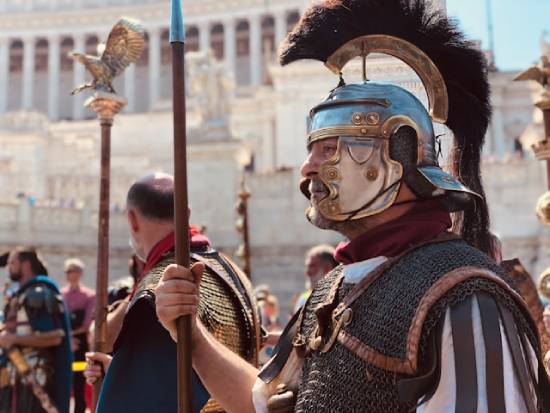
Photo by Maria Dolores Vazquez on Unsplash
Others got so caught up in His miracles that they missed the entire purpose of Jesus’ mission.
The Jews during Jesus’ time believed the Messiah had come to destroy their Roman oppressors. They didn’t understand Jesus’ true mission was to restore us, show us who God is, and redeem us through His death. They were looking for a conquering king, so much so that they tried to force Jesus to take the throne (John 6:14-15). But Jesus refused.
Jesus also refused to work miracles for the wrong reasons or ends. He denied King Herod’s request to show off His power (Luke 23:8-9). He also refused to work miracles to harm others, such as when his disciples, James and John, asked Him to destroy a Samaritan town that rejected Him (Luke 9:54-56).
Jesus didn’t want people to follow Him just because of the miraculous things He could do (Matthew 12:38-42). He wanted them to follow Him out of their own free will. In other words, He wanted them to be focused on what mattered—building a loving relationship with God and others instead of seeking out worldly power.
He didn’t do miracles to intimidate or awe people. They were done to help people understand Jesus and His mission to save us from sin.
But, it’s worth noting that Jesus never turned away someone in need, despite the stir it might have caused. He healed and helped everyone who came to Him with earnest needs, even those who had little faith (Mark 9:23-25).
Jesus also refused to perform miracles for His own benefit. He didn’t fall into Satan’s temptation to use His divine power to save Himself in the wilderness (Matthew 4: 4-11). He also wouldn’t use His power to save Himself from the cross (Mark 15:30)
This was done to fully realize the plan of salvation, where Jesus had to suffer temptation and die in the place of humanity (Hebrews 4:14-16). It was also done to reinforce the Christian experience—one that wasn’t about power and self-preservation but humility, selflessness, and total reliance on God.
What do Jesus’ miracles teach us?
Jesus’ miracles reveal what Jesus’ role as the Messiah and Son of God is all about.
In feeding the multitudes, healing the blind, and casting out demons, we see a Messiah bent on bringing restoration back to His people. Instead of acting as a conqueror, Jesus acts as a compassionate servant-leader, doing whatever it takes to reach people and give them a better life.
Want to learn more about Jesus’ divinity and role as the Son of God?
Look no further than,
Jesus’ Miracles Throughout The Gospel:
- Turned water into wine (John 2: 1-11)
- Healed a royal official’s son (John 4: 43-54)
- Healed a sick man at the pool of Bethesda (John 5:1-15)
- Helped the disciples catch an enormous amount of fish (Luke 5:1-11)
- Cast out the demon of a man at the synagogue (Mark 1:21-28)
- Healed Peter’s mother-in-law (Mark 1:29-31)
- Healed a man of leprosy (Mark 1:40-45)
- Healed a paralytic man (Mark 2:1-12)
- Healed a man’s withered hand (Mark 3:1-6)
- Healed a centurion’s servant (Luke 7: 1-10)
- Healed two blind men (Matthew 9:27-31)
- Cast out the demon of a mute man so he could speak (Matthew 9:32-34)
- Resurrected a widow’s son (Luke 7:11-17)
- Healed a demon-possessed man, helping him see and speak (Matthew 12:22-23)
- Calmed the storm over a lake (Matthew 8: 18- 27)
- Cast out demons from a man into a herd of pigs (Mark 5: 1-20)
- Healed a woman with an issue of blood (Mark 5: 25-34)
- Resurrected Jairus’s daughter (Mark 5: 22-24, 34-43)
- Fed 5,000 people (Mark 6:30-44)
- Walked on water (Matthew 14:22-31)
- Healed people who touched His clothes (Matthew 14: 34-36)
- Healed the demon-possessed daughter of a Canaanite woman (Matthew 15:21-28)
- Healed a deaf and mute person in Decapolis (Mark 7: 31-37)
- Fed 4,000 people (Matthew 15: 32-39)
- Healed a blind man at Bethsaida (Mark 8: 22-26)
- Healed a demon-possessed boy who suffered from convulsions and muteness (Mark 9:14-29)
- Made coins appear in a fish’s mouth to pay his and Peter’s temple tax (Matthew 17: 24-27)
- Healed a man that was born blind (John 9:1-41)
- Healed a cripple woman (Luke 13: 10-17)
- Healed a man with dropsy (Luke 14: 1-4)
- Resurrected Lazarus (John 11:1-45)
- Healed ten lepers (Luke 17:11-19)
- Healed a blind man named Bartimaeus (Mark 10: 46-52)
- Cursed a fig tree (Mark 11: 12-14, 20-26)
- Healed Malchus’ ear (Luke 22: 50-51)
- Helped the disciples catch an enormous amount of fish again (John 21:1-23)
- Nichol, F.D. Seventh-day Adventist Bible Commentary And Bible Students’ Source Book Volume 5, Seventh-day Adventist Church, 1980. p. 208. [↵]
- Ibid, p.1653. [↵]
- Ibid [↵]
- Matthew 12:28; Acts 10:38. [↵]
- Matthew 10:18-20, Acts 1:8; Acts 2:4; Acts 8:39; 1 Peter 4:11; Exodus 4:1-12. [↵]
- John 2:11; John 11:4; John 1:14. [↵]
- Matthew 14:14; Mark 9:14-29; Luke 7:11-17. [↵]
- Mark 6:30-44; John 2: 1-11; Matthew 9:36; Matthew 17: 24-27; Matthew 8: 18- 27). [↵]
- John 20:30-31. [↵]
- Matthew 12:9-13; Luke 5:9-10. [↵]
- Nichol. Seventh-day Adventist Bible Commentary And Bible Students’ Source Book Volume 5, 1980, p. 209. [↵]
- Nichol. Seventh-day Adventist Bible Commentary And Bible Students’ Source Book Volume 5, 1980, p. 210. [↵]
- Nichol, F.D. Seventh-day Adventist Bible Commentary And Bible Students’ Source Book Volume 5, Seventh-day Adventist Church, 1980. p.416. [↵]
- John 6:14-15; John 10:30-39; Mark 1: 41- 45. [↵]
- John 5:3-7; Matthew 8:5-10; Luke 13:10-17; Matthew 15:21-28; Luke 17:11-19. [↵]
- Luke 9: 38-39; Mark 5:5; Acts 19:13-16. [↵]
More Answers

Was Jesus Ever Hypocritical? Learn What the Bible Says.
Was Jesus Ever Hypocritical? Learn What the Bible SaysMany undesirable traits are associated with hypocrisy. But overall, hypocrites intentionally try to make others believe they uphold or represent a certain belief system, character trait, lifestyle, etc., when in...

Is Jesus the Same Being as Michael the Archangel?
Many Christians have wondered at the mysterious identity of Michael the Archangel.

All of Jesus’ Warnings and Encouragements in the Bible
Here’s a comprehensive list of every warning and encouragement from the words of Jesus, as well as how they can benefit our lives today.

Does Jesus Really Care About Me?
Does Jesus Really Care About Me?Short answer: yes, Jesus really does care about you, specifically (1 Peter 5:7, ESV). But if you’re wondering whether Jesus Christ really, truly cares about you, you aren’t alone. Gideon, Abraham and Sarah, Job, Jeremiah, Elijah, even...

Jesus and the Pharisees and Sadducees (Why They Opposed Jesus)
The Pharisees and Sadducees hated Jesus and wanted Him dead. This page looks at who they were and what motivated them to oppose Jesus.

The Many Names of Jesus in the Bible and What They Mean
The Many Names of Jesus in the Bible and What They MeanThe Bible includes a lot of names for Jesus, and they all reveal different facets of His identity, power, character, and mission. We’ve all had nicknames throughout our lives. They might be shortened versions of...

When Is Jesus Coming Back?
The Bible doesn’t tell us exactly when the Second Coming will occur, but learn about the signs that point to the nearness of the return of Christ.

After Jesus’ Ascension: What He Did Throughout the New Testament
After Jesus’ Ascension: His work Throughout the New TestamentWe first get to know Jesus, the Son of God and our Messiah, by reading the Gospel accounts of His earthly ministry. And after He died for our sins and was resurrected, He returned to heaven. This is known as...
Who is Jesus
Who Is Jesus, and Why Is He So Important to Us? Jesus Christ is the central figure of Christianity. Not only is He God’s Son and our Savior, He: Is who the Bible is all about Can give us eternal life Is part of the Trinity with God the Father and the Holy Spirit Is...

Jesus and John the Baptist: Their Relationship and Ministry
John the Baptist and Jesus were cousins, friends, and close coworkers in ministry. Learn the lasting significance of their relationship.

Why Did Jesus Have Disciples and Who Were They?
During Jesus’ ministry on earth, He selected certain individuals to help with and continue His work. They would be referred to during that time as His “disciples.”

Does Jesus Appear in the Old Testament?
Before His incarnation, Jesus also played an active role in the redemption and salvation of humanity. Discover the different ways He appeared in Old Testament stories.

Jesus’ Baptism: What It Means and Why It Matters
Jesus’s baptism marked the beginning of His earthly ministry. It was God’s big reveal regarding who Jesus is.

Why Is the Genealogy of Jesus Christ So Important?
Have you ever traced your genealogy back several generations? Did you ever try to find out if your ancestors did anything famous (or infamous)?

Jesus and the Woman at the Well: Breaking Down Barriers
Jesus’ meeting with the woman at the well reveals His heart for hurting people and His desire to break down prejudice. This page looks at how Jesus reached out to her.

Who is The Son of Man in the Bible?
In calling Himself the Son of Man, Jesus confirmed His role as humanity’s savior. Learn what else this title tells us about Jesus.

Who Was Mary, the Mother of Jesus Christ?
Mary, Jesus’ mother, was a humble woman, deeply committed to following God’s will for her life. Learn what the Bible says about Mary and what we can learn from her.

What Does the Bible Mean When It Calls Jesus the Son of God?
When the Bible calls Jesus the Son of God it’s referring to His divinity. Learn what makes this so significant and what it has to do with salvation.

The True Events Surrounding the Birth of Jesus
Jesus’ birth involved many strange events: a pregnant virgin, a stable birth, angels appearing to shepherds, and wealthy visitors. These help us understand His supernatural yet incredibly humble life.

An In-Depth List of the Prophecies About Jesus
How many prophecies of Jesus are in the Old Testament?

Can We Find Jesus Christ In the Old Testament?
Yes, you might be surprised to know that there are hundreds of verses in the Old Testament about Jesus.

The Parables of Jesus: What They Teach Us About Life
Have you ever been on the verge of sleep in the middle of a long lecture or sermon when suddenly the speaker takes a turn and begins to tell a story?