
So what’s behind the similarity—and the key difference—between a “son of man” in the Old Testament and the “Son of Man” in the New Testament?
The Bible has numerous names for Jesus: Son of God, Prince of Peace, Lamb of God, and King of Kings (and that’s just naming a few). But even with all these names, “Son of Man,” seems to be Jesus’ favorite nickname. He uses it to refer to Himself over 80 times in the Bible.1
So what did Jesus mean by calling Himself this? What does this self-designation say about Him?
Find out as we take a deep dive into:
- What “son of man” means in the Bible
- What prophecy can tell us about the “Son of Man”
- What this title tells us about Jesus
- The Son of Man’s role as judge and intercessor
Let’s start by looking more closely at how this title is used throughout the Bible.
Bible verses that tell us about the Son of Man:
- The humility of the Son of Man: Matthew 8:20
- The suffering of the Son of Man: Matthew 12:40; Mark 8:31; Matthew 17:22; Luke 24:6-7; Matthew 20:18-19; Luke 9:22; Mark 14:21; Matthew 17:9; Matthew 17:12; Matthew 26:2; Matthew 26:45, Mark 9:12
- The service of the Son of Man: Luke 19:10; Mark 10:45; John 6:27; John 6:53; Matthew 13:37; Matthew 20:28
- The authority of the Son of Man: Luke 5:24; John 5:19; Luke 6:5; Psalm 80:17; Matthew 9:6; Mark 2:10; Luke 22:69; John 6:27; John 8:28
- The divinity of the Son of Man: John 3:13; John 6:62
- The promised rule of the Son of Man: Daniel 7:13-14; Mark 14:62; Matthew 26:64; Matthew 19:28; Matthew 25:31; Acts 7:56; Luke 18:31; Mark 14:62; Luke 22:69; Matthew 13:41; Matthew 16:13-16
- The judgment of the Son of Man: John 5:27; Revelation 14:14; Matthew 24:30; Matthew 24:26-27; Luke 21:27; Matthew 16:27; Matthew 19:28; Mark 13:26; Revelation 14:14-16
What does “son of man” mean in the Bible?

Photo by Gift Habeshaw on Unsplash
In the Old Testament, when the Bible refers to a “son of man” it’s usually referring to a human being (Job 25:6; 35:8; Psalm 8:4; 146:3; Isaiah 51:12). We first come across the designation in Numbers 23:19:
“God is not a man, that He might lie, or a son of man, that He might change His mind. Does He speak and not act, or promise and not fulfill” (CSB)?
This verse makes a distinction between God and humans, so a “son of man” would be any fallen human person in contrast to a perfect God.
We also see this title used directly to a specific human person. God repeatedly addresses the prophet Ezekiel as a “son of man” (Ezekiel 2:1).
The Hebrew word that is translated to create the English phrase “son of man” in Ezekiel is ben -‘adam,2 which is similar to saying “of Adam.” Ezekiel is also called by the Hebrew word ’enosh (’enash in Aramaic), which is typically used to refer to humans in general.
So the purpose of using this designation emphasizes the status of a person’s humanity, noting the weaknesses and helplessness that come with being human.3
But there is one instance later on in the Old Testament where the phrase “son of man” (not capitalized) does not seem to refer to any old human being. We can find this in a Messianic prophecy in Daniel 7 when the text refers to keber ’enash, or “one like a son of man,” who Bible scholars believe to be Jesus (verse 13, CSB).4
The other times we see “Son of Man” referring to a specific person and not emphasizing fallen human characteristics is in the New Testament, using the Greek phrase huios anthrōpos.5 This is the phrase Jesus used (capitalized) to refer to Himself during His earthly ministry. It’s also used to describe Him in Acts 7:56, Revelation 1:13, and Revelation 14:14.
So what’s the meaning behind the two very different uses of the phrase “son of man”?
Let’s first look more closely at the Messianic prophecy in the book of Daniel, as well as some other prophetic passages that use this title.
What prophecy tell us about “the Son of Man”
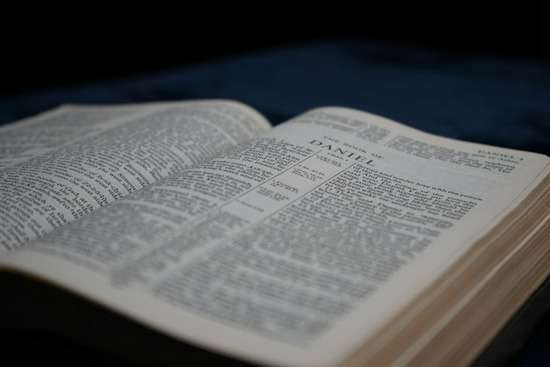
Photo by Ben Burkhardt on Unsplash
Daniel 7:13 is the first use of “son of man” to describe divine, rather than human, characteristics. This special figure is mentioned in a vision given to the prophet Daniel.
This vision involved four strange beasts, each representing a powerful nation that would, at one point, be the predominant world power (Daniel 7:17).
But when Daniel is shown the final beast, he watches as it’s destroyed and its reign of power comes to an end (Daniel 7:7-11). In its place, someone “like a son of man” arrives on the clouds of heaven to assume eternal rule of the earth (Daniel 7:13-14). This authority to rule earth is given to this “son of man” by the Ancient of Days, otherwise known as the Most High, or God the Father.6
This scene described in Daniel’s vision aligns with other Scriptural descriptions of Christ’s Second Coming, which can be found in Mark 13:26; Matthew 25:31; 1 Thessalonians 4:16-17; Revelation 1:7.
What’s more, Jesus references this prophecy as He’s on trial before Jewish leaders shortly before His death on the Cross. He said:
“‘It is as you said. Nevertheless, I say to you, hereafter you will see the Son of Man sitting at the right hand of the Power, and coming on the clouds of heaven’” (Matthew 26:64, NKJV).
Jesus publicly claims to be the Son of Man spoken of in the prophecy, the one who will gain eternal rule over the earth.
In response to this claim, the Jewish religious leaders, the chief priests, and the high priest became angry. They refused to believe that Jesus had this divinity and prophetic significance, so they accused Him of blasphemy, or trying to assume the authority of God (Matthew 26:65).
So the Jews must have already believed that the “Son of Man” in prophecy referred to God in some way, or this claim wouldn’t have gotten them so riled up.
We also see the “Son of Man” identity for Jesus show up in Revelation 1, when John describes a vision of “one like the Son of Man” (verse 13), who was dead but was resurrected, is “the First and the Last, and the Living One,” and holds the keys to eternal life (verses 17-18, CSB). Which describes Jesus perfectly.7
But what does Daniel 7 mean when it talks about Jesus ruling eternally over earth? Wouldn’t He already have control of this world as the Son of God?
Let’s rewind to Genesis. Back to the very first prophecy to reference Jesus Christ and His role in humanity’s salvation.
God made the world for humanity. Earth wasn’t just for them to dwell upon— God gave it to them to have dominion over (Genesis 1:27-28). But when Adam and Eve yielded to sin, they forfeited their rule. In listening to Satan, who appeared in the form of a serpent, they lost their dominion to him (Luke 4:5-6).8
And with Satan’s dominion came the kind of world we see today—one fueled by selfishness, power struggles, pain, and confusion.
But God didn’t abandon Adam and Eve to the ultimate fate of their actions. Ever a merciful Creator, God wanted to give Adam and Eve (and all of humanity) an opportunity for salvation from this sin-corrupted existence.
So God issued the first-ever Messianic prophecy, speaking of a savior that would come to earth, walk among us, and provide a way to deliver us from sin.
He tells the serpent:
“And I will put enmity
Between you and the woman,
And between your seed and her Seed;
He shall bruise your head,
And you shall bruise His heel” (Genesis 3:15, NKJV).
This passage predicted that humanity’s Messiah would come out of humanity’s seed, to be a human descendent, from the line started by Adam and Eve.
This human savior would be none other than Jesus, the Son of God given human form, born to a human woman named Mary to become the (capitalized) “Son of Man.”9
So Jesus died on the Cross as a sacrifice for our sins. And through this perfect sacrifice, with the perfect, sinless life He led, God gave Him ultimate dominion over the earth (Ephesians 1:20-21).
What does the title “Son of Man” tell us about Jesus?
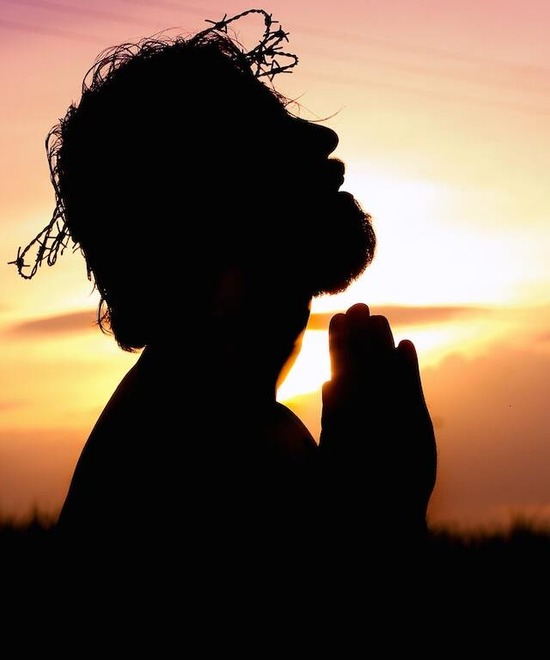
Photo by Rodolfo Clix
The title “Son of Man” reveals the special relationship between Jesus and humanity. Instead of an ordinary, sin-corrupted “son of man,” like any of us, Jesus, became the “Son of Man,” living in our sinful world as a human—but one who resisted falling into sin. And in doing this, He became humanity’s promised redeemer and demonstrated how to live a life of love.
And as the Son of Man, Jesus demonstrated His power to forgive sin:
“‘But that you may know that the Son of Man has power on earth to forgive sins’—He said to the man who was paralyzed, ‘I say to you, arise, take up your bed, and go to your house’” (Luke 5:24, NKJV).
He also showed that his role as the Son of Man means He wants everyone to understand what it means to live a sin-free life:
“‘I tell you that something greater than the temple is here. If you had known what these words mean, ‘I desire mercy, not sacrifice,’ you would not have condemned the innocent. For the Son of Man is Lord of the Sabbath” (Matthew 12:6-8, CSB).
Jesus’ claim to be the Lord of the Sabbath further verifies His authority as God, the creator of the Sabbath.
Our Lord Jesus is indeed the king who will one day reign over the New Earth—and who we can invite to reign over and shape our lives when we accept Him as our Savior.
And the beauty of this title, “Son of Man,” reminds us that Jesus is not just a king. He isn’t distant and wrapped up in His own greatness like many fallen human kings throughout history. Instead, He’s our Savior who intimately understands us. He’s gone through the same kinds of things we have (Hebrews 4:15), and is interested in having a personal relationship with us.
Jesus invites each of us to come to Him and share our burdens and joys with Him like we would a friend—because that’s who He is (Matthew 11:28; John 15:12-15).
His earthly ministry, His death, and His resurrection allow us to see that the Son of Man is not a king who rules at a distance, but one who acts as a servant-leader, reaching people where they’re at.10 Jesus didn’t shy away from all the ugliness and pain humanity faced. He was born right into the thick of it.
He came with the intention of loving others and helping them rebuild the connection they’d once had with God. To accomplish this, He was even willing to face the humiliation and pain of the Cross (Philippians 2:8).
But despite all the difficulties that came with being a human, Jesus didn’t mind being identified as one.
If the number of times Jesus called Himself the “Son of Man,” a title associated with being a human, is any indication, Jesus truly values the humanity He took on for the way it has brought Him closer to us.
It was, after all, Jesus’ experience as a human that enabled Him to become the perfect candidate for building the bridge between humanity and God (Hebrews 2:17).
The judgment and intercession of the Son of Man

Photo by Wesley Tingey on Unsplash
As the Son of Man, Jesus has the authority to judge the world (John 5:27; Matthew 16:27).
Scripture shows us how Jesus is currently performing this role. It reveals that, until He returns, He ministers in the heavenly sanctuary, going through every moment with us, searching our hearts, hearing our prayers, and following our thoughts and actions. It only makes sense for the judge of all humanity to be the God who knows us fully, inside and out (2 Corinthians 5:10; Hebrews 4:14).
The concept of judgment, unfortunately, has been twisted by sin and tainted by our human methods of judgment. After all, no one really looks forward to facing a judge in a courtroom. It’s so easy to worry that something won’t work out fairly, or that the judge won’t understand your situation, or that the opposing side will say something untrue or inaccurate about you.
But we don’t have to fear the judgment of Jesus like we would a human legal system. He is the most fair judge there could possibly be. He knows what it’s like to be human because He became human Himself.
While Adam and Eve led humanity into sin, the apostle Paul re-emphasizes Jesus’ role as the Son of Man, the second Adam (1 Corinthians 15:45), who intercedes on our behalf to save us from sin and repair our relationship with God.
While there’s nothing we can do to acquit ourselves, Jesus offers to deliver us from sin and its destructive consequences. He died for us, as a son of man, so we wouldn’t have to die for our sins (Hebrews 2:17). And, in facing every temptation we’ve faced, He can serve as our High Priest, fully prepared to help us resist temptation and choose a better way of life (Hebrews 4:15).
The Son of God became the Son of Man because He cares about us more than we could ever imagine. Jesus went through all He did so we can still have the opportunity to live with Him for eternity (John 15:13; 1 Thessalonians 5:10).
Now that we’ve learned about Jesus’ role as the Son of Man,
Related Articles



- “Lesson 2: The Son,” General Conference of Seventh-day Adventists, p.15. [↵]
- Nichol, F.D., Seventh-day Adventist Bible Commentary And Bible Students’ Source Book Volume 4, Seventh-day Adventist Church, 1977, p.580. [↵]
- Ibid. [↵]
- Nichol, Seventh-day Adventist Bible Commentary And Bible Students’ Source Book Volume 4, p. 829. [↵]
- Strong, James LL.D, S.T.D., The Strongest Strong’s Exhaustive Concordance of the Bible, Zondervan, 2001, pp. 1592,1650. [↵]
- Daniel 7:14; John 5:19; Psalm 80:17. [↵]
- Revelation 1:13-18; Romans 10:9; John 3:16. [↵]
- Nichol, F.D., Seventh-day Adventist Bible Commentary And Bible Students’ Source Book Volume 1, Seventh-day Adventist Church, 1978, p.232-233. [↵]
- Romans 8:3; John 3:16; Philippians 2:5-8. [↵]
- John 13:1-5; Mark 1:40-42; Luke 5:27-32. [↵]
More Answers

Why Do Some Bibles Have More Books Than Others?
Christians consider the Bible as their sacred writings. But within Christianity, different denominations use Bibles with different numbers of books.

Can We Find Jesus Christ In the Old Testament?
Yes, you might be surprised to know that there are hundreds of verses in the Old Testament about Jesus.

What the Bible Says About Resolving Conflicts
While it’s the main ingredient in a good story, it unfortunately can spoil things in real life. It might start from minor differences of opinion. But unchecked, it can turn into what feels like a full-blown war.

The Benefits of A Seventh-day Adventist Academy
Adventist academies are high schools (grades 9-12) that are owned and operated by the Seventh-day Adventist Church.

Are Seventh-day Adventists Christians?
Yes, the Seventh-day Adventist Church is a Protestant Christian denomination formed in 1863. Just like other Christians, we believe that Jesus Christ is our Savior and seek to follow the principles of the Word of God.


Adventist Movies: Where Faith and Film Meet
The Adventist Church uses film to share our faith and uplift positive values. Learn more about specific Adventist-produced films and where to find them.

Does the Bible Teach Predestination?
your choices, actions, and habits really matter to your eternal destiny? Or is the path you choose in life predetermined, and your life is just following a script that’s been laid out for you?
The Seven Churches of Revelation and What They Mean
The seven churches were churches that received messages from Jesus Christ through the apostle John while he was exiled on the island of Patmos. These letters are in chapters 2 and 3 of Revelation.

Do Adventists Celebrate Christmas?
In general, most Seventh-day Adventists do celebrate Christmas.
Since our denomination doesn’t have specific guidelines about holidays, it’s up to each member to decide whether to celebrate it based on their personal convictions and study of the Bible.

How Can I Know Ellen White’s Messages Were From God?
It’s natural to be a bit skeptical when you hear about someone being “divinely inspired,” or that something is a “message from God,” etc. And we expect nothing different if you’re hearing about Ellen White, an influential co-founder of the Seventh-day Adventist Church, for the first time. After all, the Bible tells us that we’re supposed to test these things!

Ellen G. White’s Time in Australia
Ellen White traveled to Australia in the later part of her life, and she ended up spending nine years there. In that time, she helped the Australian Seventh-day Adventist Church increase in size and strength.

Ellen G. White’s Time in Europe
When the Seventh-day Adventist Church was still young, a council of the church in Europe requested Ellen White, one of Adventism’s key leaders, to come to Europe. Despite the many obstacles, God led her there to help the new churches and members for two years.

Ellen G. White’s Travels and Worldwide Mission
Though Ellen White, a co-founder of the Seventh-day Adventist Church, is best known for her ministry in the United States, she also traveled to twelve other countries in her lifetime—a big accomplishment in the 19th century when travel was strenuous and long.

Ellen G. White’s Counsel on College Education
Ellen G. (Harmon) White, a significant co-founder of Adventism, is often known for her practical and spiritual guidance for proper childhood education. But she was also significantly involved in the development of Seventh-day Adventist higher education.

8 Pieces of Advice from Ellen White’s Counsel for Families
In this article, we’ll look at the insight Ellen White received from God. We’ll cover 8 major themes she highlighted for families.

Was Everything Ellen White Said Divinely Inspired?
The Seventh-day Adventist Church believes that many of Ellen White’s messages were inspired by God. But that doesn’t mean everything she ever said was prophetic, or meant to be taken as direct instruction from God. So let’s break down how to identify the nature of her many written messages and quotes.

Who Were Ellen White’s Children?
Being the children of a woman with a prophetic calling from God had its blessings and its challenges.
In this overview, we’ll look at the highlights of the lives of Ellen White’s sons during her many years of ministry, as well as the ways each of them decided to serve Jesus Christ:

Ellen White’s Spiritual Counsel on Marriage
As one of the founders of the Seventh-day Adventist Church, Ellen G. White was held in high regard. She was a prolific author and was heavily engaged in the mission of the denomination, prayerfully pursuing the guidance of the Holy Spirit.

Sabbath Keeping: What It Looks Like in the Bible
That Sabbath would not be about a checklist of rules but about a mindset of rest. It’s a day to set aside daily cares and connect with God, our Creator. Out of our love for Him, we take the principles of the Bible and apply them in the way we keep the Sabbath.

Ellen G. White or the Bible—Which is More Important to Adventists?
Ellen G. White or the Bible—Which is More Important to Adventists?The Bible—without a shadow of a doubt—is the most important book. It’s the standard we use to test all other writings, including those of Ellen White. The Seventh-day Adventist Church believes that “the...
Are Any of Ellen G. White’s Prophecies Yet to Come True?
Ellen White, a co-founder of the Seventh-day Adventist Church, demonstrated many times over that she had the spiritual gift of prophecy. Some of her predictions’ timelines have already passed, and those prophecies have been fulfilled. Others have yet to be fulfilled.

What Was Ellen G. White’s Counsel on Music?
Ellen G. White, one of the founders of the Seventh-day Adventist Church, also provided helpful guidance regarding music choices for Christians. She provided sound principles to answer questions the young Adventist Church had.

What Does the Bible Say About Modesty
Seventh-day Adventists and Christians in general try to ensure their outward presentation and lifestyle glorify God. This often involves daily habits like the ways we hold conversations, the ways we dress and accessorize, and the ways we regard other people when we’re out and about.

What Ellen White Said About Using the Bible in Education
Ellen White, one of the founders of the Seventh-day Adventist Church, believed that education was not complete unless it was founded upon the principles of the Bible.
But what does the Bible have to do with math or science? Is it important to integrate the Bible with schoolwork?

What Were Ellen White’s Visions About the Adventist Church?
What Were Ellen White’s Visions About the Adventist Church?Led by the Holy Spirit, Ellen G. White was given many messages, counsel, revelations, and visions about the Bible, history, prophecy, and how we can apply biblical principles to our daily lives. She was also a...

Is it necessary to attend church to draw closer to Christ?
What Does the Bible Say About Going to Church?While you certainly don’t have to go to church to develop a relationship with Jesus, the Bible makes it clear that gathering together with other believers can be really beneficial for your spiritual growth. For the early...

How Do I Know God Has Forgiven My Sins?
Knowing you’re forgiven is a big part of finding freedom in Christianity. The Bible tells us that after we’ve prayed for God’s forgiveness, we can believe we’re forgiven and accept His gift of pardon.

How Do Adventists Make Movie and Music Choices?
How do Adventists decide what music to listen to and which movies to watch? Learn how Bible principles can help us make better entertainment choices.
Didn’t find your answer? Ask us!
We understand your concern of having questions but not knowing who to ask—we’ve felt it ourselves. When you’re ready to learn more about Adventists, send us a question! We know a thing or two about Adventists.