
Different denominations, schools of thought, and individual believers can hold widely differing views about what hell truly is, who experiences it (and for how long), and how it’s portrayed in Scripture.
So what does the Bible actually say?
To figure this out, here’s a collection of Scriptural passages that use words translated as “hell” in English, along with other key passages about the judgment and ultimate fate of those who reject God.
We’ll also look at the Hebrew and Greek words used in those verses, which will help us more fully understand context and meaning.
It’s helpful to note that in many modern English translations, the word “hell” appears only in the New Testament. So the Old Testament verses in this list include words often associated with the concept of hell, as well as passages that describe the final consequences of those who have chosen to oppose God.
We understand that hell can be an upsetting topic. Pop culture, artwork, movies, ancient literature, and even some Christian traditions have all contributed to how it’s collectively perceived. It’s a topic often accompanied by fear and confusion.
But that’s why we’re going straight to the Bible. The first step in understanding what the Bible teaches about hell is to see how our primary source of spiritual authority describes it. Then we’re better equipped to put the pieces together ourselves and understand the bigger picture.
Here’s how this resource is organized:
- Terms directly translated to “hell” in English
- Terms associated with hell, or the eternal fate of those who reject God
(Unless otherwise noted, all verses listed on this page are from the English Standard Version, with bold and italics added for emphasis).
Terms translated to “Hell”
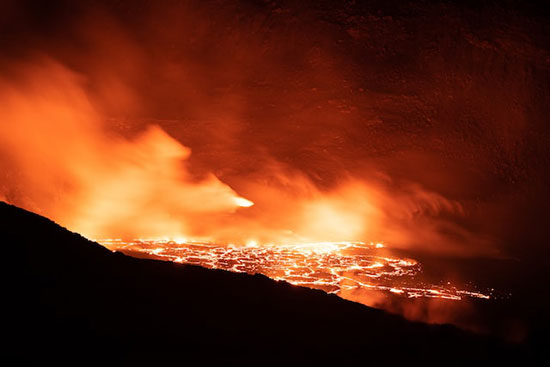
Photo by Ioann-Mark Kuznietsov on Unsplash
In this section, we’ll examine the words that in most cases are either directly translated as “hell” or commonly associated with it, and list each verse of Scripture they appear in.
Something interesting to note: Some Bible translations choose to leave the original Hebrew or Greek word instead of translating it, exemplifying that context and original definitions are important to understanding what the Bible is communicating.
For some of the words in this section, we’ve included every time they appear in the Bible. For others, we’ve only included the mentions that relate directly to the final judgment of unbelievers.
She’ol (Strong’s H7585)
Sheol is a Hebrew noun that means “place of the dead,” or “realm of the dead.” It appears 66 times in the Old Testament, and it’s commonly translated into English as “pit” or “grave,” even though Sheol refers more broadly to the realm or state of the dead, rather than a single place of burial. (A small handful of older English translations of the Bible render Sheol as “hell.”)
Many passages describe Sheol as “down,” “under,” “beneath,” or a place one descends into. It’s consistently portrayed as the common destination of the dead, both righteous and wicked. This word was not presented as a place or punishment or torment. Both “righteous” and “wicked” people are described as going there or destined to go there. The characteristics we find of Sheol are silence, darkness, inactivity, cessation, and being cut off from earthly life.
Genesis–1 Kings
- Genesis 37:35 – “All his sons and all his daughters rose up to comfort him, but he refused to be comforted and said, ‘No, I shall go down to Sheol to my son, mourning.’ Thus his father wept for him.”
- Genesis 42:38 – “But he said, ‘My son shall not go down with you, for his brother is dead, and he is the only one left. If harm should happen to him on the journey that you are to make, you would bring down my gray hairs with sorrow to Sheol.’”
- Genesis 44:29 – “If you take this one also from me, and harm happens to him, you will bring down my gray hairs in evil to Sheol.”
- Genesis 44:31 – “As soon as he sees that the boy is not with us, he will die, and your servants will bring down the gray hairs of your servant our father with sorrow to Sheol.”
- Numbers 16:30 – “But if the Lord creates something new, and the ground opens its mouth and swallows them up with all that belongs to them, and they go down alive into Sheol, then you shall know that these men have despised the Lord.”
- Numbers 16:33 – “So they and all that belonged to them went down alive into Sheol, and the earth closed over them, and they perished from the midst of the assembly.”
- Deuteronomy 32:22 – “For a fire is kindled by my anger, and it burns to the depths of Sheol, devours the earth and its increase, and sets on fire the foundations of the mountains.”
- 1 Samuel 2:6 – “The Lord kills and brings to life; He brings down to Sheol and raises up.”
- 2 Samuel 22:6 – “The cords of Sheol entangled me; the snares of death confronted me.”
- 1 Kings 2:6 – “Act therefore according to your wisdom, but do not let his gray head go down to Sheol in peace.”
- 1 Kings 2:9 – “Now therefore do not hold him guiltless, for you are a wise man. You will know what you ought to do to him, and you shall bring his gray head down with blood to Sheol.”
Job–Psalms
- Job 7:9 – “As the cloud fades and vanishes, so he who goes down to Sheol does not come up.”
- Job 11:8 – “It is higher than heaven—what can you do? Deeper than Sheol—what can you know?”
- Job 14:13 – “Oh that You would hide me in Sheol, that You would conceal me until Your wrath be past, that You would appoint me a set time, and remember me!”
- Job 17:13 – “If I hope for Sheol as my house, if I make my bed in darkness.”
- Job 17:16 – “Will it go down to the bars of Sheol? Shall we descend together into the dust?”
- Job 21:13 – “They spend their days in prosperity, and in peace they go down to Sheol.”
- Job 24:19 – “Drought and heat snatch away the snow waters; so does Sheol those who have sinned.”
- Job 26:6 – “Sheol is naked before God, and Abaddon has no covering.”
- Psalm 6:5 – “For in death there is no remembrance of You; in Sheol who will give You praise?”
- Psalm 9:17 – “The wicked shall return to Sheol, all the nations that forget God.”
- Psalm 16:10 – “For you will not abandon my soul to Sheol, or let your holy one see corruption.”
- Psalm 18:5 – “The cords of Sheol entangled me; the snares of death confronted me.”
- Psalm 30:3 – “O Lord, you have brought up my soul from Sheol; you restored me to life from among those who go down to the pit.”
- Psalm 31:17 – “O Lord, let me not be put to shame, for I call upon You; let the wicked be put to shame; let them go silently to Sheol.”
- Psalm 49:14-15 – “Like sheep they are appointed for Sheol; death shall be their shepherd, and the upright shall rule over them in the morning. Their form shall be consumed in Sheol, with no place to dwell. But God will ransom my soul from the power of Sheol, for He will receive me. Selah.”
- Psalm 55:15 – “Let death steal over them; let them go down to Sheol alive; for evil is in their dwelling place and in their heart.”
- Psalm 86:13 – “For great is Your steadfast love toward me; You have delivered my soul from the depths of Sheol.”
- Psalm 88:3 – “For my soul is full of troubles, and my life draws near to Sheol.”
- Psalm 89:48 – “What man can live and never see death? Who can deliver his soul from the power of Sheol? Selah.”
- Psalm 116:3 – “The snares of death encompassed me; the pangs of Sheol laid hold on me; I suffered distress and anguish.”
- Psalm 139:8 – “If I ascend to heaven, You are there! If I make my bed in Sheol, You are there!”
- Psalm 141:7 – “As when one plows and breaks up the earth, so shall our bones be scattered at the mouth of Sheol.”
Proverbs–Habakkuk
- Proverbs 1:12 – “Like Sheol let us swallow them alive, and whole, like those who go down to the pit.”
- Proverbs 5:5 – “Her feet go down to death; her steps follow the path to Sheol.”
- Proverbs 7:27 – “Her house is the way to Sheol, going down to the chambers of death.”
- Proverbs 9:18 – “But he does not know that the dead are there, that her guests are in the depths of Sheol.”
- Proverbs 15:11 – “Sheol and Abaddon lie open before the Lord; how much more the hearts of the children of man!”
- Proverbs 15:24 – “The path of life leads upward for the prudent, that he may turn away from Sheol beneath.”
- Proverbs 23:14 – “If you strike him with the rod, you will save his soul from Sheol.”
- Proverbs 27:20 – “Sheol and Abaddon are never satisfied, and never satisfied are the eyes of man.”
- Proverbs 30:16 – “Sheol, the barren womb, the land never satisfied with water, and the fire that never says, ‘Enough.’”
- Ecclesiastes 9:10 – “Whatever your hand finds to do, do it with your might, for there is no work or thought or knowledge or wisdom in Sheol, to which you are going.”
- Isaiah 5:14 – Therefore Sheol has enlarged its appetite and opened its mouth beyond measure, and the nobility of Jerusalem and her multitude will go down, her revelers and he who exults in her.“
- Isaiah 7:11 – “Ask a sign of the Lord your God; let it be deep as Sheol or high as heaven.”
- Isaiah 14:9, 11, 15 – “Sheol beneath is stirred up to meet you when you come; it rouses the shades to greet you, all who were leaders of the earth; it raises from their thrones all who were kings of the nations. … Your pomp is brought down to Sheol, the sound of your harps; maggots are laid as a bed beneath you, and worms are your covers. … But you are brought down to Sheol, to the far reaches of the pit.”
- Isaiah 28:15, 18 – “Because you have said, ‘We have made a covenant with death, and with Sheol we have an agreement, when the overwhelming whip passes through it will not come to us, for we have made lies our refuge, and in falsehood we have taken shelter’ … Then your covenant with death will be annulled, and your agreement with Sheol will not stand; when the overwhelming scourge passes through, you will be beaten down by it.”
- Isaiah 38:10 – “I said, in the middle of my days I must depart; I am consigned to the gates of Sheol for the rest of my years.”
- Isaiah 38:18 – “For Sheol does not thank You; death does not praise You; those who go down to the pit do not hope for Your faithfulness.”
- Isaiah 57:9 – “You journeyed to the king with oil and multiplied your perfumes; you sent your envoys far off, and sent down even to Sheol.”
- Song of Solomon 8:6 – “Set me as a seal upon your heart, as a seal upon your arm, for love is strong as death, jealousy is fierce as the grave. Its flashes are flashes of fire, the very flame of the Lord.”
- Ezekiel 31:15 – “‘Thus says the Lord God: On the day the cedar went down to Sheol I caused mourning; I closed the deep over it, and restrained its rivers, and many waters were stopped. I clothed Lebanon in gloom for it, and all the trees of the field fainted because of it.’”
- Ezekiel 31:16-17 – “I made the nations quake at the sound of its fall, when I cast it down to Sheol with those who go down to the pit. And all the trees of Eden, the choice and best of Lebanon, all that drink water, were comforted in the world below. They also went down to Sheol with it, to those who are slain by the sword; yes, those who were its arm, who lived under its shadow among the nations.”
- Ezekiel 32:21 – “The mighty chiefs shall speak of them, with their helpers, out of the midst of Sheol: ‘They have come down, they lie still, the uncircumcised, slain by the sword.’”
- Ezekiel 32:27 – “And they do not lie with the mighty, the fallen from among the uncircumcised, who went down to Sheol with their weapons of war, whose swords were laid under their heads, and whose iniquities are upon their bones; for the terror of the mighty men was in the land of the living.”
- Hosea 13:14 – “I shall ransom them from the power of Sheol; I shall redeem them from Death. O Death, where are your plagues? O Sheol, where is your sting? Compassion is hidden from My eyes.”
- Amos 9:2 – “If they dig into Sheol, from there shall My hand take them; if they climb up to heaven, from there I will bring them down.”
- Jonah 2:2 – “I called out to the Lord, out of my distress, and He answered me; out of the belly of Sheol I cried, and you heard My voice.”
- Habakkuk 2:5 – “Moreover, wine is a traitor, an arrogant man who is never at rest. His greed is as wide as Sheol; like death he has never enough. He gathers for himself all nations and collects as his own all peoples.”
Abaddôn/Apollyon (Strong’s H11)
Abaddon is a Hebrew noun meaning “destruction,” ruin,” or “place of destruction.” It’s listed here with the Greek word Apollyon because in the New Testament, it appears as the Hebrew name of the angel of the abyss, alongside the Greek name Apollyon, with a similar meaning of “destroyer.”
In the Old Testament, Abaddon appears six times, only in the books of Job, Psalms, and Proverbs. It’s often mentioned alongside Sheol and death as a realm of ruin.
Sometimes it’s translated into English as “destruction,” like in the NIV, KJV, NKJV, and YLT. The AMP adds a parenthetical “(place of destruction)” after the word Abaddon, and other versions (ESV, CSB, NASB) just use Abaddon.
From the way it was used, it was considered not to be a physical location but an abstract, sometimes poetic concept that blends both death and destruction.
Abaddon
- Job 26:6 – “Sheol is naked before God, and Abaddon has no covering.”
- Job 28:22 – “Abaddon and Death say, ‘We have heard a rumor of it with our ears.’”
- Job 31:12 – “For that would be a fire that consumes as far as Abaddon, and it would burn to the root all my increase.”
- Psalm 88:11 – “Is Your steadfast love declared in the grave, or Your faithfulness in Abaddon?”
- Proverbs 15:11 – “Sheol and Abaddon lie open before the Lord; how much more the hearts of the children of man!”
- Proverbs 27:20 – “Sheol and Abaddon are never satisfied, and never satisfied are the eyes of man.”
Apollyon (Strong’s G623)
- Revelation 9:11 – “They have as king over them the angel of the bottomless pit. His name in Hebrew is Abaddon, and in Greek he is called Apollyon.”
Geenna/Gehenna (Strong’s G1067)
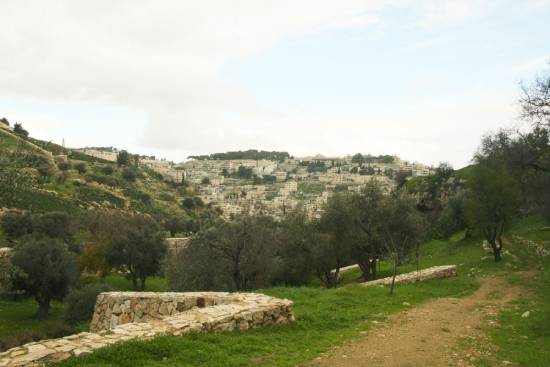
Valley of Hinnom
Geenna and Gehenna both refer to the same thing. Geenna (γέεννα) is the Greek term used in the New Testament and Gehenna is its conventional English form. It’s derived from the Hebrew “Ge Hinnom,” or “Valley of Hinnom,” a real location just south of Jerusalem mentioned in Joshua 15:8 and 18:16.
In the later part of the Old Testament, it became infamous as a place of idolatrous worship and child sacrifice. The prophet Jeremiah foretold that the valley would become known as a place of wickedness, death, and destruction, and would later be called the “Valley of Slaughter” (Jeremiah 7:30-33; 19:6, see also 2 Chronicles 28:3).
So by the time of Jesus, Geenna didn’t only refer to the location but was also associated with divine condemnation and destruction of the wicked (Matthew 10:28). So when He used the term, He was drawing from all this familiar historical imagery to warn people of where sinful influence and practices would ultimately lead.
Because this word refers to both a geographical location and imagery of divine condemnation, understanding its historical and biblical context is important for understanding the passages it appears in.
- Matthew 5:22 – “But I say to you that everyone who is angry with his brother will be liable to judgment; whoever insults his brother will be liable to the council; and whoever says, ‘You fool!’ will be liable to the hell of fire.”
- Matthew 5:29-30 – “If your right eye causes you to sin, tear it out and throw it away. For it is better that you lose one of your members than that your whole body be thrown into hell. And if your right hand causes you to sin, cut it off and throw it away. For it is better that you lose one of your members than that your whole body go into hell.”
- Matthew 10:28 – “And do not fear those who kill the body but cannot kill the soul. Rather fear him who can destroy both soul and body in hell.”
- Matthew 18:9 – “And if your eye causes you to sin, tear it out and throw it away. It is better for you to enter life with one eye than with two eyes to be thrown into the hell of fire.”
- Matthew 23:15 – “Woe to you, scribes and Pharisees, hypocrites! For you travel across sea and land to make a single proselyte, and when he becomes a proselyte, you make him twice as much a child of hell as yourselves.”
- Matthew 23:33 – “You serpents, you brood of vipers, how are you to escape being sentenced to hell?”
- Mark 9:43 – “And if your hand causes you to sin, cut it off. It is better for you to enter life crippled than with two hands to go to hell, to the unquenchable fire.”
- Mark 9:45 – “And if your foot causes you to sin, cut it off. It is better for you to enter life lame than with two feet to be thrown into hell.”
- Mark 9:47 – “And if your eye causes you to sin, tear it out. It is better for you to enter the kingdom of God with one eye than with two eyes to be thrown into hell.”
- Luke 12:5 – “But I will warn you whom to fear: fear him who, after he has killed, has authority to cast into hell. Yes, I tell you, fear him!”
- James 3:6 – “And the tongue is a fire, a world of unrighteousness. The tongue is set among our members, staining the whole body, setting on fire the entire course of life, and set on fire by hell.”
Hadés (Strong’s G86)
Hadés, a Greek proper noun, is traditionally understood to mean “unseen place.” In Greek mythology, Hades was the name of the god of the underworld, and the term came to refer to the realm of the dead itself.
When the Hebrew Scriptures were translated into the Greek Septuagint, Hades became the Greek term used for Sheol. This is evident in Acts 2:27, which quotes Psalm 16:10, and uses Hades instead of Sheol to refer to death, or the realm of the dead.
- Matthew 11:23 – “And you, Capernaum, will you be exalted to heaven? You will be brought down to Hadés. For if the mighty works done in you had been done in Sodom, it would have remained until this day.”
- Matthew 16:18 – “And I tell you, you are Peter, and on this rock I will build my church, and the gates of hell shall not prevail against it.”
- Luke 10:15 – “And you, Capernaum, will you be exalted to heaven? You shall be brought down to Hadés.”
- Luke 16:23 – “And in Hadés, being in torment, he lifted up his eyes and saw Abraham far off and Lazarus at his side.”
- Acts 2:27 – “For you will not abandon my soul to Hadés, or let your Holy One see corruption.”
- Acts 2:31 – “He foresaw and spoke about the resurrection of the Christ, that He was not abandoned to Hadés, nor did His flesh see corruption.”
- Revelation 1:17-18 – “When I saw Him, I fell at His feet as though dead. But He laid his right hand on me, saying, “Fear not, I am the first and the last, and the living one. I died, and behold I am alive forevermore, and I have the keys of Death and Hadés.”
- Revelation 6:8 – “And I looked, and behold, a pale horse! And its rider’s name was Death, and Hadés followed him. And they were given authority over a fourth of the earth, to kill with sword and with famine and with pestilence and by wild beasts of the earth.”
- Revelation 20:13-15 – “And the sea gave up the dead who were in it, Death and Hadés gave up the dead who were in them, and they were judged, each one of them, according to what they had done. Then Death and Hadés were thrown into the lake of fire. This is the second death, the lake of fire. And if anyone’s name was not found written in the book of life, he was thrown into the lake of fire.”
Tartaroó (Strong’s G5020)
This word appears only once in the New Testament. Tartaroo is a verb meaning “to cast into Tartarus.” In Greek mythology, Tartarus was the deepest part of the underworld, and a place where the Titans, the enemies of the Greek gods, were imprisoned. So it was associated with confinement, condemnation, and restraint.
Although many English translations of the Bible use the word “hell” here, this Greek word is distinct from Geenna and Hades. It was most likely used with its mythological associations in mind.
Peter’s use of this term borrows from a familiar concept in the Greek-speaking world that represents confinement by divine means, which helps describe the fate of angels who rebelled against God. They are cut off and held in restraint until their judgment.
- 2 Peter 2:4 – “For if God did not spare angels when they sinned, but cast them into hell and committed them to chains of gloomy darkness to be kept until the judgment.”
Terms associated with “Hell”
Aside from words that are directly translated as or connected to “hell” in English Bible translations, we also find instances where common words such as death, fire, destruction, etc., are used to describe the eternal fate of those who reject Christ. These instances are listed below.
To keep things focused, uses of these words that do not have to do with judgment, condemnation, or eternal fate, are not included in this list.
Death
Muth/Mût (Strong’s H4191)
Muth is a common Hebrew verb that means to die, to kill, to be dead.
- Psalm 34:21 – “Affliction will slay the wicked, and those who hate the righteous will be condemned.”
Maveth/Māvet (Strong’s H4194)
Maveth is a Hebrew noun meaning death, specifically the state of being dead. When used figuratively, it means pestilence and ruin, or things that cause or result in death.
- Proverbs 14:12 – “There is a way that seems right to a man, but its end is the way to death.”
- Proverbs 16:25 – “There is a way that seems right to a man, but its end is the way to death.”
- Isaiah 25:8 – “He will swallow up death forever; and the Lord God will wipe away tears from all faces, and the reproach of His people He will take away from all the earth, for the Lord has spoken.”
- Isaiah 28:15 – “Because you have said, ‘We have made a covenant with death, and with Sheol we have an agreement, when the overwhelming whip passes through it will not come to us, for we have made lies our refuge, and in falsehood we have taken shelter’.”
- Isaiah 28:18 – “Then your covenant with death will be annulled, and your agreement with Sheol will not stand; when the overwhelming scourge passes through, you will be beaten down by it.”
Thanatos (Strong’s G2288)
Thanatos is the common Greek noun for “death.” It can mean literal death and can also be used figuratively or theologically for death as a consequence of sin.
- John 5:24 – “Truly, truly, I say to you, whoever hears My word and believes Him who sent me has eternal life. He does not come into judgment, but has passed from death to life.”
- Romans 5:12-14, 17, 21 – “Therefore, just as sin came into the world through one man, and death through sin, and so death spread to all men because all sinned—for sin indeed was in the world before the law was given, but sin is not counted where there is no law. Yet death reigned from Adam to Moses, even over those whose sinning was not like the transgression of Adam, who was a type of the one who was to come. … For if, because of one man’s trespass, death reigned through that one man, much more will those who receive the abundance of grace and the free gift of righteousness reign in life through the one man Jesus Christ. … so that, as sin reigned in death, grace also might reign through righteousness leading to eternal life through Jesus Christ our Lord.”
- 1 Corinthians 15:55 – “O death, where is your victory? O death, where is your sting?”
- Revelation 1:17-18 – “When I saw Him, I fell at His feet as though dead. But He laid His right hand on me, saying, “Fear not, I am the first and the last, and the living one. I died, and behold I am alive forevermore, and I have the keys of Death and Hades.”
- Revelation 20:13-14 – “And the sea gave up the dead who were in it, Death and Hades gave up the dead who were in them, and they were judged, each one of them, according to what they had done. Then Death and Hades were thrown into the lake of fire. This is the second death, the lake of fire.”
Destruction
Hārbâ/Chorbah (Strong’s H2723)
Chorbah is a Hebrew noun that means “ruin,” “waste,” or “desolation.” It’s often used to describe a decayed or desolate place, as well as meaning destruction itself.
- Psalm 9:6 – “The enemy came to an end in everlasting ruins; their cities you rooted out; the very memory of them has perished.”
Šāmad/Shamad (Strong’s H8045)
Shamad is a Hebrew word meaning to destroy, annihilate, exterminate.
- Psalm 92:6-7 – “The stupid man cannot know; the fool cannot understand this: that though the wicked sprout like grass and all evildoers flourish, they are doomed to destruction forever.”
- Isaiah 26:14 – “They are dead, they will not live; they are shades, they will not arise; to that end You have visited them with destruction and wiped out all remembrance of them.”
Šebar/Sheber (Strong’s H7667)
Sheber is a Hebrew word meaning to break, fracture, ruin, destruction, and/or collapse.
- Isaiah 1:27-28 – “Zion shall be redeemed by justice, and those in her who repent, by righteousness. But rebels and sinners shall be broken together, and those who forsake the Lord shall be consumed.”
Kālâh (Strong’s H3617)
Kālâh is a Hebrew noun meaning completion, termination, consumption, destruction, annihilation, riddance, or it can be used adjectivally to mean completely/altogether.
- Daniel 9:27 – “And He shall make a strong covenant with many for one week, and for half of the week He shall put an end to sacrifice and offering. And on the wing of abominations shall come one who makes desolate, until the decreed end is poured out on the desolator.”
Qōteb (Strong’s H6987)
Qōteb is a Hebrew noun that means destruction.
- Hosea 13:14 – “I will ransom them from the power of the grave; I will redeem them from death O death, I will be your plagues! O Grave, I will be your destruction! Pity is hidden from My eyes” (NKJV).
Apōleia (Strong’s G684)
Apoleia is a Greek noun meaning “destruction,” “ruin,” or “loss” (physical, spiritual, or eternal). In many of the cases listed below, it’s used to indicate a state of finality, rather than something temporary or reversible.
- Philippians 1:28 – “And not frightened in anything by your opponents. This is a clear sign to them of their destruction, but of your salvation, and that from God.”
- Romans 9:22 – “What if God, desiring to show His wrath and to make known His power, has endured with much patience vessels of wrath prepared for destruction.”
- Philippians 3:19 – “Their end is destruction, their god is their belly, and they glory in their shame, with minds set on earthly things.”
- 1 Thessalonians 5:3 – “While people are saying, ‘There is peace and security,’ then sudden destruction will come upon them as labor pains come upon a pregnant woman, and they will not escape.”
- 2 Thessalonians 1:9 – “They will suffer the punishment of eternal destruction, away from the presence of the Lord and from the glory of His might…”
- 2 Thessalonians 2:3-4 – “Let no one deceive you in any way. For that day will not come, unless the rebellion comes first, and the man of lawlessness is revealed, the son of destruction, who opposes and exalts himself against every so-called god or object of worship, so that he takes his seat in the temple of God, proclaiming himself to be God.”
- Hebrews 10:39 – “But we are not of those who shrink back and are destroyed, but of those who have faith and preserve their souls.”
- 2 Peter 2:3-6 – “And in their greed they will exploit you with false words. Their condemnation from long ago is not idle, and their destruction is not asleep. For if God did not spare angels when they sinned, but cast them into hell and committed them to chains of gloomy darkness to be kept until the judgment; if he did not spare the ancient world, but preserved Noah, a herald of righteousness, with seven others, when he brought a flood upon the world of the ungodly; if by turning the cities of Sodom and Gomorrah to ashes he condemned them to extinction, making them an example of what is going to happen to the ungodly.”
- 2 Peter 3:7 – “But by the same word the heavens and earth that now exist are stored up for fire, being kept until the day of judgment and destruction of the ungodly.”
- Revelation 17:8 – “The beast that you saw was, and is not, and is about to rise from the bottomless pit and go to destruction. And the dwellers on earth whose names have not been written in the book of life from the foundation of the world will marvel to see the beast, because it was and is not and is to come.”
- Revelation 17:11 – “As for the beast that was and is not, it is an eighth but it belongs to the seven, and it goes to destruction.”
Phthora (Strong’s G5356)
Phthora is a Greek noun meaning corruption, decay, ruin, or destruction.
- Galatians 6:8 – “For the one who sows to his own flesh will from the flesh reap corruption, but the one who sows to the Spirit will from the Spirit reap eternal life.”
- 2 Peter 2:12 – “But these, like irrational animals, creatures of instinct, born to be caught and destroyed, blaspheming about matters of which they are ignorant, will also be destroyed in their destruction,”
- 2 Peter 2:19 – “They promise them freedom, but they themselves are slaves of corruption. For whatever overcomes a person, to that he is enslaved.”
Phtheirō (Strong’s G5351)
Phtheiro is the verb form of Phthora, meaning to corrupt, ruin, spoil, or destroy.
- 1 Corinthians 3:17 – “If anyone destroys God’s temple, God will destroy him. For God’s temple is holy, and you are that temple.”
- 2 Peter 2:12 – “But these, like irrational animals, creatures of instinct, born to be caught and destroyed, blaspheming about matters of which they are ignorant, will also be destroyed in their destruction,”
- Jude 10 – “But these people blaspheme all that they do not understand, and they are destroyed by all that they, like unreasoning animals, understand instinctively.”
Eternal
Olam (Strong’s H5769)
Olam is a Hebrew noun referring to a long or indefinite duration, antiquity, futurity, and it can be used to demonstrate finality. It’s frequently translated as “forever,” “everlasting,” or “eternal.”
- Psalm 81:15 – “Those who hate the Lord would cringe toward Him, and their fate would last forever.”
Aiōnios (Strong’s G166)
Aionios is a Greek adjective meaning “eternal,” “everlasting,” meaning an age, era, lifetime, or generation. So Aionios means “eternal,” or “everlasting.” It is derived from aion (G165), which can be used to mean “age,” “generation,” “world,” or “everlasting.”
- Matthew 18:8 – “And if your hand or your foot causes you to sin, cut it off and throw it away. It is better for you to enter life crippled or lame than with two hands or two feet to be thrown into the eternal fire.”
- Matthew 25:41, 46 – “Then He will say to those on His left, ‘Depart from Me, you cursed, into the eternal fire prepared for the devil and his angels. … And these will go away into eternal punishment, but the righteous into eternal life.”
- Mark 3:29 – “But whoever blasphemes against the Holy Spirit never has forgiveness, but is guilty of an eternal sin.”
- 2 Thessalonians 1:9 – “These people will pay the penalty of eternal destruction, away from the presence of the Lord and from the glory of His power,”
- Jude 7 – “…just as Sodom and Gomorrah and the cities around them, since they in the same way as these angels indulged in sexual perversion and went after strange flesh, are exhibited as an example in undergoing the punishment of eternal fire.”
Fire/Fiery Furnace
Photo by Guido Jansen on Unsplash
Ēš/Esh (Strong’s H784)
Esh is a common Hebrew noun for “fire” or “flame,” and it’s used both literally and figuratively.
- Psalm 11:5-6 – “The Lord tests the righteous, but His soul hates the wicked and the one who loves violence. Let Him rain coals on the wicked; fire and sulfur and a scorching wind shall be the portion of their cup.”
- Psalm 68:1-2 – “God shall arise, His enemies shall be scattered; and those who hate Him shall flee before Him! As smoke is driven away, so you shall drive them away; as wax melts before fire, so the wicked shall perish before God!”
- Isaiah 66:15-16 – “For behold, the Lord will come in fire, and His chariots like the whirlwind, to render His anger in fury, and His rebuke with flames of fire. For by fire will the Lord enter into judgment, and by His sword, with all flesh; and those slain by the Lord shall be many.”
- Joel 2:3 – “Fire devours before them, and behind them a flame burns. The land is like the garden of Eden before them, but behind them a desolate wilderness, and nothing escapes them.”
- Zephaniah 1:18 – “Neither their silver nor their gold shall be able to deliver them on the day of the wrath of the Lord. In the fire of his jealousy, all the earth shall be consumed; for a full and sudden end He will make of all the inhabitants of the earth.”
Ba’ar (Strong’s H1197)
Ba’ar is a Hebrew word meaning to burn and/or consume.
- Malachi 4:1 – “For behold, the day is coming, burning like an oven, when all the arrogant and all evildoers will be stubble. The day that is coming shall set them ablaze, says the Lord of hosts, so that it will leave them neither root nor branch.”
Pyr/Pur (Strong’s G4442)
Pur is a Greek word meaning “fire,” whether used literally (any physical fire) or figuratively, when describing purification, refinement, or destruction/condemnation.
- Matthew 13:40 – “Just as the weeds are gathered and burned with fire, so will it be at the end of the age.”
- Matthew 18:8-9 – “And if your hand or your foot causes you to sin, cut it off and throw it away. It is better for you to enter life crippled or lame than with two hands or two feet to be thrown into the eternal fire. And if your eye causes you to sin, tear it out and throw it away. It is better for you to enter life with one eye than with two eyes to be thrown into the hell of fire.”
- Matthew 25:41 – “Then He will say to those on His left, ‘Depart from Me, you cursed, into the eternal fire prepared for the devil and his angels.’”
- Mark 9:43, 47-49 – “And if your hand causes you to sin, cut it off. It is better for you to enter life crippled than with two hands to go to hell, to the unquenchable fire. … And if your eye causes you to sin, tear it out. It is better for you to enter the kingdom of God with one eye than with two eyes to be thrown into hell, ‘where their worm does not die and the fire is not quenched.’ For everyone will be salted with fire.”
- 2 Thessalonians 1:7-9 – “And to grant relief to you who are afflicted as well as to us, when the Lord Jesus is revealed from heaven with His mighty angels in flaming fire, inflicting vengeance on those who do not know God and on those who do not obey the gospel of our Lord Jesus. They will suffer the punishment of eternal destruction, away from the presence of the Lord and from the glory of His might.”
- Hebrews 10:26-27 – “For if we go on sinning deliberately after receiving the knowledge of the truth, there no longer remains a sacrifice for sins, but a fearful expectation of judgment, and a fury of fire that will consume the adversaries.”
- 2 Peter 3:7 – “But by the same word the heavens and earth that now exist are stored up for fire, being kept until the day of judgment and destruction of the ungodly.”
- Jude 7 – “Just as Sodom and Gomorrah and the surrounding cities, which likewise indulged in sexual immorality and pursued unnatural desire serve as an example by undergoing a punishment of eternal fire.”
- Revelation 14:9-10 – “And another angel, a third, followed them, saying with a loud voice, ‘If anyone worships the beast and its image and receives a mark on his forehead or on his hand, he also will drink the wine of God’s wrath, poured full strength into the cup of His anger, and he will be tormented with fire and sulfur in the presence of the holy angels and in the presence of the Lamb.’
- Revelation 20:9-10 – “And they marched up over the broad plain of the earth and surrounded the camp of the saints and the beloved city, but fire came down from heaven and consumed them, and the devil who had deceived them was thrown into the lake of fire and sulfur where the beast and the false prophet were, and they will be tormented day and night forever and ever.”
Kaminos (Strong’s G2575)
Kaminos is a Greek word translating to furnace and/or oven. In some translations, it appears in the phrase “fiery furnace.”
- Matthew 13:41-42 – “The Son of Man will send out His angels, and they will gather out of His kingdom all things that offend, and those who practice lawlessness, and will cast them into the furnace of fire. There will be wailing and gnashing of teeth.” (NKJV).
- Matthew 13:49-50 – “So it will be at the end of the age. The angels will come forth, separate the wicked from among the just, and cast them into the furnace of fire. There will be wailing and gnashing of teeth.” (NKJV).
Lake of Fire
Limnē pyr (Strong’s G3041 and G4442)
Limnē pyr is a Greek expression translated as “lake of fire,” or literally “lake of the fire.”
- Revelation 19:20 – “And the beast was captured, and with it the false prophet who in its presence had done the signs by which he deceived those who had received the mark of the beast and those who worshiped its image. These two were thrown alive into the lake of fire that burns with sulfur.”
- Revelation 20:10 – “And the devil who had deceived them was thrown into the lake of fire and sulfur where the beast and the false prophet were, and they will be tormented day and night forever and ever.”
- Revelation 20:14-15 – “Then Death and Hades were thrown into the lake of fire. This is the second death, the lake of fire. And if anyone’s name was not found written in the book of life, he was thrown into the lake of fire.”
- Revelation 21:8 – “But as for the cowardly, the faithless, the detestable, as for murderers, the sexually immoral, sorcerers, idolaters, and all liars, their portion will be in the lake that burns with fire and sulfur, which is the second death.”
Pit
Although we’re examining its connection to eternal fate, pit is usually used to describe a physical grave.
Šahat (Strong’s H7845)
Sahat is a Hebrew word meaning corruption, destruction, ditch, grave, and/or pit.
- Psalm 94:12-13 – “Blessed is the man whom You discipline, O Lord, and whom You teach out of Your law, to give him rest from days of trouble, until a pit is dug for the wicked.”
- Psalm 103:2-4 – “Bless the Lord, O my soul, and forget not all His benefits, who forgives all your iniquity, who heals all your diseases, who redeems your life from the pit, who crowns you with steadfast love and mercy.”
Abussos/Abyssos (Strong’s G12)
Abyssos is a Greek noun meaning “abyss,” “bottomless pit,” or “deep,” as in “the deep.”
- Revelation 9:1-2 – “And the fifth angel blew his trumpet, and I saw a star fallen from heaven to earth, and he was given the key to the shaft of the bottomless pit. He opened the shaft of the bottomless pit, and from the shaft rose smoke like the smoke of a great furnace, and the sun and the air were darkened with the smoke from the shaft.”
- Revelation 20:1-3 – “Then I saw an angel coming down from heaven, holding in his hand the key to the bottomless pit and a great chain. And he seized the dragon, that ancient serpent, who is the devil and Satan, and bound him for a thousand years, and threw him into the pit, and shut it and sealed it over him, so that he might not deceive the nations any longer, until the thousand years were ended. After that he must be released for a little while.”
Bôr (Strong’s H953)
Bor is a Hebrew word meaning a pit, cistern, and/or well.
- Proverbs 1:12 – “Like Sheol let us swallow them alive, and whole, like those who go down to the pit…”
- Isaiah 14:15 – “But you are brought down to Sheol, to the far reaches of the pit.”
- Isaiah 14:13-15 – “You said in your heart,‘I will ascend to heaven; above the stars of God I will set my throne on high; I will sit on the mount of assembly in the far reaches of the north; I will ascend above the heights of the clouds; I will make myself like the Most High.’ But you are brought down to Sheol, to the far reaches of the pit.”
- Isaiah 14:19 – “But you are cast out, away from your grave, like a loathed branch, clothed with the slain, those pierced by the sword, who go down to the stones of the pit, like a dead body trampled underfoot.”
- Isaiah 24:22 – “They will be gathered together as prisoners in a pit; they will be shut up in a prison, and after many days they will be punished.”
- Isaiah 38:18 – “For Sheol does not thank You; death does not praise You; those who go down to the pit do not hope for Your faithfulness.”
- Zechariah 9:11 – “As for you also, because of the blood of my covenant with you, I will set your prisoners free from the waterless pit.”
Pahat/Pachath (Strong’s H6354)
Pachath is a Hebrew word meaning “pit,” “trap,” or “snare.”
- Isaiah 24:17-18 – “Terror and the pit and the snare are upon you, O inhabitant of the earth! He who flees at the sound of the terror shall fall into the pit, and he who climbs out of the pit shall be caught in the snare. For the windows of heaven are opened, and the foundations of the earth tremble.”
- Psalm 140:10 – “Let burning coals fall upon them! Let them be cast into fire, into miry pits, no more to rise!”
Abyssos phrear (Strong’s G12 and G5421)
Abyssos phrear is a Greek phrase specifically referring to “shaft of the abyss” or the opening of it. It draws attention to the top, visible part of it. Yet it is most commonly translated into English as “bottomless pit.”
- Revelation 9:1-2 – “And the fifth angel blew his trumpet, and I saw a star fallen from heaven to earth, and he was given the key to the shaft of the bottomless pit. He opened the shaft of the bottomless pit, and from the shaft rose smoke like the smoke of a great furnace, and the sun and the air were darkened with the smoke from the shaft.”
- Revelation 9:11 – “They have as king over them the angel of the bottomless pit. His name in Hebrew is Abaddon, and in Greek he is called Apollyon.”
- Revelation 11:7 – “And when they have finished their testimony, the beast that rises from the bottomless pit will make war on them and conquer them and kill them…”
- Revelation 17:8 – “The beast that you saw was, and is not, and is about to rise from the bottomless pit and go to destruction. And the dwellers on earth whose names have not been written in the book of life from the foundation of the world will marvel to see the beast, because it was and is not and is to come.”
- Revelation 20:1-3 – “Then I saw an angel coming down from heaven, holding in his hand the key to the bottomless pit and a great chain. And he seized the dragon, that ancient serpent, who is the devil and Satan, and bound him for a thousand years, and threw him into the pit, and shut it and sealed it over him, so that he might not deceive the nations any longer, until the thousand years were ended. After that he must be released for a little while.”
Punishment
Šhillumâ/Shillumah (Strong’s H8011)
Shillumah is a Hebrew noun meaning “recompense,” “reward,” “requital,” or “reparation.”
- Psalm 91:8 – “You will only look with your eyes and see the recompense of the wicked.”
Hattā’āt/Chatta’ah (Strong’s H2403)
Chatta’ah is a Hebrew noun commonly meaning “sin” or also “sin offering.” In the verse below, however, “sin” can be understood as referring to the consequence or ultimate result of repeated sin, which is why some English translations say “judgment” (NET) or “punishment” (NASB, AMP, CSB).
Proverbs 10:16 – “The wage of the righteous leads to life, the gain of the wicked to sin.”
Pǝqudâ/Pequdda (Strong’s H6486)
Pequdda is a Hebrew noun meaning visitation, oversight, charge, punishment, appointment, care, and/or custody.
- Isaiah 10:3 – “What will you do on the day of punishment, in the ruin that will come from afar? To whom will you flee for help, and where will you leave your wealth?”
- Micah 7:4 – “The best of them is like a brier, the most upright of them a thorn hedge. The day of your watchmen, of your punishment, has come; now their confusion is at hand.”
Āôn/Avon (Strong’s H5771)
Avon is a Hebrew noun meaning “fault,” “iniquity,” “wrongdoing,” or “guilt.” And in some cases, it’s used to refer to the consequence or punishment resulting from that wrongdoing.
- Ezekiel 21:25 – “And you, O profane wicked one, prince of Israel, whose day has come, the time of your final punishment…”
- Ezekiel 21:29 – “While they see for you false visions, while they divine lies for you—to place you on the necks of the profane wicked, whose day has come, the time of their final punishment.”
- Ezekiel 35:5 – “Because you cherished perpetual enmity and gave over the people of Israel to the power of the sword at the time of their calamity, at the time of their final punishment.”
Kolasis (Strong’s G2851)
Kolasis is a Greek noun meaning “punishment,” “correction,” or “penalty.”
- Matthew 25:46 – “And these will go away into eternal punishment, but the righteous into eternal life.”
Dikē (Strong’s G1349)
Dike is a Greek noun meaning “penalty,” “punishment,” “judgment,” or “vengeance.”
- 2 Thessalonians 1:9 – “They will suffer the punishment of eternal destruction, away from the presence of the Lord and from the glory of His might…”
- Jude 7 – “Just as Sodom and Gomorrah and the surrounding cities, which likewise indulged in sexual immorality and pursued unnatural desire, serve as an example by undergoing a punishment of eternal fire.”
Kolazō (Strong’s G2849)
Kolazo is a Greek verb meaning “to punish or chastise,” and it can also mean to check, curb, prune, restrain, or “reserve for infliction.”
- 2 Peter 2:9 – “Then the Lord knows how to rescue the godly from trials, and to keep the unrighteous under punishment until the day of judgment…”
Second Death
Deuteros thanatos (Strong’s G1208 and G2288)
Together, these words form the Greek phrase translated “second death.” Revelation uses this expression for the final consequence that the “lake of fire” brings about.
- Revelation 2:11 – “He who has an ear, let him hear what the Spirit says to the churches. The one who conquers will not be hurt by the second death.”
- Revelation 20:6 – “Blessed and holy is the one who shares in the first resurrection! Over such the second death has no power, but they will be priests of God and of Christ, and they will reign with him for a thousand years.”
- Revelation 20:14 – “Then Death and Hades were thrown into the lake of fire. This is the second death, the lake of fire.”
- Revelation 21:8 – “But as for the cowardly, the faithless, the detestable, as for murderers, the sexually immoral, sorcerers, idolaters, and all liars, their portion will be in the lake that burns with fire and sulfur, which is the second death.”
When we consider all these passages of Scripture together, it’s easy to see why questions about hell are difficult to answer just by looking up the English word “hell.” Throughout the Bible, we see several different words and phrases used as imagery to talk about death, judgment, condemnation, destruction, etc. And those words don’t all mean exactly the same thing.
That right there tells us how profound this concept is. So the proper study of what the Bible teaches about hell has to include looking at how all these terms and phrases fit together into Scripture’s larger story about sin, judgment, death, resurrection, salvation, and eternal life.
One thing is for sure, however—judgment isn’t the end of the story. The Bible has much to say about resurrection, salvation, restoration, and eternal life with God. He is on our side—which is evident in how much more often the Scripture talks about heaven and eternal life!
Related Articles


More Answers
2 Corinthians: An Overview of Paul’s Most Personal Letter
Discover Paul’s lessons on forgiveness, reconciliation, generosity, and more. It’s all in the book of 2 Corinthians!

The Book of 1 Corinthians: A Topical Breakdown
Learn about the book of 1 Corinthians to support your Bible study.

Bible Verses That Mention “Heaven” (and How to Tell What They Mean)
Here’s every occurrence of the word “heaven” in the Bible, as well as the root words and original definitions.
A Guide to the Book of Galatians
A walkthrough and breakdown of Paul’s letter to the Galatian churches.
Understanding the Book of Mark (An Overview)
A walkthrough of the Gospel according to Mark, including background information and references.
An Overview of Romans: Faith, Righteousness, and Relationships
Here’s a breakdown and background of Paul’s longest epistle.
The Book of John: An Overview
Here’s a study companion for the Gospel according to John.

What Are the Synoptic Gospels? What About John?
What Are the Synoptic Gospels? What About John?The term “Synoptic Gospels” refers to the accounts of the Gospel story—the story of Jesus Christ’s earthly ministry and how it paved the way for salvation—written by Matthew, Mark, and Luke in the New Testament. The word...
The Book of Luke’s Message: Jesus’ Love for All
Learn all about the book of Luke—context, themes, differences, and takeaways.