
People often assume bigger is better, but the Bible turns this concept on its head with the story of the Widow’s Mite.
Of all the donations Jesus sees at the temple, the gift that draws Jesus’ attention is not the over-the-top offerings of the rich, but the gift of a poor widow who is only able to drop two small copper coins into the offering plate.
What could be so noteworthy about this?
Let’s comb through the passage and find out the following:
Let’s start with a summary.
What happens in the story of the Widow’s Mite?
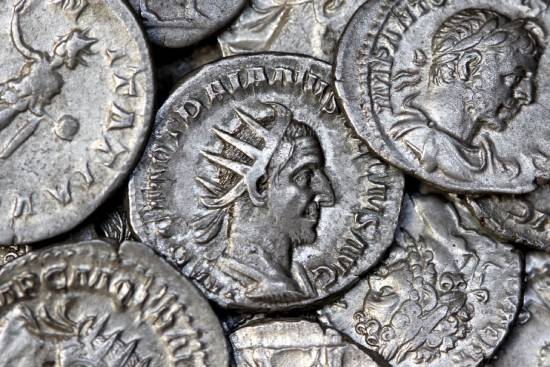
Photo by Thomas K.
The story of the Widow’s Mite is only found in the New Testament, in the Gospel accounts of Mark 12:41-44 and Luke 21:1-4.
It opens with Jesus and His disciples in the temple. They were gathered in a spot across from the temple treasury, where people would give money as an offering.
Jesus watches different people give their offerings, noticing how rich people typically donate large sums of money…and “don’t mind” if plenty of others see them do so.
But then, something else catches His eye. He sees a poor widow come to the contribution chests and drop in two mites, or coins of very little value. A mite was worth 1/10 of a U.S. penny or 1/64 of a Roman denarius (a day’s wage at the time).1
Jesus points this out to His disciples, noting that the widow had given more than anyone else at the treasury because she gave all she had. Even if it wasn’t much.
So, what was Jesus calling the disciples’ attention to when He said this? Was He telling them He expects His followers to give all that they own to the temple? Or was He just drawing a comparison between sincere generosity and doing “good deeds” for show?
Let’s fill in some context.
Context and meaning
The story of the Widow’s Mite recounts a real event during Jesus’ ministry. It’s included in list of Jesus’ parables, but this wasn’t a fictional story for the purpose of teaching. Jesus was using a real observation to demonstrate an important truth that sometimes gets smothered by human priorities.
This would have happened toward the end of Jesus’ public ministry. He and His disciples were in Jerusalem at the temple during the 4th passover of A.D. 31, possibly on the Tuesday of the week of Jesus’ crucifixion.2
Here’s what’s significant things about the placement of this story:
- It was Jesus’ last time in the temple before His crucifixion3
- It comes after a warning Jesus gives about the treatment of widows (Mark 12:38-40; Luke 21:45-47)
- It comes before Jesus’ prediction that the temple would be destroyed (Mark 13:1-2; Luke 21:5-6)
Jesus’ time on earth was nearing its end. He only had a few more days to reinforce all that He had taught His disciples and to prepare them for carrying on His ministry.
And this very short, observational anecdote reveals an important focus He wanted to make sure the disciples fully understood.
During a time when religious leaders often relied on outwardly-visible demonstrations of faith, Jesus wanted people understand that following God wasn’t about performance, status, or respect from other humans. That all matters little if it’s not in harmony with His loving character of service (Matthew 6:1-4; Matthew 23:27-28).
What really matters is a sincere relationship with God that transforms the heart and affects the whole of a person’s life (John 3:3-5; Colossians 1:3-13).
This was an important lesson, because the disciples and many other people often followed in the footsteps of the Pharisees, because for so long, they were the spiritual authorities who were to set the example. They were known for making a public display of prayer and fasting, all to appear exceptionally “righteous” in the eyes of others (Matthew 6:16-18; Luke 18:9-14).
And yet, their hearts were unchanged (Mark 3:1-6; Matthew 13:15).
In fact, it’s right before the story of the Widow’s Mite that Jesus calls the Pharisees out, saying:
“Beware of the scribes, who desire to go around in long robes, love greetings in the marketplaces, the best seats in the synagogues, and the best places at feasts, who devour widows’ houses, and for a pretense make long prayers. These will receive greater condemnation” (Mark 12:38-40, NKJV).
While Pharisees are not directly mentioned in the story of the Widow’s Mite, it’s their ideology that’s being addressed.
Donations to the temple were given publicly. The contribution chests were located in the court of women (one of the few areas women were allowed to visit in the temple), so both men and women could participate in giving offerings.4 Everyone could see who was giving and how much, making it the perfect opportunity for the religious leaders and the wealthy to show off their “generosity” and how “blessed” they were.
Jesus wasn’t impressed by these displays.
(When you value the real thing…seeing a deceptive imitation of it is extra disappointing, isn’t it?)
Instead, His attention was on the widow who gave a meager offering of two mites.
Scripture already tells us that God is not concerned with outward display, but the genuine intention of one’s heart (1 Samuel 16:7). We don’t know what was going through the widow’s mind when she presented her offering, but we do know that this small amount was all she had.
And the fact that she only gave two mites suggests that she wasn’t motivated by pride. After all, no one at the temple would have been impressed by such a small amount. In fact, some might have been embarrassed to only be able to give so little—especially in comparison to the other amounts given that day.
What matters is that she still wanted to give.
Jesus tells us what sticks out to Him here—the rich, though they’re giving large amounts of money, weren’t really sacrificing anything (Mark 12:43-44; Luke 21:3-4).5 They gave and gave, and there was plenty more where that came from.
The widow, on the other hand, was willing to put her livelihood on the line just so she could support the temple. The fact that she gave her only means of survival reveals this wasn’t just about duty. She chose to do this, and must have had a very strong faith to make this decision.
And when we consider the situation of a typical widow in Bible times, we realize even more about how incredible this decision was.
Widows lived in a patriarchal society where they had very few rights. Without a husband or son to provide for them, they were at the mercy of their community.6 This is why God was so adamant that the Israelites care for widows and orphans—because they had no means of supporting themselves.7
But this brings us to an interesting question that often comes up when discussing this story. Does God really want someone who can’t support themselves to give all they have?
Well, what does Jesus say before getting into the story of the Widow’s Mite?
He says, “Beware of the scribes…who devour widows’ houses” (Mark 12:38-40, NKJV).
This is again referring to the Pharisees, who looked with disdain upon—and sometimes took advantage of—poor people, like widows. It’s possible they might have encouraged or guilted the poor into giving the temple donations just so they could line their own pockets.8
This would have been contrary to God’s plan for donations, and very far from His character. He expected religious institutions to serve the people, particularly the less fortunate (see James 1:27; Exodus 22:22-23; Isaiah 1:17).
So really, the temple should have been caring for the widow instead of the other way around.
What better example could Jesus give to the disciples to point out the corruption in the church than to show how the Pharisees used religion to take advantage of others?
Their efforts to make a name for themselves and deck out the temple with gold and finery didn’t get them anywhere. The account given directly after the story of the widow drives this point home by saying the temple would one day be destroyed (Mark 13:1-2).
In the end, we see that all the proud displays and money of the rich and “righteous” don’t last. However, despite the corruption of the system, the widow’s offering still stands as a testament of her faith and earnestness.
3 Lessons for us today
The story of the Widow’s Mite focuses on timeless themes of sincerity, faith, and giving. But how do these concepts apply to us today? (Read: Does this mean we’re expected to give “all we have” to the church?)
Let’s look at the three major takeaways:
Jesus looks at the heart

Photo by Kelly Sikkema on Unsplash
What’s more meaningful? A fancy and impersonal gift given out of obligation, or something simple, but sincere, from someone who truly cares about us?
Sure, an expensive watch or purse might be flashier than a drawing your child made for you, but there’s a reason why that drawing ends up in a place of honor on your fridge.
What’s the difference?
Someone you love made it just for you. Even though it’s not much, it was given with an earnest heart.
God looks at our gifts the same way. He’s not impressed by how much money we give, but the heart and intention behind our gifts mean everything.
There’s no doubt that people tend to focus on appearances. The rich people in the story did actually get some looks of admiration from others when they gave their lavish gifts.
And that was their main goal. The way they showed off their wealth revealed they were really looking for human approval, not God’s. Even the disciples were caught up in the grand appearance of the temple (Mark 13:1).
Today, we’re still human, so we still have that tendency to focus on how things look.
Society assesses others’ worth by looking at their success, qualifications, and possessions. It measures the “righteousness” of others by looking at how many charities they donate to, or how many hours they spend in community service, etc.
But God looks at what we can’t always see right away: Intent. Belief. Spiritual state. He looks at “the heart.”
Throughout the Bible, Jesus emphasizes several times that belonging to the kingdom of God has nothing to do with being wealthy, powerful, or popular. It’s about what we truly believe, follow, and prioritize—specifically, how our characters reflect the fruits of the Spirit (love, faithfulness, kindness, joy, self-control, etc.).9
This is why the widow’s gift stuck out to Jesus. She didn’t give much, but what she had she gave with an earnest, faithful, and generous heart (2 Corinthians 9:6-7).
God doesn’t want us to serve Him out of a desire to impress or appease others (Galatians 1:10; Matthew 23:5-12). He wants us to follow Him because we genuinely love and trust Him (1 Corinthians 13:1-8).
The same goes for when we give offerings. We don’t need to compare our gifts with others because the amount we give has nothing to do with how much we love God.
It’s the why behind the giving that’s more important (and only God and you truly know that).
This is how we can see that the widow wasn’t acknowledged primarily because she gave all she had. Jesus was flipping a common misconception on its head, showing the real contrast between the typical behavior of the Pharisees and the genuine act of faith the widow displayed.
Her sincere actions, as someone who was often failed by society and the church, meant much, much more than anything done “for show.”
Intent, sincerity, and faith are far more important than what things look like to other humans.
The poor widow trusted in God—not money
The widow demonstrated amazing trust in God. She was poor, and yet she still gave all she had.
So is that what Jesus is telling everyone else to do, too?
Well, it’s important to note that the story itself doesn’t tell us to do anything. It’s an observation Jesus makes that points out how the size of an offering doesn’t necessarily represent someone’s love or generosity.
Jesus shared His observation to show the disciples how their culture misrepresented what it means to be truly devoted to God. He wasn’t using a roundabout approach to say, “Hey, you guys also need to give the church all you have!”
Looking throughout Scripture, God wants us to be able to provide for ourselves and our families (Matthew 6:31-33;1 Timothy 5:8). At the same time, God doesn’t want us to be afraid of giving generously (2 Corinthians 9:6-8).
So there isn’t a “rule” here. And we see this reinforced in 2 Corinthians 9:7, “So let each one give as he purposes in his heart, not grudgingly or of necessity; for God loves a cheerful giver” (NKJV).
Really, this isn’t about money. It’s about trusting God over everything else. (See 1 John 2:15-17.) But wealth or money does wield a lot of influence over human beings, whether we’re talking about back then or today.
It can be tempting to trust in money because it’s tangible. It’s something we can earn, and it makes us feel like we’re in control. But money and earthly possessions aren’t infallible. That’s why the Word of God warns against putting our faith in riches:
“Do not lay up for yourselves treasures on earth, where moth and rust destroy and where thieves break in and steal; but lay up for yourselves treasures in heaven, where neither moth nor rust destroys and where thieves do not break in and steal. For where your treasure is, there your heart will be also” (Matthew 6:19-21, NKJV).
We see the same thing happen in this small story. For all the money the rich put into furnishing the temple, it still met its destruction (Mark 13:1-2).
We can’t trust in money, but we can always trust in God. Like the widow, we can surrender to His leading. If He calls us to give, we can give confidently, knowing that He will provide for us.
And the more we come to know God, the more we’ll trust in His goodness. We’ll also become so familiar with Him that we’ll be able to discern His will and, through the power of the Holy Spirit, have the strength to follow through on it (Romans 12:2).
Depending on God becomes easier when we understand the kind of God we serve. That He not only loves us and takes care of us, but is the source of every blessing we receive.
Make the most of His blessings

Photo by Boris Pavlikovsky
Everything we have comes from God, including our talents, our possessions, and even the money we have in our pockets.
So when we serve Him with our talents and donate our offerings, we’re not really giving something that was ours…we’re returning what was God’s to begin with.
God entrusts us with these things not so we can hide them away or keep them to ourselves, but so we can make the most of them—investing in our family, the community, the church, or the less fortunate (Acts 20:35; Matthew 6:19-20).
As we build a relationship with God, He will help us understand how to best use the blessings He’s given us.
And we don’t ever have to worry that what we have to give is not enough. God can multiply what we give, making it so even the smallest gifts have a tremendous impact (John 6:1-14).
What we give won’t just help others,it’ll help us too! Sincere giving changes us for the better. When we give, we surrender ourselves to faith in God’s will, allowing Him to come into our lives and transform our hearts so we can better reflect the character of Christ.
The widow’s impact
The story of the Widow’s Mite emphasizes the difference between religious display and the earnest faithfulness that comes from a heart ready to follow Jesus.
We can follow the widow’s example by:
- Praying for God to show us opportunities to give, serve, or demonstrate His love
- Reflecting on ways to make the most of our time, talents, and money
- Surrendering our burdens to God
- Looking for reminders of God’s faithfulness
- Praising God for the good things He has given us
- Finding ways to serve those in need
Again, it’s not about what we give, or even about completing some kind of checklist for giving. It’s about taking a chance on Jesus and allowing Him to work with what we have to bless the world around us.
God honors and acknowledges even the smallest efforts we make to serve His kingdom. And He can do great things with anything we surrender to Him.
Jesus also talked about authenticity and intent in another memorable instance:
Bible Verses About Generosity:
- God wants us to give because we want to, not begrudgingly or out of obligation: 2 Corinthians 9:7; Deuteronomy 15:10; 2 Corinthians 8:1-5; 1 Peter 5:2.
- Don’t give to impress others: Matthew 6:1-4; Philippians 2:3-4
- We can’t depend on money: 1 Timothy 6:17; 1 Timothy 6:9; Luke 12:33.
- Putting our money to good use: 1 Timothy 6:18-19; Acts 20:35; Luke 12:33; 2 Corinthians 9:10.
- What we have already comes from God: 1 Corinthians 9:11; Deuteronomy 8:18; Deuteronomy 15:10; 1 Peter 4:10.
- It’s not about the amount we give, but that we give what we can: 2 Corinthians 8:12-15; Deuteronomy 16:17.
- Any of our choices to help others will not be unnoticed by God: Matthew 25:34-40; Psalm 41:1-3; 1 Corinthians 15:58; Matthew 6:3-4.
- We reflect Jesus when we give generously: 2 Corinthians 8:9; 1 John 3:16-18; 2 Corinthians 9:13; 1 Peter 4:11.
Social Media Overlay Text ideas:
1. The Most Expensive Penny. The widow in the story of the Widow’s Mite gave only two mites (with each mite being equal to 1/10 of a U.S. penny). And yet, Jesus said her gift was greater than all the other expensive donations at the temple. How could this be? Read the full article to find out
2. The Value of Faith. In the story of the Widow’s Mite, Jesus prizes a widow’s meager offering over the lavish offerings of the rich. The difference? The widow gave in faith, giving all she had. Read this article to learn what lessons this story holds for us today.
3. The Greatest, Smallest Gift. The widow in the story of the Widow’s Mite gave all she had, even though it wasn’t much. How can we be faithful to God with the little things? Comment below with your ideas.
4. Don’t Count your Money: Count on God. Money will fail us, but God never will. Like the widow who gave the last of what she had to the temple, we can trust God to take care of us. How has God been faithful to you?
5. Putting God’s Gifts to Good Use. Everything we have is a gift from God. He gives them to provide for us, but also so we can share His blessings with others. Read the full article to discover some ideas for doing just that!
- Nichol, Francis D., Seventh-day Adventist Bible Commentary, vol. 5 (1978), pp. 200; 648-649. [↵]
- Ibid., 648-649. [↵]
- Ibid, p. 486. [↵]
- Ibid. [↵]
- Ibid, p. 649.. [↵]
- Branch, Robin Gallaher, Ph.D, “Widows in the Bible,” Biblical Archaeology Society. [↵]
- Psalm 68:5; Jeremiah 49:11; Deuteronomy 10:18. [↵]
- Nichol, p. 648. [↵]
- Romans 14:17; Galatians 5:13-14,22-23; 2 Corinthians 3:1-6. [↵]
More Answers

Meaning of the Parable of the Two Sons in Matthew 21
Meaning of the Parable of the Two Sons in Matthew 21The parable of the two sons in Matthew 21:28-32 is about a father who instructs his sons to work in the family vineyard. The first son refuses to work but later has a change of heart and obeys. The second son says...

The Barren Fig Tree Parable: What It Means to Bear Fruit
Find out what the Parable of the Barren Fig Tree really means.

The Pharisee and the Tax Collector Parable: Its Meaning Made Simple
The Meaning of the Pharisee and the Tax Collector ParableIn Luke 18:9-14, Jesus told a parable about two men who went to the temple to pray. One was a Pharisee and the other a tax collector. The Pharisee prayed (well, bragged) about his own good works compared to the...

Parable of the Wedding Feast: Lessons From a Royal Invitation
Discover the beautiful Gospel invitation behind this parable of Jesus.

The Lamp on a Stand Parable—What Does it Mean?
Going through the main points, major themes, and takeaways for this parable.

Understanding the Parable of the Hidden Treasure (Matthew 13:44)
Here’s what the “Hidden Treasure” parables shows us about God’s love.

The Parable of the Persistent Widow—What it Means for Your Prayer Life
Find out what the Persistent Widow parable actually means.

What the Parable of the Mustard Seed is All About
This parable shows us how God is always at work, even if we can’t always see it.

The True Meaning of the Friend at Midnight Parable
Uncovering the real message at the heart of the Parable of the Friend at Midnight
The Parable of the Lost Coin—How God Feels About Each of Us
Learn what the Parable of the Lost Coin teaches us about God’s love for each one of us.

What the Two Builders Parable Actually Means
A walkthrough and breakdown of the Parable of the Wise and Foolish Builders.

What Does the Parable of the Dishonest Manager Really Mean?
Here’s a breakdown of what the “Parable of the Dishonest Manager” actually means.

Parable of the Rich Fool (Luke 12)—A Walkthrough
Here’s what the Parable of the Rich Fool in the Bible really means.

What the Good Samaritan Parable Really Teaches Us
The parable of the good Samaritan is a story familiar to religious and secular audiences alike.

What Does the Parable of the 10 Virgins Teach Us?
The story of the 10 virgins found in Matthew 25:1-13 is a well-recognized parable of Jesus, and one with a profoundly important message for all of humanity.

The Parable of the Unforgiving Servant—A Walk-through
Through this somewhat alarming story, Jesus teaches us about forgiveness, mercy, and human nature.

What Does the Parable of the Pearl of Great Price Mean?
Here’s what Jesus taught about the kingdom of heaven through this short parable about a merchant who finds a priceless pearl.

What is Jesus’ Parable of the Sower About?
The parable of the sower is ultimately about how people responded to Jesus Christ and His message of the kingdom of God—the Gospel.

Understanding The Parable of The Lost Sheep
The parables of Jesus teach object lessons about the kingdom of God. And three parables in particular, the parable of the lost sheep, the parable of the lost coin, and the parable of the prodigal son, specifically teach about God’s unconditional, redemptive love.
What Does the Story of the Prodigal Son Really Mean?
The Parable of the Prodigal Son tells the story of a wayward son, a jealous brother, and a father with unconditional love. Let’s see what we can learn from it today.

The Parables of Jesus
Have you ever been on the verge of sleep in the middle of a long lecture or sermon when suddenly the speaker takes a turn and begins to tell a story?