
Reading the Parable of the Barren Fig tree in Luke 13:6-9 reminds us of the delicate but sometimes intense process of spiritual self examination. It’s stark, clear, and to the point…and it’s uncomfortably exposing for those who profess to believe in Jesus, but aren’t willing to follow Him.
But even so, this parable highlights divine mercy and justice and reveals what Jesus wants to see in us.
To help us better understand, we’ll talk about:
- What the parable is about
- Why Jesus told this parable
- What it means and why it matters
- How to find our hope and delight
Let’s start with a simple walk-through.
What happens in the parable of the barren fig tree?
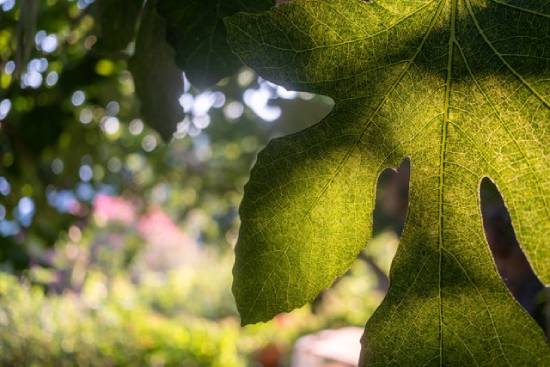
Photo by Ben Prater
One day, the owner of a vineyard comes to check how much fruit the fig tree he planted has grown. But much to his disappointment, the tree has no figs on it.
Fed up, he tells the gardener, or vinedresser, that he’s going to just cut the tree down because it hasn’t grown any fruit in three years.
But the gardener asks the vineyard owner for just one more year. He says he’ll give the tree special treatment to help it grow something, and if it hasn’t produced any fruit by the end of the year, then cut it down.
And that’s the end of the story.
We have no idea if the tree grew fruit the following year and stayed where it was or if it didn’t grow any fruit and was cut down.
It’s a little unsettling, to say the least. We love when stories have a definitive ending, but this one doesn’t.
But there’s a reason Jesus ended the story there.
What’s the context of this short parable?
As usual, Jesus is teaching a crowd of curious listeners and He challenges a spiritual assumption that He knows many people at that time are struggling with: thinking that when a tragedy or sickness occurs in someone’s life, it’s because they’re being punished for some sin they hadn’t confessed or properly dealt with.
Two tragedies had recently occurred before Jesus told this short story: Pilate had massacred a group of Galileans who were offering sacrifices, and a tower in Siloam had fallen and killed 18 people (Luke 13:1-5).
Luke is the only Gospel writer who mentions this particular massacre, though similar actions by Pilate and other administrators in Judea are mentioned in other historic texts. (In fact, Pilate was recalled from service a few years later for a massacre of Samaritan worshippers he authorized on Mt. Gerizim.)
The crowd’s belief that tragedy indicates unconfessed sin reminds us of what happened with Job when tragedy was all around him. His friends repeatedly pleaded with him to repent of his sins so that God would stop punishing him.
But Jesus emphatically opposes this belief. Suffering is a natural consequence of sin, yes, but thinking that an accident or tragedy is an “act of God” paints Him as cruel and harsh. One Bible commentary blatantly says that belief “comes from Satan.”
So to directly address this unfortunately common idea, Jesus asks if the crowd felt the Galileans who were killed or those who died at the tower were worse sinners than other people.
But He answers His own question. “No, I tell you; but unless you repent, you will all likewise perish” (Luke 13:3, 5, ESV).
So wait…does that mean not repenting means the people in the crowd would die, just like the Galileans did? Is the crowd right in their belief? Because the Galileans did die, and outwardly it wasn’t their fault…so had they not repented from something?
Pilate killed some and then a tower fell on the others. Why on earth did these tragedies happen to seemingly good, innocent people? Some of whom were even offering Passover sacrifices, which was a holy thing to do?
The people likely became further confused by Jesus’ response, so Jesus tells the parable of the barren fig tree to demonstrate the principle at the heart of the issue.
In part, Jesus is saying no matter who you are or what’s happening to or around you, every single human being needs to repent (to change, to move away from)…because “all have sinned and fall short of the glory of God” (Romans 3:23, ESV).
Repentance comes after acknowledgement and confession. It’s the action—the change—that makes the real difference. It’s the effort to turn around, or turn away from, that which was holding us back from being the fruit that comes from love.
Think about it. If a tree acknowledges that it’s not bearing fruit and confesses that it’s not serving its purpose, those are excellent and necessary first steps. But if that confession doesn’t turn into action (repentance), and doesn’t even bear one new piece of fruit…then the tree is no better off than before.
To help explain all this, Jesus uses a vineyard as a metaphor, which would have been a very familiar setting and profession for those in the crowd listening.
Isaiah 5:1-6 describes a vineyard being planted, cared for, and then destroyed because it grows the wrong kind of fruit.
In Jeremiah 12:10, God says that His “shepherds have destroyed my vineyard; they have trampled down my portion; they have made my pleasant portion a desolate wilderness” (ESV).
The vineyard metaphor was familiar to Jesus’ audience, so He used it to explain that we only have one life. We don’t have infinite time to sit and wait and hopefully bear fruit somehow. There is urgency to this.
And underneath it all, there’s a deeper reality. If a tree doesn’t bear fruit the whole time it’s been a tree…what would waiting longer really do? Especially if the tree was resistant to change?
For the one tending the land and the trees, It’s only logical to chop down an unfruitful tree to make room for a fruitful one. Because that’s the whole purpose they were planted for.
Here’s where we run into the real meaning of the parable. So let’s go over how this still applies to our lives, and to anyone’s life, no matter who they are or when they live.
What does this parable really show us?

Photo by Maria Kovalets on Unsplash
We have to ask an important question about ourselves after reading this parable: “Am I a fig tree that bears fruit, or am I a barren fig tree?”
If we’re bearing the fruit of love, joy, peace, patience, and the other fruits of the spirit (Galatians 5:22-23), then we’re living a life that demonstrates the character of Christ. A life that’s fruitful and benefits the world around us—not just ourselves.
But if our life isn’t bearing fruit, then it’s not being helpful or useful, and we’re like the barren fruit tree in the parable…which is a sobering reality to face.
So the story exposes those who live fruitless lives, hoping to inspire repentance. To change the mind. To see the world from a different perspective—to look beyond self, and beyond existing for the sake of existing. Or existing for self alone.
(Note for clarification: This illustration is not talking about being depressed, making mistakes, recovering from a dark past, etc. When Jesus talks about not bearing any fruit, He’s talking about willful decisions. All the trees in that garden could bear fruit—there was nothing outside of their own capabilities as trees keeping them from doing so. This is about choice, focus, and priority.)
All Jesus’ parables reveal parts of His will, His kingdom, and His character. This one is no different. We get a big picture view of what beautiful purpose God created us for, and we also see how our power of choice comes into play.
The vineyard owner
The owner of the vineyard represents God. He purposefully placed the fig tree in a vineyard alongside other trees, plants, and vegetation—an environment that would allow it to thrive.
He also gave the tree time to grow fruit.
It’s not like it didn’t have a chance or hadn’t reached maturity yet. So His desire to cut the tree down has nothing to do with impatience or unwillingness to give more help or attention where needed. The tree should have had fruit after three years of being cared for in a healthy environment.
Think about the owner of an orchard today. If a tree isn’t producing fruit, the owner will investigate the cause and find out if something’s wrong, because the purpose of their orchard was to produce fruit. Not just to grow trees for the sake of growing trees.
But if everything’s as it should be and the tree still isn’t producing fruit, then that tree will be cut down to make room for a new one to be planted that will bear fruit—as fruit-bearing trees were already meant to do.
And all the fig trees in the vineyard are parallel to God’s people, which we’ll look at next.
The fig tree
The barren fig tree represents God’s people, specifically the nation of Israel at that time because they were supposed to be representing His character to the rest of the world. Today, however, the fig tree can apply to any one of us.
In an example like this, certainly no one wants to be thought of as the fruitless fig tree. So reading something like this can feel humbling. Maybe we might even feel afraid of being exposed as fruitless.
But as mentioned earlier, this parable was meant for self-reflection. Between the vineyard owner and the trees. Notice how the other fig trees weren’t involved in this interaction. So it wasn’t about comparing the amount of fruit each tree produced. This was about trees either bearing fruit or being completely devoid of fruit.
The Israelites were God’s chosen people to represent Him on earth (Deuteronomy 7:6). Not only did He choose them, He also gave them special gifts and resources that should have produced the fruit that God was looking for (more on that fruit later).
But how did God’s chosen people become spiritually lifeless? And how do we know if we’re in danger of becoming spiritually lifeless, too?
If you look at the whole of the Israelites’ history throughout the Old Testament, it isn’t difficult to see the problem. Every time their king, or all of them together, pushed God’s guidance aside and wanted to do things their own way, or to try to be like other nations around them…things didn’t go so well.
You could think of it like a whole orchard of trees rejecting the care and direction of their own gardener. No wonder they weren’t bearing fruit.
Chances are, if we’re reading about this parable, we want to bear fruit. Even if we’re not sure what that looks like exactly. But having a spiritual desire to reflect Jesus Christ—even without the confidence or know-how of going about it—can be a great spot to be in because it brings us closer to Christ. We need His help in bearing fruit.
Society around us might teach us to make ourselves look good, and to “run the rat race” and eventually end with the proverbial pot of gold.
But in reality…most days it just feels like being on a hamster wheel, doesn’t it? No matter how hard and fast we run, we’re getting nowhere because we’re closed off from the path Jesus has for us, and we’re not reaching toward Him to get what we need for a fruitful life.
The Israelites were focused more on being in control and following the right rules the right way. They wanted the prestige of being God’s chosen people. They wanted to overthrow their oppressors.
By not depending on God, and instead focusing on their collective identity and heritage, they weren’t producing actual fruit. They were just…well, existing without providing nourishment to anyone other than themselves. Without the fruit of repentance, they couldn’t provide any spiritual nourishment to others.
If it weren’t for the gardener being willing to devote extra care and more time, the tree would have been cut down right then and there.
The gardener
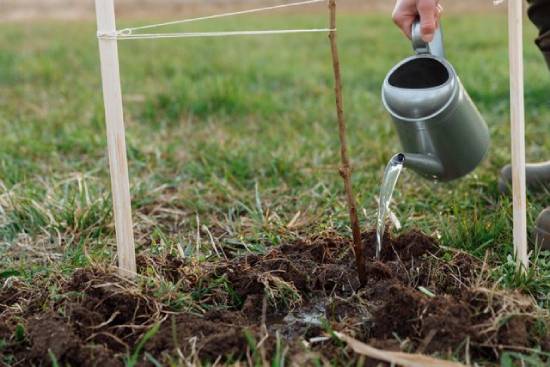
Photo by Thirdman
The gardener in the story is a representation of Jesus and His role as our Savior.
The gardener is in charge of supervising and nurturing the fig tree. But despite creating the perfect garden, the fig tree just isn’t bearing fruit. And since that’s what it’s been planted to do, not doing that means it rejects what the gardener is doing despite having more than enough time and opportunity. It’s a fruitless tree.
We can look at Jesus’ earthly ministry like a gardener coming down to provide extra effort to save fruitless trees. So He tended the soil with love, healed ailments, restored hope, identified the causes for blights or contaminated soil, and reinforced where and how trees could find the most effective fertilizer of all. Through Him.
What an awesome act of love! Jesus left heaven to spend time in a struggling garden. To be born like us, walk with us, talk with us, live with us, and love us. All so that the void sin created between us and God would be destroyed and our lives would be spirit filled again. We could again aspire to be healthy, fruitful trees in a perfect, eternal garden.
But God’s chosen people rejected Jesus as the Messiah because He didn’t fit their ideal…and that can be a wake-up call for any of us—if we find that we’re chasing our assumptions of who God is instead of getting to know who He actually is. That’s why we have to follow His way rather than our own.
But without Christ’s help, it’s useless. Jesus says this pretty clearly in John 14:6: “I am the way, and the truth, and the life. No one comes to the Father except through me” (ESV).
Without Jesus, trying to make ourselves righteous drains us dry and leaves us like empty vessels…or like a barren fig tree.
And so Jesus, the gardener who has what we need for bearing fruit, works within us (Hebrews 7:25). In the story, He asks the vineyard owner to give Him one more year to help the tree grow fruit and flourish. He even says He’ll add a little something extra, some fertilizer, to really enhance the process (Luke 13:8).
Notice that the gardener didn’t ask the tree to do anything…because we can’t grow fruit on our own. He just asked for one more chance. To encourage the tree to accept help and bear fruit, or to stay the way it had always been. Then, it’d be clear that by next year, if it was willing to repent, change, and bear fruit, or it was indeed fruitless and needed to be chopped down.
Because of the life, death, and resurrection of Jesus, we all have a chance to accept His help. We are not doomed to be chopped down just because of our fallen nature. We have a choice.
The missing fruit
Speaking of fruit, the missing fruit in the parable represents the fruit of the spirit. And Matthew 7:16-20 says the right fruit is easily recognizable.
“You will recognize them by their fruits. Are grapes gathered from thornbushes, or figs from thistles? So, every healthy tree bears good fruit, but the diseased tree bears bad fruit. A healthy tree cannot bear bad fruit, nor can a diseased tree bear good fruit. Every tree that does not bear good fruit is cut down and thrown into the fire. Thus you will recognize them by their fruits” (ESV).
Later on in the New Testament, Galatians 5:22-23 (ESV) shows us how the character of God shows up in action—as fruits of the Spirit:
- Love
- Joy
- Peace
- Patience
- Kindness
- Faithfulness
- Gentleness
- Self-control
When God describes Himself to Moses, He says He’s “The Lord, the Lord, a God merciful and gracious, slow to anger, and abounding in steadfast love and faithfulness” (Exodus 34:6, ESV).
We see love, peace, self-control…we see the fruit of His character in His description of Himself.
If we are His representatives on earth, then we should grow that fruit, too.
And we do when we’re in the hands of the gardener, Jesus, who tends to us and helps us bear fruit.
How can we find hope and delight in bearing fruit?
“Bearing fruit” sounds a bit weird to say, but it’s really just about reflecting the character of Jesus Christ. It begins with faith in Him, and then that faith grows into Christ-like character, which turns into action and behavior.
It sounds like a tall order—and it is, if we try to do it on our own. So it might help to think about it not like a list of things to accomplish, but a relationship to nurture.
And since the Holy Spirit, Jesus, and God are all on the same team, it’s like we have help and guidance in three different ways.
God is patient with us
One of the things God says when He’s describing Himself to Moses is that He “will by no means clear the guilty, visiting the iniquity of the fathers on the children and the children’s children, to the third and the fourth generation” (Exodus 34:7, ESV).
If that sounds strange, here’s what that really means. It’s that God isn’t going to let fruitless trees take over the garden. There will come a time, when it’s clear which trees are fruitful and which won’t bear fruit, that His divine judgment will be carried out. Because He’s all loving, He can’t let sin slide.
But God’s mercy shows up in His patience, and His willingness to send a gardener before identifying unfruitful trees to be chopped down. He wants to save all the trees.
So He gives us opportunity after opportunity to come to Him (with His help), to rely on Him (with His strength), to repent and yield to Him (with His guidance) and walk more closely with Him (with His love). We can find hope and delight in that.
Jesus is rooting for us
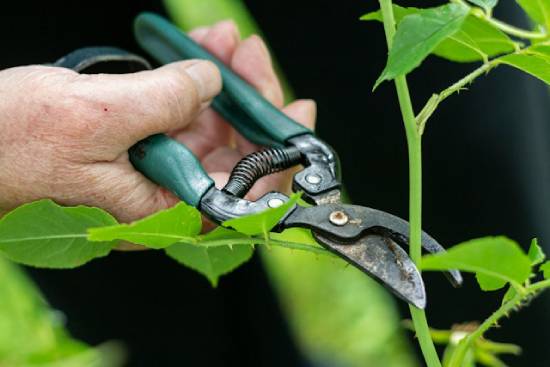
Photo by Margarita Shtyfura on Unsplash
Jesus is pruning, He’s tilling the soil, He’s giving us just the right amount of water and sun. He’s giving us all we need to be able to grow, so we don’t need to look at ourselves or any other “trees” for help. Otherwise, we’re setting ourselves up for disappointment and worry.
Jesus even warned about this in Luke 12, the chapter right before the parable of the barren fig tree.
“Do not be anxious about your life, what you will eat, nor about your body, what you will put on. For life is more than food, and the body more than clothing” (Luke 12:22-23, ESV).
These verses remind us to direct more of our attention to the things that God places in our hearts. He isn’t saying to ignore other responsibilities, but He is reminding us that He’s very aware of what we need and He’s got our back.
Jesus invites us to do away with burdens society places on us and to instead “take my yoke upon you…for My yoke is easy, and My burden is light” (Matthew 11:29-30, NKJV). He is our hope and delight.
The Holy Spirit is giving us strength
Strength to live joyfully. Strength to bring peace and show patience. Strength to lean into spiritual matters more than temporary matters. Strength to forgive. Strength to repent. Strength to submit to God’s control.
These things are hard because they feel so unnatural at times, or maybe we think they make us look weak compared to the strength the world tries to flex. The difficulty of it all reminds us that we really need the Holy Spirit’s help because “the Spirit helps us in our weakness” (Romans 8:26, ESV).
The same power that showed up as rushing wind and tongues of fire above the disciples’ heads in the upper room is still available to us today (Acts 2:2-3).
With the Holy Spirit’s help, we can produce the kind of fruit that God is looking for. We can live joyful, spirit-filled lives right now.
We can still produce spiritual fruit—the story isn’t over yet!
Jesus came to earth knowing that God “delights to give you the kingdom” (Luke 12:32, CSB). God wants to give us everything He has to offer, but true love is rooted in choice. Choosing Him above all else means receiving Him and everything He’s offering.
And it also means we put what He has for us above what we want for ourselves…it means putting Him first and submitting to Him.
(And often, this can take a lot of internal pressure off of ourselves!)
It means keeping Him directly in front of us as we grow more loving, more joyful, more peaceful, more faithful, and all the rest.
With Him, even if our lives haven’t been fruitful before, there’s still hope. Jesus chose not to end the parable in that moment because we can still change our minds. If we truly want to bear fruit, He’s the gardener that can make that happen.
What does it really look like to “bear fruit?”
More Answers

Meaning of the Parable of the Two Sons in Matthew 21
Meaning of the Parable of the Two Sons in Matthew 21The parable of the two sons in Matthew 21:28-32 is about a father who instructs his sons to work in the family vineyard. The first son refuses to work but later has a change of heart and obeys. The second son says...

The Pharisee and the Tax Collector Parable: Its Meaning Made Simple
The Meaning of the Pharisee and the Tax Collector ParableIn Luke 18:9-14, Jesus told a parable about two men who went to the temple to pray. One was a Pharisee and the other a tax collector. The Pharisee prayed (well, bragged) about his own good works compared to the...

The Story of the Widow’s Mite—What It Really Means
The Story of the Widow’s Mite—What It Really MeansPeople often assume bigger is better, but the Bible turns this concept on its head with the story of the Widow’s Mite. Of all the donations Jesus sees at the temple, the gift that draws Jesus’ attention is not the...

Parable of the Wedding Feast: Lessons From a Royal Invitation
Discover the beautiful Gospel invitation behind this parable of Jesus.

The Lamp on a Stand Parable—What Does it Mean?
Going through the main points, major themes, and takeaways for this parable.

Understanding the Parable of the Hidden Treasure (Matthew 13:44)
Here’s what the “Hidden Treasure” parables shows us about God’s love.

The Parable of the Persistent Widow—What it Means for Your Prayer Life
Find out what the Persistent Widow parable actually means.

What the Parable of the Mustard Seed is All About
This parable shows us how God is always at work, even if we can’t always see it.

The True Meaning of the Friend at Midnight Parable
Uncovering the real message at the heart of the Parable of the Friend at Midnight

The Parable of the Lost Coin—How God Feels About Each of Us
Learn what the Parable of the Lost Coin teaches us about God’s love for each one of us.

What the Two Builders Parable Actually Means
A walkthrough and breakdown of the Parable of the Wise and Foolish Builders.

What Does the Parable of the Dishonest Manager Really Mean?
Here’s a breakdown of what the “Parable of the Dishonest Manager” actually means.

Parable of the Rich Fool (Luke 12)—A Walkthrough
Here’s what the Parable of the Rich Fool in the Bible really means.

What the Good Samaritan Parable Really Teaches Us
The parable of the good Samaritan is a story familiar to religious and secular audiences alike.

What Does the Parable of the 10 Virgins Teach Us?
The story of the 10 virgins found in Matthew 25:1-13 is a well-recognized parable of Jesus, and one with a profoundly important message for all of humanity.

The Parable of the Unforgiving Servant—A Walk-through
Through this somewhat alarming story, Jesus teaches us about forgiveness, mercy, and human nature.
What Does the Parable of the Pearl of Great Price Mean?
Here’s what Jesus taught about the kingdom of heaven through this short parable about a merchant who finds a priceless pearl.
What is Jesus’ Parable of the Sower About?
The parable of the sower is ultimately about how people responded to Jesus Christ and His message of the kingdom of God—the Gospel.

Understanding The Parable of The Lost Sheep
The parables of Jesus teach object lessons about the kingdom of God. And three parables in particular, the parable of the lost sheep, the parable of the lost coin, and the parable of the prodigal son, specifically teach about God’s unconditional, redemptive love.
What Does the Story of the Prodigal Son Really Mean?
The Parable of the Prodigal Son tells the story of a wayward son, a jealous brother, and a father with unconditional love. Let’s see what we can learn from it today.

The Parables of Jesus
Have you ever been on the verge of sleep in the middle of a long lecture or sermon when suddenly the speaker takes a turn and begins to tell a story?