
Ellen White traveled to Australia in the later part of her life, and she ended up spending nine years there. In that time, she helped the Australian Seventh-day Adventist Church increase in size and strength.
Much of her time there involved speaking at churches and camp meetings. She also was instrumental in establishing various Adventist institutions, such as health centers, a health-food factory, and an Adventist college.
But what was it that really made this trip so significant in her ministry? Let’s look more closely at:
- Why Ellen White went to Australia
- When she made the trip
- Places she went and things she accomplished
- The impact she had in Australia
Let’s learn a little more about how Ellen White’s efforts affected the “land down under” for the Adventist Church.
Why did Ellen White go to Australia?
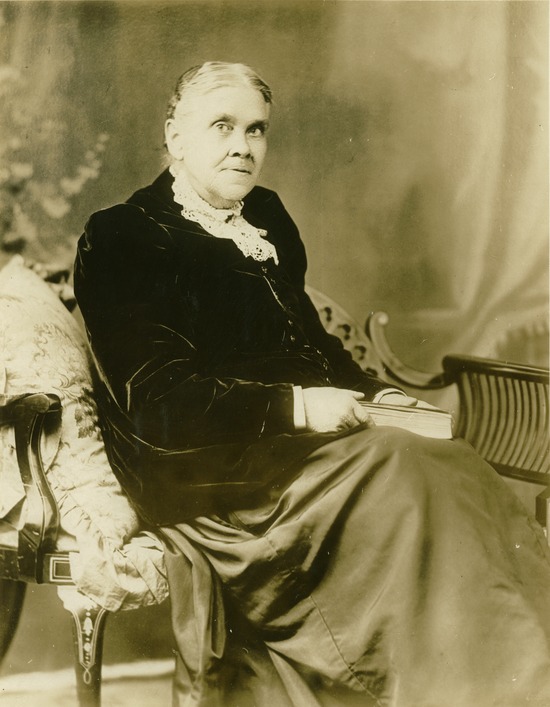
“Courtesy of the Ellen G. White Estate, Inc.”
Ellen White went to Australia at the request of the Foreign Mission Board of the Seventh-day Adventist Church.
Here’s some of the story from her biography, as explained by her grandson, Arthur White.1
The idea to send Ellen White to Australia started at the 29th General Conference Session of 1891. An Adventist missionary named Stephen Haskell was among the first to suggest it. He thought Ellen White’s presence would encourage progress in the church there and wanted her help starting an Australian mission school.
Many conference members agreed with his idea. And eventually, the Foreign Mission Board asked Ellen White if she would be willing to go.
She had often been instructed by the Holy Spirit regarding where she was being called to serve. But this time, He seemed to remain silent on the matter.
Because He didn’t tell her to stay or go, she wondered if she was meant to go at all.
Personally, she hoped she wouldn’t have to go. She had grown weary of travel. She had already traveled through a considerable amount of the United States and also visited Europe as a missionary. Now she was older and struggling with multiple health challenges. She thought she could best serve the Lord by staying home and writing the instruction that could be beneficial to share with the church.
But in the end, she decided she would follow the General Conference’s counsel (as she had done when invited to go to Europe a few years before).
Yet, even as she traveled there, she still faced moments of doubt and depression, wondering whether God really wanted her there.
This just demonstrates that even those with the gift of prophecy sometimes struggle with discerning what God wants them to do. No human is immune to sin’s effects of fear and doubt.
But although God may have seemed silent, Ellen White relied on prayer and her God-given reason to make a decision, trusting Him with the outcome.
God later revealed to her that it had not been His plan for her to go to Australia, but rather the will of the church leaders to send her there. Some reports even suggest that certain church leaders wanted Ellen White to leave for a while because of personal disagreements they had with her.2
But even though church leaders weren’t acting in cooperation with God’s will by asking her to go to Australia, His providence worked through her to accomplish wonderful things. So much so, that she decided to stay in Australia many more years than the two she had been asked to serve. God helped her to meet the great need for mission work and Bible teaching in the area.
Additionally, other things started falling into place. In a vision she was given back in 1875, she saw a printing press that she later ended up seeing in person in Australia.3
And in another vision the previous year, an angel told her the gospel message should be spread to all lands (including Australia):
“You are entertaining too limited ideas of the work for this time…You must take broader views…The message will go in power to all parts of the world, to Oregon, to Europe, to Australia, to the islands of the sea.”4
These two visions may have predicted Ellen White’s unintended but eventual influence in Australia.
Ellen White’s experience regarding her decision to go to Australia was one of the many, many times God demonstrates that even when things don’t pan out like they should, He can still do extraordinary things through those who are willing to follow His leading.
When she made the trip
Ellen White traveled to Australia by boat in 1891, when she was 64 years old. She was joined by her son W.C. White—Willie for short—and her writing assistants (as well as some Adventists who were interested in witnessing to the Australian people).
The trip was 26 days long because of stops in different countries. After leaving San Francisco, the ship stopped in Hawaii, Samoa, and then New Zealand. She arrived in Sydney, Australia, on December 8, 1891.5
And from that day until the day she left, she worked hard to build up the Australian Church.
But despite the success of her work, she also faced some challenges.
For one, shortly after she arrived, Australia descended into an economic depression.6 This made it hard for people to come up with enough money to build Adventist churches, schools, and hospitals. Beyond that, many Australian communities were in need of basic necessities. There were times when Ellen White and her family suffered financially as well.7
Even so, she was willing to forego new clothes and share what little food she had with others.8
Another hardship she faced was more illness. She caught rheumatic fever shortly after arriving in Australia.9
And on top of that, Willie’s wife had passed away only a year before they left for Australia.10
But even so, Ellen White and those with her were able to witness to countless people, establish several Adventist institutions, and spread the gospel through the Australian printing press. Willie even got remarried.11
By 1895, she and her family settled in a house at Cooranbong, New South Wales, which they came to call “Sunnyside.” In the beginning, Ellen White had intended to stay in Australia for only two years, but her trip ended up stretching to nine years.12
During that time, she ministered in several major Australian cities.
Places she went and things she accomplished
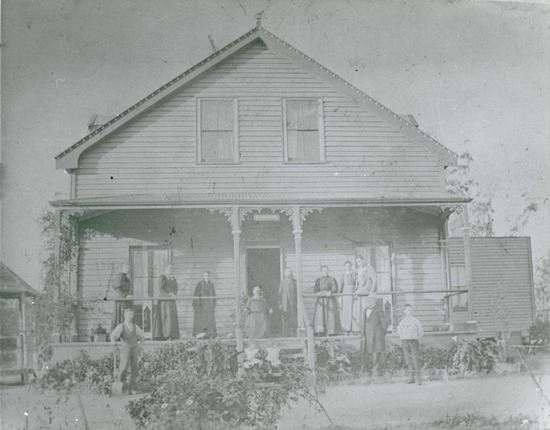
“Ellen White sitting on the front porch of her home in Cooranbong, Australia.”
Ellen White traveled to many different towns, cities, and states during her time in Australia. They are well-documented in Arthur L. White’s book, Ellen G. White: The Australian Years: 1891-1900.
A sample of her visits to the most prominent places are:
- Sydney: Soon after her arrival in Australia, she spoke to a group of people about the hope we have in righteousness by faith and was well-received.13 She ended up visiting here often.
- Melbourne: She came here to speak to the publishing house of the Australian Church—the Echo Publishing Company. This is where she recognized the printing presses from her visions. She also spoke at the fourth annual Australian Seventh-day Adventist Conference in Melbourne. In one session, she shared about the importance of creating Adventist schools.14
- Adelaide: She preached at the church here and frequently visited the area to speak with church members and minister to their needs.15
- Brighton: She spoke at a camp meeting where around a hundred people were baptized.16
- Williamstown: She also spoke at a camp meeting here.17 What she said about healthy living may have encouraged the development of an Adventist cooking school.
- Granville: She moved to this location in the northern part of New South Wales. She believed this new location in the countryside was better for her health.18
- Cooranbong: The church decided to plant the Australian school here.19 She approved of the location as God gave her a vision confirming the value of the land.20 And later on, she encouraged them to place a health-food factory and hospital here, too. In 1895, she moved here to a home called “Sunnyside.”
- Tasmania: This is where Ellen White went for her son’s wedding.21 She also attended a convention here.22
- Stanmore: She spoke at a camp meeting here.23
- Newcastle: Spoke at a camp meeting here as well.24
- Brisbane: At this particular camp meeting, she spoke about following God’s calling and living a temperate lifestyle.25
She even visited New Zealand for speaking engagements.26
And besides traveling to speak, she also helped establish key Adventist institutions—ones that still reveal the effects of her contributions.
What impact did Ellen White have in Australia?
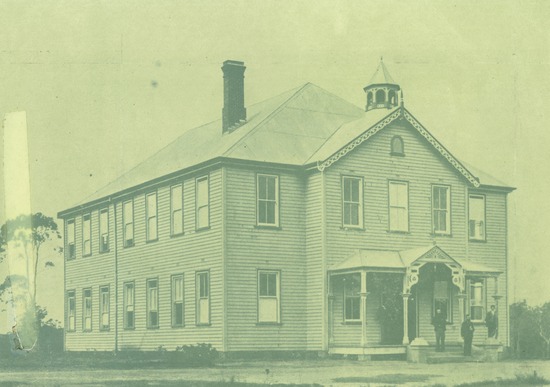
“Avondale Adventist School in Australia”
By the end of her time in Australia, Ellen White had made an incredible impact on the Australian Seventh-day Adventist Church. For starters, her presence helped increase church membership. When she first arrived in Australia, there were 445 members of the Adventist Church.27 By the time she left, there were over 2,086!28
But that was only a small part of her legacy. Here are some other ways she left her mark:
- She donated to help build the first Adventist church in continental Australia: During the economic depression, church leaders in Australia were struggling to come up with enough money to build the Parramatta Church. At the same time, Ellen White’s loved ones sent her $75 so she could buy a more comfortable chair to ease her pain when she was ill. But instead of using the money for herself, she donated it to the building funds for the Parramatta Church.29
- She helped locate the Avondale school: Ellen White was responsible for the final location of what is now known as Avondale University in Cooranbong, Australia. At first, many doubted whether it would be a suitable location because land inspectors reported the land to be unfruitful. But in a vision, Ellen White was assured that this was the land God had chosen.30
- She helped establish health institutions: This includes a sanitarium (health center) in Sydney and a hospital in Cooranbong.31
- She encouraged the founding of a health-food factory: This health-food factory, which she advised should be next to Avondale College, was created with the intention of providing healthy food alternatives like vegetarian meat substitutes.32
- She finished her book on the life of Jesus Christ while there: One of Ellen White’s primary concerns in going to Australia was that she wouldn’t have time to work on writing. Despite her concerns, she finished writing The Desire of Ages while she was there.33 This book is among her most popular works.
- She recommended a new organizational structure for the General Conference: Ellen White noticed that the General Conference back in the United States was struggling to handle the concerns of congregations around the world. Australian leadership often had to wait months for a reply from the General Conference (as mail didn’t travel very quickly). She was among one of several who recommended an intermediate conference, which became known as the Australasian Union Conference. Soon, every division of the Seventh-day Adventist World Church adopted this system and structure.34
- She ministered to Australians on a personal level: Despite facing her own financial struggles during Australia’s economic crisis, she provided new clothes and food for those in need.35
Ellen White’s contributions and Christian influence are still affecting Australian communities today.
Take Avondale University for instance. It has continued to expand and now features two campuses—one in its original location in Cooranbong and the other in the Lake Macquarie area. And the Sydney Adventist Hospital has become the largest private hospital in its state!
Ellen White’s time in Australia shows her heart for spreading the gospel of Jesus Christ and making a difference in the lives of individuals, even when it meant taking long journeys and living in a different country for years.
What commitment!
Related Pages


- White, L., Arthur, Ellen G. White: The Australian Years: 1891-1900 (vol. 4), pp. 13–18 [↵]
- Bradley, P. W., “When God Overrules,” Adventist Review, April 1, 1962, p. 8,https://documents.adventistarchives.org/Periodicals/RH/RH19820401-V159-13.pdf. [↵]
- Ibid, p. 12 [↵]
- Ibid. [↵]
- Ibid, pp. 19–21 [↵]
- Douglass, Herbert, Messenger of the Lord, p. 82 [↵]
- Ibid. [↵]
- Ibid. [↵]
- https://lineagejourney.com/read/ellen-white-called-to-australia [↵]
- White, Arthur, p. 18 [↵]
- Ibid., p. 188 [↵]
- Ibid., p. 8 [↵]
- Ibid., p. 22 [↵]
- Ibid., pp. 22-24 [↵]
- Ibid., p. 47[↵]
- Ibid., p. 124 [↵]
- Ibid. [↵]
- Ibid., pp. 138–139 [↵]
- Ibid., p. 148 [↵]
- Ibid., p. 151 [↵]
- Ibid., p. 188 [↵]
- Ibid. [↵]
- Ibid., p. 336 [↵]
- Ibid., p. 371 [↵]
- Ibid., pp. 366–367 [↵]
- Ibid., p. 78 [↵]
- “Report of Seventh-day Adventist Foreign Conference and Mission,” Seventh-day Adventist Yearbook, p. 86 [↵]
- “Summary of the Statistics of Conferences and Missions Year Ending December 31, 1900,” General Conference Bulletin 1901, pp. 162, 164 [↵]
- Douglass, p. 82 [↵]
- Ibid., p. 190 [↵]
- White, Arthur, pp. 430, 437, 452 [↵]
- Ibid., p. 433 [↵]
- Ibid., p. 375 [↵]
- Ibid., pp. 120–121 [↵]
- Douglass, p. 82 [↵]
More Answers

What Are Seventh-Day Adventist Sermons Like?
In nearly every Seventh-day Adventist Church, the sermon is the focal point of the main service—similar to many Protestant Christian denominations. It is a time of biblical instruction by the pastor, who shares what they’ve been studying in the Bible and preparing over the previous week.

What is the Great Disappointment and What Can We Learn From It?
The Millerites predicted Christ’s return on October 22, 1844, but Jesus never arrived. Another event took place. Discover what really happened and what the Great Disappointment can teach us today.

Ellen White and the Sabbath
The Sabbath is an important topic in the Seventh-day Adventist Church. It shouldn’t surprise you, then, that Ellen G. White, a co-founder of the church, studied the Bible’s teachings on the Sabbath and wrote large amounts about it.

Ellen White and the Great Controversy
The Great Controversy is a book written by Ellen G. White, a co-founder of the Seventh-day Adventist Church. Written in the late 1800s, the book is the last in a series and describes the connection between Bible prophecy and post-biblical history. It also discusses factors that will characterize last-day events.

Who Were the Judges of Israel in the Old Testament?
Times of crisis call for men and women of action. The Israelites, newly settled in the Promised Land, found themselves in those times. As enemy nations attacked and oppressed the tribes, they cried out to God for help. He, in turn, sent them men and women of action—known as judges.
Ellen White’s Visions and Prophecies
The New Testament upholds prophecy as a spiritual gift that will continue to the end of time (Ephesians 4:11–14). Seventh-day Adventists believe that Ellen G. White (1827–1915), a humble woman of God and an earnest student of the Bible, demonstrated this gift of the Holy Spirit through visions and prophecies that she received.

The Armor of God as Described in Ephesians
In Ephesians 6, the Apostle Paul was helping people understand what it means to defend themselves within a spiritual war (Ephesians 6:10-18).


Why is the Sabbath Observed from Sunset to Sunset?
If you know of any Adventists, you may have noticed that they stop their work or business activities before sundown on Friday. What’s the reason behind this?

![What is the New Testament? [About Each Book and Key Lessons]](https://devsite.askanadventistfriend.com/wp-content/uploads/2022/02/new-testament-400x250.jpg)
What is the New Testament? [About Each Book and Key Lessons]
The New Testament is the second section of the Bible, describing Jesus and how He came to this world to reveal the love of God. It tells about His ministry, His death and resurrection, and the church that resulted.

The Millerite Movement
William Miller’s Bible study led people to await Jesus’ Second Coming in 1844. This movement became known as the Millerite Movement and led to the Seventh-day Adventist Church.

How Did Ellen G. White Help Found the Adventist Church?
Ellen G. White, a humble woman from Gorham, Maine, was a co-founder of the Seventh-day Adventist Church and a key leader in it from its very beginning. Following the Holy Spirit’s guidance at a young age, she dedicated herself to studying Scripture and became involved in the Advent Movement.

Healing in the Bible
Have you ever felt like healing seemed so far away? Like it wouldn’t be possible for you? What you most want is a glimmer of hope or a bit of encouragement.


All about the prophets in the Bible
Prophets were individuals in the Bible who received messages from God and communicated those messages to the recipients—whether through speaking or writing. Their writings, known as prophetic books, comprise a huge part of the Bible.

What the Bible Says About Tattoos (Are They a Sin?)
Only one Bible verse speaks directly to permanent, symbolic markings on the skin. It’s Leviticus 19:28, and it’s one item in a list of ways God told Israel to distance themselves from the pagan practices of the people they lived among.

Who Are Adventists
The Seventh-day Adventist Church—“Adventists” for short—is a Christian denomination of ordinary people who seek to follow Jesus and live out His mission in this world. Established in 1863, we hold to the Protestant principle of sola scriptura, which means the Bible guides everything we do.

Life Lessons from Joseph in the Bible
Joseph is one of the more well-known people from the Bible’s Old Testament. He showed remarkable strength, faith, and patience—even while facing great difficulty and injustice. All because he let God lead.

Understanding Prophecy in the Bible
Seventh-day Adventists have emphasized Bible prophecy from the beginning. We have our roots in the study of God’s Word, especially the prophecies that have to do with the future.

How Do You Tell a False Prophet From a True Prophet?
The Bible speaks of both true and false prophets and gives us specific guidance on how to test prophets and their claims. Scripture is our guard against deception.

All About the Old Testament
The Old Testament is the first section of the Bible and makes up about three-quarters of its material. It lays out the story of Creation, humanity’s fall into sin, and God’s promise to rescue us from sin.






Why is There Good and Evil in the World?
Human nature is capable of the most self-sacrificing and heroic acts—a soldier risking his life for his country, a mother protecting her children from harm, a man jumping into a swirling current to save someone who is drowning.

What Seventh-day Adventists Believe About Growing in Christ
Christian growth is the experience of allowing Jesus Christ to work in our lives through the Holy Spirit and restore in us the image we were designed for—God’s image of selfless, other-centered love.
Didn’t find your answer? Ask us!
We understand your concern of having questions but not knowing who to ask—we’ve felt it ourselves. When you’re ready to learn more about Adventists, send us a question! We know a thing or two about Adventists.