
In Ephesians 6, the Apostle Paul was helping people understand what it means to defend themselves within a spiritual war (Ephesians 6:10-18).
What does that mean?
In referencing the armor of God, Paul is not encouraging a physical war or physical armor. We are to defend ourselves against Satan or the Devil, who’s primary mission is to turn people away from God.
So let’s look more closely at what this spiritual war entails, and what this whole “armor” consists of. We’ll cover:
- The armor’s meaning and purpose
- Pieces of the armor of God
- Prayer as part of this armor
- What this means for us today
Let’s start by looking at what these verses say.
What does the armor of God mean?

Photo by Henry Hustava on Unsplash
The choice of words in Ephesians to describe this armor is a direct reference to Isaiah 11:4-5 and Isaiah 59:17. The symbolism might seem odd today, but these words are meant to speak to each of us.
“Put on the whole armor of God, that you may be able to stand against the wiles of the devil. For we do not wrestle against flesh and blood, but against principalities, against powers, against the rulers of the darkness of this age, against spiritual hosts of wickedness in the heavenly places. Therefore take up the whole armor of God, that you may be able to withstand in the evil day, and having done all, to stand” (Ephesians 6:11-13, NKJV).
These “powers” and “spiritual hosts of wickedness” are the continued efforts of Satan. He doesn’t fight with conventional weapons but with influence. He sows deception, distraction, and temptation.
We are told in Matthew, “And do not fear those who kill the body but cannot kill the soul. But rather fear Him who is able to destroy both soul and body in hell” (Matthew 10:28, NKJV).
(By the way, do not be deceived by the enemy into believing in a hell where people are punished forever. Paul tells us, “For the wages of sin is death, but the gift of God is eternal life in Christ Jesus our Lord” (Romans 6:23, NKJV).
Death is final, not an eternal torture (Ecclesiastes 9:5). We are offered protection from eternal destruction by faith in God and wearing His armor.)
The full armor of God allows us to defend ourselves against these kinds of forces. We have a God that loves us and wants to protect us. He wants us to live forever with Him.
Pieces of the full armor of God
So let’s look at the individual pieces of the armor of God (Ephesians 6:14-18).
- Belt of truth (holds up the armor of God).
- Breastplate of righteousness (shields the heart, among other important parts of our bodies).
- Shoes of the gospel/sandals with the gospel of peace (to stand firm).
- Shield of faith (protection against direct attacks).
- Helmet of salvation (knowledge).
- Sword of the spirit (direct defense).
- And also prayer (by which we obtain His strength and protection).
Paul used words and images that were understood by his audience at the time.
This is exactly how Jesus spoke to people during His time on earth.
When Jesus called the first disciples who were fishermen, He said, “Follow Me, and I will make you fishers of men” (Matthew 4:19, NKJV).
Paul’s method was similar. The people he addressed in Ephesus understood war. They knew the pieces of armor worn by Roman soldiers at the time.
Belt of truth1
“Stand therefore, having girded your waist with truth” (Ephesians 6:14, NKJV).
Belts of Roman soldiers were crafted from strong metal and leather. It was sturdy enough to hold a sword and keep everything else in order.
Think of the belt as a foundation for all other pieces of the armor.
The belt must be worn first to balance and hold the rest.
For the believer, this foundational piece represents truth.
What is the truth?
The truth is that we desperately need Jesus. The truth is that He died to protect us from eternal death. And we regard God’s word as true above all else.
“Jesus said to him, ‘I am the way, the truth, and the life. No one comes to the Father except through Me’” (John 14:6, NKJV).
Using this truth as the foundation of our spiritual armor, we are able to stand against deception and temptation and be used by God. We are assured protection and salvation.
Jesus also said, “And you shall know the truth, and the truth shall make you free” (John 8:32, NKJV).
With the belt of truth, we are free to live the life God intended for us. This truth is found in Jesus’ saving grace.
Jesus’ teaching proclaimed the truth. We must know this to guard ourselves against the enemy of this war, Satan, the father of lies (John 8:44).
The truth is that God is love, and sin is the opposite of love. We are saved through Jesus Christ, through His sacrifice and promised Second Coming. Truth is His forgiveness of sins. These truths prevail against Satan’s lies.
Believers hold fast to truth.
Just like the belt of truth holds tight the armor of God.
Breastplate of righteousness
“Having put on the breastplate of righteousness” (Ephesians 6:14, NKJV).
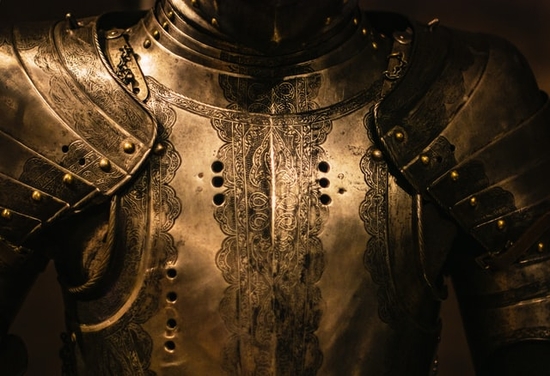
Photo by Nik Shuliahin on Unsplash
For Roman soldiers, this piece of the armor was large-scale protection during battle.
After all, it protected essential organs of a soldier, particularly the heart.
Of course, the “heart” protected by the breastplate of righteousness is not our physical heart. The heart is where we maintain our sense of self, feel emotions, and gather our sense of morality. That’s why we say it’s so important for God to “dwell in our hearts.”
In spiritual battle, the breastplate of righteousness protects our heart. Proverbs 4:23 tells us, “Keep thy heart with all diligence; for out of it are the issues of life” (NKJV).
We are not “upright” or moral without Jesus. Human beings do not have righteousness aside from what He has given us.
The breastplate of righteousness is His protection, and it never fails. We are protected from Satan’s attacks through Christ’s righteousness.
There is nothing we can do to earn righteousness. We can not be righteous without Him (Romans 3:10). When we accept Jesus as Savior, it is a gift He gives abundantly (2 Corinthians 5:21; Ephesians 2:8, 9; Philippians 3:9). And we can use this righteousness from God to protect our hearts.
Shoes of the gospel/sandals with the gospel of peace2
“And having shod your feet with the preparation of the gospel of peace” (Ephesians 6:15, NKJV).
Sandals were equipped to protect the feet of Roman soldiers. They provided comfort while marching into battle. The sandals helped soldiers “stand firm” during battle. The soles were thick. The ankle straps protected against blisters.
Believers in Jesus are called to walk as He walked (1 John 2:6). We must march where He leads. Jesus said, “My sheep hear My voice, and I know them, and they follow Me” (John 10:27, NKJV).
Believers are called to follow Him and also must stand firm when needed. That firm standing comes from understanding the gospel. With that understanding, the rest can fall into place.
Shield of faith
“Above all, taking the shield of faith with which you will be able to quench all the fiery darts of the wicked one” (Ephesians 6:16, NKJV).
The Roman soldier’s shield, or scutum, was a complex piece of the armor. It was made of solid wood, leather, and metal. It provided a hefty barrier. Then the shields were covered with animal skin soaked with water.
With this wet skin, fiery darts could be smothered on impact.
What does this have to do with a believer? What are the “fiery darts” against the shield of faith?
Faith is our shield in a spiritual war. Faith in Jesus gives us His protection.
Jesus said, “He who believes in Me, as the Scripture has said, out of his heart will flow rivers of living water” (John 7:38, NKJV).
The shield of faith needs to be dipped in the living water of His word.
To the woman at the well, Jesus said, “whoever drinks of the water that I shall give him will never thirst. But the water that I shall give him will become in him a fountain of water springing up into everlasting life” (John 4:14, NKJV).
We are told that “in the beginning was the Word, and the Word was with God, and the Word was God” (John 1:1, NKJV).
What exactly is this faith which we are called to hold like a shield? “Now faith is the substance of things hoped for, the evidence of things not seen” (Hebrews 11:1, NKJV).
We do not see God, but we have evidence of His love and works. We did not witness Jesus’ life and sacrifice, but we have testimony of it in the Word—the Bible.
And we can place our faith in God because the truth is in the Word.
Helmet of salvation
“And take the helmet of salvation…” (Ephesians 6:17, NKJV).

While each piece of armor is crucial, the helmet protects the head. The helmet of a Roman soldier shielded the entire head, face, and eyes.
In battle, these could be the most vulnerable parts of the body. The helmet of salvation is perhaps one of the most critical pieces of the armor for a believer.
The head is considered the source of knowledge, and we are called to know the salvation Jesus offers.
We are granted salvation when we believe and trust in Jesus’ death and resurrection for our sins (I John 1:9, NKJV).
The knowledge of this salvation gives us strength to fight. “And this is the testimony: that God has given us eternal life, and this life is in His Son” (1 John 5:11-12, NKJV).
Sword of the Spirit
“And the sword of the Spirit, which is the word of God” (Ephesians 6:17, NKJV).
The sword can be used for fighting or protection.
The word of God is the sword of the believer. The word gives us faith to use it defensively, when we’re being attacked with lies, or to use it proactively, by letting the word of God be evident in how we live our lives.
How did Christ battle Satan when tempted? He used Scripture with each response (Luke 4: 1-13).
God’s word is called “living and powerful, and sharper than any two-edged sword, piercing even to the division of soul and spirit, and of joints and marrow, and is a discerner of the thoughts and intents of the heart” (Hebrews 4:12, NKJV).
The more time we spend reading God’s word, the more we will understand. The more we understand God’s word, the more we can apply it to our daily lives.
Prayer
“Praying always with all prayer and supplication in the Spirit, being watchful to this end with all perseverance and supplication for all the saints” (Ephesians 6:18, NKJV).
Cloaked in the armor of God, prayer is what powers everything. It’s our connection to God.
Prayer allows us communication with God, and to be consciously relying on Him to guide us and strengthen us.
We are advised to, “be anxious for nothing, but in everything by prayer and supplication, with thanksgiving, let your requests be made known to God; and the peace of God, which surpasses all understanding, will guard your hearts and minds through Christ Jesus” (Philippians 4:6-7, NKJV).
So even if prayer isn’t a piece of the armor, it’s still part of the whole outfit.
What does the idea of God’s armor mean for us today?

How does one “put on” the armor of God?
Fortunately, this doesn’t require heavy lifting. Wearing this armor starts in the simplest of ways: believing. When we accept Jesus’ sacrifice, we have begun our journey with Him. We live as a new creation, born-again, pursuing righteousness.
And even if we’re still learning how everything works, the armor of God is something God will freely give. Our part is to acknowledge that He is the source of our strength, and in Him is where we find growth.
In a way, we can polish and reinforce our spiritual armor when we read and study Scripture. And every time we pray, watch for God’s small blessings in life, and look at the world through the lens of the Bible, our armor’s effectiveness only increases.
This doesn’t mean we are to live life as if it’s a war. Paul wasn’t calling all humans to become like drill sergeants or berserker warriors when it comes to living Christian lives.
It’s true the enemy is real, and sin is a struggle for every human being. But we’re given the armor, not weapons, to deal with these spiritual attacks.
We can also find comfort in knowing that the armor of God is the only armor we need when it comes to this great controversy against good and evil. We don’t need to make our own. God will “supply all your needs according to His riches in glory in Christ Jesus” (Philippians 4:19, CSB).
His truth tells us what we need to know. His righteousness protects our hearts, and His salvation gives us life with Him. He’s given us support to stand and go where He leads. Faith in Him shields us from deception, and the Holy Spirit fights for us and parries surprise attacks.
Want to learn more about the concepts with the Armor of God?
- Editor in Chief, “The 7 Pieces of the Armor of God and How to Use Them,” https://connectusfund.org/7-pieces-of-the-armor-of-god, 2 December, 2019. [↵]
- Bibleinfo.com, “Armor of God: What is it?,” https://www.bibleinfo.com/en/questions/armor-of-god, last accessed 13 December, 2021. [↵]
More Answers
Quem Foram os Juízes de Israel no Antigo Testamento?
Quem Foram os Juízes de Israel no Antigo Testamento?Tempos de crise exigem homens e mulheres de ação. Os israelitas, recém-estabelecidos na Terra Prometida, encontraram-se nesses tempos. À medida que nações inimigas atacavam e oprimiam as tribos, eles clamavam a Deus...

¿En qué se diferencian los Adventistas del Séptimo Día de otros protestantes?
¿En qué se diferencian los Adventistas del Séptimo Día de otros protestantes?Como denominación cristiana protestante, la Iglesia Adventista del Séptimo Día considera la Biblia como la regla suprema de fe y a Jesucristo como el único camino a la salvación. Tenemos...
Como os Adventistas do Sétimo Dia São Diferentes de Outros Protestantes?
Como os Adventistas do Sétimo Dia São Diferentes de Outros Protestantes?Como uma denominação cristã protestante, a Igreja Adventista do Sétimo Dia considera a Bíblia como o guia supremo e vê Jesus Cristo como o único caminho para a salvação. Temos algumas diferenças...

O que é ASI (Associação de Empresários e Profissionais Adventistas)?
O que é ASI (Associação de Empresários e Profissionais Adventistas)?ASI, que significa Associação de Empresários e Profissionais Adventistas (tradução adaptada), é uma organização baseada em associação que oferece apoio aos membros adventistas (profissionais...
Jesús y la Mujer en el Pozo: Derribando Barreras
El encuentro de Jesús con la mujer en el pozo revela su sentir por las personas heridas y su deseo de derribar prejuicios. Esta página analiza cómo Jesús se acercó a ella.

Revealing The True Meaning of The Parable of The Rich Man & Lazarus
Learn the real point behind one of Jesus’ most vivid parables.
O que são as Bem-Aventuranças (E o que significam)?
O que são as Bem-Aventuranças (E o que significam)?As Bem-Aventuranças, encontradas no início do Sermão da Montanha de Jesus no Evangelho de Mateus, são o manifesto do reino de Jesus. Elas descrevem a maneira como Seu reino funciona e o que significa ser um de Seus...

Líderes de la iglesia: ¿Cuál es el rol de un pastor Adventista?
Líderes de la iglesia: ¿Cuál es el rol de un pastor Adventista?¿Cuál es el rol de un pastor en la iglesia Adventista? La posición en sí misma, al menos en lo que respecta a una congregación local, no es muy diferente de la de los pastores en otras denominaciones...
ASI ni Nini (Huduma na Viwanda vya Waadventista vya Kibinafsi)?
ASI ni Nini (Huduma na Viwanda vya Waadventista vya Kibinafsi)?ASI, ambayo inayofupisha maneno (Huduma na Viwanda vya Waadventista vya Kibinafsi), ni shirika la uanachama linalotoa msaada kwa wainjilisti wa Kiadventista (wataalamu wa Kanisa la Waadventista wa Sabato...

Ellen White Alisema Nini Kuhusu Unabii wa Nyakati za Mwisho?
Tunaweza kusoma katika Maandiko kuhusu mfululizo wa matukio na dalili zinazoongoza hadi Ujio wa Pili wa Yesu Kristo.

Safari na Utume wa Ellen G. White Ulimwenguni
Safari na Utume wa Ellen G. White UlimwenguniIngawa Ellen White, mwanzilishi mwenza wa Kanisa la Waadventista wa Sabato, anajulikana zaidi kwa huduma yake nchini Marekani, pia alisafiri kwenda nchi nyingine kumi na mbili katika maisha yake—hili lilikuwa jambo kubwa...

Yote Kuhusu Wainjilisti wa Vitabu wa Kiadventista
Kanisa la Waadventista wa Sabato hutumia mbinu mbalimbali kusambaza tumaini la injili duniani.
¿Qué es ASI (Servicios e Industrias de Laicos Adventistas)?
¿Qué es ASI (Servicios e Industrias de Laicos Adventistas)?ASI, que significa Servicios e Industrias de Laicos Adventistas, es una organización basada en membresía que brinda apoyo a los laicos adventistas (profesionales Adventistas del Séptimo Día que no son...
¿Qué dijo Elena G. de White sobre la profecía de los últimos tiempos?
¿Qué dijo Elena G. de White sobre la profecía de los últimos tiempos?Podemos leer en las Escrituras acerca de la serie de eventos y señales que conducen a la segunda venida de Jesucristo. Y suena bastante intenso, por decir lo menos. La naturaleza simbólica del...
O que Ellen White disse sobre a profecia dos tempos finais?
O que Ellen White disse sobre a profecia dos tempos finais?Podemos ler nas Escrituras sobre a série de eventos e sinais que antecedem a segunda vinda de Jesus Cristo. E, para dizer o mínimo, isso soa bastante intenso. A natureza simbólica da linguagem da profecia...

Meaning of the Parable of the Two Sons in Matthew 21
Meaning of the Parable of the Two Sons in Matthew 21The parable of the two sons in Matthew 21:28-32 is about a father who instructs his sons to work in the family vineyard. The first son refuses to work but later has a change of heart and obeys. The second son says...
Viagens e Missão Mundial de Ellen G. White
Viagens e Missão Mundial de Ellen G. WhiteEmbora Ellen White, cofundadora da Igreja Adventista do Sétimo Dia, seja mais conhecida por seu ministério nos Estados Unidos, ela também viajou para outros doze países durante sua vida — uma grande conquista no século XIX,...
Joseph Bates na Nafasi Yake katika Kanisa la Waadventista
Joseph Bates na Nafasi Yake katika Kanisa la WaadventistaJoseph Bates alikuwa baharia aliyegeuka kuwa mhubiri ambaye alijiunga na Harakati ya Miller na kusubiri Ujio wa Pili wa Yesu kutokea mwaka 1844. Licha ya kukatishwa tamaa wakati hili halikutokea, Bates...

Je, Wasabato Husherehekea Sikukuu?
Je, Wasabato Husherehekea Sikukuu?Je unajiuliza ikiwa mwanafunzi mwenzako au mfanyakazi mwenzako Mwadventista husherehekea sikukuu kama wewe? Labda ungependa kumshirikisha kwenye sherehe fulani, lakini pia unataka kuheshimu imani yake. Kwa hiyo, huna uhakika wa jinsi...

O Que a Bíblia Diz Sobre a Segunda Vinda de Jesus Cristo
Curioso para saber o que a Bíblia diz sobre a Segunda Vinda de Jesus Cristo? Vamos abordar os versículos-chave e o que eles significam.

Waadventista Wanaamini Nini Kuhusu Imani na Matendo?
Waadventista Wanaamini Nini Kuhusu Imani na Matendo?Waadventista wanaamini tunaokolewa kwa imani, ambayo ni imani na tumaini tulilonalo kwa Yesu Kristo kutuokoa kutoka dhambini. Yesu, basi, anatupa uwezo wa kuishi kwa utii wa amri za Mungu na kuwahudumia wengine kwa...
Todo sobre los colportores Adventistas del Séptimo Día
Todo sobre los colportores Adventistas del Séptimo DíaLa Iglesia Adventista del Séptimo Día utiliza una variedad de métodos para difundir la esperanza del evangelio al mundo. Una de estas formas es a través del colportaje, también llamado “venta puerta a puerta” o...
Tudo Sobre Colportores Adventistas do Sétimo Dia
A Igreja Adventista do Sétimo Dia usa uma variedade de métodos para espalhar a esperança do evangelho ao mundo.
Los viajes y la misión mundial de Elena G. de White
Los viajes y la misión mundial de Elena G. de WhiteAunque Elena G. de White, cofundadora de la Iglesia Adventista del Séptimo Día, es más conocida por su ministerio en los Estados Unidos, también viajó a otros doce países durante su vida, un gran logro en el siglo XIX...

Mikutano ya Injili ya Waadventista ni Nini?
Kanisa la Waadventista wa Sabato linaweka mkazo mkubwa katika kushiriki injili kupitia uinjilisti, yaani kushiriki injili kupitia mahubiri, mafundisho, na ushuhuda.
Joseph Bates y su papel en la Iglesia Adventista del Séptimo Día
Joseph Bates y su papel en la Iglesia Adventista del Séptimo DíaJoseph Bates fue un marinero que se convirtió en predicador, se unió al Movimiento Millerita y esperó que ocurriera la Segunda Venida de Jesús en 1844. A pesar de sentirse decepcionado cuando esto no...
Joseph Bates e Seu Papel na Igreja Adventista do Sétimo Dia
Joseph Bates foi um marinheiro que se tornou pregador, juntou-se ao Movimento Millerita e esperou pela Segunda Vinda de Jesus em 1844.
¿Los Adventistas del Séptimo Día celebran las fiestas?
¿Los Adventistas del Séptimo Día celebran las fiestas?¿Te preguntas si tu compañero de clase o de trabajo adventista celebra las mismas fiestas que tú? Tal vez quieres incluirlo en algunas festividades, pero también deseas respetar sus creencias. Entonces, no estás...
Os Adventistas do Sétimo Dia Celebram Feriados?
Está se perguntando se seu colega de classe ou de trabalho adventista celebra os mesmos feriados que você?
Didn’t find your answer? Ask us!
We understand your concern of having questions but not knowing who to ask—we’ve felt it ourselves. When you’re ready to learn more about Adventists, send us a question! We know a thing or two about Adventists.