
Sometimes, life is just plain hard. There’s no way around it. So would thinking about things differently really change anything?
Our perspective on life, and everything it throws at us, affects more than we’re even aware of.
Think of perspective as the windshield through which you view life. If it’s dirty or damaged, it’ll distort your perception. And if we get so used to driving with a dirty windshield, we might forget what it looked like when it was clean.
Changing your point of view is essential to facing challenges and getting through hard times. It makes you a more resilient person as you realize that you’re not facing everything alone—God is “with you wherever you go” (Joshua 1:9, NKJV).
So let’s learn what we can do to establish a healthy perspective:
- Why your mindsets matter
- How to change your perspective
- 5 mindsets for a positive perspective
- Habits to support your enriched perspective
And before we can even consider shifting our outlook on life, it helps to have a reason for doing so. Let’s be clear on why we’re focusing on the way we see our world.
Why is it important to change your perspective on life?

Changing your point of view helps you handle the curveballs life throws at you.
It all boils down to your mind, and its power over your body’s ability to handle stress.
Adam Aréchiga, a doctor of psychology at Loma Linda University, discusses this connection. He points out that stress is about “personal perception.” What one person views as stressful may not be stressful to someone else. We all see things from a different angle.
Dr. Aréchiga teaches that managing stress requires changing how we think about something and learning to accept what we can’t change.1
And he’s not alone in his views.
A Stanford report called “Your Powerful, Changeable Mindset” shows that the way we view stress impacts whether the stress affects our health in negative ways.
It quotes Dr. Jacob Towery, a clinical instructor in Stanford’s department of psychiatry: “The exciting news about mindsets is that they are absolutely changeable.”2
So let’s figure out how we can do just that.
How do you change your perspective?
Changing perspective involves changing the way we process situations and life in general. It consists of the power of choice, because no one else can do it for you.
However, that doesn’t mean you have to do it all on your own. There is divine help from God, and His Holy Spirit, working through His Word—the Bible. We can use the principles of Scripture to guide our mindsets.
So what does that look like?
We can’t control the negative thoughts that come into our minds. But through the agency God gives us, we can choose whether to allow those negative thoughts to stick around.
If we decide that we don’t want a thought, we can counter that thought and replace it with a truthful thought—like a passage from Scripture—instead.
This process is called “reframing.”
As we reframe our thoughts in light of God’s Word, we are creating new neural pathways in our brains that grow stronger as we repeat those thoughts over and over again. New habits of thinking develop.
For example, let’s think about a situation we all associate with sadness and difficulty.
Let’s say you’re facing cancer and having to deal with the severe effects of chemo. You may have the underlying belief that you don’t deserve good things in life. Thus, for you, the cancer diagnosis is another confirmation of this self-talk.
The result?
Your outlook on life is bleak. You feel depressed and discouraged with little motivation to live.
(And…you might not even be fully aware of the fact that you think this way. But it’s become an underlying framework of your mindset.)
Enter Scripture. God’s Word reorients us and helps us accurately view reality—even when going through a difficult situation like cancer treatment.
That’s why we’ll explore five mindsets in Scripture that can change our outlook.
What are 5 mindsets for a positive perspective?
The Bible offers five key mindsets that will help us see the bigger picture of life when faced with challenging things. For each of the following, we’ll look at Bible verses that can help us reframe with positive thoughts for a new perspective. You can use these passages as affirmations.
1. Contentment

Photo by Nikola Johnny Mirkovic on Unsplash
One of the biggest causes of worry is discontentment. It’s like a nagging feeling that something’s missing. We still need something…even if we’re not sure exactly what.
We often feel discontent when we tell ourselves we’re missing out on something. And so, we keep reaching out for more because we’re dissatisfied with our current situation.
Paul tells us that “godliness with contentment is great gain. For we brought nothing into this world and it is certain we can carry nothing out” (1 Timothy 6:6–7, NKJV).
So, he advises us to be content—to count ourselves blessed if we have food and clothing.
And he gives us his own example when he says:
“I have learned to be content in whatever circumstances I find myself. I know how to make do with little, and I know how to make do with a lot” (Philippians 4:11–12, CSB).
Another cause of discontentment is comparing ourselves with others.
We run into so much stress trying to be like so-and-so, trying to measure up to societal expectations, and beating ourselves up if we don’t.
Again, the Bible tells us that this kind of comparison is unwise and unhelpful (2 Corinthians 10:12).
Being content with ourselves and our current circumstances frees us from the anxiety of trying to be someone else or do or get more.
Then we can relax and enjoy the present. We can pause to appreciate the blessings that today brings. And we might just realize that our situation is not as bad as we thought it was!
Note: Contentment is not the same as complacency. It’s not a feeling that you don’t need to improve your situation.
Instead, you realize where you are in your journey, appreciate how far you’ve come, and continue striving for more.
But remember that every step of that journey is precious and has its lessons. And that includes the step you are currently in.
2. Gratitude
Gratitude is an attitude of thankfulness.
It’s seeing the blessings in your situation and the gift in the people—family members and friends—who surround you in your journey. It’s an outward focus that leads us to bless and help others.
And most of all, it’s appreciating the privilege of being in God’s special care. We thank Him for providing for us, protecting us, and loving us.
Even when things are hard, we can still trust that He’s in charge and that we’ll understand His larger plans in time.
Paul advises us to be thankful when faced with anxiety:
“Be anxious for nothing, but in everything by prayer and supplication, with thanksgiving, let your requests be made known to God. And the peace of God, which surpasses all understanding, will guard your hearts and minds through Christ Jesus” (Philippians 4:6–7, NKJV, emphasis added).
So, whenever you start worrying about the future, block out even just five minutes to do nothing else but intentionally think about the good things you can be grateful for. Think of God’s blessings in your life and how He’s brought you through hard times.
Here’s an exercise that psychologist Dr. Aréchiga encourages his patients to do. He tells them to think about a positive resource in their life—a person, place, thing, or activity that gives them great happiness. Then, he asks them to visualize that resource with as many sensory details as possible.
Visualizing the pleasant details intensifies it in our memories and makes it easier to fortify positive associations. It also allows the nervous system to reset and move out of a stressful state.
This can actually be quite empowering: Each time you consider how grateful you are for someone or something in your life, you’re increasing your capacity to handle hard things.
3. Humility
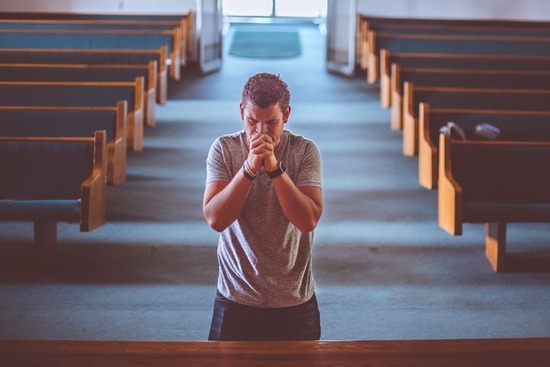
Humility is having a modest view of yourself. It’s knowing you’re not more important than others and at the same time not any less important. In relation to God, it means you submit to His wisdom—trusting Him and allowing Him to direct your life.
(Note: Humility does not equal self-loathing or self-deprecation. True humility still acknowledges your inherent value as a human being.)
The opposite of humility is pride, or having an inflated ego and thinking of yourself as better or more important than others—what is often described as someone being “full of themselves.”
But oddly enough, pride is a notorious cause of worry.
It often stems from low self-esteem and leads to conflict with others because proud people feel the need to prove themselves.
Yet the Bible makes it clear that pride will lead to our downfall (Proverbs 11:2; 16:8)—resulting in what we fear most.
But for the humble, the Bible promises a better future (James 4:6).
Solomon, the wisest man who ever lived, observed the outcomes of both proud and humble people and concluded, “A person’s pride will bring him low, but a humble spirit will obtain honor” (Proverbs 29:23, NASB).
And Jesus is so willing to teach us to be humble.
All we need to do is go to Him. He welcomes us by saying, “Come…and learn from Me, because I am lowly and humble in heart, and you will find rest for your souls” (Matthew 11:28–29, CSB).
4. Courage
Courage is the quality of facing the unknown even when you feel fearful or uncertain of what such a step will lead to.
It’s not a blind impulse by any means. Courage often involves planning and strategy to reduce risks and mistakes.
But the courageous are willing to go through with something even if it’s outside their comfort zones.
And it’s not that the courageous don’t feel fear or stress. But as psychologist Kelly McGonigal points out, they choose to see that stress as helpful—it’s the means of propelling them forward and helping them get through the tricky situation. As a result, their bodies handle the stress better, and they don’t experience the negative effects as much.
So what are some affirmations from the Bible for having a mindset of courage?
Look at God’s words to Joshua, who was called to lead the Israelites into the Promised Land:
“Be strong and courageous. Do not be frightened, and do not be dismayed, for the Lord your God is with you wherever you go” (Joshua 1:9, ESV).
Also, think about how David encouraged his son Solomon to accomplish the daunting task of building the temple. He told him very similar words:
“Be strong and courageous and do it. Do not be afraid and do not be dismayed, for the Lord God, even my God, is with you” (1 Chronicles 28:20, ESV).
You may be in a situation where you need to make a decision or take action, but you are afraid of the outcome. Or you may even be afraid of the process itself.
God’s word for you, too, is “be strong and courageous.”
He promises to be with you every moment so you can confidently say, “I can do all things through Him who strengthens me” (Philippians 4:13, ESV).
Every time you find fear creeping in, take courage by reminding yourself that God has not given us a spirit “of fear but of power and love and self-control” (2 Timothy 1:7, ESV).
5. Hope
Photo from Unsplash
Hope is the opposite of worry. It’s the anticipation or expectation that something good will happen—sooner or later.
People with hope have what author and psychologist Carol Dweck calls a “growth mindset” rather than a “fixed mindset.” They choose to expect and work toward the best possible outcome, believing that they can develop and improve instead of staying stuck.
If you find yourself at a standstill, choose to see the silver lining in your situation.
Easier said than done, though, right?
But it has to start there. Make a decision to start looking for the good in things, and over time it will become more of a habit. You’ll imprint a new pathway in your brain.
And as you strive toward a more hope-filled perspective, you can move beyond your current situation and grow into the person you want to be. Why? Because “He who promised is faithful” (Hebrews 10:23, NKJV).
You can look ahead knowing that God is in charge of your future. He declares:
“I know the plans I have for you…plans for your well-being, not for disaster, to give you a future and a hope” (Jeremiah 29:11, CSB).
What kind of habits support a healthy perspective?
As we’ve seen, our thoughts—or self-talk—play a significant role in our perspective. But the way we live also makes a difference. Wholesome and healthy habits will support brain function even as we change our outlook.
Dr. Neil Nedley, a Seventh-day Adventist physician and founder of the Nedley Depression and Anxiety Recovery program, highlights the importance of the following factors when it comes to mental health:3
- Proper nutrition from a diet high in plant foods
- A toxin-free environment
- Regular exercise
- Sunlight exposure
- Fresh air
- Rest and recreation
- Water
- A healthy community and social connections
- Brain-boosting music
By following these lifestyle measures, our minds can function at their optimum, and we’ll be more equipped to handle the hard things that come our way. We’ll more easily be able to adopt the biblical mindsets we’ve learned about.
For more detailed steps toward a stress-free lifestyle, read our page on 12 practical ways to overcome worry and fear.
Make a positive change today
Changing your perspective on life is not easy. It involves intentionally replacing negative thoughts with the truth of Scripture. It’s about exchanging:
- Discontentment for contentment
- Self-pity for gratitude
- Pride for humility
- Fear for courage
- Worry and stagnation for hope
These new mindsets, along with healthy habits to support them, will give you a positive attitude and make you resilient in the face of challenging circumstances. Even though life won’t be perfect, it will be meaningful and fulfilling.
And the good news?
God promises to help you in this whole journey. You can head over and read those promises here!
Choose an Online Bible Study
Want to keep learning? Find out more about Jesus, humanity, the plan of salvation, and how God loves you enough to sacrifice everything, just to give you a chance to choose Him.
Sometimes it can be hard to know where to start, that’s why we offer free, user-friendly, online Bible study options you can do anytime, anywhere, and at your own pace.
This online Bible school will take you through the major themes of Scripture, breaking down the Bible’s complex concepts into bite-sized pieces, which can lead you toward the answers of life’s more challenging questions.
- Arechiga, Adam, “Beating Anxiety: Effective Ways to Combat Stress in Our Daily Lives,” Loma Linda University Health, YouTube video, May 27, 2020. [↵]
- Primeau, Mia, “Your Powerful, Changeable Mindset,” Stanford Report, Sept. 15, 2021. [↵]
- Nedley, Neil, The Lost Art of Thinking (Nedley Publishing, 2011), ch. 11–19. [↵]
More Answers
Quem Foram os Juízes de Israel no Antigo Testamento?
Quem Foram os Juízes de Israel no Antigo Testamento?Tempos de crise exigem homens e mulheres de ação. Os israelitas, recém-estabelecidos na Terra Prometida, encontraram-se nesses tempos. À medida que nações inimigas atacavam e oprimiam as tribos, eles clamavam a Deus...

¿En qué se diferencian los Adventistas del Séptimo Día de otros protestantes?
¿En qué se diferencian los Adventistas del Séptimo Día de otros protestantes?Como denominación cristiana protestante, la Iglesia Adventista del Séptimo Día considera la Biblia como la regla suprema de fe y a Jesucristo como el único camino a la salvación. Tenemos...
Como os Adventistas do Sétimo Dia São Diferentes de Outros Protestantes?
Como os Adventistas do Sétimo Dia São Diferentes de Outros Protestantes?Como uma denominação cristã protestante, a Igreja Adventista do Sétimo Dia considera a Bíblia como o guia supremo e vê Jesus Cristo como o único caminho para a salvação. Temos algumas diferenças...

O que é ASI (Associação de Empresários e Profissionais Adventistas)?
O que é ASI (Associação de Empresários e Profissionais Adventistas)?ASI, que significa Associação de Empresários e Profissionais Adventistas (tradução adaptada), é uma organização baseada em associação que oferece apoio aos membros adventistas (profissionais...
Jesús y la Mujer en el Pozo: Derribando Barreras
El encuentro de Jesús con la mujer en el pozo revela su sentir por las personas heridas y su deseo de derribar prejuicios. Esta página analiza cómo Jesús se acercó a ella.

Revealing The True Meaning of The Parable of The Rich Man & Lazarus
Learn the real point behind one of Jesus’ most vivid parables.
O que são as Bem-Aventuranças (E o que significam)?
O que são as Bem-Aventuranças (E o que significam)?As Bem-Aventuranças, encontradas no início do Sermão da Montanha de Jesus no Evangelho de Mateus, são o manifesto do reino de Jesus. Elas descrevem a maneira como Seu reino funciona e o que significa ser um de Seus...

Líderes de la iglesia: ¿Cuál es el rol de un pastor Adventista?
Líderes de la iglesia: ¿Cuál es el rol de un pastor Adventista?¿Cuál es el rol de un pastor en la iglesia Adventista? La posición en sí misma, al menos en lo que respecta a una congregación local, no es muy diferente de la de los pastores en otras denominaciones...
ASI ni Nini (Huduma na Viwanda vya Waadventista vya Kibinafsi)?
ASI ni Nini (Huduma na Viwanda vya Waadventista vya Kibinafsi)?ASI, ambayo inayofupisha maneno (Huduma na Viwanda vya Waadventista vya Kibinafsi), ni shirika la uanachama linalotoa msaada kwa wainjilisti wa Kiadventista (wataalamu wa Kanisa la Waadventista wa Sabato...

Ellen White Alisema Nini Kuhusu Unabii wa Nyakati za Mwisho?
Tunaweza kusoma katika Maandiko kuhusu mfululizo wa matukio na dalili zinazoongoza hadi Ujio wa Pili wa Yesu Kristo.

Safari na Utume wa Ellen G. White Ulimwenguni
Safari na Utume wa Ellen G. White UlimwenguniIngawa Ellen White, mwanzilishi mwenza wa Kanisa la Waadventista wa Sabato, anajulikana zaidi kwa huduma yake nchini Marekani, pia alisafiri kwenda nchi nyingine kumi na mbili katika maisha yake—hili lilikuwa jambo kubwa...
Yote Kuhusu Wainjilisti wa Vitabu wa Kiadventista
Kanisa la Waadventista wa Sabato hutumia mbinu mbalimbali kusambaza tumaini la injili duniani.
¿Qué es ASI (Servicios e Industrias de Laicos Adventistas)?
¿Qué es ASI (Servicios e Industrias de Laicos Adventistas)?ASI, que significa Servicios e Industrias de Laicos Adventistas, es una organización basada en membresía que brinda apoyo a los laicos adventistas (profesionales Adventistas del Séptimo Día que no son...
¿Qué dijo Elena G. de White sobre la profecía de los últimos tiempos?
¿Qué dijo Elena G. de White sobre la profecía de los últimos tiempos?Podemos leer en las Escrituras acerca de la serie de eventos y señales que conducen a la segunda venida de Jesucristo. Y suena bastante intenso, por decir lo menos. La naturaleza simbólica del...
O que Ellen White disse sobre a profecia dos tempos finais?
O que Ellen White disse sobre a profecia dos tempos finais?Podemos ler nas Escrituras sobre a série de eventos e sinais que antecedem a segunda vinda de Jesus Cristo. E, para dizer o mínimo, isso soa bastante intenso. A natureza simbólica da linguagem da profecia...

Meaning of the Parable of the Two Sons in Matthew 21
Meaning of the Parable of the Two Sons in Matthew 21The parable of the two sons in Matthew 21:28-32 is about a father who instructs his sons to work in the family vineyard. The first son refuses to work but later has a change of heart and obeys. The second son says...
Viagens e Missão Mundial de Ellen G. White
Viagens e Missão Mundial de Ellen G. WhiteEmbora Ellen White, cofundadora da Igreja Adventista do Sétimo Dia, seja mais conhecida por seu ministério nos Estados Unidos, ela também viajou para outros doze países durante sua vida — uma grande conquista no século XIX,...
Joseph Bates na Nafasi Yake katika Kanisa la Waadventista
Joseph Bates na Nafasi Yake katika Kanisa la WaadventistaJoseph Bates alikuwa baharia aliyegeuka kuwa mhubiri ambaye alijiunga na Harakati ya Miller na kusubiri Ujio wa Pili wa Yesu kutokea mwaka 1844. Licha ya kukatishwa tamaa wakati hili halikutokea, Bates...

Je, Wasabato Husherehekea Sikukuu?
Je, Wasabato Husherehekea Sikukuu?Je unajiuliza ikiwa mwanafunzi mwenzako au mfanyakazi mwenzako Mwadventista husherehekea sikukuu kama wewe? Labda ungependa kumshirikisha kwenye sherehe fulani, lakini pia unataka kuheshimu imani yake. Kwa hiyo, huna uhakika wa jinsi...

O Que a Bíblia Diz Sobre a Segunda Vinda de Jesus Cristo
Curioso para saber o que a Bíblia diz sobre a Segunda Vinda de Jesus Cristo? Vamos abordar os versículos-chave e o que eles significam.

Waadventista Wanaamini Nini Kuhusu Imani na Matendo?
Waadventista Wanaamini Nini Kuhusu Imani na Matendo?Waadventista wanaamini tunaokolewa kwa imani, ambayo ni imani na tumaini tulilonalo kwa Yesu Kristo kutuokoa kutoka dhambini. Yesu, basi, anatupa uwezo wa kuishi kwa utii wa amri za Mungu na kuwahudumia wengine kwa...
Todo sobre los colportores Adventistas del Séptimo Día
Todo sobre los colportores Adventistas del Séptimo DíaLa Iglesia Adventista del Séptimo Día utiliza una variedad de métodos para difundir la esperanza del evangelio al mundo. Una de estas formas es a través del colportaje, también llamado “venta puerta a puerta” o...
Tudo Sobre Colportores Adventistas do Sétimo Dia
A Igreja Adventista do Sétimo Dia usa uma variedade de métodos para espalhar a esperança do evangelho ao mundo.
Los viajes y la misión mundial de Elena G. de White
Los viajes y la misión mundial de Elena G. de WhiteAunque Elena G. de White, cofundadora de la Iglesia Adventista del Séptimo Día, es más conocida por su ministerio en los Estados Unidos, también viajó a otros doce países durante su vida, un gran logro en el siglo XIX...

Mikutano ya Injili ya Waadventista ni Nini?
Kanisa la Waadventista wa Sabato linaweka mkazo mkubwa katika kushiriki injili kupitia uinjilisti, yaani kushiriki injili kupitia mahubiri, mafundisho, na ushuhuda.
Joseph Bates y su papel en la Iglesia Adventista del Séptimo Día
Joseph Bates y su papel en la Iglesia Adventista del Séptimo DíaJoseph Bates fue un marinero que se convirtió en predicador, se unió al Movimiento Millerita y esperó que ocurriera la Segunda Venida de Jesús en 1844. A pesar de sentirse decepcionado cuando esto no...
Joseph Bates e Seu Papel na Igreja Adventista do Sétimo Dia
Joseph Bates foi um marinheiro que se tornou pregador, juntou-se ao Movimento Millerita e esperou pela Segunda Vinda de Jesus em 1844.
¿Los Adventistas del Séptimo Día celebran las fiestas?
¿Los Adventistas del Séptimo Día celebran las fiestas?¿Te preguntas si tu compañero de clase o de trabajo adventista celebra las mismas fiestas que tú? Tal vez quieres incluirlo en algunas festividades, pero también deseas respetar sus creencias. Entonces, no estás...
Os Adventistas do Sétimo Dia Celebram Feriados?
Está se perguntando se seu colega de classe ou de trabalho adventista celebra os mesmos feriados que você?
Didn’t find your answer? Ask us!
We understand your concern of having questions but not knowing who to ask—we’ve felt it ourselves. When you’re ready to learn more about Adventists, send us a question! We know a thing or two about Adventists.