
What Do Adventists Believe About the Mark of the Beast and 666?
It’s a popular topic, especially during tumultuous times. When everything around you feels chaotic, it’s easy to wonder about the end of the world, and topics like the mark of the beast, as mentioned in Revelation 13, can stir up uneasiness.
And speculating about what this “mark” could be is nothing new. When credit cards and microchips first emerged, some thought the mark of the beast might be one of these new technologies that could possibly identify and categorize us.
But as mysterious as technology can be, the Bible gives us a different understanding of the mark of the beast.
The Seventh-day Adventist Church, along with many other Christians, believes that the mark of the beast is not an outward sign—or any kind of microchip or implant—but rather an indication of allegiance. It’s a spiritual designation that shows whom we have chosen to worship and be loyal to.
Those who have the mark of the beast in the last days will have chosen to follow and worship human authority over God.
Wanting to unravel this topic in the Bible? Here, we’ll cover:
- What the mark of the beast is (in contrast to God’s mark)
- What the Bible tells us about 666
- How to identify falsehoods about the mark of the beast
- Why the mark of the beast matters today
Because this is a big topic, we’ll walk you through it step by step, pointing out the pertinent Bible principles and helping you reach your own conclusions. At the end, we’ll also connect you to resources for further study.
Ready?
What is the mark of the beast?
The mark of the beast is an indicator of a person’s choice to follow the beast, which is a religious-political power that will have achieved global authority in the last days. This mark won’t be visible. Instead, it’ll be a conviction of the heart.
We find the reference to this mark in Revelation 13:16:
“He [the beast] causes all, both small and great, rich and poor, free and slave, to receive a mark on their right hand or on their foreheads” (NKJV).
Before we can understand more about the mark itself, though, we need to learn about the beast of the mark.
What is the beast of Revelation 13?
Image by James Nichols from Pixabay
In Bible prophecy, animals (referred to as “beasts”) are used to symbolize kingdoms and political powers.
This idea becomes especially clear in Daniel, a key prophetic book in the Old Testament. In Daniel 7, the prophet Daniel has a vision of numerous “beasts”:
- A lion with eagle’s wings
- A bear
- A four-headed leopard with four wings
- A “terrible” beast with horns
An angel gave Daniel the interpretations of these beasts:
“Those great beasts, which are four, are four kings [kingdoms] which arise out of the earth” (Daniel 7:17, 23, NKJV).
Revelation 13:1-2 continues with the same symbol. It mentions a beast “rising up out of the sea, having seven heads and ten horns, and on his horns ten crowns, and on his heads a blasphemous name. Now the beast which I saw was like a leopard, his feet were like the feet of a bear, and his mouth like the mouth of a lion” (NKJV).
This is the same beast that will enforce the mark of the beast (Revelation 13:17). And historically, many Bible scholars have connected it to the antichrist power mentioned in 2 Thessalonians 2:3-4.1
So what political power does it represent?
Though the Bible doesn’t give us a specific answer, it does give us many clues to help us identify it. Let’s look at those:
It comes from a densely populated area
Revelation 13:1 tells us this political power rises “up out of the sea” (NKJV). Again, Bible prophecy helps us unravel the meaning of this symbol. The sea or waters represent “peoples, multitudes, nations, and tongues” (Revelation 17:15, NKJV).
It would have worldwide rulership and authority

Photo by Markus Spiske on Unsplash
Revelation 13 describes this beast as having horns and crowns. Horns often represent power and authority (Daniel 7:24; Habakkuk 3:4). And throughout the Bible, crowns indicate rulership.
What’s more, this power would have a global influence, as indicated by the fact that “all the world marveled and followed the beast” (Revelation 13:3, NKJV).
But it would be more than just a political and secular power.
It would be a religious power
All through Revelation (but particularly chapters 13 and 14), we find an emphasis on worship—worship of the beast and worship of God. The beast is seeking worship for itself (Revelation 13:4), indicating that it’s also a religious power.
It would blaspheme God
We often think of blasphemy as speaking against God or religious things. But it can be more subtle—someone who blasphemes might seek to take the place of God or claim the prerogatives of God (John 10:33).
That’s the reason that first-century religious leaders accused Jesus of blasphemy. He had claimed to be able to forgive sins, which is something only God can do (Mark 2:7).
However, Jesus could rightly claim this because He is God. But the religious-political power in Revelation 13 claims authority that doesn’t belong to it.
It would receive its power from another political power
According to Revelation 13:2, the beast gets its “power, his throne, and great authority” from the dragon.
Who is the dragon?
To answer this question, it’s important for us to understand the term in the context of not only Revelation 13 but also the chapter before.
Revelation 12:7-9 tells us that the dragon represents Satan.
From the time that Satan deceived Eve by disguising himself as a serpent (Genesis 3:1-5), Satan has often worked through agents. In Revelation 12 and 13, we see a progression of him working through political powers.
For example, Revelation 12:4 speaks about the dragon seeking to “devour” the child, referring to Jesus who was born a human child, who would later “rule all nations” (verse 5). This reference takes us back to King Herod, a vassal of the Roman Empire, who sought to destroy Jesus soon after His birth (Matthew 2). At that time, Satan was working through the Roman Empire to try to accomplish his purposes.
Verses 5-6 and 13-16 continue the story, showing that the dragon was persecuting God’s followers (represented by a woman2) after the time of Jesus. We know that the Roman Empire persecuted faithful Christians during this time.
Thus, we can conclude that the dragon in Revelation 12—Satan working through a political power—is also in Revelation 13 giving power, a throne, and authority to the beast.
It would rule for 1,260 years
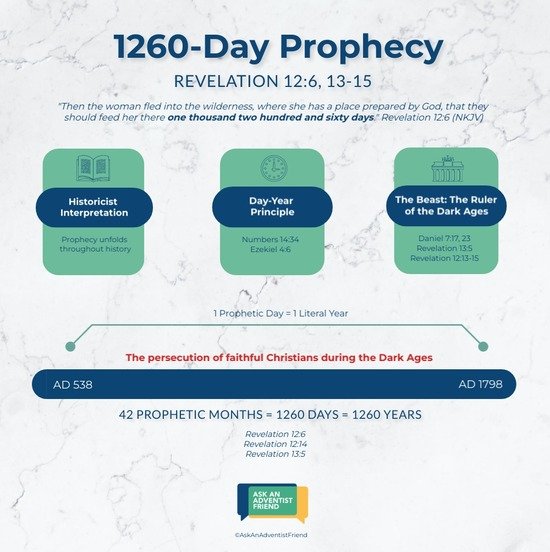
Revelation 13:5 tells us that the beast would rule for 42 months, a period equivalent to 1,260 days. In Bible prophecy, a prophetic day equals a literal year (Ezekiel 4:6; Numbers 14:34), meaning this number refers to 1,260 years.
In short:
42 prophetic months (with 30 days each per the Jewish calendar) = 1,260 prophetic days = 1,260 literal years
During this period—which occurred during the Middle Ages, a time of great persecution of Christians—the beast had great power (Revelation 12:6; 13:7).
It would lose its power for a time but then regain it
A final characteristic tells us that the beast lost its power by suffering a “deadly wound”; its 1,260-year rule ended. However, this deadly wound will be healed, and the beast will regain its power (Revelation 13:3).
Revelation 13:11-16 says that the beast will regain its power and receive the help of a second beast—another political power—to enforce the mark of the beast.
Now that we understand more about the beast, we need one more piece to the puzzle. Throughout Revelation 13 and 14 (as well as other passages), the Scriptures present the seal of God and worship of God in contrast to the mark of the beast (Revelation 7:1; 13:8). By understanding this seal, we can pick up on some clues about the mark.
What is God’s mark?
God’s mark, known as the seal of God, is an end-time sign of loyalty to worshiping Him and following His law of love.
Revelation 7:1 mentions that in the last days, angels are holding back the winds of strife on earth until God’s followers receive the seal on their foreheads.
Then, Revelation 14:1—which presents the worship of God in contrast to the worship of the beast—speaks of a group of people who have the “Father’s name written on their foreheads” (NKJV).
In the Bible, names are reflective of character. And God’s name especially tells us about His character of love, mercy, and justice (Exodus 34:5-7). This leads us to believe that this is not a literal seal or name on the forehead, but rather the character of God written in the hearts and minds of His followers.
After all, that’s what God wants to do: write His law on our hearts and minds so that it becomes part of who we are (Hebrews 8:10).
Here are some more clues. Revelation 14 shows us that the people who have this seal are those who:
- “Follow the Lamb wherever He goes” (verse 4)
- “Were redeemed” (verse 4)
- “Are without fault before the throne of God” (verse 5)
- “Keep the commandments of God and the faith of Jesus” (verse 12)
Isaiah 8:16 also speaks about God sealing His law among His disciples. This verse takes us back to Deuteronomy, where God instructed His people to “bind” the commandments of God as a sign on their hands and foreheads (Deuteronomy 11:18). But it wasn’t talking about a literal sign—in the same verse, God tells the people to “lay up these words of mine in your heart and in your soul” (NKJV).
But note, the Bible refers to two types of seals. One is the seal of salvation. Both 2 Corinthians 1:22 and Ephesians 1:13 talk about being sealed by the Holy Spirit for salvation.
On the other hand, the seal we’re discussing is a seal of the last days. Here’s how Adventist theologian Jiří Moskala, ThD, distinguishes the two:
“The first is a seal of salvation, declaring that a person is saved by Christ and is part of God’s family, with that status remaining so long as the person remains faithful to Christ. The second is a seal of protection that guards the faithful ones during the time of persecution that comes in the apocalyptic period.”3
So, if the seal of God in the last days is about loyalty to Him and His commandments, then the mark of the beast must be the opposite. Let’s explore that in the next section.
Learn about one of God’s beautiful commandments that has often been neglected.
In contrast to God’s mark, what does the mark of the beast mean?

Photo by Oliver Hae on Unsplash
Where the seal of God (God’s mark) is a sign of loyalty to God and His commandments, the mark of the beast is a sign of loyalty to the beast and its ways.
And it all comes down to worship, an emphasis we’ve seen in Revelation 13 and 14. Notice the following passages:
“So they worshiped the dragon who gave authority to the beast; and they worshiped the beast, saying, ‘Who is like the beast? Who is able to make war with him?’” (Revelation 13:4, NKJV)
“All who dwell on the earth will worship [the beast], whose names have not been written in the Book of Life of the Lamb slain from the foundation of the world” (Revelation 13:8, NKJV).
“And he [the second beast] exercises all the authority of the first beast in his presence, and causes the earth and those who dwell in it to worship the first beast, whose deadly wound was healed” (Revelation 13:12, NKJV).
“Fear God and give glory to Him…worship Him who made heaven and earth, the sea and the springs of water” (Revelation 14:7, NKJV).
“If anyone worships the beast and his image, and receives his mark on his forehead or on his hand, he himself shall also drink of the wine of the wrath of God” (Revelation 14:9-10, NKJV).
This mark, then, isn’t a physical one.
But what does it mean to receive the mark on the hand or on the forehead?
Those who receive it on the forehead have made a conscious decision based on their convictions to follow the beast rather than God’s commandments. Their hearts and minds are in it.
Pastor Anthony MacPherson, BA, points out that the mark of the beast, then, is really “anti-law.”4 It contradicts God’s law of love—which gives us principles for loving one another and loving God (Matthew 22:38-40).
The hand refers to actions (Ecclesiastes 9:10). Some also will choose to follow the beast simply out of convenience. Their conviction may not be in direct opposition to God, but their lack of conviction in that area shows that they have a stronger conviction for temporal security and comfort. They don’t want to lose economic privileges or their lives (Revelation 13:15-16).
But either way, whether out of conviction or convenience, those who receive the mark of the beast are rejecting God’s ways.
Mark Finley, former vice president of the Seventh-day Adventist General Conference and an internationally-known preacher, said it this way in an interview:
“Why is the mark of the beast in the forehead or in the hand? The reason is this. The devil doesn’t care whether he convinces you intellectually to follow the beast or whether he forces or coerces you to follow with the symbol of the hand.”5
But this is different from God who “never uses force or coercion. He only uses choice.”6 That’s why the seal of God must be on the forehead.
But even after understanding the mark of the beast more, you’re probably still wondering, what’s the deal with 666?
What does 666 mean?
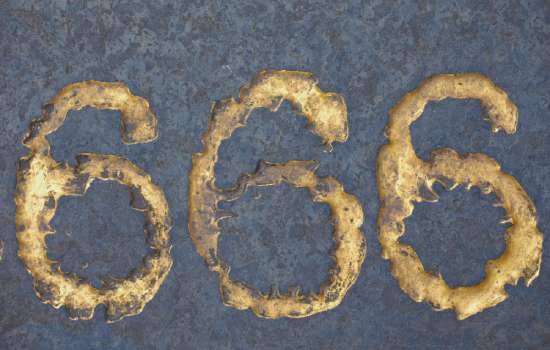
The Adventist Church has had a couple of different interpretations for 666, though the Scriptures don’t give us a clear answer, except for the following: “Let him who has understanding calculate the number of the beast, for it is the number of a man: His number is 666” (Revelation 13:18, NKJV).
Numbers are often symbolic in the Bible.
For example, 7 is the number of perfection, reflecting the seventh day of Creation on which God rested and sanctified the Sabbath. It points to His Ten Commandments, particularly the Sabbath commandment, which encourages us to remember God’s work of Creation.
The number 6, as in the verse above, “is the number of a man” (NKJV).
One possible interpretation is that 666 simply symbolizes humanity and human authority. (Humans, after all, were created on the sixth day of the week.)
It makes sense since the mark of the beast is about following human authority over God’s commandments.
But in the end, even if we don’t fully understand what 666 means—or can’t identify it at this time—the Bible writers still wrote it down for our benefit. When it does happen, we’ll recognize it.
Jesus Himself operated on this principle. When warning His disciples that one of them would betray Him, they didn’t understand. But He knew that they would once it happened:
“Now I tell you before it comes, that when it does come to pass, you may believe that I am He” (John 13:19, NKJV).
Similarly, we may not completely understand everything in Bible prophecy—such as 666—but the fulfillment will open our eyes to what it means, and it’ll deepen our trust in Jesus.
How do you identify falsehoods or misconceptions about the mark of the beast?

Photo by CardMapr.nl on Unsplash
The best way to identify and avoid falsehoods about the mark of the beast is to make God’s Word our standard. It starts with sound principles of Bible study, allowing the Bible to explain itself rather than using the news to interpret the Bible.
For example, many people over the years have speculated that the mark of the beast will be:
- The internet
- A credit card
- A microchip
- An injection
But as we’ve looked at Revelation 13 and 14, we’ve seen that the central issue in the end times won’t be any of these. Rather, it’ll be worship.
The mark of the beast will have to do with people’s choices.
Not a physical or literal thing.
What’s more, the mark of the beast isn’t something that can be forced on someone against their will. Rather, everyone will have the opportunity to make a clear decision for or against God.
It’s also not something that someone could receive mistakenly, or without any kind of knowledge of what they were choosing. The whole point is that the mark of the beast or the seal of God represents our true decision.
And when decision time comes, this pressure will eventually split humanity into two groups: those who worship the beast and those who don’t. That means the mark of the beast won’t be some kind of secret operation. It will be open to the whole world.
Thankfully, we don’t have to fear. Revelation 14 reminds us that God’s people will follow Jesus and have His faith. He will sustain them through this time of trial and bring them out on the other side.
The Bible has given us this awareness so that today, we can seek a deeper walk with Jesus and be prepared for that time.
Why does the mark of the beast matter to us today?
The mark of the beast is important to us because it’s an upcoming event in the timeline of Bible prophecy. But even more importantly, it reaches down to our very hearts and who we’ll choose to be loyal to.
Revelation 14 identifies three angels with messages of warning for the world in the end times, and the warning about the mark of the beast is the third of those messages.
The mark of the beast is also part of a greater issue in the Great Controversy between good and evil in our world. Pastor Finley says:
“The real significance of the mark of the beast in Bible prophecy is the larger context of a cosmic struggle in the universe between good and evil, and a battle over the issue of worship. The overarching theme of Revelation is Christ’s triumph over the principalities and powers of hell with a central focus on worshiping the Creator.”7
By giving us these warnings, God wants to prepare us so we won’t be caught off guard. He wants us to be aware when a religious-political power takes center stage in our world and begins to promote choices that contradict the law of God.
And even more importantly, God’s ways are all about the heart and character. That’s why we can choose today to seek Him and build the kind of character that’ll remain loyal to Him no matter the cost.
It’s not so much about focusing on the mark itself, as Pastor Finley points out:
“Your understanding of the mark of the beast should give you a passion to reach lost people with the gospel of Christ and with the prophetic, unique message of the three angels to prepare the world for our Lord’s soon return. … If my understanding of prophecy doesn’t make me a more loving, kind, compassionate Christian—then I should reevaluate my understanding.”
It’s about coming to know and love Jesus more deeply each day. And then sharing that with others.

Photo by Priscilla Du Preez 🇨🇦 on Unsplash
The heart of the matter
The mark of the beast may have been a cryptic idea to you, but we hope this page has given you a new perspective, that it’s really a matter of the heart—of choosing faithfulness to the Word of God or faithfulness to human ways.
But does it make you wonder whether you’ll make the right choice?
The Bible doesn’t warn us about the mark of the beast because we should be worried about it.
Instead, the warning is there for our awareness—so we don’t have to fear it. But more importantly, the Bible invites us to walk with Jesus Christ and choose His ways today. Then, before the Second Coming, when the worship crisis becomes a reality, it’ll only be natural for us to choose His way again.
Wanting to dig more into this topic and learn how to walk with Jesus?
Related Articles.


- Liu, Rebekah Yi, “The Background and Meaning of the Image of the Beast in Rev. 13:14, 15” (2016). Dissertations, p. 13; Metzger, Bruce, and Michael Coogan, eds. The Oxford Companion to the Bible, p. 651. [↵]
- he Bible often uses a woman to represent God’s people (Jeremiah 6:2; the book of Hosea; 2 Corinthians 11:2). [↵]
- Moskala, Jiří, “God’s Two Seals: The Seal of the Gospel and the Apocalyptic Seal,” Ministry. [↵]
- MacPherson, Anthony, “When ‘the Mark of the Beast’ Was a Biochip!” Ministry. [↵]
- Finley, Mark, “The Mark of the Beast,” Adventist Review. [↵]
- Ibid. [↵]
- Ibid. [↵]
More Answers

The Barren Fig Tree Parable: What It Means to Bear Fruit
Find out what the Parable of the Barren Fig Tree really means.

¿Qué son las reuniones evangelísticas adventistas?
¿Qué son las reuniones evangelísticas adventistas?La Iglesia Adventista del Séptimo Día pone un gran énfasis en compartir el evangelio mediante la evangelización, o compartir el evangelio a través de la predicación, la enseñanza y el testimonio. Una de las formas en...
O que são os Encontros Evangelísticos Adventistas?
O que são os Encontros Evangelísticos Adventistas?A Igreja Adventista do Sétimo Dia dá grande ênfase ao compartilhamento do evangelho por meio da evangelização, ou seja, compartilhar o evangelho através da pregação, ensino e testemunho. Uma das formas de realizarmos...

O Que os Adventistas Acreditam Sobre Fé e Obras?
O Que os Adventistas Acreditam Sobre Fé e Obras?Os adventistas acreditam que somos salvos pela fé, que é a crença e confiança que temos em Jesus Cristo para nos salvar dos nossos pecados. Jesus, então, nos capacita a viver em harmonia com os mandamentos de Deus e a...
¿Qué creen los Adventistas sobre la fe y las obras?
¿Qué creen los Adventistas sobre la fe y las obras?Los adventistas creen que somos salvos por la fe, que es la creencia y confianza que tenemos en Jesucristo para salvarnos de nuestros pecados. Jesús, entonces, nos capacita para vivir en armonía con los mandamientos...
Je, Ninahitaji Kuwa Mwadventista Ili Niokolewe
Je, Ninahitaji Kuwa Mwadventista Ili Niokolewe?Jibu la swali hili ni rahisi, “hapana.” Linapokuja swala la wokovu katika Yesu Kristo, kinachohitajika kwa mtu ni kukiri dhabihu ya Yesu kwa ajili yetu, kuamini kwamba Ametuokoa, na kudai zawadi ya bure ya wokovu ambayo...
¿Necesito ser adventista para ser salvo?
¿Necesito ser adventista para ser salvo?La respuesta a esta pregunta es simplemente, “no.” Cuando se trata de la salvación en Jesucristo, todo lo que se requiere de una persona es reconocer el sacrificio de Jesús por nosotros, creer que Él nos ha salvado y reclamar el...
Preciso ser Adventista para ser salvo?
A resposta para essa pergunta é simplesmente: “não.”

Lo que la Biblia dice sobre la Segunda Venida de Jesucristo
¿Tienes curiosidad sobre lo que la Biblia dice acerca de la Segunda Venida de Jesucristo? Cubriremos los versículos clave y su significado.

¿Quién fue Mateo, el apóstol, en la Biblia?
En el primer libro del Nuevo Testamento, encontramos la historia del Evangelio desde la perspectiva de Mateo.
2 Corinthians: An Overview of Paul’s Most Personal Letter
Discover Paul’s lessons on forgiveness, reconciliation, generosity, and more. It’s all in the book of 2 Corinthians!
Quem Foi Mateus, o Apóstolo, na Bíblia?
Quem Foi Mateus, o Apóstolo, na Bíblia?No primeiro livro do Novo Testamento, encontramos a história do Evangelho sob a perspectiva de Mateus. Ele era um coletor de impostos judeu de Cafarnaum, no primeiro século d.C., e provavelmente era desprezado pelos outros judeus...

The Pharisee and the Tax Collector Parable: Its Meaning Made Simple
The Meaning of the Pharisee and the Tax Collector ParableIn Luke 18:9-14, Jesus told a parable about two men who went to the temple to pray. One was a Pharisee and the other a tax collector. The Pharisee prayed (well, bragged) about his own good works compared to the...
Biblia Inasema Nini Kuhusu Ujio wa Pili wa Yesu Kristo
Unajuliza Biblia inasema nini kuhusu Kurudi kwa Yesu Kristo Mara ya Pili? Tutajadili aya kuu na maana zake.

The Story of the Widow’s Mite—What It Really Means
The Story of the Widow’s Mite—What It Really MeansPeople often assume bigger is better, but the Bible turns this concept on its head with the story of the Widow’s Mite. Of all the donations Jesus sees at the temple, the gift that draws His attention is not the...

Consejo de Elena G. de White sobre la Educación Universitaria
Consejo de Elena G. de White sobre la Educación UniversitariaElena G. de White, una cofundadora importante del Adventismo, es conocida a menudo por su orientación práctica y espiritual para la educación infantil adecuada. Pero también estuvo significativamente...
Mathayo Alikuwa Nani Katika Biblia?
Mathayo Alikuwa Nani Katika Biblia?Katika kitabu cha kwanza cha Agano Jipya, tunapata simulizi la Injili kutoka kwa Mathayo. Alikuwa mtoza ushuru Myahudi kutoka Kapernaumu katika karne ya kwanza MK, na huenda alichukiwa na Wayahudi wenzake kwa kuchagua kazi hiyo....

¿Cuáles son los beneficios de vivir en el campo?
¿Cuáles son los beneficios de vivir en el campo?Visitar el campo puede ofrecer un descanso muy necesario del típico ajetreo y bullicio de la ciudad. Muchos incluso han decidido mudarse a zonas rurales para disfrutar de un ritmo más lento, espacios amplios, aire...
Quais São os Benefícios de Viver no Campo?
Visitar o campo pode oferecer uma pausa muito necessária do típico agito da cidade.

¿Qué significa la parábola de la perla de gran precio?
Esto es lo que Jesús enseñó sobre el reino de los cielos a través de esta breve parábola sobre un comerciante que encuentra una perla invaluable.
O Que Significa a Parábola da Pérola de Grande Valor?
Aqui está o que Jesus ensinou sobre o reino dos céus por meio desta parábola curta sobre um comerciante que encontra uma pérola inestimável.

Por Que Muitos Adventistas Querem Viver no Campo
Por Que Muitos Adventistas Querem Viver no CampoViver em áreas rurais é algo que os adventistas têm valorizado historicamente, embora as necessidades da vida moderna nem sempre tenham tornado isso possível. Convenhamos, as vantagens da vida na cidade são bastante...
Uma Visão Geral de Romanos: Fé, Justiça, Relacionamentos
Uma Visão Geral de Romanos: Fé, Justiça, RelacionamentosO livro de Romanos é uma das 21 epístolas, ou cartas abertas, do Novo Testamento. E embora seja um texto bíblico antigo, ainda tem uma relevância significativa (até surpreendente) para nossas vidas hoje. O...

Jesus é o Mesmo Ser que Miguel, o Arcanjo?
Jesus é o Mesmo Ser que Miguel, o Arcanjo?Muitos cristãos têm se perguntado sobre a misteriosa identidade de Miguel, o Arcanjo. Desde os primórdios do cristianismo, muitos interpretaram Miguel como o Messias identificado com a figura do Anjo do Senhor. O reformador...
Je, Faida za Kuishi Vijijini ni Zipi?
Kutembelea maeneo ya vijijini kunaweza kutoa mapumziko yanayohitajika sana kutoka kwenye pilikapilika za kawaida za mijini.
Je, Mfano wa Lulu ya Thamani Kubwa Unamaanisha Nini?
Hivi ndivyo Yesu alivyofundisha kuhusu ufalme wa mbinguni kupitia mfano huu mfupi wa mfanyabiashara aliyepata lulu ya thamani isiyo na kifani.
Kwa Nini Waadventista Wengi Wanataka Kuishi Vijijini
Kwa Nini Waadventista Wengi Wanataka Kuishi VijijiniKuishi maeneo ya vijijini ni jambo ambalo Waadventista wamekuwa wakilithamini kihistoria, ingawa mahitaji ya maisha ya kisasa hayafanyi iwezekane kila wakati. Tukubali, faida za kuishi mjini zinaonekana wazi: fursa...
Muhtasari wa Kitabu cha Warumi: Imani, Haki, Mahusiano
Hapa kuna muhtasari na historia ya waraka mrefu zaidi wa Paulo.
Sobre o que é a Parábola do Semeador de Jesus?
A parábola do semeador é, em última análise, sobre como as pessoas responderam a Jesus Cristo e Sua mensagem do reino de Deus—o Evangelho.
Didn’t find your answer? Ask us!
We understand your concern of having questions but not knowing who to ask—we’ve felt it ourselves. When you’re ready to learn more about Adventists, send us a question! We know a thing or two about Adventists.