
Ellen White was a co-founder and leader in the Seventh-day Adventist Church from its beginning. Adventists believe that she had the prophetic gift (Ephesians 4:14; 1 Corinthians 12:28) and passes the biblical tests of a prophet.
But do we worship her?
No. God alone is worthy of our worship, and while human beings can be used by God to accomplish extraordinary things, nothing can elevate one person’s value, holiness, goodness, or worthiness over another.
However, for those looking in, the idea of a modern-day prophet can be concerning and trigger such questions. We get it, and that’s why we’ll answer the following:
How does the Adventist Church view Ellen White?
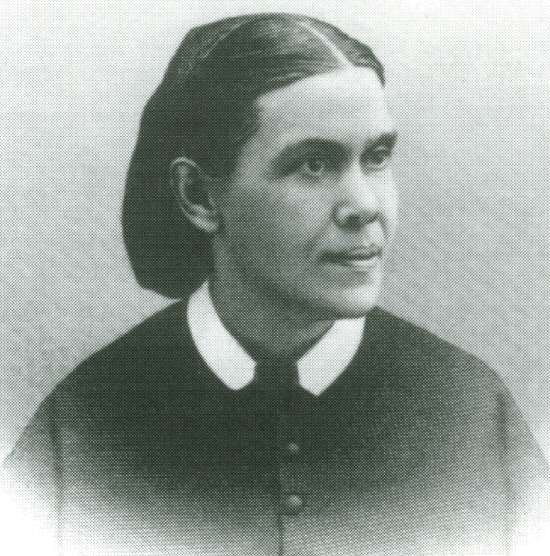 The Adventist Church acknowledges that Ellen White demonstrated the prophetic gift throughout the majority of her life—but only because her ministry harmonizes with that of biblical prophets. She passes each of the tests of a prophet we can find in the Bible:
- Consistency with the Bible (Isaiah 8:20) and its teachings about Jesus Christ (1 John 4:1–3)
- Fulfilled proclamations and predictions (Deuteronomy 18:20–21)
- Fruit of godly character (Matthew 7:16–20)
- Revelations from God, such as in visions or dreams (2 Peter 1:20–21; Numbers 12:6)
- Messages that inspire godly change (Ezekiel 13:10)
- Messages of truth without errors mixed in (2 Peter 2:1–3)
Like prophets in the Bible, prophets today and up until the end of time will encourage, instruct, unify, and protect against false teachings (Ephesians 4:12–14). In line with this, the Adventist Church states the following in its official beliefs:
“[The gift of prophecy] is an identifying mark of the remnant church and we believe it was manifested in the ministry of Ellen G. White. Her writings speak with prophetic authority and provide comfort, guidance, instruction, and correction to the church. They also make clear that the Bible is the standard by which all teaching and experience must be tested.”
It’s true—Ellen White consistently pointed to the Bible as the ultimate standard. She never wanted her teachings to take the place of deep, honest Bible study:
“God’s Word is the unerring standard…. Let all prove their positions from the Scriptures and substantiate every point of truth from the revealed Word of God.1
In addition, she made it clear that she wasn’t revealing new truths. Instead, the Holy Spirit used her messages to bring people back to truths they had neglected.2
Why would people think Adventists worship Ellen White?
Here are three likely reasons people outside Adventism might have thought we worship Ellen White:
- Unbiblical/inaccurate concepts of a prophet
- Ellen White’s involvement in the Adventist Church
- The human tendency to idolize
Unbiblical concepts of a prophet
In actuality, many people don’t understand the role of a true prophet, according to the Bible. In fact, many Protestants assume that God stopped appointing prophets when the Bible was completed. So when a Christian church acknowledges someone as a prophet, it becomes a default assumption that the church members must worship that individual.
They may also look at the way certain religions or cults have overly revered their prophets almost like they are divine themselves. And then assume that Adventists do the same.
But note:
The New Testament tells us that the spiritual gift of a prophet would continue to encourage God’s people and keep them from false teachings down to the Second Coming (Ephesians 4:11–16).
At the same time, it never permits the worship of anyone other than the one true God (Exodus 20:2–5; Matthew 4:10). This includes prophets and even angels (Revelation 19:10). And it makes it clear that His Word is the final authority (John 17:17). Nothing that contradicts God’s Word is from Him (Isaiah 8:20).
Thus, just because the Adventist Church acknowledges that a human being demonstrated the prophetic gift does not mean that its members are relating to that person in a fanatical or unbiblical way.
Ellen White’s involvement in the Adventist Church
Ellen White played an integral role in developing the Adventist Church, and providing counsel for health and lifestyle. This could also lead people to believe that we worship her.
Doctrine. Ellen White was indeed present when many of Adventism’s distinct doctrines were developed. Doctrines such as the heavenly sanctuary, the Sabbath, the state of the dead, and the Great Controversy. But the doctrines were the result of intense Bible study, not her ideas. Her visions only helped confirm what had already been studied.
Healthy lifestyle. Ellen White’s writings on lifestyle topics, such as a vegetarian diet and other health principles, have shaped the way Adventists live today. Because we are known for this lifestyle, some might mistakenly think we follow it in order to honor her.
In reality, we make healthful lifestyle decisions out of a desire to honor God in how we care for our bodies (1 Corinthians 10:31). That was the encouragement within most of her counsel on this topic to begin with.
Adventist institutions. Ellen White helped start many Adventist institutions—from healthcare to education to publishing. But just because she did so doesn’t mean that we worship her. Other church leaders, such as James White, Joseph Bates, and J. N. Andrews accomplished great things, but we don’t worship them either.
The human tendency to idolize

Photo by Pien Muller on Unsplash
Even though the Adventist Church is clear that it doesn’t worship Ellen White, sometimes individuals can give the wrong impression. This is due to the human tendency to idolize.
We can see this general principle everywhere. Look at how highly people regard celebrities, sports figures, politicians, authors, dynamic speakers, or even teachers, coworkers, parents, or friends. Admiring and respecting people is a good thing…but it’s all too easy to put other human beings on a pedestal. And often, we don’t even realize we’re doing it.
So even in religious circles, it’s common for people to go overboard and become enamored with human beings, instead of keeping their eyes fixed on God.
This can happen with individuals who love the Adventist Church and feel that its teachings have saved their lives. They may even become obsessed with Ellen White’s writings or quote her so much that it seems they’re emphasizing her more than the Bible.
But just because it’s a natural tendency doesn’t make it right. The Adventist Church and the Bible don’t support this extreme view of Ellen White.
What is the role of Ellen White’s writings in Adventism today?
We take the Bible as our authority by which everything else—including Ellen White’s writings—must be tested. Because her ministry passes the biblical tests of a prophet, we view her writings as an inspired source of counsel for us today.
Notice this statement from an Adventist General Conference session:
“We reaffirm our conviction that her writings are divinely inspired, truly Christ-centered, and Bible-based.”
“We commit ourselves to study the writings of Ellen G White prayerfully and with hearts willing to follow the counsels and instructions we find there. Whether individually, in the family, in small groups, in the classroom, or in the church…. the study of these writings is a powerful means to strengthen and prepare His people for the glorious appearing of our Lord and Savior Jesus Christ.”
We’ll look at how this statement plays out on a practical level in 5 different ways:
Personal spiritual life

Photo by Thought Catalog on Unsplash
Like the prophets in the Bible, Ellen White provides encouragement and counsel for followers of God (1 Corinthians 14:3–4; Ephesians 4:12). She saw her writings as a lesser light leading to the greater light of the Bible.3 Today, we still turn to her books to enrich our time of personal devotion.
Her Conflict of the Ages series follows the biblical narrative from Genesis to Revelation. Many Adventists read these books alongside their studies of Scripture.
Steps to Christ is also a refreshing devotional that has brought many to a closer walk with Jesus Christ.
But a few things to keep in mind:
- Read her writings for yourself instead of taking someone else’s word about them.
- Interpret them wisely. It’s always important to understand their context and then look for the underlying principles.4
- Be careful about inserting one’s own ideas into her writings or try to use them to prove a point.5
Lifestyle

Photo by Jason Briscoe on Unsplash
We appreciate and value the writings of Ellen White on healthful living. Though written over a century ago, the concepts were far ahead of the popular opinions of that time and are now being validated by science.
Concepts such as:
- The benefits of a plant-based diet
- The dangers of smoking
- The importance of exercise, fresh air, and sunshine
- The mind-body connection
Some books that we turn to for counsel are The Ministry of Healing, Counsels on Health, and Counsels on Diet and Foods.
Even so, she urged people to base their lifestyle decisions on what the Holy Spirit was convincing them to do—not because she said something. She put it this way:
“I have not had meat in my house for years. But do not give up the use of meat because Sister White does not eat it. I would not give a farthing for your health reform if that is what it is based upon. I want you to stand in your individual dignity and in your individual consecration before God, the whole being dedicated to Him.”6
Worship services
Many Adventists use Ellen White’s writings in their worship services, though there is a need for caution when doing so.
Here’s the balance.
Ellen White made it clear that sermons should be supported by Bible texts, not her writings. At the same time, she never said that her writings shouldn’t be referenced—only that the Bible needed to be the ultimate authority.
Adventist speakers are encouraged to quote her wisely, paying attention to their audience’s familiarity with Ellen White. They should never make it seem that she, instead of the Bible, is the foundation of the message.
Evangelism
When it comes to evangelism—sharing the good news about Jesus—Ellen White advised that her writings should not be used to prove our beliefs:
“In public labor do not make prominent, and quote that which Sister White has written, as authority to sustain your positions…. Bring your evidences, clear and plain, from the Word of God.”7
She did, however, intend that her books would be used to draw people to the Bible’s truths. She encouraged the distribution of the following in particular:8
- The Great Controversy, which shows the connection of Bible prophecy to history and last day events
- Patriarchs and Prophets, which follows the story of the Bible from Genesis to the time of David
- The Desire of Ages, a commentary on the life of Christ
- Christ’s Object Lessons, a study on Jesus’ parables
The Church and its institutions

Courtesy of the Ellen G. White Estate, Inc.
Courtesy of the Ellen G. White Estate, Inc. Ellen White’s writings have served as a source of counsel for many Adventist institutions and initiatives. Aside from countless manuscripts, letters, and individual articles, her books and compilations have helped guide the Church’s work in various fields.
For example, people in the healthcare field have consulted her book Medical Ministry, and educators have gleaned principles from her book Fundamentals of Christian Education.
Ellen White wanted people to worship God, not her
Though some have had a false impression that Adventists worship Ellen White, that is not the church’s official attitude or position. We worship God alone with the Bible as our foundation and authority.
Because Ellen White was a humble woman who saw herself as the Lord’s messenger, the idea of people worshiping her would have horrified her! She never boasted about being a prophet nor tried to gain attention for herself.
More than anything, she longed for her ministry to lead people to worship Jesus Christ.
Learn what Adventists believe about the gift of prophecy.
Find a Church
If you’re interested in finding a local Adventist church near you, you can use the Adventist Locator provided by the General Conference of Seventh-day Adventists.
- White, Ellen, Evangelism (Review and Herald, Washington, D.C., 1946), p. 256. [↵]
- White, Ellen, Testimonies for the Church, vol. 5 (Pacific Press, Mountain View, CA, 1882), p. 665. [↵]
- White, Ellen, Colporteur Ministry (Pacific Press, Mountain View, CA, 1953), p. 125. [↵]
- Douglass, Herbert, Messenger of the Lord (Nampa, Idaho, Pacific Press, 1998), p. 373. [↵]
- Douglass, p. 374. [↵]
- White, Ellen, Manuscript Releases, vol. 13 (EGW Estate, Silver Spring, MD, 1990), p. 202. [↵]
- White, Ellen, Selected Messages, book 3 (Review and Herald, Washington, D.C., 1980), p. 29. [↵]
- White, Ellen, Colporteur Ministry (Pacific Press, Mountain View, CA, 1953), p. 129. [↵]
Related Articles



More Answers

The Barren Fig Tree Parable: What It Means to Bear Fruit
Find out what the Parable of the Barren Fig Tree really means.

¿Qué son las reuniones evangelísticas adventistas?
¿Qué son las reuniones evangelísticas adventistas?La Iglesia Adventista del Séptimo Día pone un gran énfasis en compartir el evangelio mediante la evangelización, o compartir el evangelio a través de la predicación, la enseñanza y el testimonio. Una de las formas en...
O que são os Encontros Evangelísticos Adventistas?
O que são os Encontros Evangelísticos Adventistas?A Igreja Adventista do Sétimo Dia dá grande ênfase ao compartilhamento do evangelho por meio da evangelização, ou seja, compartilhar o evangelho através da pregação, ensino e testemunho. Uma das formas de realizarmos...

O Que os Adventistas Acreditam Sobre Fé e Obras?
O Que os Adventistas Acreditam Sobre Fé e Obras?Os adventistas acreditam que somos salvos pela fé, que é a crença e confiança que temos em Jesus Cristo para nos salvar dos nossos pecados. Jesus, então, nos capacita a viver em harmonia com os mandamentos de Deus e a...
¿Qué creen los Adventistas sobre la fe y las obras?
¿Qué creen los Adventistas sobre la fe y las obras?Los adventistas creen que somos salvos por la fe, que es la creencia y confianza que tenemos en Jesucristo para salvarnos de nuestros pecados. Jesús, entonces, nos capacita para vivir en armonía con los mandamientos...

Je, Ninahitaji Kuwa Mwadventista Ili Niokolewe
Je, Ninahitaji Kuwa Mwadventista Ili Niokolewe?Jibu la swali hili ni rahisi, “hapana.” Linapokuja swala la wokovu katika Yesu Kristo, kinachohitajika kwa mtu ni kukiri dhabihu ya Yesu kwa ajili yetu, kuamini kwamba Ametuokoa, na kudai zawadi ya bure ya wokovu ambayo...
¿Necesito ser adventista para ser salvo?
¿Necesito ser adventista para ser salvo?La respuesta a esta pregunta es simplemente, “no.” Cuando se trata de la salvación en Jesucristo, todo lo que se requiere de una persona es reconocer el sacrificio de Jesús por nosotros, creer que Él nos ha salvado y reclamar el...
Preciso ser Adventista para ser salvo?
A resposta para essa pergunta é simplesmente: “não.”

Lo que la Biblia dice sobre la Segunda Venida de Jesucristo
¿Tienes curiosidad sobre lo que la Biblia dice acerca de la Segunda Venida de Jesucristo? Cubriremos los versículos clave y su significado.

¿Quién fue Mateo, el apóstol, en la Biblia?
En el primer libro del Nuevo Testamento, encontramos la historia del Evangelio desde la perspectiva de Mateo.
2 Corinthians: An Overview of Paul’s Most Personal Letter
Discover Paul’s lessons on forgiveness, reconciliation, generosity, and more. It’s all in the book of 2 Corinthians!
Quem Foi Mateus, o Apóstolo, na Bíblia?
Quem Foi Mateus, o Apóstolo, na Bíblia?No primeiro livro do Novo Testamento, encontramos a história do Evangelho sob a perspectiva de Mateus. Ele era um coletor de impostos judeu de Cafarnaum, no primeiro século d.C., e provavelmente era desprezado pelos outros judeus...

The Pharisee and the Tax Collector Parable: Its Meaning Made Simple
The Meaning of the Pharisee and the Tax Collector ParableIn Luke 18:9-14, Jesus told a parable about two men who went to the temple to pray. One was a Pharisee and the other a tax collector. The Pharisee prayed (well, bragged) about his own good works compared to the...
Biblia Inasema Nini Kuhusu Ujio wa Pili wa Yesu Kristo
Unajuliza Biblia inasema nini kuhusu Kurudi kwa Yesu Kristo Mara ya Pili? Tutajadili aya kuu na maana zake.

The Story of the Widow’s Mite—What It Really Means
The Story of the Widow’s Mite—What It Really MeansPeople often assume bigger is better, but the Bible turns this concept on its head with the story of the Widow’s Mite. Of all the donations Jesus sees at the temple, the gift that draws His attention is not the...

Consejo de Elena G. de White sobre la Educación Universitaria
Consejo de Elena G. de White sobre la Educación UniversitariaElena G. de White, una cofundadora importante del Adventismo, es conocida a menudo por su orientación práctica y espiritual para la educación infantil adecuada. Pero también estuvo significativamente...
Mathayo Alikuwa Nani Katika Biblia?
Mathayo Alikuwa Nani Katika Biblia?Katika kitabu cha kwanza cha Agano Jipya, tunapata simulizi la Injili kutoka kwa Mathayo. Alikuwa mtoza ushuru Myahudi kutoka Kapernaumu katika karne ya kwanza MK, na huenda alichukiwa na Wayahudi wenzake kwa kuchagua kazi hiyo....

¿Cuáles son los beneficios de vivir en el campo?
¿Cuáles son los beneficios de vivir en el campo?Visitar el campo puede ofrecer un descanso muy necesario del típico ajetreo y bullicio de la ciudad. Muchos incluso han decidido mudarse a zonas rurales para disfrutar de un ritmo más lento, espacios amplios, aire...
Quais São os Benefícios de Viver no Campo?
Visitar o campo pode oferecer uma pausa muito necessária do típico agito da cidade.

¿Qué significa la parábola de la perla de gran precio?
Esto es lo que Jesús enseñó sobre el reino de los cielos a través de esta breve parábola sobre un comerciante que encuentra una perla invaluable.
O Que Significa a Parábola da Pérola de Grande Valor?
Aqui está o que Jesus ensinou sobre o reino dos céus por meio desta parábola curta sobre um comerciante que encontra uma pérola inestimável.

Por Que Muitos Adventistas Querem Viver no Campo
Por Que Muitos Adventistas Querem Viver no CampoViver em áreas rurais é algo que os adventistas têm valorizado historicamente, embora as necessidades da vida moderna nem sempre tenham tornado isso possível. Convenhamos, as vantagens da vida na cidade são bastante...
Uma Visão Geral de Romanos: Fé, Justiça, Relacionamentos
Uma Visão Geral de Romanos: Fé, Justiça, RelacionamentosO livro de Romanos é uma das 21 epístolas, ou cartas abertas, do Novo Testamento. E embora seja um texto bíblico antigo, ainda tem uma relevância significativa (até surpreendente) para nossas vidas hoje. O...

Jesus é o Mesmo Ser que Miguel, o Arcanjo?
Jesus é o Mesmo Ser que Miguel, o Arcanjo?Muitos cristãos têm se perguntado sobre a misteriosa identidade de Miguel, o Arcanjo. Desde os primórdios do cristianismo, muitos interpretaram Miguel como o Messias identificado com a figura do Anjo do Senhor. O reformador...
Je, Faida za Kuishi Vijijini ni Zipi?
Kutembelea maeneo ya vijijini kunaweza kutoa mapumziko yanayohitajika sana kutoka kwenye pilikapilika za kawaida za mijini.
Je, Mfano wa Lulu ya Thamani Kubwa Unamaanisha Nini?
Hivi ndivyo Yesu alivyofundisha kuhusu ufalme wa mbinguni kupitia mfano huu mfupi wa mfanyabiashara aliyepata lulu ya thamani isiyo na kifani.
Kwa Nini Waadventista Wengi Wanataka Kuishi Vijijini
Kwa Nini Waadventista Wengi Wanataka Kuishi VijijiniKuishi maeneo ya vijijini ni jambo ambalo Waadventista wamekuwa wakilithamini kihistoria, ingawa mahitaji ya maisha ya kisasa hayafanyi iwezekane kila wakati. Tukubali, faida za kuishi mjini zinaonekana wazi: fursa...
Muhtasari wa Kitabu cha Warumi: Imani, Haki, Mahusiano
Hapa kuna muhtasari na historia ya waraka mrefu zaidi wa Paulo.

Sobre o que é a Parábola do Semeador de Jesus?
A parábola do semeador é, em última análise, sobre como as pessoas responderam a Jesus Cristo e Sua mensagem do reino de Deus—o Evangelho.
Didn’t find your answer? Ask us!
We understand your concern of having questions but not knowing who to ask—we’ve felt it ourselves. When you’re ready to learn more about Adventists, send us a question! We know a thing or two about Adventists.