
The Great Controversy is a book written by Ellen G. White, a co-founder of the Seventh-day Adventist Church. Written in the late 1800s, the book is the last in a series and describes the connection between Bible prophecy and post-biblical history. It also discusses factors that will characterize last-day events.
To better understand what’s in this book, why it’s one of the most well-known of Ellen White’s books, and why it holds such significance among Adventists, we’ll go over:
Here are 3 details about the book that we’ll go over:
- What is the book The Great Controversy about?
- Why is the book important?
- The writing, publishing, and distribution of The Great Controversy
Let’s begin by giving you an overview of the book itself.
What is the book Great Controversy about?
The book The Great Controversy goes over almost 2000 years of history and shows how the world has been progressing against the backdrop of Bible prophecy.
 The idea of the “Great Controversy” refers to the universal clashing between God and Satan (good and evil), which has been going on since Lucifer was cast out of heaven (Revelation 12:7-9). This book shows how this controversy has played out since 70 AD, then goes into the progression of history, including setting the stage for where things will end—at the second coming of Jesus and re-creation of the earth.
It details the struggle that has existed to maintain the purity of Bible truth in the Christian church. And how different nations, movements, and individuals have acted their part, both positively and negatively to advance the plot.
It also shows the way God always caused His Truth to triumph despite great persecution and opposition against the Bible and faithful Bible believers.
- It covers different eras like the Dark Ages, and the Reformation.
- It highlights religious revivals like the First and Second Great Awakenings and the Advent Movement.
- It tells the story of God’s faithful believers who often gave up their lives for the sake of truth and freedom. Stories of people like John Huss, Martin Luther, the Waldenses, etc.
- It shows how the actions of nations, even empires and their leaders, have fulfilled Bible prophecy.
And concerning our present world and the future, The Great Controversy provides wisdom on questions that often nag at our minds:
- Why would a God of love allow sin and suffering?
- What happens when we die?
- How religious and political alliances will one day threaten our freedoms.
- How can we be prepared to play our part in this conflict between good and evil, and which snares to avoid.
- Do certain countries have a clear role in Bible prophecy?
- What could the “mark of the beast” be?
- What and/or who is the antichrist?
- How will evil be finally defeated?
Above all, this book points us to our greatest hope, Jesus Christ.
It shows that after all has been said and done, Jesus will come and make all things new. Ultimately, it’s His love, mercy, and justice that will triumph over the chaos that our world has gotten into.
A peek inside the book, The Great Controversy
The book The Great Controversy is 678 pages long, made of 42 chapters.
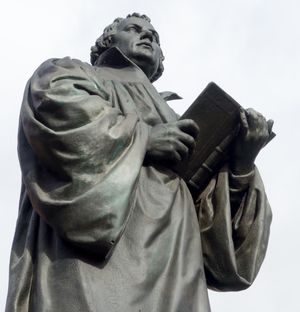
Photo by Wim van ‘t Einde on Unsplash
It also has a preface by Ellen White, which acts as the introduction. In it, she carefully describes her inspiration by the Holy Spirit as guiding her mind in presenting the information.
Here’s a brief summary of the book’s contents:
- Chapter 1 – Destruction of Jerusalem
- Chapter 2-6 – The persecutions of Christians in the Roman Empire and the apostasy of the Dark Ages
- Chapter 7-16 – The Reformation
- Chapter 17-22 – The worldwide religious awakening of the nineteenth century.
- Chapter 23-38 – A description of key Adventist beliefs (like the authority of Scripture, the heavenly sanctuary, the investigative judgment and the state of the dead) and their relevance today.
- Chapter 39-42 – End time events, the Second Coming, destruction of sin and the recreation of the earth at the end of the controversy.
Why is the book The Great Controversy important?
Adventists have found significant value in this book because it highlights significant milestones in the great controversy and the plan of salvation. It helps us in our studies of the Bible, especially with the concepts that take some time to understand.
It illuminates the past and shows how historical events fulfilled Bible prophecy. And how Bible prophecy will be fulfilled in future.
It also gives us a lens through which to view current world events in light of Bible prophecy. It shows how the controversy is playing out in this day and age, and how we can be on God’s side.
And its extra meaningful for Adventists because in the early days of the denomination, there was dedicated effort to understanding Bible prophecy. Prophecy was a topic that was seldom discussed before that time, at least for the average person who wasn’t clergy.
From their earliest beginnings, Adventists have generally maintained an inquisitive attitude toward last day events. And they have always sought to understand Bible prophecies by thorough Bible study.
So from the first time it was published, this book was warmly received by the Church since it provided a clear outline of past and future fulfilments of Bible prophecy. Also, it provided much needed guidance for dealing with difficulties in the present.
Photo by Aaron Burden on Unsplash
And above all, it explains in detail the Great Controversy theme, an important framework for studying the Bible. You get to see how each Bible passage fits in the context of the ongoing struggle between good and evil. And this backdrop has always aided correct interpretation and application of Scripture in daily Christian living.
In fact, an understanding of the Great Controversy itself (the event that gives the book its title), and how every scriptural and historical study fits in its larger context, is included as one of the fundamental beliefs of Seventh-day Adventists. It’s summarized in the official Adventist website as belief number 8, titled, The Great Controversy.
To this day, the book The Great Controversy remains helpful, relevant, and eye-opening. It provides important lessons that can help us navigate our present and be prepared for the future, while avoiding Satan’s temptations and distractions.
You also get to see how God preserved His truth through the darkest time in history. And how He raised one movement after the other to preserve the Bible through times when it was outlawed. How faithful people who loved the truth were willing to stand up for freedom and even die rather than give up the truth they loved.
Anyone can see how the Scriptures have a purifying and ennobling influence on any society or individual. And it’s hard not to acknowledge that God always stands behind His Word to defend and fulfill it, all for our ultimate benefit.
And throughout the different eras, civilizations and society’s progression, you can trace God’s love constantly at work to redeem the world from sin and deception.
But most importantly, this book points to the glorious triumph of God over Satan, of good over evil, of love over all else.
It shows that though this world has been the battlefield of this controversy, a bright future lies ahead for our planet, and for the whole universe.
We see that the second coming of Jesus could happen sooner than we might think, and it will lead to a new beginning and an end of sin (Revelation 21:4). And all we need to do to be part of this triumphant end is to accept Jesus’ free gift of salvation.
Writing and publishing of The Great Controversy
The Great Controversy was first published in 1858 by Ellen White’s husband, James White. This was followed by expansions on the content which led to two other major editions in 1884 and 1888. Then a final revision in 1911.
In this section, we’ll look at why the book was written, and the different stages of development of the book to the present version.
Why did Ellen G. White write this book?
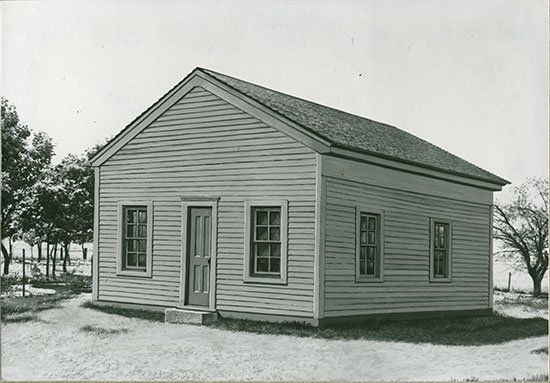
Lovetts Grove, Ohio. Schoolhouse where Ellen G. White received her “Great Controversy” vision in 1858. Artist’s conception – Courtesy of the Ellen G. White Estate, Inc.
Ellen White herself answers this question. She says she was shown that she must write it out1 in a vision she received in 1858.
But the journey of writing this book began in 1848.
Back then, she saw a vision that gave her a very broad overview of the conflict that has long raged between God and Satan. A conflict between good and evil that began in heaven before the earth was made. And which will end when sin will be forever destroyed and the earth is re-created, as depicted in the book of Revelation.
Then ten years later, while attending a funeral in Lovett’s Grove, Ohio, in March 1858, she saw another vision on the same theme.
The vision lasted two hours. She reported that most of what she‘d seen in the 1848 vision was repeated. Then more detail was given so that she had a more comprehensive understanding of those events.
That’s when she was instructed to write what she had been shown. She was also warned that while writing the book, Satan would try to hinder her, but she should still press on to do it. God’s Holy Spirit would guide her.
The next day, Ellen and James began planning on publishing these writings as they traveled back home to Battle Creek, Michigan.
As they stopped to visit a family friend at Jackson, Michigan, she became paralyzed.1
But in answer to many prayers offered for her, she recovered partially the next day and went home.
This was the first attack on her as she worked on this book.
As she began, she could write only one page per day. Then she’d become exhausted and have to rest for three days. But as she progressed, she got better. By the time she finished writing the book in mid August, she was back to normal health.
And in September, 1858, the first edition of the book was ready for distribution.2
The four major editions of The Great Controversy
After publishing the initial book on the conflict between Jesus and Satan, Ellen White continued to expand on it through the years.
By the time of her death, there were four major editions. They include:
The 1858 edition
The book was published titled: Spiritual Gifts, Vol. 1: The Great Controversy Between Christ and His Angels, and Satan and His Angels.
It was the first of a four-book series written between 1858 and 1864.
It had 219 pages that highlighted only the main points of the conflict story chronologically.
It had:
- 3 chapters on the Old Testament covering the fall of Satan, the fall of humanity, and the Plan of Salvation.
- 13 chapters on the life and ministry of Jesus and the apostles.
- 25 chapters on the great apostasy of the early Christian church, through the Reformation, the Advent Movement, to earth’s closing scenes and the end of sin.
The 1884 edition
This edition was titled, Spirit of Prophecy, Volume 4. As the name displays, it was part of a four-volume series, The Spirit of Prophecy.
The series as a whole expanded on the Great Controversy, giving more details than what was presented in the 1858 edition.
It was organized so that each volume would cover a specific time period as follows:
- Volume 1, published in 1870: The Old Testament period.
- Volume 2, published in 1877: The life and ministry of Jesus.
- Volume 3, published in 1878: The development of the early Christian church and the Acts of the Apostles.
- Volume 4, published in 1884: The history of the Christian church, beginning with the destruction of Jerusalem in 70 AD. It then transitions to the controversy going on today and onto the end times.3
It’s volume 4 that ended up being expanded to form the book known as The Great Controversy today. It covered the historical periods of the Dark Ages and the Reformation.
She read historical books like D’Aubigne’s History of the Reformation, which helped her locate and therefore describe in detail many of the events and characters she’d seen in vision.4
The book was well received. And within 3 years, 50,000 copies were sold.
The 1888 edition
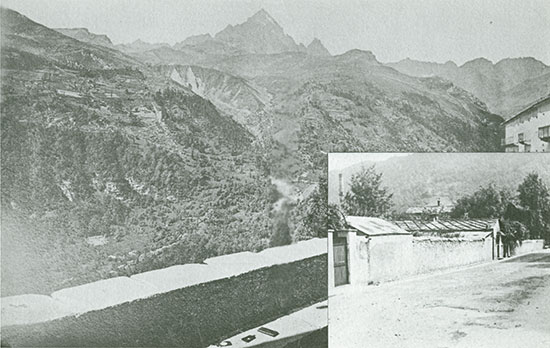
The building in Torre Pellice, Italy, where Ellen G. White spoke to the believers and friends in that place. Photo courtesy of the Ellen G. White Estate, Inc.
Ellen White visited Europe between 1885 to 1887.
From her interactions with people and visits to different historic sites, she recognized many of her surroundings to be the same as she had seen in vision. Places like Zurich, Switzerland, where Zwingli had labored, and the Waldensian valleys in Italy.
These were significant places in the conflict during the Reformation.
Then around this time, there were plans to translate Spirit of Prophecy Volume 4 (Also titled: The Great Controversy Between Christ and His Angels and Satan and His Angels) in European languages.
So she decided to add a more detailed description of the events that occurred in Europe to the translation manuscript.
While working on this, she says that she “was often conscious of the presence of the angels of God. And many times the scenes about which I was writing were presented to me anew in visions of the night, so that they were fresh and vivid in my mind.”5
It’s during this time that she developed the plan to have the entire story of the conflict between God and Satan expanded and written in five separate books, instead of having it as four volumes.
The books are now known as the Conflict of the Ages series.
All together, they covered the entire timeline of the great controversy between Jesus and Satan.
So, the expanded Spirit of Prophecy, Volume 4 ended up becoming the last book in the 5-book series. It was titled, The Great Controversy Between Christ and Satan During the Christian Dispensation.
It covered the time from the destruction of Jerusalem to the end of the controversy.
The other 4 books in the Conflict of the Ages Series had the following titles:
- Patriarchs and Prophets: From the fall of Satan to the life of David
- Prophets and Kings: From King Solomon to the end of the Old Testament
- The Desire of Ages: The life and ministry of Jesus
- The Acts of the Apostles: The establishment of the early Christian church and the apostles’ ministry
Today, these books are considered a set and are often sold together.
The 1888 book became what we know today as the book with the title, The Great Controversy.
The 1911 Edition of The Great Controversy
This edition is the standard book currently used throughout the world in English and other translations. It’s a revision of the 1888 edition.
It was revised to ensure the truths in the book were stated in the very best way possible.
The book was published in July 1911 by Pacific Press and the Review and Herald Publishing Association.
Through the years, it’s been printed and distributed widely.
This is in response to Ellen White’s encouragement to circulate this book, even more than any of her other books:
“The Great Controversy should be very widely circulated. It contains the story of the past, the present, and the future. In its outline of the closing scenes of this earth’s history, it bears a powerful testimony in behalf of the truth. I am more anxious to see a wide circulation for this book than for any others I have written; for in The Great Controversy, the last message of warning to the world is given more distinctly than in any of my other books.”6
From its first publication, this book has helped countless souls find their way to Jesus and to receive this gift.
Here is a free copy of the Great Controversy you can read or listen to even today.
- Ellen G. White, Life Sketches of Ellen G. White, pp. 162-163. [↵]
- Ellen G. White, Selected Messages, Book 3, (Review and Herald Publishing Association, 1980), p. 100. [↵]
- Ellen G. White, The Great Controversy (1888), p. xi. [↵]
- Ellen G. White, Selected Messages Book 3, p. 437. [↵]
- Ellen G. White, Colporteur Ministry, p.128. [↵]
- Ellen G. White, Letter 281, 1905. [↵]
More Answers

The Barren Fig Tree Parable: What It Means to Bear Fruit
Find out what the Parable of the Barren Fig Tree really means.

¿Qué son las reuniones evangelísticas adventistas?
¿Qué son las reuniones evangelísticas adventistas?La Iglesia Adventista del Séptimo Día pone un gran énfasis en compartir el evangelio mediante la evangelización, o compartir el evangelio a través de la predicación, la enseñanza y el testimonio. Una de las formas en...
O que são os Encontros Evangelísticos Adventistas?
O que são os Encontros Evangelísticos Adventistas?A Igreja Adventista do Sétimo Dia dá grande ênfase ao compartilhamento do evangelho por meio da evangelização, ou seja, compartilhar o evangelho através da pregação, ensino e testemunho. Uma das formas de realizarmos...

O Que os Adventistas Acreditam Sobre Fé e Obras?
O Que os Adventistas Acreditam Sobre Fé e Obras?Os adventistas acreditam que somos salvos pela fé, que é a crença e confiança que temos em Jesus Cristo para nos salvar dos nossos pecados. Jesus, então, nos capacita a viver em harmonia com os mandamentos de Deus e a...
¿Qué creen los Adventistas sobre la fe y las obras?
¿Qué creen los Adventistas sobre la fe y las obras?Los adventistas creen que somos salvos por la fe, que es la creencia y confianza que tenemos en Jesucristo para salvarnos de nuestros pecados. Jesús, entonces, nos capacita para vivir en armonía con los mandamientos...
Je, Ninahitaji Kuwa Mwadventista Ili Niokolewe
Je, Ninahitaji Kuwa Mwadventista Ili Niokolewe?Jibu la swali hili ni rahisi, “hapana.” Linapokuja swala la wokovu katika Yesu Kristo, kinachohitajika kwa mtu ni kukiri dhabihu ya Yesu kwa ajili yetu, kuamini kwamba Ametuokoa, na kudai zawadi ya bure ya wokovu ambayo...
¿Necesito ser adventista para ser salvo?
¿Necesito ser adventista para ser salvo?La respuesta a esta pregunta es simplemente, “no.” Cuando se trata de la salvación en Jesucristo, todo lo que se requiere de una persona es reconocer el sacrificio de Jesús por nosotros, creer que Él nos ha salvado y reclamar el...
Preciso ser Adventista para ser salvo?
A resposta para essa pergunta é simplesmente: “não.”

Lo que la Biblia dice sobre la Segunda Venida de Jesucristo
¿Tienes curiosidad sobre lo que la Biblia dice acerca de la Segunda Venida de Jesucristo? Cubriremos los versículos clave y su significado.

¿Quién fue Mateo, el apóstol, en la Biblia?
En el primer libro del Nuevo Testamento, encontramos la historia del Evangelio desde la perspectiva de Mateo.
2 Corinthians: An Overview of Paul’s Most Personal Letter
Discover Paul’s lessons on forgiveness, reconciliation, generosity, and more. It’s all in the book of 2 Corinthians!
Quem Foi Mateus, o Apóstolo, na Bíblia?
Quem Foi Mateus, o Apóstolo, na Bíblia?No primeiro livro do Novo Testamento, encontramos a história do Evangelho sob a perspectiva de Mateus. Ele era um coletor de impostos judeu de Cafarnaum, no primeiro século d.C., e provavelmente era desprezado pelos outros judeus...

The Pharisee and the Tax Collector Parable: Its Meaning Made Simple
The Meaning of the Pharisee and the Tax Collector ParableIn Luke 18:9-14, Jesus told a parable about two men who went to the temple to pray. One was a Pharisee and the other a tax collector. The Pharisee prayed (well, bragged) about his own good works compared to the...
Biblia Inasema Nini Kuhusu Ujio wa Pili wa Yesu Kristo
Unajuliza Biblia inasema nini kuhusu Kurudi kwa Yesu Kristo Mara ya Pili? Tutajadili aya kuu na maana zake.

The Story of the Widow’s Mite—What It Really Means
The Story of the Widow’s Mite—What It Really MeansPeople often assume bigger is better, but the Bible turns this concept on its head with the story of the Widow’s Mite. Of all the donations Jesus sees at the temple, the gift that draws His attention is not the...

Consejo de Elena G. de White sobre la Educación Universitaria
Consejo de Elena G. de White sobre la Educación UniversitariaElena G. de White, una cofundadora importante del Adventismo, es conocida a menudo por su orientación práctica y espiritual para la educación infantil adecuada. Pero también estuvo significativamente...
Mathayo Alikuwa Nani Katika Biblia?
Mathayo Alikuwa Nani Katika Biblia?Katika kitabu cha kwanza cha Agano Jipya, tunapata simulizi la Injili kutoka kwa Mathayo. Alikuwa mtoza ushuru Myahudi kutoka Kapernaumu katika karne ya kwanza MK, na huenda alichukiwa na Wayahudi wenzake kwa kuchagua kazi hiyo....

¿Cuáles son los beneficios de vivir en el campo?
¿Cuáles son los beneficios de vivir en el campo?Visitar el campo puede ofrecer un descanso muy necesario del típico ajetreo y bullicio de la ciudad. Muchos incluso han decidido mudarse a zonas rurales para disfrutar de un ritmo más lento, espacios amplios, aire...
Quais São os Benefícios de Viver no Campo?
Visitar o campo pode oferecer uma pausa muito necessária do típico agito da cidade.

¿Qué significa la parábola de la perla de gran precio?
Esto es lo que Jesús enseñó sobre el reino de los cielos a través de esta breve parábola sobre un comerciante que encuentra una perla invaluable.
O Que Significa a Parábola da Pérola de Grande Valor?
Aqui está o que Jesus ensinou sobre o reino dos céus por meio desta parábola curta sobre um comerciante que encontra uma pérola inestimável.

Por Que Muitos Adventistas Querem Viver no Campo
Por Que Muitos Adventistas Querem Viver no CampoViver em áreas rurais é algo que os adventistas têm valorizado historicamente, embora as necessidades da vida moderna nem sempre tenham tornado isso possível. Convenhamos, as vantagens da vida na cidade são bastante...
Uma Visão Geral de Romanos: Fé, Justiça, Relacionamentos
Uma Visão Geral de Romanos: Fé, Justiça, RelacionamentosO livro de Romanos é uma das 21 epístolas, ou cartas abertas, do Novo Testamento. E embora seja um texto bíblico antigo, ainda tem uma relevância significativa (até surpreendente) para nossas vidas hoje. O...

Jesus é o Mesmo Ser que Miguel, o Arcanjo?
Jesus é o Mesmo Ser que Miguel, o Arcanjo?Muitos cristãos têm se perguntado sobre a misteriosa identidade de Miguel, o Arcanjo. Desde os primórdios do cristianismo, muitos interpretaram Miguel como o Messias identificado com a figura do Anjo do Senhor. O reformador...
Je, Faida za Kuishi Vijijini ni Zipi?
Kutembelea maeneo ya vijijini kunaweza kutoa mapumziko yanayohitajika sana kutoka kwenye pilikapilika za kawaida za mijini.
Je, Mfano wa Lulu ya Thamani Kubwa Unamaanisha Nini?
Hivi ndivyo Yesu alivyofundisha kuhusu ufalme wa mbinguni kupitia mfano huu mfupi wa mfanyabiashara aliyepata lulu ya thamani isiyo na kifani.
Kwa Nini Waadventista Wengi Wanataka Kuishi Vijijini
Kwa Nini Waadventista Wengi Wanataka Kuishi VijijiniKuishi maeneo ya vijijini ni jambo ambalo Waadventista wamekuwa wakilithamini kihistoria, ingawa mahitaji ya maisha ya kisasa hayafanyi iwezekane kila wakati. Tukubali, faida za kuishi mjini zinaonekana wazi: fursa...
Muhtasari wa Kitabu cha Warumi: Imani, Haki, Mahusiano
Hapa kuna muhtasari na historia ya waraka mrefu zaidi wa Paulo.
Sobre o que é a Parábola do Semeador de Jesus?
A parábola do semeador é, em última análise, sobre como as pessoas responderam a Jesus Cristo e Sua mensagem do reino de Deus—o Evangelho.
Didn’t find your answer? Ask us!
We understand your concern of having questions but not knowing who to ask—we’ve felt it ourselves. When you’re ready to learn more about Adventists, send us a question! We know a thing or two about Adventists.