
Not to mention that she was also helping guide the Adventist Church in the United States and writing thousands of pages of material!1
To give you an idea of how far-reaching her ministry was, we’ll take a look at:
- Why Ellen White traveled so much
- The different places she went and what she did there:
- The results of her travels
But before we list all the places she visited, lets’ first look at why she ended up traveling so much in the first place.
Why did Ellen White travel so much?
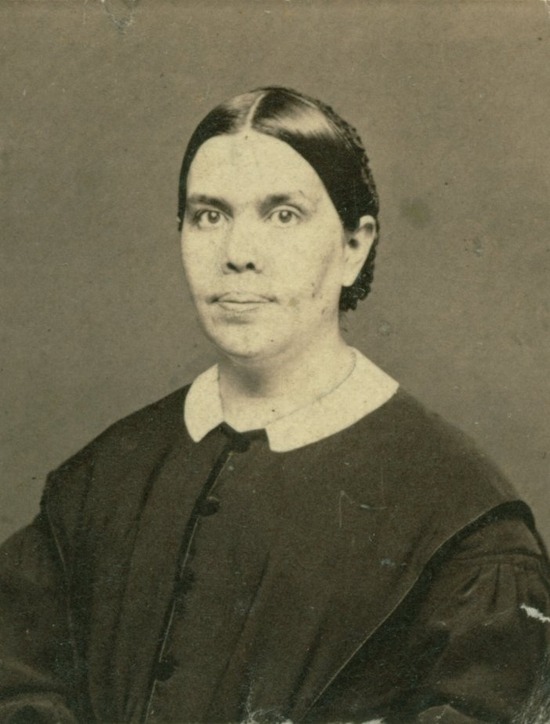
“Courtesy of the Ellen G. White Estate, Inc.”
Ellen White visited specific international locations simply because God called her to. The growing Adventist Church knew that the Advent message wasn’t just for their own communities, or even their own country. It was for all God’s children!
So to help establish a global ministry, she visited various places to meet people, offer guidance, attend camp meetings, support fellow missionaries, and assist in establishing educational and health institutions.
At first, she often felt unsure of going so far away from home, but the Holy Spirit’s promptings reassured her that she would be safe, and that her services would further the spread of the gospel.
And because Adventism spread so quickly, she didn’t stop after one or two countries. By the end of her life, she had ministered in 13 countries, including several locations across the United States.2
Of course, she was no stranger to missionary work.
She had already called for a worldwide publishing ministry.3 It all began in 1848 when she was impressed by the Holy Spirit that the Adventist Church should start its own paper. She told her husband about this vision she received from God, encouraging him and others to start publishing Adventist literature (books, magazines, and tracts) that would eventually circulate throughout the world.4
But ministry efforts weren’t supposed to stop there, either. Many Adventists were convicted that it was also time to put significant effort into missionary work.
In 1874, Ellen White had a vision in which God showed her that the Adventist Church must spread the gospel everywhere—not just the United States:
“You must take broader views. Your light must not be put under a bushel or under a bed, but on a candlestick, that it may give light to all that are in the house. Your house is the world.”5
This counsel led to the Church’s very first missionary program. And eventually, Ellen White herself felt the call to visit Adventist conferences and churches in various international locations.6
While most missionaries were reaching out to non-Adventists, Ellen White’s ministry work was largely among Adventist church members. She spoke to large groups and also met with smaller church groups and ministry leaders, offering counsel and encouragement as directed by the Holy Spirit.
Along the way, she met many people and helped establish multiple Adventist schools and sanitariums (later hospitals).
She accomplished these groundbreaking achievements despite several obstacles and dangers.
Unlike the relative smoothness and speed of travel today, travel back then was riskier and took longer. Whether by boat, train, or horse and buggy, the ride was always rough and usually exhausting. And sickness spread quickly, especially when the weather was cold or damp.
But her efforts were well worth it.
Today, there are more than 9,000 Adventist schools and 230 hospitals established partly because of the tireless missionary efforts of Ellen White.7 While she didn’t personally oversee the creation of each institution, she did help select the location for several schools and health centers. She also helped lay the foundation for operating these institutions—the success of which we still see today.
Her travels began in North America, so we’ll start there.
Travels in North America

Photo by Greg Rosenke on Unsplash
As the Adventist Church grew, Ellen White received invitations to churches across the United States, and even in Canada. She frequently traveled to the New England states near her but also ventured to the South and the distant West.
Most of the time, church leaders asked her to speak for their camp meetings, which were weekend or week-long meetings often held in tents. And as she traveled, she continued to write articles for the church paper, the Review and Herald.8
On other occasions, Ellen White received visions telling her to travel. Some of these visions involved the Holy Spirit calling her to go somewhere to speak to specific people, and others asked her to show the church where they should plant new Adventist institutions.
While in North America, she mainly traveled with her husband, James White. And for some trips, she had to leave her young sons to stay with family friends. But as they got older, she frequently brought Willie with her on her travels.
They traveled to many beautiful places, but their trips were anything but easy. They often suffered from poor travel conditions—anything from biting cold to rough roads.9
Sometimes, their travels could be dangerous. One time, Ellen was thrown off her horse.10 On another trip, James was run over by carriage wheels. He had been trying to keep the carriage from flipping when the horse suddenly stopped while going up an embankment.11
But probably their most horrific travel experience was when they were on a train that crashed. Several passengers were killed, but Ellen White and her husband were uninjured. They believed it was because an angel of God intervened to protect them.12
But despite the significant risks, their travels allowed them to accomplish many amazing things and see some amazing places.
While on one of her trips, Ellen White wrote a letter to her children about a mechanical bird she came across:
“And the little feathers would move on the little bird, and it would twirl its pretty little head this way and that, flap its little wings, move its tail and fly about and act just as pretty as though the noise came from its tiny little throat.”13
Along her journey, she saw many strange and wonderful things, especially for the time she lived in. She made note of seeing a hot air balloon,14 a goat pulling a carriage,15 and the beautiful Rocky Mountain range.16 She even had a chance to visit Hawaii while on her way to Australia.
Here’s a list of the many states she visited (in no particular order):
- California:17 Ellen White spent many years in this state during the 1870s-80s, helping the church advance in its educational and medical outreach. In 1901, after her time in Australia, she settled at “Elmshaven” in St. Helena, where she spent the rest of her life.
- Michigan: The White family lived in this state from 1855 until moving to California in the 1870s. But in later years, she would often return to Battle Creek, where the church was headquartered, for meetings with church leaders.
- Texas:18 Her travels took her to this state in 1878 and 1879 to speak at camp meetings and several other events or gatherings.
- Colorado:19 Ellen White enjoyed vacations here in the late 1870s and early 80s. While there, she supported her husband in writing several manuscripts that encouraged the church to translate Adventist literature into other languages and urged the Adventists of Battle Creek, Michigan, to start a school and further expand their health institute.
- Maine:20 Ellen White was born in Portland, Maine, and raised in the state when she was still known by her maiden name, Ellen Harmon. She spent a portion of her early adulthood there and returned for speaking engagements as late as 1909.
She also went to the following states, mainly for the sake of attending camp meetings and speaking at local churches:21
- Kansas
- Missouri
- Wisconsin
- Ohio
- Vermont
- Massachusetts
- New York
- Indiana
- Illinois
As she continued to travel, she brought companions with her—often her husband, older family members, or friends. And when James White passed away in 1881, Ellen White’s son Willie became her full-time travel companion and assistant.22
While living at “Elmshaven” in California, Ellen White led the effort to establish a sanitarium in Southern California. This sanitarium later became Loma Linda University Health and Loma Linda University.
Here’s the story:
At Ellen White’s urging, a church member named John Burden had purchased the property, which she then came to see. When she arrived, she felt she must have seen the land before. Her son reminded her she had never been there, and she realized the land was familiar because she had seen it in a prophetic dream.23
Her realization cemented the church’s decision to use the land. And it paid off. Today, Loma Linda is one of the only faith-based university hospitals in the US.
But her journey didn’t stop there.
God was about to send her on an even farther journey—an overseas journey to the sprawling cities of Europe.
Travels in Europe
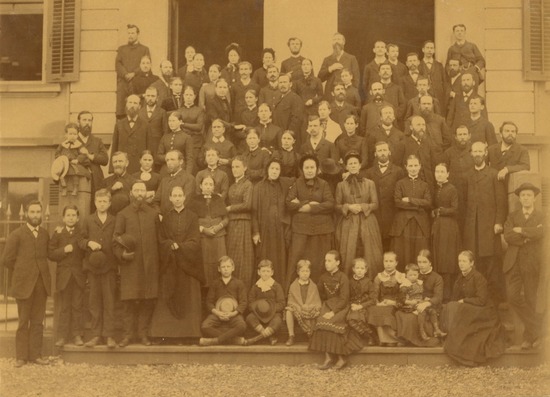
Ellen G white at the Swiss conference Meeting, Sept 1885.
“Courtesy of the Ellen G. White Estate, Inc.”
The Adventist Central European Mission invited Ellen White to come to Europe and speak at different European conferences and churches. The leaders also wanted her guidance in their publishing ministries.24
This was only a few years after her husband, James, had died. So at first, she wasn’t sure she would be able to go because traveling would be difficult for her health at her age. But God strengthened her until she was able to safely travel overseas.25
She left America for Europe in 1885 with her son Willie. By the time she boarded the ship, she felt confident that God would lead her, saying:
“The Lord seems very near and I feel peaceful and restful.”26
Even so, the travels were just as harsh as those in America. Ellen White and her family continued to suffer from periodic sickness and harsh weather.27
But despite her circumstances, she was still determined to help. She went from church to church, preaching the Bible and speaking about its truths both to Adventists and the general public.
During her time in Europe, she traveled to:
- England:28 This was the country she arrived in. She spoke at many gatherings about the gospel and about how and why the Adventist Church began.
- Switzerland:29 Switzerland became Ellen White’s home base while she was in Europe, and the place where she focused on her publishing work.
- France:30 She spoke at tent meetings and encouraged a young man she had seen in her visions to accept Christ.
- Italy:31 She offered counsel to several evangelists and encouraged them to be honest and humble in their mission to reach others.
- Germany:32 She preached several sermons to German congregations. One particular congregation was struggling with unity, so she suggested a social meeting to help build connections among the members and bring them into harmony.
- Norway:33 She came here to offer guidance to the church at Christiania. It had been struggling with fanaticism (religious extremism), which resulted in many of its members becoming strict and judgmental. In response, she encouraged them to adopt Christ’s attitude of mercy and humility.
- Denmark:34 While making the rounds to speak at several different churches, she also encouraged young people to get involved in ministry.
- Sweden:35 She toured the Swedish churches and attended a large gathering of Swedish Adventists in 1886.
Throughout Ellen White’s time in Europe, she was also able to work on her books. The one she spent the most time on was The Great Controversy, a book that discusses the backdrop of the whole Bible—the spiritual conflict between Satan and Jesus.
Europe was the perfect place for her to work on this book, which covered a lot of the history of the Christian Church through the Dark Ages and the Protestant Reformation.
She was able to visit the places she mentioned in her book and get a deeper glimpse into the history beyond what she had read about or learned about through the Holy Spirit’s guidance.
She left Europe in 1887, but as it turns out, her overseas work was still not complete. She would be called to service in yet another continent—this time to Australia.
Travels in Australia
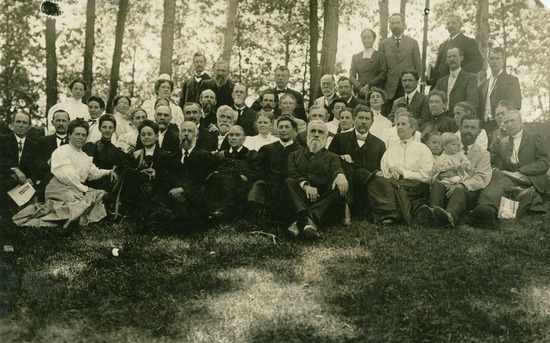
Ellen G. White with Australian workers, 1909.
“Courtesy of the Ellen G. White Estate, Inc.”
Church leaders asked Ellen White to go to Australia to help guide the developing Adventist churches there, and to assist in furthering education and health care efforts.
She left for Australia in 1891 with her son, Willie.
At first, she was hesitant to go because she didn’t feel convicted that God was the one telling her to go.36 She was also aware that it could be risky to attempt so much travel at her age, and with her health concerns. She would turn 64 that year.
But eventually, she concluded that the people in Australia needed her. And since God hadn’t impressed her not to go to Australia, she stepped forward in faith and accepted the General Conference’s suggestion to spend two years there.37
Once she stepped foot in Australia, she came to better understand what God wanted her to do there.
While there, she spoke at many camp meetings and published several books, including her classic on the life of Christ, The Desire of Ages.38
One of the most notable things she did was to help establish Avondale College.
The Adventist leaders had wanted to begin a school in Australia but struggled to find a location. This was partly because they were looking for land during an economic depression,39 and partly because they had a hard time finding land that could sustain a school-run farm.
So the leaders asked a land surveyor to look at the land they wanted to buy. Unfortunately, he reported that it was too poor to sustain good crops. Ellen White, on the other hand, had a vision telling her that the land was good and should be bought.40
The leaders followed her guidance and secured the property. And true to her vision, the land produced a bountiful harvest. The college was successful and still exists today—now known as Avondale University.41
Ellen White ended up extending her stay in Australia for nearly a decade. The Australian people were sad to see her go back to the US in 1900. She had helped advance the church in many ways, both in the establishment of Adventist institutions and through her personal, humanitarian efforts for the locals.42 Her influence lived on even after she left.
The result of Ellen White’s travels

Loma Linda University
“Courtesy of the Ellen G. White Estate, Inc.”
Much like leaders in the early Christian church in the Bible, Ellen White was sent by God to spread His message to the world.
According to Tim Poirier, the vice-director of the Ellen G. White Estate, Ellen White’s mission work was important because:
“Her traveling to Europe and Australia helped to get the beginning work of the Church in those areas on a strong footing—this included the launching of new schools, medical institutions, and support for the Church’s publishing houses.”
By the end of her ministry, she had played a role in the prophecy God gave years earlier to travel to different parts of the earth, spreading the gospel message:
“The message will go in power to all parts of the world, to Oregon, to Europe, to Australia, to the islands of the sea, to all nations, tongues, and peoples.”43
In many different ways during her travels, she actively served the communities she met—and she left a legacy of community service by helping start Adventist institutions like schools and health centers. After she left, these organizations continued to reach out in practical ways.
Interested in learning how the Adventist Church serves the community through its schooling system? We’ve got something on that too!
Related Articles


- Douglass, Herbert, Messenger of the Lord, p. 108 [↵]
- Delafield, A. D, Ellen G. White in Europe, p. 5 [↵]
- Pfandl, Gerhard, “Ellen G. White’s Contributions to the Seventh-day Adventist Church,” Ministry Magazine, June 2015. [↵]
- Ibid. [↵]
- White, Ellen G., Life Sketches of Ellen G. White, p. 208 [↵]
- Ibid., p. 196 [↵]
- “Quick Statistics on the Seventh-day Adventist Church,” Office of Archives, Statistics, and Research. [↵]
- White, Arthur, Ellen G. White: The Lonely Years: 1876–1891, p. 39 [↵]
- White, Ellen G., I’d Like to Ask Sister White, p. 113 [↵]
- Ibid., p. 74 [↵]
- Ibid., p. 75 [↵]
- White, Arthur, Ellen G. White: The Early Years: 1827–1862, pp. 295–296 [↵]
- White, Ellen G., I’d Like to Ask, p. 105 [↵]
- Ibid., p. 104 [↵]
- Ibid., p. 105 [↵]
- White, Arthur, Ellen G. White: The Progressive Years: 1862–1876, p. 347 [↵]
- Ibid., p. 357 [↵]
- White, Arthur, The Lonely Years, p. 98 [↵]
- White, Arthur, The Progressive Years, pp. 389–393 [↵]
- White, Arthur, The Lonely Years, p. 38 [↵]
- Ibid. [↵]
- “James S. White,” Adventist Pioneer Library. [↵]
- Molivarez, “This is the Very Place,” Loma Linda University Library News. May 27, 2014. [↵]
- White, Arthur, The Lonely Years, p. 287 [↵]
- Ibid. [↵]
- Delafield, Ellen G. White in Europe, p. 23 [↵]
- Ibid., p. 188 [↵]
- Ibid., pp. 40–42 [↵]
- Ibid., pp. 211–212 [↵]
- Ibid., pp. 232–234 [↵]
- Ibid., pp. 135–136 [↵]
- Ibid., p. 279 [↵]
- Ibid., pp. 199–201 [↵]
- Ibid., pp. 95–96 [↵]
- Ibid., pp.192–193 [↵]
- White, Arthur, Ellen G. White: The Australian Years: 1891–1900, pp. 15–16 [↵]
- Ibid. [↵]
- Skrzypaszek, John, “Ellen G. White’s Ministry in the South Pacific,” Encyclopedia of Seventh-day Adventists. [↵]
- “Avondale College,” Lineage Journey. [↵]
- Ibid. [↵]
- Ibid. [↵]
- Skrzypaszek, “Ellen G. White’s Ministry in the South Pacific,” Encyclopedia of Seventh-day Adventists. [↵]
- White, Ellen G., Life Sketches, p. 209 [↵]
More Answers

The Barren Fig Tree Parable: What It Means to Bear Fruit
Find out what the Parable of the Barren Fig Tree really means.

¿Qué son las reuniones evangelísticas adventistas?
¿Qué son las reuniones evangelísticas adventistas?La Iglesia Adventista del Séptimo Día pone un gran énfasis en compartir el evangelio mediante la evangelización, o compartir el evangelio a través de la predicación, la enseñanza y el testimonio. Una de las formas en...
O que são os Encontros Evangelísticos Adventistas?
O que são os Encontros Evangelísticos Adventistas?A Igreja Adventista do Sétimo Dia dá grande ênfase ao compartilhamento do evangelho por meio da evangelização, ou seja, compartilhar o evangelho através da pregação, ensino e testemunho. Uma das formas de realizarmos...

O Que os Adventistas Acreditam Sobre Fé e Obras?
O Que os Adventistas Acreditam Sobre Fé e Obras?Os adventistas acreditam que somos salvos pela fé, que é a crença e confiança que temos em Jesus Cristo para nos salvar dos nossos pecados. Jesus, então, nos capacita a viver em harmonia com os mandamentos de Deus e a...
¿Qué creen los Adventistas sobre la fe y las obras?
¿Qué creen los Adventistas sobre la fe y las obras?Los adventistas creen que somos salvos por la fe, que es la creencia y confianza que tenemos en Jesucristo para salvarnos de nuestros pecados. Jesús, entonces, nos capacita para vivir en armonía con los mandamientos...
Je, Ninahitaji Kuwa Mwadventista Ili Niokolewe
Je, Ninahitaji Kuwa Mwadventista Ili Niokolewe?Jibu la swali hili ni rahisi, “hapana.” Linapokuja swala la wokovu katika Yesu Kristo, kinachohitajika kwa mtu ni kukiri dhabihu ya Yesu kwa ajili yetu, kuamini kwamba Ametuokoa, na kudai zawadi ya bure ya wokovu ambayo...
¿Necesito ser adventista para ser salvo?
¿Necesito ser adventista para ser salvo?La respuesta a esta pregunta es simplemente, “no.” Cuando se trata de la salvación en Jesucristo, todo lo que se requiere de una persona es reconocer el sacrificio de Jesús por nosotros, creer que Él nos ha salvado y reclamar el...
Preciso ser Adventista para ser salvo?
A resposta para essa pergunta é simplesmente: “não.”

Lo que la Biblia dice sobre la Segunda Venida de Jesucristo
¿Tienes curiosidad sobre lo que la Biblia dice acerca de la Segunda Venida de Jesucristo? Cubriremos los versículos clave y su significado.

¿Quién fue Mateo, el apóstol, en la Biblia?
En el primer libro del Nuevo Testamento, encontramos la historia del Evangelio desde la perspectiva de Mateo.

2 Corinthians: An Overview of Paul’s Most Personal Letter
Discover Paul’s lessons on forgiveness, reconciliation, generosity, and more. It’s all in the book of 2 Corinthians!
Quem Foi Mateus, o Apóstolo, na Bíblia?
Quem Foi Mateus, o Apóstolo, na Bíblia?No primeiro livro do Novo Testamento, encontramos a história do Evangelho sob a perspectiva de Mateus. Ele era um coletor de impostos judeu de Cafarnaum, no primeiro século d.C., e provavelmente era desprezado pelos outros judeus...

The Pharisee and the Tax Collector Parable: Its Meaning Made Simple
The Meaning of the Pharisee and the Tax Collector ParableIn Luke 18:9-14, Jesus told a parable about two men who went to the temple to pray. One was a Pharisee and the other a tax collector. The Pharisee prayed (well, bragged) about his own good works compared to the...
Biblia Inasema Nini Kuhusu Ujio wa Pili wa Yesu Kristo
Unajuliza Biblia inasema nini kuhusu Kurudi kwa Yesu Kristo Mara ya Pili? Tutajadili aya kuu na maana zake.

The Story of the Widow’s Mite—What It Really Means
The Story of the Widow’s Mite—What It Really MeansPeople often assume bigger is better, but the Bible turns this concept on its head with the story of the Widow’s Mite. Of all the donations Jesus sees at the temple, the gift that draws His attention is not the...

Consejo de Elena G. de White sobre la Educación Universitaria
Consejo de Elena G. de White sobre la Educación UniversitariaElena G. de White, una cofundadora importante del Adventismo, es conocida a menudo por su orientación práctica y espiritual para la educación infantil adecuada. Pero también estuvo significativamente...
Mathayo Alikuwa Nani Katika Biblia?
Mathayo Alikuwa Nani Katika Biblia?Katika kitabu cha kwanza cha Agano Jipya, tunapata simulizi la Injili kutoka kwa Mathayo. Alikuwa mtoza ushuru Myahudi kutoka Kapernaumu katika karne ya kwanza MK, na huenda alichukiwa na Wayahudi wenzake kwa kuchagua kazi hiyo....

¿Cuáles son los beneficios de vivir en el campo?
¿Cuáles son los beneficios de vivir en el campo?Visitar el campo puede ofrecer un descanso muy necesario del típico ajetreo y bullicio de la ciudad. Muchos incluso han decidido mudarse a zonas rurales para disfrutar de un ritmo más lento, espacios amplios, aire...
Quais São os Benefícios de Viver no Campo?
Visitar o campo pode oferecer uma pausa muito necessária do típico agito da cidade.

¿Qué significa la parábola de la perla de gran precio?
Esto es lo que Jesús enseñó sobre el reino de los cielos a través de esta breve parábola sobre un comerciante que encuentra una perla invaluable.
O Que Significa a Parábola da Pérola de Grande Valor?
Aqui está o que Jesus ensinou sobre o reino dos céus por meio desta parábola curta sobre um comerciante que encontra uma pérola inestimável.

Por Que Muitos Adventistas Querem Viver no Campo
Por Que Muitos Adventistas Querem Viver no CampoViver em áreas rurais é algo que os adventistas têm valorizado historicamente, embora as necessidades da vida moderna nem sempre tenham tornado isso possível. Convenhamos, as vantagens da vida na cidade são bastante...

Uma Visão Geral de Romanos: Fé, Justiça, Relacionamentos
Uma Visão Geral de Romanos: Fé, Justiça, RelacionamentosO livro de Romanos é uma das 21 epístolas, ou cartas abertas, do Novo Testamento. E embora seja um texto bíblico antigo, ainda tem uma relevância significativa (até surpreendente) para nossas vidas hoje. O...

Jesus é o Mesmo Ser que Miguel, o Arcanjo?
Jesus é o Mesmo Ser que Miguel, o Arcanjo?Muitos cristãos têm se perguntado sobre a misteriosa identidade de Miguel, o Arcanjo. Desde os primórdios do cristianismo, muitos interpretaram Miguel como o Messias identificado com a figura do Anjo do Senhor. O reformador...
Je, Faida za Kuishi Vijijini ni Zipi?
Kutembelea maeneo ya vijijini kunaweza kutoa mapumziko yanayohitajika sana kutoka kwenye pilikapilika za kawaida za mijini.
Je, Mfano wa Lulu ya Thamani Kubwa Unamaanisha Nini?
Hivi ndivyo Yesu alivyofundisha kuhusu ufalme wa mbinguni kupitia mfano huu mfupi wa mfanyabiashara aliyepata lulu ya thamani isiyo na kifani.
Kwa Nini Waadventista Wengi Wanataka Kuishi Vijijini
Kwa Nini Waadventista Wengi Wanataka Kuishi VijijiniKuishi maeneo ya vijijini ni jambo ambalo Waadventista wamekuwa wakilithamini kihistoria, ingawa mahitaji ya maisha ya kisasa hayafanyi iwezekane kila wakati. Tukubali, faida za kuishi mjini zinaonekana wazi: fursa...
Muhtasari wa Kitabu cha Warumi: Imani, Haki, Mahusiano
Hapa kuna muhtasari na historia ya waraka mrefu zaidi wa Paulo.

Sobre o que é a Parábola do Semeador de Jesus?
A parábola do semeador é, em última análise, sobre como as pessoas responderam a Jesus Cristo e Sua mensagem do reino de Deus—o Evangelho.
Didn’t find your answer? Ask us!
We understand your concern of having questions but not knowing who to ask—we’ve felt it ourselves. When you’re ready to learn more about Adventists, send us a question! We know a thing or two about Adventists.