
It’s natural to be a bit skeptical when you hear about someone being “divinely inspired,” or that something is a “message from God,” etc. And we expect nothing different if you’re hearing about Ellen White, an influential co-founder of the Seventh-day Adventist Church, for the first time. After all, the Bible tells us that we’re supposed to test these things!
Fortunately, there’s a fairly simple answer to why we’re confident that Ellen White’s spiritual counsel was prompted by the Holy Spirit: Any information she claimed to have received from God has always been in line with what the Bible says and has always upheld Jesus Christ as the Son of God, our Redeemer and Savior.
(And that’s a huge part of what Scripture tells us to use as “tests of a prophet.”)1
So whether you’ve read her writings yet or not, we’ll take you through:
- The Adventist Church’s position on the nature of Ellen White’s writings
- How we can tell which of her writings were inspired, and which came about from her own observations and studies
- Why Ellen White’s writings are still relevant today
Let’s start with the official stance of the Seventh-day Adventist Church.
What does the Adventist Church say about the nature of Ellen White’s writings?

The Seventh-day Adventist Church believes that Ellen White’s writings align with the spirit of prophecy (Revelation 19:10).
In other words, we believe she was given one of the gifts of the Holy Spirit—the prophetic gift—as mentioned in Romans 12 and 1 Corinthians 14.
(You can read more about this in the 18th Fundamental Belief of the Seventh-day Adventist Church.)
Some people wonder whether God still uses prophets today, in the post-biblical era.
But Scripture hasn’t given any indication that God would ever stop using prophets to further the gospel or help nurture and guide His followers. We’re even told that prophecy is a spiritual gift given by the Holy Spirit, just as leadership, giving, and teaching are (Romans 12:6-8).
As a matter of fact, the Bible tells us that the gift of prophecy will increase as we reach the last days (Acts 2:17).
It also tells us to “test the spirits,” so we don’t get led astray by false prophets (1 John 4:1-2, ESV). And Scripture gives us several guidelines to use in doing just that.
And throughout her life, Ellen White has demonstrated that she passes the biblical tests of a prophet.
(For a more comprehensive list of the tests of a prophet, check out “6 Ways to Tell if Someone is a True Prophet” or “10 Tests of a Prophet.”)
Here are just a few examples:
1) A prophet’s words should align with the Bible (Isaiah 8:20; 1 John 4:1-3): As we’ve already mentioned, Ellen White’s messages always point to principles found within Scripture, and always uplift the Bible as the ultimate spiritual authority. In fact, she made a point to remind her fellow Christians of this in her very first book.
“I recommend to you, dear reader, the Word of God as the rule of your faith and practice. By that Word we are to be judged. God has, in that Word, promised to give visions in the “last days”; not for a new rule of faith, but for the comfort of His people, and to correct those who err from Bible truth.”2
2) A prophet’s predictions should come true (Deuteronomy 18:20-21): Ellen White knew things she could only know through divine revelation. For example, she was shown the yet-unknown (or neglected to be acknowledged) dangers of certain 19th-century medical practices. On top of that, she was also given specific visions about last-day events. Many of her predictions have come true, while others have yet to happen. One of the most notable predictions she gave was when she described how the secession of the Southern states would lead to the Civil War.3
3) A prophet’s message should inspire positive change (Ezekiel 13:10): The primary goal of all her writings were to call people to be more diligent about following the Scriptures they profess to believe in.
This is evident in the way she calls people to put their sins and selfishness behind them and come to God.
Sometimes she would call for positive change on a grand scale, by pointing out areas where church leaders had begun to stray from what Scripture teaches (such as when she warned church leaders to guard against the growing influence of spiritualism, especially in the form of pantheistic teachings).4
On other occasions, she would write personal letters to some whom she felt needed direct confrontation. One example of this is when she contacted John Byington, the man who would soon become the first president of the Seventh-day Adventist General Conference.5 She wrote him a letter to remind him to take his focus off of worldly struggles, and instead focus his attention on God’s faithfulness.6
Because this man was on the path toward leadership in the Adventist Church, she knew that it was appropriate to be rather blunt. So she called him out, warning him that a fixation on becoming well-respected and financially comfortable was a distraction from the ministry work ahead of him.
4) A prophet should always glorify God (John 16:13):7 True prophets never seek to glorify themselves. When they speak of their ability, they always direct any glory to God. After all, prophets aren’t called to be popular. They’re called to be humble messengers for God. Even at the expense of their own lives, popularity, and welfare, true prophets call people to be more like Jesus Christ and to worship God alone (Revelation 22:9).
Ellen White’s writings were all about sharing God’s glory and love with others. She constantly reflected on her reliance on the Holy Spirit, humbling herself before God and others as she asked Him to guide her ministry.8 And even when her messages were not well received, she continued with her spiritual duty to provide guidance or even rebuke, when necessary.
Overall, it’s not hard to see divine inspiration in Ellen White’s writings because they continuously give glory to God, and consistently ask us to live by His Word above all else. Nothing she wrote gave indication that any of her prophetic gift was used to bolster her own pride or public standing.
How we can tell which of her messages were directly inspired by God?
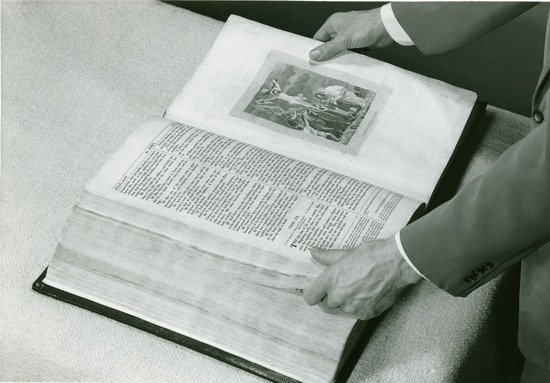
There are certain markers that help us distinguish between Ellen White’s personal views and her inspired writings.
After all, just because Ellen White had prophetic duties doesn’t mean she didn’t have her own life and her own informed opinions. For example, she would often write newsy letters to friends and family.
Some of the advice she gave family and close friends through these personal letters she did not attribute to divine inspiration, but to her own experiences and good sense.
And it’s not difficult to differentiate between her personal and inspired writings, especially if we look at the context when we encounter a quote from her.
For one thing, Ellen White was careful to tell people whether she was speaking from her own thoughts or from God’s instruction.
And the fact that she wrote her own thoughts demonstrates what true prophets are really like.
They’re not distant, impersonal, or cold. They’re not overly strange or intentionally isolated from the goings-on of daily life. Prophets, throughout history, haven’t been much different than any other person—they have families, jobs, differing personalities, personal struggles, and unique perspectives.
Their positions as prophets simply call them to have a closer connection with the Holy Spirit, which often enables them to look at even the most simple things of life with a deeper spiritual perspective.
As Tim Poirier, the Vice Director of the Ellen G. White Estate, puts it:
“It is easy to know whether the message came from revelation when she says ‘I was shown…’ or ‘It was revealed to me…’ etc. But the mere absence of such expression does not necessarily mean that what follows is only her own opinion. A colleague of mine used to say that what she wrote was the product of ‘an enlightened mind’—meaning that even if she hadn’t received a specific revelation about a matter, the counsels and instruction that she presented were based on principles that derived from the benefit of having received many visions and prophetic dreams throughout her lifetime.”
This helps us see that while not every piece of her writing was a direct message from God or the recounting of a prophetic vision, we can rest assured that her words were prayed over, and the concepts she wrote about were studied with a biblical perspective.
But if you come across a quote of hers and you’re wondering if it was inspired or not, here are some things you can do to help determine as such.
First, always check the context of the quote. (You can find all her writings at egwwritings.org.)
Then, ask the following questions:
- Is she speaking to family or close friends, to a general audience, or to a specified group of people? Once it’s clear who the audience is, then proceed to the following questions.
- Is it practical advice about a common subject, or spiritual guidance about a serious matter?
- Does she say it’s her own opinion, or that it’s based on her observations? If not, does she seem to be making a spiritual plea for the sake of a person’s well-being, or the sake of the gospel message?
In general, you can usually assume she was relaying instruction from God when she:
- Gave spiritual reproof
- Described events of biblical prophecy, or provided information about future events
- Provided instruction on health reform (for the sake of ministry, stewardship, and representing Christ)
- Provided guidance on matters of doctrine
- Gave guidance to the General Conference or other church leaders (particularly regarding fundamental beliefs or the mission and administration of the Adventist Church)
And, though many of her personal writings weren’t directly inspired, that doesn’t mean they aren’t important or that they aren’t based on biblical truths. As someone with the prophetic gift, she was constantly growing closer to God—which also meant growing in wisdom. We can often find helpful advice in her words that help us apply the Bible’s profound principles to daily life.
Why Ellen White’s writings are still relevant today

Photo by Emmanuel Phaeton on Unsplash
Ellen White’s writings contain timeless truths for God’s people. These truths include information about how we care for ourselves, how we treat other people, how to apply Bible prophecy to history, and how we might recognize and understand prophetic events yet to come.
While there might be specific instruction she gave that doesn’t apply to current times (like cautioning families from wasting their money on bicycles, which were very expensive at the time), we can still find value in the general principle behind what she wrote about maintaining good standards of stewardship by managing our money responsibly.
We just have to be careful about applying her instruction directly to contemporary situations that don’t match the context in which she was writing.
But you might still find that some of her quotes, books, articles, or pamphlets are not relevant to your situation, or maybe you come across statements where the contextual details would require some extra research.
Well, that’s okay! Her writings were for those who needed them. They weren’t all written for everyone, at every time, in every situation. And there’s no requirement to read everything she wrote. After all, her primary goal was to get people to keep up with regular Bible study!
So even if some of her writings don’t seem relevant or useful to us at the time, we can be thankful for the principles presented and we can appreciate the impact they’ve had on other people’s lives.
Her first vision gave hope to the Millerite people regarding the Second Coming. From there, she led Advent believers—like Joseph Bates and James White—through what she wrote in her books, such as Testimonies for the Church and Spiritual Gifts, as well as her contributions to Signs of the Times and The Review and Herald.
Even today, Ellen White’s more popular books (like the Desire of Ages, The Great Controversy, and Steps to Christ) have provided spiritual enrichment for countless people. Many have attested to how these books have helped them grow closer to Jesus Christ.
In fact, the writings of Ellen G. White have grown so popular that she is considered one of the most translated female authors in the world.9
If you’re interested in taking a look at her writings for yourself, you can find them at the Ellen G. White Estate or at egwwritings.org.
Want to learn more about Ellen White’s life and how she became involved in ministry? prophetic gift?
Find a Church
If you’re interested in finding a local Adventist church near you, you can use the Adventist Locator provided by the General Conference of Seventh-day Adventists.
Related Articles



- Deuteronomy 18:20-22; Isaiah 8:20; Jeremiah 23:16; Matthew 7:15-20; Luke 6:26; John 14:6; Romans 16:18; 2 Peter 2:1-3; 1 John 4:1-6. [↵]
- White, Ellen G., Early Writings, p. 78 [↵]
- Douglass, E. Herbert, Messenger of the Lord, p. 158 [↵]
- Ibid, pp. 200-201 [↵]
- https://adventistreview.org/news/when-ellen-white-rebuked-the-adventist-church-s-future-first-president/ [↵]
- Ibid. [↵]
- “10 Tests Of A Prophet,” https://www.ellengwhitetruth.com/her-ministry/10-tests-of-a-prophet [↵]
- “The Test Results Pt.2,” https://www.ellengwhitetruth.com/her-ministry/the-test-results/the-test-results-pt-2 [↵]
- https://m.egwwritings.org/en/about [↵]
More Answers

How to Join the Seventh-day Adventist Church
Whether you heard about the Seventh-day Adventist Church through a traveling evangelist, during your online searches, or through a loved one or relative, you might be considering joining yourself.

What Are the Three Angels’ Messages in Revelation 14?
The three angels’ messages in Revelation 14 warn the world to worship God, leave religious confusion, and avoid worship of human traditions instead of God’s commands.

Is the Old Testament Important for Christians Today?
Yes, the Old Testament is important because it kicks off the story that is continued by the New Testament. Without it, we wouldn’t have the vital background to Jesus’ first coming and the other accounts of the New Testament.
![The Early Christian Church [Overview]](https://devsite.askanadventistfriend.com/wp-content/uploads/2023/01/old-temple-400x250.jpg)
The Early Christian Church [Overview]
The Early Christian Church describes the faith community that developed from followers of Jesus after He returned to heaven (Acts 1) in A.D. 31. Their purpose was to be witnesses of the life, death, and resurrection of Jesus and grow their faith community into a worldwide movement.

Individual or Group Bible Study—Which Is Better?
They’re both great, of course! But depending on where you’re at and what your goals are, it’s worth looking into the different benefits of each.

How Do Adventists Do Baby Dedications?
For Christians, dedication ceremonies for babies, also for older children, are an important time for parents and the church. It’s a special part of the worship service when parents present their young children to God and the church family. Both parents, along with the congregation, regard this as a solemn promise to be a Christ-like example to the child.

What You Need to Know About Temptation and How to Resist It
Ever felt like you face the same temptation day after day? The one temptation that always seems to resurface?
It can be frustrating, yes. But be encouraged—being tempted doesn’t mean you have done anything wrong! And even if you give in to temptation, you are never too imperfect to come before God.

All About the 2300-Day Prophecy and the Investigative Judgment
This page will explain what the 2300-day prophecy is about. We’ll especially be looking at what events marked its fulfillment and what it has to do with the Investigative Judgment.

Was Ellen G. White Really a Prophet?
If you look at what Scripture provides as tests for a true prophet, Ellen White meets all the criteria.

Do Adventists Celebrate Communion and Foot Washing?
Like many Christian denominations, Adventists regularly participate in communion, also referred to as the “Lord’s Supper” or the “Last Supper.” They also practice foot washing (John 13:1-20), or the “ordinance of humility,” during the service—which isn’t as common.

Faith and Works—Do Both Matter in the Christian Life?
In so many religions all throughout time, individuals work toward enlightenment, salvation, or the favor of a deity. People are taught subtly—or not so subtly—that if you only do enough good deeds, you’ll be worthy/ascended/redeemed/approved, etc.

What is the Concept of “Present Truth” and Why is it Important?
Present truth is the principle that certain biblical truths are relevant to God’s people at specific times in history. God sends the Holy Spirit to reveal truths that help us better understand how to interpret and apply His Word in a present moment.

What is the Spirit of Prophecy (Books 1–4) by Ellen G. White?
Applying biblical prophecy to history, recent events, and especially the future, can be a daunting task. Even a little scary for some. But even so, we can’t help but want to know more. We want to be prepared—to feel like we know how to weather the storm.

Do Seventh-day Adventists Celebrate Easter
Yes, many Seventh-day Adventists do celebrate Easter.

Ellen G. White’s Counsel on Christian Education
Ellen White, a co-founder of the Seventh-day Adventist Church, saw that the U.S. educational system during her time was lacking. And as part of her life of ministry, she sought out practical ways to be better stewards of our minds, bodies, and the lives we’re given.

What Does Ellen White Say About Prayer?
Have you ever had a burden you just had to tell someone, but you were afraid of being judged if you did? Ellen G. White, an important figure in the Seventh-day Adventist Church and a prolific writer, described prayer as talking to God in a personal way—He’s the friend we can tell everything to.

Were All Ellen White’s Visions About the Future?
While the visions God gave Ellen White were often about the distant future or last-day events, she had many others that addressed different topics. They may not be discussed as much as her visions about the Second Coming or the End Times, but they tackled some timely topics for her day.

What Did Ellen White Say About End-Time Prophecy?
We can read in Scripture about the series of events and signs that lead up to the second coming of Jesus Christ. And it sounds pretty intense, to say the least. The symbolic nature of the language of prophecy also can make things tricky to understand at first.

Does the Adventist Church Have Youth Ministry Programs?
The Seventh-day Adventist Church has been organizing and operating youth ministry programs since 1879.
In our opinion, youth ministry is one of the most important ministries a church can have.

Were All Ellen White’s Books Inspired?
As the most translated female author in the world, Ellen White wrote numerous books, articles, pamphlets, and more. These writings focused on developing Christian character, emphasizing Bible truth, practical tips for living well and staying healthy, and discussing effective methods of delivering the gospel message to the world.

Do Adventists Celebrate Birthdays?
Yes, most Seventh-day Adventists do celebrate birthdays because we see them as excellent reminders of the life God has blessed us with. And we celebrate them the same way everyone else does—with friends, family, presents, and a special meal.

The Ultimate Guide to Personal Bible Study
Ever felt that studying the Bible is challenging, and you’re just not sure where to start? Or looking for fresh ideas to improve your current Bible study habits? We’ve got you covered with simple techniques and plans to improve your Bible study experience.

What Is Salvation, and How Do I Get Saved?
Salvation, or being saved, is what God wants for all of us. And since God created us with free will, this salvation is ultimately our choice. We become “saved” by accepting that Jesus Christ died on the cross, taking the punishment meant for sinners upon Himself.

What Is the 70-Week Prophecy in Daniel 9
Could a prophecy accurately predict an event over 500 years before it was supposed to happen?
The 70-week prophecy of Daniel 9 did, culminating in one of the most important events in earth’s history: Jesus’ sacrifice for us on the cross.

Do Seventh-day Adventists Believe in Hell?
Seventh-day Adventists believe that any human being who accepts God’s free gift of salvation through Jesus will be given eternal life. But what about the eternal fate of those who choose not to accept Jesus?
Sola Scriptura—What It Means and Why It Matters
Sola scriptura is a term that originated during the Protestant Reformation. It represents the way many Christians view the Bible and its authority. While the idea is simple enough, there is so much more to sola scriptura than its basic definition.

What Do Adventists Offer for Young Adults?
In recent years, the age group often classified as “young adults” has been trickier to engage. It’s been a significant concern for Christian churches around the world. Though interestingly enough, similar observations regarding young adults have been coming up in conversations about the economy, the entertainment industry, politics, and more.

King David: How Was He a Man After God’s Own Heart?
War, bloodshed, murder, adultery—all of these crimes overshadowed the life of a biblical Old Testament man named David. Yet he was called a man after God’s own heart, not to mention one of Israel’s greatest heroes and kings.

Do Seventh-day Adventists Believe in the Secret Rapture
The secret rapture belief asserts that the followers of Jesus will be suddenly and stealthily “raptured” from earth and taken to heaven. Then, any people left on earth will face a period of great difficulty—before Christ’s second coming actually happens.
Didn’t find your answer? Ask us!
We understand your concern of having questions but not knowing who to ask—we’ve felt it ourselves. When you’re ready to learn more about Adventists, send us a question! We know a thing or two about Adventists.