
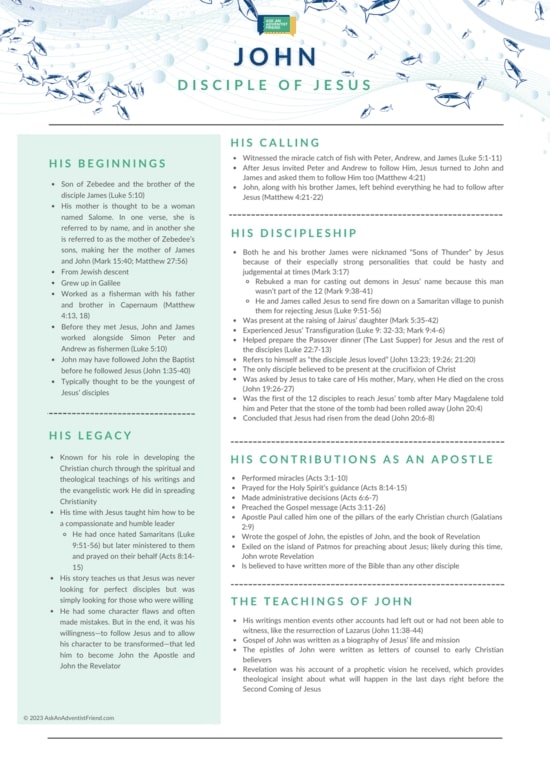
Whether you’ve heard of him as “John the Beloved,” “John the Evangelist,” or John the apostle, “John of Patmos,” there’s much discussion about this disciple of Jesus Christ and brother of James. But he is generally believed to be the youngest of the 12 disciples, and the one who authored the Gospel of John.
The Gospel accounts place him in Jesus’ inner circle, along with Peter and James. And more than once, he is described as the disciple “Jesus loved.”
But perhaps the most notable thing about John is that he was present for the most pivotal events in Jesus Christ’s ministry, some of which only a few of the other disciples got to witness.
It’s likely that these experiences, and his time with Christ, prepared him to become a prominent leader and writer in the early Christian church.
There’s a lot packed into the life of this apostle, so let’s go through his life step by step:
- John’s beginnings
- His calling
- His discipleship
- His apostolic contributions
- His teachings
- His persecution, death, and legacy
We’ll start with what we know from before he became a disciple of Jesus.
John’s beginnings
The New Testament tells us that John was the son of Zebedee and the brother of the apostle James (Luke 5:10).
And while it isn’t directly stated, John is typically thought to be the youngest of the disciples of Jesus. This is assumed because his name is always mentioned after his brother James, meaning he was the younger brother, and in the list of the first four disciples Jesus called, he was listed last (Matthew 4:18-22; Mark 1:16-20; Luke 5:8-11).1
Like most of the other disciples, John and his brother were Jewish.2 They grew up in Galilee, a northern region of Israel3 that had long since been conquered by the Empire of Rome. They likely shared a common sentiment among Jews of being unhappy with this political situation and hoping to one day be set free from Roman occupation.4
In the meantime, John and James both worked as fishermen in Capernaum (Matthew 4:13, 21; Mark 1:20).
And little did these brothers know that their grueling work would one day lead them to meet the prophesied Messiah.
The calling of John

Photo by Harrison Haines
John and his brother were on their fishing boat when they were called to be Jesus’ disciples.
It all began when they were called by their fishing partners, Simon Peter and Andrew, to help them haul in their nets (Matthew 4:18-21; Luke 5:1-11).
They needed John and his brother’s help because they had caught a lot of fish—so much so that the boat was starting to sink from the weight as they tried to pull in the nets (Luke 5:7)!
John and James learned that this amazing miracle was performed by a man named Jesus.
So when Jesus turned to James and John and asked them to become His disciples, they agreed. They left their home and jobs behind to follow Him (Matthew 4:21-22).
Joining the disciples
In accepting the call at the Sea of Galilee, John and his older brother were among the four men Jesus first called to be His disciples.
Later on, Jesus called more disciples of varying ages, classes, professions, and personalities. And as you can imagine, these differences caused some of the disciples to clash with one another.
And of the 12 disciples, Scripture hints that John and his brother had especially strong personalities.
They could be hasty and judgmental at times, prone to jumping to conclusions. They often had harsh words toward anyone they thought didn’t measure up to their standards. But while they were quick to point fingers at others, they were slow to acknowledge their own flaws and shortcomings.
On one occasion, John rebuked a man for casting out demons in Jesus’ name, because this man wasn’t part of the 12 (Mark 9:38-41). Another time, he and James asked Jesus to send fire down on a Samaritan village to punish them for rejecting Him (Luke 9:51-56).
But on both occasions He emphatically corrected them, calling them to seek out unity and peace instead of division and destruction (Mark 9:39-40; Luke 9:55-56). The brothers’ eagerness to punish who they believed to be wrong-doers might very well be the reason Jesus called them “Boanerges,” or “Sons of Thunder” (Mark 3:17).
They still had much to understand about what Jesus’ mission truly was.
It seems that they, like many Jews, were more focused on how Jesus could help them gain earthly victory and power—specifically over the Romans.
It’s the classic human tendency to dwell upon what’s currently happening to us in our own corners of the world, rather than thinking bigger.
But Jesus’ ministry had much bigger plans—victory over sin, for all of humanity.
But James and John were so fixated on the idea of political authority that they supported their mother’s request to Jesus, that they be seated at His left and right hands when He ascended to His throne (Mark 10:35-45; Matthew 20:20-28).
But over time, Jesus helped them understand what His kingdom is really like (Luke 9:25-28). He showed them that what matters most in the kingdom of God isn’t a person’s status among other humans, but the condition of their character.
He reiterated this idea to the disciples throughout His time with them, teaching them how to value love and humility over selfishness and worldly gain.
Day by day, His servant leadership helped the disciples develop the right focus and mindset, eventually preparing them for their roles as apostles.
And John was no exception.
In the time he spent with Jesus, he went from being known as “a son of Thunder” to “the disciple whom Jesus loved.”
His discipleship
John had a unique relationship with Jesus while he was a disciple. He and his brother James, along with Peter, are commonly considered the “inner circle” of the 12 disciples since they were chosen to accompany Jesus on certain occasions.5
But the care Jesus had for John is further emphasized by his modern reputation as “John the Beloved”6 and the description in his Gospel account as “the disciple Jesus loved” (John 13:23; 19:26; 20:2; 21:7).
Though Scripture doesn’t specifically use the name “John” to identify the beloved disciple, the times, people, and places mentioned alongside this disciple suggest that it is indeed him. And at the end of the fourth Gospel account, the book of John, the last anecdote and final words identify this beloved disciple as its author (John 21:20-25).
And we see evidence of a closer relationship between John and Jesus in passages like this:
“Lying back on Jesus’ chest was one of His disciples, whom Jesus loved. So Simon Peter nodded to this disciple and said to him, ‘Tell us who it is of whom He is speaking.’ He then simply leaned back on Jesus’ chest and said to Him, ‘Lord, who is it?’” (John 13:23-25, NASB).
The fact that this disciple was able to lean on Jesus and speak to Him so frankly is further evidence that he was especially close to Him. It could also signify that he was much younger than the others, demonstrating child-like awe and affection toward his Master and Teacher.
Whatever the circumstances, John was so close to Jesus that he got to be present for some of the most pivotal moments in His ministry when many of the other disciples were not.
The healing of Jairus’ daughter
The disciples witnessed many miracles throughout Jesus’ ministry, but only John, James, and Peter were present for the resurrection of a synagogue leader’s daughter. Mark 5:37 even says that Jesus “did not let anyone accompany Him except Peter, James, and John, James’ brother” (CSB). So it wasn’t merely by circumstance that John was alongside Jesus for this miracle.
Jairus asked Jesus to heal His sick daughter, but as they were on their way to his house, word came that she had already died. So Peter, James, and John watched how Jesus was not deterred by this news, and encouraged everyone to believe and not be afraid (Mark 5:36).
Then Jesus approached Jairus’ daughter’s body, took her by the hand, and told her to get up—which she immediately did (Mark 5:41-42).
This miracle gave John a glimpse of Jesus’ great compassion, as well as His power over death. But it was far from the last miraculous thing he would experience in the company of Christ.
The Transfiguration
Just a matter of days after Jesus informed His disciples that He would “suffer many things” and “be killed, and be raised the third day” (Luke 9:22, CSB), Jesus took Peter, James, and John to a spot on a mountain to pray (Luke 9:28).
John and the other two disciples had apparently fallen asleep, but they awoke to Jesus becoming radiant with light, speaking with Moses and Elijah about what He was about to undergo on the Cross (Matthew 17:2-3; Luke 9:29-32).
Upon seeing this, “a cloud appeared and overshadowed them,” which terrified them. And from the cloud, they heard a voice say to them, “‘This is my Son, the Chosen One; listen to Him!’” (Luke 9:34-35, CSB).
Though John was likely overwhelmed by the experience, like any of us would have been, he had been given the honor of hearing God’s voice. We can only imagine how much this must have strengthened his faith.
The Last Supper
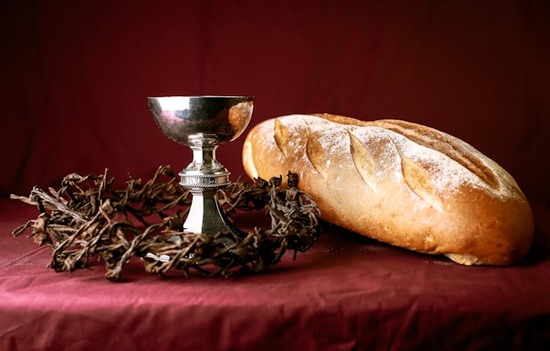
Photo by James Coleman on Unsplash
As the time of Jesus’ crucifixion grew near, He called John and Peter to prepare the Passover dinner for Him and the rest of the disciples (Luke 22:7-13).
Jesus knew this would be the last formal meal He would eat with His disciples, and He trusted John to be able to set it up as He asked.
The Garden of Gethsemane
It was John, James, and Peter that Jesus called to be with Him as He prayed in the Garden of Gethsemane (Matthew 26:37).
Though John and the others were eager to follow Him, they didn’t understand the gravity of the situation.
Jesus went to the garden to pray for God to give Him the strength He needed to fulfill His mission. He knew the pain and heartbreak that awaited Him on the Cross. The agonizing idea of being separated from His Heavenly Father actually caused Him to sweat blood (Luke 22:44).
And yet, in one of the darkest moments in His life, John and the other disciples let Him down.
“Then He came to the disciples and found them sleeping, and said to Peter, ‘What? Could you not watch with Me one hour? Watch and pray, lest you enter into temptation. The spirit indeed is willing, but the flesh is weak’” (Matthew 26:40-41, NKJV).
But even after Jesus warned them to stay awake, they fell asleep again moments later.
“And He came and found them asleep again, for their eyes were heavy. … ‘Are you still sleeping and resting? Behold, the hour is at hand, and the Son of Man is being betrayed into the hands of sinners. Rise, let us be going. See, My betrayer is at hand’” (Matthew 26:43-46, NKJV).
Like all of us, John suffered from human weakness. But even as he failed to pray by Jesus’ side in the Garden of Gethsemane, he later found the strength to stand by Him as He hung on the Cross.
Jesus’ crucifixion
Of all 12 disciples, John is the only one believed to be present for the crucifixion of Christ.
Just like Jesus predicted, the other disciples scattered when He was captured (John 18:12; Matthew 26:31). Even Peter, also one of His inner circle disciples, denied and abandoned Him (Matthew 26:69-75).
Only John stood by the Cross as Jesus died.
In the end, he remained loyal to Jesus, even agreeing to look after His mother when He passed.
“When Jesus saw His mother and the disciple He loved standing there, He said to His mother, ‘Woman, here is your son.’ Then He said to the disciple, ‘Here is your mother.’ And from that hour the disciple took her into his own home” (John 19:26-27, CSB).
It’s difficult to imagine what John must have felt, watching his friend and Savior hanging on the Cross.
Fortunately, he wasn’t left with the heartbreak of Jesus’ passing for long. He was among the first of the 12 apostles to learn of Jesus’ resurrection.
Jesus’ Resurrection
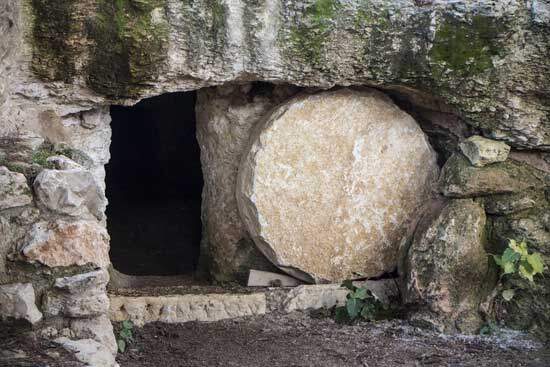
John was the first disciple to reach Jesus’ tomb after Mary Magdalene told him and Peter that the stone of the tomb had been rolled away (John 20:4).
But for all of his eagerness, he waited for Peter to arrive and inspect the tomb before he went in himself (John 20:5-8).
When Peter had confirmed that Jesus was gone and His grave clothes left behind, John concluded that Jesus had risen from the dead (John 20:6-8).
Perhaps being witness to the raising of Jairus’ daughter had reminded him of God’s power over death.
Whatever the case, his time with Jesus surely helped him better understand what His ministry was all about. And in the end, this, along with the way Jesus was able to transform his character, helped him become the leader the early church needed.
His contributions as an apostle
As an apostle, John preached the Gospel message, performed miracles, and became a leader of the early Christian Church.
His life as an apostle began once Jesus returned to heaven in the Ascension. And not long before that, Jesus gave His apostles the commission to keep telling others about the blessed hope of the Gospel message (Mark 16:14-20).
This was quite the transformation for the disciples. They had to go from being students to being teachers and evangelists. For his part, John had to go from being the youngest disciple to becoming an apostle of a new religious movement.
But Jesus didn’t leave them to figure it all out on their own. He sent the Holy Spirit to guide them.
The book of Acts tells us that the apostles received the Holy Spirit at Pentecost while they were in Jerusalem (Acts 1:2-5; 2:1-13).
Through the guidance of the Holy Spirit, John took an active role in church leadership, often working alongside Peter.
Some of the acts of John included
- Performing miracles (Acts 3:1-10)
- Praying for the Holy Spirit’s guidance (Acts 8:14-15)
- Making administrative decisions (Acts 6:6-7)
- Preaching the Gospel message (Acts 3:11-26)
He became such an important leader that the apostle Paul called him one of the pillars of the early Christian church (Galatians 2:9).
He is also believed to have authored several books of the Bible. He is most commonly credited with writing the Gospel of John, the three epistles of John, and the book of Revelation.7
And the same fervor that earned him the “Son of Thunder” nickname eventually applied to his ministry as an apostle. He was exiled on the island of Patmos for preaching about Jesus. But his captors couldn’t keep him from serving God. It was likely during this time that John wrote Revelation.8
Through books like this he was able to deliver theological and spiritual messages that would guide and encourage readers around the world, even to this day.
His teachings
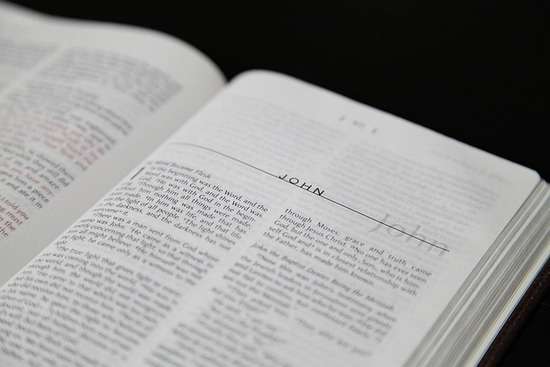
Image by Sang Valte from Pixabay
John is believed to be the author of the Gospel of John, the epistles of John, and the book of Revelation.
While the historian Eusebius disagrees about Johannine authorship of these books, second-century church leader Papias and other religious figures like Irenaeus and Polycarp believed John was indeed the author of these books.9
In the Gospel According to John, he offered his up-close-and-personal perspective on the events surrounding Jesus’ life. He mentioned events other accounts had left out or that other writers had not been able to witness, like the resurrection of Lazarus (John 11:38-44).
But while the Gospel of John was written as a biography of Jesus’ life and mission, the epistles of John were written as letters of counsel to early Christian believers. Altogether, they warn Christians not to follow after false teachers10 and instead pursue the life God calls them to live—one motivated by love and compassion.11 It is believed that the first of these epistles was written while John was in Ephesus as a warning for the churches of Asia against Gnostic teachings that denied the divinity of Jesus.12
The book of Revelation, however, presents an entirely different kind of information. While John’s other books focused on themes of discipleship and love, Revelation was his account of prophetic visions he received. We get glimpses of the end times and learn the significance of various events and patterns in history, which ultimately provides helpful insight about what will happen in the last days before Jesus returns at His Second Coming.
His writings also help us see how he matured as an apostle of Christ.
The Gospel of John gives us a look at his early growth as a disciple of Jesus, while his epistles reveal his spiritual maturity and influence as a church leader.
And in the book of Revelation, his role expanded to prophet as well. God entrusted him with the task of recording what he was shown about how the Great Controversy began, what it did to our world, and Jesus’ incredible role in God’s plan for redeeming us and putting an end to sin forever.
All in all, his writings helped the church better understand the life of Christ, what it means to be a disciple, and the culmination of the plan of salvation.
His persecution, death, and legacy
Today, John is known for his roles as a powerful evangelist, writer, and leader of the Christian Church.
Though we aren’t certain about the events surrounding the end of his life, we do know that John served in his many ministerial roles even while facing persecution.
The historian Tertullian believes his persecutors may have sentenced John to be boiled in oil.13 And though Tertullian asserts that God protected him from this ordeal, John continued to face persecution for the rest of his life.14
Some scholars believe he was exiled to the island of Patmos for many years by Emperor Domitian.15 Once Domitian died, John was believed to be released to Ephesus where he died of old age. If this is true, it would mean John was the only disciple who didn’t die a martyr.16
However, there are some who still claim John was indeed martyred.17
But regardless of how he died, what’s important is the legacy his life left with the entire world.
John was invested in Jesus’ ministry from the start, but his story also shows just how much he grew in his relationship with Christ. His time with his Master and Savior taught him how to be a compassionate and humble leader.
We can remember things like his old hatred for Samaritans (Luke 9:51-56), contrasted with how he later ministered to them and prayed on their behalf (Acts 8:14-15).
He had once asked Jesus about the signs of the end times (Mark 13:3, 29), only to later be given the responsibility of sharing the events of the end times with the world through the book of Revelation.
In the end, John’s story teaches us that Jesus was never looking for perfect disciples. He was looking for willing disciples.
John left behind his entire life—his home, job, and family—to follow Him. Like all of us, he had some character flaws and often made mistakes. But in the end, it was his willingness to follow Jesus and to allow his character to be transformed that led him to become who theologians recognize as “John the Apostle” or “John the Revelator.”
Want to learn more about the apostles? Read all about
John’s big brother, James.
- Chadwick, Henry, “Saint John the Apostle,” Britannica.com. [↵]
- “24 Surprising Things About the Disciple Whom Jesus Loved,” Heroes Bible Trivia, Hope Channel, General Conference of Seventh-day Adventists. [↵]
- “Galilee,” Encyclopedia Britannica, https://www.britannica.com/place/Galilee-region-Israel. [↵]
- Skinner, C., Andrew. “A Historical Sketch of Galilee,” Brigham Young University, https://byustudies.byu.edu/article/a-historical-sketch-of-galilee/. [↵]
- “St. John the Apostle.” [↵]
- “John, Gospel According To,” Encyclopedia.com. [↵]
- Davidson, Richard M., PhD., “Who Authored the Bible?” Ministry Magazine. [↵]
- “John at Patmos: Why Was He Exiled and Why Was it a Blessing?” Heroes Bible Trivia, Hope Channel, General Conference of Seventh-day Adventists. [↵]
- The Remnant Study Bible, Remnant Publications, 2009. pp. 1251, 1494. [↵]
- 1 John 4; 2 John 1:7-11; 3 John 1:9-12. [↵]
- 1 John 5; 1 John 4; 2 John 1:4-6; 3 John 1:5-8. [↵]
- The Remnant Study Bible. p.1495. [↵]
- “St. John the Apostle.” [↵]
- Ibid. [↵]
- “John at Patmos.” [↵]
- “Stories of Christian Martyrs: The Apostle John,” The Voice of the Martyrs, Aug. 20, 2021. [↵]
- “How did St. John the Apostle die?” Britannica. [↵]
- “Chadwick.” [↵]
- “Messiah,” Encyclopedia Britannica, https://www.britannica.com/topic/messiah-religion. [↵]
Fun Facts about the Apostle John:
- Before they met Jesus, John and James worked alongside Simon Peter and Andrew as fishermen (Luke 5:10).
- John is believed to be the youngest disciple.
- John may have followed John the Baptist before he followed Jesus (John 1:35-40).
- Jesus called John and James “Sons of Thunder” (Mark 3:17).
- John refers to himself as the disciple Jesus loved (John 21:20-25; John 13:23-25; John 19:26-27).
- Jesus asked John to take care of His mother, Mary, when He died on the Cross (John 19:26-27).
- John is credited with writing the Gospel of John, the epistles of John, and the book of Revelation.
- John is believed to have written more of the Bible than any other disciple.
- According to church tradition, John is the last disciple to die. And he’s the only one to die of natural causes.
- According to the historian Tertullian, John was sentenced to be boiled in oil, and he survived without any injury.18
- His mother is thought to be a woman named Salome. In one verse, she is referred to by name, and in another she is referred to as the mother of Zebedee’s sons, making her the mother of James and John (Mark 15:40; Matthew 27:56).
That one day, the ancient nation of Israel would be restored to what it once was. And they hoped that the promised Messiah would be the one to deliver them from Roman occupation.19
Related pages


More Answers
Quem Foram os Juízes de Israel no Antigo Testamento?
Quem Foram os Juízes de Israel no Antigo Testamento?Tempos de crise exigem homens e mulheres de ação. Os israelitas, recém-estabelecidos na Terra Prometida, encontraram-se nesses tempos. À medida que nações inimigas atacavam e oprimiam as tribos, eles clamavam a Deus...

¿En qué se diferencian los Adventistas del Séptimo Día de otros protestantes?
¿En qué se diferencian los Adventistas del Séptimo Día de otros protestantes?Como denominación cristiana protestante, la Iglesia Adventista del Séptimo Día considera la Biblia como la regla suprema de fe y a Jesucristo como el único camino a la salvación. Tenemos...
Como os Adventistas do Sétimo Dia São Diferentes de Outros Protestantes?
Como os Adventistas do Sétimo Dia São Diferentes de Outros Protestantes?Como uma denominação cristã protestante, a Igreja Adventista do Sétimo Dia considera a Bíblia como o guia supremo e vê Jesus Cristo como o único caminho para a salvação. Temos algumas diferenças...

O que é ASI (Associação de Empresários e Profissionais Adventistas)?
O que é ASI (Associação de Empresários e Profissionais Adventistas)?ASI, que significa Associação de Empresários e Profissionais Adventistas (tradução adaptada), é uma organização baseada em associação que oferece apoio aos membros adventistas (profissionais...
Jesús y la Mujer en el Pozo: Derribando Barreras
El encuentro de Jesús con la mujer en el pozo revela su sentir por las personas heridas y su deseo de derribar prejuicios. Esta página analiza cómo Jesús se acercó a ella.

Revealing The True Meaning of The Parable of The Rich Man & Lazarus
Learn the real point behind one of Jesus’ most vivid parables.
O que são as Bem-Aventuranças (E o que significam)?
O que são as Bem-Aventuranças (E o que significam)?As Bem-Aventuranças, encontradas no início do Sermão da Montanha de Jesus no Evangelho de Mateus, são o manifesto do reino de Jesus. Elas descrevem a maneira como Seu reino funciona e o que significa ser um de Seus...

Líderes de la iglesia: ¿Cuál es el rol de un pastor Adventista?
Líderes de la iglesia: ¿Cuál es el rol de un pastor Adventista?¿Cuál es el rol de un pastor en la iglesia Adventista? La posición en sí misma, al menos en lo que respecta a una congregación local, no es muy diferente de la de los pastores en otras denominaciones...
ASI ni Nini (Huduma na Viwanda vya Waadventista vya Kibinafsi)?
ASI ni Nini (Huduma na Viwanda vya Waadventista vya Kibinafsi)?ASI, ambayo inayofupisha maneno (Huduma na Viwanda vya Waadventista vya Kibinafsi), ni shirika la uanachama linalotoa msaada kwa wainjilisti wa Kiadventista (wataalamu wa Kanisa la Waadventista wa Sabato...

Ellen White Alisema Nini Kuhusu Unabii wa Nyakati za Mwisho?
Tunaweza kusoma katika Maandiko kuhusu mfululizo wa matukio na dalili zinazoongoza hadi Ujio wa Pili wa Yesu Kristo.

Safari na Utume wa Ellen G. White Ulimwenguni
Safari na Utume wa Ellen G. White UlimwenguniIngawa Ellen White, mwanzilishi mwenza wa Kanisa la Waadventista wa Sabato, anajulikana zaidi kwa huduma yake nchini Marekani, pia alisafiri kwenda nchi nyingine kumi na mbili katika maisha yake—hili lilikuwa jambo kubwa...

Yote Kuhusu Wainjilisti wa Vitabu wa Kiadventista
Kanisa la Waadventista wa Sabato hutumia mbinu mbalimbali kusambaza tumaini la injili duniani.
¿Qué es ASI (Servicios e Industrias de Laicos Adventistas)?
¿Qué es ASI (Servicios e Industrias de Laicos Adventistas)?ASI, que significa Servicios e Industrias de Laicos Adventistas, es una organización basada en membresía que brinda apoyo a los laicos adventistas (profesionales Adventistas del Séptimo Día que no son...
¿Qué dijo Elena G. de White sobre la profecía de los últimos tiempos?
¿Qué dijo Elena G. de White sobre la profecía de los últimos tiempos?Podemos leer en las Escrituras acerca de la serie de eventos y señales que conducen a la segunda venida de Jesucristo. Y suena bastante intenso, por decir lo menos. La naturaleza simbólica del...
O que Ellen White disse sobre a profecia dos tempos finais?
O que Ellen White disse sobre a profecia dos tempos finais?Podemos ler nas Escrituras sobre a série de eventos e sinais que antecedem a segunda vinda de Jesus Cristo. E, para dizer o mínimo, isso soa bastante intenso. A natureza simbólica da linguagem da profecia...

Meaning of the Parable of the Two Sons in Matthew 21
Meaning of the Parable of the Two Sons in Matthew 21The parable of the two sons in Matthew 21:28-32 is about a father who instructs his sons to work in the family vineyard. The first son refuses to work but later has a change of heart and obeys. The second son says...
Viagens e Missão Mundial de Ellen G. White
Viagens e Missão Mundial de Ellen G. WhiteEmbora Ellen White, cofundadora da Igreja Adventista do Sétimo Dia, seja mais conhecida por seu ministério nos Estados Unidos, ela também viajou para outros doze países durante sua vida — uma grande conquista no século XIX,...
Joseph Bates na Nafasi Yake katika Kanisa la Waadventista
Joseph Bates na Nafasi Yake katika Kanisa la WaadventistaJoseph Bates alikuwa baharia aliyegeuka kuwa mhubiri ambaye alijiunga na Harakati ya Miller na kusubiri Ujio wa Pili wa Yesu kutokea mwaka 1844. Licha ya kukatishwa tamaa wakati hili halikutokea, Bates...

Je, Wasabato Husherehekea Sikukuu?
Je, Wasabato Husherehekea Sikukuu?Je unajiuliza ikiwa mwanafunzi mwenzako au mfanyakazi mwenzako Mwadventista husherehekea sikukuu kama wewe? Labda ungependa kumshirikisha kwenye sherehe fulani, lakini pia unataka kuheshimu imani yake. Kwa hiyo, huna uhakika wa jinsi...

O Que a Bíblia Diz Sobre a Segunda Vinda de Jesus Cristo
Curioso para saber o que a Bíblia diz sobre a Segunda Vinda de Jesus Cristo? Vamos abordar os versículos-chave e o que eles significam.

Waadventista Wanaamini Nini Kuhusu Imani na Matendo?
Waadventista Wanaamini Nini Kuhusu Imani na Matendo?Waadventista wanaamini tunaokolewa kwa imani, ambayo ni imani na tumaini tulilonalo kwa Yesu Kristo kutuokoa kutoka dhambini. Yesu, basi, anatupa uwezo wa kuishi kwa utii wa amri za Mungu na kuwahudumia wengine kwa...
Todo sobre los colportores Adventistas del Séptimo Día
Todo sobre los colportores Adventistas del Séptimo DíaLa Iglesia Adventista del Séptimo Día utiliza una variedad de métodos para difundir la esperanza del evangelio al mundo. Una de estas formas es a través del colportaje, también llamado “venta puerta a puerta” o...
Tudo Sobre Colportores Adventistas do Sétimo Dia
A Igreja Adventista do Sétimo Dia usa uma variedade de métodos para espalhar a esperança do evangelho ao mundo.
Los viajes y la misión mundial de Elena G. de White
Los viajes y la misión mundial de Elena G. de WhiteAunque Elena G. de White, cofundadora de la Iglesia Adventista del Séptimo Día, es más conocida por su ministerio en los Estados Unidos, también viajó a otros doce países durante su vida, un gran logro en el siglo XIX...

Mikutano ya Injili ya Waadventista ni Nini?
Kanisa la Waadventista wa Sabato linaweka mkazo mkubwa katika kushiriki injili kupitia uinjilisti, yaani kushiriki injili kupitia mahubiri, mafundisho, na ushuhuda.
Joseph Bates y su papel en la Iglesia Adventista del Séptimo Día
Joseph Bates y su papel en la Iglesia Adventista del Séptimo DíaJoseph Bates fue un marinero que se convirtió en predicador, se unió al Movimiento Millerita y esperó que ocurriera la Segunda Venida de Jesús en 1844. A pesar de sentirse decepcionado cuando esto no...
Joseph Bates e Seu Papel na Igreja Adventista do Sétimo Dia
Joseph Bates foi um marinheiro que se tornou pregador, juntou-se ao Movimento Millerita e esperou pela Segunda Vinda de Jesus em 1844.
¿Los Adventistas del Séptimo Día celebran las fiestas?
¿Los Adventistas del Séptimo Día celebran las fiestas?¿Te preguntas si tu compañero de clase o de trabajo adventista celebra las mismas fiestas que tú? Tal vez quieres incluirlo en algunas festividades, pero también deseas respetar sus creencias. Entonces, no estás...
Os Adventistas do Sétimo Dia Celebram Feriados?
Está se perguntando se seu colega de classe ou de trabalho adventista celebra os mesmos feriados que você?
Didn’t find your answer? Ask us!
We understand your concern of having questions but not knowing who to ask—we’ve felt it ourselves. When you’re ready to learn more about Adventists, send us a question! We know a thing or two about Adventists.