
Applying biblical prophecy to history, recent events, and especially the future, can be a daunting task. Even a little scary for some. But even so, we can’t help but want to know more. We want to be prepared—to feel like we know how to weather the storm.
God used Ellen G. White to help us do just that. Inspired by the Holy Spirit, her visions showed her the degree of spiritual conflict happening behind the scenes of world events and movements. She wrote out these details in 4 books, titled Spiritual Gifts. These were later expanded to Spirit of Prophecy, vol. 1-4, which led to the most recent series that provides a fuller perspective: the Conflict of the Ages series.
These books have an interesting backstory, and they can add helpful commentary and perspective to our own Bible study efforts. To give you some background information, we’ll look at:
- What is meant by the phrase “spirit of prophecy”
- What are the Spirit of Prophecy books about?
- Writing and publication of the Spirit of Prophecy series
- Where to find the Spirit of Prophecy books
- Benefits we can get from reading the Spirit of Prophecy
Before we dig into Ellen White’s insightful books, let’s first clarify what the term “spirit of prophecy” means.
What is the “spirit of prophecy”?
Looking first to the Bible, the phrase “spirit of prophecy” appears in Revelation 19:10:
“Worship God, because the testimony of Jesus is the spirit of prophecy” (CSB).
This tells us that the spirit of true prophecy is that which testifies of Jesus Christ being the Son of God and our Savior. And it can also describe the Holy Spirit Himself, as He is the one who gives prophets their prophecy.
The phrase “spirit of prophecy” has also been used to describe one of the spiritual gifts of the Holy Spirit, as prophecy is among those gifts.
Any person might be called by God to be a prophet, or one who relays messages from God to the intended audience.
Prophets were prominent and abundant throughout the Old and New Testaments, but God still promises this gift even in modern times (Joel 2:28-29). Not necessarily as a title, like in the days of Samuel or Elijah, but by serving as a messenger to uphold His Word.
What are the Spirit of Prophecy books about?
As for the books, the Spirit of Prophecy set contains four volumes written by Ellen White. They cover much of earth’s history in the light of the spiritual conflict between God and Satan.
The basis for these books stems from a vision she received on March 14, 1858, while in Lovett’s Grove, Ohio.1
Great Controversy vision
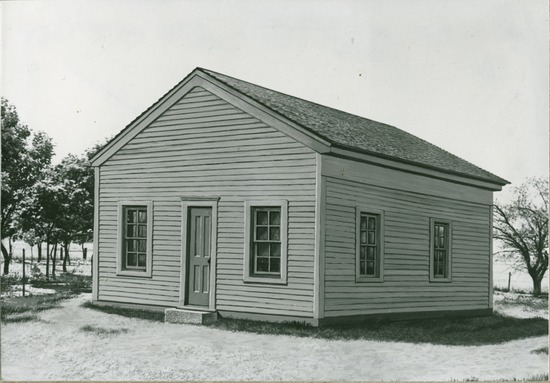
Courtesy of the Ellen G. White Estate, Inc.
In the book Life Sketches of Ellen G. White, we can see how she described the vision:
“In the vision at Lovett’s Grove, most of the matter which I had seen ten years before concerning the great controversy of the ages between Christ and Satan, was repeated, and I was instructed to write it out. I was shown that while I should have to contend with the powers of darkness, for Satan would make strong efforts to hinder me, yet I must put my trust in God, and angels would not leave me in the conflict.”
The vision lasted two hours—one of her longest.2
Satan indeed tried to stop her from writing out the vision. Before she reached home, a debilitating stroke of paralysis struck her, and she was afraid she was dying.3 But the feeling gradually returned to her limbs, and she embarked on the enormous task of writing out the vision.
These writings eventually led to the publication of four volumes titled, The Spirit of Prophecy.
Let’s take a look at what each volume is about.
Volume 1: The Great Controversy Between Christ and His Angels and Satan and His Angels (1870)
Volume one of Spirit of Prophecy covers some of the events of the Old Testament.
The volume starts with events in heaven: Satan’s desire for God’s position, and how he was cast out of heaven with the angels who followed him.
Next, the book moves into Satan’s first interaction with humanity on earth. And this turned into his temptation of Adam and Eve, and humanity’s fall into sin.
Then it goes through the biblical narrative: the Flood, the Tower of Babel and the dispersion of the current population, Abraham and his descendants, the progression of the nation of ancient Israel, all the way through Solomon and the Ark of the Covenant.
All throughout the book, Ellen White emphasizes the invisible struggle between God and the devil, or of good and evil. Satan wants to take the allegiance of humanity away from God, while God wants us to find redemption and salvation through Him.
Volume 2: Life, Teachings, and Miracles of Our Lord Jesus Christ (1877)
The second volume of Spirit of Prophecy takes us through Jesus’ life on earth, when He lived among humanity for 33 years.
In particular, this book focuses on the first part of Jesus’ earthly ministry. It begins with His humble birth, then delves into His ministry while participating in society as a young adult. The book is like a compilation of the Gospels in the New Testament, combining perspectives to form a well-rounded account.
After describing Jesus’ miracles, His sermons, and His travels, the book concludes with His triumphal arrival into Jerusalem. This sets the stage for the events leading to His crucifixion.
Volume 3: The Death, Resurrection, and Ascension of Our Lord Jesus Christ (1878)

Photo by Ann on Unsplash
Beginning with Jesus weeping over Jerusalem, the book continues with the more serious endeavors of the Jewish leaders to get rid of Jesus.
At their success, the book describes how the conflict between Christ and Satan was ended by Jesus’ atonement for all human sin on the cross. We then read about Jesus’ rising from the dead, His final guidance to His disciples, and His ascension into Heaven. Then the book follows the ministries of the disciples and Paul.
In the original publication, the third volume ended with the chapter “Opposition at Thessalonica.” But in later editions, five more chapters were added from other collections of her writing. This provided more information about Paul and Peter’s deaths and their significance.
Volume 4: The Great Controversy Between Christ and Satan from the Destruction of Jerusalem to the End of Time (1884)
Originally, Ellen White meant to begin this book with the ministries of the apostles (the last five chapters), but God told her in vision to start with Jerusalem’s destruction.4
The reader is taken through the history of the Christian church, then the focus transitions into the three angel’s message and end-time events. We get details about the journey of God’s people through the “time of trouble,” concluded by the second advent of Christ and the destruction of the “old earth” along with Satan and his followers. This ends the Great Controversy between good and evil.
Much of the historical research, especially on the Reformation, was done when Ellen White was visiting Switzerland and had access to J. N. Andrew’s large library.5
Their writing and publication
When Ellen White first began writing out her vision of the Great Controversy, she didn’t have as solid of a plan as what created the perfectly-laid-out books of the Spirit of Prophecy series, each being around 400 pages and dealing with specific events.6
Her writing about the Great Controversy was published in shorter segments before the Spirit of Prophecy, in a series called Spiritual Gifts.
Spiritual Gifts
The first edition of the Great Controversy was published in 1858 by the Seventh-day Adventist Publishing Association as Spiritual Gifts—The Great Controversy Between Christ and His Angels, and Satan and His Angels. It was a short book and only touched on the main points of the story.7 It was later combined into another book, called Early Writings of Ellen G. White.
The second volume of Spiritual Gifts was an autobiographical piece she’d been working on before she had the Great Controversy vision.8
The last two volumes of Spiritual Gifts further discussed the Old Testament events described in volume one.9 It covered not only what was written in the first volume about the fall of Satan and humanity, but also the patriarchs and Israel.10 Both were published in 1864.
Spirit of Prophecy
The Spiritual Gifts volumes were so well received that Adventists requested a republication of the little books.11 However, Ellen White wanted to expand them into a more complete picture of the Great Controversy, so she instead created a new series. This became the Spirit of Prophecy.
Spiritual Gifts, volumes three and four, became the basis for Spirit of Prophecy, volume one.12 This was published in 1870.
The second volume was published in 1877, and the third the next year. In 1884 the fourth volume came out, concluding the series. Excerpts of these books were also published in the Review and Herald at different times, further alerting people to their existence.
This last book, which would later be called The Great Controversy, became one of Ellen White’s most popular books. Its fame spread, when, after she published the first edition, several of its chapters appeared in Signs of the Times.13
About this time, Adventists discovered the benefit of colporteurs, or people who sell books, pamphlets, or other forms of literature door-to-door. The Great Controversy proved to be quite successful in this area.14
Conflict of the Ages

Courtesy of the Ellen G. White Estate, Inc.
After the Spirit of Prophecy books were finished, Ellen White visited Europe. There, she saw many of the places important to the Reformation. She at once recognized them from her visions of the Great Controversy.
Around this time as well, plans were being laid to translate the Spirit of Prophecy into the main languages of Europe.
With this broadened view in mind, she decided to rewrite and expand the Spirit of Prophecy series. It needed to go to everyone, not just Seventh-day Adventists.
This third edition of The Great Controversy became part of the Conflict of the Ages series. As The Great Controversy (volume 4 of Spirit of Prophecy) was the most popular, she began there. This new series came to include:
- Patriarchs and Prophets (1890): this first volume covers and expands on Spirit of Prophecy volume one, detailing time from the earth’s creation to King David.
- Prophets and Kings (1917): this volume covered the missing years in Israel’s history, from King Solomon to its captivity.
- The Desire of Ages (1898): the third volume covers the life of Christ, the Son of God and Savior of the world. It combines content from volumes two and three of the Spirit of Prophecy.
- The Acts of the Apostles (1911): Based on volume three of Spirit of Prophecy, this book tells the story of the early Christians and the spread of the gospel.
- The Great Controversy (1888): Enriched by Ellen White’s personal view of the Reformation sites, this book covers the same journey of the unseen battle between God and Satan, starting at the destruction of Jerusalem and ending after the Second Coming.
The Great Controversy continued to be the most popular of the books. Many reprints were made to keep up with the demand.
By 1907, it had been printed so many times the printing plates were worn out. They were patched and a new copyright was issued, but she decided to inspect the book again, to “see if the truths it contained were stated in the very best manner, to convince those not of our faith that the Lord had guided and sustained me in the writing of its pages.”15
Later, edits were made to generalize dates to say things like “many years since” instead of “fifty years since,” etc.16
Ellen White also left out some things that she felt were not as beneficial to the general public.
“Essential truths must be plainly told; but so far as possible they should be told in language that will win, rather than offend,” she said about the new edition.
Just as you might speak diplomatically to a friend to avoid unnecessary conflict, Ellen White reworded a few expressions that some might take in a different way than intended.
The new revision was released in 1911 and is the standard edition used today.17
Other books Ellen White wrote during this time
The Spirit of Prophecy was finished eight years before Steps to Christ was published in 1892 and 37 years after her first pamphlet, A Word to the “Little Flock,” was published in 1847.
The Spirit of Prophecy was written at a time when America was still reeling from the effects of the Civil War. These books were important to people understanding how the war fit in the overall Great Controversy theme.
Ellen White was not writing only the Spirit of Prophecy during this time. Besides all of her other numerous tasks, she found time to write articles and several other books, including Sketches from the Life of Paul (1883) and Testimonies for the Church, volumes 3, 4, and 5 (1872, 1876, 1882).
As can be seen, Ellen White was an exceptionally driven writer for someone who didn’t complete schooling past age 9. In a letter to Uriah Smith, she wrote, “I write from fifteen to twenty pages each day. It is now 11:00 o’clock and I have written fourteen pages of manuscript. … My mind is stirred so deeply I cannot rest. Write, write, write, I feel I must and not delay.”18
God guided her hand to write what must be said.
Where can I find these books?

The original Spirit of Prophecy books are available both online at egwwritings.org and in print. To purchase the complete Conflict of the Ages series, they can be found at the Adventist Book Center or Amazon.
Why read the Spirit of Prophecy?
It’s not hard to notice how the world is fast spiraling out of control. The only way we can know what will ultimately happen and not be consumed with fear is through prophecy written in the Bible. 1 Corinthians 14:3 encourages us:
“But he who prophesies speaks edification and exhortation and comfort to men” (NKJV).
Ellen White’s revelation about the unseen spiritual side of the world’s events helps us more fully grasp the prophecies we read in our Bible study. There is so much going on behind the scenes, even right now.
The Conflict of the Ages series can greatly help our understanding of both the history of the world and its future. When we learn more about Satan’s rebellion against God, we can understand why sin exists and becomes progressively worse as more and more of earth’s history plays out.
Satan knows he can’t win against God, so instead he wants to bring down every possible human with him—because he knows God loves them dearly.
When we understand this, the reason for wars, violence, broken families, and every other sin becomes clear. Everything is influenced by this unseen fight. The more people Satan can turn against God, the more he hurts God.
Knowing this, we can join in the fight to save people from the devil’s lies and empty promises.
This series also shows how biblical prophecy through the ages has revealed the fundamental layout of world history, including the last days. God didn’t leave us in the dark to bumble through existence, wondering how He had any hand in this evil world.
There is a bigger picture and plan, and the outcome will be better than anything we could ever imagine. And we can deepen our insight about this plan by reading this series as we also study our Bibles.
Want to learn more about the fall of humanity and the plan of salvation?
Choose an Online Bible Study
Want to keep learning? Find out more about Jesus, humanity, the plan of salvation, and how God loves you enough to sacrifice everything, just to give you a chance to choose Him.
Sometimes it can be hard to know where to start, that’s why we offer free, user-friendly, online Bible study options you can do anytime, anywhere, and at your own pace.
This online Bible school will take you through the major themes of Scripture, breaking down the Bible’s complex concepts into bite-sized pieces, which can lead you toward the answers of life’s more challenging questions.
Related Articles



- “A Monumental Vision,” https://adventistreview.org/2008-1508/2008-1508-8/. [↵]
- Ibid. [↵]
- White, Ellen G. Life Sketches of Ellen G. White, p. 162. [↵]
- White, Arthur L. “Ellen G. White’s Portrayal of the Great Controversy Story,” https://whiteestate.org/legacy/issues-4sop-supp-html/. [↵]
- White, W. C. “How Ellen White’s Books were Written,” https://whiteestate.org/legacy/issues-howegwbkswcw-html/. [↵]
- “A Monumental Vision” [↵]
- White, Arthur L., ibid. [↵]
- Ibid. [↵]
- Ibid. [↵]
- Ibid. [↵]
- Ibid. [↵]
- Ibid. [↵]
- Ibid. [↵]
- Ibid. [↵]
- Ibid. [↵]
- Ibid. [↵]
- Ibid. [↵]
- White, W. C., Ibid. [↵]
More Answers

The Barren Fig Tree Parable: What It Means to Bear Fruit
Find out what the Parable of the Barren Fig Tree really means.

¿Qué son las reuniones evangelísticas adventistas?
¿Qué son las reuniones evangelísticas adventistas?La Iglesia Adventista del Séptimo Día pone un gran énfasis en compartir el evangelio mediante la evangelización, o compartir el evangelio a través de la predicación, la enseñanza y el testimonio. Una de las formas en...
O que são os Encontros Evangelísticos Adventistas?
O que são os Encontros Evangelísticos Adventistas?A Igreja Adventista do Sétimo Dia dá grande ênfase ao compartilhamento do evangelho por meio da evangelização, ou seja, compartilhar o evangelho através da pregação, ensino e testemunho. Uma das formas de realizarmos...

O Que os Adventistas Acreditam Sobre Fé e Obras?
O Que os Adventistas Acreditam Sobre Fé e Obras?Os adventistas acreditam que somos salvos pela fé, que é a crença e confiança que temos em Jesus Cristo para nos salvar dos nossos pecados. Jesus, então, nos capacita a viver em harmonia com os mandamentos de Deus e a...
¿Qué creen los Adventistas sobre la fe y las obras?
¿Qué creen los Adventistas sobre la fe y las obras?Los adventistas creen que somos salvos por la fe, que es la creencia y confianza que tenemos en Jesucristo para salvarnos de nuestros pecados. Jesús, entonces, nos capacita para vivir en armonía con los mandamientos...
Je, Ninahitaji Kuwa Mwadventista Ili Niokolewe
Je, Ninahitaji Kuwa Mwadventista Ili Niokolewe?Jibu la swali hili ni rahisi, “hapana.” Linapokuja swala la wokovu katika Yesu Kristo, kinachohitajika kwa mtu ni kukiri dhabihu ya Yesu kwa ajili yetu, kuamini kwamba Ametuokoa, na kudai zawadi ya bure ya wokovu ambayo...
¿Necesito ser adventista para ser salvo?
¿Necesito ser adventista para ser salvo?La respuesta a esta pregunta es simplemente, “no.” Cuando se trata de la salvación en Jesucristo, todo lo que se requiere de una persona es reconocer el sacrificio de Jesús por nosotros, creer que Él nos ha salvado y reclamar el...
Preciso ser Adventista para ser salvo?
A resposta para essa pergunta é simplesmente: “não.”

Lo que la Biblia dice sobre la Segunda Venida de Jesucristo
¿Tienes curiosidad sobre lo que la Biblia dice acerca de la Segunda Venida de Jesucristo? Cubriremos los versículos clave y su significado.

¿Quién fue Mateo, el apóstol, en la Biblia?
En el primer libro del Nuevo Testamento, encontramos la historia del Evangelio desde la perspectiva de Mateo.
2 Corinthians: An Overview of Paul’s Most Personal Letter
Discover Paul’s lessons on forgiveness, reconciliation, generosity, and more. It’s all in the book of 2 Corinthians!
Quem Foi Mateus, o Apóstolo, na Bíblia?
Quem Foi Mateus, o Apóstolo, na Bíblia?No primeiro livro do Novo Testamento, encontramos a história do Evangelho sob a perspectiva de Mateus. Ele era um coletor de impostos judeu de Cafarnaum, no primeiro século d.C., e provavelmente era desprezado pelos outros judeus...
The Pharisee and the Tax Collector Parable: Its Meaning Made Simple
The Meaning of the Pharisee and the Tax Collector ParableIn Luke 18:9-14, Jesus told a parable about two men who went to the temple to pray. One was a Pharisee and the other a tax collector. The Pharisee prayed (well, bragged) about his own good works compared to the...
Biblia Inasema Nini Kuhusu Ujio wa Pili wa Yesu Kristo
Unajuliza Biblia inasema nini kuhusu Kurudi kwa Yesu Kristo Mara ya Pili? Tutajadili aya kuu na maana zake.

The Story of the Widow’s Mite—What It Really Means
The Story of the Widow’s Mite—What It Really MeansPeople often assume bigger is better, but the Bible turns this concept on its head with the story of the Widow’s Mite. Of all the donations Jesus sees at the temple, the gift that draws His attention is not the...

Consejo de Elena G. de White sobre la Educación Universitaria
Consejo de Elena G. de White sobre la Educación UniversitariaElena G. de White, una cofundadora importante del Adventismo, es conocida a menudo por su orientación práctica y espiritual para la educación infantil adecuada. Pero también estuvo significativamente...
Mathayo Alikuwa Nani Katika Biblia?
Mathayo Alikuwa Nani Katika Biblia?Katika kitabu cha kwanza cha Agano Jipya, tunapata simulizi la Injili kutoka kwa Mathayo. Alikuwa mtoza ushuru Myahudi kutoka Kapernaumu katika karne ya kwanza MK, na huenda alichukiwa na Wayahudi wenzake kwa kuchagua kazi hiyo....

¿Cuáles son los beneficios de vivir en el campo?
¿Cuáles son los beneficios de vivir en el campo?Visitar el campo puede ofrecer un descanso muy necesario del típico ajetreo y bullicio de la ciudad. Muchos incluso han decidido mudarse a zonas rurales para disfrutar de un ritmo más lento, espacios amplios, aire...
Quais São os Benefícios de Viver no Campo?
Visitar o campo pode oferecer uma pausa muito necessária do típico agito da cidade.

¿Qué significa la parábola de la perla de gran precio?
Esto es lo que Jesús enseñó sobre el reino de los cielos a través de esta breve parábola sobre un comerciante que encuentra una perla invaluable.
O Que Significa a Parábola da Pérola de Grande Valor?
Aqui está o que Jesus ensinou sobre o reino dos céus por meio desta parábola curta sobre um comerciante que encontra uma pérola inestimável.

Por Que Muitos Adventistas Querem Viver no Campo
Por Que Muitos Adventistas Querem Viver no CampoViver em áreas rurais é algo que os adventistas têm valorizado historicamente, embora as necessidades da vida moderna nem sempre tenham tornado isso possível. Convenhamos, as vantagens da vida na cidade são bastante...
Uma Visão Geral de Romanos: Fé, Justiça, Relacionamentos
Uma Visão Geral de Romanos: Fé, Justiça, RelacionamentosO livro de Romanos é uma das 21 epístolas, ou cartas abertas, do Novo Testamento. E embora seja um texto bíblico antigo, ainda tem uma relevância significativa (até surpreendente) para nossas vidas hoje. O...

Jesus é o Mesmo Ser que Miguel, o Arcanjo?
Jesus é o Mesmo Ser que Miguel, o Arcanjo?Muitos cristãos têm se perguntado sobre a misteriosa identidade de Miguel, o Arcanjo. Desde os primórdios do cristianismo, muitos interpretaram Miguel como o Messias identificado com a figura do Anjo do Senhor. O reformador...
Je, Faida za Kuishi Vijijini ni Zipi?
Kutembelea maeneo ya vijijini kunaweza kutoa mapumziko yanayohitajika sana kutoka kwenye pilikapilika za kawaida za mijini.
Je, Mfano wa Lulu ya Thamani Kubwa Unamaanisha Nini?
Hivi ndivyo Yesu alivyofundisha kuhusu ufalme wa mbinguni kupitia mfano huu mfupi wa mfanyabiashara aliyepata lulu ya thamani isiyo na kifani.
Kwa Nini Waadventista Wengi Wanataka Kuishi Vijijini
Kwa Nini Waadventista Wengi Wanataka Kuishi VijijiniKuishi maeneo ya vijijini ni jambo ambalo Waadventista wamekuwa wakilithamini kihistoria, ingawa mahitaji ya maisha ya kisasa hayafanyi iwezekane kila wakati. Tukubali, faida za kuishi mjini zinaonekana wazi: fursa...
Muhtasari wa Kitabu cha Warumi: Imani, Haki, Mahusiano
Hapa kuna muhtasari na historia ya waraka mrefu zaidi wa Paulo.

Sobre o que é a Parábola do Semeador de Jesus?
A parábola do semeador é, em última análise, sobre como as pessoas responderam a Jesus Cristo e Sua mensagem do reino de Deus—o Evangelho.
Didn’t find your answer? Ask us!
We understand your concern of having questions but not knowing who to ask—we’ve felt it ourselves. When you’re ready to learn more about Adventists, send us a question! We know a thing or two about Adventists.