
Ellen White, one of the founders of the Seventh-day Adventist Church, believed that education was not complete unless it was founded upon the principles of the Bible.
It’s crucial for giving students a framework through which to understand every other aspect of life.
But what does the Bible have to do with math or science? Is it important to integrate the Bible with schoolwork?
We’ll answer these questions by looking at:
- Why Ellen White cared about education
- Her insights for a Bible-based education
- Where her counsel about education came from
- How to incorporate the Bible into the classroom
Let’s first get some background to Ellen White’s emphasis on education.
Why Ellen White cared about education
Ellen White focused so much on education because she recognized its ripple effect on every other part of life. As Proverbs 22:6 states, the direction of a person’s life is shaped during the training received in the formative years. An education that leads children to know God is vital because it’ll impact them for the rest of their lives—and possibly for eternity.
Ellen White advocated for whole-person education—what she called true education.
This type of education went beyond the three Rs. She emphasized that it “is the harmonious development of the physical, the mental, and the spiritual powers.”1
It also incorporates service, a core principle of Christianity: “It prepares the student for the joy of service in this world and for the higher joy of wider service in the world to come.”2
Taking it one step further, she wrote that education, in its highest sense, is connected to the work of redemption. Both have their foundation in Jesus Christ.3
And if education is so closely tied together with redemption, it makes sense that the Bible would play an important role in both.
Ellen White’s insights for a Bible-based education

Photo by Gift Habeshaw on Unsplash
Ellen White believed in having the Bible as the foundation for education. She wrote, “The Bible is the great educator; for it is not possible prayerfully to study its sacred pages without having the intellect disciplined, ennobled, purified, and refined.”4
Though the Word of God isn’t a comprehensive textbook on every subject, it provides a worldview that can shape how a student thinks about life.
And how does it do this?
For one, the Bible shows us our origin and our ultimate purpose.
It shows us that God created humans to reflect His image. But to a great extent, we lost the image of God when Adam and Eve chose to disobey Him (Genesis 3). A Bible-based education plays a role in restoring us to reflect the character of God again.5
This restoration ties education to the Great Controversy theme in the Bible.6 The Great Controversy is the unseen battle between good and evil—God and Satan—happening at this very moment. Satan has worked hard to skew our understanding of God and turn Him into something He is not.
Educating children within a biblical framework can help them see God’s true character and the way the love of God can transform their lives.
When it comes to the use of the Bible in the classroom, Ellen White offered balanced guidelines. The Word of God couldn’t just be inserted into the curriculum to “flavor” the other subjects.7
She wrote,
“The Bible should not be brought into our schools to be sandwiched in between infidelity. The Bible must be made the groundwork and subject matter of education.”8
In other words, teachers and students shouldn’t treat the Bible like every other textbook that may or may not contradict Christian teachings. Rather, the Bible is the authority for evaluating every other textbook.
But the Bible can’t be the only textbook, either.9 Not every subject is in the Bible.
What Ellen White advocated for is an education through the lens of a biblical worldview. This means that the subject matter of the classes promotes the values of the Bible and points to Jesus. The students learn to evaluate everything by the principles of the Bible.
But what is the purpose of a biblical framework after the child has finished school?
Proverbs 22:6 tells us,
“Train up a child in the way he should go, and when he is old he will not depart from it.”

Photo by Stormseeker on Unsplash
This is what a biblical education seeks to do—to teach students to use the Bible to think and reason for themselves all throughout life. Ellen White said,
“It is the work of true education to develop this power, to train the youth to be thinkers, and not mere reflectors of other men’s thought.”10
As a result, students will have the skills to discern truth with the help of the Holy Spirit and effectively share that truth with others.
This kind of education prepares us to be good citizens and witnesses for Christ.
Here’s how Ellen White described this philosophy:
“The Holy Scriptures are the perfect standard of truth, and as such should be given the highest place in education. To obtain an education worthy of the name, we must receive a knowledge of God, the Creator, and of Christ, the Redeemer, as they are revealed in the sacred Word.”
Now that we have seen her counsels regarding a Bible-based education, let’s see where these counsels came from.
Where Ellen White’s counsel about education came from
Everything Ellen White taught about education is solidly rooted in the Bible and the truths the Spirit of God impressed upon her.
The context in which she lived also played a role in her desire to improve educational practices. So what did education look like in her day?
Education in Ellen White’s time
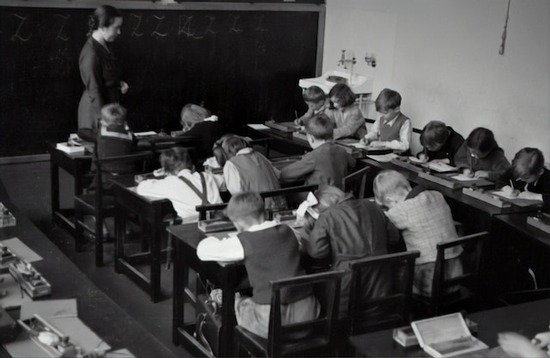
Photo by Austrian National Library on Unsplash
In the mid-to-late 1800s, education in industrialized countries was far from what it is today. In the United States, most schools were one-room country schoolhouses where students were taught the “three Rs” of reading, writing, and arithmetic. Though much of the class material was moral and practical, the main learning method was memorization. Students didn’t have to think critically about what they were studying.11
The schoolhouses were dark, and little physical movement was permitted outside of recess. “Fidgeting” called for severe punishment.
As a result, education was one-sided, focusing on developing mental capacities over physical ones.
The few schools of a higher caliber often taught a classical curriculum.12 Students, mostly young men, learned the arts and studied the writings of classic thinkers, such as Cicero, Plato, and Homer. These authors were steeped in Greek and Roman philosophy, which often contradicted biblical principles.
At this time in America, the Transcendentalist period was also in full swing, and its ideas about humanity’s inherent goodness clashed with the Bible’s teaching that man is sinful and needs a Savior.
Education needed help, and Ellen White stepped in to do what she could for the next generation. While she was also interested in what educational reformers were proposing, the Bible was her principal guide.
The Bible and God’s counsel
The Bible shaped every aspect of Ellen White’s educational counsel. She often quoted passages from Scripture and used their principles when outlining teaching methods.
For example, in her book Education, she traces education from the time of Adam and Eve to the Israelites and gleans principles for today.
Just like the Israelites were instructed to educate their children in a true knowledge of God, she encouraged teachers to make the law of God a practical part of daily life:
“These words that I am giving you today are to be in your heart. Repeat them to your children. Talk about them when you sit in your house and when you walk along the road, when you lie down and when you get up” (Deuteronomy 6:6–7, CSB).
As Ellen White wrote these ideas down, God was guiding her. Though she didn’t record a specific vision on the topic, she wrote that “the subject of education has been presented before me in different lines, in varied aspects, by many illustrations, and with direct specification, now upon one point, and again upon another.”13
Let’s look at how we can make her counsel practical.
How to incorporate the Bible into the classroom
As we addressed earlier, students can be taught to evaluate every subject through a biblical worldview. Here are ways to do this:
Use biblical themes for essay topics
When teaching students how to write, teachers can give them essay prompts on themes that encourage them to look for answers in the Bible. Students could also study a Bible character or topic, such as faith or ambition, and write about their findings.
Give reading assignments based on biographies in the Bible
The Bible is a unique collection of narratives that can make for great character studies.
Ellen White pointed out that because God is the ultimate author of the Bible, its biographies don’t have the human bias common in other stories:
“No part of the Bible is of greater value than its biographies. These biographies differ from all others in that they are absolutely true to life. It is impossible for any finite mind to interpret rightly, in all things, the workings of another. None but [God]…[can] delineate character, or give a faithful picture of a human life.”14
Through reading Bible narratives, students will also learn the principle of cause and effect: actions have consequences. Ellen White puts it this way:
“No truth does the Bible more clearly teach than that what we do is the result of what we are. To a great degree the experiences of life are the fruition of our own thoughts and deeds.”15
Teach science from a biblical perspective, using the story of Creation
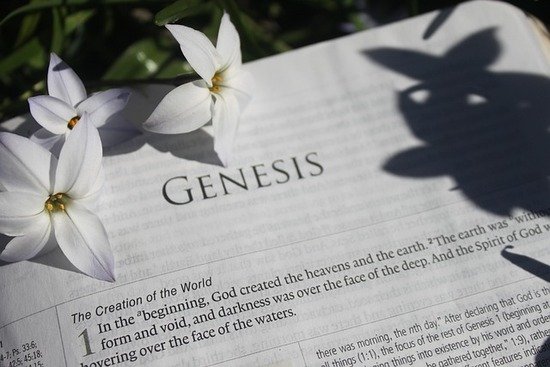
Teachers can use a creationist curriculum, coupled with a study of the Creation story, to establish students in a biblical perspective of our origins.
Study the methods of government in Bible times
While learning about modern types of government, students can also learn about how governments look at various points in Bible history. For example, the special form of government God designed for the Israelites in contrast to those of other nations mentioned in the Bible, such as the Babylonians, Persians, and Romans.
Include the narratives of the Bible in the study of history
We often think of the Bible as a spiritual book, but it’s also a rich repository of ancient history. In fact, the Institute for Creation Research states,
“The Bible has proven to be more historically and archaeologically accurate than any other ancient book. It has been subjected to the minutest scientific textual analysis possible to humanity and has been proven to be authentic in every way.”
So why not use it as a source in your world history curriculum?
A Bible-based education develops individual thinkers
Ellen White summed up her biblical integration ideas in a single quote:
“In [the Bible’s] pages are found history the most ancient; biography the truest to life; principles of government for the control of the state, for the regulation of the household—principles that human wisdom has never equaled.”16
Even if the students aren’t directly participating in Bible study, their teachers can weave those principles into many aspects of the classroom. The Bible can be the standard for testing all other subject matter and activities.
In this way, children carry a solid foundation into adulthood—the ability to think for themselves and evaluate life by the Bible.
- White, Ellen G., Education, p. 13 [↵]
- Ibid. [↵]
- Ibid., p. 30 [↵]
- White, Ellen, Christian Education (International Tract Society, 1894), p. 103 [↵]
- Douglass, Herbert E., Messenger of the Lord, p. 346 [↵]
- Ibid. [↵]
- bid., p. 347 [↵]
- White, Ellen G., Fundamentals of Christian Education, p. 474 [↵]
- Messenger of the Lord, p. 347 [↵]
- Education, p. 17 [↵]
- Knight, George, “The Transformation of Education” in Land, Gary, The World of Ellen White, pp. 162-163 [↵]
- Ibid. [↵]
- Fundamentals of Christian Education, p. 310 [↵]
- Education, p. 146 [↵]
- Ibid. [↵]
- Ibid., p. 125 [↵]
More Answers

The Barren Fig Tree Parable: What It Means to Bear Fruit
Find out what the Parable of the Barren Fig Tree really means.

¿Qué son las reuniones evangelísticas adventistas?
¿Qué son las reuniones evangelísticas adventistas?La Iglesia Adventista del Séptimo Día pone un gran énfasis en compartir el evangelio mediante la evangelización, o compartir el evangelio a través de la predicación, la enseñanza y el testimonio. Una de las formas en...
O que são os Encontros Evangelísticos Adventistas?
O que são os Encontros Evangelísticos Adventistas?A Igreja Adventista do Sétimo Dia dá grande ênfase ao compartilhamento do evangelho por meio da evangelização, ou seja, compartilhar o evangelho através da pregação, ensino e testemunho. Uma das formas de realizarmos...

O Que os Adventistas Acreditam Sobre Fé e Obras?
O Que os Adventistas Acreditam Sobre Fé e Obras?Os adventistas acreditam que somos salvos pela fé, que é a crença e confiança que temos em Jesus Cristo para nos salvar dos nossos pecados. Jesus, então, nos capacita a viver em harmonia com os mandamentos de Deus e a...
¿Qué creen los Adventistas sobre la fe y las obras?
¿Qué creen los Adventistas sobre la fe y las obras?Los adventistas creen que somos salvos por la fe, que es la creencia y confianza que tenemos en Jesucristo para salvarnos de nuestros pecados. Jesús, entonces, nos capacita para vivir en armonía con los mandamientos...

Je, Ninahitaji Kuwa Mwadventista Ili Niokolewe
Je, Ninahitaji Kuwa Mwadventista Ili Niokolewe?Jibu la swali hili ni rahisi, “hapana.” Linapokuja swala la wokovu katika Yesu Kristo, kinachohitajika kwa mtu ni kukiri dhabihu ya Yesu kwa ajili yetu, kuamini kwamba Ametuokoa, na kudai zawadi ya bure ya wokovu ambayo...
¿Necesito ser adventista para ser salvo?
¿Necesito ser adventista para ser salvo?La respuesta a esta pregunta es simplemente, “no.” Cuando se trata de la salvación en Jesucristo, todo lo que se requiere de una persona es reconocer el sacrificio de Jesús por nosotros, creer que Él nos ha salvado y reclamar el...
Preciso ser Adventista para ser salvo?
A resposta para essa pergunta é simplesmente: “não.”

Lo que la Biblia dice sobre la Segunda Venida de Jesucristo
¿Tienes curiosidad sobre lo que la Biblia dice acerca de la Segunda Venida de Jesucristo? Cubriremos los versículos clave y su significado.

¿Quién fue Mateo, el apóstol, en la Biblia?
En el primer libro del Nuevo Testamento, encontramos la historia del Evangelio desde la perspectiva de Mateo.
2 Corinthians: An Overview of Paul’s Most Personal Letter
Discover Paul’s lessons on forgiveness, reconciliation, generosity, and more. It’s all in the book of 2 Corinthians!
Quem Foi Mateus, o Apóstolo, na Bíblia?
Quem Foi Mateus, o Apóstolo, na Bíblia?No primeiro livro do Novo Testamento, encontramos a história do Evangelho sob a perspectiva de Mateus. Ele era um coletor de impostos judeu de Cafarnaum, no primeiro século d.C., e provavelmente era desprezado pelos outros judeus...

The Pharisee and the Tax Collector Parable: Its Meaning Made Simple
The Meaning of the Pharisee and the Tax Collector ParableIn Luke 18:9-14, Jesus told a parable about two men who went to the temple to pray. One was a Pharisee and the other a tax collector. The Pharisee prayed (well, bragged) about his own good works compared to the...
Biblia Inasema Nini Kuhusu Ujio wa Pili wa Yesu Kristo
Unajuliza Biblia inasema nini kuhusu Kurudi kwa Yesu Kristo Mara ya Pili? Tutajadili aya kuu na maana zake.

The Story of the Widow’s Mite—What It Really Means
The Story of the Widow’s Mite—What It Really MeansPeople often assume bigger is better, but the Bible turns this concept on its head with the story of the Widow’s Mite. Of all the donations Jesus sees at the temple, the gift that draws His attention is not the...

Consejo de Elena G. de White sobre la Educación Universitaria
Consejo de Elena G. de White sobre la Educación UniversitariaElena G. de White, una cofundadora importante del Adventismo, es conocida a menudo por su orientación práctica y espiritual para la educación infantil adecuada. Pero también estuvo significativamente...
Mathayo Alikuwa Nani Katika Biblia?
Mathayo Alikuwa Nani Katika Biblia?Katika kitabu cha kwanza cha Agano Jipya, tunapata simulizi la Injili kutoka kwa Mathayo. Alikuwa mtoza ushuru Myahudi kutoka Kapernaumu katika karne ya kwanza MK, na huenda alichukiwa na Wayahudi wenzake kwa kuchagua kazi hiyo....

¿Cuáles son los beneficios de vivir en el campo?
¿Cuáles son los beneficios de vivir en el campo?Visitar el campo puede ofrecer un descanso muy necesario del típico ajetreo y bullicio de la ciudad. Muchos incluso han decidido mudarse a zonas rurales para disfrutar de un ritmo más lento, espacios amplios, aire...
Quais São os Benefícios de Viver no Campo?
Visitar o campo pode oferecer uma pausa muito necessária do típico agito da cidade.

¿Qué significa la parábola de la perla de gran precio?
Esto es lo que Jesús enseñó sobre el reino de los cielos a través de esta breve parábola sobre un comerciante que encuentra una perla invaluable.
O Que Significa a Parábola da Pérola de Grande Valor?
Aqui está o que Jesus ensinou sobre o reino dos céus por meio desta parábola curta sobre um comerciante que encontra uma pérola inestimável.

Por Que Muitos Adventistas Querem Viver no Campo
Por Que Muitos Adventistas Querem Viver no CampoViver em áreas rurais é algo que os adventistas têm valorizado historicamente, embora as necessidades da vida moderna nem sempre tenham tornado isso possível. Convenhamos, as vantagens da vida na cidade são bastante...
Uma Visão Geral de Romanos: Fé, Justiça, Relacionamentos
Uma Visão Geral de Romanos: Fé, Justiça, RelacionamentosO livro de Romanos é uma das 21 epístolas, ou cartas abertas, do Novo Testamento. E embora seja um texto bíblico antigo, ainda tem uma relevância significativa (até surpreendente) para nossas vidas hoje. O...

Jesus é o Mesmo Ser que Miguel, o Arcanjo?
Jesus é o Mesmo Ser que Miguel, o Arcanjo?Muitos cristãos têm se perguntado sobre a misteriosa identidade de Miguel, o Arcanjo. Desde os primórdios do cristianismo, muitos interpretaram Miguel como o Messias identificado com a figura do Anjo do Senhor. O reformador...
Je, Faida za Kuishi Vijijini ni Zipi?
Kutembelea maeneo ya vijijini kunaweza kutoa mapumziko yanayohitajika sana kutoka kwenye pilikapilika za kawaida za mijini.
Je, Mfano wa Lulu ya Thamani Kubwa Unamaanisha Nini?
Hivi ndivyo Yesu alivyofundisha kuhusu ufalme wa mbinguni kupitia mfano huu mfupi wa mfanyabiashara aliyepata lulu ya thamani isiyo na kifani.
Kwa Nini Waadventista Wengi Wanataka Kuishi Vijijini
Kwa Nini Waadventista Wengi Wanataka Kuishi VijijiniKuishi maeneo ya vijijini ni jambo ambalo Waadventista wamekuwa wakilithamini kihistoria, ingawa mahitaji ya maisha ya kisasa hayafanyi iwezekane kila wakati. Tukubali, faida za kuishi mjini zinaonekana wazi: fursa...
Muhtasari wa Kitabu cha Warumi: Imani, Haki, Mahusiano
Hapa kuna muhtasari na historia ya waraka mrefu zaidi wa Paulo.

Sobre o que é a Parábola do Semeador de Jesus?
A parábola do semeador é, em última análise, sobre como as pessoas responderam a Jesus Cristo e Sua mensagem do reino de Deus—o Evangelho.
Didn’t find your answer? Ask us!
We understand your concern of having questions but not knowing who to ask—we’ve felt it ourselves. When you’re ready to learn more about Adventists, send us a question! We know a thing or two about Adventists.