
What Was Ellen and James White’s Marriage Like?
Ellen and James White, cofounders of the Seventh-day Adventist Church, met and married under somewhat unusual circumstances. But it’s a sweet story of partners in ministry becoming partners in life. And their married life continued to center on furthering the spread of the gospel together.
But that doesn’t mean their marriage was atypical in all areas. They raised children, traveled, established homesteads, stayed active in their communities, and faced many of the common challenges families still face today.
But let’s see what made James and Ellen White’s marriage so inspiring. We’ll look at:
- How they met and became a couple
- Their wedding and newlywed life
- Challenges in married life
- What we can learn from James and Ellen White
First, let’s hear the story of how they met.
How they met and became a couple
Photo by Aaron Burden on Unsplash
Ellen Harmon didn’t remember meeting James White before her trip to Orrington, Maine, in 1845, but James first met her when she was sixteen, in 1843. He was visiting her hometown of Portland, Maine as a Millerite preacher. And he was impressed by her sincere Christian missionary efforts.1
By the time they met again in early 1845, the situation was vastly different. The Millerite movement had crumbled with the Great Disappointment of 1844, and Ellen was beginning her own ministry efforts. Persuaded by her friends, she traveled to Orrington, Maine, to share a vision she received from the Holy Spirit about the parts of Scripture she’d been studying.2
Once more, James admired her willingness to share the Advent message (that the Second Coming was still imminent). He offered to accompany her on her travels, and she accepted.
Before long, however, people couldn’t help but notice how much time the two were spending together, traveling so often. Their names would even pop up in some communities’ gossip circles. They traveled together so much—was their relationship just that of getting to know each other, or of working together, or was more going on? Ellen and James were certainly interested in each other, but up until that point, they hadn’t discussed their relationship. But it was time to address what they truly meant to each other, especially since they appeared in public together so often.3
Ellen White later remembered the finality of James’ proposal. “He told me … he should have to go away and leave me to go with whomsoever I would, or we must be married.”4
Despite the purely ministerial reason they were traveling together, mutual affection had sprung up between them. They had plenty of opportunity to see how the other acted in various circumstances because they were together so often on the road.
Tricky situations, like dealing with weather or finding lodging, treatment of strangers and acquaintances alike, processing upsetting news—all of these scenarios Ellen and James undoubtedly encountered during their travels. By seeing how the other handled these situations, they were able to determine each other’s characters and their compatibility.
Apparently, everything checked out. Ellen saw in James desirable qualities: his “firmness and decision,” his ability to “stand in defense of the truth, without yielding,” “bold and fearless in acting,” and “unbending integrity,” among others. These helped her decide James was the one for her.
And that was that! Soon after, they married.5
Wedding and life as newlyweds
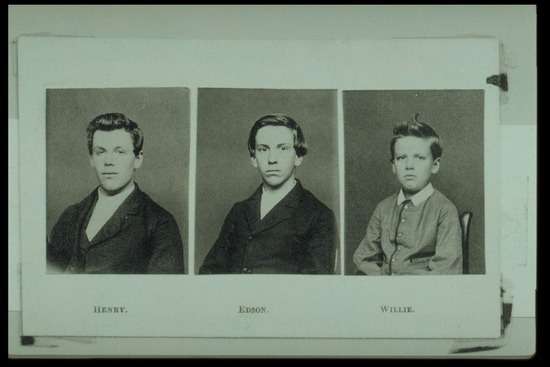
“Courtesy of the Ellen G. White Estate, Inc.”
On Sunday, August 30, 1846, 18-year-old Ellen Harmon and 25-year-old James White said their marriage vows. Charles Harding, a Justice of the Peace in Portland, Maine, performed the ceremony.6
It was a joyous occasion, but their early life together was no piece of cake. Ministers of the Advent Movement were not paid then. So not only did they have to find ways to support themselves, they also had to fund their own missionary efforts.7
In their first years of marriage, James had to divide his time between traveling, preaching, and working jobs like railroad construction, forestry work, and hay harvesting.8 They were very poor and often lived with other people, although their goal was to be independent.
Sometimes, things were so tight that they couldn’t afford the basic food items we take for granted today, like potatoes and butter. Instead they’d eat turnips and sauce, on a table made of fireboard supported by two flour barrels.9
Struggles were many and often, and they certainly had their share of discouragements. But, they did not give up. “We are willing to endure privations if the work of God can be advanced,” she wrote.10
Eventually, they were able to live on their own, first in New York, then in Battle Creek, Michigan. The Adventist Church became more organized, and they could support themselves off the work they did for it.
Although no less busy, their lives became a bit more comfortable. They were blessed with four sons over the years: Henry Nichols, James Edson, William Clarence, and John Herbert. They involved their sons in their work as much as possible as a way to incorporate family time.
Despite the hardships, there were many happy times in James and Ellen’s marriage. Together, they were a strong team. They traveled, preached, and united their available funds and time to help share the Advent message.
And they didn’t just work together for a common cause. They truly enjoyed working as partners in ministry. Here’s one example of how they benefited from their team effort. On one occasion, early in their marriage and ministry, Ellen White had a vision.
Afterward, she went to her husband. “I have a message for you. You must begin to print a little paper and send it out to the people. Let it be small at first; but as the people read, they will send you means with which to print, and it will be a success from the first. From this small beginning it was shown to me to be like streams of light that went clear round the world.”11
James had already been interested in writing and publishing about the new Scriptural discoveries they had been studying, and this encouraged him. He did indeed start a publication, and it became known as The Present Truth.
Challenges in Ellen White’s married life
Like any marriage, Ellen White’s wasn’t perfect. She and James encountered many difficulties along the way that challenged the knot they had tied.
Balancing family life and ministry
Unlike most women at that time, Ellen White’s ministry required working extensively outside the home. This meant the time she had for her husband, and later children, was limited.
She loved her family deeply, but felt a keen sense of responsibility for her work in the Adventist Church. It involved traveling—sometimes across the country—to preach, and she also began writing books like The Great Controversy and articles for periodicals like the Review and Herald.
Ultimately, she had to leave her children in the care of others for much of their young lives.
“I cannot do my duty to my family and devote myself to the benefit of God’s children too,” she wrote in a letter. “My mind cannot be everlastingly planning and cutting and contriving, and yet be prepared to write for the Review and Instructor and answer the numerous letters sent in to me.”12
But she realized her situation was unique. She was not an example for how things should be. And she still worried over her children, wishing the situation could be different. In Testimonies For the Church, Volume 1, she wrote,
“I had felt the deepest anxiety that my children should be brought up free from evil habits, and I was often grieved as I thought of the contrast between my situation and that of others who would not take burdens and cares, who could ever be with their children, to counsel and instruct them, and who spent their time almost exclusively in their own families.”13
Despite being separated from her children, Ellen White wrote regularly to them, as she did with her husband, when travel separated them. Much to her happiness, her entire family eventually came under one roof again.
Financial struggles

Photo by Emil Kalibradov on Unsplash
As mentioned earlier, Ellen and James had their own set of financial difficulties, especially early on in their marriage. Part of it was due to the lack of financial support for ministers. But another part of it was because of their joint decision to not go into debt.
James worked his fingers to the bone doing odd jobs to bring in money. Ellen White’s biography describes that hauling stone for the railroad “wore the skin on his hands to the bleeding point.”14 Cutting wood from dawn to dusk earned him a meager 50 cents a day, and nagging pain at night.15
At home, Ellen White pinched pennies to keep them all fed and clothed. Sometimes, she even had to go without basic necessities so there would be enough for others.
“Ellen could afford only one pint of milk a day for her child [Henry] and herself. Then came a day when she had to cut out the nine-cent allowance for the milk supply for three days to have enough money to buy a bit of cloth for a simple garment for the baby.”16
Their poverty discouraged them for a time, and James wrote that he “suffered more in mind and body than he could show with pen and paper.”17
Fortunately, they had friends who were willing to help them out. But it took several years for their circumstances to improve, and they credit the Holy Spirit’s guidance and comfort for helping them overcome the near-constant discouragement.
Loss of loved ones
The Whites experienced grief fairly early in their married life. They lost two of their children within three years.
In 1860, they were blessed with a fourth son, John Herbert. But just a month or two later, he came down with erysipelas—a type of bacterial skin infection. “Twenty-four days and twenty-four nights we watched our suffering little one,” Ellen White wrote. “Much of the time during his sickness I was mourning and pleading before the Lord that, if consistent with His will, my precious one might be spared. I could give vent to my feelings with bitter tears.”18
But John died. Ellen White fainted at the funeral. “Although my heart ached to bursting, I could not shed a tear. For one week this anguish pressed me. My mind was in a continual study as to why it should be so.”19
The stricken parents naturally wondered why God didn’t heal John. But they did not give up. They knew that death and suffering were an inevitable part of living in a sinful world, and they trusted God would get them through this unbearable time.
Then in 1863, their oldest son Henry, a young man of 16, came down with pneumonia. He rapidly grew worse, and eventually, everyone, including Henry himself, knew he was going to die. On December 8, 1863, he passed away.20
“When our noble Henry died, at the age of 16—when our sweet singer was borne to the grave, and we no more heard his early song—ours was a lonely home.”21
This was another blow to the White home. But Ellen White did not let it conquer her as a wife, mother, and Christian. She wrote, “…God comforted us in our bereavements, and with faith and courage we pressed forward in the work He had given us, in bright hope of meeting our children who had been torn from us by death, in that world where sickness and death will never come.”22
James and Ellen carried the pain of those losses for the rest of their lives. But they also expressed overwhelming gratitude for their other two sons, James Edson and William Clarence, both of whom lived to adulthood.
Long-term sickness

Later in life, James suffered a series of strokes, beginning with one on August 16, 1865. So Ellen, in addition to her own significant health struggles, had to be a caregiver for him as he recovered.
In the 1870s, he had more strokes. These changed his personality, so as you can imagine, it made things tougher in their relationship. James had always done well in management positions at work, but his stroke caused him to lean on those familiar workplace-type roles even while at home. Sometimes he’d end up ordering Ellen around, rather than treating her like his life partner.
In a letter, Ellen White confided the strain she was enduring, caring for James in his altered state:
“I can but dread the liability of James’ changeable moods, his strong feelings, his censures, his viewing me in the light he does, and has felt free to tell me his idea of my being led by the wrong spirit, my restricting his liberty, et cetera.”23
Throughout their friendship and their marriage, they had always worked as a team. So hearing these things from her beloved husband was undoubtedly disheartening.
She also wrote of his complaints. “He has said we must not seek to control each other. I do not own to doing it, but he has, and much more. I never felt as I do now in this matter. I cannot have confidence in James’ judgment in reference to my duty.”24
This type of situation may sound painfully familiar for those who have had spouses or family members suffer from strokes, mental illness, or other mind-altering conditions. Sometimes it just feels impossible.
And, since she had always leaned upon his judgment when they made decisions together, this made the burden on Ellen even heavier. Finally, she and James decided to continue their ministries by working separately for about two months.
She traveled for a while on church business, but always wrote loving letters home. Eventually, James’ physical and mental health improved to the extent that these difficulties lessened and they were able to resume their united ministry.
Lessons from Ellen White’s marriage

Photo from Unsplash
Ellen White gained a lot of personal insight and biblical guidance from her years as a working wife and mother. Here are a few takeaways from her experience.
- Seek God’s will before entering marriage. When James proposed marriage to Ellen, she took time to pray before giving James her answer. Likewise, she advised young people to pray about their relationships, bringing concerns, questions, and joys to God and listening for His leading. This was to accompany the study of the Bible and its fundamental principles for loving relationships of any kind. She wrote later in The Adventist Home, “The instruction given in God’s word on this point should be carefully considered. Heaven looks with pleasure upon a marriage formed with an earnest desire to conform to the directions given in the Scripture.”25
- Maintaining a proper balance between work and family. From an early age, Ellen White knew what it was like to have too much to do. She also learned that if she wasn’t intentional about her time management, things wouldn’t come into balance on their own. “As a rule, the labor of the day should not be prolonged into the evening. … Let parents devote the evenings to their families. Lay off care and perplexity with the labors of the day.”26 She knew that for genuine quality time with her children, she had to guard her time with them, making sure it was clear they were the priority.
- The best of marriages still have problems, but God’s principles can help us navigate them. From the very start of their marriage, James and Ellen White had to deal with poverty, loss, illness, and several types of overwhelming circumstances. Their commitment to one another, to their family, and to their ministry is a testament to their faith, and to God’s loving sustenance. That’s why she advised, “But what human wisdom cannot do, the wisdom of God can do through the surrender of the will, the mind, the soul, the strength, the entire being, to God. … [H]eart is bound firmly to heart in the golden chain of a love that is genuine.”27
Marriage is an adventure—it can be fun, exhilarating, and fulfilling. But adventures also include difficulty. Ellen White’s marriage may have been a bit different from many others, but the relational components and principles are the same. Love and marriage is more than just strong feelings of attraction. It’s a spectrum of emotions, experiences, and growth, all taking place under a commitment to cherish and support the other for the whole of life. And with God being the ultimate source and example of true, unconditional love, it makes perfect sense to trust this precious relationship to His will.
Ellen and James White placed their marriage in God’s hands, no matter how hard it was at times. And they were both glad they did. There is much we can learn from such a couple.
Interested in what the Bible says about marriage and relationships?
Related Articles.



- Steinweg, Marlene, “Her Husband’s Crown,” Adventist Pioneer Library, vol. 5, 1995, p. 3. [↵]
- Ibid. [↵]
- “Marriage and Children,” [↵]
- “Her Husband’s Crown,” p. 6. [↵]
- Ibid. [↵]
- “Marriage and Children.” [↵]
- Coon, Roger W., A Gift of Light, p. 26. [↵]
- Ibid. [↵]
- A Gift of Light, p. 27. [↵]
- Ibid. [↵]
- White, Ellen G., Life Sketches of Ellen G. White, p. 125. [↵]
- White, Ellen G., “Letter 27,” 1861. [↵]
- White, Ellen G., Testimonies For the Church, vol. 1, p. 101. [↵]
- White, Arthur Lacey, Ellen G. White: The Early Years: 1827-1862, vol. 1, p. 134. [↵]
- Ibid. [↵]
- Ibid. [↵]
- Ellen G. White: The Early Years, p. 135. [↵]
- White, Ellen G., “Letter 17, 1861.” [↵]
- Ibid. [↵]
- “Henry White’s Death At Fort Howland,” [↵]
- White, Ellen G., Life Sketches of Ellen G. White, p. 165. [↵]
- Life Sketches of Ellen G. White, pp. 165-166 [↵]
- White, Ellen G., Letter 64, 1876. [↵]
- Ibid. [↵]
- White, Ellen G., The Adventist Home, p. 70. [↵]
- White, Ellen G., Christian Temperance and Bible Hygiene, p. 65. [↵]
- White, Ellen G., “Letter 76, 1894.” [↵]
More Answers

The Barren Fig Tree Parable: What It Means to Bear Fruit
Find out what the Parable of the Barren Fig Tree really means.

¿Qué son las reuniones evangelísticas adventistas?
¿Qué son las reuniones evangelísticas adventistas?La Iglesia Adventista del Séptimo Día pone un gran énfasis en compartir el evangelio mediante la evangelización, o compartir el evangelio a través de la predicación, la enseñanza y el testimonio. Una de las formas en...
O que são os Encontros Evangelísticos Adventistas?
O que são os Encontros Evangelísticos Adventistas?A Igreja Adventista do Sétimo Dia dá grande ênfase ao compartilhamento do evangelho por meio da evangelização, ou seja, compartilhar o evangelho através da pregação, ensino e testemunho. Uma das formas de realizarmos...

O Que os Adventistas Acreditam Sobre Fé e Obras?
O Que os Adventistas Acreditam Sobre Fé e Obras?Os adventistas acreditam que somos salvos pela fé, que é a crença e confiança que temos em Jesus Cristo para nos salvar dos nossos pecados. Jesus, então, nos capacita a viver em harmonia com os mandamentos de Deus e a...
¿Qué creen los Adventistas sobre la fe y las obras?
¿Qué creen los Adventistas sobre la fe y las obras?Los adventistas creen que somos salvos por la fe, que es la creencia y confianza que tenemos en Jesucristo para salvarnos de nuestros pecados. Jesús, entonces, nos capacita para vivir en armonía con los mandamientos...
Je, Ninahitaji Kuwa Mwadventista Ili Niokolewe
Je, Ninahitaji Kuwa Mwadventista Ili Niokolewe?Jibu la swali hili ni rahisi, “hapana.” Linapokuja swala la wokovu katika Yesu Kristo, kinachohitajika kwa mtu ni kukiri dhabihu ya Yesu kwa ajili yetu, kuamini kwamba Ametuokoa, na kudai zawadi ya bure ya wokovu ambayo...
¿Necesito ser adventista para ser salvo?
¿Necesito ser adventista para ser salvo?La respuesta a esta pregunta es simplemente, “no.” Cuando se trata de la salvación en Jesucristo, todo lo que se requiere de una persona es reconocer el sacrificio de Jesús por nosotros, creer que Él nos ha salvado y reclamar el...
Preciso ser Adventista para ser salvo?
A resposta para essa pergunta é simplesmente: “não.”

Lo que la Biblia dice sobre la Segunda Venida de Jesucristo
¿Tienes curiosidad sobre lo que la Biblia dice acerca de la Segunda Venida de Jesucristo? Cubriremos los versículos clave y su significado.

¿Quién fue Mateo, el apóstol, en la Biblia?
En el primer libro del Nuevo Testamento, encontramos la historia del Evangelio desde la perspectiva de Mateo.
2 Corinthians: An Overview of Paul’s Most Personal Letter
Discover Paul’s lessons on forgiveness, reconciliation, generosity, and more. It’s all in the book of 2 Corinthians!
Quem Foi Mateus, o Apóstolo, na Bíblia?
Quem Foi Mateus, o Apóstolo, na Bíblia?No primeiro livro do Novo Testamento, encontramos a história do Evangelho sob a perspectiva de Mateus. Ele era um coletor de impostos judeu de Cafarnaum, no primeiro século d.C., e provavelmente era desprezado pelos outros judeus...

The Pharisee and the Tax Collector Parable: Its Meaning Made Simple
The Meaning of the Pharisee and the Tax Collector ParableIn Luke 18:9-14, Jesus told a parable about two men who went to the temple to pray. One was a Pharisee and the other a tax collector. The Pharisee prayed (well, bragged) about his own good works compared to the...
Biblia Inasema Nini Kuhusu Ujio wa Pili wa Yesu Kristo
Unajuliza Biblia inasema nini kuhusu Kurudi kwa Yesu Kristo Mara ya Pili? Tutajadili aya kuu na maana zake.

The Story of the Widow’s Mite—What It Really Means
The Story of the Widow’s Mite—What It Really MeansPeople often assume bigger is better, but the Bible turns this concept on its head with the story of the Widow’s Mite. Of all the donations Jesus sees at the temple, the gift that draws His attention is not the...

Consejo de Elena G. de White sobre la Educación Universitaria
Consejo de Elena G. de White sobre la Educación UniversitariaElena G. de White, una cofundadora importante del Adventismo, es conocida a menudo por su orientación práctica y espiritual para la educación infantil adecuada. Pero también estuvo significativamente...
Mathayo Alikuwa Nani Katika Biblia?
Mathayo Alikuwa Nani Katika Biblia?Katika kitabu cha kwanza cha Agano Jipya, tunapata simulizi la Injili kutoka kwa Mathayo. Alikuwa mtoza ushuru Myahudi kutoka Kapernaumu katika karne ya kwanza MK, na huenda alichukiwa na Wayahudi wenzake kwa kuchagua kazi hiyo....

¿Cuáles son los beneficios de vivir en el campo?
¿Cuáles son los beneficios de vivir en el campo?Visitar el campo puede ofrecer un descanso muy necesario del típico ajetreo y bullicio de la ciudad. Muchos incluso han decidido mudarse a zonas rurales para disfrutar de un ritmo más lento, espacios amplios, aire...
Quais São os Benefícios de Viver no Campo?
Visitar o campo pode oferecer uma pausa muito necessária do típico agito da cidade.

¿Qué significa la parábola de la perla de gran precio?
Esto es lo que Jesús enseñó sobre el reino de los cielos a través de esta breve parábola sobre un comerciante que encuentra una perla invaluable.
O Que Significa a Parábola da Pérola de Grande Valor?
Aqui está o que Jesus ensinou sobre o reino dos céus por meio desta parábola curta sobre um comerciante que encontra uma pérola inestimável.

Por Que Muitos Adventistas Querem Viver no Campo
Por Que Muitos Adventistas Querem Viver no CampoViver em áreas rurais é algo que os adventistas têm valorizado historicamente, embora as necessidades da vida moderna nem sempre tenham tornado isso possível. Convenhamos, as vantagens da vida na cidade são bastante...

Uma Visão Geral de Romanos: Fé, Justiça, Relacionamentos
Uma Visão Geral de Romanos: Fé, Justiça, RelacionamentosO livro de Romanos é uma das 21 epístolas, ou cartas abertas, do Novo Testamento. E embora seja um texto bíblico antigo, ainda tem uma relevância significativa (até surpreendente) para nossas vidas hoje. O...

Jesus é o Mesmo Ser que Miguel, o Arcanjo?
Jesus é o Mesmo Ser que Miguel, o Arcanjo?Muitos cristãos têm se perguntado sobre a misteriosa identidade de Miguel, o Arcanjo. Desde os primórdios do cristianismo, muitos interpretaram Miguel como o Messias identificado com a figura do Anjo do Senhor. O reformador...
Je, Faida za Kuishi Vijijini ni Zipi?
Kutembelea maeneo ya vijijini kunaweza kutoa mapumziko yanayohitajika sana kutoka kwenye pilikapilika za kawaida za mijini.
Je, Mfano wa Lulu ya Thamani Kubwa Unamaanisha Nini?
Hivi ndivyo Yesu alivyofundisha kuhusu ufalme wa mbinguni kupitia mfano huu mfupi wa mfanyabiashara aliyepata lulu ya thamani isiyo na kifani.
Kwa Nini Waadventista Wengi Wanataka Kuishi Vijijini
Kwa Nini Waadventista Wengi Wanataka Kuishi VijijiniKuishi maeneo ya vijijini ni jambo ambalo Waadventista wamekuwa wakilithamini kihistoria, ingawa mahitaji ya maisha ya kisasa hayafanyi iwezekane kila wakati. Tukubali, faida za kuishi mjini zinaonekana wazi: fursa...
Muhtasari wa Kitabu cha Warumi: Imani, Haki, Mahusiano
Hapa kuna muhtasari na historia ya waraka mrefu zaidi wa Paulo.

Sobre o que é a Parábola do Semeador de Jesus?
A parábola do semeador é, em última análise, sobre como as pessoas responderam a Jesus Cristo e Sua mensagem do reino de Deus—o Evangelho.
Didn’t find your answer? Ask us!
We understand your concern of having questions but not knowing who to ask—we’ve felt it ourselves. When you’re ready to learn more about Adventists, send us a question! We know a thing or two about Adventists.