
Ellen Gould White was one of the key co-founders of the Seventh-day Adventist Church. And though she lived most of her life in the 19th century, the impact of her life and ministry continues today.
Living her life as a humble servant of God, she authored several books and thousands of articles that have touched the lives of millions of people around the world.
To give you an overview of who Ellen White was and why she is significant to the Adventist Church, we’ll look at six areas of her life:
1. Her legacy
2. Her early life
3. Her beginnings in ministry as a messenger of God
4. Her later life and ministry
5. Her writing and speaking
6. Her involvement in other initiatives in society
We’ll start with an overview of her contributions.
Ellen White’s legacy
Ellen White lived 87 full years (1827–1915). With the spiritual gifts given to her by the Holy Spirit, she dedicated 70 of those years to ministry, helping to found and establish the Seventh-day Adventist Church.
Through her extensive writing and speaking, she provided practical, lasting guidance for the leadership and development of the then-young Adventist Church.
Here is a summary of her legacy:
- The Smithsonian named her one of the 100 most significant Americans of all time.
- She served as God’s special messenger to call people’s attention to the Bible and Jesus’ soon return.
- Led by the Holy Spirit, she provided counsel for the early Adventist Church as an organization and for individual members regarding different situations.
- She was a prolific writer of more than 5,000 articles and nearly 24 books in current circulation. Today, her writings have been compiled to make more than 130 English titles. They are all under legal custody of the Ellen G. White Estate in Silver Spring, Maryland.
- She is the most translated woman writer in the entire history of literature and the most translated American author of either gender.
- She was heavily involved in health reform during an unhealthy time for America soon after the Industrial Revolution.
With that overview, we’re ready to dive into Ellen White’s life story. We’ll look at who she was and what she did from her early life and ministry to the end of her life.
Ellen White’s early life
Ellen White was born to Robert and Eunice Harmon on November 26, 1827. Her maiden name was Ellen Gould Harmon. Together with her twin sister, Elizabeth Harmon, they were the youngest in a family of eight children.
They lived on a small farm near the village of Gorham, Maine, in the United States and later moved to Portland, Maine.
While walking home from school one day at the age of nine, an unfortunate accident changed her life forever.
One of her classmates threw a stone at her and hit her in the face. This injured her nose severely. After being unconscious for three weeks, she slowly recovered. For some time, she had shaky hands and her eyes couldn’t see well when she attempted to read or write. And even with the recovery, her physical health remained so frail that she had to end her formal education at third grade—which makes the accomplishments of her lifetime even more incredible!
Nearly 50 years later, she looked back at this experience and said:
“This misfortune, which for a time seemed so bitter and was so hard to bear, has proved to be a blessing in disguise. The cruel blow which blighted the joys of earth, was the means of turning my eyes to heaven. I might never have known Jesus, had not the sorrow that clouded my early years led me to seek comfort in Him.”1
Though her physical health suffered greatly, God was preparing her for a great work ahead. A work where He would bless the world through her service, her intellect, and her devotion to Jesus.
Ellen White’s conversion
In 1840, she attended a Methodist camp meeting at Buxton, Maine, with her parents. There, she gave her heart to Jesus at age 12. She later requested to be baptized at Casco Bay and became a member of the Methodist Church.
Also at this time in the US, the Millerite Movement was underway, led by William Miller, a farmer-turned-minister who preached that Jesus would return in a few years.
In fact, one Millerite, Samuel Snow, predicted specifically that Jesus would return on October 22, 1844.
Ellen White attended one of the Millerite revival meetings with her family. And in June 1842, she accepted the teachings and joined the movement. With confidence, she looked forward to Christ’s Second Advent. Though naturally timid and reserved, she overcame her fear of speaking up and worked earnestly to show others that Jesus was coming soon.
But October 22, 1844, came and went.
Like all the other Millerites, she was greatly disappointed that she didn’t get to finally meet Jesus.
But instead of giving in to despair, she joined those who decided to study the Bible and pray for understanding about where they had gone wrong. And not long after, she received some of her first visions from the Holy Spirit, along with God’s call to be His messenger. More on that next.
Ellen White’s ministry beginnings
“Courtesy of the Ellen G. White Estate, Inc.”
From the age of 17 to her late 30s, Ellen White was instrumental in laying the foundation for the Adventist Church.
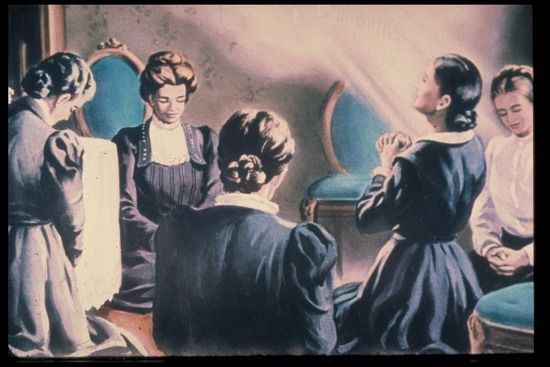
It all began one December morning in 1844, when she was just 17 years old.
She was praying with four other women when she received a vision from the Holy Spirit. The vision showed the Advent people journeying toward heaven, looking forward to Christ’s Second Coming. It represented God guiding His people into the truth, despite their disappointed expectations of His return. And they need not look back with regret for the experience they’d gone through with the Millerites’ overzealous prediction.
They’d later learn that though they were wrong about the event that day, something had happened that they needed to find out through further Bible study (learn more about it in our article about the Great Disappointment).
Soon after her first vision, Ellen White received another in which God instructed her to share with other Advent believers what she’d been shown.
So began the public ministry that would last the rest of her life.
From then on, God provided guidance, encouragement, and comfort to His people through her testimony.
We’ll look at the next 21 years of her life and ministry (1844–1865), specifically:
- Her marriage and family
- Her discovery of the Sabbath truth in the Bible
- Her role as God’s messenger
- The start of publishing her writings
- The organization of the Seventh-day Adventist Church
- Her involvement in health reform in Adventism
Let’s begin with her family life.
Ellen White’s marriage and family
“Courtesy of the Ellen G. White Estate, Inc.”
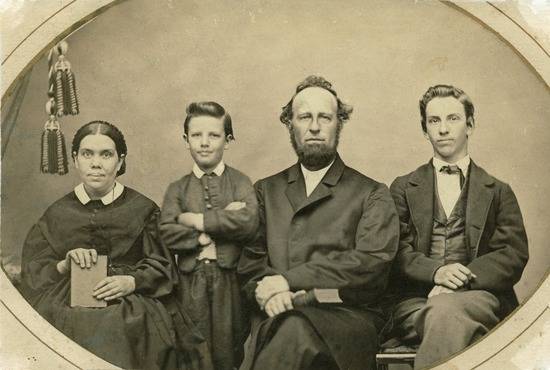
In late August of 1846, Ellen Harmon married James White, a young Adventist preacher at the time. They met in Orrington, Maine, where she had traveled to speak.
They were married for 36 years until James’ death in 1881. Together they had four sons: Henry, Edson, William, and John Herbert.
Unfortunately, only two of the boys grew to adulthood. Henry died at 16 years old, and John Herbert at just a few months.
Discovery of the seventh-day Sabbath
Early in their ministry and just a few weeks after their marriage, James and Ellen White learned about the Sabbath from a tract published by another prominent Adventist, Joseph Bates. The tract’s title was Seventh-day Sabbath, a Perpetual Sign. It showed from Scripture that the seventh day was still the biblical Sabbath.
The tract’s title was Seventh-day Sabbath, a Perpetual Sign. It showed from Scripture that the seventh day was still the biblical Sabbath.
Convinced that the views were biblically correct, they began to keep Saturday, instead of Sunday, as the Sabbath.
Then six months later, on April 3, 1847, Ellen White received another vision, this time about the Sabbath. She saw a temple in heaven, and inside were the Ten Commandments. A ring of light encircled the fourth commandment (the Sabbath commandment).
This vision both confirmed the biblical truth of the Sabbath and gave believers confidence in it.2
From this time on, the Whites and Joseph Bates worked together to unite the Advent believers on the Sabbath message. These three formed the nucleus that led to the founding of the Seventh-day Adventist Church.
God’s messenger

“Courtesy of the Ellen G. White Estate, Inc.”
The Sabbath vision is a good example of how Ellen White’s visions and counsels helped develop Adventist doctrines.
Usually, the members of the church would study the Bible about a topic that came up. They’d pray for understanding of God’s Word and unity in a given belief.
In many situations, God would then give Ellen White a vision that confirmed their understanding.
This was the case with Adventist beliefs like the heavenly sanctuary.
The Advent believers came to regard Ellen White as having the gift of prophecy. A gift just like one of the other spiritual gifts listed in Romans 12:6–8, 1 Corinthians 12:8–10, and Ephesians 4:11.
However, Ellen White never referred to herself as a prophet but rather as “the Lord’s messenger.”3
But she exhibited striking similarities to Bible prophets in various ways—from the way she received the visions to the nature of her messages. They were always in line with the Bible and pointed people back to it (Isaiah 8:20). She also passed the biblical tests for a true prophet found in the Bible.4
Because of this, those in the Advent Movement believed the messages were from God. That she was God’s messenger for the church, their modern-day prophet.
The visions varied and addressed different topics, including:
- Church doctrines, initiatives, and the general state of the church
- Heaven
- The end times
- Bible prophecies and their fulfillment in history
- Explanations of unfulfilled Bible prophecies that are yet to happen
- Current issues and events during her time, like the American Civil War
- Counsel to specific members of the church
As they continued to study Bible prophecies, Adventists found that one key characteristic of God’s people in the end times is having “the testimony of Jesus Christ” (Revelation 12:17, NKJV).
Revelation 19:10 defines the testimony of Jesus as the “spirit of prophecy.”
And with a firm belief that Jesus was coming soon, they knew they should strive toward the characteristics of God’s people, as Revelation described.
So, they welcomed Ellen White’s prophetic gift because it fit with the biblical description. And because her writings were inspired by this gift, people have often referred to them as the “Spirit of Prophecy” or the “Testimonies.”
However, it’s important to note that not all her writings or words were inspired.
Since she was like any other human being with relationships and a life, she had some “common writings” too. Things like letters to her children, friends, and relatives and diary entries about her day-to-day homemaking.
So it’s always important to differentiate between the writings God gave her and her other writings. Even so, reading the common writings is refreshing since she was generally a wise woman with remarkable intellect and excellent common sense.
Today, one of the Fundamental Beliefs of the Adventist Church is the gift of prophecy demonstrated by Ellen White.
And this demonstration has been preserved through her writings. Let’s look at how she began publishing her writings in the first place.
The start of publishing her writings
“Courtesy of the Ellen G. White Estate, Inc.”
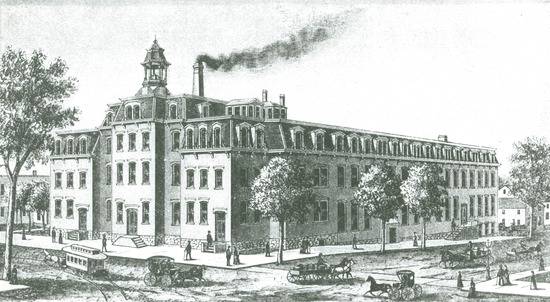
The work of publishing her writings is linked to the establishment of Adventist publishing houses.
This began on November 18, 1848, when Ellen White received a vision.5
In it, she received instruction for her husband to begin publishing a small paper about Bible truth and send it to the scattered Advent believers. This paper would grow into the massive publishing work of the Seventh-day Adventist Church.
So, in the summer of 1849, James White started publishing a paper called The Present Truth (later known as The Review and Herald). It contained articles by Ellen White and other Adventists on various subjects.
By 1851, Ellen White had written and published her first book, which is now pages 11–127 of Early Writings. She contributed to periodicals that James put out too.
In March 1858, she received another vision about a spiritual conflict described in the Bible. A conflict between Christ and Satan that began before the creation of the earth and will continue to the end of the world.
She published it in a 219-page book titled Spiritual Gifts, volume 1, The Great Controversy Between Christ and His Angels and Satan and His Angels, in the summer of 1858.
The book was well received by the church with its eye-opening descriptions of biblical end-time scenes.6
This struggle between God and Satan (and therefore good and evil) became known as the Great Controversy. It has become a key Adventist belief and a critical framework for studying the Bible.
Organization of the Adventist Church
In the early 1860s, Ellen White actively supported the collective efforts to set up the church and conference organizations. This organization became necessary to manage different aspects of the fast-growing movement.
Finally, in May 1863, the Advent believers organized into a denomination as the General Conference of Seventh-day Adventists.
Ellen White cared deeply about the newly established Seventh-day Adventist Church, and she strove to help its members, and others, live out their God-given lives in the best way possible. That’s where health reform comes in.
Involvement in health reform

Photo by Jannis Brandt on Unsplash
Many of the early Adventist church workers struggled with poor health, and even died, due to overwork and other preventable causes. Personal hygiene and treatment of disease in the 19th century had little resemblance to what they are today.
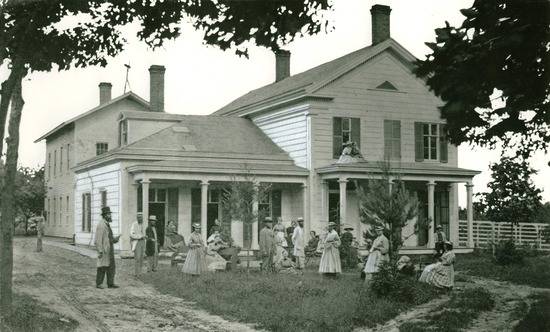
So two weeks after the organization of the church, Ellen White received another vision on the relation of physical health to spirituality.
“Courtesy of the Ellen G. White Estate, Inc.”
It showed the importance of following self-care principles and highlighted the benefits of nature’s remedies—fresh air, sunshine, exercise, and pure water. She also learned that vegetarianism can be healthier than a meat-based diet.
As a result of this vision, she started advocating the importance of health reform to the church leaders. She and James compiled and published a 64-page pamphlet called Health, or How to Live.
Soon, the health message became part of the message of Seventh-day Adventists.
On Christmas Day of 1865, Ellen White received another instruction: Adventists should establish a health institute to care for the sick and to teach people about healthy living.7
The first one—the Western Health Reform Institute—opened in Battle Creek, Michigan, in September 1866. From this beginning, Adventists have continued to establish health centers and clinics, which have matured into the vast Adventist healthcare system we know today.
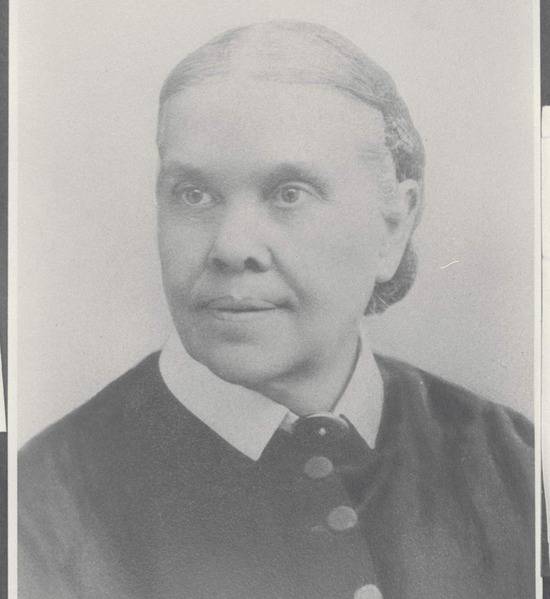
Ellen White’s later life and ministry
“Courtesy of the Ellen G. White Estate, Inc.”
After its organization, Ellen White remained a strong, nurturing influence in the church. She continued to write and travel, encouraging believers and helping missionary efforts at home and abroad.
During this period, her husband’s health began failing. Sadly, he died in 1881. Despite mourning his death, Ellen White’s later years were still full of accomplishments for the Lord and the church.
In this section, we’ll look at her life and ministry from 1866 to the end of her life in 1915. We’ll explore her involvement in:
- Broadening the denomination’s work to the West Coast
- Establishing Adventist education
- Encouraging the start of the denomination’s work overseas
- Helping the church in Europe and Australia
- Reorganizing the church
- Finishing her work before her death
Broadening the denomination’s work to the West Coast
In 1872 and 1873, James and Ellen White went to California and started working on projects on the Pacific Coast.
On April 1, 1874, Ellen White received another vision. In it, she saw how the denomination’s work was to expand and develop in the western states and also overseas. This led to evangelistic meetings in Oakland, California, just a few weeks later. James White also began publishing the magazine Signs of the Times. Then he set up a publishing house, the Pacific Press.
And by early 1878, the church had started a health institution near St. Helena, California.
Over in Michigan, the Adventist Church was growing, too—in the area of education.
Establishing Adventist education
“Courtesy of the Ellen G. White Estate, Inc.”
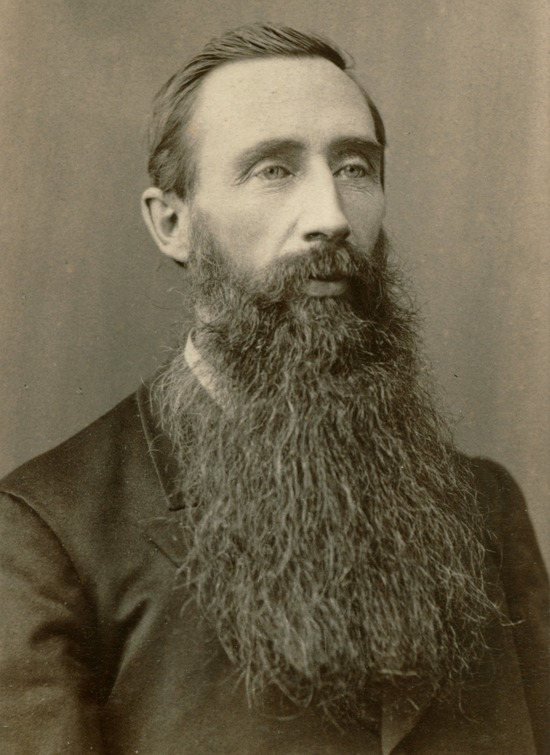
In 1872, a man named Goodloe Bell started a small school for some Adventist youth who wanted to learn. It was the first school sponsored by the Adventist Church.
To encourage the church’s educational pursuits, Ellen White wrote a pivotal essay titled “Proper Education.” The principles she presented in this essay remain the blueprint of Adventist education to this day.
By the fall of 1874, the church opened its first educational institution: Battle Creek College in Michigan.
Just a day prior to the college’s dedication on January 4, 1875, Ellen White received another vision concerning the church’s role in spreading the Gospel internationally. So, Battle Creek College became the first of many colleges to train missionaries for the Gospel work, both at home and abroad.
Encouraging the start of the denomination’s work overseas
Back on April 1, 1874, Ellen White had seen a vision of the church’s mission work expanding overseas. She saw that printing presses would be set up in other lands. That well-organized work would develop in world territories Adventists had never thought of entering.
And with calls for a missionary to be sent to Europe, she encouraged the church to venture abroad.
That same year, the church sent John N. Andrews to Europe as its first overseas missionary. He set up headquarters for the European Adventist Church in Basel, Switzerland, where he started a publishing house and a French periodical.
From this point on, many more mission stations were established in other parts of the world.
Helping the church abroad
Between 1885 and 1900, Ellen White traveled internationally twice: first to Europe for about two years and later Australia for nine years. Because her husband had died in 1881, her son William (Willie) became her traveling companion.
Europe
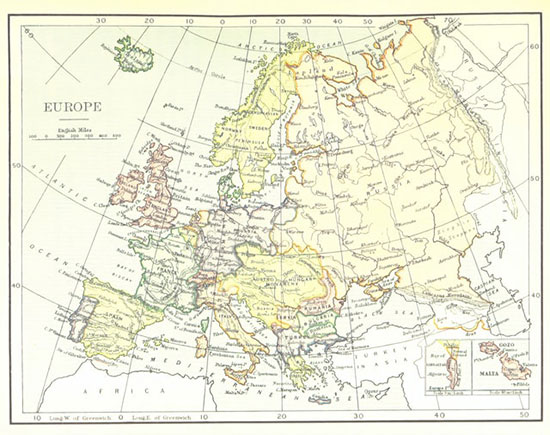
Photo by British Library on Unsplash
Ellen White and Willie traveled throughout Europe from 1885 to 1887. They spent time at the church’s headquarters in Switzerland and also visited England, Germany, France, Italy, Denmark, Norway, and Sweden.
That’s when she saw the printing presses she’d seen in her January 3, 1875, vision in person! They were located in Basel, Switzerland, and Christiana (now Oslo), Norway.
Through her counsel, she greatly influenced the establishment of sound policies and plans for the church’s work in Europe.
She also made two trips to the Waldensian valleys in Italy. There, she visited places she had seen in vision in connection with the Dark Ages and the Reformation. These historical eras were an important part of her book The Spirit of Prophecy, volume 4, that had been published in 1884 (it expanded on the Great Controversy vision she had seen in 1858). It covered Christian history from the destruction of Jerusalem to the end of the world.
After she returned to America, she edited the book to spell out the details of the scenes involving those places in Europe. The result was the book known today as The Great Controversy.
In between her time in Europe and her next trip to Australia, Ellen White attended the General Conference (GC) session of 1888 in Minneapolis, Minnesota.
There, she saw the need for a more Christ-centered message in the Adventist Church. So in the following months, she traveled and preached, seeking to unify the church on the doctrine of righteousness by faith.
She also worked on her masterpiece, the book Steps to Christ, which was published while she was in Australia in 1892. It focuses on how we can become practical, loving, and lovable Christians through a relationship with Jesus.
Australia
“Courtesy of the Ellen G. White Estate, Inc.”
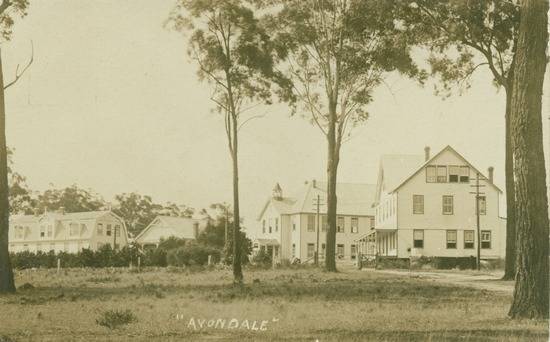
By 1891, the church was pioneering the work in Australia. And again, the leadership asked Ellen White to go help with this work. Traveling with Willie and several assistants, she reached Australia in December.
And just like in Europe, Ellen White recognized the printing presses in Australia as some she’d seen in the January 1875 vision.
In 1894, she supported the organization of the territory into a union conference, the first administrative structure of its kind in Adventist history.
Here are some of the other things she accomplished while there:
- She advocated for the establishment of Avondale College
- She gave financially to support the Australian mission
- She supported the establishment of a health institution and the building of churches
- She wrote articles weekly for the different periodicals in North America and corresponded with denominational leaders
- She completed four more books, including The Desire of Ages, a commentary on the life of Jesus that brings together the accounts from all four Gospels
After nine years in Australia, Ellen White returned to the United States and made her home at Elmshaven, near St. Helena in northern California.
From there, she traveled to attend the General Conference (GC) session of 1901 in Battle Creek, Michigan.
Reorganizing the Adventist Church
“Courtesy of the Ellen G. White Estate, Inc.”
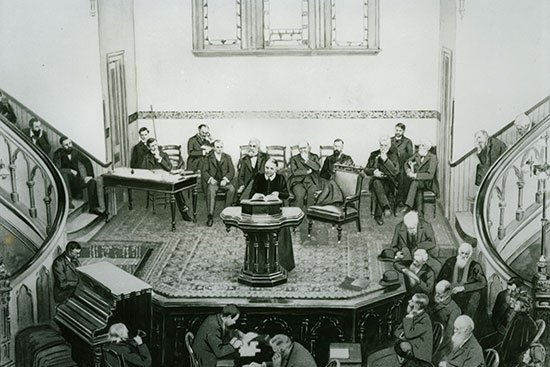
At the 1901 GC Session, Ellen White called for a reorganization of the church’s structure. Because of the structure set up during the early days of the denomination, only a few people held leadership positions. But now that the church was growing rapidly, it needed to distribute responsibilities.
So, they set up different departments and created union conferences as intermediate organizations between the General Conference and the local conferences.
Ellen White also advised that the General Conference be moved from Battle Creek to the East Coast. Two years later, the denominational headquarters moved to Silver Spring, Maryland, near Washington, DC.
Finishing her work
“Courtesy of the Ellen G. White Estate, Inc.”
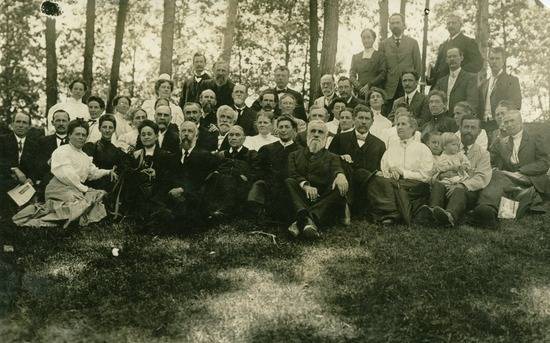
During and after the time of the church’s reorganization, Ellen White wrote intensely. In just a few years, she published a number of books—The Ministry of Healing, Education, and Testimonies for the Church, volumes 7 and 8.
She also encouraged the start of medical missionary training on the Pacific Coast. This resulted in a college at Loma Linda and the Paradise Valley Sanitarium near San Diego.
At the age of 81, Ellen White attended the 1909 GC session in Washington, DC.
In her talks, she emphasized some basics of the Adventist faith—commitment to Christ, healthy living, evangelism, and the three angels’ messages. And at the end of her very last address, she picked up the Bible, opened it, and held it up with trembling hands. Then she firmly stated:
“Brethren and sisters, I commend unto you this book.”8
That was her last General Conference session.
What a final charge she gave to the church leaders! The Bible was to be their foundation and their guide.
She went home and intensified her efforts to finish a number of books with various essential instructions to the church. She completed three more by the end of 1914.
Then on the morning of February 13, 1915, she fell and broke her left hip. And for the next five months, she was confined to her bed or wheelchair. She died on July 16, 1915, at the age of 87.
She was laid to rest by her husband’s side at the Oak Hill Cemetery in Battle Creek, Michigan.
Ellen White’s later life was all about ministry until the moment it ended. Her dedication to God’s message and to the church is inspiring. Her ministry of writing and speaking is especially notable, which is what we will look at in detail next.
Ellen White’s writing and speaking
“Courtesy of the Ellen G. White Estate, Inc.”
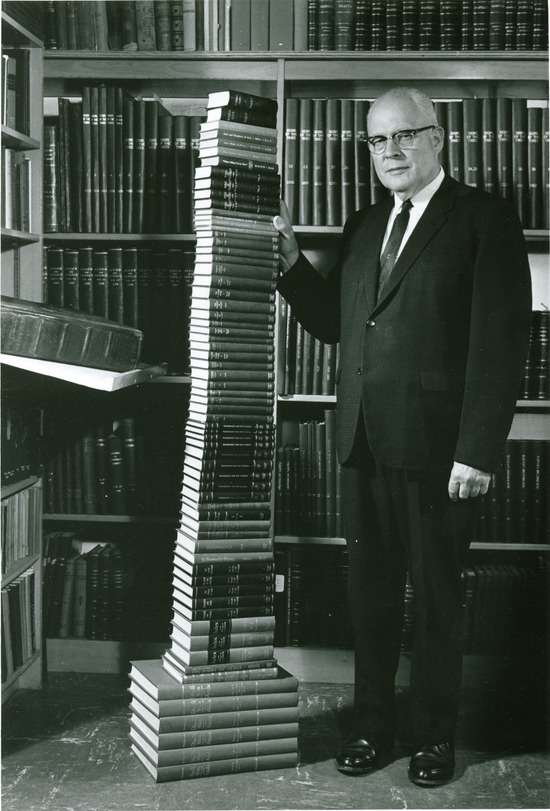
Ellen White wrote and spoke consistently throughout her lifelong ministry on topics such as personal spirituality, the life of Jesus, Bible prophecy, education, and health. She wrote over 100,000 pages by the end of her life and had 24 books in print at that time. After her death, many of her other works were published, increasing that number to 128 titles.
Ellen White preached and spoke publicly at important church meetings and other local events, providing counsel, warnings, and encouragement and even calling out harmful behaviors.
For example, in August 1877 she addressed a large audience of nearly 20,000 people at Groveland, Massachusetts, on the topic of Christian temperance.
She also maintained a personal ministry and spoke to individuals, families, or small groups.
Some of her sermons and talks have been recorded. But it’s through her writings that most of her messages live on.
Ellen White’s gift as a writer is incredible, considering that she only had a formal education up to third grade.
Yet she was led by the Holy Spirit to write widely, addressing a variety of topics—religion, education, social relationships, evangelism, prophecy, publishing, nutrition, and management. Through her pen, God provided guidance on various issues during her time and for the formation and growth of the Adventist Church. Even today, that guidance remains relevant for both the church and believers.
Her most well-known books are:
- Steps to Christ, a classic book on the Christian journey
- The Desire of Ages, a book on the life of Christ
- Christ’s Object Lessons, which covers Jesus’ parables
- The Great Controversy, a key book on Christian history, prophecy, and end-time events
- The Ministry of Healing, practical lessons from Jesus’ work as a healer
Over the years, the Ellen G. White Estate has also compiled her writings into titles covering specific topics. For example:
- Practical topics like the book Counsels for the Church
- Devotional books like Maranatha and Our High Calling
- Thoughts on prayer in the book Prayer
- Books on health like Counsels on Diet and Foods
- Books on education like Fundamentals of Christian Education
- Books on family relations and marriage like Adventist Home and Child Guidance
- Books on Christian dating and courtship like Letters to Young Lovers
Apart from her books, her letters—typically counsel to individuals—contain much wisdom too.
They were published (without the full names of the recipients) because they were found helpful for situational learning.
Her correspondence with church leaders remains useful today as well. The principles still provide management and leadership instruction for church leaders and administrators.
Want to take a peek at Ellen White’s work? Find all the writings of Ellen G. White in digital or audiobook format at egwwritings.org.
Ellen White’s involvement in other major initiatives
Ellen White advocated for positive change in various issues involving social justice and religious liberty. She encouraged the church to be sensitive to the needs of others and relieve suffering as Jesus would.
And she herself took action, caring for poor and orphaned children and helping them get an education. She also took part in positive initiatives in her community. Initiatives like:
Temperance movements
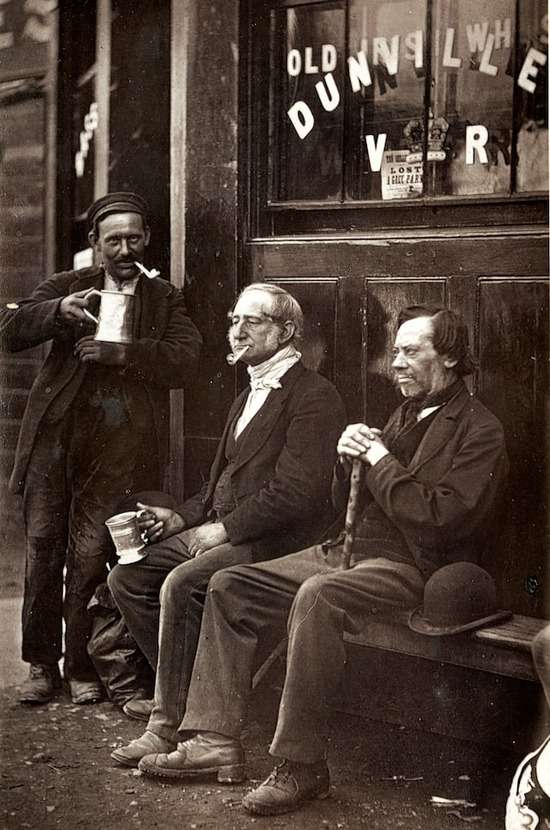
Photo by LSE Library on Unsplash
Ellen White was a vocal advocate for the temperance pledge, encouraging church members to sign it. The pledge was a promise to abstain from tobacco, alcohol, and narcotics—substances that have been shown to negatively affect health and mental judgment.
Better treatment of women
She believed women have an important role in society, ministry, and the family. She had much to say about how women should be respected for their perspective and advocated that both genders view one another as equal in all respective endeavors—just as God created them to be.
One example of her advocacy for women’s rights is when she called for better pay for female church workers.9.9
Equality between the races
Ellen White supported the abolitionist movement, calling slavery a blot on America’s history. She encouraged the church to reach out to enslaved people and relieve their suffering.
In 1891, Ellen White appealed to church leaders to reach out to former slaves in the war-torn South.
Three years later, her son Edson built a steamboat and used it for about a decade as a floating mission and school in Mississippi and Tennessee. Later, Oakwood College began in Huntsville, Alabama, as a technical training institute for African American youth.
And Ellen White cared about all races and ethnicities. During her time in Australia, she was sensitive to the mistreatment of the Aboriginal and Torres Strait Islanders.
Ellen G. White was God’s humble servant
Ellen White loved her Lord and poured out all her life in service to Him.
As an avid Bible scholar and God’s messenger to His children, she was instrumental in the founding and development of the Seventh-day Adventist Church during her lifetime. And beyond her lifetime, God uses her writings to inspire and counsel many, including church leaders and members.
Yet with all these achievements, she only wanted to be remembered as “a messenger for the Lord.” Nothing of high rank.
She never claimed to be perfect or to be any better than any other human being.

Photo by Burst
She only claimed to be a recipient of instruction from God and His Word—the Bible.
Adventists recognize the priceless gift Ellen White has been to their lives and the church.
Because we uphold the biblical doctrine of spiritual gifts—including the gift of prophecy—we recognize that Ellen White passes the Bible’s tests of a true prophet of the Holy Spirit.
But we don’t elevate her writings to the same level as Scripture. And we certainly don’t worship her, as we recognize she was a regular human being. She was merely willing to be used by the
Holy Spirit in a special way. So Adventists honor her service to God and others, noting the significant contributions to this faith community.
And because of the ways God used her, we often talk about her and share her books.
But again, the whole point of her counsel was to point people back toward Scripture. So reading all her writings is not a requirement to become an Adventist but rather a valuable way to be drawn closer to God.
One of her books that has impacted thousands of lives and drawn them to Jesus is Steps to Christ.
Related Articles



- White, Ellen Gould. “Nov. 25, 1884,” Review and Herald, Review and Herald Publishing Association, 1851. [↵]
- White, Ellen Gould. Early Writings, Review and Herald Publishing Association, 1882. pp. 32-35 [↵]
- Douglass, Herbert E. Messenger of the Lord, 1998. p. 170. [↵]
- Numbers 12:6; 1 John 4:2; Hosea 12:10; Jeremiah 28:9; Deuteronomy 18:22; Isaiah 8:20. [↵]
- White, Ellen Gould. The Publishing Ministry, Review and Herald Publishing Association, 1983. pp. 15–17. [↵]
- White. Early Writings. pp. 133–295. [↵]
- White, Ellen Gould. Testimonies for the Church, vol. 1, Pacific Press Publishing Association, 1885. p. 489 [↵]
- White, Arthur Lacey. Ellen G. White: The Later Elmshaven Years: 1905–1915 (vol. 6), Review and Herald Publishing Association, 1982. p. 197. [↵]
- White, Ellen G. “MR No. 330—Women as Workers in the Cause of God,” Manuscript Releases, Vol 5 [NOS 260-346], Ellen G. White Estate, 2017. pp. 256- 259. [↵]
More Answers

The Barren Fig Tree Parable: What It Means to Bear Fruit
Find out what the Parable of the Barren Fig Tree really means.

¿Qué son las reuniones evangelísticas adventistas?
¿Qué son las reuniones evangelísticas adventistas?La Iglesia Adventista del Séptimo Día pone un gran énfasis en compartir el evangelio mediante la evangelización, o compartir el evangelio a través de la predicación, la enseñanza y el testimonio. Una de las formas en...
O que são os Encontros Evangelísticos Adventistas?
O que são os Encontros Evangelísticos Adventistas?A Igreja Adventista do Sétimo Dia dá grande ênfase ao compartilhamento do evangelho por meio da evangelização, ou seja, compartilhar o evangelho através da pregação, ensino e testemunho. Uma das formas de realizarmos...

O Que os Adventistas Acreditam Sobre Fé e Obras?
O Que os Adventistas Acreditam Sobre Fé e Obras?Os adventistas acreditam que somos salvos pela fé, que é a crença e confiança que temos em Jesus Cristo para nos salvar dos nossos pecados. Jesus, então, nos capacita a viver em harmonia com os mandamentos de Deus e a...
¿Qué creen los Adventistas sobre la fe y las obras?
¿Qué creen los Adventistas sobre la fe y las obras?Los adventistas creen que somos salvos por la fe, que es la creencia y confianza que tenemos en Jesucristo para salvarnos de nuestros pecados. Jesús, entonces, nos capacita para vivir en armonía con los mandamientos...
Je, Ninahitaji Kuwa Mwadventista Ili Niokolewe
Je, Ninahitaji Kuwa Mwadventista Ili Niokolewe?Jibu la swali hili ni rahisi, “hapana.” Linapokuja swala la wokovu katika Yesu Kristo, kinachohitajika kwa mtu ni kukiri dhabihu ya Yesu kwa ajili yetu, kuamini kwamba Ametuokoa, na kudai zawadi ya bure ya wokovu ambayo...
¿Necesito ser adventista para ser salvo?
¿Necesito ser adventista para ser salvo?La respuesta a esta pregunta es simplemente, “no.” Cuando se trata de la salvación en Jesucristo, todo lo que se requiere de una persona es reconocer el sacrificio de Jesús por nosotros, creer que Él nos ha salvado y reclamar el...
Preciso ser Adventista para ser salvo?
A resposta para essa pergunta é simplesmente: “não.”

Lo que la Biblia dice sobre la Segunda Venida de Jesucristo
¿Tienes curiosidad sobre lo que la Biblia dice acerca de la Segunda Venida de Jesucristo? Cubriremos los versículos clave y su significado.

¿Quién fue Mateo, el apóstol, en la Biblia?
En el primer libro del Nuevo Testamento, encontramos la historia del Evangelio desde la perspectiva de Mateo.
2 Corinthians: An Overview of Paul’s Most Personal Letter
Discover Paul’s lessons on forgiveness, reconciliation, generosity, and more. It’s all in the book of 2 Corinthians!
Quem Foi Mateus, o Apóstolo, na Bíblia?
Quem Foi Mateus, o Apóstolo, na Bíblia?No primeiro livro do Novo Testamento, encontramos a história do Evangelho sob a perspectiva de Mateus. Ele era um coletor de impostos judeu de Cafarnaum, no primeiro século d.C., e provavelmente era desprezado pelos outros judeus...

The Pharisee and the Tax Collector Parable: Its Meaning Made Simple
The Meaning of the Pharisee and the Tax Collector ParableIn Luke 18:9-14, Jesus told a parable about two men who went to the temple to pray. One was a Pharisee and the other a tax collector. The Pharisee prayed (well, bragged) about his own good works compared to the...
Biblia Inasema Nini Kuhusu Ujio wa Pili wa Yesu Kristo
Unajuliza Biblia inasema nini kuhusu Kurudi kwa Yesu Kristo Mara ya Pili? Tutajadili aya kuu na maana zake.

The Story of the Widow’s Mite—What It Really Means
The Story of the Widow’s Mite—What It Really MeansPeople often assume bigger is better, but the Bible turns this concept on its head with the story of the Widow’s Mite. Of all the donations Jesus sees at the temple, the gift that draws His attention is not the...

Consejo de Elena G. de White sobre la Educación Universitaria
Consejo de Elena G. de White sobre la Educación UniversitariaElena G. de White, una cofundadora importante del Adventismo, es conocida a menudo por su orientación práctica y espiritual para la educación infantil adecuada. Pero también estuvo significativamente...
Mathayo Alikuwa Nani Katika Biblia?
Mathayo Alikuwa Nani Katika Biblia?Katika kitabu cha kwanza cha Agano Jipya, tunapata simulizi la Injili kutoka kwa Mathayo. Alikuwa mtoza ushuru Myahudi kutoka Kapernaumu katika karne ya kwanza MK, na huenda alichukiwa na Wayahudi wenzake kwa kuchagua kazi hiyo....

¿Cuáles son los beneficios de vivir en el campo?
¿Cuáles son los beneficios de vivir en el campo?Visitar el campo puede ofrecer un descanso muy necesario del típico ajetreo y bullicio de la ciudad. Muchos incluso han decidido mudarse a zonas rurales para disfrutar de un ritmo más lento, espacios amplios, aire...
Quais São os Benefícios de Viver no Campo?
Visitar o campo pode oferecer uma pausa muito necessária do típico agito da cidade.

¿Qué significa la parábola de la perla de gran precio?
Esto es lo que Jesús enseñó sobre el reino de los cielos a través de esta breve parábola sobre un comerciante que encuentra una perla invaluable.
O Que Significa a Parábola da Pérola de Grande Valor?
Aqui está o que Jesus ensinou sobre o reino dos céus por meio desta parábola curta sobre um comerciante que encontra uma pérola inestimável.

Por Que Muitos Adventistas Querem Viver no Campo
Por Que Muitos Adventistas Querem Viver no CampoViver em áreas rurais é algo que os adventistas têm valorizado historicamente, embora as necessidades da vida moderna nem sempre tenham tornado isso possível. Convenhamos, as vantagens da vida na cidade são bastante...

Uma Visão Geral de Romanos: Fé, Justiça, Relacionamentos
Uma Visão Geral de Romanos: Fé, Justiça, RelacionamentosO livro de Romanos é uma das 21 epístolas, ou cartas abertas, do Novo Testamento. E embora seja um texto bíblico antigo, ainda tem uma relevância significativa (até surpreendente) para nossas vidas hoje. O...

Jesus é o Mesmo Ser que Miguel, o Arcanjo?
Jesus é o Mesmo Ser que Miguel, o Arcanjo?Muitos cristãos têm se perguntado sobre a misteriosa identidade de Miguel, o Arcanjo. Desde os primórdios do cristianismo, muitos interpretaram Miguel como o Messias identificado com a figura do Anjo do Senhor. O reformador...
Je, Faida za Kuishi Vijijini ni Zipi?
Kutembelea maeneo ya vijijini kunaweza kutoa mapumziko yanayohitajika sana kutoka kwenye pilikapilika za kawaida za mijini.
Je, Mfano wa Lulu ya Thamani Kubwa Unamaanisha Nini?
Hivi ndivyo Yesu alivyofundisha kuhusu ufalme wa mbinguni kupitia mfano huu mfupi wa mfanyabiashara aliyepata lulu ya thamani isiyo na kifani.
Kwa Nini Waadventista Wengi Wanataka Kuishi Vijijini
Kwa Nini Waadventista Wengi Wanataka Kuishi VijijiniKuishi maeneo ya vijijini ni jambo ambalo Waadventista wamekuwa wakilithamini kihistoria, ingawa mahitaji ya maisha ya kisasa hayafanyi iwezekane kila wakati. Tukubali, faida za kuishi mjini zinaonekana wazi: fursa...
Muhtasari wa Kitabu cha Warumi: Imani, Haki, Mahusiano
Hapa kuna muhtasari na historia ya waraka mrefu zaidi wa Paulo.

Sobre o que é a Parábola do Semeador de Jesus?
A parábola do semeador é, em última análise, sobre como as pessoas responderam a Jesus Cristo e Sua mensagem do reino de Deus—o Evangelho.
Didn’t find your answer? Ask us!
We understand your concern of having questions but not knowing who to ask—we’ve felt it ourselves. When you’re ready to learn more about Adventists, send us a question! We know a thing or two about Adventists.