
In Ephesians 6, the Apostle Paul was helping people understand what it means to defend themselves within a spiritual war (Ephesians 6:10-18).
What does that mean?
In referencing the armor of God, Paul is not encouraging a physical war or physical armor. We are to defend ourselves against Satan or the Devil, who’s primary mission is to turn people away from God.
So let’s look more closely at what this spiritual war entails, and what this whole “armor” consists of. We’ll cover:
- The armor’s meaning and purpose
- Pieces of the armor of God
- Prayer as part of this armor
- What this means for us today
Let’s start by looking at what these verses say.
What does the armor of God mean?

Photo by Henry Hustava on Unsplash
The choice of words in Ephesians to describe this armor is a direct reference to Isaiah 11:4-5 and Isaiah 59:17. The symbolism might seem odd today, but these words are meant to speak to each of us.
“Put on the whole armor of God, that you may be able to stand against the wiles of the devil. For we do not wrestle against flesh and blood, but against principalities, against powers, against the rulers of the darkness of this age, against spiritual hosts of wickedness in the heavenly places. Therefore take up the whole armor of God, that you may be able to withstand in the evil day, and having done all, to stand” (Ephesians 6:11-13, NKJV).
These “powers” and “spiritual hosts of wickedness” are the continued efforts of Satan. He doesn’t fight with conventional weapons but with influence. He sows deception, distraction, and temptation.
We are told in Matthew, “And do not fear those who kill the body but cannot kill the soul. But rather fear Him who is able to destroy both soul and body in hell” (Matthew 10:28, NKJV).
(By the way, do not be deceived by the enemy into believing in a hell where people are punished forever. Paul tells us, “For the wages of sin is death, but the gift of God is eternal life in Christ Jesus our Lord” (Romans 6:23, NKJV).
Death is final, not an eternal torture (Ecclesiastes 9:5). We are offered protection from eternal destruction by faith in God and wearing His armor.)
The full armor of God allows us to defend ourselves against these kinds of forces. We have a God that loves us and wants to protect us. He wants us to live forever with Him.
Pieces of the full armor of God
So let’s look at the individual pieces of the armor of God (Ephesians 6:14-18).
- Belt of truth (holds up the armor of God).
- Breastplate of righteousness (shields the heart, among other important parts of our bodies).
- Shoes of the gospel/sandals with the gospel of peace (to stand firm).
- Shield of faith (protection against direct attacks).
- Helmet of salvation (knowledge).
- Sword of the spirit (direct defense).
- And also prayer (by which we obtain His strength and protection).
Paul used words and images that were understood by his audience at the time.
This is exactly how Jesus spoke to people during His time on earth.
When Jesus called the first disciples who were fishermen, He said, “Follow Me, and I will make you fishers of men” (Matthew 4:19, NKJV).
Paul’s method was similar. The people he addressed in Ephesus understood war. They knew the pieces of armor worn by Roman soldiers at the time.
Belt of truth1
“Stand therefore, having girded your waist with truth” (Ephesians 6:14, NKJV).
Belts of Roman soldiers were crafted from strong metal and leather. It was sturdy enough to hold a sword and keep everything else in order.
Think of the belt as a foundation for all other pieces of the armor.
The belt must be worn first to balance and hold the rest.
For the believer, this foundational piece represents truth.
What is the truth?
The truth is that we desperately need Jesus. The truth is that He died to protect us from eternal death. And we regard God’s word as true above all else.
“Jesus said to him, ‘I am the way, the truth, and the life. No one comes to the Father except through Me’” (John 14:6, NKJV).
Using this truth as the foundation of our spiritual armor, we are able to stand against deception and temptation and be used by God. We are assured protection and salvation.
Jesus also said, “And you shall know the truth, and the truth shall make you free” (John 8:32, NKJV).
With the belt of truth, we are free to live the life God intended for us. This truth is found in Jesus’ saving grace.
Jesus’ teaching proclaimed the truth. We must know this to guard ourselves against the enemy of this war, Satan, the father of lies (John 8:44).
The truth is that God is love, and sin is the opposite of love. We are saved through Jesus Christ, through His sacrifice and promised Second Coming. Truth is His forgiveness of sins. These truths prevail against Satan’s lies.
Believers hold fast to truth.
Just like the belt of truth holds tight the armor of God.
Breastplate of righteousness
“Having put on the breastplate of righteousness” (Ephesians 6:14, NKJV).
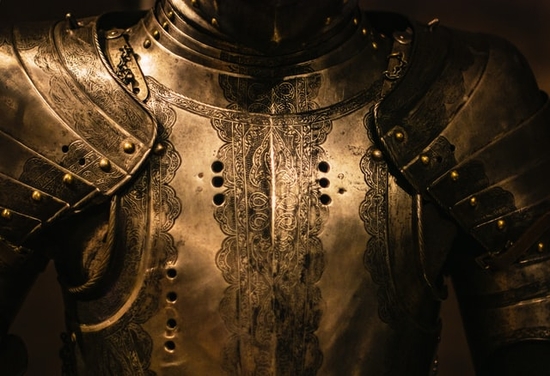
Photo by Nik Shuliahin on Unsplash
For Roman soldiers, this piece of the armor was large-scale protection during battle.
After all, it protected essential organs of a soldier, particularly the heart.
Of course, the “heart” protected by the breastplate of righteousness is not our physical heart. The heart is where we maintain our sense of self, feel emotions, and gather our sense of morality. That’s why we say it’s so important for God to “dwell in our hearts.”
In spiritual battle, the breastplate of righteousness protects our heart. Proverbs 4:23 tells us, “Keep thy heart with all diligence; for out of it are the issues of life” (NKJV).
We are not “upright” or moral without Jesus. Human beings do not have righteousness aside from what He has given us.
The breastplate of righteousness is His protection, and it never fails. We are protected from Satan’s attacks through Christ’s righteousness.
There is nothing we can do to earn righteousness. We can not be righteous without Him (Romans 3:10). When we accept Jesus as Savior, it is a gift He gives abundantly (2 Corinthians 5:21; Ephesians 2:8, 9; Philippians 3:9). And we can use this righteousness from God to protect our hearts.
Shoes of the gospel/sandals with the gospel of peace2
“And having shod your feet with the preparation of the gospel of peace” (Ephesians 6:15, NKJV).
Sandals were equipped to protect the feet of Roman soldiers. They provided comfort while marching into battle. The sandals helped soldiers “stand firm” during battle. The soles were thick. The ankle straps protected against blisters.
Believers in Jesus are called to walk as He walked (1 John 2:6). We must march where He leads. Jesus said, “My sheep hear My voice, and I know them, and they follow Me” (John 10:27, NKJV).
Believers are called to follow Him and also must stand firm when needed. That firm standing comes from understanding the gospel. With that understanding, the rest can fall into place.
Shield of faith
“Above all, taking the shield of faith with which you will be able to quench all the fiery darts of the wicked one” (Ephesians 6:16, NKJV).
The Roman soldier’s shield, or scutum, was a complex piece of the armor. It was made of solid wood, leather, and metal. It provided a hefty barrier. Then the shields were covered with animal skin soaked with water.
With this wet skin, fiery darts could be smothered on impact.
What does this have to do with a believer? What are the “fiery darts” against the shield of faith?
Faith is our shield in a spiritual war. Faith in Jesus gives us His protection.
Jesus said, “He who believes in Me, as the Scripture has said, out of his heart will flow rivers of living water” (John 7:38, NKJV).
The shield of faith needs to be dipped in the living water of His word.
To the woman at the well, Jesus said, “whoever drinks of the water that I shall give him will never thirst. But the water that I shall give him will become in him a fountain of water springing up into everlasting life” (John 4:14, NKJV).
We are told that “in the beginning was the Word, and the Word was with God, and the Word was God” (John 1:1, NKJV).
What exactly is this faith which we are called to hold like a shield? “Now faith is the substance of things hoped for, the evidence of things not seen” (Hebrews 11:1, NKJV).
We do not see God, but we have evidence of His love and works. We did not witness Jesus’ life and sacrifice, but we have testimony of it in the Word—the Bible.
And we can place our faith in God because the truth is in the Word.
Helmet of salvation
“And take the helmet of salvation…” (Ephesians 6:17, NKJV).

While each piece of armor is crucial, the helmet protects the head. The helmet of a Roman soldier shielded the entire head, face, and eyes.
In battle, these could be the most vulnerable parts of the body. The helmet of salvation is perhaps one of the most critical pieces of the armor for a believer.
The head is considered the source of knowledge, and we are called to know the salvation Jesus offers.
We are granted salvation when we believe and trust in Jesus’ death and resurrection for our sins (I John 1:9, NKJV).
The knowledge of this salvation gives us strength to fight. “And this is the testimony: that God has given us eternal life, and this life is in His Son” (1 John 5:11-12, NKJV).
Sword of the Spirit
“And the sword of the Spirit, which is the word of God” (Ephesians 6:17, NKJV).
The sword can be used for fighting or protection.
The word of God is the sword of the believer. The word gives us faith to use it defensively, when we’re being attacked with lies, or to use it proactively, by letting the word of God be evident in how we live our lives.
How did Christ battle Satan when tempted? He used Scripture with each response (Luke 4: 1-13).
God’s word is called “living and powerful, and sharper than any two-edged sword, piercing even to the division of soul and spirit, and of joints and marrow, and is a discerner of the thoughts and intents of the heart” (Hebrews 4:12, NKJV).
The more time we spend reading God’s word, the more we will understand. The more we understand God’s word, the more we can apply it to our daily lives.
Prayer
“Praying always with all prayer and supplication in the Spirit, being watchful to this end with all perseverance and supplication for all the saints” (Ephesians 6:18, NKJV).
Cloaked in the armor of God, prayer is what powers everything. It’s our connection to God.
Prayer allows us communication with God, and to be consciously relying on Him to guide us and strengthen us.
We are advised to, “be anxious for nothing, but in everything by prayer and supplication, with thanksgiving, let your requests be made known to God; and the peace of God, which surpasses all understanding, will guard your hearts and minds through Christ Jesus” (Philippians 4:6-7, NKJV).
So even if prayer isn’t a piece of the armor, it’s still part of the whole outfit.
What does the idea of God’s armor mean for us today?

How does one “put on” the armor of God?
Fortunately, this doesn’t require heavy lifting. Wearing this armor starts in the simplest of ways: believing. When we accept Jesus’ sacrifice, we have begun our journey with Him. We live as a new creation, born-again, pursuing righteousness.
And even if we’re still learning how everything works, the armor of God is something God will freely give. Our part is to acknowledge that He is the source of our strength, and in Him is where we find growth.
In a way, we can polish and reinforce our spiritual armor when we read and study Scripture. And every time we pray, watch for God’s small blessings in life, and look at the world through the lens of the Bible, our armor’s effectiveness only increases.
This doesn’t mean we are to live life as if it’s a war. Paul wasn’t calling all humans to become like drill sergeants or berserker warriors when it comes to living Christian lives.
It’s true the enemy is real, and sin is a struggle for every human being. But we’re given the armor, not weapons, to deal with these spiritual attacks.
We can also find comfort in knowing that the armor of God is the only armor we need when it comes to this great controversy against good and evil. We don’t need to make our own. God will “supply all your needs according to His riches in glory in Christ Jesus” (Philippians 4:19, CSB).
His truth tells us what we need to know. His righteousness protects our hearts, and His salvation gives us life with Him. He’s given us support to stand and go where He leads. Faith in Him shields us from deception, and the Holy Spirit fights for us and parries surprise attacks.
Want to learn more about the concepts with the Armor of God?
- Editor in Chief, “The 7 Pieces of the Armor of God and How to Use Them,” https://connectusfund.org/7-pieces-of-the-armor-of-god, 2 December, 2019. [↵]
- Bibleinfo.com, “Armor of God: What is it?,” https://www.bibleinfo.com/en/questions/armor-of-god, last accessed 13 December, 2021. [↵]
More Answers

The Barren Fig Tree Parable: What It Means to Bear Fruit
Find out what the Parable of the Barren Fig Tree really means.

¿Qué son las reuniones evangelísticas adventistas?
¿Qué son las reuniones evangelísticas adventistas?La Iglesia Adventista del Séptimo Día pone un gran énfasis en compartir el evangelio mediante la evangelización, o compartir el evangelio a través de la predicación, la enseñanza y el testimonio. Una de las formas en...
O que são os Encontros Evangelísticos Adventistas?
O que são os Encontros Evangelísticos Adventistas?A Igreja Adventista do Sétimo Dia dá grande ênfase ao compartilhamento do evangelho por meio da evangelização, ou seja, compartilhar o evangelho através da pregação, ensino e testemunho. Uma das formas de realizarmos...

O Que os Adventistas Acreditam Sobre Fé e Obras?
O Que os Adventistas Acreditam Sobre Fé e Obras?Os adventistas acreditam que somos salvos pela fé, que é a crença e confiança que temos em Jesus Cristo para nos salvar dos nossos pecados. Jesus, então, nos capacita a viver em harmonia com os mandamentos de Deus e a...
¿Qué creen los Adventistas sobre la fe y las obras?
¿Qué creen los Adventistas sobre la fe y las obras?Los adventistas creen que somos salvos por la fe, que es la creencia y confianza que tenemos en Jesucristo para salvarnos de nuestros pecados. Jesús, entonces, nos capacita para vivir en armonía con los mandamientos...
Je, Ninahitaji Kuwa Mwadventista Ili Niokolewe
Je, Ninahitaji Kuwa Mwadventista Ili Niokolewe?Jibu la swali hili ni rahisi, “hapana.” Linapokuja swala la wokovu katika Yesu Kristo, kinachohitajika kwa mtu ni kukiri dhabihu ya Yesu kwa ajili yetu, kuamini kwamba Ametuokoa, na kudai zawadi ya bure ya wokovu ambayo...
¿Necesito ser adventista para ser salvo?
¿Necesito ser adventista para ser salvo?La respuesta a esta pregunta es simplemente, “no.” Cuando se trata de la salvación en Jesucristo, todo lo que se requiere de una persona es reconocer el sacrificio de Jesús por nosotros, creer que Él nos ha salvado y reclamar el...
Preciso ser Adventista para ser salvo?
A resposta para essa pergunta é simplesmente: “não.”

Lo que la Biblia dice sobre la Segunda Venida de Jesucristo
¿Tienes curiosidad sobre lo que la Biblia dice acerca de la Segunda Venida de Jesucristo? Cubriremos los versículos clave y su significado.

¿Quién fue Mateo, el apóstol, en la Biblia?
En el primer libro del Nuevo Testamento, encontramos la historia del Evangelio desde la perspectiva de Mateo.
2 Corinthians: An Overview of Paul’s Most Personal Letter
Discover Paul’s lessons on forgiveness, reconciliation, generosity, and more. It’s all in the book of 2 Corinthians!
Quem Foi Mateus, o Apóstolo, na Bíblia?
Quem Foi Mateus, o Apóstolo, na Bíblia?No primeiro livro do Novo Testamento, encontramos a história do Evangelho sob a perspectiva de Mateus. Ele era um coletor de impostos judeu de Cafarnaum, no primeiro século d.C., e provavelmente era desprezado pelos outros judeus...
The Pharisee and the Tax Collector Parable: Its Meaning Made Simple
The Meaning of the Pharisee and the Tax Collector ParableIn Luke 18:9-14, Jesus told a parable about two men who went to the temple to pray. One was a Pharisee and the other a tax collector. The Pharisee prayed (well, bragged) about his own good works compared to the...
Biblia Inasema Nini Kuhusu Ujio wa Pili wa Yesu Kristo
Unajuliza Biblia inasema nini kuhusu Kurudi kwa Yesu Kristo Mara ya Pili? Tutajadili aya kuu na maana zake.

The Story of the Widow’s Mite—What It Really Means
The Story of the Widow’s Mite—What It Really MeansPeople often assume bigger is better, but the Bible turns this concept on its head with the story of the Widow’s Mite. Of all the donations Jesus sees at the temple, the gift that draws His attention is not the...

Consejo de Elena G. de White sobre la Educación Universitaria
Consejo de Elena G. de White sobre la Educación UniversitariaElena G. de White, una cofundadora importante del Adventismo, es conocida a menudo por su orientación práctica y espiritual para la educación infantil adecuada. Pero también estuvo significativamente...
Mathayo Alikuwa Nani Katika Biblia?
Mathayo Alikuwa Nani Katika Biblia?Katika kitabu cha kwanza cha Agano Jipya, tunapata simulizi la Injili kutoka kwa Mathayo. Alikuwa mtoza ushuru Myahudi kutoka Kapernaumu katika karne ya kwanza MK, na huenda alichukiwa na Wayahudi wenzake kwa kuchagua kazi hiyo....

¿Cuáles son los beneficios de vivir en el campo?
¿Cuáles son los beneficios de vivir en el campo?Visitar el campo puede ofrecer un descanso muy necesario del típico ajetreo y bullicio de la ciudad. Muchos incluso han decidido mudarse a zonas rurales para disfrutar de un ritmo más lento, espacios amplios, aire...
Quais São os Benefícios de Viver no Campo?
Visitar o campo pode oferecer uma pausa muito necessária do típico agito da cidade.

¿Qué significa la parábola de la perla de gran precio?
Esto es lo que Jesús enseñó sobre el reino de los cielos a través de esta breve parábola sobre un comerciante que encuentra una perla invaluable.
O Que Significa a Parábola da Pérola de Grande Valor?
Aqui está o que Jesus ensinou sobre o reino dos céus por meio desta parábola curta sobre um comerciante que encontra uma pérola inestimável.

Por Que Muitos Adventistas Querem Viver no Campo
Por Que Muitos Adventistas Querem Viver no CampoViver em áreas rurais é algo que os adventistas têm valorizado historicamente, embora as necessidades da vida moderna nem sempre tenham tornado isso possível. Convenhamos, as vantagens da vida na cidade são bastante...
Uma Visão Geral de Romanos: Fé, Justiça, Relacionamentos
Uma Visão Geral de Romanos: Fé, Justiça, RelacionamentosO livro de Romanos é uma das 21 epístolas, ou cartas abertas, do Novo Testamento. E embora seja um texto bíblico antigo, ainda tem uma relevância significativa (até surpreendente) para nossas vidas hoje. O...

Jesus é o Mesmo Ser que Miguel, o Arcanjo?
Jesus é o Mesmo Ser que Miguel, o Arcanjo?Muitos cristãos têm se perguntado sobre a misteriosa identidade de Miguel, o Arcanjo. Desde os primórdios do cristianismo, muitos interpretaram Miguel como o Messias identificado com a figura do Anjo do Senhor. O reformador...
Je, Faida za Kuishi Vijijini ni Zipi?
Kutembelea maeneo ya vijijini kunaweza kutoa mapumziko yanayohitajika sana kutoka kwenye pilikapilika za kawaida za mijini.
Je, Mfano wa Lulu ya Thamani Kubwa Unamaanisha Nini?
Hivi ndivyo Yesu alivyofundisha kuhusu ufalme wa mbinguni kupitia mfano huu mfupi wa mfanyabiashara aliyepata lulu ya thamani isiyo na kifani.
Kwa Nini Waadventista Wengi Wanataka Kuishi Vijijini
Kwa Nini Waadventista Wengi Wanataka Kuishi VijijiniKuishi maeneo ya vijijini ni jambo ambalo Waadventista wamekuwa wakilithamini kihistoria, ingawa mahitaji ya maisha ya kisasa hayafanyi iwezekane kila wakati. Tukubali, faida za kuishi mjini zinaonekana wazi: fursa...
Muhtasari wa Kitabu cha Warumi: Imani, Haki, Mahusiano
Hapa kuna muhtasari na historia ya waraka mrefu zaidi wa Paulo.
Sobre o que é a Parábola do Semeador de Jesus?
A parábola do semeador é, em última análise, sobre como as pessoas responderam a Jesus Cristo e Sua mensagem do reino de Deus—o Evangelho.
Didn’t find your answer? Ask us!
We understand your concern of having questions but not knowing who to ask—we’ve felt it ourselves. When you’re ready to learn more about Adventists, send us a question! We know a thing or two about Adventists.