
Prayer is intentional communication with God.
And the way you go about it is much like how you’d communicate with your best friend. You can reach out anytime and anywhere, in the way that’s most natural between the two of you.
In the same way, you can pray to God any time, anywhere, in any way that directs your thoughts toward God.
And what makes prayer even better than talking to your friend is that God doesn’t have availability limitations. And He’ll always understand you—no need to stress about finding the “right words.”
You can talk to Him as a child to a perfect, loving father.
But if you’d like some more details, as well as some methods or how-tos, let’s go over some options. We’ll go over some of the when, where, and how of prayer, with the Bible as our guide.
We’ll answer these 4 common questions:
- How many times should I pray in a day?
- Where should I pray?
- Whom should I pray with?
- Is there a specific position for praying?
Let’s begin with the when of prayer.
How many times should I pray in a day?

As many times as you can, or want to.
Think about it this way. If you have a trusted friend you can always depend on, you don’t usually limit your time with them. You want to talk as much as possible!
It’s the same with God.
That’s why we’re encouraged to “pray without ceasing” (1 Thessalonians 5:17, NKJV).
This doesn’t mean that we have to devote every moment of our days to kneeling down in formal prayer. Instead, it’s about being in constant communication with God (Romans 12:12).
You can even pray in between classes at school, as you walk down the hall to wake up your kids, or in the drive-thru line when you’re grabbing an on-the-go breakfast on a hectic day.
It’s amazing how helpful it can be just to engage in a simple prayer here and there throughout the day.
- We can thank Him for the little blessings we stop to notice
- We can recall previous answers to prayer and express gratitude
- We can ask Him for help with an urgent decision
- We can express to Him our stresses or struggles of the moment (1 Peter 5:7)
- We can take a few minutes to pause and let Him calm us
- We can involve Him in all that we do, seeking to be in harmony with His will (1 Thessalonians 5:18), since He knows us better than we know ourselves!
But it’s also good to have a number of times in a day that we dedicate to prayer. Here are some examples of when people carved out specific times for prayer in the Bible:
- Daniel used to “pray three times in a day” (Daniel 6:10, NKJV).
- The Psalmist also said, “evening, and morning and at noon will I pray” (Psalms 55:17, NKJV).
- When Jews would visit the temple, “the people were praying outside at the time of incense” (Luke 1:10, NKJV).
- The disciples “Peter and John went to the temple in the hour of prayer being the ninth hour” (Acts 3:1, NKJV).
It’s always good to have dedicated times for prayer. Just like we might set a weekly lunch date with our friend.
It also helps keep us accountable. We can make prayer time part of our routines so that our relentless and never-ending to-do lists don’t end up smothering it from our schedule.
And we’ll know when we miss a prayer time. Sometimes we can really feel the difference on the days we don’t get our regular devotional time!
But upon noticing that, we can go back and see what distracted us and get back on track to communicating regularly with God.
It’s as simple as directing our thoughts to Him in prayer, and listening to His voice as we read His Word, the Bible.
To begin cultivating a prayer-time habit, start by scheduling some quiet time in your daily calendar. Maybe you’ll want to do it first thing in the morning, before the rush of the day. Or maybe you’ll choose some time before you go to bed, once you’ve ended your day and set all distractions aside.
If you’d like some guidance in getting started, you can use a devotional book or email series, or a daily prayer guide. These types of resources can provide specific Bible verses with promises you can claim in your prayers.
Paul tells us in Philippians 4 that “in everything by prayer and supplication with thanksgiving let your request be made known to God” (verse 6, NKJV). We can trust that He wants to guide us and help us experience the joy and peace only His Holy Spirit can bring (verse 7).
Where should I pray?
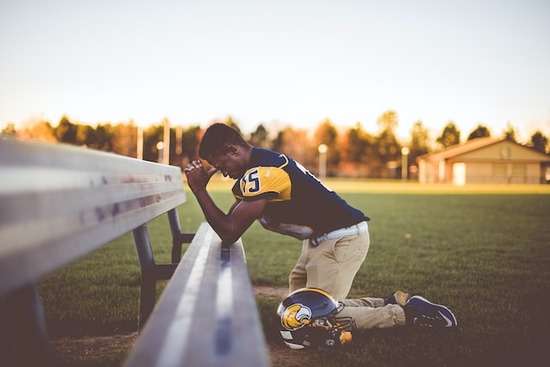
Just like you can pray at any time, you can also pray anywhere.
There’s no physical place we could go that would keep God from hearing our prayers.
However, there might be a physical place that helps us pray more easily, or that helps us block out distractions.
So it can still be a good idea to devote a specific place for our prayer time. And as we associate this place with our communion with Jesus, it can inspire reverence and peace within us just by being in it.
Jesus had a favorite place where He often went to pray. Before His crucifixion, He “went as was His custom to the Mount Olives” to pray (Luke 22:39, NKJV).
A church is also a good place to pray. In fact, Jesus said that the temple (church) is “called the house of prayer” (Matthew 21:13, NKJV).
But you can also pray at home, in prayer rooms, alone in your car, sitting on a bench in the park, or wherever you feel your need for God’s presence and ever-listening ear. Even while driving on a busy street, you can whisper a prayer to God with assurance that He’ll hear and answer it.
Here are a few biblical examples of not-so-ordinary places people prayed:
- “Jonah prayed unto the Lord His God out of the fish’s belly” (Jonah 2:1, NKJV).
- Nehemiah silently “prayed to the God of heaven” while standing in front of the King (Nehemiah 2:4, NKJV).
- Jesus prayed while He was on the cross: “Father, into Your hands I commend My spirit” (Luke 23:46, NKJV).
- Paul and Silas prayed while in prison: “And at midnight Paul and Silas prayed… and the prisoners heard them” (Acts 16:25, NKJV).
Whom should you pray with?
You can have individual, private prayers or you can pray with others as a group.
Group/corporate/public prayers
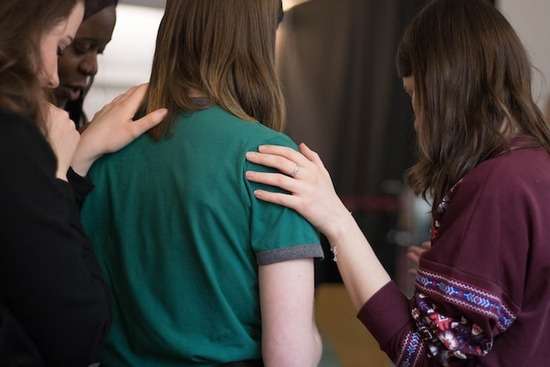
These organized prayer sessions can be offered in unison by more than one person, sometimes at the same time. All the people participating could be in the same location, or they can even do it remotely and connect through their phones or computers, like using Skype, FaceTime, or Zoom.
In most cases, one person prays on behalf of the rest (intercessory prayer), or they take turns praying for one another.
There are also times when everyone prays quietly at the same time.
But why are public or group prayers important?
Group prayers unite the group members with each other and with God. Members feel that they are not alone in their struggles. They’re comforted and consoled by others, even as they seek the help of God or a revelation of God’s will in a given situation.
And as we unite in intercession for others we pray for, our own spirits are enriched as we commune with God.
Matthew 18:20 says that whenever two or three are gathered in the name of Jesus, His presence is there with them.
So apart from having each other there for support, we’re also comforted by God’s presence through the Holy Spirit.
Have you ever had a problem, then someone offered to pray with you for a solution? It can help take that weight off your shoulders and direct your thoughts toward God.
The Bible tells us that even Jesus Himself longed for His friends to pray with Him in His most trying moment, just before His crucifixion.
Matthew tells us that He became “sorrowful even unto death.” Then He took three of His disciples; John, James and Peter as prayer partners and told them, “stay here and watch [pray] with me” (Matthew 26:38, NKJV).
Here are some factors to consider when praying as a group:
- Public prayers should be kept simple and short so it’s easy for others to follow. That way, it’s easier for them to keep their own thoughts directed toward God.
This is in line with what Jesus said when He advised against using a bunch of flowery, poetic speech to significantly lengthen prayers. The Pharisees would do this, thinking their prayers would “be heard because of their many words” (Matthew 6:7, NASB). But God already knows our needs! We don’t need to explain it in every way possible. The whole point is being intentional about putting these things in God’s hands.
- As much as possible, use phrasing that everyone involved understands.
- Unless a specific situation calls for it, you don’t need to openly confess your private sins. And never mention private confessions of others. When praying about confession and forgiveness, keep the phrasing general, allowing each of the individuals praying to direct their own struggles to God.
Private/personal prayers
These prayers are just between you and God. If possible, you might look for a secluded place that helps you quiet your mind and focus.
Though you could also have a private prayer even while standing within a crowd of people. It’s to Whom your mind is directed that counts.
Jesus said, “when you pray, go into your own room, and when you have shut your door, pray to your Father who is in the secret place…” (Matthew 6:6, NKJV).
Why are private prayers necessary?
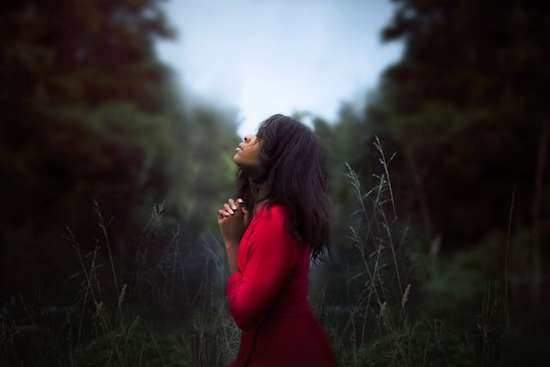
Sometimes, all we need is to be alone with our Heavenly Father to just pour our hearts to Him.
Just like we can do with a close friend.
Even though friends often talk in a public place, sometimes we need to talk with them in a private place. Times when we need to share something of a heavier subject matter, or if we need to work on an issue together and concentrate.
Even Jesus often “departed into a lonely place, and there prayed” (Mark 3:35, NKJV).
In fact, most of Jesus’ prayer life was a private one.
As the Son of God, often misunderstood and with the burden of our salvation on His shoulders, He often retreated to talk with His Father who understood Him and His mission best.
In the same way, when you feel no one understands you, or if you feel overwhelmed by your struggles and life’s burdens, you can turn to God and pray to Him since He understands us more than any other person could.
Private prayer time is when we can confess anything—even the thoughts and fears we have in the deepest corners of our minds. Even the thoughts we’re ashamed of or scared of. God hears it all, and receives our prayers with unconditional love.
We find a good example with Jacob, when he was threatened by his brother. Since only Jacob and God understood the details of the sin he committed against his brother, he sent his family away so that he “was left alone.” Then he wrestled with God in prayer until he was forgiven (Genesis 32:24, NKJV).
Also, private prayers can be longer than public prayers. You can take your time, just the way Jesus often “continued all night in prayer to God” (Luke 6:12, NKJV).
This is the time to tell Him about all your needs and situations, and even intercede for your loved ones you might be concerned about.
Is there a specific position for praying?
There isn’t an exact position we’re required to assume while praying. What’s most important is that we realize we’re talking to the God of all the universe. It’s appropriate to foster an attitude of reverence when we pray (Psalms 111:9).
And God understands our most personal circumstances. He knows that we need to pray while we’re driving in our cars, while in the middle of a tough work situation, or while we’re rocking a crying baby.
Or if you’re in a public place and feel your need to pray, you can just go ahead in the most unnoticeable way. Just like Nehemiah did while standing before the Persian king (Nehemiah 2:4).
Here are examples of prayer positions in the Bible
Sometimes the way we position ourselves can help us express ourselves and cultivate an attitude of worship and respect. If you think this might be helpful for you, here are some examples from Scripture about how people positioned themselves while praying.
- Kneeling down

This is the most common position for both public or private prayer because kneeling symbolizes reverence and respect. We lower ourselves in submission, showing that we recognize God’s authority.
In Luke 22:41, Jesus “knelt down and prayed” (NKJV). And in several instances, the disciples also “kneeled down and prayed” (Acts 9:4; 20:26; 21:5, NKJV).
Paul even says, “I bow my knees unto the Father of our Lord Jesus Christ” (Ephesians 3:14, NKJV).
Of Daniel, it is written that he “kneeled down upon his knees three times a day and prayed” (Daniel 6:10, NKJV).
And the Psalmist calls us to “kneel before the Lord our maker” (Psalms 95:6, NKJV).
- Bowing down
Bowing down before someone is an act of worship, because it also symbolizes submission, gratitude, and respect. That’s why many people lower their heads while they pray.
When Abraham’s servant saw that his prayer had been answered, “he worshiped the Lord, bowing himself to the earth” (Genesis 24:52, NKJV).
And in the story of the repentant tax collector, he showed his heartfelt submission in the way that he “would not even raise his eyes to heaven…and saying, ‘God, have mercy on me, a sinner!” (Luke 18:13, CSB).
Bowing our heads can also help to block out distractions so we can concentrate.
- Lifting up hands

Photo by Alex Woods on Unsplash
This is a sign of surrender, openness, and acceptance. When we lift up our hands in prayer, we show that we can do nothing unless we receive God’s help. And we’re open to what He has in store for us.
In his letter to Timothy, Paul advises people to “pray, lifting up holy hands without anger or argument” (1 Timothy 2:8, NKJV).
- Looking up toward heaven
Looking up to heaven, symbolized by looking up in general, can also be a signal of dependence on God.
In John 17, Jesus “lifted up His eyes to heaven” and prayed. Also, when He resurrected Lazarus, “Jesus lifted up His eyes” and prayed (John 17:1; 11:41, NKJV).
- Lying flat
In some Bible versions, this is referred to as “laying prostrate” as a sign of ultimate submission before God (Deuteronomy 9:18, 25; 1 Chronicles 29:20).
It’s more than just kneeling down and bowing your head. Sometimes people do this while still on their knees, or sometimes they stretch themselves out completely. But the idea is that you’re placing your hands out on the ground, facing downward, and relaxing your entire body.
Again, we find an example in Jesus for this prayer position. He “fell on His face and prayed” (Matthew 26:39, NKJV). And Ezekiel the prophet also records that he prayed in this position. He says, “I fell down upon my face, and cried with a loud voice and said, Ah Lord God!” (Ezekiel 11:13, NKJV).
This often happened during very sincere prayers or confessions, sometimes out of desperation. These people’s actions demonstrated their total dependence on God.
- Standing
Sometimes you might be in a situation where people are asked to stand during a prayer.
In the story recorded in Luke 18, both the Pharisee and the tax collector stood while praying (Luke 18:11, 13).
Also, in the Old Testament sanctuary services, the Levites were required “to stand every morning to thank and praise the Lord, and likewise at evening” (1Chronicles 23:30, NKJV).
Standing while in prayer can demonstrate an attitude of readiness, expressing our willingness to take what God gives us and go where He leads. It can foster an attitude of support and solidarity, similar to the meaning in phrases like “stand together,” “stand up for,” or “stand with,” etc.
- Sitting
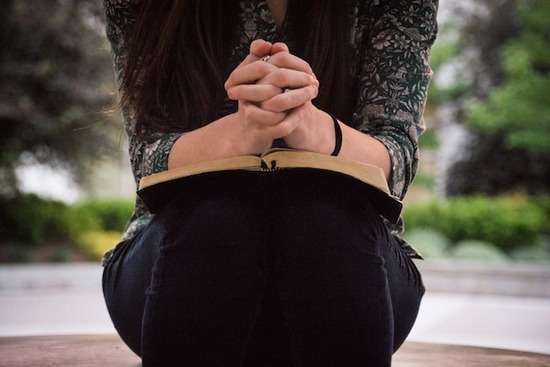
Photo by Olivia Snow on Unsplash
This is the position King David assumed when he prayed to acknowledge the covenant the Lord made with him (2 Samuel 7:18,27).
Sitting down isn’t mentioned much in the Bible. But considering that sitting is a common human posture, people must have prayed this way many times. It allows us to rest and to focus.
- While laying in bed
This position isn’t talked about as much in regards to prayer, but it’s certainly a time when many people end up praying.
Though we are told that when King Hezekiah was sick and about to die on his deathbed, he “turned his face to the wall and prayed unto the Lord” (2 Kings 20:2, NKJV).
God looks at the heart
As you have seen in the examples above, there are many ways that we can pray.
And there’s no wrong way to pray! Sincerity is all that matters.
Beyond outward positions and manners, or the places and occasions when we pray, God looks at the heart. When we acknowledge who He is, and that we are His children, we approach Him with reverence that only He is deserving of. “The Lord is a great God and a great King above all gods” (Psalm 95:3, NKJV).
Even in the Lord’s prayer, Jesus specified that apart from calling God our Father, we also recognize His worthiness of praise, honor, and worship (Matthew 6:9).
The psalmist says that what is most valuable to God is a broken (humble) spirit and a repentant heart (Psalm 51:17).
So as we pray, the one thing to remember is that we can let all our guards down. God knows our darkest secrets already, and there’s no reason to hide anything from Him because He already loves us and accepts us.
Our part is in trusting His love and care for us, having faith in His power to answer our prayers.
God’s Word is full of many wonderful promises He’s made to us. And unlike men who sometimes make promises and fail to fulfill them, “all the promises of God in Him are yes, and in Him, Amen” (2 Corinthians 1:20, NKJV).
We can claim these promises and trust that He will fulfill them because “God is not man, that He should lie… has He said and shall He not do it?” (Numbers 23:19, NKJV).
To learn more about prayer, check out our article on Prayer—What Is It and Why Is It Important?
And you can also share your prayer request for us to pray for or with you by filling out the prayer request form below.
Choose an Online Bible Study
Want to keep learning? Find out more about Jesus, humanity, the plan of salvation, and how God loves you enough to sacrifice everything, just to give you a chance to choose Him.
Sometimes it can be hard to know where to start, that’s why we offer free, user-friendly, online Bible study options you can do anytime, anywhere, and at your own pace.
This online Bible school will take you through the major themes of Scripture, breaking down the Bible’s complex concepts into bite-sized pieces, which can lead you toward the answers of life’s more challenging questions.
Related Articles



More Answers

What is the Ellen G. White Estate?
What is the Ellen G. White Estate?Ellen G. White’s contributions to the formation and growth of the Seventh-day Adventist Church are an integral part of its history. As a significant co-founder of the denomination, her writings provided millions of people with...
Getting to Know Mark—Gospel Writer and Follower of Jesus
Mark (whose full name was John Mark) had a lot of roles in the New Testament: he was an early follower of Jesus Christ, he traveled the Mediterranean as a Christian missionary, and he wrote a book of the Bible.

Understanding Luke: The Beloved Physician, Historian, and Evangelist
Who was Luke in the Bible? What was he known for and what contributions did he make for the early church? Find out here.

Exploring the Life of the Apostle Paul
The apostle Paul went from Pharisee to Christian after a miraculous encounter with Jesus. He spent the rest of his life spreading the Gospel and writing words we still read today.

All About the Disciple, Simon the Zealot
“Simon the Zealot” was one of the 12 disciples chosen by Jesus Christ. But despite this important role, the New Testament doesn’t provide specific details about his life, family, job, etc.

Judas Iscariot, the Most Infamous Disciple of Jesus
Judas Iscariot is best known for betraying Jesus with 30 pieces of silver. This page looks more closely at who he was and what led him to do so.

Who Is Thaddeus, the Disciple?
Thaddeus (or Thaddaeus) is one of the more unique and obscure figures among Jesus Christ’s disciples in the New Testament. Though we know little about him from the Bible or tradition, we do know that he went by a few names, specifically Thaddeus, Lebbaeus, and Judas of James.

Matthew—From Tax Collector to Jesus’ Disciple
In the first book of the New Testament, we find the Gospel story from the perspective of Matthew. He was a Jewish tax collector from Capernaum in the first century AD, and he was likely despised by fellow Jews for choosing that profession.

Who Was Jesus’ Disciple Named James, Son of Alphaeus?
Two of Jesus’ 12 disciples were named James. While more is known about James the son of Zebedee and brother of John, let’s see what there is to know about the other James, known as James the son of Alphaeus—also sometimes referred to as “James the Lesser.”
What the Bible Tells Us About Thomas the Apostle of Jesus
You might know him as “Doubting Thomas” because he refused to believe in Jesus Christ’s resurrection without first seeing Jesus.

All About the Disciple James, Son of Zebedee
James the son of Zebedee was a fisherman who became Jesus’ disciple. Discover how his decision to follow Jesus shaped his life and the beginnings of the early Church.
Who was the Apostle John?
What does the Bible say about the apostle John? What is he known for today? Learn more about John’s life, ministry, and legacy here.
All About Bartholomew, a Disciple of Jesus
Bartholomew is a lesser-known character in the New Testament who is mentioned in each of the lists of the twelve disciples of Jesus Christ (Matthew 10:2-4; Mark 3:14-19; Luke 6:13-16). He is most likely the same individual as Nathanael (see John 1), someone who was sincerely studying the Scriptures and waiting for the Messiah to come.

What Do We Know About Andrew the Disciple?
Andrew was Jesus Christ’s first disciple (John 1:37-40) and the first to recognize Him as the Messiah.

Simon Peter: Fisherman to Disciple to Apostle
Simon Peter was a simple fisherman who became one of the most well-known disciples of Jesus Christ. He is perhaps best known for being part of Jesus’ inner circle of three disciples, walking on water, and proclaiming Jesus as the Son of God.

Who Was Philip the Disciple In the Bible?
Philip was one of the 12 disciples called by Jesus Christ during His earthly ministry. He was originally from the city of Bethsaida and to this day is often known as the “practical disciple.”

How Are Seventh-day Adventists Different from Other Protestants?
As a Protestant Christian denomination, the Seventh-day Adventist Church regards the Bible as the ultimate guide and looks to Jesus Christ as the only way to salvation. We do have some differences of belief or interpretation when it comes to topics like Bible prophecy, end-time events, the Sabbath, and a person’s state after death.
What Do Adventists Believe About the Atonement?
If you’ve spent much time in the Bible books of Leviticus or Numbers, you might’ve noticed the word atonement.

Who Changed the Sabbath to Sunday?
If the Bible never mentions the change of the Sabbath, why do so many today attend church on Sunday?

How Adventists Handle Death and Funerals
Most Seventh-day Adventist funeral services are similar to those of other Protestant denominations, such as Methodists, Baptists, or Presbyterians, but you might find a few differences or unique nuances.

Adventist Culture
Many Seventh-day Adventists adhere to specific lifestyle principles that can make them stand out from those in other Christian denominations. Whether it’s going to church services on Saturday or eating the popular Adventist entrée of “haystacks.”

Do Seventh-day Adventists Believe Only They Will Go to Heaven?
No, Adventists definitely don’t believe they’re the only ones that will go to heaven. As a matter of fact, we don’t believe admittance into heaven is ever based on which church or denomination we belong to. People all over the world from different Christian denominations, religions, and walks of life will be welcomed by Jesus.

What Is Children’s Sabbath School in the Adventist Church?
Children’s Sabbath School is a Bible program offered every Sabbath at Adventist churches for children from birth to age 18. These classes give children the chance to learn Bible stories, make new friends, and participate in fun activities.
How Adventists Developed the Sanctuary Doctrine and What It Means
The sanctuary was a building at the center of ancient Israelite society that gives us a small picture of the original sanctuary, God’s throne room in heaven (Hebrews 8:1-2).

What Do Adventists Believe About Faith and Works?
Adventists believe we are saved by faith, which is the belief and trust we have in Jesus to save us from our sins. Jesus, then, enables us to live in harmony with God’s commandments and serve others with love—sometimes referred to as “works.”
Do Adventists Observe Easter-Related Holidays?
Jesus Christ’s resurrection, celebrated on many Easter-related holidays, is central to the beliefs of the Seventh-day Adventist Church. And that means we seek every opportunity to remember it.

An Overview of Seventh-day Adventist Higher Education
The Seventh-day Adventist Church has about 118 tertiary schools around the world. Though many of them are within North America, you’ll also find Adventist universities in countries across the world—places like Croatia, Austria, Brazil, Madagascar, and the Philippines.
The Ten Commandments from a Seventh-day Adventist Perspective
Ever eaten a salad and gotten a big piece of green stuck in your teeth? And you didn’t realize it was there until you looked in the mirror? (Because no one ever told you!)

Major Fulfilled Bible Prophecies You Should Know About
Prophets seem like something from novels or movies. The predictions they make couldn’t actually happen, could they? After all, nobody can tell the future!
Didn’t find your answer? Ask us!
We understand your concern of having questions but not knowing who to ask—we’ve felt it ourselves. When you’re ready to learn more about Adventists, send us a question! We know a thing or two about Adventists.