
If the Bible never mentions the change of the Sabbath, why do so many today attend church on Sunday?
Who changed the day?
But that’s actually the wrong question to ask. The Sabbath hasn’t changed.
What has changed is Christians’ decision of what day to worship. And it all started during the first and second centuries. Let’s uncover more of the story by looking at:
- Where the seventh-day Sabbath originated
- How the Sabbath was kept in the Bible
- How Christians shifted to keeping Sunday
Without further ado, here’s a quick refresher on the Sabbath up to New Testament times. From there, we’ll find out what happened in the early centuries of Christianity.

Photo by Javier Miranda on Unsplash
Where the seventh-day Sabbath originated
The seventh-day Sabbath is interwoven into the human fabric from the time God gave it to the newly created humans as a day of rest. People have kept the Sabbath ever since: the Israelites did, Jesus Christ did, the apostles did, and many faithful people after that time did.
But it all began when there were no Jews or varying groups of people or churches. It was just God and the first two humans: Adam and Eve.
When God finished creating the world in six days, “God blessed the seventh day and declared it holy, for on it He rested from all His work of creation” (Genesis 2:3, CSB).
He made the Sabbath as a time to pause—to reorient ourselves to Him and one another. We’re designed for this rhythm.
How the Sabbath was kept in the Bible
Both the Old Testament and New Testament mention examples of people keeping the seventh-day Sabbath.
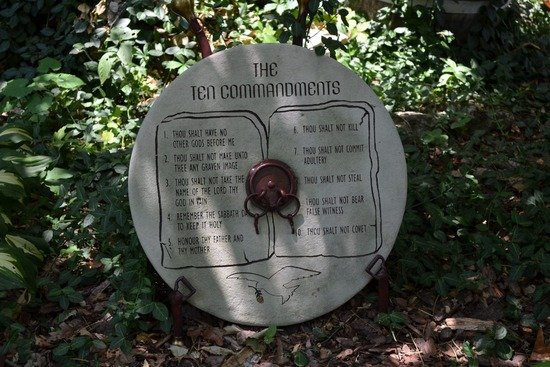
God reminded His people of the Sabbath when He gave the Ten Commandments to Moses. The fourth commandment about the Sabbath began specifically with the word remember (unlike any of the other commandments).
God had just brought the Israelites out of Egypt, where they had been slaves. Some of them had no doubt lost sight of these principles, but as slaves, they also wouldn’t have been able to enjoy a day off each week. God’s reminder would’ve come as a welcome gift. It also would’ve required them to re-learn what it means to have that weekly rhythm of work and rest.
That’s why among the instructions for loving Him and loving one another (Matthew 22:38–40), He said,
“Remember the Sabbath day, to keep it holy. Six days you shall labor and do all your work…. For in six days the LORD made the heavens and the earth, the sea, and all that is in them, and rested the seventh day. Therefore the LORD blessed the Sabbath day and hallowed it” (Exodus 20:8–11, NKJV).
The people of Israel continued to keep the Sabbath throughout the Old Testament.
Then, in the New Testament, Jesus comes on the scene.
Jesus could very well have changed the Sabbath if He’d wanted to. He definitely wasn’t afraid to show the Pharisees that they’d turned the Sabbath into a day of drudgery and rules rather than mercy and generosity (Mark 3:4).
And yet, Jesus upheld the Sabbath (Luke 4:16), even proclaiming Himself “Lord of the Sabbath” (Mark 2:28, NKJV). He made it clear that He hadn’t come to destroy God’s Law but to live it out in His life, setting an example for us (Matthew 5:17–19).
The apostles in the first century, including Paul, kept the Sabbath too. And they wrote about the importance of the Ten Commandments and the Sabbath rest that remained (James 2:10–11; Hebrews 4:4, 9).
But as human nature so often does, some Christians turned Sabbath into a legalistic practice rather than the joyful celebration it’s meant to be.
This distortion of the Sabbath played a role in the shift to keeping Sunday.
How Christians shifted to keeping Sunday
After Jesus returned to heaven (around AD 31), the disciples and the early Christian church (Jews and Gentiles) continued to keep the Sabbath. They did so all throughout the time of the book of Acts and the first century.
The historian Lyman Coleman in his book Ancient Christianity Exemplified points this out. What he says is significant, considering that he’s not a Sabbath keeper himself:
“No law or precept appears to have been given by Christ or the apostles, either for the abrogation [repeal] of the Jewish Sabbath or the institution of the Lord’s day, or the substitution of the first for the seventh day of the week.”1
Despite not having any instruction from Christ or the apostles, some of the early church fathers (leaders) of the second century began to shift their day of worship from Saturday to Sunday.
Let’s find out the real reason for this shift. We’ll look at historical research for answers.
Church fathers in the first through the third century
The change from Sabbath to Sunday keeping was a slow transition over a few hundred years. It started as Christians incorporated Greek, Roman, and pagan philosophies into Christianity to assimilate with those around them and distance themselves from Judaism.
See, Sunday had long been a holy day for many other religions. For them, it was a festival to worship the sun—which is where we get its name from.2 These practices date back to ancient times and are even mentioned in the Old Testament (Ezekiel 8:15–17).
Christians worshiping on Sunday “dates to the second or third centuries” and was “associated with either Rome or Alexandria.”3
One of the first mentions is in AD 155 by one of the church fathers, Justin Martyr, in a defense of Christianity to the Roman emperor:
“But Sunday is the day on which we all hold our common assembly, because it is the first day on which God, having wrought a change in the darkness and matter, made the world; and Jesus Christ our Savior on the same day rose from the dead.”4
It’s likely he hoped to put Christians in good favor with the emperor and lessen persecution.
Justin Martyr, who spent time in Rome, came from a pagan background and had studied Stoic, Platonic, and other pagan philosophies. During his lifetime, Sunday was a pagan festival to honor the sun god, but Christians had begun celebrating on Sunday as a way to connect with these other religions and hopefully convert them to Christianity.5
But whether the Christians were successful in their outreach is questionable, especially when we read the words of the Christian author Tertullian from about 60 years after Justin Martyr.
Interestingly, Tertullian, another church father, seemed to contradict himself when he talked about the Sabbath. He said the Word of God didn’t give any evidence that the “Creator’s Sabbath” had changed, and he believed it was the enemy’s work to find ways to avoid keeping the Sabbath.
And yet, Tertullian also defended Sunday worship when accused of worshiping the sun rather than God on this day.6
Both Sabbath and Sunday

Photo by Chandan Chaurasia on Unsplash
Pagans in the Roman Empire kept festivals for sun worship every Sunday. Over time, Christians, influenced by Roman ways of thinking, began to worship on both the Sabbath and Sunday.
Even so, Sunday wasn’t really seen as a replacement for the Sabbath—like a “Christian Sabbath.” Instead, it seemed to be an additional festival. The Apostolic Constitutions, a piece of early Christian literature from the fourth century, even instructed this:
“But keep the Sabbath, and the Lord’s day festival; because the former is a memorial of the creation, and the latter of the resurrection.”7
But in the process, the Sabbath was becoming distorted. Much like what happened during the time of Jesus, religious leaders called the Pharisees had placed so many rules and regulations around the Sabbath that its observance became a drudgery rather than the delight it was supposed to be (Isaiah 58:13). Jesus had shown the people a different way of Sabbath keeping, but unfortunately, this was lost sight of in the following centuries.
Here’s how, according to church historian Dr. Charles Hase of Germany:
“While the eastern churches retained the Sabbath, a portion of the western churches, with the church of Rome at their head, turned it into a fast.”8
And while Sabbath became a fast day, Sunday was to be a celebratory day. Thus, it became a day of rejoicing and festivity to look forward to after the Sabbath was over.
And this keeping of both days was quite common until the fifth century.
Notice what the historian Coleman says about it:
“The observance of the Lord’s day as the first day of the week was at first introduced as a separate institution…. Their Sabbath, the last day of the week, was strictly kept in connection with that of the first day, for a long time after the overthrow of the temple and its worship [AD 70]. Down even to the fifth century, the observance of the Jewish Sabbath was continued in the Christian church, with a rigour and solemnity gradually diminishing until it was wholly discontinued.”
Over time, most Christians lost interest in the drudgery and fasting of the Sabbath, making it easier for them to accept what came next.
Constantine’s Sunday law
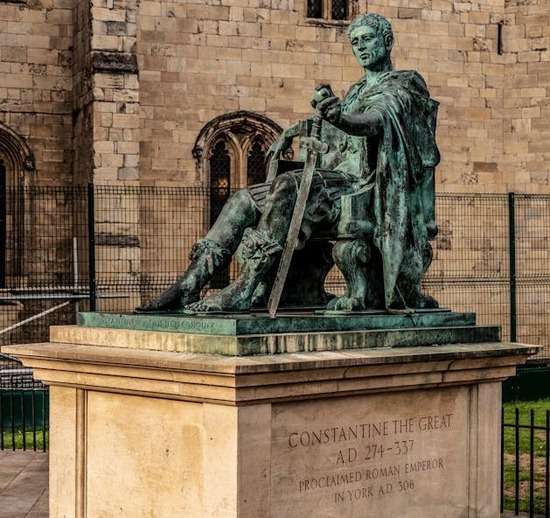
Photo by John Nail
As Christians were compromising and keeping both Sabbath and Sunday, something unusual took place within the Roman Empire. In the early fourth century, Emperor Constantine was in the Battle of the Milvian Bridge, when he had a vision of a flaming cross with the Latin words, “In this sign conquer.”9
As a result, he became a Christian—and so did the Empire. This change marked the beginning of the church being under Roman authority.10
The change was no doubt a relief to Christians who had experienced severe persecution under the reign of Emperor Diocletian.
Up to this point, Constantine had been a devotee of Mithraism, a monotheistic religion that involved worshiping the sun god. It seemed that Mithraism declined as Christianity became more widespread. But in reality, it had simply been repackaged. We see this in Constantine’s decree on March 7, 321:
“On the venerable Day of the Sun let the magistrates and people residing in cities rest, and let all workshops be closed.”11
It was a very political move—a way for Constantine to unite the different religious groups within his empire and bring social stability.
Eusebius, a Christian historian during that time, had close connections with the emperor and no doubt was looking for ways to please him. In his Commentary of the Psalms, he makes this claim:
“And all things whatsoever that it was duty to do on the Sabbath, these we have transferred to the Lord’s day, as more appropriately belonging to it, because it has a precedence and is first in rank, and more honorable than the Jewish Sabbath.”12
Even so, as we already mentioned, Sabbath keeping didn’t stop at this time. It would take another couple hundred years for the Christian church to officially end it.
Fourth-century councils
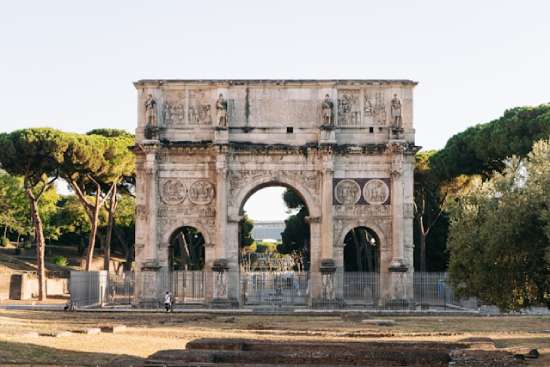
Photo by Fabio Fistarol on Unsplash
Some key fourth-century councils within the Roman-controlled church influenced the way Christians kept the Sabbath. Keeping Sunday rather than the seventh day became a way for them to put distance between themselves and the Jews.
During the Council of Nicaea in AD 325, a discussion arose about whether to keep the Passover as the Jews did. We see an anti-semitic attitude in Constantine’s response, as noted by Eusebius:
“It appeared an unworthy thing that in the celebration of this most holy feast [Passover] we should follow the practice of the Jews…. Let us then have nothing in common with the detestable Jewish crowd.”
Clearly, Constantine had an agenda against Jewish practices, and Christians would have to follow suit to stay in his good graces.
Then, the Council of Laodicea in AD 365 specifically addressed Sabbath keeping. It forbade Christians, particularly in the western church, from keeping it:
“Christians must not judaize by resting on the Sabbath, but must work on that day, rather honouring the Lord’s Day, and, if they can, resting then as Christians. But if any shall be found to be judaizers, let them be anathema from Christ.”13
From the sixth century onward, other edicts and councils by the Roman-controlled church forbade Christians to work on Sunday or keep Sabbath.14 Slowly, Sabbath keepers dwindled.
But they never disappeared completely.
The truth remained alive
The transition from Sunday keeping to Sabbath keeping reveals the human tendency to want to fit in and please other humans over God. We may not readily accept an outright falsehood, but over time, we may make subtle changes that lead us down the path of compromise.
Despite the fact that Christians at large followed the lead of the Roman Church, some small groups, like the Celtic church and the Waldensians of Northern Italy, remained faithful to the teaching and example of Jesus.15
Though hidden from view for many centuries, God’s truth never went completely out.
And it re-emerged as a group of Protestant Christians went to the Scriptures to look for it again.
Related pages


- Coleman, Lyman, Ancient Christianity Exemplified (Lippincott, Grambo & Co, 1853), p. 530. [↵]
- Andrews, John Nevins, The History of the Sabbath, p. 146. [↵]
- McIver, Robert, “When, Where, and Why Did the Change from Sabbath to Sunday Worship Take Place in the Early Church?” [↵]
- Justin Martyr, First Apology 67. [↵]
- Andrews, p. 148. [↵]
- Ibid., p. 155. [↵]
- Ibid., p. 163. [↵]
- Quoted in Andrews, p. 156. [↵]
- Cavendish, Richard, “The Battle of the Milvian Bridge,” History Today. [↵]
- “Constantine the Great – Paganism to Christianity,” Lineage. [↵]
- Codex Justinianus 3.12.3, trans. Philip Schaff, History of the Christian Church, 5th ed. (New York, 1902), 3:380, note 1. [↵]
- Andrews, p. 200. [↵]
- Canon XXIX. [↵]
- Andrews, Chapter 19. [↵]
- “Waldensians: People of the Valleys,” Lineage. [↵]
More Answers

What is the Ellen G. White Estate?
What is the Ellen G. White Estate?Ellen G. White’s contributions to the formation and growth of the Seventh-day Adventist Church are an integral part of its history. As a significant co-founder of the denomination, her writings provided millions of people with...
Getting to Know Mark—Gospel Writer and Follower of Jesus
Mark (whose full name was John Mark) had a lot of roles in the New Testament: he was an early follower of Jesus Christ, he traveled the Mediterranean as a Christian missionary, and he wrote a book of the Bible.

Understanding Luke: The Beloved Physician, Historian, and Evangelist
Who was Luke in the Bible? What was he known for and what contributions did he make for the early church? Find out here.

Exploring the Life of the Apostle Paul
The apostle Paul went from Pharisee to Christian after a miraculous encounter with Jesus. He spent the rest of his life spreading the Gospel and writing words we still read today.

All About the Disciple, Simon the Zealot
“Simon the Zealot” was one of the 12 disciples chosen by Jesus Christ. But despite this important role, the New Testament doesn’t provide specific details about his life, family, job, etc.

Judas Iscariot, the Most Infamous Disciple of Jesus
Judas Iscariot is best known for betraying Jesus with 30 pieces of silver. This page looks more closely at who he was and what led him to do so.

Who Is Thaddeus, the Disciple?
Thaddeus (or Thaddaeus) is one of the more unique and obscure figures among Jesus Christ’s disciples in the New Testament. Though we know little about him from the Bible or tradition, we do know that he went by a few names, specifically Thaddeus, Lebbaeus, and Judas of James.

Matthew—From Tax Collector to Jesus’ Disciple
In the first book of the New Testament, we find the Gospel story from the perspective of Matthew. He was a Jewish tax collector from Capernaum in the first century AD, and he was likely despised by fellow Jews for choosing that profession.

Who Was Jesus’ Disciple Named James, Son of Alphaeus?
Two of Jesus’ 12 disciples were named James. While more is known about James the son of Zebedee and brother of John, let’s see what there is to know about the other James, known as James the son of Alphaeus—also sometimes referred to as “James the Lesser.”

What the Bible Tells Us About Thomas the Apostle of Jesus
You might know him as “Doubting Thomas” because he refused to believe in Jesus Christ’s resurrection without first seeing Jesus.

All About the Disciple James, Son of Zebedee
James the son of Zebedee was a fisherman who became Jesus’ disciple. Discover how his decision to follow Jesus shaped his life and the beginnings of the early Church.
Who was the Apostle John?
What does the Bible say about the apostle John? What is he known for today? Learn more about John’s life, ministry, and legacy here.
All About Bartholomew, a Disciple of Jesus
Bartholomew is a lesser-known character in the New Testament who is mentioned in each of the lists of the twelve disciples of Jesus Christ (Matthew 10:2-4; Mark 3:14-19; Luke 6:13-16). He is most likely the same individual as Nathanael (see John 1), someone who was sincerely studying the Scriptures and waiting for the Messiah to come.

What Do We Know About Andrew the Disciple?
Andrew was Jesus Christ’s first disciple (John 1:37-40) and the first to recognize Him as the Messiah.

Simon Peter: Fisherman to Disciple to Apostle
Simon Peter was a simple fisherman who became one of the most well-known disciples of Jesus Christ. He is perhaps best known for being part of Jesus’ inner circle of three disciples, walking on water, and proclaiming Jesus as the Son of God.

Who Was Philip the Disciple In the Bible?
Philip was one of the 12 disciples called by Jesus Christ during His earthly ministry. He was originally from the city of Bethsaida and to this day is often known as the “practical disciple.”

How Are Seventh-day Adventists Different from Other Protestants?
As a Protestant Christian denomination, the Seventh-day Adventist Church regards the Bible as the ultimate guide and looks to Jesus Christ as the only way to salvation. We do have some differences of belief or interpretation when it comes to topics like Bible prophecy, end-time events, the Sabbath, and a person’s state after death.
What Do Adventists Believe About the Atonement?
If you’ve spent much time in the Bible books of Leviticus or Numbers, you might’ve noticed the word atonement.

How Adventists Handle Death and Funerals
Most Seventh-day Adventist funeral services are similar to those of other Protestant denominations, such as Methodists, Baptists, or Presbyterians, but you might find a few differences or unique nuances.

Adventist Culture
Many Seventh-day Adventists adhere to specific lifestyle principles that can make them stand out from those in other Christian denominations. Whether it’s going to church services on Saturday or eating the popular Adventist entrée of “haystacks.”

Do Seventh-day Adventists Believe Only They Will Go to Heaven?
No, Adventists definitely don’t believe they’re the only ones that will go to heaven. As a matter of fact, we don’t believe admittance into heaven is ever based on which church or denomination we belong to. People all over the world from different Christian denominations, religions, and walks of life will be welcomed by Jesus.

What Is Children’s Sabbath School in the Adventist Church?
Children’s Sabbath School is a Bible program offered every Sabbath at Adventist churches for children from birth to age 18. These classes give children the chance to learn Bible stories, make new friends, and participate in fun activities.
How Adventists Developed the Sanctuary Doctrine and What It Means
The sanctuary was a building at the center of ancient Israelite society that gives us a small picture of the original sanctuary, God’s throne room in heaven (Hebrews 8:1-2).

What Do Adventists Believe About Faith and Works?
Adventists believe we are saved by faith, which is the belief and trust we have in Jesus to save us from our sins. Jesus, then, enables us to live in harmony with God’s commandments and serve others with love—sometimes referred to as “works.”
Do Adventists Observe Easter-Related Holidays?
Jesus Christ’s resurrection, celebrated on many Easter-related holidays, is central to the beliefs of the Seventh-day Adventist Church. And that means we seek every opportunity to remember it.

An Overview of Seventh-day Adventist Higher Education
The Seventh-day Adventist Church has about 118 tertiary schools around the world. Though many of them are within North America, you’ll also find Adventist universities in countries across the world—places like Croatia, Austria, Brazil, Madagascar, and the Philippines.
The Ten Commandments from a Seventh-day Adventist Perspective
Ever eaten a salad and gotten a big piece of green stuck in your teeth? And you didn’t realize it was there until you looked in the mirror? (Because no one ever told you!)

Major Fulfilled Bible Prophecies You Should Know About
Prophets seem like something from novels or movies. The predictions they make couldn’t actually happen, could they? After all, nobody can tell the future!

What Day Is the Sabbath, and How Do We Know?
The Sabbath is a declaration of weekly rest by God which we find in the Bible (Genesis 2:2-3). But you may be wondering:
Didn’t find your answer? Ask us!
We understand your concern of having questions but not knowing who to ask—we’ve felt it ourselves. When you’re ready to learn more about Adventists, send us a question! We know a thing or two about Adventists.