
What’s the Seventh-day Adventist “Health Message” All About?
One thing Seventh-day Adventists (SDA) are known for is their emphasis on living healthy lives. Since our bodies are living temples of the Holy Spirit (1 Corinthians 6:19, 20), we strive to stay healthy physically and mentally, as well as spiritually (3 John 1:2).
In many ways, these three categories of total health go hand in hand. It’s part of being good stewards of the bodies God gave us.
Even in a sinful, imperfect world, we recognize that each human being is “awesomely and wonderfully made” (Psalm 139:14, NASB). So we do what we can to promote information, activities, programs, etc., that can improve our individual health and help others do the same.
To learn more about how Adventists view and pursue wellness, we’ll go over 8 fundamental areas of health that form the foundation of our health message:
Many Adventists remember these 8 health principles by the acronym NEW START, coined by Weimar University, a private Adventist health education institute (Nutrition, Exercise, Water, Sunlight, Temperance, Air, Rest, and Trust in God).
Nutrition to support complete wellness

Adventists strive to maintain a diet based on foods in their most natural form. You’ll find that many Adventists are vegetarian (avoiding meat) or vegan (avoiding all animal products), opting for whole foods and plant-based choices.
But even though reducing animal products is a large focus, the real goal is complete nutrition. It’s not only about avoiding certain foods, it’s about what foods are included.
But why the emphasis on plant-based or vegetarian foods?
For one, we look at the original diet God gave to Adam and Eve in the Garden of Eden, before the Fall.
“And God said, ‘See, I have given you every herb that yields seed which is on the face of all the earth, and every tree whose fruit yields seed; to you it shall be for food” (Genesis 1:29, NKJV).
It was only after the Flood that God gave humanity the go-ahead to use animals for food (Genesis 9:3). And even then, He clearly instructed them not to eat flesh with the blood or animal fat still in it (Genesis 7:3–4; Genesis 9:4; Leviticus 7:22–27).
He also outlined which animals were considered “clean” and could be eaten (Leviticus 11).
Much of this instruction still applies, even today. Modern research shows that those who stick to plant-based food tend to live longer. This is what informs our choices when it comes to diet.
“A vegan diet has been associated with a lowering of risk of diabetes, heart disease, and high blood pressure,” says David DeRose, MD, MPH, an Adventist physician and president of Compass Health Consulting, Inc. “And this is more than just avoiding animal products. A diet rich in vegetables, fruits, whole grains, nuts, and beans can enhance your overall health.”
Adventists, nutrition, and “Blue Zones”

Photo by Edgar Castrejon on Unsplash
Adventists in Loma Linda, California, are among the people with the longest life expectancy in the world.
Partnering with the National Geographic Society, writer Dan Buettner located 5 places in the world that had high concentrations of centenarians, or people over 100 years old. Many of these people have grown old without significant health issues like heart disease, obesity, cancer, or diabetes.
He called these places Blue Zones.
One of these places was a small city that has the highest concentration of Seventh-day Adventists in the United States: Loma Linda, California. And the Adventists in this area live up to 10 more healthy years than the average American.
This is likely due to their plant-based diet, supported by other healthy habits such as avoiding alcohol and tobacco.
The other Blue Zones include:
- Okinawa, Japan
- Ikaria, Greece
- Sardinia, Italy
- Nicoya Peninsula, Costa Rica
The study shows that 95% of all people who lived to be 100 ate a plant-based diet rich in vegetables, legumes, and whole grains.
The Adventist Health Study
Conducted by Michael Orlich, MD, PhD, Gary E. Fraser, MD, PhD, Fayth Miles, PhD, MPH, and Karen Jaceldo-Siegl, DRPH, this study is an ongoing, long-term medical research endeavor to determine the links between diet, disease, and lifestyle. The study’s participants are more than 96,000 Adventists from every state/province in the United States and Canada.
Findings continue to suggest that those who maintain a vegetarian diet exhibited lower risk of obesity, high blood pressure, colon cancer, and high blood sugar, compared to non-vegetarians.
This could be why on average, vegetarian Adventists lived 1.5–2.4 years longer than non-vegetarian Adventists.
Also, those in the study who maintained a vegan diet had the lowest body mass index (BMI) compared with vegetarians and those who ate meat.
Eating well in today’s world
Even with the emphasis on eating well, Adventists know that keeping up a healthy, balanced diet isn’t easy these days. So many factors can make this difficult, like being busy or stressed, limited budget, limited availability of certain foods, or feeding a family of very picky kids.
That’s why there are many Adventist programs and resources available on the subject of nutrition. Helping one another is one of the keys to success when setting up any important habit.
It can be fun to share creative ways to prepare healthy meals, or tips for including beneficial foods in our diets. Lots of individual Adventists, churches, or ministry groups have put together cookbooks, host cooking classes, or offer courses or seminars
Exercise—we were born to move
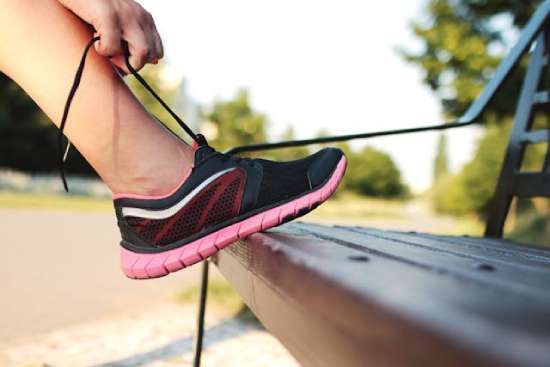
Photo by JESHOOTS.com
In addition to eating healthy, Adventists recognize the necessity of regular exercise. We are created to move!
Adventists often bring attention to the fact that right after God created humans, He gave them something to do.
“Then the Lord God took the man and put him in the garden of Eden to tend and keep it” (Genesis 2:15, NKJV).
Caring for the garden was meant to be a daily, full-time responsibility. God ensured that humans got their regular workouts from the very beginning. And we still need it even today.
(In fact, yardwork or gardening is a great option for a well-rounded, non-strenuous physical activity. And it comes with the perks of making your home look nice, and perhaps some food or herbs to enjoy later.)
But of course, we are free to exercise whichever ways work best for our individual needs.
It could be:
- Brisk walking
- Running
- Swimming
- Biking
- A gym session
- Etc.
The key is consistency. Anything that keeps you active and moving can benefit your mind and body if it’s kept up regularly.
There’s always considerations taken for those who have specific fitness goals, or those who have to make accommodations for various health conditions. But in typical situations, a good recommendation is 75-150 minutes per week of moderate-to-intense exercise.
The scientific community also tells us that beyond weight loss, muscle building, and endurance, physical exercise benefits our minds, too.
Ever noticed that sense of wellbeing you feel right after exercising? That’s from endorphins. This group of hormones can uplift your mood and help your body during the recovery period after a workout.
Exercise also helps improve mental focus. It even helps to prevent disease and aids in recovery from sickness.
And there’s still more!
Staying hydrated (Water can do more than you think!)
Water has always been a large part of our existence.
The Bible tells us that it was here even before the world was created. The whole place was covered by it (Genesis 1:2). So when God started creating, the second and third things He did had to do with water.
First, He separated the waters on the earth’s surface from the water in the atmosphere, like clouds and vapor. Then He divided the surface water into separated bodies of water (Genesis 1:6-10).
Today it’s common knowledge that about 70% of the earth’s surface is covered in water. God must have thought we’d need a lot of it, and often.
It’s no wonder that water happens to be the one consumable thing needed in the largest quantity by the human body.
In fact, our bodies are mostly made up of water—up to 60%. And the biological processes in our bodies need water to run.
Generally, adult men need about 3 liters (3.2 quarts) per day while women need about 2.2 liters (2.3 quarts). Children need less depending on their age.
And we use pure water for more than just drinking, cleaning up, or personal hygiene. Many Adventist wellness centers offer hydrotherapy options to aid in treatment or recovery.
Safely getting sunlight

Photo by Andre Furtado
The very first thing God made was light (Genesis 1:3). Then on the fourth day, He made the sun (Genesis 1:14-19). And not only does it provide us with light and warmth during the day, but it also can serve as a powerful healing and cleansing agent (when used appropriately).
It’s common knowledge that sunlight helps our bodies produce vitamin D, which is an important staple in our nutrition.
According to Neil Nedley, MD, and president of Weimar University, “many people around the world can get enough sunshine in their own backyards. Ten or 15 minutes in noontime summer sun leads to the production of 10,000 IU [International Units] of Vitamin D.”
Sunlight can also have a mood-elevating effect. 1
The sun can provide multifaceted benefits to us. And it’s interesting that when God wanted to reveal Himself to us as the Savior and Healer of our souls, He used the sun as His illustration:
“But to you who fear My name, the Sun of Righteousness shall arise with healing in His wings” (Malachi 4:2, NKJV).
But we can’t talk about the benefits of sunlight without also acknowledging that we have to be careful about how much sun we take in at a time.
Currently, the American Academy of Dermatology recommends that if we spend any prolonged time outside, broad-spectrum sunscreen with SPF 30 or higher should be applied to any exposed skin.
Self-control is a key ingredient for balance and contentment
According to the Bible, self-control is one of the “fruits of the Holy Spirit” (Galatians 5:22-23), or evidence God is working in a believer’s life.
Also, in describing the growth of a believer to become godly, Peter mentions self-control as a necessary ingredient (2 Peter 1:2-11).
“But also for this very reason, giving all diligence, add to your faith virtue, to virtue knowledge, to knowledge self-control, to self-control perseverance, to perseverance godliness, to godliness brotherly kindness, and to brotherly kindness love” (2 Peter 1:5-7, NKJV).
Another word for self-control is temperance. This means to be accountable toward yourself, knowing when to say “yes” or “no” to our human whims.
But rather than thinking of self-control as a singular act, or that it just means saying “no” most of the time, it’s best to think of it as knowing yourself well enough to exercise restraint when needed.
As Solomon observed in his great wisdom, “Whoever has no rule over his own spirit is like a city broken down, without walls” (Proverbs 25:28, NKJV).
Our self-control is at the root of most of the decisions we make each day:
- What and how we eat
- What and how we drink
- How we dress
- Which advice we listen to
- Who we spend time with
- How much we work or study
- How we spend our time
- How we deal with our emotional lives and interpersonal relationships etc.
Because these decisions can affect our personal wellbeing, Adventists consider self-control an integral part of complete health.
And there is a particular emphasis on exercising self-control when it comes to consuming alcohol, tobacco, and any type of mind-altering substance. Lack of self-control with these substances can have dangerous effects on a person’s life, so we often start with these “big-ticket” items when talking about temperance, or self-control.
A good biblical principle to keep in mind when working on self-control is found in the words of the apostle Paul:
“All things are lawful for me, but not all things are helpful; all things are lawful for me, but not all things edify” (1 Corinthians 10:23, NKJV).
While there are plenty of things in life that should be avoided completely, with most things, the goal is moderation. We want to seek out what is good for the body and the mind, and to stay away from things that could harm our health.
Fresh air—a simple yet necessary ingredient of wellness
After God sculpted the first human from dust, he still laid lifeless. But when “[God] breathed into his nostrils the breath of life,” Adam became alive (Genesis 2:7, NKJV).
And ever since then, humanity needs to breathe in order to stay alive.
In fact, breathing is the one thing a human being can’t live long without. We can survive a few weeks without food, a few days without water, but we can only survive a few minutes without air.
“The breath of the Almighty gives me life” (Job 33:4, NKJV).
But why worry about getting enough air? It’s all around us, right?
Sure. But the quality of air also matters.
Air that is polluted or air that has become stale can affect how well we process it in our lungs.
That’s why Adventists include “fresh air” in our principles of health. When we make a point to breathe fresh air that is well-circulated and clean, our bodies can use that air more efficiently.
So open the windows or take a walk outside.
But if it’s the dead of winter or opening the windows just isn’t practical, or if you’re concerned about the air quality in your area, there are ways you can filter the air with plants or air filter devices.
The bottom line is that the air we breathe matters for our wellness, so we want to make sure it is a priority.
The importance of rest

Photo by bruce mars on Unsplash
Taking time to rest is an absolute necessity for both our physical and mental health.
Even machines get worn out after running for a while. Then they’d need to be serviced or have parts replaced.
Everything needs time to rest.
We like to look at this rest in three different ways:
Rest every day between tasks
We need periodic rest now and then during the day.
Strenuous jobs or tasks require stopping to rest in between, so we don’t wear out our muscles or cause repetitive stress on our joints.
Or if we’ve been sitting for a while at work, taking a break could be standing up and stretching.
Sometimes all we might need is a change between tasks. It’s like hitting a reset button for our minds.
Rest every night as we sleep
We all know we need sleep. While the average recommendation for adults is 7-8 hours per night, some might need a little more and others a little less.
We also know how lack of sleep can affect our moods, our productivity, our immune systems, and our physical and mental health in general.
But it’s not uncommon for us humans to exchange a couple hours of much-needed sleep to finish a project we’re working on or finish a movie we’re watching…sometimes we just don’t want to stop.
Other times we might want to sleep but it just isn’t happening, whether it’s due to anxiety, distractions, parenthood, a noisy environment, or any number of things.
But sleep is essential enough to our health that it pays to make it a priority.
Rest every week, taking a day off all work (Sabbath)

After He made us, God took a full day to rest. In fact, the first day Adam and Eve were alive was this day of rest, so they could enjoy communing with their Maker.
From then on, one out of the seven days of the week was dedicated to rest and worship, so we can pause from the typical obligations that take up the rest of the days of the week.
God knew we needed a Sabbath.
“Remember the Sabbath day, to keep it holy. Six days you shall labor and do all your work, but the seventh day is the Sabbath of the Lord your God.”
In it you shall do no work: you, nor your son, nor your daughter, nor your male servant, nor your female servant, nor your cattle, nor your stranger who is within your gates.
For in six days the Lord made the heavens and the earth, the sea, and all that is in them, and rested the seventh day. Therefore the Lord blessed the Sabbath day and hallowed it” (Exodus 20:8-11, NKJV).
Seventh-day Adventists take full advantage of this rest day. We consider it a much-loved day off.
Trusting in Divine Power
Each facet of health we’ve looked at so far helps us keep our minds and bodies in tip-top shape. But what about our souls? Does spiritual health matter to our mental and physical health too?
Yes. Our spiritual health and our perspective of the world has a lot to do with our overall wellbeing.
It’s hard work to stay healthy. We’re busier than we’ve ever been, more stressed than we’ve ever been…and we live in a world of convenience, flashy advertising, and sedentary activities. Sometimes it feels like we just can’t do this on our own.
But God is here for us. He knows we’re all struggling in a world rife with sin. Where we are weak, He is strong. And He offers His strength to us as we grow closer to Him.
We can let go of our burdens and give them to God. We can find comfort and hope in the fact that this world and this life isn’t everything. We can look forward to eternal life with Him, when Jesus returns for us.
And even if we could stay healthy on our own, there’s more to our fulfillment than just functioning properly. We naturally crave meaning and purpose in our lives. It’s like our bodies know deep down that we need our Creator.
“Come to Me, all you who labor and are heavy laden, and I will give you rest. Take My yoke upon you and learn from Me, for I am gentle and lowly in heart, and you will find rest for your souls” (Matthew 11:28-29, NKJV).
We can embrace our purpose and identity as children of God. And when we see other people as children of God as well, we learn to treat them with love and dignity. And our relationships can flourish.
Trusting and following God is a health principle we don’t often think about, but it’s truly amazing the impact our spiritual lives can have on our wellbeing.
These principles of health work best when they work together

Each of these eight principles of whole-person health are great on their own, but they’re meant to work together. They are like eight puzzle pieces of the big picture of health.
In the Blue Zones study we mentioned earlier, those with long lifespans attributed their good health not only to diet, but to their lifestyle as a whole.
These people lead active lives, make time to be outside, rest regularly, eat a nutritious diet, and maintain close family and community ties as much as possible.
That kind of healthy lifestyle contributes to physical, mental, emotional, and social wellbeing. Living out these health principles can set us up to thrive in our respective corners of the world, enjoying a high quality of life.
Adventist lifestyle choices are inspired by the Bible. And science continues to show that though these simple 8 health principles were given long ago, they are still relevant today.
We don’t see these choices as restrictions. Instead, we treasure them as priceless guidelines that help us live as Jesus wants us all to live, to “have life and have it abundantly” (John 10:10, ESV).
We also recognize that total health is a journey, and everyone has to set their current priorities within the circumstances of their lives. These principles are just that—principles. We use them for our own personal growth, and to guide us in helping others in need. They aren’t health laws or standards of character, and God loves us and saves us no matter where we are on our health journeys.
Choose an Online Bible Study
Want to keep learning? Find out more about Jesus, humanity, the plan of salvation, and how God loves you enough to sacrifice everything, just to give you a chance to choose Him.
Sometimes it can be hard to know where to start, that’s why we offer free, user-friendly, online Bible study options you can do anytime, anywhere, and at your own pace.
This online Bible school will take you through the major themes of Scripture, breaking down the Bible’s complex concepts into bite-sized pieces, which can lead you toward the answers of life’s more challenging questions.
More Answers

¿Qué son los Evangelios sinópticos? ¿Y Juan?
Aprende qué son los Evangelios Sinópticos y por qué Juan no está incluido.

“Vete y no peques más”, ¿Qué quiso decir Jesús?
Aprende el significado profundamente aplicable del mandato de Jesús al hombre en Juan 5 y a la mujer en Juan 8 de “vete y no peques más.”

Parable of the Wedding Feast: Lessons From a Royal Invitation
Discover the beautiful Gospel invitation behind this parable of Jesus.

Entendiendo el libro de Marcos: Una visión general
Un recorrido por el Evangelio según Marcos, incluyendo información de contexto y referencias.
O Livro de João: Uma Visão Geral
Aqui está um companheiro de estudo para o Evangelho segundo João.
El mensaje del libro de Lucas: Jesús ama a todos
Aprende todo sobre el libro de Lucas: contexto, temas, diferencias y conclusiones.
El Libro de Juan: Una Visión General
Aquí tienes un compañero de estudio para el Evangelio según Juan.

Como Ter um Relacionamento Pessoal com Jesus: Um Guia
No importa quién seas, estás rodeado de relaciones.

Kile Waadventista wa Sabato Wanaamini Kuhusu Uwakili (na Maana Yake)
Kile Waadventista wa Sabato Wanaamini Kuhusu Uwakili (na Maana Yake)Upendo kwa Mungu na kwa wanadamu wenzetu ndiyo kanuni kuu ya imani ya Waadventista wa Sabato. Na tunaonyesha upendo huo kwa njia kuu kupitia jinsi tunavyosimamia mambo—ya kimwili na yasiyo ya...
Cómo Tener una Relación Personal con Jesús
No importa quién seas, estás rodeado de relaciones.

Joyería: ¿Por qué muchos adventistas del séptimo día eligen no usarla?
Joyería: ¿Por qué muchos adventistas del séptimo día eligen no usarla?Si entras a un servicio de la Iglesia Adventista del Séptimo Día, podrías notar que muchas personas no usan aretes, pulseras, collares o a veces ni siquiera anillos de matrimonio. Es común en las...
Joias—Por Que Muitos Adventistas do Sétimo Dia Escolhem Não Usá-las?
Quais são os princípios por trás da escolha de muitos adventistas de não usar joias? As joias em si não são erradas, mas vamos ver o que a Bíblia diz sobre o adorno.

Lo que los Adventistas del Séptimo Día creen sobre la mayordomía (y qué significa)
El amor a Dios y a nuestros semejantes es el principio fundamental de la fe adventista del séptimo día.
O Que os Adventistas do Sétimo Dia Acreditam Sobre Mordomia (e o Que Isso Significa)
O Que os Adventistas do Sétimo Dia Acreditam Sobre Mordomia (e o Que Isso Significa)O amor a Deus e ao próximo é o princípio fundamental da fé Adventista do Sétimo Dia. E expressamos esse amor de forma abrangente através de como administramos as coisas — materiais e...

Oración: ¿Cómo lo hago?
Oración: ¿Cómo lo hago?La oración es comunicación intencional con Dios. Y la forma en que lo haces es muy parecida a cómo te comunicarías con tu mejor amigo. Puedes acercarte en cualquier momento y lugar, de la manera que sea más natural entre ustedes dos. De la misma...
Oração—Como Eu Faço?
Oração é comunicação intencional com Deus.

Wafalme 42 (na Malkia 1) wa Israeli na Yuda katika Biblia
Umewahi kujiuliza ni akina nani wote waliokuwa wafalme wa Israeli na Yuda katika Biblia? Wafahamu wote 42 (pamoja na malkia 1) na ujifunze masomo ya kina na yasiyotarajiwa kutoka kwenye hadithi zao.

The Lamp on a Stand Parable—What Does it Mean?
Going through the main points, major themes, and takeaways for this parable.

Wanavyoamini Waadventista wa Sabato Kuhusu Meza ya Bwana (Ushirika)
Wanavyoamini Waadventista wa Sabato Kuhusu Meza ya Bwana (Ushirika)Kama Wakristo wengi wa Kiprotestanti, Waadventista wa Sabato wanaamini katika tendo linalojulikana kama Meza ya Bwana au Ushirika Mtakatifu. Wanakunywa divai ya zabibu na kula mkate usiotiwa chachu...
Lo que los Adventistas del Séptimo Día creen sobre la Cena del Señor (Comunión)
Lo que los Adventistas del Séptimo Día creen sobre la Cena del Señor (Comunión)Como muchos cristianos protestantes, los Adventistas del Séptimo Día creen en la práctica comúnmente llamada la Cena del Señor o Santa Comunión. Ellos beben jugo de uva y comen pan sin...
O Que os Adventistas do Sétimo Dia Acreditam Sobre a Santa Ceia (Comunhão)
O Que os Adventistas do Sétimo Dia Acreditam Sobre a Santa Ceia (Comunhão)Como muitos cristãos protestantes, os Adventistas do Sétimo Dia acreditam na prática comumente chamada de Santa Ceia ou Santa Comunhão. Eles bebem suco de uva e comem pão ázimo em obediência às...
Maombi—Ninawezaje Kuomba?
Maombi—Ninawezaje Kuomba?Na jinsi unavyofanya ni sawa na vile unavyo wasiliana na rafiki yako wa karibu. Unaweza kuwasiliana naye wakati wowote na mahali popote, kwa namna ya kawaida kati yenu wawili. Vivyo hivyo, unaweza kuomba kwa Mungu wakati wowote, mahali popote,...

Bible Verses That Mention “Heaven” (and How to Tell What They Mean)
Here’s every occurrence of the word “heaven” in the Bible, as well as the root words and original definitions.

Understanding the Parable of the Hidden Treasure (Matthew 13:44)
Here’s what the “Hidden Treasure” parables shows us about God’s love.
The Parable of the Persistent Widow—What it Means for Your Prayer Life
Find out what the Persistent Widow parable actually means.

15 Exemplos de Oração na Bíblia
A oração é a principal forma de mantermos nosso relacionamento com Deus.
Mifano 15 Ya Maombi katika Biblia
Maombi ndiyo njia kuu ambayo kwayo tunadumisha uhusiano wetu na Mungu.

Je, Kila Kitu Alichosema Ellen White Kilikuwa na Uvuvio wa Kiungu?
Je, Kila Kitu Alichosema Ellen White Kilikuwa na Uvuvio wa Kiungu?Kanisa la Waadventista Wasabato linaamini kwamba ujumbe mwingi wa Ellen White ulikuwa ufunuo kutoka kwa Mungu. Lakini hiyo haimaanishi kwamba kila kitu alichowahi kusema kilikuwa cha kinabii, au...
15 Ejemplos de Oración en la Biblia
15 Ejemplos de Oración en la BibliaLa oración es la forma principal en que mantenemos nuestra relación con Dios. Es nuestro método de comunicación, y Él milagrosamente escucha cada palabra que sale de nuestro corazón. Pero la oración también sigue siendo un poco...
Didn’t find your answer? Ask us!
We understand your concern of having questions but not knowing who to ask—we’ve felt it ourselves. When you’re ready to learn more about Adventists, send us a question! We know a thing or two about Adventists.