
Jesus and John the Baptist were relatives(Luke 1:36). But the significance of their relationship was far beyond the family tree. They were interconnected in prophecy, ministry, and mission.
Jesus Christ fulfilled Old Testament prophecies when He came to earth as the Messiah. But John the Baptist also had a role. He was the one who set the stage for Jesus’s arrival and prepared people to meet their Savior (Isaiah 40:3-5).
As far as direct interactions go, the Bible only documents a few. But there’s a lot we can learn about how Jesus and John regarded each other as co-laborers for a higher purpose. So let’s look at:
- The family ties of Jesus and John the Baptist
- Their relationship in prophecy
- Their relationship in mission
- Why their relationship is meaningful for us, even today
First, let’s confirm the family roots they had in common.
The family ties of Jesus and John the Baptist
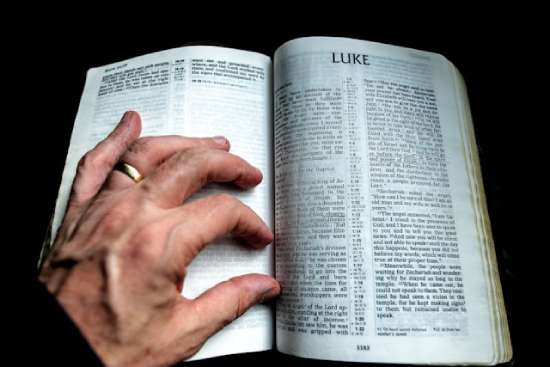
Photo by James Coleman on Unsplash
In Luke 1, we learn that Jesus and John were second cousins and close in age.
Not much else is documented about either of their childhoods, however, so we don’t know how much interaction they had in their younger years. It certainly is possible that they could’ve come in contact when they were growing up. Their families may have gathered together on occasion, or they might’ve seen each other on trips to Jerusalem for annual feast days. We just don’t know for sure.
But quite a bit was written about their births. Jesus and John the Baptist both came from divinely-blessed situations that set them up as significant spiritual figures.
Both of their births were foretold by angels (verses 13-20; 28-38), and both of them were a result of miraculous pregnancies.
Jesus was born to Mary, who was a virgin (verses 27, 34). And Mary’s relatives, Elizabeth, gave birth to John after she was well past childbearing age (verses 7, 36).
Before they were born, they did “meet” once. Mary traveled to visit Elizabeth when they were both pregnant. When she arrived, we’re told that Elizabeth was “filled with the Holy Spirit” and that her “leaped inside her” (verse 41, ESV).
It sounds like the two unborn babies, both destined for world-changing lives, already sensed each other’s presence. They were filled with the Holy Spirit right from the start (verses 15, 35, 41).
The relationship of Jesus and John the Baptist in prophecy
As we learned from their birth experiences, both Jesus and John the Baptist were prophetically linked. We see this in the prophecies that predict Jesus’ arrival as humanity’s Messiah, Savior, and sacrificial Lamb.
According to Matthew 3:3 and John 1:23, John the Baptist fulfilled Isaiah’s prophecy as “the voice of one crying out: Prepare the way of the Lord in the wilderness; make a straight highway for our God in the desert” (Isaiah 40:3, CSB)
So John’s foretold purpose was to inform and prepare people before Jesus showed up.
That might sound like a simple job, but considering the nature of humanity, it would be much needed. It’s likely that the people of John’s time had grown spiritually complacent, especially after being ruled by other nations for so long. So John’s objective was to remind the people about the prophesied Messiah and renew their hope. He called for everyone to believe, get baptized, and change their lives for the better “because the kingdom of heaven has come near!” (Matthew 3:2, CSB).
The prophet Malachi also gave John a description similar to Isaiah’s:
“Behold, I send My messenger, and he will prepare the way before Me. And the Lord, whom you seek, will suddenly come to His temple, even the Messenger of the covenant, in whom you delight. Behold, He is coming” (Malachi 3:1, NKJV).
Again, John is foretold to go ahead of Jesus and to be a messenger who lays the groundwork for His earthly ministry.
Prophecy also connects John the Baptist with the prophet Elijah, who had a close relationship with God and was also on a mission to help Israel repent from the influence of corrupted leadership (1 Kings 17–2 Kings 2). In Matthew 11:13-14, Jesus refers to John as “the Elijah” from prophecy:
“For all the prophets and the law prophesied until John. And if you’re willing to accept it, he is the Elijah who is to come” (CSB).
We can look back in the book of Malachi to find:
“Behold, I will send you Elijah the prophet before the great and awesome day of the Lord comes. And he will turn the hearts of the fathers to their children, and the hearts of the children to their fathers” (Malachi 4:5-6, ESV).
That same verse is referenced when the angel tells John’s father, Zacharias—or Zechariah, that he and Elizabeth will have a son:
“And he will go before Him in the spirit and power of Elijah, to turn the hearts of fathers to their children, and the disobedient to the understanding of the righteous, to make ready for the Lord a prepared people” (Luke 1:17, CSB).
So John the Baptist was linked to Jesus not just by a blood relationship, but through prophecy. And “in the spirit and power of Elijah,” John indeed fulfilled his predicted role of turning people’s hearts toward their Savior.
This gives us the framework for understanding how Jesus and John were so closely related in mission. Both their ministries were about restoring humanity’s hope—and helping them understand where (or through Whom) that hope comes from.
The relationship of Jesus and John the Baptist in mission

Photo by Pixabay
Now we get to look at how Jesus and John were united in the fulfillment of messianic prophecy. John’s ministry (messenger/preparer) complemented Jesus’ ministry (Messiah/Savior).
John was the forerunner. The primer. The stage setter. He helped re-establish people’s faith in their Redeemer so they could be ready to receive Him.
We can see John’s love and respect for Jesus in how seriously he took his role—it governed his whole life. He lived away from society, survived on locusts and honey, and dressed in camel hair and a leather belt (Matthew 3:4; Mark 1:6, and like Elijah in 2 Kings 1:8). His days were spent preaching and baptizing at the Jordan River (Mark 1:5; Luke 3:3), and also in Aenon (John 3:23).
And people came in droves to hear him. We read that “Jerusalem, all Judea, and all the region around the Jordan went out to him and were baptized by him in the Jordan, confessing their sins” (Matthew 3:5-6, NKJV).
Yet even with this important role and a throng of followers, John did not become proud. He knew his place. And he made sure the people understood his place, too:
“He proclaimed, ‘One who is more powerful than I am is coming after me. I am not worthy to stoop down and untie the strap of His sandals’” (Mark 1:7, CSB).
At one point, he even had to remind his own disciples that his whole purpose was to point to Jesus, not to gain authority or influence for himself.
“So they came to John and told him, ‘Rabbi, the one you testified about, and who was with you across the Jordan, is baptizing—and everyone is going to Him.’ John responded … You yourselves can testify that I said, “I am not the Messiah, but I’ve been sent ahead of Him.” … He must increase, but I must decrease’” (John 3:26-30, CSB).
John also understood that his mission for Jesus could be upsetting to the established religious leaders. Most of them were fixated on their heritage instead of maintaining loving, repentant hearts. Like Jesus, it would eventually cost John his life as a result of speaking truth to those in power.
But John’s message to these leaders highlighted some key aspects of Jesus’ ultimate mission for humanity.
“But when he saw many of the Pharisees and Sadducees coming to his baptism, he said to them, ‘Brood of vipers! Who warned you to flee from the coming wrath? Therefore produce fruit consistent with repentance. And don’t presume to say to yourselves, “We have Abraham as our father.” For I tell you that God is able to raise up children for Abraham from these stones’” (Matthew 3:7-9, CSB).
He wanted to make it clear to these pious religious leaders that, despite their lineage from Abraham, they had become an opposing force to the plan of salvation. And if they didn’t repent, they would be judged accordingly. He also pointed out that only Jesus is worthy and able to judge people’s hearts. Jesus is the one they should pay attention to.
“The ax is already at the root of the trees. Therefore, every tree that doesn’t produce good fruit will be cut down and thrown into the fire. I baptize you with water for repentance … He Himself will baptize you with the Holy Spirit and fire” (Matthew 3:10-11, CSB).
John was giving the Pharisees and Sadducees a wake-up call by comparing them to a tree bearing bad fruit, meaning they needed to change their self-serving ways. He was hoping to prepare them to receive Jesus and the purifying work of the Holy Spirit.
So John and Jesus went about their missions with clear awareness and acknowledgment of what the other was doing. But as for face-to-face interactions between the two, the only one recorded in Scripture is when Jesus approaches John for baptism (Matthew 3:13-17; Mark 1:7-11; Luke 3:21-22; John 1:26-37).
And this interaction happened to be an incredibly significant moment. John’s mission to preach about the Coming messiah was reaching its completion—just as Jesus’ public ministry as the Messiah was beginning.
John was initially surprised at Jesus’ request to be baptized by him. But Jesus affirmed John’s role as His forerunner and the initiator of His earthly ministry. “This is the way to fulfill all righteousness” (Matthew 3:15, CSB).
When Jesus came up out of the water from His baptism, a voice from heaven pronounced that He was indeed the Son of God, doing exactly what He was meant to do (Matthew 3:16-17).
John’s mission paved the way for Jesus to do His.
Why is Jesus’s relationship with John the Baptist important?
The story of Jesus and John reminds us that:
- Any person can be used by God for important things
- Serving God isn’t always easy
- Jesus is there for us, even when we’re having a hard time
While John the Baptist got to herald the arrival of Jesus Christ Himself, he’s not the only person in the Bible to serve as a messenger. He shares this role with other prophets like Noah, Jonah, Elijah, and Samuel. Throughout the Bible, we can see how God frequently used ordinary individuals as messengers to prepare people for a major event.
We can also be messengers for God, even today. And we can learn a lot from John’s life and his relationship with Jesus.

Image by simone gatterwe from Pixabay
Near the end of his life, John grew discouraged. He’d spoken out against powerful men and ended up in prison.
While locked away, John started to doubt if he’d done things right. Was this how things were supposed to work out? Announce the coming Messiah…and then get arrested and sentenced to death?
Even this great messenger had his low points. He felt the need to send a couple of his disciples to find Jesus and ask Him, “Are You the Coming One, or do we look for another?” (Matthew 11:2-3, NKJV).
But Jesus sent encouraging words back to John (much like He did for Elijah in 1 Kings 19:13-18).
“The blind are made to see. Those who could not walk are walking. Those who have had bad skin diseases are healed. Those who could not hear are hearing. The dead are raised up to life and the Good News is preached to poor people. He is happy who is not ashamed of me and does not turn away because of Me” (Matthew 11:5-6, NASB).
Jesus assured John that even though he wasn’t able to see it at that moment, miraculous things were happening. The Gospel was spreading. Their mission was being accomplished.
Jesus even said about John, “Assuredly, I say to you, among those born of women there has not risen one greater than John the Baptist” (Matthew 11:11, NKJV).
So when we’re going about our lives and sharing the love of God, we might also encounter hardship or opposition.
Now, this doesn’t mean we’re all destined to confront government officials and get thrown into prison. But being a representative of God in a world that can be uncaring and shallow…it will get hard sometimes.
So it can be easy to doubt if we’re on the right track, or if God really can use us to make good things happen.
But God alone sees the big picture. Our job is to yield to Him who does the real work of healing, forgiving, judging, and saving. As long as we aspire to live loving lives as His messengers, and as long as we make ourselves open to His Holy Spirit’s leading, we are indeed on the right track.
The call to be a messenger of the Gospel was given to all of us (Matthew 28:19-20; Acts 1:8; 1 Peter 3:15). Jesus will return one day soon (John 14:1-3), and we can share this Good News with a broken, disheartened world. By our words and actions, we can also turn people’s hearts toward Jesus—the One who sees all, loves all, and wants to save all.
Related Articles.



More Answers

The Barren Fig Tree Parable: What It Means to Bear Fruit
Find out what the Parable of the Barren Fig Tree really means.

¿Qué son las reuniones evangelísticas adventistas?
¿Qué son las reuniones evangelísticas adventistas?La Iglesia Adventista del Séptimo Día pone un gran énfasis en compartir el evangelio mediante la evangelización, o compartir el evangelio a través de la predicación, la enseñanza y el testimonio. Una de las formas en...
O que são os Encontros Evangelísticos Adventistas?
O que são os Encontros Evangelísticos Adventistas?A Igreja Adventista do Sétimo Dia dá grande ênfase ao compartilhamento do evangelho por meio da evangelização, ou seja, compartilhar o evangelho através da pregação, ensino e testemunho. Uma das formas de realizarmos...

O Que os Adventistas Acreditam Sobre Fé e Obras?
O Que os Adventistas Acreditam Sobre Fé e Obras?Os adventistas acreditam que somos salvos pela fé, que é a crença e confiança que temos em Jesus Cristo para nos salvar dos nossos pecados. Jesus, então, nos capacita a viver em harmonia com os mandamentos de Deus e a...
¿Qué creen los Adventistas sobre la fe y las obras?
¿Qué creen los Adventistas sobre la fe y las obras?Los adventistas creen que somos salvos por la fe, que es la creencia y confianza que tenemos en Jesucristo para salvarnos de nuestros pecados. Jesús, entonces, nos capacita para vivir en armonía con los mandamientos...

Je, Ninahitaji Kuwa Mwadventista Ili Niokolewe
Je, Ninahitaji Kuwa Mwadventista Ili Niokolewe?Jibu la swali hili ni rahisi, “hapana.” Linapokuja swala la wokovu katika Yesu Kristo, kinachohitajika kwa mtu ni kukiri dhabihu ya Yesu kwa ajili yetu, kuamini kwamba Ametuokoa, na kudai zawadi ya bure ya wokovu ambayo...
¿Necesito ser adventista para ser salvo?
¿Necesito ser adventista para ser salvo?La respuesta a esta pregunta es simplemente, “no.” Cuando se trata de la salvación en Jesucristo, todo lo que se requiere de una persona es reconocer el sacrificio de Jesús por nosotros, creer que Él nos ha salvado y reclamar el...
Preciso ser Adventista para ser salvo?
A resposta para essa pergunta é simplesmente: “não.”

Lo que la Biblia dice sobre la Segunda Venida de Jesucristo
¿Tienes curiosidad sobre lo que la Biblia dice acerca de la Segunda Venida de Jesucristo? Cubriremos los versículos clave y su significado.

¿Quién fue Mateo, el apóstol, en la Biblia?
En el primer libro del Nuevo Testamento, encontramos la historia del Evangelio desde la perspectiva de Mateo.

2 Corinthians: An Overview of Paul’s Most Personal Letter
Discover Paul’s lessons on forgiveness, reconciliation, generosity, and more. It’s all in the book of 2 Corinthians!
Quem Foi Mateus, o Apóstolo, na Bíblia?
Quem Foi Mateus, o Apóstolo, na Bíblia?No primeiro livro do Novo Testamento, encontramos a história do Evangelho sob a perspectiva de Mateus. Ele era um coletor de impostos judeu de Cafarnaum, no primeiro século d.C., e provavelmente era desprezado pelos outros judeus...

The Pharisee and the Tax Collector Parable: Its Meaning Made Simple
The Meaning of the Pharisee and the Tax Collector ParableIn Luke 18:9-14, Jesus told a parable about two men who went to the temple to pray. One was a Pharisee and the other a tax collector. The Pharisee prayed (well, bragged) about his own good works compared to the...
Biblia Inasema Nini Kuhusu Ujio wa Pili wa Yesu Kristo
Unajuliza Biblia inasema nini kuhusu Kurudi kwa Yesu Kristo Mara ya Pili? Tutajadili aya kuu na maana zake.

The Story of the Widow’s Mite—What It Really Means
The Story of the Widow’s Mite—What It Really MeansPeople often assume bigger is better, but the Bible turns this concept on its head with the story of the Widow’s Mite. Of all the donations Jesus sees at the temple, the gift that draws His attention is not the...

Consejo de Elena G. de White sobre la Educación Universitaria
Consejo de Elena G. de White sobre la Educación UniversitariaElena G. de White, una cofundadora importante del Adventismo, es conocida a menudo por su orientación práctica y espiritual para la educación infantil adecuada. Pero también estuvo significativamente...
Mathayo Alikuwa Nani Katika Biblia?
Mathayo Alikuwa Nani Katika Biblia?Katika kitabu cha kwanza cha Agano Jipya, tunapata simulizi la Injili kutoka kwa Mathayo. Alikuwa mtoza ushuru Myahudi kutoka Kapernaumu katika karne ya kwanza MK, na huenda alichukiwa na Wayahudi wenzake kwa kuchagua kazi hiyo....

¿Cuáles son los beneficios de vivir en el campo?
¿Cuáles son los beneficios de vivir en el campo?Visitar el campo puede ofrecer un descanso muy necesario del típico ajetreo y bullicio de la ciudad. Muchos incluso han decidido mudarse a zonas rurales para disfrutar de un ritmo más lento, espacios amplios, aire...
Quais São os Benefícios de Viver no Campo?
Visitar o campo pode oferecer uma pausa muito necessária do típico agito da cidade.

¿Qué significa la parábola de la perla de gran precio?
Esto es lo que Jesús enseñó sobre el reino de los cielos a través de esta breve parábola sobre un comerciante que encuentra una perla invaluable.
O Que Significa a Parábola da Pérola de Grande Valor?
Aqui está o que Jesus ensinou sobre o reino dos céus por meio desta parábola curta sobre um comerciante que encontra uma pérola inestimável.

Por Que Muitos Adventistas Querem Viver no Campo
Por Que Muitos Adventistas Querem Viver no CampoViver em áreas rurais é algo que os adventistas têm valorizado historicamente, embora as necessidades da vida moderna nem sempre tenham tornado isso possível. Convenhamos, as vantagens da vida na cidade são bastante...

Uma Visão Geral de Romanos: Fé, Justiça, Relacionamentos
Uma Visão Geral de Romanos: Fé, Justiça, RelacionamentosO livro de Romanos é uma das 21 epístolas, ou cartas abertas, do Novo Testamento. E embora seja um texto bíblico antigo, ainda tem uma relevância significativa (até surpreendente) para nossas vidas hoje. O...

Jesus é o Mesmo Ser que Miguel, o Arcanjo?
Jesus é o Mesmo Ser que Miguel, o Arcanjo?Muitos cristãos têm se perguntado sobre a misteriosa identidade de Miguel, o Arcanjo. Desde os primórdios do cristianismo, muitos interpretaram Miguel como o Messias identificado com a figura do Anjo do Senhor. O reformador...
Je, Faida za Kuishi Vijijini ni Zipi?
Kutembelea maeneo ya vijijini kunaweza kutoa mapumziko yanayohitajika sana kutoka kwenye pilikapilika za kawaida za mijini.
Je, Mfano wa Lulu ya Thamani Kubwa Unamaanisha Nini?
Hivi ndivyo Yesu alivyofundisha kuhusu ufalme wa mbinguni kupitia mfano huu mfupi wa mfanyabiashara aliyepata lulu ya thamani isiyo na kifani.
Kwa Nini Waadventista Wengi Wanataka Kuishi Vijijini
Kwa Nini Waadventista Wengi Wanataka Kuishi VijijiniKuishi maeneo ya vijijini ni jambo ambalo Waadventista wamekuwa wakilithamini kihistoria, ingawa mahitaji ya maisha ya kisasa hayafanyi iwezekane kila wakati. Tukubali, faida za kuishi mjini zinaonekana wazi: fursa...
Muhtasari wa Kitabu cha Warumi: Imani, Haki, Mahusiano
Hapa kuna muhtasari na historia ya waraka mrefu zaidi wa Paulo.

Sobre o que é a Parábola do Semeador de Jesus?
A parábola do semeador é, em última análise, sobre como as pessoas responderam a Jesus Cristo e Sua mensagem do reino de Deus—o Evangelho.
Didn’t find your answer? Ask us!
We understand your concern of having questions but not knowing who to ask—we’ve felt it ourselves. When you’re ready to learn more about Adventists, send us a question! We know a thing or two about Adventists.