
William Miller was a farmer in the early 1800s who gave his life to God and began intensely studying his Bible. This study led him to some unexpected conclusions, namely that Jesus Christ’s Second Coming would happen in his lifetime—in 1843 or 1844. As Miller began sharing this news, he sparked a religious revival in North America called the Millerite Movement.
So, who was William Miller and what led him to this conclusion? Let’s look at:
- William Miller’s background
- William Miller and the Millerite Movement
- His life after Jesus didn’t return
- His connection to the Seventh-day Adventist Church
We’ll start with the backstory of a humble man who never intended to start a major religious movement.
William Miller’s background
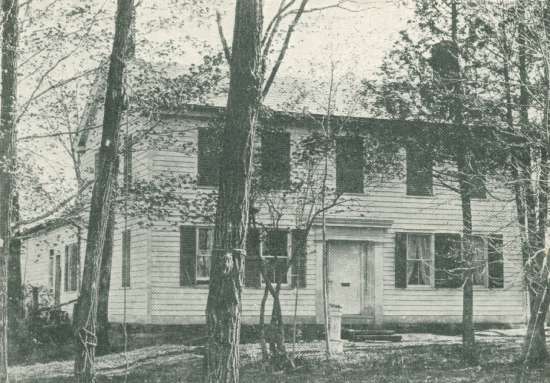 William Miller was born in Pittsfield, Massachusetts, in 1782. He was the first of William and Paulina Miller’s 17 children. Soon after his birth, the family moved to Low Hampton, New York.
Miller’s father, who had served as a captain in the Revolutionary War, was not very religious. His wife, though, was a devout Baptist, whose prayers were not lost on her eldest son.1
As a child, Miller showed intellectual promise and curiosity. As soon as he learned to read, he began to do so every night with books borrowed from neighbors.2
William Miller’s marriage and occupation
In 1803, William Miller married Lucy Smith, with whom he had five children. He continued farming and became involved in the civil matters of his community, serving as constable, deputy sheriff, and justice of the peace.
Despite his busy life, he found time for his favorite pastime—reading. His curiosity sparked some questions about his beliefs.3
Becoming a deist
After their marriage, the Millers settled in Poultney, Vermont, where Miller became acquainted with deists. Deists believed in God but rejected the Bible and viewed Him as a distant deity that left the world to run on its own. This kind of God was not personally involved with His created beings.
Miller had always wondered about some perplexing passages in the Bible and had never received solid answers from preachers. If the Bible didn’t have answers, perhaps deism was the solution.
He began reading books by deistic philosophers, but his mind was not at ease. He struggled with what they believed about the afterlife—that humans cease to exist.4
Questions of eternity and death became even more real when he faced the horrors of war.
Returning to Christianity
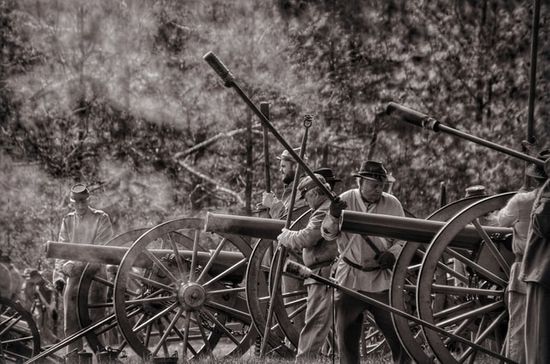
William Miller became a captain in the army during the War of 1812 between the United States and Great Britain. His experiences during that time led him back to Christianity and belief in a personal God.
While he served in the war, the Americans experienced an unexpected victory at the Battle of Plattsburgh.5 They were far outnumbered and should have lost, yet they didn’t. In the same battle, a shell exploded near Miller, barely missing him.6
After the war, his close brush with death caused him to confront his own mortality. He took a special interest in God and wondered what His plan could be for his life.7
Moving back to Low Hampton, New York, he began attending the Baptist Church—but only when his uncle, the church minister, gave the Sunday sermon. When his mother asked him why he didn’t come at other times, he complained about how the deacons read the sermons: “When Uncle’s away, Mother, why don’t they let me read it?”
His mother took his words to heart, and the next time his uncle was away, Miller did read the sermon. And many more times after. As he did so, the words of Scripture began to have an impact on him.8
During one of these sermons, conviction pierced his heart so strongly that he could not finish. That day in 1816, he realized his need for a Savior. He began to spend time specifically reading the Bible to know this personal God.
Here’s how he puts it:
“When [I was] brought almost to despair, God by His Holy Spirit opened my eyes. I saw Jesus as a friend, and my only help. … And the Scriptures, which before were dark and contradictory, now became the lamp to my feet and light to my path.”9
“But how do you know the Bible is the Word of God?” his deist friends challenged him.10
This question caused him to study even more, and then he discovered a prophecy that would lead to a worldwide religious movement.
William Miller and the Millerite Movement
William Miller’s deep dive into the Bible led him to prophecies about the Second Coming of Jesus. The more he studied, the more he became convinced that Jesus was coming soon—most likely in 1843 or 1844.
As he shared this with others, a religious revival, known as the Millerite Movement (also called the Advent Movement), swept across the country.
What exactly did he uncover?
The 2,300-day prophecy
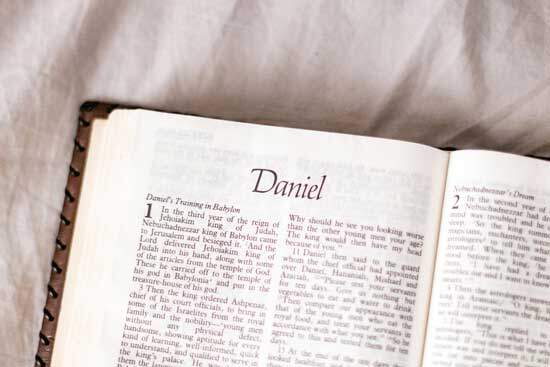
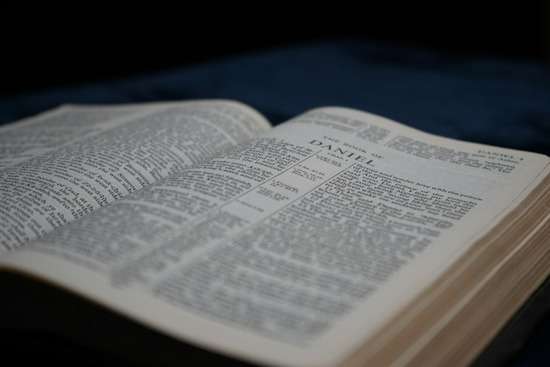
Photo by Sincerely Media on Unsplash
Miller’s biographer, Sylvester Bliss, in Memoirs of William Miller, gives us a look into his Bible study journey.11 Miller began his Bible study to respond to the challenge of his deist friends. He decided he would study verse by verse, using the margin of his Bible and a concordance to find cross-referenced verses. Eventually, he uncovered a prophecy in Daniel 8:14 that seemed to point to the Second Coming of Christ and the judgment day:
“For two thousand three hundred days; then the sanctuary shall be cleansed” (Daniel 8:14, NKJV).
Like other Christians of his time, he thought that the sanctuary referred to the earth. The cleansing, then, had to be its cleansing by fire when Jesus returned, as described in Revelation 21:8.
Miller believed, as did many theologians before him, that a day in Bible prophecy equals one year (Numbers 14:34; Ezekiel 4:6). This meant that this prophecy was referring to 2,300 literal years.
In addition, he realized that Daniel 9 connected with Daniel 8 and provided a starting point for the prophecies in both chapters: 457 BC—the time of the decree to rebuild Jerusalem.
All that remained was a math calculation. Counting 2,300 years from 457 BC, Miller came to 1844.
Could it be that Jesus was coming in less than 25 years? That the end of the world was so close?
Miller wasn’t sure, so he kept it to himself as he continued to study out objections.
The call from God
After about 13 years of study, Miller was growing more convinced in his Bible studies on Daniel 8:14. He wrestled with the message God was giving him: “Go and tell the world of their danger.”
“I can’t go, Lord.” He felt inadequate to speak about the Bible in public since he had little or no theological training and was not ordained as a minister. He was just a farmer who loved to study the Bible.
But to ease his conviction, he decided: “If I should have an invitation to speak publicly in any place, I will go and tell them what I find in the Bible about the Lord’s coming.”12
A sense of peace came over him. He didn’t dream that anyone would actually invite him to preach!
Half an hour later, a young man knocked at the door and asked if Miller would come that Sunday and share about the Second Coming.
Keeping his promise to God, Miller accepted the invitation, and revival took place in the church. Soon another invitation came, and another. So many requests poured in that he couldn’t keep up.
Thinking to solve this problem, he published a book in 1832.13 But this only served to increase interest.
In 1839, he partnered with Joshua V. Himes, a well-known reform leader from Boston, who began promoting his message. One way Himes did this was by starting a periodical called the Signs of the Times.14
Miller also received help from Apollos Hale to create the 1843 prophecy chart that showed the Bible prophecies that ended in 1843.15
Though he had not intended to, he had begun a religious revival, just after the tail end of the Second Great Awakening, that spread across the United States and even the world. Through it all, he remained a humble Bible student and follower of Jesus.
But you may be wondering:
Did he ignore plain passages in the Bible that say no one knows the day nor the hour of Jesus’ coming (Mark 13:32)?
No, he did consider those passages. For this reason, he never set a definite time for the Second Coming but only said that he believed it would happen sometime in 1843 or 1844. Later on, one of
Miller’s followers set the date of October 22, 1844.16
Miller was skeptical of this exact date for Jesus’ coming. It wasn’t until the beginning of October that he became convinced that October 22nd “was at a probable point of time.” He believed it was “a work of God” because of the way people were confessing their sins and earnestly searching their hearts as they waited for Jesus to come.17
Did William Miller claim to be a prophet?
When speaking about Jesus’ coming and the judgment day, William Miller never claimed to be a prophet. He was a genuine Christian who was sharing what he had learned through years of diligent Bible study.
Furthermore, he had no goals to build a following or convert people to a specific denomination. His motives were pure—he wanted people to be ready to meet Jesus.
He wrote:
“My whole object was a desire to convert souls to God, to notify the world of a coming judgment, and to induce my fellowmen to make that preparation of heart which will enable them to meet their God in peace. The great majority of those who were converted under my labors, united with the various existing churches.”18
He showed a similar attitude when Jesus did not return as expected on October 22, 1844.
How did Miller respond to the Great Disappointment?
Naturally, October 22nd, 1844, was a disappointment to Miller. But he remained humble and trusted that God’s plan had not failed. It must have been a human error.
On August 1, 1845, he published a document that became known as William Miller’s Apology and Defence. In it, he admitted that he had been mistaken about the timing of Christ’s return.
But he expressed some confusion. Why had God seemed to be working so clearly in people’s lives during the Millerite Movement right before October 22nd? Why did they experience peace and joy while waiting if the time had been wrong?19
He also traced his line of reasoning and said that he could not find where his calculations were off. He believed that he had followed God’s leading and done the right thing in sharing his convictions:
“I therefore still feel that it was my duty to present all the evidence that was apparent to my mind; and were I now in the same circumstances, I should be compelled to act as I have done.”20
Nonetheless, in the remainder of his life, he took to heart the lesson of not setting dates for the Second Coming.
Miller’s life after the Great Disappointment
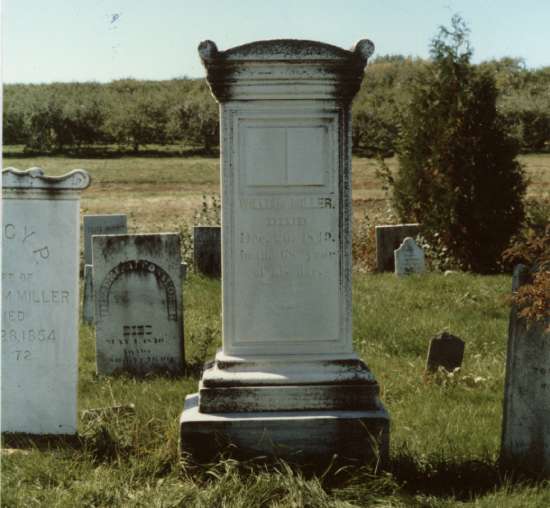 Miller never spoke of a definite time for the Second Advent again, but he continued to hope for that day.21 He formed a group of believers and supported the younger leaders in the movement until he died in 1849.
Many of his followers gave up their faith in God after the Great Disappointment, while those who didn’t split up into three main groups:22
- Those who believed the date was wrong, but that Christ’s coming would take place soon.
- Those who believed that Christ had come, but in a “spiritual” sense, or not as a physical event.
- Those who believed the date was correct, but the anticipated event was not.
Miller was part of the first group, but it “pained [him] to see a spirit of sectarianism [a strong attachment to a religious sect] and bigotry.”23 He was concerned that some of the people in these groups had gone to extremes in their beliefs.
For this reason, he met with some of his followers at a conference in Albany, New York, on April 23, 1845. There they clarified their beliefs and encouraged one another, but never set a new date for Jesus’ return.24
But how about the Seventh-day Adventists? Did he join them?
What is William Miller’s connection to Adventism?
William Miller’s earnest study of the Bible and the resulting movement was a catalyst for starting the Seventh-day Adventist Church. But he was not a founder of the Church and never became involved with it. In fact, he died in 1849, many years before Adventism’s organization in 1863.
But after October 22, 1844, there was a small group of people who believed that the date had indeed been correct. The event, however, was not. Returning to their Bibles and guided by the Holy Spirit, this group—which included individuals like Ellen G. (Harmon) White, James White, and Joseph Bates—realized that Jesus had moved from the Holy Place to the Most Holy Place of the sanctuary to begin a work of judgment instead.
At the same time, they were learning about other things that had either become de-emphasized or forgotten about over time, such as the seventh-day Sabbath. Many years later, they would form the Seventh-day Adventist Church.
But Miller would not be among their ranks since he didn’t agree with them about Jesus’ work in the sanctuary. Ellen G. White, who became one of the founders of the Adventist Church, wrote that Miller also didn’t accept the Bible’s truth about the Sabbath due to the influence of his fellow workers.25
Nevertheless, through what he started, others further pursued the truths of the Bible.
God used Miller despite his misinterpretation
William Miller was a true man of God who looked forward to Jesus’ return. Though mistaken about the timing of that event, he simply wanted others to be ready, and God used him in powerful ways to bring revival worldwide.
Because of the Great Disappointment, a handful of people began studying their Bibles more deeply. What they discovered led to the Seventh-day Adventist Church—a thriving Christ-centered denomination today. In this way, God took William Miller’s mistake and turned it into a blessing.
- Bliss, Sylvester, and Hale, Apollos, Memoirs of William Miller, (J.V. Himes, 1853), p. 4. [↵]
- Himes, Joshua V., Views of the Prophecies and Prophetic Chronology, Selected from Manuscripts of William Miller with a Memoir of His Life (Boston: Moses A. Dow, 1841), p. 7. [↵]
- Maxwell, C. Mervyn, Tell It to the World, (Pacific Press, Nampa, ID, 1977), p. 9. [↵]
- Miller, William, William Miller’s Apology and Defence, p. 3. [↵]
- “The Battle of Lake Champlain,” Naval History and Heritage Command [↵]
- Maxwell, C. Mervyn, Tell It to the World, (Pacific Press, Nampa, ID, 1977), p. 11. [↵]
- Ibid., p. 12. [↵]
- Ibid., p. 12. [↵]
- Himes, Joshua V., Views of the Prophecies and Prophetic Chronology, Selected from Manuscripts of William Miller with a Memoir of His Life (Boston: Moses A. Dow, 1841), p. 7–14. [↵]
- Maxwell, C. Mervyn, Tell It to the World, (Pacific Press, Nampa, ID, 1977), p. 12. [↵]
- Bliss, Sylvester, and Hale, Apollos, Memoirs of William Miller, (J.V. Himes, 1853), pp. 68–69. [↵]
- Bliss, Sylvester, and Hale, Apollos, Memoirs of William Miller, (J.V. Himes, 1853), pp. 92–99. [↵]
- The full title of the book is “Evidences from Scripture and History of the Second Coming of Christ About the Year A.D. 1843, and of His Personal Reign of 1000 Years”. [↵]
- Maxwell, C. Mervyn, Tell It to the World, (Pacific Press, Nampa, ID, 1977), pp. 16–18. [↵]
- Ibid., p. 19. [↵]
- Miller, William, William Miller’s Apology and Defence, pp. 13, 24. [↵]
- Miller, William, William Miller’s Apology and Defence, p. 25; White, James, Sketches of the Christian Life and Public Labors of William Miller, ch. 16. [↵]
- Miller, William, William Miller’s Apology and Defence, p. 23. [↵]
- Maxwell, C. Mervyn, Tell It to the World, (Pacific Press, Nampa, ID, 1977), p. 35. [↵]
- Miller, William, William Miller’s Apology and Defence, p. 33. [↵]
- White, James, Sketches of the Christian Life and Public Labors of William Miller, ch. 16. [↵]
- Douglass, Herbert, Messenger of the Lord, (Pacific Press, Nampa, Idaho, 1998), p. 134. [↵]
- Miller, William, William Miller’s Apology and Defence, p. 26. [↵]
- White, James, Sketches of the Christian Life and Public Labors of William Miller, p. 344. [↵]
- White, Ellen G., Early Writings (Review and Herald, Washington, D.C., 1882), p. 303. [↵]
Related Articles


More Answers

Mikutano ya Injili ya Waadventista ni Nini?
Kanisa la Waadventista wa Sabato linaweka mkazo mkubwa katika kushiriki injili kupitia uinjilisti, yaani kushiriki injili kupitia mahubiri, mafundisho, na ushuhuda.
Joseph Bates y su papel en la Iglesia Adventista del Séptimo Día
Joseph Bates y su papel en la Iglesia Adventista del Séptimo DíaJoseph Bates fue un marinero que se convirtió en predicador, se unió al Movimiento Millerita y esperó que ocurriera la Segunda Venida de Jesús en 1844. A pesar de sentirse decepcionado cuando esto no...
Joseph Bates e Seu Papel na Igreja Adventista do Sétimo Dia
Joseph Bates foi um marinheiro que se tornou pregador, juntou-se ao Movimento Millerita e esperou pela Segunda Vinda de Jesus em 1844.

¿Los Adventistas del Séptimo Día celebran las fiestas?
¿Los Adventistas del Séptimo Día celebran las fiestas?¿Te preguntas si tu compañero de clase o de trabajo adventista celebra las mismas fiestas que tú? Tal vez quieres incluirlo en algunas festividades, pero también deseas respetar sus creencias. Entonces, no estás...
Os Adventistas do Sétimo Dia Celebram Feriados?
Está se perguntando se seu colega de classe ou de trabalho adventista celebra os mesmos feriados que você?

The Barren Fig Tree Parable: What It Means to Bear Fruit
Find out what the Parable of the Barren Fig Tree really means.
¿Qué son las reuniones evangelísticas adventistas?
¿Qué son las reuniones evangelísticas adventistas?La Iglesia Adventista del Séptimo Día pone un gran énfasis en compartir el evangelio mediante la evangelización, o compartir el evangelio a través de la predicación, la enseñanza y el testimonio. Una de las formas en...
O que são os Encontros Evangelísticos Adventistas?
O que são os Encontros Evangelísticos Adventistas?A Igreja Adventista do Sétimo Dia dá grande ênfase ao compartilhamento do evangelho por meio da evangelização, ou seja, compartilhar o evangelho através da pregação, ensino e testemunho. Uma das formas de realizarmos...

O Que os Adventistas Acreditam Sobre Fé e Obras?
O Que os Adventistas Acreditam Sobre Fé e Obras?Os adventistas acreditam que somos salvos pela fé, que é a crença e confiança que temos em Jesus Cristo para nos salvar dos nossos pecados. Jesus, então, nos capacita a viver em harmonia com os mandamentos de Deus e a...
¿Qué creen los Adventistas sobre la fe y las obras?
¿Qué creen los Adventistas sobre la fe y las obras?Los adventistas creen que somos salvos por la fe, que es la creencia y confianza que tenemos en Jesucristo para salvarnos de nuestros pecados. Jesús, entonces, nos capacita para vivir en armonía con los mandamientos...
Je, Ninahitaji Kuwa Mwadventista Ili Niokolewe
Je, Ninahitaji Kuwa Mwadventista Ili Niokolewe?Jibu la swali hili ni rahisi, “hapana.” Linapokuja swala la wokovu katika Yesu Kristo, kinachohitajika kwa mtu ni kukiri dhabihu ya Yesu kwa ajili yetu, kuamini kwamba Ametuokoa, na kudai zawadi ya bure ya wokovu ambayo...
¿Necesito ser adventista para ser salvo?
¿Necesito ser adventista para ser salvo?La respuesta a esta pregunta es simplemente, “no.” Cuando se trata de la salvación en Jesucristo, todo lo que se requiere de una persona es reconocer el sacrificio de Jesús por nosotros, creer que Él nos ha salvado y reclamar el...
Preciso ser Adventista para ser salvo?
A resposta para essa pergunta é simplesmente: “não.”

Lo que la Biblia dice sobre la Segunda Venida de Jesucristo
¿Tienes curiosidad sobre lo que la Biblia dice acerca de la Segunda Venida de Jesucristo? Cubriremos los versículos clave y su significado.

¿Quién fue Mateo, el apóstol, en la Biblia?
En el primer libro del Nuevo Testamento, encontramos la historia del Evangelio desde la perspectiva de Mateo.
2 Corinthians: An Overview of Paul’s Most Personal Letter
Discover Paul’s lessons on forgiveness, reconciliation, generosity, and more. It’s all in the book of 2 Corinthians!
Quem Foi Mateus, o Apóstolo, na Bíblia?
Quem Foi Mateus, o Apóstolo, na Bíblia?No primeiro livro do Novo Testamento, encontramos a história do Evangelho sob a perspectiva de Mateus. Ele era um coletor de impostos judeu de Cafarnaum, no primeiro século d.C., e provavelmente era desprezado pelos outros judeus...

The Pharisee and the Tax Collector Parable: Its Meaning Made Simple
The Meaning of the Pharisee and the Tax Collector ParableIn Luke 18:9-14, Jesus told a parable about two men who went to the temple to pray. One was a Pharisee and the other a tax collector. The Pharisee prayed (well, bragged) about his own good works compared to the...
Biblia Inasema Nini Kuhusu Ujio wa Pili wa Yesu Kristo
Unajuliza Biblia inasema nini kuhusu Kurudi kwa Yesu Kristo Mara ya Pili? Tutajadili aya kuu na maana zake.

The Story of the Widow’s Mite—What It Really Means
The Story of the Widow’s Mite—What It Really MeansPeople often assume bigger is better, but the Bible turns this concept on its head with the story of the Widow’s Mite. Of all the donations Jesus sees at the temple, the gift that draws His attention is not the...

Consejo de Elena G. de White sobre la Educación Universitaria
Consejo de Elena G. de White sobre la Educación UniversitariaElena G. de White, una cofundadora importante del Adventismo, es conocida a menudo por su orientación práctica y espiritual para la educación infantil adecuada. Pero también estuvo significativamente...
Mathayo Alikuwa Nani Katika Biblia?
Mathayo Alikuwa Nani Katika Biblia?Katika kitabu cha kwanza cha Agano Jipya, tunapata simulizi la Injili kutoka kwa Mathayo. Alikuwa mtoza ushuru Myahudi kutoka Kapernaumu katika karne ya kwanza MK, na huenda alichukiwa na Wayahudi wenzake kwa kuchagua kazi hiyo....

¿Cuáles son los beneficios de vivir en el campo?
¿Cuáles son los beneficios de vivir en el campo?Visitar el campo puede ofrecer un descanso muy necesario del típico ajetreo y bullicio de la ciudad. Muchos incluso han decidido mudarse a zonas rurales para disfrutar de un ritmo más lento, espacios amplios, aire...
Quais São os Benefícios de Viver no Campo?
Visitar o campo pode oferecer uma pausa muito necessária do típico agito da cidade.

¿Qué significa la parábola de la perla de gran precio?
Esto es lo que Jesús enseñó sobre el reino de los cielos a través de esta breve parábola sobre un comerciante que encuentra una perla invaluable.
O Que Significa a Parábola da Pérola de Grande Valor?
Aqui está o que Jesus ensinou sobre o reino dos céus por meio desta parábola curta sobre um comerciante que encontra uma pérola inestimável.

Por Que Muitos Adventistas Querem Viver no Campo
Por Que Muitos Adventistas Querem Viver no CampoViver em áreas rurais é algo que os adventistas têm valorizado historicamente, embora as necessidades da vida moderna nem sempre tenham tornado isso possível. Convenhamos, as vantagens da vida na cidade são bastante...
Uma Visão Geral de Romanos: Fé, Justiça, Relacionamentos
Uma Visão Geral de Romanos: Fé, Justiça, RelacionamentosO livro de Romanos é uma das 21 epístolas, ou cartas abertas, do Novo Testamento. E embora seja um texto bíblico antigo, ainda tem uma relevância significativa (até surpreendente) para nossas vidas hoje. O...

Jesus é o Mesmo Ser que Miguel, o Arcanjo?
Jesus é o Mesmo Ser que Miguel, o Arcanjo?Muitos cristãos têm se perguntado sobre a misteriosa identidade de Miguel, o Arcanjo. Desde os primórdios do cristianismo, muitos interpretaram Miguel como o Messias identificado com a figura do Anjo do Senhor. O reformador...
Didn’t find your answer? Ask us!
We understand your concern of having questions but not knowing who to ask—we’ve felt it ourselves. When you’re ready to learn more about Adventists, send us a question! We know a thing or two about Adventists.