
If the Bible never mentions the change of the Sabbath, why do so many today attend church on Sunday?
Who changed the day?
But that’s actually the wrong question to ask. The Sabbath hasn’t changed.
What has changed is Christians’ decision of what day to worship. And it all started during the first and second centuries. Let’s uncover more of the story by looking at:
- Where the seventh-day Sabbath originated
- How the Sabbath was kept in the Bible
- How Christians shifted to keeping Sunday
Without further ado, here’s a quick refresher on the Sabbath up to New Testament times. From there, we’ll find out what happened in the early centuries of Christianity.

Photo by Javier Miranda on Unsplash
Where the seventh-day Sabbath originated
The seventh-day Sabbath is interwoven into the human fabric from the time God gave it to the newly created humans as a day of rest. People have kept the Sabbath ever since: the Israelites did, Jesus Christ did, the apostles did, and many faithful people after that time did.
But it all began when there were no Jews or varying groups of people or churches. It was just God and the first two humans: Adam and Eve.
When God finished creating the world in six days, “God blessed the seventh day and declared it holy, for on it He rested from all His work of creation” (Genesis 2:3, CSB).
He made the Sabbath as a time to pause—to reorient ourselves to Him and one another. We’re designed for this rhythm.
How the Sabbath was kept in the Bible
Both the Old Testament and New Testament mention examples of people keeping the seventh-day Sabbath.
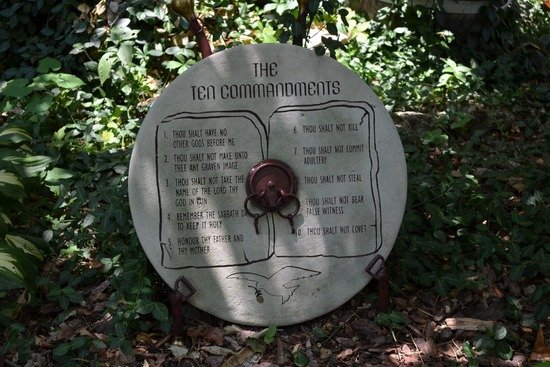
God reminded His people of the Sabbath when He gave the Ten Commandments to Moses. The fourth commandment about the Sabbath began specifically with the word remember (unlike any of the other commandments).
God had just brought the Israelites out of Egypt, where they had been slaves. Some of them had no doubt lost sight of these principles, but as slaves, they also wouldn’t have been able to enjoy a day off each week. God’s reminder would’ve come as a welcome gift. It also would’ve required them to re-learn what it means to have that weekly rhythm of work and rest.
That’s why among the instructions for loving Him and loving one another (Matthew 22:38–40), He said,
“Remember the Sabbath day, to keep it holy. Six days you shall labor and do all your work…. For in six days the LORD made the heavens and the earth, the sea, and all that is in them, and rested the seventh day. Therefore the LORD blessed the Sabbath day and hallowed it” (Exodus 20:8–11, NKJV).
The people of Israel continued to keep the Sabbath throughout the Old Testament.
Then, in the New Testament, Jesus comes on the scene.
Jesus could very well have changed the Sabbath if He’d wanted to. He definitely wasn’t afraid to show the Pharisees that they’d turned the Sabbath into a day of drudgery and rules rather than mercy and generosity (Mark 3:4).
And yet, Jesus upheld the Sabbath (Luke 4:16), even proclaiming Himself “Lord of the Sabbath” (Mark 2:28, NKJV). He made it clear that He hadn’t come to destroy God’s Law but to live it out in His life, setting an example for us (Matthew 5:17–19).
The apostles in the first century, including Paul, kept the Sabbath too. And they wrote about the importance of the Ten Commandments and the Sabbath rest that remained (James 2:10–11; Hebrews 4:4, 9).
But as human nature so often does, some Christians turned Sabbath into a legalistic practice rather than the joyful celebration it’s meant to be.
This distortion of the Sabbath played a role in the shift to keeping Sunday.
How Christians shifted to keeping Sunday
After Jesus returned to heaven (around AD 31), the disciples and the early Christian church (Jews and Gentiles) continued to keep the Sabbath. They did so all throughout the time of the book of Acts and the first century.
The historian Lyman Coleman in his book Ancient Christianity Exemplified points this out. What he says is significant, considering that he’s not a Sabbath keeper himself:
“No law or precept appears to have been given by Christ or the apostles, either for the abrogation [repeal] of the Jewish Sabbath or the institution of the Lord’s day, or the substitution of the first for the seventh day of the week.”1
Despite not having any instruction from Christ or the apostles, some of the early church fathers (leaders) of the second century began to shift their day of worship from Saturday to Sunday.
Let’s find out the real reason for this shift. We’ll look at historical research for answers.
Church fathers in the first through the third century
The change from Sabbath to Sunday keeping was a slow transition over a few hundred years. It started as Christians incorporated Greek, Roman, and pagan philosophies into Christianity to assimilate with those around them and distance themselves from Judaism.
See, Sunday had long been a holy day for many other religions. For them, it was a festival to worship the sun—which is where we get its name from.2 These practices date back to ancient times and are even mentioned in the Old Testament (Ezekiel 8:15–17).
Christians worshiping on Sunday “dates to the second or third centuries” and was “associated with either Rome or Alexandria.”3
One of the first mentions is in AD 155 by one of the church fathers, Justin Martyr, in a defense of Christianity to the Roman emperor:
“But Sunday is the day on which we all hold our common assembly, because it is the first day on which God, having wrought a change in the darkness and matter, made the world; and Jesus Christ our Savior on the same day rose from the dead.”4
It’s likely he hoped to put Christians in good favor with the emperor and lessen persecution.
Justin Martyr, who spent time in Rome, came from a pagan background and had studied Stoic, Platonic, and other pagan philosophies. During his lifetime, Sunday was a pagan festival to honor the sun god, but Christians had begun celebrating on Sunday as a way to connect with these other religions and hopefully convert them to Christianity.5
But whether the Christians were successful in their outreach is questionable, especially when we read the words of the Christian author Tertullian from about 60 years after Justin Martyr.
Interestingly, Tertullian, another church father, seemed to contradict himself when he talked about the Sabbath. He said the Word of God didn’t give any evidence that the “Creator’s Sabbath” had changed, and he believed it was the enemy’s work to find ways to avoid keeping the Sabbath.
And yet, Tertullian also defended Sunday worship when accused of worshiping the sun rather than God on this day.6
Both Sabbath and Sunday

Photo by Chandan Chaurasia on Unsplash
Pagans in the Roman Empire kept festivals for sun worship every Sunday. Over time, Christians, influenced by Roman ways of thinking, began to worship on both the Sabbath and Sunday.
Even so, Sunday wasn’t really seen as a replacement for the Sabbath—like a “Christian Sabbath.” Instead, it seemed to be an additional festival. The Apostolic Constitutions, a piece of early Christian literature from the fourth century, even instructed this:
“But keep the Sabbath, and the Lord’s day festival; because the former is a memorial of the creation, and the latter of the resurrection.”7
But in the process, the Sabbath was becoming distorted. Much like what happened during the time of Jesus, religious leaders called the Pharisees had placed so many rules and regulations around the Sabbath that its observance became a drudgery rather than the delight it was supposed to be (Isaiah 58:13). Jesus had shown the people a different way of Sabbath keeping, but unfortunately, this was lost sight of in the following centuries.
Here’s how, according to church historian Dr. Charles Hase of Germany:
“While the eastern churches retained the Sabbath, a portion of the western churches, with the church of Rome at their head, turned it into a fast.”8
And while Sabbath became a fast day, Sunday was to be a celebratory day. Thus, it became a day of rejoicing and festivity to look forward to after the Sabbath was over.
And this keeping of both days was quite common until the fifth century.
Notice what the historian Coleman says about it:
“The observance of the Lord’s day as the first day of the week was at first introduced as a separate institution…. Their Sabbath, the last day of the week, was strictly kept in connection with that of the first day, for a long time after the overthrow of the temple and its worship [AD 70]. Down even to the fifth century, the observance of the Jewish Sabbath was continued in the Christian church, with a rigour and solemnity gradually diminishing until it was wholly discontinued.”
Over time, most Christians lost interest in the drudgery and fasting of the Sabbath, making it easier for them to accept what came next.
Constantine’s Sunday law
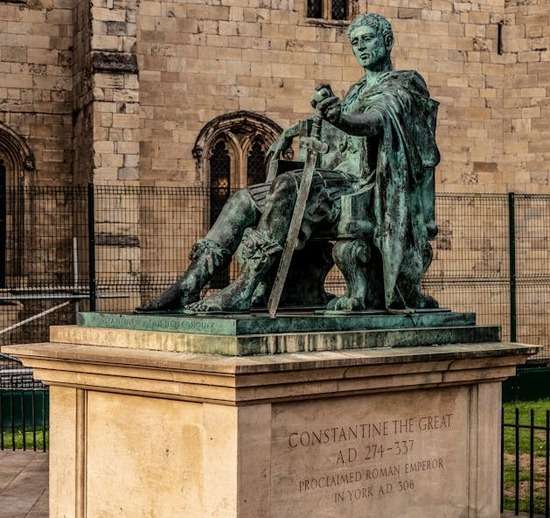
Photo by John Nail
As Christians were compromising and keeping both Sabbath and Sunday, something unusual took place within the Roman Empire. In the early fourth century, Emperor Constantine was in the Battle of the Milvian Bridge, when he had a vision of a flaming cross with the Latin words, “In this sign conquer.”9
As a result, he became a Christian—and so did the Empire. This change marked the beginning of the church being under Roman authority.10
The change was no doubt a relief to Christians who had experienced severe persecution under the reign of Emperor Diocletian.
Up to this point, Constantine had been a devotee of Mithraism, a monotheistic religion that involved worshiping the sun god. It seemed that Mithraism declined as Christianity became more widespread. But in reality, it had simply been repackaged. We see this in Constantine’s decree on March 7, 321:
“On the venerable Day of the Sun let the magistrates and people residing in cities rest, and let all workshops be closed.”11
It was a very political move—a way for Constantine to unite the different religious groups within his empire and bring social stability.
Eusebius, a Christian historian during that time, had close connections with the emperor and no doubt was looking for ways to please him. In his Commentary of the Psalms, he makes this claim:
“And all things whatsoever that it was duty to do on the Sabbath, these we have transferred to the Lord’s day, as more appropriately belonging to it, because it has a precedence and is first in rank, and more honorable than the Jewish Sabbath.”12
Even so, as we already mentioned, Sabbath keeping didn’t stop at this time. It would take another couple hundred years for the Christian church to officially end it.
Fourth-century councils
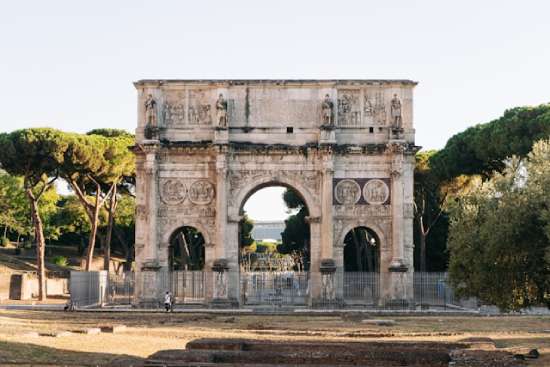
Photo by Fabio Fistarol on Unsplash
Some key fourth-century councils within the Roman-controlled church influenced the way Christians kept the Sabbath. Keeping Sunday rather than the seventh day became a way for them to put distance between themselves and the Jews.
During the Council of Nicaea in AD 325, a discussion arose about whether to keep the Passover as the Jews did. We see an anti-semitic attitude in Constantine’s response, as noted by Eusebius:
“It appeared an unworthy thing that in the celebration of this most holy feast [Passover] we should follow the practice of the Jews…. Let us then have nothing in common with the detestable Jewish crowd.”
Clearly, Constantine had an agenda against Jewish practices, and Christians would have to follow suit to stay in his good graces.
Then, the Council of Laodicea in AD 365 specifically addressed Sabbath keeping. It forbade Christians, particularly in the western church, from keeping it:
“Christians must not judaize by resting on the Sabbath, but must work on that day, rather honouring the Lord’s Day, and, if they can, resting then as Christians. But if any shall be found to be judaizers, let them be anathema from Christ.”13
From the sixth century onward, other edicts and councils by the Roman-controlled church forbade Christians to work on Sunday or keep Sabbath.14 Slowly, Sabbath keepers dwindled.
But they never disappeared completely.
The truth remained alive
The transition from Sunday keeping to Sabbath keeping reveals the human tendency to want to fit in and please other humans over God. We may not readily accept an outright falsehood, but over time, we may make subtle changes that lead us down the path of compromise.
Despite the fact that Christians at large followed the lead of the Roman Church, some small groups, like the Celtic church and the Waldensians of Northern Italy, remained faithful to the teaching and example of Jesus.15
Though hidden from view for many centuries, God’s truth never went completely out.
And it re-emerged as a group of Protestant Christians went to the Scriptures to look for it again.
Related pages


- Coleman, Lyman, Ancient Christianity Exemplified (Lippincott, Grambo & Co, 1853), p. 530. [↵]
- Andrews, John Nevins, The History of the Sabbath, p. 146. [↵]
- McIver, Robert, “When, Where, and Why Did the Change from Sabbath to Sunday Worship Take Place in the Early Church?” [↵]
- Justin Martyr, First Apology 67. [↵]
- Andrews, p. 148. [↵]
- Ibid., p. 155. [↵]
- Ibid., p. 163. [↵]
- Quoted in Andrews, p. 156. [↵]
- Cavendish, Richard, “The Battle of the Milvian Bridge,” History Today. [↵]
- “Constantine the Great – Paganism to Christianity,” Lineage. [↵]
- Codex Justinianus 3.12.3, trans. Philip Schaff, History of the Christian Church, 5th ed. (New York, 1902), 3:380, note 1. [↵]
- Andrews, p. 200. [↵]
- Canon XXIX. [↵]
- Andrews, Chapter 19. [↵]
- “Waldensians: People of the Valleys,” Lineage. [↵]
More Answers

Nani Walikuwa Waamuzi wa Israeli Katika Agano la Kale?
Nani Walikuwa Waamuzi wa Israeli Katika Agano la Kale?Nyakati za misukosuko zinahitaji wanaume na wanawake wa vitendo. Waisraeli, waliokuwa wamekalia nchi ya Ahadi hivi karibuni, walijikuta katika nyakati hizo. Mataifa ya adui yaliposhambulia na kuwatesa makabila ya...

Waadventista Wana Tofauti Gani na Waprotestanti Wengine?
Waadventista wanatambulika sana kwa msisitizo wao katika afya na Sabato. Jifunze walivyo tofauti na Wakristo Waprotestanti wengine.

O Que os Adventistas do Sétimo Dia Acreditam Sobre os Dons Espirituais na Bíblia
O Que os Adventistas do Sétimo Dia Acreditam Sobre os Dons Espirituais na BíbliaOs Adventistas do Sétimo Dia acreditam que os dons espirituais são talentos que o Espírito Santo concede aos crentes e seguidores de Jesus Cristo. Esses dons são diferentes, mas...

De qué trata el Antiguo Testamento: Una guía introductoria
De qué trata el Antiguo Testamento: Una guía introductoriaEl Antiguo Testamento es la primera sección de la Biblia y constituye aproximadamente tres cuartas partes de su contenido. Presenta la historia de la Creación, la caída de la humanidad en el pecado y la promesa...
¿Quiénes fueron los jueces de Israel en el Antiguo Testamento?
¿Quiénes fueron los jueces de Israel en el Antiguo Testamento?Los tiempos de crisis requieren hombres y mujeres de acción. Los israelitas, recién asentados en la Tierra Prometida, se encontraron en esos tiempos. Cuando naciones enemigas atacaban y oprimían a las...
Quem Foram os Juízes de Israel no Antigo Testamento?
Quem Foram os Juízes de Israel no Antigo Testamento?Tempos de crise exigem homens e mulheres de ação. Os israelitas, recém-estabelecidos na Terra Prometida, encontraram-se nesses tempos. À medida que nações inimigas atacavam e oprimiam as tribos, eles clamavam a Deus...
¿En qué se diferencian los Adventistas del Séptimo Día de otros protestantes?
¿En qué se diferencian los Adventistas del Séptimo Día de otros protestantes?Como denominación cristiana protestante, la Iglesia Adventista del Séptimo Día considera la Biblia como la regla suprema de fe y a Jesucristo como el único camino a la salvación. Tenemos...
Como os Adventistas do Sétimo Dia São Diferentes de Outros Protestantes?
Como os Adventistas do Sétimo Dia São Diferentes de Outros Protestantes?Como uma denominação cristã protestante, a Igreja Adventista do Sétimo Dia considera a Bíblia como o guia supremo e vê Jesus Cristo como o único caminho para a salvação. Temos algumas diferenças...

O que é ASI (Associação de Empresários e Profissionais Adventistas)?
O que é ASI (Associação de Empresários e Profissionais Adventistas)?ASI, que significa Associação de Empresários e Profissionais Adventistas (tradução adaptada), é uma organização baseada em associação que oferece apoio aos membros adventistas (profissionais...
Jesús y la Mujer en el Pozo: Derribando Barreras
El encuentro de Jesús con la mujer en el pozo revela su sentir por las personas heridas y su deseo de derribar prejuicios. Esta página analiza cómo Jesús se acercó a ella.

Revealing The True Meaning of The Parable of The Rich Man & Lazarus
Learn the real point behind one of Jesus’ most vivid parables.
O que são as Bem-Aventuranças (E o que significam)?
O que são as Bem-Aventuranças (E o que significam)?As Bem-Aventuranças, encontradas no início do Sermão da Montanha de Jesus no Evangelho de Mateus, são o manifesto do reino de Jesus. Elas descrevem a maneira como Seu reino funciona e o que significa ser um de Seus...

Líderes de la iglesia: ¿Cuál es el rol de un pastor Adventista?
Líderes de la iglesia: ¿Cuál es el rol de un pastor Adventista?¿Cuál es el rol de un pastor en la iglesia Adventista? La posición en sí misma, al menos en lo que respecta a una congregación local, no es muy diferente de la de los pastores en otras denominaciones...
ASI ni Nini (Huduma na Viwanda vya Waadventista vya Kibinafsi)?
ASI ni Nini (Huduma na Viwanda vya Waadventista vya Kibinafsi)?ASI, ambayo inayofupisha maneno (Huduma na Viwanda vya Waadventista vya Kibinafsi), ni shirika la uanachama linalotoa msaada kwa wainjilisti wa Kiadventista (wataalamu wa Kanisa la Waadventista wa Sabato...

Ellen White Alisema Nini Kuhusu Unabii wa Nyakati za Mwisho?
Tunaweza kusoma katika Maandiko kuhusu mfululizo wa matukio na dalili zinazoongoza hadi Ujio wa Pili wa Yesu Kristo.

Safari na Utume wa Ellen G. White Ulimwenguni
Safari na Utume wa Ellen G. White UlimwenguniIngawa Ellen White, mwanzilishi mwenza wa Kanisa la Waadventista wa Sabato, anajulikana zaidi kwa huduma yake nchini Marekani, pia alisafiri kwenda nchi nyingine kumi na mbili katika maisha yake—hili lilikuwa jambo kubwa...

Yote Kuhusu Wainjilisti wa Vitabu wa Kiadventista
Kanisa la Waadventista wa Sabato hutumia mbinu mbalimbali kusambaza tumaini la injili duniani.
¿Qué es ASI (Servicios e Industrias de Laicos Adventistas)?
¿Qué es ASI (Servicios e Industrias de Laicos Adventistas)?ASI, que significa Servicios e Industrias de Laicos Adventistas, es una organización basada en membresía que brinda apoyo a los laicos adventistas (profesionales Adventistas del Séptimo Día que no son...
¿Qué dijo Elena G. de White sobre la profecía de los últimos tiempos?
¿Qué dijo Elena G. de White sobre la profecía de los últimos tiempos?Podemos leer en las Escrituras acerca de la serie de eventos y señales que conducen a la segunda venida de Jesucristo. Y suena bastante intenso, por decir lo menos. La naturaleza simbólica del...
O que Ellen White disse sobre a profecia dos tempos finais?
O que Ellen White disse sobre a profecia dos tempos finais?Podemos ler nas Escrituras sobre a série de eventos e sinais que antecedem a segunda vinda de Jesus Cristo. E, para dizer o mínimo, isso soa bastante intenso. A natureza simbólica da linguagem da profecia...

Meaning of the Parable of the Two Sons in Matthew 21
Meaning of the Parable of the Two Sons in Matthew 21The parable of the two sons in Matthew 21:28-32 is about a father who instructs his sons to work in the family vineyard. The first son refuses to work but later has a change of heart and obeys. The second son says...
Viagens e Missão Mundial de Ellen G. White
Viagens e Missão Mundial de Ellen G. WhiteEmbora Ellen White, cofundadora da Igreja Adventista do Sétimo Dia, seja mais conhecida por seu ministério nos Estados Unidos, ela também viajou para outros doze países durante sua vida — uma grande conquista no século XIX,...
Joseph Bates na Nafasi Yake katika Kanisa la Waadventista
Joseph Bates na Nafasi Yake katika Kanisa la WaadventistaJoseph Bates alikuwa baharia aliyegeuka kuwa mhubiri ambaye alijiunga na Harakati ya Miller na kusubiri Ujio wa Pili wa Yesu kutokea mwaka 1844. Licha ya kukatishwa tamaa wakati hili halikutokea, Bates...

Je, Wasabato Husherehekea Sikukuu?
Je, Wasabato Husherehekea Sikukuu?Je unajiuliza ikiwa mwanafunzi mwenzako au mfanyakazi mwenzako Mwadventista husherehekea sikukuu kama wewe? Labda ungependa kumshirikisha kwenye sherehe fulani, lakini pia unataka kuheshimu imani yake. Kwa hiyo, huna uhakika wa jinsi...

O Que a Bíblia Diz Sobre a Segunda Vinda de Jesus Cristo
Curioso para saber o que a Bíblia diz sobre a Segunda Vinda de Jesus Cristo? Vamos abordar os versículos-chave e o que eles significam.

Waadventista Wanaamini Nini Kuhusu Imani na Matendo?
Waadventista Wanaamini Nini Kuhusu Imani na Matendo?Waadventista wanaamini tunaokolewa kwa imani, ambayo ni imani na tumaini tulilonalo kwa Yesu Kristo kutuokoa kutoka dhambini. Yesu, basi, anatupa uwezo wa kuishi kwa utii wa amri za Mungu na kuwahudumia wengine kwa...
Todo sobre los colportores Adventistas del Séptimo Día
Todo sobre los colportores Adventistas del Séptimo DíaLa Iglesia Adventista del Séptimo Día utiliza una variedad de métodos para difundir la esperanza del evangelio al mundo. Una de estas formas es a través del colportaje, también llamado “venta puerta a puerta” o...
Tudo Sobre Colportores Adventistas do Sétimo Dia
A Igreja Adventista do Sétimo Dia usa uma variedade de métodos para espalhar a esperança do evangelho ao mundo.
Los viajes y la misión mundial de Elena G. de White
Los viajes y la misión mundial de Elena G. de WhiteAunque Elena G. de White, cofundadora de la Iglesia Adventista del Séptimo Día, es más conocida por su ministerio en los Estados Unidos, también viajó a otros doce países durante su vida, un gran logro en el siglo XIX...
Didn’t find your answer? Ask us!
We understand your concern of having questions but not knowing who to ask—we’ve felt it ourselves. When you’re ready to learn more about Adventists, send us a question! We know a thing or two about Adventists.