
You may have an Adventist friend who is vegetarian, or maybe you’re attending a Seventh-day Adventist Church for the first time and notice the potluck doesn’t have any meat.
This isn’t unusual in Adventism.
In fact, about 36% of Adventists are lacto-ovo vegetarians, meaning they don’t eat meat or fish but may eat eggs or dairy. Another 16% eat fish or meat occasionally, according to Adventist Health Studies done by Loma Linda University.1
At any rate, perhaps you’re wondering what their reasons are.
Vegetarianism is popular within Seventh-day Adventism because we value personal health and believe that a vegetarian diet is a good way to care for our bodies, maintain wellness, and honor God (1 Corinthians 6:20; 10:31; Romans 12:1-2). God originally gave human beings a vegetarian diet, according to Genesis 1:29, and today, research is increasingly showing the benefits of a diet low in animal products and high in fruits, vegetables, grains, and nuts.
However, the desire to serve God in this way is not meant to be a means to become “holier” or to somehow earn salvation. Adventists aim to live this way as a response to what God has done for us as human beings.
To further explain why vegetarianism is popular among Adventists, we’ll look at:
To start off, let’s turn to the Bible’s insights.
What the Bible says about a vegetarian diet

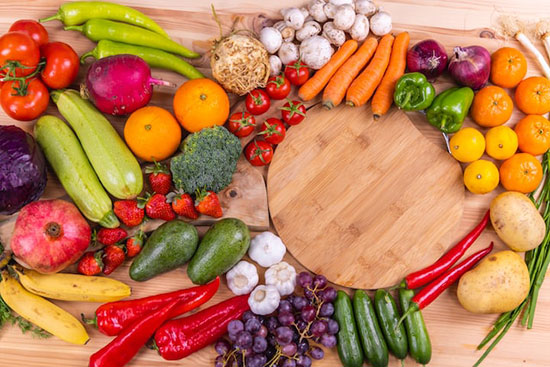
Photo on Pexel
When we read about Adam and Eve living in the Garden of Eden, we find that God’s original plan for humanity included a plant-based diet. He told the new humans:
“See, I have given you every herb that yields seed which is on the face of all the earth, and every tree whose fruit yields seed; to you it shall be for food” (Genesis 1:29, NKJV).
And it makes sense that God would have provided Adam and Eve with food that would sustainably grow for them. And in a perfect world without death of any kind, the slaughter of animals would’ve been incomprehensible.
It wasn’t until after the flood that God directly permitted humans to eat meat (Genesis 9:3-4). After the flood, the earth’s vegetation had been destroyed and would take time to grow back and be able to provide food once again.
For this reason, God instructed Noah to bring on the ark seven of every “clean” animal (Genesis 7:2-3).
(Leviticus 11 and Deuteronomy 14 explain in more detail what is considered “clean” meat.)
After the time of the flood, most people throughout the rest of the Bible ate meat. It was a necessity in a society where fresh food wasn’t always easy to come by and couldn’t be preserved for long periods of time. So to meet their dietary needs, they hunted animals to provide for their families.
In some places today, too, being a vegetarian may not be as practical or provide enough necessary nutrition due to a lack of vegetarian options. But many Adventists who live in places with easy access to fruits, vegetables, grains, and legumes year-round choose a vegetarian diet to eat as closely to the original diet as possible.
And modern science continues to show the benefits of eating this way, as we’ll look at in the next section.
What science says about a vegetarian diet
A balanced vegetarian diet, high in fruits, nuts, vegetables, and legumes, has numerous benefits for physical health, as revealed by research done over the past 20 years. Eating vegetarian is associated with:2
- Lower blood pressure, LDL cholesterol, and BMI
- Lower risk of heart disease
- Lower risk of cancer
- Lower risk of type 2 diabetes
- Lower risk of obesity3
Adventist Health Studies, conducted by Loma Linda University, have looked at the connection between lifestyle and health in Seventh-day Adventists. Adventist Health Study-1 surveyed more than 34,000 individuals over a 14-year period and found significant links between a high-fiber vegetarian diet and lower risks of cancer.
Adventist Health Study-2, which involved over 94,000 respondents, provided even more insight. It found that Adventists who did not eat meat had a smaller chance of developing type 2 diabetes.4
Another analysis of the data from the Adventist Health Study-2 found that Adventists who got protein from foods like lentils, nuts, and seeds had a lower risk of cardiovascular death than those who got protein from meat.5
The longevity of Adventists also speaks for their lifestyle and way of eating.
Researchers found that Adventist men in California who were vegetarian lived almost 10 years longer than their counterparts.6
In fact, Loma Linda, California, an area with a high concentration of Adventists, drew the attention of researcher Dan Buettner when he was studying “Blue Zones,” or places in the world where people live significantly longer (often to over 100 years old) and healthier lives than the average population.
He labeled Loma Linda as one of those Blue Zones because of the many Seventh-day Adventists there who are health conscious and eat a vegetarian or vegan diet.
Though diet is not the only factor for health and longevity in the Blue Zones, it’s a significant one. Most Blue Zone residents eat 95% vegetarian, consuming meat rarely and focusing on unprocessed, whole foods like legumes, vegetables, fruits, nuts, and whole grains. If they do eat meat, it’s generally lean meat, like fish, and little to no red meat.7
The health benefits of being vegetarian coincide with Adventists’ desire to honor God by being good stewards of the bodies God gave us, striving to maintain well-being in as many ways as possible. Let’s look at that next.
Spiritual reasons Adventists choose vegetarianism

Photo by Pablo Merchán Montes on Unsplash
Alongside striving toward eco-friendliness and kindness to animals, Adventists find healthy living to be a good way to serve and honor God to the best of our abilities. One passage we turn to in Scripture is 1 Corinthians 6:19-20:
“Or do you not know that your body is the temple of the Holy Spirit who is in you, whom you have from God, and you are not your own? For you were bought at a price; therefore glorify God in your body and in your spirit, which are God’s” (NKJV).
Because our bodies are “the temple of the Holy Spirit”—the means through which God speaks to our minds—we seek to care for our bodies, mentally, spiritually, and physically. So it makes sense for good health to be a priority.
Eating healthy is one aspect of that. It helps to keep our minds clear, making it easier to grow closer to God and serve Him more effectively.
The apostle Paul sums up this idea of honoring God in his letter to the Corinthian church:
“Therefore, whether you eat or drink, or whatever you do, do all to the glory of God” (1 Corinthians 10:31, NKJV).
And that’s really what it’s all about—serving God and orienting our lives toward Him. Making healthy choices supports that ultimate desire.
Choose an Online Bible Study
Want to keep learning? Find out more about Jesus, humanity, the plan of salvation, and how God loves you enough to sacrifice everything, just to give you a chance to choose Him.
Sometimes it can be hard to know where to start, that’s why we offer free, user-friendly, online Bible study options you can do anytime, anywhere, and at your own pace.
This online Bible school will take you through the major themes of Scripture, breaking down the Bible’s complex concepts into bite-sized pieces, which can lead you toward the answers of life’s more challenging questions.
Related Articles.


- “Adventist Health Study–2,” Loma Linda University. [↵]
- “Becoming a vegetarian,” Harvard Health Publishing. [↵]
- “Plant-based nutrition: Exploring Health Benefits for Atherosclerosis, Chronic Diseases, and Metabolic Syndrome—A Comprehensive Review,” Nutrients, July 2023. [↵]
- Sabaté, Joan, et al. “Unscrambling the relations of egg and meat consumption with type 2 diabetes risk,” National Library of Medicine, November 1, 2018. [↵]
- Tharrey, Marion, et al. “Patterns of plant and animal protein intake are strongly associated with cardiovascular mortality: the Adventist Health Study–2 cohort,” National Library of Medicine, October 1, 2018. [↵]
- “Findings for Longevity,” Loma Linda University Health. [↵]
- “Top Reasons Why Blue Zones are the Healthiest Places to Live,” Plant Whys. [↵]
More Answers

What Is “Soul Sleep,” and Is It Biblical?
“Soul sleep” is not the most common of theological phrases, but it does appear in enough places to bring about questions.
The Book of Luke’s Message: Jesus’ Love for All
Learn all about the book of Luke—context, themes, differences, and takeaways.

Como os adventistas lidam com a morte e os funerais
A maioria dos serviços funerários adventistas do sétimo dia são semelhantes aos de outras denominações protestantes, como Metodistas, Batistas ou Presbiterianos, mas você pode encontrar algumas diferenças ou nuances únicas.

Fé e Obras – Ambos Importam na Vida de um Cristão?
Em tantas religiões ao longo do tempo, indivíduos trabalham em direção à iluminação, salvação ou ao favor de uma divindade.
Imani na Matendo – Je! Yote Ni Muhimu katika Maisha ya Mkristo?
Katika dini nyingi katika nyakati zote, watu hufanya kazi kuelekea ufahamu, wokovu, au kibali kutoka kwa mungu.
¿Quién es el “Hijo del Hombre” en la Biblia?
Al llamarse a sí mismo el Hijo del Hombre, Jesús confirmó su papel como salvador de la humanidad. Aprende qué más nos dice este título sobre Jesús.

Kile Unachohitaji Kujua Kuhusu Majaribu na Jinsi ya Kuyapinga
Unajiuliza jinsi ya kupinga majaribu na kutoka kwenye mzunguko wa kushindwa? Yesu hutupa tumaini na kielelezo cha kukabiliana na majaribu ya shetani. Soma zaidi hapa!

Hatua Kuelekea kwa Kristo: Mwongozo wa Uhusiano na Yesu
Iwe unanza safari yako na Yesu Kristo, unarejea baada ya muda fulani, au umekuwa na uhusiano na Yesu kwa miaka, kutumia kitabu

Kwa nini Ukoo wa Yesu Kristo ni muhimu sana?
Je, umewahi kufuatilia ukoo wako nyuma ya vizazi kadhaa? Je, umewahi jaribu kujua kama mababu zako walifanya jambo lolote maarufu (au la kusikitisha)?
Por que a genealogia de Jesus Cristo é tão importante?
Já rastreou sua genealogia por várias gerações? Já tentou descobrir se seus antepassados fizeram algo famoso (ou infame)?

Can God Forgive Me?
In one way or another, every single one of us has made a sizeable mistake that we’re ashamed of.

Waadventista Wasabato wanaamini nini kuhusu Biblia?
Biblia ndiyo msingi wa kila kanuni na mafundisho ya Waadventista wa Sabato.
¿Por qué es tan importante la genealogía de Jesucristo?
¿Alguna vez has rastreado tu genealogía varias generaciones atrás? ¿Alguna vez intentaste descubrir si tus ancestros hicieron algo famoso (o infame)?
El camino a Cristo: Una guía para tener una relación con Jesús
El camino a Cristo: Una guía para tener una relación con JesúsYa sea que estés comenzando tu camino con Jesucristo, estés regresando después de algún tiempo lejos, o hayas tenido una relación con Jesús durante años, usar un libro, además de la Biblia, para guiar o...

Rey David: ¿Cómo fue un hombre conforme al corazón de Dios?
Guerra, derramamiento de sangre, asesinato, adulterio: todos estos crímenes ensombrecieron la vida de un hombre del Antiguo Testamento llamado David.
Mfalme Daudi: Alikuwaje Mtu Ambaye Aliupendeza Moyo wa Mungu?
Vita, umwagaji damu, mauaji, uzinzi—maovu haya yote yalifunika maisha ya mtu wa Agano la Kale aliyeitwa Daudi.
Quem é o “Filho do Homem” na Bíblia?
Ao se chamar de Filho do Homem, Jesus confirmou seu papel como salvador da humanidade. Saiba o que mais esse título nos diz sobre Jesus.

Wafahamu Watoto wa Ellen White
Ellen White, ambaye ni mmoja wa waanzilishi maarufu zaidi wa Kanisa la Waadventista wa Sabato, alikuwa na watoto wanne na mumewe, James: Henry Nichols, James Edson, William Clarence, na John Herbert.
“Caminho a Cristo”: Um Guia para um Relacionamento com Jesus
Quer você esteja apenas começando sua jornada com Jesus Cristo, esteja retornando após algum tempo afastado, ou tenha tido um relacionamento com Jesus por anos, usar um livro
Rei Davi: Como Ele Foi um Homem Segundo o Coração de Deus?
Rei Davi: Como Ele Foi um Homem Segundo o Coração de Deus?Guerra, derramamento de sangue, assassinato, adultério - todos esses crimes lançaram sombra sobre a vida de um homem do Antigo Testamento chamado Davi. No entanto, ele foi chamado de homem segundo o coração de...

The Book of Acts: A Simple Guide
The book of Acts is the fifth book in the New Testament. It’s a continuation of one of the Gospel accounts and an intimate look into the eventful early history of the Christian church.

O que Ellen White diz sobre a oração?
O que Ellen White diz sobre a oração?Você já teve um fardo que precisava contar a alguém, mas tinha medo de ser julgado se o fizesse? Não precisamos ter esse tipo de medo quando se trata de falar com Deus - uma prática espiritual chamada oração. Ellen G. White, uma...

Pumziko na Kuunganishwa Tena: Maana Halisi ya Kutunza Sabato
Biblia inatuambia kwamba tunatunza Sabato kwa kuepuka kazi. Mungu alitoa sheria hii kwa sababu alijua itatuimarisha na kutuletea furaha, pamoja na kutupa muda wa kuungana naye na kujipatia nguvu kutokana na maisha yetu yenye shughuli nyingi.

Jinsi Mafundisho ya Ellen White Yanavyoweza Kuboresha Afya Yako
Matibabu katika karne ya kumi na tisa yalisemekana kuacha “ugonjwa zaidi kuliko yalivyotibu” kwa matumizi yake ya kutoa damu na “dawa” kama zebaki na arseniki.
“Mwana wa Adamu” ni nani katika Biblia?
Kwa kujiita Mwenyewe Mwana wa Adamu, Yesu alithibitisha jukumu lake kama mwokozi wa wanadamu. Jifunze jambo jingine jina hili linachosema kuhusu Yesu.
Quem foram os filhos de Ellen White?
Ellen White, que é provavelmente a co-fundadora mais conhecida da Igreja Adventista do Sétimo Dia, teve quatro filhos com seu marido, James: Henry Nichols, James Edson, William Clarence e John Herbert.

Cómo Elena G. de White influenció el mensaje de salud adventista
Cómo Elena G. de White influenció el mensaje de salud adventistaLos Adventistas del Séptimo Día son conocidos por su énfasis en la vida saludable. Y Elena G. de White fue una influencia significativa en el desarrollo de esta prioridad y práctica entre los adventistas....
Como os Ensinos de Ellen White Podem Melhorar Sua Saúde
Como os Ensinos de Ellen White Podem Melhorar Sua SaúdeAssistência médica no século XIX era dito deixar "mais doenças do que levava embora" com o uso de sangrias e "remédios" como mercúrio e arsênico.1 À medida que as pessoas questionavam esses métodos, novas...
Cómo las enseñanzas de Elena G. de White pueden mejorar tu salud
La atención médica en el siglo XIX se decía que dejaba “más enfermedades de las que eliminaba” con su uso de sangrías y “medicamentos” como el mercurio y el arsénico.
Didn’t find your answer? Ask us!
We understand your concern of having questions but not knowing who to ask—we’ve felt it ourselves. When you’re ready to learn more about Adventists, send us a question! We know a thing or two about Adventists.