
Struggling to think straight? Wondering why you can’t remember that important tidbit you heard earlier today? Feeling like your emotions are about to explode?
These are just some of the symptoms that can reveal your need for rest—that simple yet incredibly effective way to strengthen and repair your body, have a clear mind, and balance your emotions.
But simple as it may be, getting enough rest can be something we so easily set aside.
One in three Americans don’t sleep enough—much less rest in other ways.
Our phones are always pinging, crises are demanding our attention, and responsibilities keep piling higher.
The result of our hurried culture is stress. Stress, in turn, affects sleep. And because people aren’t getting quality sleep, their bodies can’t cope with the stress.1 It becomes a vicious cycle.
You may relate to this cycle. Or you’re wondering about the importance of rest as an Adventist health principle. Either way, stay with us to look at:
How a lack of rest is hurting you

Image by Mojca-Peter from Pixabay
Our bodies cry out when we don’t get enough rest. Those cries can show up as exhaustion, sickness, weight gain, a foggy mind, or a depressed mood.
Let’s look at them in more detail:
Exhaustion
It’s more than just being tired. It’s the feeling that you can’t go on any longer. You feel drained without an ounce of energy left to give.
Sickness
Though the body is amazing at adapting to stress and a lack of rest, it eventually begins to break, too.
Without enough rest, the body’s immune system doesn’t function well. This puts us at greater risk of catching colds and other sicknesses.2
We also set ourselves up for chronic diseases—type 2 diabetes, heart disease, and obesity.3
Weight gain
You know that food you reach for late at night? Your favorite sour cream and onion chips. Or that pint (or half-gallon?) of Rocky Road ice cream.
There’s a reason you choose those foods late at night.
When people don’t get enough sleep, they tend to have less “dietary restraint” and eat more calories than they need. As a result, they have a greater chance of becoming overweight or obese.4
Foggy mind
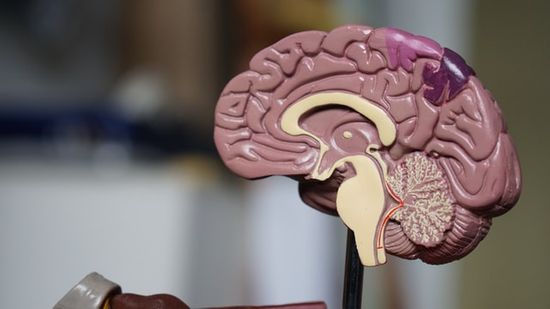
Photo by Robina Weermeijer on Unsplash
The frontal lobe is the part of our brain responsible for analysis, decision-making, and other high-level thought processes. But lack of adequate sleep decreases the activity in this area.5 This makes us less able to focus and remember things.6
When especially tired, the brain begins to experience “microsleeps”—moments of sleep that cause a lapse in attention.7 This is often what happens when drivers fall asleep at the wheel.
Depressive mood
Stress rewires the brain, decreasing frontal lobe activity and ramping up the emotional centers of the brain.8 It’s not surprising then that sleep deprivation and lack of rest affect mood! One study reported that people who struggled with insomnia tended to also have more depressive symptoms.9
By this point, you’re probably ready to make rest a priority in your life. Let’s talk about the benefits you’ll experience.
How rest will benefit you
When we live restful lives, our bodies thank us physically, mentally, and spiritually. We have less illness, a greater ability to cope with stress, and better weight management. We also have clearer minds to focus, make better decisions, learn, and manage moods.
And when our bodies and minds are thriving, our spiritual lives feel the benefit, too. For this reason, Seventh-day Adventists include rest as one of their eight principles of health. Rest allows us to experience the whole-person health God intends for us.
Physical benefits
Going to sleep at regular times triggers the body to produce a hormone called melatonin in response to lower levels of light. This hormone regulates the circadian rhythm.10
Melatonin also:11
- Helps repair the body
- Slows aging
- Boosts the body’s ability to fight disease
- Prevents tumor growth
- Lowers cholesterol and blood pressure levels
- Lowers the risk of heart rhythm problems
Safety is also a major benefit of rest. A rested person will stay awake and pay better attention, preventing driving accidents or other mistakes.
And did we mention that you’ll just feel more energetic? That’s a plus, in and of itself!
Mental benefits
Proper rest is just as important for mental health as it is for physical health. During the sleep cycle, the body goes through five stages with each cycle lasting about 90 minutes. The last of these stages is REM (rapid-eye movement) sleep.12 During REM, the brain processes and consolidates memories and makes connections in the brain.13
Thus, plenty of rest results in:
- Repaired neurons (nerve cells)
- Better memory
- Greater learning ability
- Better judgment14
- Increased focus15
- Better moods and emotional control16
Spiritual benefits

Photo by Gift Habeshaw on Unsplash
Humans are holistic beings whose physical, mental, and spiritual facets are connected. This means that the health of the body and mind affects our connection with God.
By taking time to rest, we’re able to quiet our minds for spiritual practices, such as prayer, study of the Bible, and meditation on Scripture.
Another aspect of spiritual health is self-control and choosing between right and wrong.
Adequate rest helps with that, too. Here’s how:
Sleep deprivation causes people to have greater emotional responses, decreasing self-control. But getting enough sleep increases discernment and the ability to manage ourselves.17
Now, it’s time to get practical. What kind of rest do we need? And how can we incorporate it into our already-crazy lives?
The three types of rest you need
Getting sufficient rest means being intentional about three different types (mentioned by Dr. Neil Nedley in his book, The Lost Art of Thinking):
- Daily rest
- Weekly rest
- Relaxation
Daily rest

Photo by Maks Styazhkin on Unsplash
Daily rest is the one we think of first: sleep. Our bodies need to go through four to five cycles of the stages of sleep. For adults, this amounts to about 7–9 hours of sleep per night.
Follow these steps to get restful sleep and better sleep quality:
- Be consistent with your sleep schedule. Decide on your bedtime and count forward eight hours to determine your wake-up time.
- Catch the hours before midnight. These hours of rest will ensure that you get plenty of deep sleep.
- Avoid alcohol and caffeine. Alcohol may have a relaxing effect, but it actually disrupts sleep quality. Caffeine is a stimulant that could hinder you from sleeping well too, especially if consumed within six hours of bedtime.
- Get daylight and exercise, but don’t exercise too close to bedtime or you may feel wound up.
- Avoid eating less than three hours before bedtime. Your stomach won’t be able to rest during the night if it’s also trying to digest food!
- Turn off bright lights and blue light from screens, as they may affect melatonin production.
- Unwind with a bedtime routine. This can include deep breathing techniques, herbal tea, prayer, stretching, or a warm shower.
- Make your bedroom dark, quiet, and cool. Bright lights and noise can disrupt sleep, while being too warm can prevent you from sleeping deeply.
Weekly rest
Another type of rest our bodies need is a 24-hour period every week to come apart from the daily humdrum. It’s a time to focus on what’s most important in life.

The body runs on a seven-day cycle, as shown by medical research. Certain conditions—like swelling after surgery and chances of organ transplants being rejected—are heightened on the 7th and 14th days.18
But where did this cycle come from?
It comes from Creation week. When God finished making the earth, He rested on the seventh day, known as the Sabbath (Genesis 2:2–3; Exodus 20:8–11). He gave this rest day for us to turn away from secular activity and draw closer to Him and others. It’s for our benefit (Mark 2:28).
Studies of Seventh-day Adventists, who believe in keeping the Sabbath, found that those who didn’t perform secular activities on that day experienced greater mental health.
And even the non-religious tout the value of having one day to disconnect from technology and the demands of society.19
Relaxation
Taking time to relax may seem counterproductive. But it’s not. Even when we take a break from work and the hustle, the brain is unconsciously working and solving problems.
An article in Scientific American describes it like this:
“Downtime replenishes the brain’s stores of attention and motivation, encourages productivity and creativity, and is essential to both achieve our highest levels of performance and simply form stable memories in everyday life.”

Photo by Jessica Rockowitz on Unsplash
Here are some relaxation ideas:
- Unplugging from technology for a planned amount of time.
- Take a short nap (10–20 minutes).
- Spend time outdoors (e.g. exercising, strolling in nature, picnicking, or hiking).
- Go out to lunch with a friend and have a quality conversation.
- Take a restful vacation and time off (meaning don’t cram it too full of activities!).
The key is to find an activity that rejuvenates you.
Going to the source of true rest
If you’re finding yourself fatigued, burnt out, or struggling with other health challenges, rest may be the key to restoring you on every front—body, mind, and spirit.
So, take a look at the three different types of rest again. Which ones do you need to add into your life?
As you do so, your body will thank you. And you’ll be able to face each day with strength, clarity, and peace.
But above all, remember, God is the giver of true rest. Out of love, He gave us the Sabbath for weekly rest, but He also invites us each day:
“Come to Me, all who are weary and heavy-laden, and I will give you rest” (Matthew 11:28, NASB).
Choose an Online Bible Study
Want to keep learning? Find out more about Jesus, humanity, the plan of salvation, and how God loves you enough to sacrifice everything, just to give you a chance to choose Him.
Sometimes it can be hard to know where to start, that’s why we offer free, user-friendly, online Bible study options you can do anytime, anywhere, and at your own pace.
This online Bible school will take you through the major themes of Scripture, breaking down the Bible’s complex concepts into bite-sized pieces, which can lead you toward the answers of life’s more challenging questions.
- Nedley, Neil, The Lost Art of Thinking (Nedley Publishing, Ardmore, OK, 2011), p. 260. [↵]
- Ibid., p. 261. [↵]
- “Sleep and Chronic Disease,” Centers for Disease Control and Prevention, August 8, 2018. [↵]
- Markwald et al., “Impact of Insufficient Sleep on Total Daily Energy Expenditure, Food Intake, and Weight Gain,” PNAS, vol. 110(14), 2013, pp. 5695–5700. [↵]
- Nedley, Neil, The Lost Art of Thinking (Nedley Publishing, Ardmore, OK, 2011), p. 258–259. [↵]
- P. Alhola and P. Polo-Kantola, “Sleep Deprivation: Impact on Cognitive Performance,” Neuropsychiatr Dis Treat., vol. 3(5), 2007, pp. 553–567. [↵]
- Krause et al., “The Sleep-Deprived Human Brain,” Nat Rev Neurosci, vol. 18(7), 2017, pp. 404–407. [↵]\
- “Protect Your Brain from Stress,” Harvard Health Publishing, health.harvard.edu, Feb. 15, 2021. [↵]
- Hayley et al., “The Relationships Between Insomnia, Sleep Apnoea and Depression,” Aust N Z J Psychiatry, vol. 49(2), 2015, pp. 156–70. [↵]
- Nedley, Neil, The Lost Art of Thinking (Nedley Publishing, Ardmore, OK, 2011), p. 262. [↵]
- Ibid., p. 262. [↵]
- “Natural Patterns of Sleep,” Harvard Medical School. [↵]
- Nedley, Neil, The Lost Art of Thinking (Nedley Publishing, Ardmore, OK, 2011), p. 258 [↵]
- Ibid., p. 258 [↵]
- A. Krause et al., “The Sleep-Deprived Human Brain,” Nat Rev Neurosci, vol. 18(7), 2017, pp. 404–407. [↵]
- Hayley et al., “The Relationships Between Insomnia, Sleep Apnoea and Depression,” Aust N Z J Psychiatry, vol. 49(2), 2015, pp. 156–70. [↵]
- Gujar et al., “Sleep Deprivation Amplifies Reactivity of Brain Reward Networks,” The Journal of Neuroscience, vol. 31(12), 2011, pp. 4466–4474. [↵]
- Nedley, Neil, The Lost Art of Thinking (Nedley Publishing, Ardmore, OK, 2011), p. 264. [↵]
- Miller, Emily, “The Science of Sabbath,” Religion News Service, Sept. 25, 2019. [↵]
Related Articles



More Answers

Waadventista wa Sabato Wanaamini Nini Kuhusu Pambano Kuu (Wema na Uovu)?
Pambano Kuu” ni msemo ambao Waadventista wa Sabato kawaida huutumia kuelezea mgogoro wa kiroho wa ulimwengu kati ya nguvu za mema (Mungu) na nguvu za uovu au dhambi (Shetani/iblis).

Silaha Zote za Mungu Kama Ilivyoelezwa Katika Waefeso 6
Katika Waefeso 6, Mtume Paulo alikuwa akisaidia watu kuelewa maana ya kujilinda katika vita vya kiroho (Waefeso 6:10-18).
A Armadura de Deus conforme Descrita em Efésios 6
Em Efésios 6, o Apóstolo Paulo estava ajudando as pessoas a entender o que significa se defender em uma guerra espiritual (Efésios 6:10-18).
¿Qué creen los Adventistas del Séptimo Día sobre el gran conflicto (bien vs. mal)?
El “gran conflicto” es la frase que los Adventistas del Séptimo Día suelen usar para describir el conflicto espiritual cósmico entre las fuerzas del bien (Dios) y las fuerzas del mal o del pecado (Satanás/el diablo).

¿Por qué muchos Adventistas del Séptimo Día eligen una dieta vegetariana?
¿Por qué muchos Adventistas del Séptimo Día eligen una dieta vegetariana?Puede que tengas un amigo adventista que sea vegetariano, o tal vez estés asistiendo a una Iglesia Adventista del Séptimo Día por primera vez y notes que en la comida compartida no hay carne....

What is Jesus’ Parable of the Sower About?
The parable of the sower is ultimately about how people responded to Jesus Christ and His message of the kingdom of God—the Gospel.
O que os Adventistas do Sétimo Dia acreditam sobre o Grande Conflito (Bem vs. Mal)?
O “Grande Conflito” é a frase que os Adventistas do Sétimo Dia normalmente usam para descrever o conflito espiritual cósmico entre as forças do bem (Deus) e as forças do mal ou do pecado (Satanás/o diabo).

Was Jesus Ever Hypocritical? Learn What the Bible Says.
Was Jesus Ever Hypocritical? Learn What the Bible SaysMany undesirable traits are associated with hypocrisy. But overall, hypocrites intentionally try to make others believe they uphold or represent a certain belief system, character trait, lifestyle, etc., when in...

Kukatishwa Tamaa Kukuu na Kile Tunachojifunza
Wafuasi wa Miller walitabiri kurudi kwa Kristo Oktoba 22, 1844, lakini Yesu hakuja kamwe. Tukio lingine lilitokea. Gundua kilichotokea kweli na Kukatishwa Tamaa pakubwa kunaweza kutufundisha leo.

When in Doubt: 7 Ways Christians Can Manage Uncertainty
Few things in life are truly certain. And no matter how convinced some people can appear on the surface, no one is immune to doubt.
El gran chasco y las lecciones que nos enseña
Los Milleritas predijeron el regreso de Cristo el 22 de octubre de 1844, pero Jesús nunca llegó. Ocurrió otro evento. Descubre lo que realmente sucedió y qué puede enseñarnos hoy El gran chasco.

Is Jesus the Same Being as Michael the Archangel?
Many Christians have wondered at the mysterious identity of Michael the Archangel.
A Grande Desapontamento e Lições que nos Ensina
Os Milleritas previram o retorno de Cristo em 22 de outubro de 1844, mas Jesus nunca chegou. Outro evento ocorreu. Descubra o que realmente aconteceu e o que o Grande Desapontamento pode nos ensinar hoje.
James Springer White, Co-Fundador da Igreja Adventista do Sétimo Dia
James Springer White (1821–1881) foi uma figura chave na Igreja Adventista do Sétimo Dia e marido de Ellen G. White.
James Springer White, cofundador de la Iglesia Adventista del Séptimo Día
James Springer White (1821–1881) fue una figura clave en la Iglesia Adventista del Séptimo Día y el esposo de Elena G. de White.

Kila Kitu Unachohitaji Kujua Kuhusu Chakula cha Siku ya Sabato
Kwa Waadventista Wa Sabato, kushiriki chakula cha Siku ya Sabato pamoja na marafiki na familia ni moja ya sehemu muhimu na ya kumbukumbu ya Sabato.
Nini Maana ya “Mwadventista”?
Waadventista wa Sabato ni dhehebu la Kikristo la Kiprotestanti wanaoshikilia Sabato ya siku ya saba kama ilivyoandikwa katika Biblia.

How to Have a Personal Relationship with Jesus: A 10-Step Guide
How to Have a Personal Relationship with Jesus: A GuideNo matter who you are, you’re surrounded by relationships. Friends, family, colleagues, acquaintances...they all play a part in our lives, for better or worse. So you’re surely aware of a lot of the components...

Biblia Ina Maana Gani Inaposema Yesu ni Mwana wa Mungu?
Biblia inapomwita Yesu Mwana wa Mungu inarejelea uungu wake. Jifunze ni nini kinachofanya hili kuwa muhimu na kinahusianaje na wokovu.
“Go and Sin No More”—What Did Jesus Mean?
These well-known words of Jesus Christ come from two New Testament stories in the book of John—a man healed by the Pool of Bethesda (John 5) and a woman caught in adultery (John 8).

Quais são as Mensagens dos Três Anjos em Apocalipse 14?
As mensagens dos três anjos em Apocalipse 14 advertem o mundo a adorar a Deus, deixar a confusão religiosa e evitar a adoração de tradições humanas em vez dos mandamentos de Deus.

Je! Tunaweza Kuitunza Siku Yoyote ya Wiki Kama Sabato?
Katika sura za kwanza kabisa za Biblia, tunamwona Mungu akianzisha kumbukumbu ya kila wiki na siku ya mapumziko, inayoitwa Sabato (Mwanzo 2:2-3).
¿Cuáles son los mensajes de los tres ángeles en Apocalipsis 14?
Los mensajes de los tres ángeles en Apocalipsis 14 invitan al mundo a adorar a Dios, abandonar la confusión religiosa y evitar la adoración de tradiciones humanas en lugar de los mandamientos de Dios.
Por que muitos Adventistas do Sétimo Dia escolhem uma dieta vegetariana?
Embora nem todo adventista seja vegetariano, muitos evitam completamente o consumo de carne para viver de forma mais saudável, buscando honrar a Deus física, espiritual e mentalmente.

Understanding the Miracles of Jesus Christ
Understanding the Miracles of Jesus ChristWhat do you think of when someone says something is “a miracle”? Maybe you think of an unexpected recovery, surviving a dangerous accident, or getting an answer to a seemingly impossible prayer. Simply put, miracles are...
O que significa “Adventista”?
O que significa "Adventista"?Os Adventistas do Sétimo Dia são uma denominação cristã protestante que observa o sábado bíblico do sétimo dia. A partir dessa crença, eles obtêm a primeira parte de seu nome. Mas e quanto à segunda parte - "Adventista"? “Adventista”...
¿Podemos guardar el sábado bíblico cualquier día de la semana?
En los primeros capítulos de la Biblia, encontramos a Dios estableciendo un memorial semanal y día de reposo, conocido como el sábado (Génesis 2:2-3).
Podemos guardar o Sábado em qualquer dia da semana?
Nos primeiros capítulos da Bíblia, encontramos Deus estabelecendo um memorial semanal e dia de descanso, conhecido como o Sábado (Gênesis 2:2-3).
O que significa a Bíblia quando chama Jesus de Filho de Deus?
Quando a Bíblia chama Jesus de Filho de Deus, está se referindo à Sua divindade. Saiba o que torna isso tão significativo e o que tem a ver com a salvação.
Didn’t find your answer? Ask us!
We understand your concern of having questions but not knowing who to ask—we’ve felt it ourselves. When you’re ready to learn more about Adventists, send us a question! We know a thing or two about Adventists.