
The most accurate Bible possible would be one that’s printed in its original languages—Hebrew and Greek. But since most of us are not Hebrew or Greek scholars, the next best option is an English Bible translation that most closely reflects the original language and intent while also presenting these ideas in a practical and understandable way.
You might feel overwhelmed with all the options out there—about 900 in the English language.1 That’s almost like a GPS giving you hundreds of routes to choose from!
But the process doesn’t have to be difficult. By understanding the three main categories of Bibles, you’ll find a version that suits your needs and helps you come to know Jesus better.
Here, we’ll cover:
- Why are there so many Bible versions?
- What are the different types of Bible translations?
- How to choose the best Bible version for you
Let’s first touch on why we have so many versions in the first place.
Why are there so many Bible versions?

Photo by Tim Wildsmith on Unsplash
The number of different Scripture translations has mushroomed in the past centuries as original manuscripts have been discovered and repeatedly translated.
The Old Testament was written in Hebrew, and the New Testament in Greek and Aramaic. After the first century, these languages became less and less common because Latin was the primary language of the Roman Empire.
And with the spread of Christianity to different countries, the Hebrew and Greek texts soon needed to be translated into those languages as well.
The result was many different manuscripts that have been used in recent centuries for modern translations.
As we’ll see next, those versions are divided into three main categories. The most accurate ones will be those translated from the original Hebrew and Greek manuscripts.
What are the different types of Bible translations?
Bible translations fall into three categories based on how closely they reflect the original wording of Greek and Hebrew manuscripts. They are:
1. Literal translations
2. Dynamic equivalents
3. Paraphrases
Literal translations
Literal, or word-for-word, translations seek to translate each Hebrew and Greek word in as literal a manner as possible. They are also called formal equivalents.
This can result in text that’s a little more clunky or difficult for modern readers to understand.
The reason for this is the differences between the Bible’s original languages and English. Sometimes, Greek and Hebrew words have multiple meanings in English, making it challenging for translators to know which English word to use.
And there are more than just word differences between these languages. There are variations in sentence structure, emphasis, and punctuation, too.
Even so, literal translations are the most accurate Bibles for in-depth study. Having additional resources on hand can also help with understanding what the original Bible writers meant. Try out a Strong’s Exhaustive Concordance of the Bible or Hebrew-English and Greek-English lexicons.
The following are some of the most popular translations in this category.
The King James Version (KJV)

Photo by Humble Lamb on Unsplash
Date translated: 1611
- Translated/produced by: Bible scholars of the Church of England; commissioned by King James
- Pros:
- Poetic writing style
- Traditional Bible for centuries
- Most popular Bible in use today
- Considered the most accurate translation for its time
- Cons:
- An old English version with archaic language. Some words had very different connotations back then.
- Harder to understand
The Revised Standard Version (RSV)
- Date published: 1952
- Translated/produced by: National Council of the Churches of Christ
- Pros:
- First translation to use the Dead Sea Scrolls
- Updated language
- Cons:
- Possible concerns about the theological viewpoints of the translators and bias in the text
- Can be hard to find printed copies
The New American Standard Bible (NASB)
- Date published: 1963
- Translated/produced by: The Lockman Foundation
- Pros:
- Highly accurate
- Contemporary English
- Translation notes with literal meanings of words and other possible translations
- Con:
- More literal wording that may not flow like modern wording
- Read the NASB for free.
The Amplified Bible (AMP)
- Date published: 1965
- Translated/produced by: Zondervan and the Lockman Foundation
- Pros:
- Additional meanings of words and phrases within the text to enhance the understanding
- One of the most easy-to-understand literal translations
- Con:
- The extra phrasing in brackets and parentheses can make the text feel cluttered, especially when reading out loud
The New King James Version (NKJV)
- Date published: 1982
- Translated/produced by: 130 Bible scholars, pastors, and theologians; published by Thomas Nelson
- Pros:
- Updated version of the KJV (updated grammar and wording while retaining the traditional poetic beauty of the KJV)
- Easier read with the older style
- Con:
- Still contains many archaic phrases
The English Standard Version (ESV)
- Date published: 2001
- Translated/produced by: Crossway; over 100 scholars and pastors
- Pros:
- More modern wording
- Keeps some of the most-loved verses close to the KJV translation
- Cons:
- Some hard-to-read sentence structure
- Concerns about possible theological bias (since the RSV was referenced in translations)
Dynamic equivalents
Dynamic equivalents, or thought-for-thought translations, convey the message of the Bible’s text rather than the exact words. Scholars have sought to use cultural, linguistic, and historical background to express in modern language what the original author intended.
While these translations are generally easier to read and understand, they’re not perfect. Every scholar comes to their work with a theological bias, so these translations may potentially express more bias than word-for-word translations.
But this fact doesn’t mean we should avoid dynamic equivalents.
Instead, they can make for enjoyable devotional reading in conjunction with other Bible study tools and more literal translations.
Check out these ones:
The New International Version (NIV)
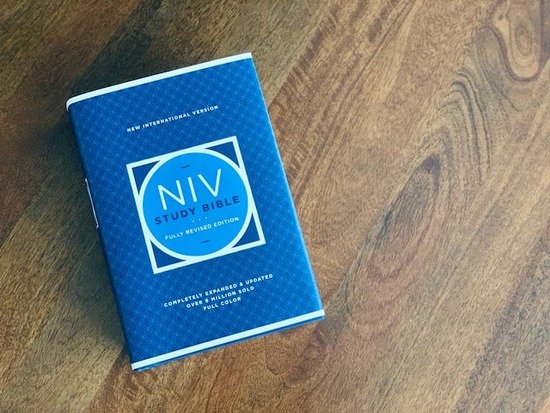
Photo by Tim Wildsmith on Unsplash
Date published: 1978
- Translated/produced by: Biblica (International Bible Society)
- Pros:
- One of the most popular, easy-to-read, modern versions of the Bible
- Uses word-for-word and thought-for-thought translation, striking a balance between
- Cons:
- Wording isn’t always the most poetic
- Translators sometimes added words that weren’t original, making it seem interpreted rather than translated
The New Living Translation (NLT)
- Date published: 1996
- Translated/produced by: Tyndale House Publishers
- Pros:
- A highly accessible version
- Changes traditional metaphors or terms to modern-day equivalents for easier understanding
- Cons:
- The colloquial language can make it seem far away from the original text
- Its use of modern terms and metaphors may change the originally intended meaning
God’s Word Translation (GW)
- Date published: 1995
- Translated/produced by: God’s Word to the Nations Society
- Pros:
- Printed in a single-column format for easy reading.
- Displays the reading in the way the Bible writers would speak if they lived today
- Con:
- Sometimes interprets phrases instead of translating them
- Read the GW translation for free.
The Christian Standard Bible (CSB)
- Date published: 2017
- Translated/produced by: Holman Bible Publishers
- Pros:
- An updated version of the Holman Christian Standard Bible, which is known as an “optimal equivalence” because it contains both word-for-word and thought-for-thought translation throughout
- Uses gender-neutral terms when the original language would also refer to both genders
- Easy-to-read text
- Con:
- Uses some unconventional translating ideas, like translating “beer” for “strong drink”
Paraphrases
Paraphrases are not translations in the strictest sense. Rather, they involve interpretation, rewording, and expanding upon the original text of the Bible to make it more understandable.
Paraphrases tend to have a greater potential for bias, particularly since they’re often the work of one individual rather than a committee of Bible scholars.
For these reasons, they work best when combined with more literal translations. But they can be a great addition to a devotional routine or study.
Here are four common paraphrases:
The Living Bible (TLB)
- Date published: 1971
- Produced by: Kenneth Taylor
- Pro:
- Seeks to communicate the meaning of each passage in as simple a way as possible
- Cons:
- Less poetic
- Potential bias and interpretation that may not be accurate to the originally-intended meaning
Good News Translation (GNT)
- Date published: 1976
- Produced by: Dr. Robert Bratcher together with a committee appointed by the American Bible Society
- Pros:
- Accessible to non-native English speakers
- Easy to read and understand
- Con:
- Potentially strays too far from the original meaning of the text
The Clear Word
- Date published: 1994
- Produced by: Jack J. Blanco
- Pro:
- A devotional paraphrase from an Adventist perspective
- Con:
- Not an actual Bible
- Learn more about the Clear Word.
The Message (MSG)
- Date published: 2002
- Produced by: Eugene H. Peterson
- Pros:
- Easy-to-read, colloquial language
- Can give a different perspective to verses
- Cons:
- A very loose translation of the original with heavy interpretation
- Some of the idioms used are American
How to choose the best Bible version for you

Photo by Kelly Sikkema on Unsplash
As we’ve already mentioned, the best Bible translation will be as close as possible to the originally intended meaning of its authors. Generally, word-for-word translations fit this criterion best.
Your purpose will also affect which one you should choose.
Let’s go through a few different purposes and the Bible versions that might work best for you:
- Bible study. If you are looking to dig deep into the Bible, a word-for-word translation (such as the NASB or the KJV) is ideal since it sticks closest to the original language. Though not always the easiest to read, Bible dictionaries and concordances can help remedy that challenge.
- Devotional reading. When looking for simple encouragement for your day and ways to connect with God, pick a Bible you can easily understand. Depending on what you are most used to hearing, this version could be a word-for-word translation or a dynamic equivalent.
- Memorization. Remember Psalm 23’s classic “thy rod and thy staff they comfort me”? Some versions are written very poetically and are the standard you hear quoted. The King James Version is one of the most famous.
- Reading aloud. Choose a translation that allows the words to easily roll off your tongue and that is easy for listeners to understand. Thought-for-thought translations usually fit this bill because they are written in modern English.
- Secondary Bible. You may already have a favorite Bible but want another for comparison. A good way to balance your selection is to pick the opposite type of Bible from the one you have now. If you use a thought-for-thought version, pick a word-for-word translation and vice versa.
- Children’s Bible. A thought-for-thought version with simpler language may be the best for children who might struggle with more literal wording.
The key is getting to know the ultimate author of the Bible
Due to the challenges of translating from language to language, no Bible translation will ever be able to fully convey the originally intended meaning of all its passages.
After all, Scripture was written by finite humans about an infinite God. So there’s always more to learn.
But the good news is that this fact hasn’t obscured the message in the Word of God. Through the years, God has used His people to preserve this valuable book so that it could continue to be transformative in the lives of many.
So instead of getting hung up on the details, use the principles listed here to pick an accurate and readable Bible.
Then, focus on what’s most important: getting to know the author of the Bible. He has promised to give us the Holy Spirit to guide us to all truth (John 16:13).
- “Number of English Translations of the Bible,” American Bible Society. [↵]
Related Articles


More Answers

Quem Foram os Juízes de Israel no Antigo Testamento?
Quem Foram os Juízes de Israel no Antigo Testamento?Tempos de crise exigem homens e mulheres de ação. Os israelitas, recém-estabelecidos na Terra Prometida, encontraram-se nesses tempos. À medida que nações inimigas atacavam e oprimiam as tribos, eles clamavam a Deus...

¿En qué se diferencian los Adventistas del Séptimo Día de otros protestantes?
¿En qué se diferencian los Adventistas del Séptimo Día de otros protestantes?Como denominación cristiana protestante, la Iglesia Adventista del Séptimo Día considera la Biblia como la regla suprema de fe y a Jesucristo como el único camino a la salvación. Tenemos...
Como os Adventistas do Sétimo Dia São Diferentes de Outros Protestantes?
Como os Adventistas do Sétimo Dia São Diferentes de Outros Protestantes?Como uma denominação cristã protestante, a Igreja Adventista do Sétimo Dia considera a Bíblia como o guia supremo e vê Jesus Cristo como o único caminho para a salvação. Temos algumas diferenças...

O que é ASI (Associação de Empresários e Profissionais Adventistas)?
O que é ASI (Associação de Empresários e Profissionais Adventistas)?ASI, que significa Associação de Empresários e Profissionais Adventistas (tradução adaptada), é uma organização baseada em associação que oferece apoio aos membros adventistas (profissionais...

Jesús y la Mujer en el Pozo: Derribando Barreras
El encuentro de Jesús con la mujer en el pozo revela su sentir por las personas heridas y su deseo de derribar prejuicios. Esta página analiza cómo Jesús se acercó a ella.

Revealing The True Meaning of The Parable of The Rich Man & Lazarus
Learn the real point behind one of Jesus’ most vivid parables.
O que são as Bem-Aventuranças (E o que significam)?
O que são as Bem-Aventuranças (E o que significam)?As Bem-Aventuranças, encontradas no início do Sermão da Montanha de Jesus no Evangelho de Mateus, são o manifesto do reino de Jesus. Elas descrevem a maneira como Seu reino funciona e o que significa ser um de Seus...

Líderes de la iglesia: ¿Cuál es el rol de un pastor Adventista?
Líderes de la iglesia: ¿Cuál es el rol de un pastor Adventista?¿Cuál es el rol de un pastor en la iglesia Adventista? La posición en sí misma, al menos en lo que respecta a una congregación local, no es muy diferente de la de los pastores en otras denominaciones...
ASI ni Nini (Huduma na Viwanda vya Waadventista vya Kibinafsi)?
ASI ni Nini (Huduma na Viwanda vya Waadventista vya Kibinafsi)?ASI, ambayo inayofupisha maneno (Huduma na Viwanda vya Waadventista vya Kibinafsi), ni shirika la uanachama linalotoa msaada kwa wainjilisti wa Kiadventista (wataalamu wa Kanisa la Waadventista wa Sabato...

Ellen White Alisema Nini Kuhusu Unabii wa Nyakati za Mwisho?
Tunaweza kusoma katika Maandiko kuhusu mfululizo wa matukio na dalili zinazoongoza hadi Ujio wa Pili wa Yesu Kristo.

Safari na Utume wa Ellen G. White Ulimwenguni
Safari na Utume wa Ellen G. White UlimwenguniIngawa Ellen White, mwanzilishi mwenza wa Kanisa la Waadventista wa Sabato, anajulikana zaidi kwa huduma yake nchini Marekani, pia alisafiri kwenda nchi nyingine kumi na mbili katika maisha yake—hili lilikuwa jambo kubwa...

Yote Kuhusu Wainjilisti wa Vitabu wa Kiadventista
Kanisa la Waadventista wa Sabato hutumia mbinu mbalimbali kusambaza tumaini la injili duniani.
¿Qué es ASI (Servicios e Industrias de Laicos Adventistas)?
¿Qué es ASI (Servicios e Industrias de Laicos Adventistas)?ASI, que significa Servicios e Industrias de Laicos Adventistas, es una organización basada en membresía que brinda apoyo a los laicos adventistas (profesionales Adventistas del Séptimo Día que no son...
¿Qué dijo Elena G. de White sobre la profecía de los últimos tiempos?
¿Qué dijo Elena G. de White sobre la profecía de los últimos tiempos?Podemos leer en las Escrituras acerca de la serie de eventos y señales que conducen a la segunda venida de Jesucristo. Y suena bastante intenso, por decir lo menos. La naturaleza simbólica del...
O que Ellen White disse sobre a profecia dos tempos finais?
O que Ellen White disse sobre a profecia dos tempos finais?Podemos ler nas Escrituras sobre a série de eventos e sinais que antecedem a segunda vinda de Jesus Cristo. E, para dizer o mínimo, isso soa bastante intenso. A natureza simbólica da linguagem da profecia...

Meaning of the Parable of the Two Sons in Matthew 21
Meaning of the Parable of the Two Sons in Matthew 21The parable of the two sons in Matthew 21:28-32 is about a father who instructs his sons to work in the family vineyard. The first son refuses to work but later has a change of heart and obeys. The second son says...
Viagens e Missão Mundial de Ellen G. White
Viagens e Missão Mundial de Ellen G. WhiteEmbora Ellen White, cofundadora da Igreja Adventista do Sétimo Dia, seja mais conhecida por seu ministério nos Estados Unidos, ela também viajou para outros doze países durante sua vida — uma grande conquista no século XIX,...

Joseph Bates na Nafasi Yake katika Kanisa la Waadventista
Joseph Bates na Nafasi Yake katika Kanisa la WaadventistaJoseph Bates alikuwa baharia aliyegeuka kuwa mhubiri ambaye alijiunga na Harakati ya Miller na kusubiri Ujio wa Pili wa Yesu kutokea mwaka 1844. Licha ya kukatishwa tamaa wakati hili halikutokea, Bates...

Je, Wasabato Husherehekea Sikukuu?
Je, Wasabato Husherehekea Sikukuu?Je unajiuliza ikiwa mwanafunzi mwenzako au mfanyakazi mwenzako Mwadventista husherehekea sikukuu kama wewe? Labda ungependa kumshirikisha kwenye sherehe fulani, lakini pia unataka kuheshimu imani yake. Kwa hiyo, huna uhakika wa jinsi...

O Que a Bíblia Diz Sobre a Segunda Vinda de Jesus Cristo
Curioso para saber o que a Bíblia diz sobre a Segunda Vinda de Jesus Cristo? Vamos abordar os versículos-chave e o que eles significam.

Waadventista Wanaamini Nini Kuhusu Imani na Matendo?
Waadventista Wanaamini Nini Kuhusu Imani na Matendo?Waadventista wanaamini tunaokolewa kwa imani, ambayo ni imani na tumaini tulilonalo kwa Yesu Kristo kutuokoa kutoka dhambini. Yesu, basi, anatupa uwezo wa kuishi kwa utii wa amri za Mungu na kuwahudumia wengine kwa...
Todo sobre los colportores Adventistas del Séptimo Día
Todo sobre los colportores Adventistas del Séptimo DíaLa Iglesia Adventista del Séptimo Día utiliza una variedad de métodos para difundir la esperanza del evangelio al mundo. Una de estas formas es a través del colportaje, también llamado “venta puerta a puerta” o...
Tudo Sobre Colportores Adventistas do Sétimo Dia
A Igreja Adventista do Sétimo Dia usa uma variedade de métodos para espalhar a esperança do evangelho ao mundo.
Los viajes y la misión mundial de Elena G. de White
Los viajes y la misión mundial de Elena G. de WhiteAunque Elena G. de White, cofundadora de la Iglesia Adventista del Séptimo Día, es más conocida por su ministerio en los Estados Unidos, también viajó a otros doce países durante su vida, un gran logro en el siglo XIX...

Mikutano ya Injili ya Waadventista ni Nini?
Kanisa la Waadventista wa Sabato linaweka mkazo mkubwa katika kushiriki injili kupitia uinjilisti, yaani kushiriki injili kupitia mahubiri, mafundisho, na ushuhuda.
Joseph Bates y su papel en la Iglesia Adventista del Séptimo Día
Joseph Bates y su papel en la Iglesia Adventista del Séptimo DíaJoseph Bates fue un marinero que se convirtió en predicador, se unió al Movimiento Millerita y esperó que ocurriera la Segunda Venida de Jesús en 1844. A pesar de sentirse decepcionado cuando esto no...
Joseph Bates e Seu Papel na Igreja Adventista do Sétimo Dia
Joseph Bates foi um marinheiro que se tornou pregador, juntou-se ao Movimento Millerita e esperou pela Segunda Vinda de Jesus em 1844.
¿Los Adventistas del Séptimo Día celebran las fiestas?
¿Los Adventistas del Séptimo Día celebran las fiestas?¿Te preguntas si tu compañero de clase o de trabajo adventista celebra las mismas fiestas que tú? Tal vez quieres incluirlo en algunas festividades, pero también deseas respetar sus creencias. Entonces, no estás...
Os Adventistas do Sétimo Dia Celebram Feriados?
Está se perguntando se seu colega de classe ou de trabalho adventista celebra os mesmos feriados que você?
Didn’t find your answer? Ask us!
We understand your concern of having questions but not knowing who to ask—we’ve felt it ourselves. When you’re ready to learn more about Adventists, send us a question! We know a thing or two about Adventists.