
“When you can’t breathe, nothing else matters,” the American Lung Association tells us.
And while that’s true, the kind of air you’re breathing will determine the health benefits you experience.
Breathing fresh air—clean air that is free from both indoor and outdoor pollution—is an essential part of caring for our bodies, which God has given us. It gives our bodies the oxygen they need to stay physically healthy. It invigorates our minds. And in turn, the physical and mental benefits help us to be spiritually healthy and better connected to God.
On the other hand, when we’re breathing polluted or smoggy air, we’re at a greater risk of headaches, tiredness, a sluggish mind, coughing, bronchitis, sinusitis, and even cancer.1
Here, we’ll dive into the reasons why fresh air is so essential for overall health, and we’ll look at some ways to make sure we’re getting all the fresh air we need. We’ll cover:
- Physical benefits of fresh air
- Mental benefits of fresh air
- Spiritual benefits of fresh air
- How much fresh air do we need?
- How can we get fresher air?
Physical benefits of fresh air
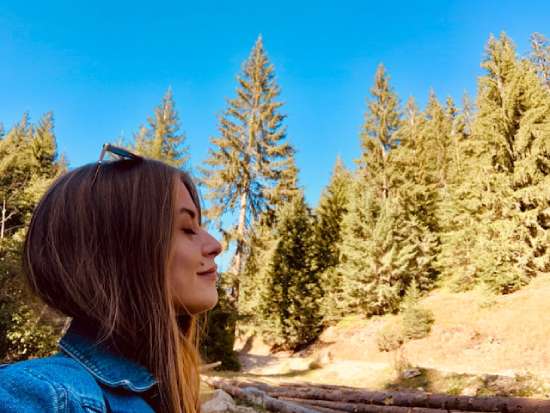
Oxygen is absolutely necessary for our bodies to make energy and keep us alive. Clean air is the best source of this oxygen while providing many other benefits for physical health.
Deep breaths of fresh air increase the concentration of oxygen our lungs take in. It may be one of the reasons fresh air has been shown to improve body temperature, heart rate, and breathing efficiency.2
Fresh air also contains negative ions that energize the air—and us—by increasing the amount of oxygen we take in.
What exactly are these negative ions?
We’re so used to hearing the word “negative” and thinking “bad.” But here we’re talking about molecular polarity. Negative ions result when the air molecules “have gained or lost an electrical charge.” This usually happens when moving air, moving water, or sunlight breaks the molecules apart.3 These negative ions bind together with unhealthy particles, helping to remove them from the air. Think of them like nature’s air purifiers.4
Not surprisingly then, fresh air may have as much as ten times more of these negative ions than stale air!5
And researchers believe that fresh air is also one of the reasons that the Japanese practice of “forest bathing”—spending time in forests—impacts physical health in so many positive ways.6
Forests have a higher concentration of oxygen due to the way trees convert carbon dioxide into oxygen. And that higher concentration of oxygen can mean the following for us:
- Increased energy levels7
- A stronger immune system8
- Lowered stress levels9
- Better function of antioxidants (substances that help protect the cells from damage)10
- Less inflammatory markers related to coronary artery disease and chronic heart failure11
Mental benefits of fresh air

Photo by Japheth Mast on Unsplash
Because of the connection between the mind and the body, the physical benefits of fresh air translate to mental health, too. Though the brain only makes up 2% of the body, it uses 20% of the body’s oxygen supply. Fresh air is vital for the brain.
Have you ever found yourself stuck in a rut when learning something or trying to solve a problem?
In exasperation, you shut your laptop screen and went for a short walk. And when you returned, your mind felt clear and refreshed.
You were experiencing the mental health benefits of fresh air.
The increased oxygen and negative ions combine to help:
- Relax the mind12
- Improve focus and learning ability13
- Improve mood (by increasing levels of serotonin, the brain’s happiness hormone)14
- Decrease stress, anxiety, depression, and anger15
Spiritual benefits of fresh air
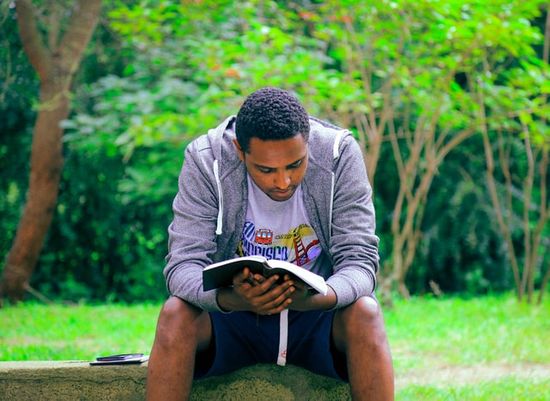
Photo by Gift Habeshaw on Unsplash
Adventists believe that we are holistic beings whose physical, mental, and spiritual health are interconnected. Experiencing the benefits of fresh air means that we will have clear minds for connecting with God.
The Bible calls our bodies temples of the Holy Spirit (1 Corinthians 3:16–17) because the body houses the mind, through which we talk with God and perceive the wisdom He’s seeking to give us. This means that what we choose to think about can have eternal consequences:
“For to set the mind on the flesh is death, but to set the mind on the Spirit is life and peace” (Romans 8:6, ESV).
And fresh air? When we experience its benefit on the mind, we also experience its spiritual benefits:
- We’re able to understand God’s Word better
- We have a clearer mind for prayer
- We can focus on God and His Spirit
- We make better decisions
How much fresh air do we need?

Photo by Annie Spratt on Unsplash
When it comes to the amount of fresh air you need, the more, the better! Recent research suggests at least 30–40 minutes per day.
But unfortunately, most Americans spend over 90% of their time indoors, where fresh air tends to be lacking and the air may be polluted by cigarette smoke, paint, chemicals in furniture, household chemicals, and more.
In 2019, researchers surveyed a group of people about the time they spent in nature and their resulting sense of health and wellness.
They found that those who spent between 200 and 300 minutes per week (30 and 40 minutes per day) outdoors had the greatest sense of health and wellbeing.16 Though there were other factors involved (such as spending time in green spaces), fresh air no doubt played a part.
The good news is that fresh air may continue to make a difference in your health even when you can’t be in it all the time! According to one study, the physical benefits of going on a forest bathing vacation lasted for at least seven days afterward.17
How can we enjoy more fresh air?
Follow these simple tips:
- Spend time outdoors in an environment full of negative ions
- Open your windows
- Get some house plants
- Use air purifiers and filters
Participate in outdoor activities
Indoor air can have up to 100 times more pollutants than outdoor air! Doesn’t that make you want to get some clean outdoor air?
Look for places out in nature where the concentration of negative ions is likely to be higher. Places such as waterfalls, creeks, rivers, forests, and the ocean.
Some ideas for spending time outdoors are:
- Walks in the sunshine
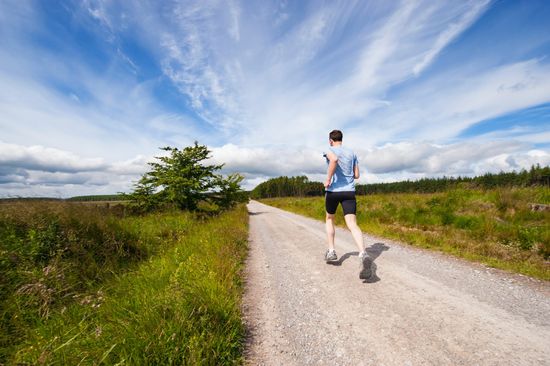
- Outdoor exercise
- Working in your yard or garden
- A picnic at a park
- Reading a book outside
But there are ways to improve indoor air quality, too.
Open your windows
Let some of that fresh outdoor air into your home! If the weather is warm and you don’t live in a polluted city, open those windows wide. For better ventilation, run a fan and open the windows on opposite sides of your house to allow a crosswind.
On cold days, even cracking the window for a few minutes can help rejuvenate the indoor air.
Get some house plants

Photo by Kate Darmody on Unsplash
Plants take in carbon dioxide and release oxygen into the air, making them great for improving air quality. They also absorb toxic pollutants that come from carpets, furniture, cleaning products, and paint.18 In fact, one plant alone can remove up to 90% of pollutants in a room.19
Use air purifiers and filters
Air purifiers can help improve indoor air quality by removing unhealthful particles. Also, place air filters in your vents and keep them clean to ensure that the air circulating through your home is clean.
Breathe deep of fresh air and God’s Spirit
God cares about every aspect of our health—including the air we breathe. He designed fresh air to invigorate us physically, mentally, and spiritually. This is why Adventists are intentional about getting out in nature to enjoy the benefits of fresh air.
The Bible uses air as a metaphor for the Holy Spirit. Just like we need fresh air moment by moment, we need the Holy Spirit to help us navigate our daily lives.
So let’s make sure we’re getting deep breaths of both kinds of air—the fresh outdoor air and the air of God’s Spirit. Both are good for you, refreshing your mind, body, and spirit.
For more about how the Bible and health go hand in hand,
Related Articles

- Nedley, Neil, Lost Art of Thinking (Nedley Publishing, Ardmore, OK, 2011), p. 252; “Indoor Air Quality,” OSHA.gov. [↵]
- English, Jim, “The Positive Health Benefits of Negative Ions,” Nutrition Review, nutritionreview.org, April 22, 2013. [↵]
- Mann, Denise, “Negative Ions Create Positive Vibes,” WebMD.com, May 6, 2002. [↵]
- English, “The Positive Health Benefits of Negative Ions.” [↵]
- Nedley, p. 250. [↵]
- Evans, Karin, “Why Forest Bathing Is Good for Your Health,” Greater Good, greatergood.berkeley.edu, August 20, 2018. [↵]
- Nedley, p. 250. [↵]
- Ibid. [↵]
- Li, Qing, “Effect of Forest Bathing Trips on Human Immune Function,” Environmental Health and Preventative Medicine, 15(1), 2010, pp. 9–17. [↵]
- Mao, et al., “The Salutary Influence of Forest Bathing on Elderly Patients with Chronic Heart Failure,” International Journal of Environmental Research and Public Health 14, 4: 368, 2017. [↵]
- Ibid. [↵]
- Nedley, p. 250. [↵]
- Ibid. [↵]
- Mann, Denise, “Negative Ions Create Positive Vibes.” [↵]
- Evans, Karin, “Why Forest Bathing Is Good for Your Health.” [↵]
- White, et al., “Spending At Least 120 Minutes a Week in Nature Is Associated with Good Health and Wellbeing,” Scientific Reports 9, 7730, 2019. [↵]
- Li, “Effect of Forest Bathing Trips on Human Immune Function.” [↵]
- “Using the Right Plants Can Reduce Indoor Pollution and Save Energy,” Science Daily, April 19, 2018. [↵]
- Nedley, p. 251. [↵]
More Answers
Quem Foram os Juízes de Israel no Antigo Testamento?
Quem Foram os Juízes de Israel no Antigo Testamento?Tempos de crise exigem homens e mulheres de ação. Os israelitas, recém-estabelecidos na Terra Prometida, encontraram-se nesses tempos. À medida que nações inimigas atacavam e oprimiam as tribos, eles clamavam a Deus...
¿En qué se diferencian los Adventistas del Séptimo Día de otros protestantes?
¿En qué se diferencian los Adventistas del Séptimo Día de otros protestantes?Como denominación cristiana protestante, la Iglesia Adventista del Séptimo Día considera la Biblia como la regla suprema de fe y a Jesucristo como el único camino a la salvación. Tenemos...
Como os Adventistas do Sétimo Dia São Diferentes de Outros Protestantes?
Como os Adventistas do Sétimo Dia São Diferentes de Outros Protestantes?Como uma denominação cristã protestante, a Igreja Adventista do Sétimo Dia considera a Bíblia como o guia supremo e vê Jesus Cristo como o único caminho para a salvação. Temos algumas diferenças...

O que é ASI (Associação de Empresários e Profissionais Adventistas)?
O que é ASI (Associação de Empresários e Profissionais Adventistas)?ASI, que significa Associação de Empresários e Profissionais Adventistas (tradução adaptada), é uma organização baseada em associação que oferece apoio aos membros adventistas (profissionais...
Jesús y la Mujer en el Pozo: Derribando Barreras
El encuentro de Jesús con la mujer en el pozo revela su sentir por las personas heridas y su deseo de derribar prejuicios. Esta página analiza cómo Jesús se acercó a ella.

Revealing The True Meaning of The Parable of The Rich Man & Lazarus
Learn the real point behind one of Jesus’ most vivid parables.
O que são as Bem-Aventuranças (E o que significam)?
O que são as Bem-Aventuranças (E o que significam)?As Bem-Aventuranças, encontradas no início do Sermão da Montanha de Jesus no Evangelho de Mateus, são o manifesto do reino de Jesus. Elas descrevem a maneira como Seu reino funciona e o que significa ser um de Seus...

Líderes de la iglesia: ¿Cuál es el rol de un pastor Adventista?
Líderes de la iglesia: ¿Cuál es el rol de un pastor Adventista?¿Cuál es el rol de un pastor en la iglesia Adventista? La posición en sí misma, al menos en lo que respecta a una congregación local, no es muy diferente de la de los pastores en otras denominaciones...
ASI ni Nini (Huduma na Viwanda vya Waadventista vya Kibinafsi)?
ASI ni Nini (Huduma na Viwanda vya Waadventista vya Kibinafsi)?ASI, ambayo inayofupisha maneno (Huduma na Viwanda vya Waadventista vya Kibinafsi), ni shirika la uanachama linalotoa msaada kwa wainjilisti wa Kiadventista (wataalamu wa Kanisa la Waadventista wa Sabato...

Ellen White Alisema Nini Kuhusu Unabii wa Nyakati za Mwisho?
Tunaweza kusoma katika Maandiko kuhusu mfululizo wa matukio na dalili zinazoongoza hadi Ujio wa Pili wa Yesu Kristo.

Safari na Utume wa Ellen G. White Ulimwenguni
Safari na Utume wa Ellen G. White UlimwenguniIngawa Ellen White, mwanzilishi mwenza wa Kanisa la Waadventista wa Sabato, anajulikana zaidi kwa huduma yake nchini Marekani, pia alisafiri kwenda nchi nyingine kumi na mbili katika maisha yake—hili lilikuwa jambo kubwa...
Yote Kuhusu Wainjilisti wa Vitabu wa Kiadventista
Kanisa la Waadventista wa Sabato hutumia mbinu mbalimbali kusambaza tumaini la injili duniani.
¿Qué es ASI (Servicios e Industrias de Laicos Adventistas)?
¿Qué es ASI (Servicios e Industrias de Laicos Adventistas)?ASI, que significa Servicios e Industrias de Laicos Adventistas, es una organización basada en membresía que brinda apoyo a los laicos adventistas (profesionales Adventistas del Séptimo Día que no son...
¿Qué dijo Elena G. de White sobre la profecía de los últimos tiempos?
¿Qué dijo Elena G. de White sobre la profecía de los últimos tiempos?Podemos leer en las Escrituras acerca de la serie de eventos y señales que conducen a la segunda venida de Jesucristo. Y suena bastante intenso, por decir lo menos. La naturaleza simbólica del...
O que Ellen White disse sobre a profecia dos tempos finais?
O que Ellen White disse sobre a profecia dos tempos finais?Podemos ler nas Escrituras sobre a série de eventos e sinais que antecedem a segunda vinda de Jesus Cristo. E, para dizer o mínimo, isso soa bastante intenso. A natureza simbólica da linguagem da profecia...

Meaning of the Parable of the Two Sons in Matthew 21
Meaning of the Parable of the Two Sons in Matthew 21The parable of the two sons in Matthew 21:28-32 is about a father who instructs his sons to work in the family vineyard. The first son refuses to work but later has a change of heart and obeys. The second son says...
Viagens e Missão Mundial de Ellen G. White
Viagens e Missão Mundial de Ellen G. WhiteEmbora Ellen White, cofundadora da Igreja Adventista do Sétimo Dia, seja mais conhecida por seu ministério nos Estados Unidos, ela também viajou para outros doze países durante sua vida — uma grande conquista no século XIX,...
Joseph Bates na Nafasi Yake katika Kanisa la Waadventista
Joseph Bates na Nafasi Yake katika Kanisa la WaadventistaJoseph Bates alikuwa baharia aliyegeuka kuwa mhubiri ambaye alijiunga na Harakati ya Miller na kusubiri Ujio wa Pili wa Yesu kutokea mwaka 1844. Licha ya kukatishwa tamaa wakati hili halikutokea, Bates...

Je, Wasabato Husherehekea Sikukuu?
Je, Wasabato Husherehekea Sikukuu?Je unajiuliza ikiwa mwanafunzi mwenzako au mfanyakazi mwenzako Mwadventista husherehekea sikukuu kama wewe? Labda ungependa kumshirikisha kwenye sherehe fulani, lakini pia unataka kuheshimu imani yake. Kwa hiyo, huna uhakika wa jinsi...

O Que a Bíblia Diz Sobre a Segunda Vinda de Jesus Cristo
Curioso para saber o que a Bíblia diz sobre a Segunda Vinda de Jesus Cristo? Vamos abordar os versículos-chave e o que eles significam.

Waadventista Wanaamini Nini Kuhusu Imani na Matendo?
Waadventista Wanaamini Nini Kuhusu Imani na Matendo?Waadventista wanaamini tunaokolewa kwa imani, ambayo ni imani na tumaini tulilonalo kwa Yesu Kristo kutuokoa kutoka dhambini. Yesu, basi, anatupa uwezo wa kuishi kwa utii wa amri za Mungu na kuwahudumia wengine kwa...
Todo sobre los colportores Adventistas del Séptimo Día
Todo sobre los colportores Adventistas del Séptimo DíaLa Iglesia Adventista del Séptimo Día utiliza una variedad de métodos para difundir la esperanza del evangelio al mundo. Una de estas formas es a través del colportaje, también llamado “venta puerta a puerta” o...
Tudo Sobre Colportores Adventistas do Sétimo Dia
A Igreja Adventista do Sétimo Dia usa uma variedade de métodos para espalhar a esperança do evangelho ao mundo.
Los viajes y la misión mundial de Elena G. de White
Los viajes y la misión mundial de Elena G. de WhiteAunque Elena G. de White, cofundadora de la Iglesia Adventista del Séptimo Día, es más conocida por su ministerio en los Estados Unidos, también viajó a otros doce países durante su vida, un gran logro en el siglo XIX...

Mikutano ya Injili ya Waadventista ni Nini?
Kanisa la Waadventista wa Sabato linaweka mkazo mkubwa katika kushiriki injili kupitia uinjilisti, yaani kushiriki injili kupitia mahubiri, mafundisho, na ushuhuda.
Joseph Bates y su papel en la Iglesia Adventista del Séptimo Día
Joseph Bates y su papel en la Iglesia Adventista del Séptimo DíaJoseph Bates fue un marinero que se convirtió en predicador, se unió al Movimiento Millerita y esperó que ocurriera la Segunda Venida de Jesús en 1844. A pesar de sentirse decepcionado cuando esto no...
Joseph Bates e Seu Papel na Igreja Adventista do Sétimo Dia
Joseph Bates foi um marinheiro que se tornou pregador, juntou-se ao Movimento Millerita e esperou pela Segunda Vinda de Jesus em 1844.
¿Los Adventistas del Séptimo Día celebran las fiestas?
¿Los Adventistas del Séptimo Día celebran las fiestas?¿Te preguntas si tu compañero de clase o de trabajo adventista celebra las mismas fiestas que tú? Tal vez quieres incluirlo en algunas festividades, pero también deseas respetar sus creencias. Entonces, no estás...
Os Adventistas do Sétimo Dia Celebram Feriados?
Está se perguntando se seu colega de classe ou de trabalho adventista celebra os mesmos feriados que você?
Didn’t find your answer? Ask us!
We understand your concern of having questions but not knowing who to ask—we’ve felt it ourselves. When you’re ready to learn more about Adventists, send us a question! We know a thing or two about Adventists.