
Ellen White was a co-founder and leader in the Seventh-day Adventist Church from its beginning. Adventists believe that she had the prophetic gift (Ephesians 4:14; 1 Corinthians 12:28) and passes the biblical tests of a prophet.
But do we worship her?
No. God alone is worthy of our worship, and while human beings can be used by God to accomplish extraordinary things, nothing can elevate one person’s value, holiness, goodness, or worthiness over another.
However, for those looking in, the idea of a modern-day prophet can be concerning and trigger such questions. We get it, and that’s why we’ll answer the following:
How does the Adventist Church view Ellen White?
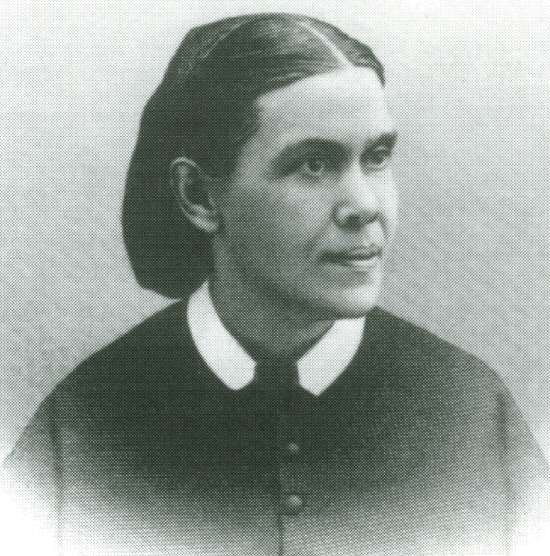 The Adventist Church acknowledges that Ellen White demonstrated the prophetic gift throughout the majority of her life—but only because her ministry harmonizes with that of biblical prophets. She passes each of the tests of a prophet we can find in the Bible:
- Consistency with the Bible (Isaiah 8:20) and its teachings about Jesus Christ (1 John 4:1–3)
- Fulfilled proclamations and predictions (Deuteronomy 18:20–21)
- Fruit of godly character (Matthew 7:16–20)
- Revelations from God, such as in visions or dreams (2 Peter 1:20–21; Numbers 12:6)
- Messages that inspire godly change (Ezekiel 13:10)
- Messages of truth without errors mixed in (2 Peter 2:1–3)
Like prophets in the Bible, prophets today and up until the end of time will encourage, instruct, unify, and protect against false teachings (Ephesians 4:12–14). In line with this, the Adventist Church states the following in its official beliefs:
“[The gift of prophecy] is an identifying mark of the remnant church and we believe it was manifested in the ministry of Ellen G. White. Her writings speak with prophetic authority and provide comfort, guidance, instruction, and correction to the church. They also make clear that the Bible is the standard by which all teaching and experience must be tested.”
It’s true—Ellen White consistently pointed to the Bible as the ultimate standard. She never wanted her teachings to take the place of deep, honest Bible study:
“God’s Word is the unerring standard…. Let all prove their positions from the Scriptures and substantiate every point of truth from the revealed Word of God.1
In addition, she made it clear that she wasn’t revealing new truths. Instead, the Holy Spirit used her messages to bring people back to truths they had neglected.2
Why would people think Adventists worship Ellen White?
Here are three likely reasons people outside Adventism might have thought we worship Ellen White:
- Unbiblical/inaccurate concepts of a prophet
- Ellen White’s involvement in the Adventist Church
- The human tendency to idolize
Unbiblical concepts of a prophet
In actuality, many people don’t understand the role of a true prophet, according to the Bible. In fact, many Protestants assume that God stopped appointing prophets when the Bible was completed. So when a Christian church acknowledges someone as a prophet, it becomes a default assumption that the church members must worship that individual.
They may also look at the way certain religions or cults have overly revered their prophets almost like they are divine themselves. And then assume that Adventists do the same.
But note:
The New Testament tells us that the spiritual gift of a prophet would continue to encourage God’s people and keep them from false teachings down to the Second Coming (Ephesians 4:11–16).
At the same time, it never permits the worship of anyone other than the one true God (Exodus 20:2–5; Matthew 4:10). This includes prophets and even angels (Revelation 19:10). And it makes it clear that His Word is the final authority (John 17:17). Nothing that contradicts God’s Word is from Him (Isaiah 8:20).
Thus, just because the Adventist Church acknowledges that a human being demonstrated the prophetic gift does not mean that its members are relating to that person in a fanatical or unbiblical way.
Ellen White’s involvement in the Adventist Church
Ellen White played an integral role in developing the Adventist Church, and providing counsel for health and lifestyle. This could also lead people to believe that we worship her.
Doctrine. Ellen White was indeed present when many of Adventism’s distinct doctrines were developed. Doctrines such as the heavenly sanctuary, the Sabbath, the state of the dead, and the Great Controversy. But the doctrines were the result of intense Bible study, not her ideas. Her visions only helped confirm what had already been studied.
Healthy lifestyle. Ellen White’s writings on lifestyle topics, such as a vegetarian diet and other health principles, have shaped the way Adventists live today. Because we are known for this lifestyle, some might mistakenly think we follow it in order to honor her.
In reality, we make healthful lifestyle decisions out of a desire to honor God in how we care for our bodies (1 Corinthians 10:31). That was the encouragement within most of her counsel on this topic to begin with.
Adventist institutions. Ellen White helped start many Adventist institutions—from healthcare to education to publishing. But just because she did so doesn’t mean that we worship her. Other church leaders, such as James White, Joseph Bates, and J. N. Andrews accomplished great things, but we don’t worship them either.
The human tendency to idolize

Photo by Pien Muller on Unsplash
Even though the Adventist Church is clear that it doesn’t worship Ellen White, sometimes individuals can give the wrong impression. This is due to the human tendency to idolize.
We can see this general principle everywhere. Look at how highly people regard celebrities, sports figures, politicians, authors, dynamic speakers, or even teachers, coworkers, parents, or friends. Admiring and respecting people is a good thing…but it’s all too easy to put other human beings on a pedestal. And often, we don’t even realize we’re doing it.
So even in religious circles, it’s common for people to go overboard and become enamored with human beings, instead of keeping their eyes fixed on God.
This can happen with individuals who love the Adventist Church and feel that its teachings have saved their lives. They may even become obsessed with Ellen White’s writings or quote her so much that it seems they’re emphasizing her more than the Bible.
But just because it’s a natural tendency doesn’t make it right. The Adventist Church and the Bible don’t support this extreme view of Ellen White.
What is the role of Ellen White’s writings in Adventism today?
We take the Bible as our authority by which everything else—including Ellen White’s writings—must be tested. Because her ministry passes the biblical tests of a prophet, we view her writings as an inspired source of counsel for us today.
Notice this statement from an Adventist General Conference session:
“We reaffirm our conviction that her writings are divinely inspired, truly Christ-centered, and Bible-based.”
“We commit ourselves to study the writings of Ellen G White prayerfully and with hearts willing to follow the counsels and instructions we find there. Whether individually, in the family, in small groups, in the classroom, or in the church…. the study of these writings is a powerful means to strengthen and prepare His people for the glorious appearing of our Lord and Savior Jesus Christ.”
We’ll look at how this statement plays out on a practical level in 5 different ways:
Personal spiritual life

Photo by Thought Catalog on Unsplash
Like the prophets in the Bible, Ellen White provides encouragement and counsel for followers of God (1 Corinthians 14:3–4; Ephesians 4:12). She saw her writings as a lesser light leading to the greater light of the Bible.3 Today, we still turn to her books to enrich our time of personal devotion.
Her Conflict of the Ages series follows the biblical narrative from Genesis to Revelation. Many Adventists read these books alongside their studies of Scripture.
Steps to Christ is also a refreshing devotional that has brought many to a closer walk with Jesus Christ.
But a few things to keep in mind:
- Read her writings for yourself instead of taking someone else’s word about them.
- Interpret them wisely. It’s always important to understand their context and then look for the underlying principles.4
- Be careful about inserting one’s own ideas into her writings or try to use them to prove a point.5
Lifestyle

Photo by Jason Briscoe on Unsplash
We appreciate and value the writings of Ellen White on healthful living. Though written over a century ago, the concepts were far ahead of the popular opinions of that time and are now being validated by science.
Concepts such as:
- The benefits of a plant-based diet
- The dangers of smoking
- The importance of exercise, fresh air, and sunshine
- The mind-body connection
Some books that we turn to for counsel are The Ministry of Healing, Counsels on Health, and Counsels on Diet and Foods.
Even so, she urged people to base their lifestyle decisions on what the Holy Spirit was convincing them to do—not because she said something. She put it this way:
“I have not had meat in my house for years. But do not give up the use of meat because Sister White does not eat it. I would not give a farthing for your health reform if that is what it is based upon. I want you to stand in your individual dignity and in your individual consecration before God, the whole being dedicated to Him.”6
Worship services
Many Adventists use Ellen White’s writings in their worship services, though there is a need for caution when doing so.
Here’s the balance.
Ellen White made it clear that sermons should be supported by Bible texts, not her writings. At the same time, she never said that her writings shouldn’t be referenced—only that the Bible needed to be the ultimate authority.
Adventist speakers are encouraged to quote her wisely, paying attention to their audience’s familiarity with Ellen White. They should never make it seem that she, instead of the Bible, is the foundation of the message.
Evangelism
When it comes to evangelism—sharing the good news about Jesus—Ellen White advised that her writings should not be used to prove our beliefs:
“In public labor do not make prominent, and quote that which Sister White has written, as authority to sustain your positions…. Bring your evidences, clear and plain, from the Word of God.”7
She did, however, intend that her books would be used to draw people to the Bible’s truths. She encouraged the distribution of the following in particular:8
- The Great Controversy, which shows the connection of Bible prophecy to history and last day events
- Patriarchs and Prophets, which follows the story of the Bible from Genesis to the time of David
- The Desire of Ages, a commentary on the life of Christ
- Christ’s Object Lessons, a study on Jesus’ parables
The Church and its institutions

Courtesy of the Ellen G. White Estate, Inc.
Courtesy of the Ellen G. White Estate, Inc. Ellen White’s writings have served as a source of counsel for many Adventist institutions and initiatives. Aside from countless manuscripts, letters, and individual articles, her books and compilations have helped guide the Church’s work in various fields.
For example, people in the healthcare field have consulted her book Medical Ministry, and educators have gleaned principles from her book Fundamentals of Christian Education.
Ellen White wanted people to worship God, not her
Though some have had a false impression that Adventists worship Ellen White, that is not the church’s official attitude or position. We worship God alone with the Bible as our foundation and authority.
Because Ellen White was a humble woman who saw herself as the Lord’s messenger, the idea of people worshiping her would have horrified her! She never boasted about being a prophet nor tried to gain attention for herself.
More than anything, she longed for her ministry to lead people to worship Jesus Christ.
Learn what Adventists believe about the gift of prophecy.
Find a Church
If you’re interested in finding a local Adventist church near you, you can use the Adventist Locator provided by the General Conference of Seventh-day Adventists.
- White, Ellen, Evangelism (Review and Herald, Washington, D.C., 1946), p. 256. [↵]
- White, Ellen, Testimonies for the Church, vol. 5 (Pacific Press, Mountain View, CA, 1882), p. 665. [↵]
- White, Ellen, Colporteur Ministry (Pacific Press, Mountain View, CA, 1953), p. 125. [↵]
- Douglass, Herbert, Messenger of the Lord (Nampa, Idaho, Pacific Press, 1998), p. 373. [↵]
- Douglass, p. 374. [↵]
- White, Ellen, Manuscript Releases, vol. 13 (EGW Estate, Silver Spring, MD, 1990), p. 202. [↵]
- White, Ellen, Selected Messages, book 3 (Review and Herald, Washington, D.C., 1980), p. 29. [↵]
- White, Ellen, Colporteur Ministry (Pacific Press, Mountain View, CA, 1953), p. 129. [↵]
Related Articles



More Answers
Quem Foram os Juízes de Israel no Antigo Testamento?
Quem Foram os Juízes de Israel no Antigo Testamento?Tempos de crise exigem homens e mulheres de ação. Os israelitas, recém-estabelecidos na Terra Prometida, encontraram-se nesses tempos. À medida que nações inimigas atacavam e oprimiam as tribos, eles clamavam a Deus...

¿En qué se diferencian los Adventistas del Séptimo Día de otros protestantes?
¿En qué se diferencian los Adventistas del Séptimo Día de otros protestantes?Como denominación cristiana protestante, la Iglesia Adventista del Séptimo Día considera la Biblia como la regla suprema de fe y a Jesucristo como el único camino a la salvación. Tenemos...
Como os Adventistas do Sétimo Dia São Diferentes de Outros Protestantes?
Como os Adventistas do Sétimo Dia São Diferentes de Outros Protestantes?Como uma denominação cristã protestante, a Igreja Adventista do Sétimo Dia considera a Bíblia como o guia supremo e vê Jesus Cristo como o único caminho para a salvação. Temos algumas diferenças...

O que é ASI (Associação de Empresários e Profissionais Adventistas)?
O que é ASI (Associação de Empresários e Profissionais Adventistas)?ASI, que significa Associação de Empresários e Profissionais Adventistas (tradução adaptada), é uma organização baseada em associação que oferece apoio aos membros adventistas (profissionais...
Jesús y la Mujer en el Pozo: Derribando Barreras
El encuentro de Jesús con la mujer en el pozo revela su sentir por las personas heridas y su deseo de derribar prejuicios. Esta página analiza cómo Jesús se acercó a ella.

Revealing The True Meaning of The Parable of The Rich Man & Lazarus
Learn the real point behind one of Jesus’ most vivid parables.
O que são as Bem-Aventuranças (E o que significam)?
O que são as Bem-Aventuranças (E o que significam)?As Bem-Aventuranças, encontradas no início do Sermão da Montanha de Jesus no Evangelho de Mateus, são o manifesto do reino de Jesus. Elas descrevem a maneira como Seu reino funciona e o que significa ser um de Seus...

Líderes de la iglesia: ¿Cuál es el rol de un pastor Adventista?
Líderes de la iglesia: ¿Cuál es el rol de un pastor Adventista?¿Cuál es el rol de un pastor en la iglesia Adventista? La posición en sí misma, al menos en lo que respecta a una congregación local, no es muy diferente de la de los pastores en otras denominaciones...
ASI ni Nini (Huduma na Viwanda vya Waadventista vya Kibinafsi)?
ASI ni Nini (Huduma na Viwanda vya Waadventista vya Kibinafsi)?ASI, ambayo inayofupisha maneno (Huduma na Viwanda vya Waadventista vya Kibinafsi), ni shirika la uanachama linalotoa msaada kwa wainjilisti wa Kiadventista (wataalamu wa Kanisa la Waadventista wa Sabato...

Ellen White Alisema Nini Kuhusu Unabii wa Nyakati za Mwisho?
Tunaweza kusoma katika Maandiko kuhusu mfululizo wa matukio na dalili zinazoongoza hadi Ujio wa Pili wa Yesu Kristo.

Safari na Utume wa Ellen G. White Ulimwenguni
Safari na Utume wa Ellen G. White UlimwenguniIngawa Ellen White, mwanzilishi mwenza wa Kanisa la Waadventista wa Sabato, anajulikana zaidi kwa huduma yake nchini Marekani, pia alisafiri kwenda nchi nyingine kumi na mbili katika maisha yake—hili lilikuwa jambo kubwa...
Yote Kuhusu Wainjilisti wa Vitabu wa Kiadventista
Kanisa la Waadventista wa Sabato hutumia mbinu mbalimbali kusambaza tumaini la injili duniani.
¿Qué es ASI (Servicios e Industrias de Laicos Adventistas)?
¿Qué es ASI (Servicios e Industrias de Laicos Adventistas)?ASI, que significa Servicios e Industrias de Laicos Adventistas, es una organización basada en membresía que brinda apoyo a los laicos adventistas (profesionales Adventistas del Séptimo Día que no son...
¿Qué dijo Elena G. de White sobre la profecía de los últimos tiempos?
¿Qué dijo Elena G. de White sobre la profecía de los últimos tiempos?Podemos leer en las Escrituras acerca de la serie de eventos y señales que conducen a la segunda venida de Jesucristo. Y suena bastante intenso, por decir lo menos. La naturaleza simbólica del...
O que Ellen White disse sobre a profecia dos tempos finais?
O que Ellen White disse sobre a profecia dos tempos finais?Podemos ler nas Escrituras sobre a série de eventos e sinais que antecedem a segunda vinda de Jesus Cristo. E, para dizer o mínimo, isso soa bastante intenso. A natureza simbólica da linguagem da profecia...

Meaning of the Parable of the Two Sons in Matthew 21
Meaning of the Parable of the Two Sons in Matthew 21The parable of the two sons in Matthew 21:28-32 is about a father who instructs his sons to work in the family vineyard. The first son refuses to work but later has a change of heart and obeys. The second son says...
Viagens e Missão Mundial de Ellen G. White
Viagens e Missão Mundial de Ellen G. WhiteEmbora Ellen White, cofundadora da Igreja Adventista do Sétimo Dia, seja mais conhecida por seu ministério nos Estados Unidos, ela também viajou para outros doze países durante sua vida — uma grande conquista no século XIX,...
Joseph Bates na Nafasi Yake katika Kanisa la Waadventista
Joseph Bates na Nafasi Yake katika Kanisa la WaadventistaJoseph Bates alikuwa baharia aliyegeuka kuwa mhubiri ambaye alijiunga na Harakati ya Miller na kusubiri Ujio wa Pili wa Yesu kutokea mwaka 1844. Licha ya kukatishwa tamaa wakati hili halikutokea, Bates...

Je, Wasabato Husherehekea Sikukuu?
Je, Wasabato Husherehekea Sikukuu?Je unajiuliza ikiwa mwanafunzi mwenzako au mfanyakazi mwenzako Mwadventista husherehekea sikukuu kama wewe? Labda ungependa kumshirikisha kwenye sherehe fulani, lakini pia unataka kuheshimu imani yake. Kwa hiyo, huna uhakika wa jinsi...

O Que a Bíblia Diz Sobre a Segunda Vinda de Jesus Cristo
Curioso para saber o que a Bíblia diz sobre a Segunda Vinda de Jesus Cristo? Vamos abordar os versículos-chave e o que eles significam.

Waadventista Wanaamini Nini Kuhusu Imani na Matendo?
Waadventista Wanaamini Nini Kuhusu Imani na Matendo?Waadventista wanaamini tunaokolewa kwa imani, ambayo ni imani na tumaini tulilonalo kwa Yesu Kristo kutuokoa kutoka dhambini. Yesu, basi, anatupa uwezo wa kuishi kwa utii wa amri za Mungu na kuwahudumia wengine kwa...
Todo sobre los colportores Adventistas del Séptimo Día
Todo sobre los colportores Adventistas del Séptimo DíaLa Iglesia Adventista del Séptimo Día utiliza una variedad de métodos para difundir la esperanza del evangelio al mundo. Una de estas formas es a través del colportaje, también llamado “venta puerta a puerta” o...
Tudo Sobre Colportores Adventistas do Sétimo Dia
A Igreja Adventista do Sétimo Dia usa uma variedade de métodos para espalhar a esperança do evangelho ao mundo.
Los viajes y la misión mundial de Elena G. de White
Los viajes y la misión mundial de Elena G. de WhiteAunque Elena G. de White, cofundadora de la Iglesia Adventista del Séptimo Día, es más conocida por su ministerio en los Estados Unidos, también viajó a otros doce países durante su vida, un gran logro en el siglo XIX...

Mikutano ya Injili ya Waadventista ni Nini?
Kanisa la Waadventista wa Sabato linaweka mkazo mkubwa katika kushiriki injili kupitia uinjilisti, yaani kushiriki injili kupitia mahubiri, mafundisho, na ushuhuda.
Joseph Bates y su papel en la Iglesia Adventista del Séptimo Día
Joseph Bates y su papel en la Iglesia Adventista del Séptimo DíaJoseph Bates fue un marinero que se convirtió en predicador, se unió al Movimiento Millerita y esperó que ocurriera la Segunda Venida de Jesús en 1844. A pesar de sentirse decepcionado cuando esto no...
Joseph Bates e Seu Papel na Igreja Adventista do Sétimo Dia
Joseph Bates foi um marinheiro que se tornou pregador, juntou-se ao Movimento Millerita e esperou pela Segunda Vinda de Jesus em 1844.
¿Los Adventistas del Séptimo Día celebran las fiestas?
¿Los Adventistas del Séptimo Día celebran las fiestas?¿Te preguntas si tu compañero de clase o de trabajo adventista celebra las mismas fiestas que tú? Tal vez quieres incluirlo en algunas festividades, pero también deseas respetar sus creencias. Entonces, no estás...
Os Adventistas do Sétimo Dia Celebram Feriados?
Está se perguntando se seu colega de classe ou de trabalho adventista celebra os mesmos feriados que você?
Didn’t find your answer? Ask us!
We understand your concern of having questions but not knowing who to ask—we’ve felt it ourselves. When you’re ready to learn more about Adventists, send us a question! We know a thing or two about Adventists.