
Medical care in the mid-1800s was primitive, to say the least. Basic concepts we take for granted—such as proper handwashing or recognizing the dangers of bloodletting—were nonexistent. And doctors often had little more than nine months of training!
But Seventh-day Adventists would help raise the standard in healthcare.
God inspired Ellen G. White (1827–1915), one of Adventism’s founders, with a health message that was far ahead of its time—personal hygiene, a healthy diet, the lifestyle-disease connection, and more. She urged the Church to begin its own health clinics, called sanitariums, to put these teachings into practice.
Adventist health institutions today carry the legacy that Ellen White left behind. Let’s get a glimpse of that through the answers to these questions:
Why does the Adventist Church have health care institutions?

Battle Creek Sanitarium, Battle Creek, Michigan
The Seventh-day Adventist Church owes the start of its health centers to Ellen White. During her ministry, the Holy Spirit impressed her with messages about healthful living and the need for Christians to be involved in medical ministry. After her husband, James White, had a stroke and spent time in a health center in New York, she realized the Adventist Church needed its own health centers, too. These places would have a revolutionary approach for their time: combining lifestyle adjustments with biblical principles while offering high-quality care.
That was in 1865. By the following year, the Church began the Western Health Reform Institute in Battle Creek, Michigan. Looking back, Ellen White wrote:
“The Lord years ago gave me special light in regard to the establishment of a health institution where the sick could be treated on altogether different lines from those followed in any other institution in the world. It was to be founded and conducted upon Bible principles…and it was to be in His hands one of the most effective agencies for giving light to the world. It was God’s purpose that it should stand forth with scientific ability, with moral and spiritual power, and as a faithful sentinel of reform in all its bearings.”1
These clinics had a greater purpose than humanitarianism. They were to show that God wants human beings to experience good physical health just as much as spiritual health. And they were to share the hope and healing found in Christ.
What health care institutions did Ellen White help start?
Ellen White helped start at least five health centers for the Adventist Church during her lifetime. These include:
- Battle Creek Sanitarium
- St. Helena Sanitarium
- Avondale Health Retreat
- Paradise Valley Sanitarium
- Loma Linda Sanitarium
She gave specific counsel on what these sanitariums should be like:
- They should be small and home-like.
- They should use natural remedies—such as hydrotherapy, diet, and exercise.
- They should educate their patients on the laws of health, a vegetarian diet, and cooking.
- Spiritual talks and free books should be available for the patients to learn about God and the Bible.
- They should offer training for people to become medical missionaries.
This counsel spurred the development of many health centers. But we’ll look at the five Ellen White was directly involved with.
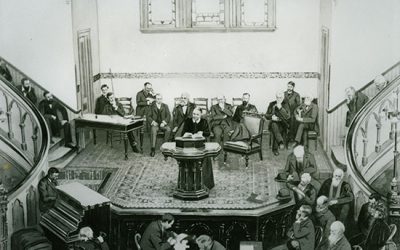
Battle Creek Sanitarium2
God impressed Ellen White that “our people should have an institution of their own, under their own control, for the benefit of the diseased and suffering among us.”3 As a result, the Western Health Reform Institute was born in 1866—the first of many more to follow.
It started with one patient. But after a month, it had reached its capacity of 12.
John Harvey Kellogg, a young man who Ellen and James White sponsored through medical school, became the superintendent of the sanitarium in 1876. Under his leadership, its name became the Battle Creek Medical and Surgical Sanitarium (Battle Creek Sanitarium, or the “San” for short).
As the first Adventist health center, it was the galvanizing force for many more to come.
St. Helena Sanitarium4

St. Helena Sanitarium, St. Helena, California
In the 1870s, Ellen White urged Adventists to start a sanitarium on the west coast. Her counsel inspired W. A. Pratt to help buy a 10.5-acre property in St. Helena, California, for a sanitarium.
The St. Helena Sanitarium opened in 1878 with Merritt G. Kellogg, half-brother of John Harvey Kellogg, as its first superintendent.
Ellen White lived near this sanitarium in her home at Elmshaven. Its staff cared for her right before she died in 1915.
Today, the institution remains as the St. Helena Hospital—the oldest Adventist hospital in the world.
Avondale Health Retreat5
The Avondale Health Retreat began in 1899 at Ellen White’s prompting. Why the urgency? There was no Adventist health center in that part of Australia (New South Wales), and the nearest hospital was miles away.6 She wanted Adventists to help the community.
Ellen White played a major role in fundraising and sat on the committee that selected the site—a pleasant country location. The location made it different from a typical hospital, as it was to be a “resting place for the overworked…and the sick.”7
For a time, the center also served as a nursing school before the program moved to Sydney Sanitarium in 1903.
The retreat continued for a while, but eventually, its buildings were used for Avondale College and then demolished in 1935.
Paradise Valley Sanitarium8

Paradise Valley Sanitarium, Paradise Valley, California
In 1905, a Doctor Whitelock discovered a country plot in Paradise, California. He told Ellen White about it. Would it make a good location for a health center?
She thought so! She and a woman named Josephine Gotzian decided to buy the property for that purpose.
But obstacle number one: a drought. Where would they get water? A well would have to be dug.
As the well-digger went deeper and deeper, he didn’t find water. But Ellen White assured him that God had led them to this property. He would provide.
And He did—below 80 feet!
The sanitarium remained privately owned until, in 1912, the Southern California Conference of Adventists took ownership.
In 1962, the Sanitarium became the Paradise Valley Hospital, which continued until it was sold in 2007 and closed in 2008.
Loma Linda Sanitarium9
In 1905, God showed Ellen White a property for a sanitarium in southern California.
When she first visited the Loma Linda Sanitarium property, she noted:
“Willie, I have been here before.”
“No, Mother. You have never been here,” he told her.
“Then this is the very place the Lord has shown me, for it is all familiar.”10
She pressed the Southern California Conference of Adventists to purchase the 76-acre property.11 Its fresh air and country environment was ideal for patients to be outdoors and tend gardens.
Both a health center and nursing school were opened on the property. It later expanded to include the College of Medical Evangelists for training physicians.
Today, it operates as Loma Linda University and Medical Center. And today there are many other Adventist institutions like this.
What legacy did Ellen White leave for Adventist healthcare today?
Ellen White left behind a unique philosophy of health reform for Adventists to share with the world. Today, the Adventist health care system carries on this legacy of whole health—treating people as individuals with physical, mental, and spiritual needs. Through its healthcare ethics and practices, its staff aims to live out the healing ministry of Jesus.
The Adventist Church operates 198 hospitals worldwide, plus clinics. Ellen White’s legacy also encouraged Adventists to start private lifestyle centers and do medical missionary work in support of the Church’s mission.
These places are about more than providing basic medical care. Some of these lifestyle centers offer training programs so Adventists can become medical missionaries themselves and serve in their communities or in foreign mission locations.
Here’s a quick overview of Adventist hospitals, clinics, lifestyle centers, and training programs throughout the world.
Loma Linda University Medical Center

Loma Linda University Medical Center, Loma Linda, California
Founded in 1905, Loma Linda University Medical Center is a renowned research center, university, and healthcare system. It has six hospitals, plus clinics, that employ 16,000 workers.
Adventist HealthCare
Adventist HealthCare is a system of five hospitals in Maryland’s Montgomery County. It grew from Washington Sanitarium in Takoma Park, Maryland, which was started back in 1907.
Adventist Health
Adventist Health is a network of 18 hospitals across the west coast and Hawaii. Based out of Roseville, California, it began in 1965 and has been acquiring hospitals since then.
One of its most well-known hospitals is the White Memorial Hospital in Los Angeles. It opened in 1913 as a clinic for medical students from the College of Medical Evangelists (present-day Loma Linda University) to work in.
Kettering Health
Kettering Health is a network of 13 hospitals in southwestern Ohio. Adventists started it in 1964 with the support of Eugene and Victoria Kettering.
Eugene’s father, Charles Kettering, was an inventor. In memory of him, Eugene and Victoria wanted to found a hospital with state-of-the-art technology. Though the Ketterings were not Seventh-day Adventists, they resonated with the Adventist philosophy of whole health and asked the Church to start and manage the hospital.12
AdventHealth
AdventHealth is a hospital network based out of Altamonte Springs, Florida. Begun in 1973, it spans 45 hospitals in nine different states.
AdventHealth is known for its CREATION Life program, which promotes Adventist health principles.
Hospitals and clinics worldwide
As a worldwide movement, the Adventist health system extends beyond the United States. Adventist hospitals, clinics, and medical missionaries can be found on every continent (except perhaps Antarctica).
Adventist Health International and Loma Linda have partnered together with Adventist hospitals throughout Africa, Asia, and South and Central America. To see a full list of the hospitals worldwide, visit the Adventist Directory.
Adventist Mission also helps send doctors and nurses to work in smaller clinics and hospitals in more rural regions of the world. Other mission organizations, such as Adventist Frontier Missions, do the same. Whether a doctor in a hospital in Chad or a nurse at front-porch clinics in the jungles of the Philippines, each volunteer shines the love of Jesus through meeting the physical and spiritual needs of their patients.
Lifestyle centers

Photo by Anupam Mahapatra on Unsplash
Besides hospitals, Adventists have opened private lifestyle centers throughout the world. These centers support the mission of the Adventist Church and provide places for people to learn natural healing methods and simple lifestyle principles.
Rather than being massive institutions, they reflect the home-like sanitariums that Ellen White counseled Adventists to start.
Many of them also have short-term training programs to equip people as medical missionaries.
Here are just a few:
- NEWSTART Lifestyle Center in Weimar, California
- Wildwood Lifestyle Center in Wildwood, Georgia
- Hartland Lifestyle Center in Rapidan, Virginia
- Black Hills Health and Education Center in Hermosa, South Dakota
- Aenon Health Care in Malaysia
- Riverview Wellness Center in Zambia
- Country Life in Austria
God’s principles are the foundation of Adventist healthcare
The Adventist health system began with Ellen White’s counsel to exemplify the healing ministry of Jesus.
That aim has not changed. The global Adventist Church continues to follow His example in meeting the needs of individuals and teaching them a healthy way of life.
And all that happened because God inspired the Church to be on the cutting edge of medical care.
To learn more about the Adventist philosophy of health and well-being, check out the eight health principles we promote.
- White, Ellen, Counsels on Health (Pacific Press, Mountain View, CA, 1923) p. 204. [↵]
- Gomide, Jonathan, “Battle Creek Sanitarium,” Encyclopedia of Seventh-day Adventists, Feb. 27, 2022. [↵]
- White, Ellen, Testimonies for the Church, vol. 1 (Pacific Press, Mountain View, CA 1948), p. 492. [↵]
- “St. Helena Sanitarium and Hospital,” Fortin and Moon, The Ellen G. White Encyclopedia. [↵]
- Skryzpaszek, John, “Avondale Health Retreat, Australia (1899–1935),” Encyclopedia of Seventh-day Adventists. Jan. 29, 2020. [↵]
- White, A. L., Ellen G. White: The Australian Years: 1891–1900, vol. 4, (Review and Herald, Hagerstown, MD, 1983), p. 438. [↵]
- See reference 6. [↵]
- “Paradise Valley Sanitarium,” Fortin and Moon, The Ellen G. White Encyclopedia. [↵]
- “Timeline of Our History,” Loma Linda University. [↵]
- White, A. L., Ellen G. White: The Later Elmshaven Years: 1905–1915, vol. 6, (Review and Herald, Hagerstown, MD, 1982), p. 18. [↵]
- Ibid., p. 20. [↵]
- Our Story | Kettering Health; Kettering Health | Seventh-day Adventist Church. [↵]
Related Articles



More Answers

¿Sobre qué fueron las visiones de Elena G. de White acerca de la Iglesia Adventista?
¿Sobre qué fueron las visiones de Elena G. de White acerca de la Iglesia Adventista?Guiada por el Espíritu Santo, Ellen G. White recibió muchos mensajes, consejos, revelaciones y visiones sobre la Biblia, la historia, la profecía y cómo podemos aplicar los principios...

Sobre o que eram as Visões de Ellen White a respeito da Igreja Adventista?
Sobre o que eram as Visões de Ellen White a respeito da Igreja Adventista?Guiada pelo Espírito Santo, Ellen G. White recebeu muitas mensagens, conselhos, revelações e visões sobre a Bíblia, história, profecia e como podemos aplicar princípios bíblicos em nossas vidas...

Vilabu vya Wavumbuzi na Watafuta Njia ni Nini?
Vilabu vya Wavumbuzi na Watafuta Njia ni Nini?Kama ilivyo kwa skauti wa kiume au wa kike, Watafuta njia na Wavumbuzi hujifunza kuhusu asili na ujuzi wa maisha. Lakini kinachofanya vilabu hivi kuwa maalum ni lengo lao la kuwavuta vijana karibu zaidi na Yesu. Ikiwa...
¿Qué son los Clubes de Conquistadores y Aventureros?
Como os escoteiros e escoteiras, Desbravadores e Aventureiros aprendem sobre a natureza e habilidades para a vida.
O que são os Clubes de Desbravadores e Aventureiros?
Como os escoteiros e escoteiras, Desbravadores e Aventureiros aprendem sobre a natureza e habilidades para a vida.

Os 42 Reis (e 1 Rainha) de Israel e Judá na Bíblia
Os 42 Reis (e 1 Rainha) de Israel e Judá na BíbliaConspirações, escândalos reais, ditaduras — a história está cheia deles. E a história bíblica não é diferente quando paramos para olhar os reis do antigo Israel no Antigo Testamento. Os governantes de Israel incluem 42...
Los 42 reyes (y 1 reina) de Israel y Judá en la Biblia
Conspiraciones, escándalos reales, dictaduras—la historia está llena de ellos.
![¿Qué es el Nuevo Testamento? [Sobre Cada Libro y Lecciones Clave]](https://devsite.askanadventistfriend.com/wp-content/uploads/2022/08/new-testament-1-1-400x250.jpg)
¿Qué es el Nuevo Testamento? [Sobre Cada Libro y Lecciones Clave]
El Nuevo Testamento podría ser la compilación más transformadora que jamás puedas leer.

Entendiendo la Profecía en la Biblia
Los Adventistas del Séptimo Día ponen gran énfasis en el estudio de la profecía.
Compreendendo a Profecia na Bíblia
Compreendendo a Profecia na BíbliaOs Adventistas do Sétimo Dia dão grande ênfase ao estudo da profecia. De fato, o adventismo tem suas raízes no estudo da palavra de Deus, especialmente nas profecias que dizem respeito a tempos que ainda virão. E sustentamos que uma...
![Agano Jipya ni Nini? [Kuhusu Kila Kitabu na Mafunzo Muhimu]](https://devsite.askanadventistfriend.com/wp-content/uploads/2022/08/new-testament-1-400x250.jpg)
Agano Jipya ni Nini? [Kuhusu Kila Kitabu na Mafunzo Muhimu]
Agano Jipya huenda likawa mkusanyiko wa maandishi unaoweza kubadilisha maisha yako kuliko yote utakayowahi kusoma.

¿Qué creen los adventistas sobre la vida, muerte y resurrección de Jesús?
Jesucristo, una persona que vivió en la Palestina del siglo I, es el fundamento de la fe adventista.
Je, Kweli Ellen G. White Alikuwa Nabii?
Ukiangalia yale ambayo Maandiko yanatolewa kama vipimo vya nabii wa kweli, Ellen White anakidhi vigezo vyote.
O que é o Novo Testamento? [Sobre Cada Livro e Lições Principais]
O Novo Testamento pode muito bem ser a compilação mais transformadora que você já leu.

Tazama Vyuo na Vyuo Vikuu vya Kiadventista
Kwa nje, vyuo vikuu vya Waadventista wa Sabato vinaweza visionekane tofauti sana na vyuo vingine. Lakini tofauti halisi ziko nyuma ya pazia.
Una mirada a los colegios y universidades adventistas
Una mirada a los colegios y universidades adventistasPor fuera, las universidades de la Iglesia Adventista del Séptimo Día pueden no parecer muy diferentes a otros campus universitarios. Pero las verdaderas diferencias están bajo la superficie. Las universidades...
Uma Visão sobre Faculdades e Universidades Adventistas
Uma Visão sobre Faculdades e Universidades AdventistasPor fora, as universidades da Igreja Adventista do Sétimo Dia podem não parecer muito diferentes de outros campi universitários. Mas as verdadeiras diferenças estão abaixo da superfície. As universidades...

Kuelewa Unabii katika Biblia
Waadventista wa Sabato huweka msisitizo mkubwa katika kujifunza unabii.
¿Fue Elena G. de White realmente una profetisa?
¿Fue Elena G. de White realmente una profetisa?Si observas lo que las Escrituras establecen como pruebas para un verdadero profeta, Elena G. de White cumple con todos los criterios. Además, la Iglesia Adventista del Séptimo Día debe gran parte de su historia y...
Ellen G. White Realmente Foi uma Profetisa?
Se você observar o que as Escrituras fornecem como testes para um verdadeiro profeta, Ellen White atende a todos os critérios.

Cómo ven los Adventistas el fin del mundo
El fin del mundo no es algo agradable para pensar. Pero aquí te mostramos cómo podemos encontrar esperanza y consuelo en lo que está por venir.

¿Qué dice la Biblia sobre el cielo?
¿Qué dice la Biblia sobre el cielo?seres humanos tienen un anhelo natural de entender qué viene después. Y casi todas las religiones tienen algún tipo de explicación al respecto. ¿Hay algo más allá de esta vida y sus desafíos? ¿Hay algo que esperar que pueda darnos...
Waadventista Wanaamini Nini Kuhusu Maisha, Kifo, na Ufufuo wa Yesu?
Yesu Kristo, mtu aliyeishi Palestina ya karne ya kwanza, ndiye msingi wa imani ya Waadventista.
O Que os Adventistas Acreditam Sobre a Vida, Morte e Ressurreição de Jesus?
Jesus Cristo, uma pessoa que viveu na Palestina do primeiro século, é o fundamento da fé Adventista.
Jinsi Waadventista Wanavyoutazama Mwisho wa Dunia
Mwisho wa dunia sio jambo la kufurahisha kufikiria. Lakini hivi ndivyo tunavyoweza kupata tumaini na faraja katika yanayokuja.

¿Cómo quiere Dios que use mi dinero?
La Biblia ofrece sabiduría sobre las mejores formas en que podemos usar nuestro dinero. Aprende lo que la Biblia dice sobre el diezmo, las ofrendas, proveer, deudas, ahorros, inversiones y presupuesto.
Como Deus quer que eu use o meu dinheiro?
A Bíblia oferece sabedoria sobre as melhores maneiras de usar o dinheiro. Aprenda o que as Escrituras dizem sobre dízimo, ofertas, provisão para a família, dívidas, poupança, investimentos e orçamento.
Mungu Anataka Nitumie Vipi Pesa Zangu?
Biblia inatoa hekima juu ya namna bora tunavyoweza kutumia pesa zetu. Jifunze Biblia inasemaje kuhusu zaka, sadaka, kutoa, madeni, akiba, uwekezaji, na kupanga bajeti.
Biblia Inasemaje Kuhusu Mbingu?
Maisha baada ya kifo ni jambo linalowasumbua watu wote. Iwe Mkristo au la, binadamu ana shauku ya asili ya kuelewa kinachofuata.
Didn’t find your answer? Ask us!
We understand your concern of having questions but not knowing who to ask—we’ve felt it ourselves. When you’re ready to learn more about Adventists, send us a question! We know a thing or two about Adventists.