
Prayer is intentional communication with God.
And the way you go about it is much like how you’d communicate with your best friend. You can reach out anytime and anywhere, in the way that’s most natural between the two of you.
In the same way, you can pray to God any time, anywhere, in any way that directs your thoughts toward God.
And what makes prayer even better than talking to your friend is that God doesn’t have availability limitations. And He’ll always understand you—no need to stress about finding the “right words.”
You can talk to Him as a child to a perfect, loving father.
But if you’d like some more details, as well as some methods or how-tos, let’s go over some options. We’ll go over some of the when, where, and how of prayer, with the Bible as our guide.
We’ll answer these 4 common questions:
- How many times should I pray in a day?
- Where should I pray?
- Whom should I pray with?
- Is there a specific position for praying?
Let’s begin with the when of prayer.
How many times should I pray in a day?

As many times as you can, or want to.
Think about it this way. If you have a trusted friend you can always depend on, you don’t usually limit your time with them. You want to talk as much as possible!
It’s the same with God.
That’s why we’re encouraged to “pray without ceasing” (1 Thessalonians 5:17, NKJV).
This doesn’t mean that we have to devote every moment of our days to kneeling down in formal prayer. Instead, it’s about being in constant communication with God (Romans 12:12).
You can even pray in between classes at school, as you walk down the hall to wake up your kids, or in the drive-thru line when you’re grabbing an on-the-go breakfast on a hectic day.
It’s amazing how helpful it can be just to engage in a simple prayer here and there throughout the day.
- We can thank Him for the little blessings we stop to notice
- We can recall previous answers to prayer and express gratitude
- We can ask Him for help with an urgent decision
- We can express to Him our stresses or struggles of the moment (1 Peter 5:7)
- We can take a few minutes to pause and let Him calm us
- We can involve Him in all that we do, seeking to be in harmony with His will (1 Thessalonians 5:18), since He knows us better than we know ourselves!
But it’s also good to have a number of times in a day that we dedicate to prayer. Here are some examples of when people carved out specific times for prayer in the Bible:
- Daniel used to “pray three times in a day” (Daniel 6:10, NKJV).
- The Psalmist also said, “evening, and morning and at noon will I pray” (Psalms 55:17, NKJV).
- When Jews would visit the temple, “the people were praying outside at the time of incense” (Luke 1:10, NKJV).
- The disciples “Peter and John went to the temple in the hour of prayer being the ninth hour” (Acts 3:1, NKJV).
It’s always good to have dedicated times for prayer. Just like we might set a weekly lunch date with our friend.
It also helps keep us accountable. We can make prayer time part of our routines so that our relentless and never-ending to-do lists don’t end up smothering it from our schedule.
And we’ll know when we miss a prayer time. Sometimes we can really feel the difference on the days we don’t get our regular devotional time!
But upon noticing that, we can go back and see what distracted us and get back on track to communicating regularly with God.
It’s as simple as directing our thoughts to Him in prayer, and listening to His voice as we read His Word, the Bible.
To begin cultivating a prayer-time habit, start by scheduling some quiet time in your daily calendar. Maybe you’ll want to do it first thing in the morning, before the rush of the day. Or maybe you’ll choose some time before you go to bed, once you’ve ended your day and set all distractions aside.
If you’d like some guidance in getting started, you can use a devotional book or email series, or a daily prayer guide. These types of resources can provide specific Bible verses with promises you can claim in your prayers.
Paul tells us in Philippians 4 that “in everything by prayer and supplication with thanksgiving let your request be made known to God” (verse 6, NKJV). We can trust that He wants to guide us and help us experience the joy and peace only His Holy Spirit can bring (verse 7).
Where should I pray?
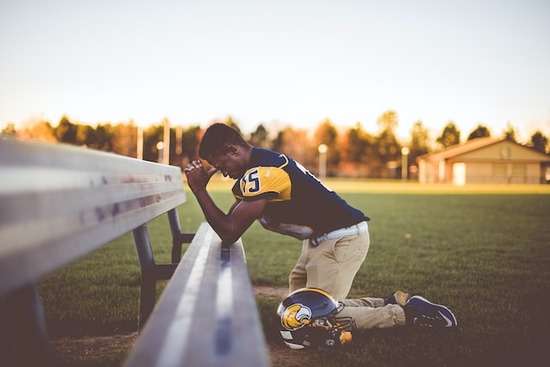
Just like you can pray at any time, you can also pray anywhere.
There’s no physical place we could go that would keep God from hearing our prayers.
However, there might be a physical place that helps us pray more easily, or that helps us block out distractions.
So it can still be a good idea to devote a specific place for our prayer time. And as we associate this place with our communion with Jesus, it can inspire reverence and peace within us just by being in it.
Jesus had a favorite place where He often went to pray. Before His crucifixion, He “went as was His custom to the Mount Olives” to pray (Luke 22:39, NKJV).
A church is also a good place to pray. In fact, Jesus said that the temple (church) is “called the house of prayer” (Matthew 21:13, NKJV).
But you can also pray at home, in prayer rooms, alone in your car, sitting on a bench in the park, or wherever you feel your need for God’s presence and ever-listening ear. Even while driving on a busy street, you can whisper a prayer to God with assurance that He’ll hear and answer it.
Here are a few biblical examples of not-so-ordinary places people prayed:
- “Jonah prayed unto the Lord His God out of the fish’s belly” (Jonah 2:1, NKJV).
- Nehemiah silently “prayed to the God of heaven” while standing in front of the King (Nehemiah 2:4, NKJV).
- Jesus prayed while He was on the cross: “Father, into Your hands I commend My spirit” (Luke 23:46, NKJV).
- Paul and Silas prayed while in prison: “And at midnight Paul and Silas prayed… and the prisoners heard them” (Acts 16:25, NKJV).
Whom should you pray with?
You can have individual, private prayers or you can pray with others as a group.
Group/corporate/public prayers
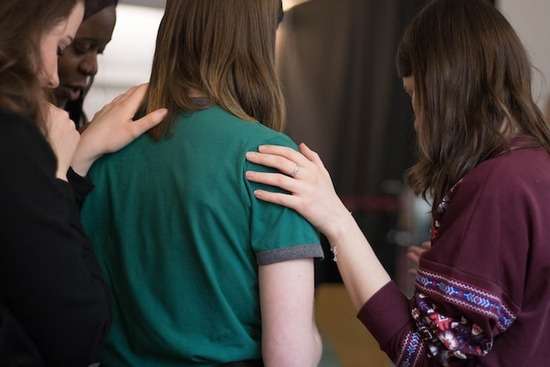
These organized prayer sessions can be offered in unison by more than one person, sometimes at the same time. All the people participating could be in the same location, or they can even do it remotely and connect through their phones or computers, like using Skype, FaceTime, or Zoom.
In most cases, one person prays on behalf of the rest (intercessory prayer), or they take turns praying for one another.
There are also times when everyone prays quietly at the same time.
But why are public or group prayers important?
Group prayers unite the group members with each other and with God. Members feel that they are not alone in their struggles. They’re comforted and consoled by others, even as they seek the help of God or a revelation of God’s will in a given situation.
And as we unite in intercession for others we pray for, our own spirits are enriched as we commune with God.
Matthew 18:20 says that whenever two or three are gathered in the name of Jesus, His presence is there with them.
So apart from having each other there for support, we’re also comforted by God’s presence through the Holy Spirit.
Have you ever had a problem, then someone offered to pray with you for a solution? It can help take that weight off your shoulders and direct your thoughts toward God.
The Bible tells us that even Jesus Himself longed for His friends to pray with Him in His most trying moment, just before His crucifixion.
Matthew tells us that He became “sorrowful even unto death.” Then He took three of His disciples; John, James and Peter as prayer partners and told them, “stay here and watch [pray] with me” (Matthew 26:38, NKJV).
Here are some factors to consider when praying as a group:
- Public prayers should be kept simple and short so it’s easy for others to follow. That way, it’s easier for them to keep their own thoughts directed toward God.
This is in line with what Jesus said when He advised against using a bunch of flowery, poetic speech to significantly lengthen prayers. The Pharisees would do this, thinking their prayers would “be heard because of their many words” (Matthew 6:7, NASB). But God already knows our needs! We don’t need to explain it in every way possible. The whole point is being intentional about putting these things in God’s hands.
- As much as possible, use phrasing that everyone involved understands.
- Unless a specific situation calls for it, you don’t need to openly confess your private sins. And never mention private confessions of others. When praying about confession and forgiveness, keep the phrasing general, allowing each of the individuals praying to direct their own struggles to God.
Private/personal prayers
These prayers are just between you and God. If possible, you might look for a secluded place that helps you quiet your mind and focus.
Though you could also have a private prayer even while standing within a crowd of people. It’s to Whom your mind is directed that counts.
Jesus said, “when you pray, go into your own room, and when you have shut your door, pray to your Father who is in the secret place…” (Matthew 6:6, NKJV).
Why are private prayers necessary?
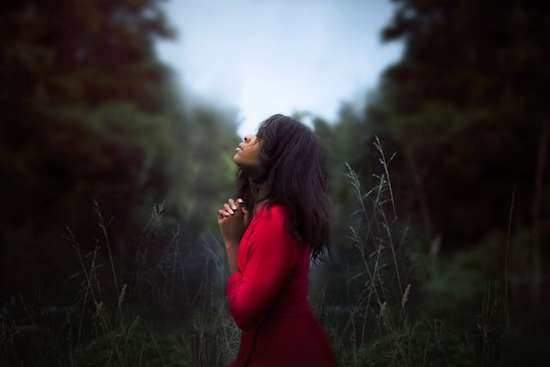
Sometimes, all we need is to be alone with our Heavenly Father to just pour our hearts to Him.
Just like we can do with a close friend.
Even though friends often talk in a public place, sometimes we need to talk with them in a private place. Times when we need to share something of a heavier subject matter, or if we need to work on an issue together and concentrate.
Even Jesus often “departed into a lonely place, and there prayed” (Mark 3:35, NKJV).
In fact, most of Jesus’ prayer life was a private one.
As the Son of God, often misunderstood and with the burden of our salvation on His shoulders, He often retreated to talk with His Father who understood Him and His mission best.
In the same way, when you feel no one understands you, or if you feel overwhelmed by your struggles and life’s burdens, you can turn to God and pray to Him since He understands us more than any other person could.
Private prayer time is when we can confess anything—even the thoughts and fears we have in the deepest corners of our minds. Even the thoughts we’re ashamed of or scared of. God hears it all, and receives our prayers with unconditional love.
We find a good example with Jacob, when he was threatened by his brother. Since only Jacob and God understood the details of the sin he committed against his brother, he sent his family away so that he “was left alone.” Then he wrestled with God in prayer until he was forgiven (Genesis 32:24, NKJV).
Also, private prayers can be longer than public prayers. You can take your time, just the way Jesus often “continued all night in prayer to God” (Luke 6:12, NKJV).
This is the time to tell Him about all your needs and situations, and even intercede for your loved ones you might be concerned about.
Is there a specific position for praying?
There isn’t an exact position we’re required to assume while praying. What’s most important is that we realize we’re talking to the God of all the universe. It’s appropriate to foster an attitude of reverence when we pray (Psalms 111:9).
And God understands our most personal circumstances. He knows that we need to pray while we’re driving in our cars, while in the middle of a tough work situation, or while we’re rocking a crying baby.
Or if you’re in a public place and feel your need to pray, you can just go ahead in the most unnoticeable way. Just like Nehemiah did while standing before the Persian king (Nehemiah 2:4).
Here are examples of prayer positions in the Bible
Sometimes the way we position ourselves can help us express ourselves and cultivate an attitude of worship and respect. If you think this might be helpful for you, here are some examples from Scripture about how people positioned themselves while praying.
- Kneeling down

This is the most common position for both public or private prayer because kneeling symbolizes reverence and respect. We lower ourselves in submission, showing that we recognize God’s authority.
In Luke 22:41, Jesus “knelt down and prayed” (NKJV). And in several instances, the disciples also “kneeled down and prayed” (Acts 9:4; 20:26; 21:5, NKJV).
Paul even says, “I bow my knees unto the Father of our Lord Jesus Christ” (Ephesians 3:14, NKJV).
Of Daniel, it is written that he “kneeled down upon his knees three times a day and prayed” (Daniel 6:10, NKJV).
And the Psalmist calls us to “kneel before the Lord our maker” (Psalms 95:6, NKJV).
- Bowing down
Bowing down before someone is an act of worship, because it also symbolizes submission, gratitude, and respect. That’s why many people lower their heads while they pray.
When Abraham’s servant saw that his prayer had been answered, “he worshiped the Lord, bowing himself to the earth” (Genesis 24:52, NKJV).
And in the story of the repentant tax collector, he showed his heartfelt submission in the way that he “would not even raise his eyes to heaven…and saying, ‘God, have mercy on me, a sinner!” (Luke 18:13, CSB).
Bowing our heads can also help to block out distractions so we can concentrate.
- Lifting up hands
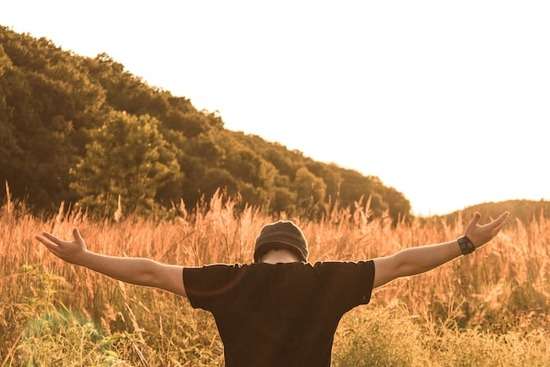
Photo by Alex Woods on Unsplash
This is a sign of surrender, openness, and acceptance. When we lift up our hands in prayer, we show that we can do nothing unless we receive God’s help. And we’re open to what He has in store for us.
In his letter to Timothy, Paul advises people to “pray, lifting up holy hands without anger or argument” (1 Timothy 2:8, NKJV).
- Looking up toward heaven
Looking up to heaven, symbolized by looking up in general, can also be a signal of dependence on God.
In John 17, Jesus “lifted up His eyes to heaven” and prayed. Also, when He resurrected Lazarus, “Jesus lifted up His eyes” and prayed (John 17:1; 11:41, NKJV).
- Lying flat
In some Bible versions, this is referred to as “laying prostrate” as a sign of ultimate submission before God (Deuteronomy 9:18, 25; 1 Chronicles 29:20).
It’s more than just kneeling down and bowing your head. Sometimes people do this while still on their knees, or sometimes they stretch themselves out completely. But the idea is that you’re placing your hands out on the ground, facing downward, and relaxing your entire body.
Again, we find an example in Jesus for this prayer position. He “fell on His face and prayed” (Matthew 26:39, NKJV). And Ezekiel the prophet also records that he prayed in this position. He says, “I fell down upon my face, and cried with a loud voice and said, Ah Lord God!” (Ezekiel 11:13, NKJV).
This often happened during very sincere prayers or confessions, sometimes out of desperation. These people’s actions demonstrated their total dependence on God.
- Standing
Sometimes you might be in a situation where people are asked to stand during a prayer.
In the story recorded in Luke 18, both the Pharisee and the tax collector stood while praying (Luke 18:11, 13).
Also, in the Old Testament sanctuary services, the Levites were required “to stand every morning to thank and praise the Lord, and likewise at evening” (1Chronicles 23:30, NKJV).
Standing while in prayer can demonstrate an attitude of readiness, expressing our willingness to take what God gives us and go where He leads. It can foster an attitude of support and solidarity, similar to the meaning in phrases like “stand together,” “stand up for,” or “stand with,” etc.
- Sitting
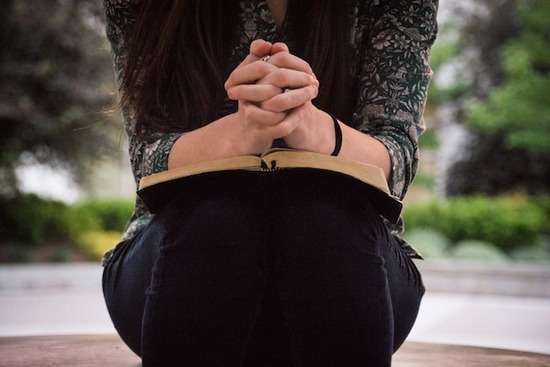
Photo by Olivia Snow on Unsplash
This is the position King David assumed when he prayed to acknowledge the covenant the Lord made with him (2 Samuel 7:18,27).
Sitting down isn’t mentioned much in the Bible. But considering that sitting is a common human posture, people must have prayed this way many times. It allows us to rest and to focus.
- While laying in bed
This position isn’t talked about as much in regards to prayer, but it’s certainly a time when many people end up praying.
Though we are told that when King Hezekiah was sick and about to die on his deathbed, he “turned his face to the wall and prayed unto the Lord” (2 Kings 20:2, NKJV).
God looks at the heart
As you have seen in the examples above, there are many ways that we can pray.
And there’s no wrong way to pray! Sincerity is all that matters.
Beyond outward positions and manners, or the places and occasions when we pray, God looks at the heart. When we acknowledge who He is, and that we are His children, we approach Him with reverence that only He is deserving of. “The Lord is a great God and a great King above all gods” (Psalm 95:3, NKJV).
Even in the Lord’s prayer, Jesus specified that apart from calling God our Father, we also recognize His worthiness of praise, honor, and worship (Matthew 6:9).
The psalmist says that what is most valuable to God is a broken (humble) spirit and a repentant heart (Psalm 51:17).
So as we pray, the one thing to remember is that we can let all our guards down. God knows our darkest secrets already, and there’s no reason to hide anything from Him because He already loves us and accepts us.
Our part is in trusting His love and care for us, having faith in His power to answer our prayers.
God’s Word is full of many wonderful promises He’s made to us. And unlike men who sometimes make promises and fail to fulfill them, “all the promises of God in Him are yes, and in Him, Amen” (2 Corinthians 1:20, NKJV).
We can claim these promises and trust that He will fulfill them because “God is not man, that He should lie… has He said and shall He not do it?” (Numbers 23:19, NKJV).
To learn more about prayer, check out our article on Prayer—What Is It and Why Is It Important?
And you can also share your prayer request for us to pray for or with you by filling out the prayer request form below.
Choose an Online Bible Study
Want to keep learning? Find out more about Jesus, humanity, the plan of salvation, and how God loves you enough to sacrifice everything, just to give you a chance to choose Him.
Sometimes it can be hard to know where to start, that’s why we offer free, user-friendly, online Bible study options you can do anytime, anywhere, and at your own pace.
This online Bible school will take you through the major themes of Scripture, breaking down the Bible’s complex concepts into bite-sized pieces, which can lead you toward the answers of life’s more challenging questions.
Related Articles



More Answers
Quem Foram os Juízes de Israel no Antigo Testamento?
Quem Foram os Juízes de Israel no Antigo Testamento?Tempos de crise exigem homens e mulheres de ação. Os israelitas, recém-estabelecidos na Terra Prometida, encontraram-se nesses tempos. À medida que nações inimigas atacavam e oprimiam as tribos, eles clamavam a Deus...

¿En qué se diferencian los Adventistas del Séptimo Día de otros protestantes?
¿En qué se diferencian los Adventistas del Séptimo Día de otros protestantes?Como denominación cristiana protestante, la Iglesia Adventista del Séptimo Día considera la Biblia como la regla suprema de fe y a Jesucristo como el único camino a la salvación. Tenemos...
Como os Adventistas do Sétimo Dia São Diferentes de Outros Protestantes?
Como os Adventistas do Sétimo Dia São Diferentes de Outros Protestantes?Como uma denominação cristã protestante, a Igreja Adventista do Sétimo Dia considera a Bíblia como o guia supremo e vê Jesus Cristo como o único caminho para a salvação. Temos algumas diferenças...

O que é ASI (Associação de Empresários e Profissionais Adventistas)?
O que é ASI (Associação de Empresários e Profissionais Adventistas)?ASI, que significa Associação de Empresários e Profissionais Adventistas (tradução adaptada), é uma organização baseada em associação que oferece apoio aos membros adventistas (profissionais...
Jesús y la Mujer en el Pozo: Derribando Barreras
El encuentro de Jesús con la mujer en el pozo revela su sentir por las personas heridas y su deseo de derribar prejuicios. Esta página analiza cómo Jesús se acercó a ella.

Revealing The True Meaning of The Parable of The Rich Man & Lazarus
Learn the real point behind one of Jesus’ most vivid parables.
O que são as Bem-Aventuranças (E o que significam)?
O que são as Bem-Aventuranças (E o que significam)?As Bem-Aventuranças, encontradas no início do Sermão da Montanha de Jesus no Evangelho de Mateus, são o manifesto do reino de Jesus. Elas descrevem a maneira como Seu reino funciona e o que significa ser um de Seus...

Líderes de la iglesia: ¿Cuál es el rol de un pastor Adventista?
Líderes de la iglesia: ¿Cuál es el rol de un pastor Adventista?¿Cuál es el rol de un pastor en la iglesia Adventista? La posición en sí misma, al menos en lo que respecta a una congregación local, no es muy diferente de la de los pastores en otras denominaciones...
ASI ni Nini (Huduma na Viwanda vya Waadventista vya Kibinafsi)?
ASI ni Nini (Huduma na Viwanda vya Waadventista vya Kibinafsi)?ASI, ambayo inayofupisha maneno (Huduma na Viwanda vya Waadventista vya Kibinafsi), ni shirika la uanachama linalotoa msaada kwa wainjilisti wa Kiadventista (wataalamu wa Kanisa la Waadventista wa Sabato...

Ellen White Alisema Nini Kuhusu Unabii wa Nyakati za Mwisho?
Tunaweza kusoma katika Maandiko kuhusu mfululizo wa matukio na dalili zinazoongoza hadi Ujio wa Pili wa Yesu Kristo.

Safari na Utume wa Ellen G. White Ulimwenguni
Safari na Utume wa Ellen G. White UlimwenguniIngawa Ellen White, mwanzilishi mwenza wa Kanisa la Waadventista wa Sabato, anajulikana zaidi kwa huduma yake nchini Marekani, pia alisafiri kwenda nchi nyingine kumi na mbili katika maisha yake—hili lilikuwa jambo kubwa...

Yote Kuhusu Wainjilisti wa Vitabu wa Kiadventista
Kanisa la Waadventista wa Sabato hutumia mbinu mbalimbali kusambaza tumaini la injili duniani.
¿Qué es ASI (Servicios e Industrias de Laicos Adventistas)?
¿Qué es ASI (Servicios e Industrias de Laicos Adventistas)?ASI, que significa Servicios e Industrias de Laicos Adventistas, es una organización basada en membresía que brinda apoyo a los laicos adventistas (profesionales Adventistas del Séptimo Día que no son...
¿Qué dijo Elena G. de White sobre la profecía de los últimos tiempos?
¿Qué dijo Elena G. de White sobre la profecía de los últimos tiempos?Podemos leer en las Escrituras acerca de la serie de eventos y señales que conducen a la segunda venida de Jesucristo. Y suena bastante intenso, por decir lo menos. La naturaleza simbólica del...
O que Ellen White disse sobre a profecia dos tempos finais?
O que Ellen White disse sobre a profecia dos tempos finais?Podemos ler nas Escrituras sobre a série de eventos e sinais que antecedem a segunda vinda de Jesus Cristo. E, para dizer o mínimo, isso soa bastante intenso. A natureza simbólica da linguagem da profecia...

Meaning of the Parable of the Two Sons in Matthew 21
Meaning of the Parable of the Two Sons in Matthew 21The parable of the two sons in Matthew 21:28-32 is about a father who instructs his sons to work in the family vineyard. The first son refuses to work but later has a change of heart and obeys. The second son says...
Viagens e Missão Mundial de Ellen G. White
Viagens e Missão Mundial de Ellen G. WhiteEmbora Ellen White, cofundadora da Igreja Adventista do Sétimo Dia, seja mais conhecida por seu ministério nos Estados Unidos, ela também viajou para outros doze países durante sua vida — uma grande conquista no século XIX,...
Joseph Bates na Nafasi Yake katika Kanisa la Waadventista
Joseph Bates na Nafasi Yake katika Kanisa la WaadventistaJoseph Bates alikuwa baharia aliyegeuka kuwa mhubiri ambaye alijiunga na Harakati ya Miller na kusubiri Ujio wa Pili wa Yesu kutokea mwaka 1844. Licha ya kukatishwa tamaa wakati hili halikutokea, Bates...

Je, Wasabato Husherehekea Sikukuu?
Je, Wasabato Husherehekea Sikukuu?Je unajiuliza ikiwa mwanafunzi mwenzako au mfanyakazi mwenzako Mwadventista husherehekea sikukuu kama wewe? Labda ungependa kumshirikisha kwenye sherehe fulani, lakini pia unataka kuheshimu imani yake. Kwa hiyo, huna uhakika wa jinsi...

O Que a Bíblia Diz Sobre a Segunda Vinda de Jesus Cristo
Curioso para saber o que a Bíblia diz sobre a Segunda Vinda de Jesus Cristo? Vamos abordar os versículos-chave e o que eles significam.

Waadventista Wanaamini Nini Kuhusu Imani na Matendo?
Waadventista Wanaamini Nini Kuhusu Imani na Matendo?Waadventista wanaamini tunaokolewa kwa imani, ambayo ni imani na tumaini tulilonalo kwa Yesu Kristo kutuokoa kutoka dhambini. Yesu, basi, anatupa uwezo wa kuishi kwa utii wa amri za Mungu na kuwahudumia wengine kwa...
Todo sobre los colportores Adventistas del Séptimo Día
Todo sobre los colportores Adventistas del Séptimo DíaLa Iglesia Adventista del Séptimo Día utiliza una variedad de métodos para difundir la esperanza del evangelio al mundo. Una de estas formas es a través del colportaje, también llamado “venta puerta a puerta” o...
Tudo Sobre Colportores Adventistas do Sétimo Dia
A Igreja Adventista do Sétimo Dia usa uma variedade de métodos para espalhar a esperança do evangelho ao mundo.
Los viajes y la misión mundial de Elena G. de White
Los viajes y la misión mundial de Elena G. de WhiteAunque Elena G. de White, cofundadora de la Iglesia Adventista del Séptimo Día, es más conocida por su ministerio en los Estados Unidos, también viajó a otros doce países durante su vida, un gran logro en el siglo XIX...

Mikutano ya Injili ya Waadventista ni Nini?
Kanisa la Waadventista wa Sabato linaweka mkazo mkubwa katika kushiriki injili kupitia uinjilisti, yaani kushiriki injili kupitia mahubiri, mafundisho, na ushuhuda.
Joseph Bates y su papel en la Iglesia Adventista del Séptimo Día
Joseph Bates y su papel en la Iglesia Adventista del Séptimo DíaJoseph Bates fue un marinero que se convirtió en predicador, se unió al Movimiento Millerita y esperó que ocurriera la Segunda Venida de Jesús en 1844. A pesar de sentirse decepcionado cuando esto no...
Joseph Bates e Seu Papel na Igreja Adventista do Sétimo Dia
Joseph Bates foi um marinheiro que se tornou pregador, juntou-se ao Movimento Millerita e esperou pela Segunda Vinda de Jesus em 1844.
¿Los Adventistas del Séptimo Día celebran las fiestas?
¿Los Adventistas del Séptimo Día celebran las fiestas?¿Te preguntas si tu compañero de clase o de trabajo adventista celebra las mismas fiestas que tú? Tal vez quieres incluirlo en algunas festividades, pero también deseas respetar sus creencias. Entonces, no estás...
Os Adventistas do Sétimo Dia Celebram Feriados?
Está se perguntando se seu colega de classe ou de trabalho adventista celebra os mesmos feriados que você?
Didn’t find your answer? Ask us!
We understand your concern of having questions but not knowing who to ask—we’ve felt it ourselves. When you’re ready to learn more about Adventists, send us a question! We know a thing or two about Adventists.