
In so many religions all throughout time, individuals work toward enlightenment, salvation, or the favor of a deity. People are taught subtly—or not so subtly—that if you only do enough good deeds, you’ll be worthy/ascended/redeemed/approved, etc.
But even for those who don’t follow a religion, there’s an underlying work-toward-betterment or work-toward-goodness motivation that we can’t just deny.
And this can cause confusion among Christians about faith and works. Are we saved by faith? Or do our works justify us? Or do works not matter at all?
Turns out, both faith and works matter. But faith has to come first (James 2:14-18).
In other words, we’re not saved by good works, but for good works.
Humanity, through Adam and Eve, has opted for a life of knowing both good and evil (Genesis 3:5, 7). And this brought about sin, selfishness, fear, etc. But God promises to save us from those consequences if we have faith in what Jesus Christ did for us. And as a result of this faith, works are the natural byproduct of experiencing this ultimate demonstration of love.
The faith-works balance doesn’t have to be hard to understand. So let’s break through some of the ideas that have muddied the waters and go straight to what Scripture tells us.
We’ll look at:
- What are faith and works, according to Scripture?
- How is faith related to works?
- What are justification and sanctification?
- How to experience justification by faith
Let’s begin with some definitions.
What are faith and works, according to Scripture?
Faith is trusting that what God says and does is true, even if we can’t see proof for it yet (Hebrews 11:1). It goes beyond a belief or theory to a deep conviction that affects the way we live and how we see the world.
Works refers to behavior or actions. Or ultimately, habits. The way we consistently act.
In Scripture, we see many instances of good “works” referring to acts of service to help others (John 10:32; Acts 9:36) or obedience to God’s law of love, the Ten Commandments (Matthew 22:38-40; Galatians 5:16, 22-25).
We also see references to bad/evil/sinful/wicked “works” when describing Satan, or people following the influence of sin (Galatians 5:19; Ephesians 5:11; Colossians 1:21). And it seems that the worst of these bad “works” are those that also hurt or corrupt others, not just the deed-doer (Matthew 5:19).
But “works” can even go beyond physical action. We think of good deeds like volunteering at a local soup kitchen, attending church, or honoring God’s commandments. Or bad works might be punching someone, stealing money, or gossiping.
However, works can even be internal, because it still involves decisive action. Internal wicked works could be harboring hate or jealousy, or wishing ill upon another (Matthew 5:21-22, 27-28). But internal good works can be praying, depending on God, letting go of fears, or cultivating a quiet heart (Psalm 51:17; Matthew 6:6; Galatians 5:22-23; Philippians 4:6-7).
(See also 1 Timothy 5:24-25.)
And all our sincerely good works, whether visible or invisible, are a result of what God does in our hearts first.
More on that next.
How is faith related to works?

Photo by Federico Tasin on Unsplash
Think of faith and works as a sequence in God’s plan to save us from the road to nowhere that is sin and evil.
Faith in God’s power—and nothing else—leads to salvation. We trust that He has saved us, we accept the love that He has for us, and that trust and acceptance impacts our internal moral compass. As a result, our actions—the works that stem from our hearts—reflect Him.
But some Bible passages in the New Testament can seem contradictory when they’re read alone, out of the context of their chapters and books. So let’s look at those next.
Let’s start with what the apostle Paul said:
“For we conclude that a person is justified by faith apart from the works of the law” (Romans 3:28, CSB).
“Because we know that a person is not justified by the works of the law but by faith in Jesus Christ” (Galatians 2:16, CSB).
These verses declare that justification (a fancy word for salvation) is possible by faith alone in Jesus Christ.
Some verses from the book of James can muddy the waters, though:
“What good is it, my brothers and sisters, if someone claims to have faith but does not have works? Can such faith save him?” (James 2:14, CSB)
“Faith without works is dead” (James 2:26, CSB).
Do Paul and James disagree?
To find out, we need to understand these passages in the context of their times and circumstances.
Paul wrote Romans 3 for Jewish Christians. Many of these Jews believed they needed to perform certain rituals, such as circumcision, to earn salvation. They thought they had an advantage over others because of their rigid law-keeping. And Paul knew he had to correct this harmful mindset (Romans 3:9-10).
On the other hand, James wrote to Christian believers to balance Paul’s writings and emphasize that God’s Ten Commandments—principles of love toward God, self, and others—shouldn’t be thrown out just because they alone can’t save us (James 2:8-12). He pointed out what kind of faith Christians should have—a faith that results in godly works.
After all, demons believe in God’s existence and power, even though they live in constant rebellion against God (verse 18). So belief in God’s existence isn’t the same as faith.
True faith has much more to it.
It changes the way we live. It leads to actions consistent with our beliefs. And any works of love we do are simply evidence that God is working in our lives (Galatians 5:6; 1 John 2:3).
Even basic psychology attests that humans generally act according to their beliefs.
In fact, it’s rather difficult to do otherwise. (And what would be the point?)
Our conviction about something—or lack of it—will eventually and inevitably come through in our actions.
Salvation isn’t about figuring out the right pattern of actions to demonstrate our faith. When we have genuine faith in Jesus and a desire to honor Him, our actions will naturally reveal that. Some call it “saving faith” or “living faith.”
That’s why Jesus emphasized in Matthew 7 that we’d be able to recognize true Christians “by their fruit”—the consistent actions that result from God’s Spirit working in their lives—just like we recognize the species of a tree by the kind of fruit it regularly produces (Galatians 5:22–23).
Now, as faith and works are becoming clearer in our minds, let’s talk about a few Christian terms that can sometimes be confusing.
What are “justification” and “sanctification”?
The concept of justification refers to the process of Jesus’ perfect life taking on the penalty that is meant for humanity’s decision to defy God’s way in favor of our own (2 Corinthians 5:21). When God looks at us, He only sees Jesus’ perfection—not all our mistakes and shortcomings.
Christ’s ultimate, loving sacrifice on the cross paid the debt that resulted from our sinfulness. And through that, we are justified before God. So justification is something only Jesus can do.
Sanctification is what follows justification. It’s the process of the Holy Spirit working in us to refine our lives, reveal more about God to us, and help us deepen our relationship with Him.
So justification starts the process. We receive Jesus’ sinless life (Philippians 3:9)—a clean slate. Then this change on the inside (2 Corinthians 5:17) results in a change on the outside as God begins His work in us—sanctification.
But sanctification isn’t something we do any more than justification is. It also happens by faith (Romans 7:14-25; Philippians 3:9).
Jesus is the one who sanctifies us completely (1 Thessalonians 5:23–24). He works in us “both to desire and to work for His good pleasure” (Philippians 2:13, NASB).
So how do these concepts tie in with faith and works?
How justification and sanctification help us understand faith and works
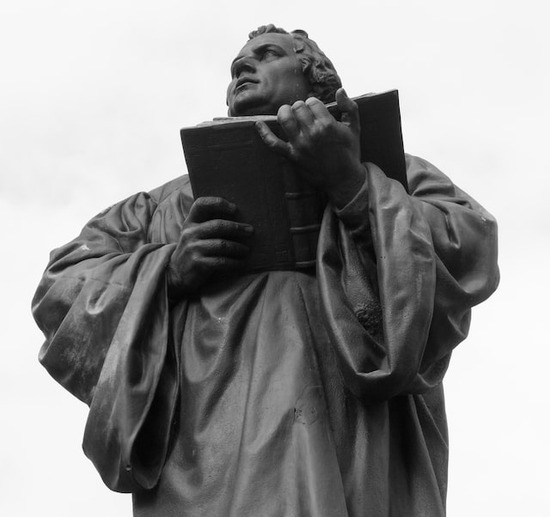
Photo by Wim van ‘t Einde on Unsplash
Faith and works are woven within justification and sanctification. Justification is an experience that happens by faith in Jesus Christ, rather than our own works. Sanctification is the process that follows. It involves works that give evidence for our faith and what God is doing in us.
So why can’t works justify us?
Because we’re born with a sinful nature, as a result of the decision in Eden. So when we’re in auto-pilot mode, this sinful nature pulls us toward selfishness. Even when we do the right thing, it’s often out of a selfish motive (Romans 3:9-10), such as wanting to help someone or giving money to a charity because of how it’ll make us look good.
But good news—God isn’t expecting us to get our act together before we come to Him. He wants us to accept His salvation just as we are.
Then, when we are justified by faith, we receive a fresh start and give God permission to begin working in our lives.
Look at how the apostle Paul puts it:
“For by grace you have been saved through faith, and that not of yourselves; it is the gift of God, not of works, lest anyone should boast. For we are His workmanship, created in Christ Jesus for good works, which God prepared beforehand that we should walk in them” (Ephesians 2:8–10, NKJV).
If we could be justified or saved by our works, that would result in pride. And we would be more focused on our own efforts than on letting God work within us. But when we open ourselves up to let God do it all, we forego any of that pride and depend on God—since He is the only source of goodness there is.
This understanding of justification by faith was a key tenet of the Protestant Reformation. We can thank Martin Luther for the way that he championed this truth throughout his life.
As a devout monk, Luther tried to do everything possible to earn God’s favor—even beating himself for his sins—but he felt it was never enough. After wrestling with passages of Scripture, he finally found freedom in the truth that faith alone in Christ is what will save him.
However, he also understood that justification by faith doesn’t mean we get to do whatever we want.
After all, it wouldn’t make sense to go back to our old lives when God has given us new lives (Romans 6:1-4).
Think about it. If we believe a book will be interesting, we’ll read it. If we believe a person is fun and nice, we’ll probably talk to them more. If we believe we might make a better first impression at a job interview if we get a fresh haircut…then we’ll probably make that happen!
The point is, we act on our beliefs all the time.
So it only makes sense that if we believe in and accept what Jesus did for us, it would have at least some effect on our lives! (Otherwise…we might question if we actually believe it or not.)
See, God designed us to do works of love—to be the salt of the earth and the light of the world (Matthew 5:13-14). And we inherently thrive when we live other-centered lives. To live in any other way goes against what we were created to be and do.
Thus, God wasn’t being arbitrary when He gave us the Ten Commandments. And He wasn’t giving us a list of demands to “appease” Him. Far from it. Instead, these are His way of saying, “This is how you’ll live the most meaningful and satisfying life.”
Sanctification is God restoring us to that ideal. He puts the principles of His law of love into our hearts (Hebrews 8:10), and we see evidence of this in our works—the way we treat others, our habits, and what we do when no one’s looking.
So what is it like to start this process?
How to experience justification by faith
Experiencing justification by faith is about deciding to start a journey with Jesus.
You may feel like you don’t know much yet. Or maybe you’re unsure whether you even want to start that journey.
But you won’t lose anything by considering these steps:
Discover God’s love for you

Photo by Bethany Laird on Unsplash
God doesn’t ask you to start any journey with Him without understanding what you’re getting into. He wants you to choose Him because you want to, not because you feel obligated or afraid.
That’s why the first step in the journey is getting to know Him for who He is—a God of selfless love who gave everything to get you out of the mess of sin and make it possible for you to have a relationship with Him (John 3:16; 1 John 4:18).
As you get to know Him, you might start to feel self-conscious. You wonder if you’re good enough for Him.
That’s when you need to remember…
Don’t wait to get your act together
Come to God as you are. You may only see your mistakes…but God invites you to come for that very reason. He can work in your life and change you (Philippians 2:13).
Think about it. What if someone dear to your heart wouldn’t spend time with you because they worried they weren’t good enough for you, or that they wouldn’t live up to your standards? How would that make you feel?
And what if you knew you could help them with what they were going through? But instead, they figured it’d be better if they solved a few more of their problems before they made any contact with you?
You’d probably want to tell them they don’t have to worry about all their shortcomings. In fact, as far as your relationship with them is concerned, those shortcomings are irrelevant! They’re one of your loved ones—you long to be with them, no matter what they’re going through.
And we’re the loved ones of God—His children that He lovingly created. So there’s nothing you need to do/finish/solve/reform before accepting His gift and beginning a relationship with Him.
Choose to receive the incredible gift of salvation by faith
This can be a simple prayer in which you tell Him that you accept His life in your place, and you choose to receive His transforming love and power.
You may feel like you don’t have much faith at the moment. But that’s okay. You can tell God that, too (Mark 9:24). Your prayer is simply telling both God and yourself, “OK…let’s give this a try!”
The good news is that He’s given us all a “measure of faith” to get started (Romans 12:3, NKJV).
Believe that God accepts you and has renewed your life
When we receive the gift of salvation, God makes us new (2 Corinthians 5:17). You might not feel any different right away, but you can move forward believing it’s true. God’s Holy Spirit is working in your life!
Grow in your relationship with God
Then, you have the opportunity to continue getting to know this God who has changed your life. You were designed for the joys of a relationship with Him. And learning more about the God of the universe can be enriching and fascinating. Feel free to be curious in your journey with God—ask Him anything!
Here are some ways you can build that relationship:
- Reading His messages to you in the Bible
- Talking to Him about what’s on your heart
- Spending time with a faith community
And as you see things in your life that need to change, or that you’re nervous about, tell God about it. Ask Him for strength and guidance—which He promises to provide (James 1:5).
Be encouraged—He who has started a good work in you will complete it (Philippians 1:6).
God designed us so that our lives would reflect our beliefs
Faith and works—turns out, they’re compatible, if not inseparable. And that’s because we were made for our outward expressions to reflect our inner convictions.
Understanding faith and works in this way keeps us from falling into the idea that we have to get our act together to be worthy of God’s gift of salvation. Or the idea that obedience doesn’t matter.
When we are justified by the grace of God, we begin a new life of faith, reflected in our actions. A life of faith that brings us into harmony with God’s original design for us. Then, we can live for the glory of God.
Choose an Online Bible Study
Want to keep learning? Find out more about Jesus, humanity, the plan of salvation, and how God loves you enough to sacrifice everything, just to give you a chance to choose Him.
Sometimes it can be hard to know where to start, that’s why we offer free, user-friendly, online Bible study options you can do anytime, anywhere, and at your own pace.
This online Bible school will take you through the major themes of Scripture, breaking down the Bible’s complex concepts into bite-sized pieces, which can lead you toward the answers of life’s more challenging questions.
Related Articles



More Answers

Quem Foram os Juízes de Israel no Antigo Testamento?
Quem Foram os Juízes de Israel no Antigo Testamento?Tempos de crise exigem homens e mulheres de ação. Os israelitas, recém-estabelecidos na Terra Prometida, encontraram-se nesses tempos. À medida que nações inimigas atacavam e oprimiam as tribos, eles clamavam a Deus...

¿En qué se diferencian los Adventistas del Séptimo Día de otros protestantes?
¿En qué se diferencian los Adventistas del Séptimo Día de otros protestantes?Como denominación cristiana protestante, la Iglesia Adventista del Séptimo Día considera la Biblia como la regla suprema de fe y a Jesucristo como el único camino a la salvación. Tenemos...
Como os Adventistas do Sétimo Dia São Diferentes de Outros Protestantes?
Como os Adventistas do Sétimo Dia São Diferentes de Outros Protestantes?Como uma denominação cristã protestante, a Igreja Adventista do Sétimo Dia considera a Bíblia como o guia supremo e vê Jesus Cristo como o único caminho para a salvação. Temos algumas diferenças...

O que é ASI (Associação de Empresários e Profissionais Adventistas)?
O que é ASI (Associação de Empresários e Profissionais Adventistas)?ASI, que significa Associação de Empresários e Profissionais Adventistas (tradução adaptada), é uma organização baseada em associação que oferece apoio aos membros adventistas (profissionais...
Jesús y la Mujer en el Pozo: Derribando Barreras
El encuentro de Jesús con la mujer en el pozo revela su sentir por las personas heridas y su deseo de derribar prejuicios. Esta página analiza cómo Jesús se acercó a ella.

Revealing The True Meaning of The Parable of The Rich Man & Lazarus
Learn the real point behind one of Jesus’ most vivid parables.
O que são as Bem-Aventuranças (E o que significam)?
O que são as Bem-Aventuranças (E o que significam)?As Bem-Aventuranças, encontradas no início do Sermão da Montanha de Jesus no Evangelho de Mateus, são o manifesto do reino de Jesus. Elas descrevem a maneira como Seu reino funciona e o que significa ser um de Seus...

Líderes de la iglesia: ¿Cuál es el rol de un pastor Adventista?
Líderes de la iglesia: ¿Cuál es el rol de un pastor Adventista?¿Cuál es el rol de un pastor en la iglesia Adventista? La posición en sí misma, al menos en lo que respecta a una congregación local, no es muy diferente de la de los pastores en otras denominaciones...
ASI ni Nini (Huduma na Viwanda vya Waadventista vya Kibinafsi)?
ASI ni Nini (Huduma na Viwanda vya Waadventista vya Kibinafsi)?ASI, ambayo inayofupisha maneno (Huduma na Viwanda vya Waadventista vya Kibinafsi), ni shirika la uanachama linalotoa msaada kwa wainjilisti wa Kiadventista (wataalamu wa Kanisa la Waadventista wa Sabato...

Ellen White Alisema Nini Kuhusu Unabii wa Nyakati za Mwisho?
Tunaweza kusoma katika Maandiko kuhusu mfululizo wa matukio na dalili zinazoongoza hadi Ujio wa Pili wa Yesu Kristo.

Safari na Utume wa Ellen G. White Ulimwenguni
Safari na Utume wa Ellen G. White UlimwenguniIngawa Ellen White, mwanzilishi mwenza wa Kanisa la Waadventista wa Sabato, anajulikana zaidi kwa huduma yake nchini Marekani, pia alisafiri kwenda nchi nyingine kumi na mbili katika maisha yake—hili lilikuwa jambo kubwa...

Yote Kuhusu Wainjilisti wa Vitabu wa Kiadventista
Kanisa la Waadventista wa Sabato hutumia mbinu mbalimbali kusambaza tumaini la injili duniani.
¿Qué es ASI (Servicios e Industrias de Laicos Adventistas)?
¿Qué es ASI (Servicios e Industrias de Laicos Adventistas)?ASI, que significa Servicios e Industrias de Laicos Adventistas, es una organización basada en membresía que brinda apoyo a los laicos adventistas (profesionales Adventistas del Séptimo Día que no son...
¿Qué dijo Elena G. de White sobre la profecía de los últimos tiempos?
¿Qué dijo Elena G. de White sobre la profecía de los últimos tiempos?Podemos leer en las Escrituras acerca de la serie de eventos y señales que conducen a la segunda venida de Jesucristo. Y suena bastante intenso, por decir lo menos. La naturaleza simbólica del...
O que Ellen White disse sobre a profecia dos tempos finais?
O que Ellen White disse sobre a profecia dos tempos finais?Podemos ler nas Escrituras sobre a série de eventos e sinais que antecedem a segunda vinda de Jesus Cristo. E, para dizer o mínimo, isso soa bastante intenso. A natureza simbólica da linguagem da profecia...

Meaning of the Parable of the Two Sons in Matthew 21
Meaning of the Parable of the Two Sons in Matthew 21The parable of the two sons in Matthew 21:28-32 is about a father who instructs his sons to work in the family vineyard. The first son refuses to work but later has a change of heart and obeys. The second son says...
Viagens e Missão Mundial de Ellen G. White
Viagens e Missão Mundial de Ellen G. WhiteEmbora Ellen White, cofundadora da Igreja Adventista do Sétimo Dia, seja mais conhecida por seu ministério nos Estados Unidos, ela também viajou para outros doze países durante sua vida — uma grande conquista no século XIX,...
Joseph Bates na Nafasi Yake katika Kanisa la Waadventista
Joseph Bates na Nafasi Yake katika Kanisa la WaadventistaJoseph Bates alikuwa baharia aliyegeuka kuwa mhubiri ambaye alijiunga na Harakati ya Miller na kusubiri Ujio wa Pili wa Yesu kutokea mwaka 1844. Licha ya kukatishwa tamaa wakati hili halikutokea, Bates...

Je, Wasabato Husherehekea Sikukuu?
Je, Wasabato Husherehekea Sikukuu?Je unajiuliza ikiwa mwanafunzi mwenzako au mfanyakazi mwenzako Mwadventista husherehekea sikukuu kama wewe? Labda ungependa kumshirikisha kwenye sherehe fulani, lakini pia unataka kuheshimu imani yake. Kwa hiyo, huna uhakika wa jinsi...

O Que a Bíblia Diz Sobre a Segunda Vinda de Jesus Cristo
Curioso para saber o que a Bíblia diz sobre a Segunda Vinda de Jesus Cristo? Vamos abordar os versículos-chave e o que eles significam.

Waadventista Wanaamini Nini Kuhusu Imani na Matendo?
Waadventista Wanaamini Nini Kuhusu Imani na Matendo?Waadventista wanaamini tunaokolewa kwa imani, ambayo ni imani na tumaini tulilonalo kwa Yesu Kristo kutuokoa kutoka dhambini. Yesu, basi, anatupa uwezo wa kuishi kwa utii wa amri za Mungu na kuwahudumia wengine kwa...
Todo sobre los colportores Adventistas del Séptimo Día
Todo sobre los colportores Adventistas del Séptimo DíaLa Iglesia Adventista del Séptimo Día utiliza una variedad de métodos para difundir la esperanza del evangelio al mundo. Una de estas formas es a través del colportaje, también llamado “venta puerta a puerta” o...
Tudo Sobre Colportores Adventistas do Sétimo Dia
A Igreja Adventista do Sétimo Dia usa uma variedade de métodos para espalhar a esperança do evangelho ao mundo.
Los viajes y la misión mundial de Elena G. de White
Los viajes y la misión mundial de Elena G. de WhiteAunque Elena G. de White, cofundadora de la Iglesia Adventista del Séptimo Día, es más conocida por su ministerio en los Estados Unidos, también viajó a otros doce países durante su vida, un gran logro en el siglo XIX...

Mikutano ya Injili ya Waadventista ni Nini?
Kanisa la Waadventista wa Sabato linaweka mkazo mkubwa katika kushiriki injili kupitia uinjilisti, yaani kushiriki injili kupitia mahubiri, mafundisho, na ushuhuda.
Joseph Bates y su papel en la Iglesia Adventista del Séptimo Día
Joseph Bates y su papel en la Iglesia Adventista del Séptimo DíaJoseph Bates fue un marinero que se convirtió en predicador, se unió al Movimiento Millerita y esperó que ocurriera la Segunda Venida de Jesús en 1844. A pesar de sentirse decepcionado cuando esto no...
Joseph Bates e Seu Papel na Igreja Adventista do Sétimo Dia
Joseph Bates foi um marinheiro que se tornou pregador, juntou-se ao Movimento Millerita e esperou pela Segunda Vinda de Jesus em 1844.
¿Los Adventistas del Séptimo Día celebran las fiestas?
¿Los Adventistas del Séptimo Día celebran las fiestas?¿Te preguntas si tu compañero de clase o de trabajo adventista celebra las mismas fiestas que tú? Tal vez quieres incluirlo en algunas festividades, pero también deseas respetar sus creencias. Entonces, no estás...
Os Adventistas do Sétimo Dia Celebram Feriados?
Está se perguntando se seu colega de classe ou de trabalho adventista celebra os mesmos feriados que você?
Didn’t find your answer? Ask us!
We understand your concern of having questions but not knowing who to ask—we’ve felt it ourselves. When you’re ready to learn more about Adventists, send us a question! We know a thing or two about Adventists.