
God designed the Sabbath day to be a 24-hour period when we could pause and enjoy the goodness of His creation. We do this by putting aside our regular work so we can focus on spending time with Him and appreciating what He’s created (Exodus 20:8-11).
That may sound simple enough. But it gets blurrier when we think about how things are today.
Jobs are more diverse and advanced. Work schedules cover hours around the clock, and many people take work home or even work at home. So many things are automated. Not all jobs are physically strenuous. And some things that used to be considered work (fishing, sewing, gardening, caring for animals, hiking, cooking, etc.) are now things some of us do for fun when we have a little time to ourselves.
So how can we tell which kinds of things count (or don’t count) as “work” when it comes to keeping the Sabbath holy?
Well, there’s a reason the fourth commandment didn’t include a checklist. The real way to answer this question lies in a deeper understanding of what it truly means to keep the Sabbath—which God made for us (Mark 2:27).
So let’s look to Scripture and see what we can find.
We’ll go over:
- What the Bible means when it says not to work on Sabbath
- Why some Sabbath keepers work on Sabbath
- How to determine what counts as work
- How the definition of “work” has changed throughout history
Let’s start by looking at when the Sabbath was first established, and how it became a common practice among ancient Israel.
What does the Bible mean when it says we shouldn’t work on Sabbath?

Photo by Cassidy Dickens on Unsplash
Though the Sabbath day is discussed in Exodus 16, in Exodus 20 is where we read of it in the form of the fourth commandment.
So why would something so seemingly simple as “not working” be part of an everlasting commandment?
We’re told not to work on Sabbath because we wouldn’t be able to fully experience it if we just kept going with our regular routines. If something is special, you make time for it. If you want to acknowledge something, enjoy something, learn more about something…what do you have to do to make those things happen?
Stop what you’re doing and shift your attention.
God created the Sabbath as our permission to stop, rest, and shift our mindset from “working” to “enjoying.”
And this gives us a perfect opportunity to spend more time communing with God (Exodus 20:8-10; Isaiah 58:13-14; Luke 14:6; Matthew 11:28-30). And not just by ourselves, but worshiping God as a faith community—“a Sabbath of complete rest, a sacred assembly” (Leviticus 23:3, CSB).
By sanctifying and resting on the seventh day Himself, God provided an example of how we can celebrate the Sabbath by resting and spending time with Him (Genesis 2:2-3).
This kind of rest would be especially meaningful for the Israelites after they spent so long in slavery, most likely having to work all day, every single day. So God took special care to remind them of that Sabbath in the fourth commandment (Exodus 20:8-11), giving them the encouragement and permission they needed to experience the profound rest they had been denied for so many years.
The Sabbath was—and still is—a time of spiritual rejuvenation. It was created to direct our attention to spiritual matters where we could rest from our daily cares and find peace and reconnection with God.
However, as we mentioned earlier, Sabbath keepers recognize that there are some types of work that must be performed out of necessity.
Why do some Sabbath keepers work on Sabbath?

Sabbath keepers might work on Sabbath if they feel their work must be done for the sake of others (or for the simple fact that their line of work is essential, and can’t stop on any day of the week).
This is often the case for:
- Doctors
- Nurses
- Caregivers
- Emergency workers
- Police
- Firefighters
There are even some occupations Sabbath keepers hold that take place on the Sabbath with the purpose of helping others honor the Sabbath day.
That’s right—we’re talking about pastors and church personnel who serve congregations of Sabbath-keepers on Sabbath.
Even in Bible times, the Israelites knew there were certain types of work that had to be done—even on the Sabbath.
In a perfect world, all would be able to experience each Sabbath to the fullest. But regardless of what day it was, they still needed to feed their animals, care for their children, and tend to sick members of the community.
This is why the Israelites had to make a distinction between necessary and unnecessary work, or work that needed to be done every day versus work that didn’t need to take place on the Sabbath.
But keep in mind that the real key to understanding what counts as work on the Sabbath isn’t a matter of simply listing and categorizing certain jobs as “do on Sabbath” or “don’t do on Sabbath.”
Understanding what counts as work on the Sabbath is a matter of coming to God and asking Him to help you apply the principle of the Sabbath to your individual circumstances.
But there are many cases where we can see why some jobs still have to continue being done, no matter the day or time.
How can we determine what counts as work on Sabbath?

Photo by Tara Clark on Unsplash
Even though the Bible doesn’t give us a categorized list, there are still ways we can determine how “work” is defined in relation to the Sabbath. Here we’ll look at what God and His prophets instructed the Israelites on various occasions, and how the Israelites upheld (or failed to uphold) these instructions.
Types of work that paused on the Sabbath:
- Common jobs and trades (Exodus 20:8-10; Jeremiah 17:20-22): Most jobs or careers fall under this category. These are the types of jobs where if the work is done only six out of seven days a week, the results of that labor should still be enough to provide for the community.
- Engaging in commerce/buying or selling (Nehemiah 13:15-22): Focusing on making a profit or obtaining material goods is all about furthering one’s own business or status, and it’s counterproductive to pausing to focus on one’s Creator, who made all of this possible to begin with. What’s more, when someone buys from a seller, they require the seller to work, keeping them from experiencing Sabbath rest.
That’s what God had the prophet Nehemiah address with the Israelites when they stopped protecting the Sabbath hours and kept going about their businesses or trading with traveling merchants.
- Non-urgent chores or tasks (Exodus 16:22-30; 35:3; Isaiah 58:13-14): Even tasks that aren’t considered a career or a trade were to be stopped on Sabbath, such as gathering food, lighting a fire, or even “talking business” (Isaiah 58:13, CSB). These are all things that could reasonably be done before the Sabbath or wait until after.
While many of these jobs were different in ancient Israel’s time than they are today, the principles still apply. There’s nothing wrong with growing your business or maximizing profits or negotiating trades or purchases. God wants us to be good stewards and diligent workers (Genesis 2:15; Ephesians 6:6-8).
The reason these things stop on Sabbath is, again, for our own mental and spiritual health, and for our relationship with God.
But what about the types of jobs that keep going at all hours of every day? How does the fourth commandment, and the blessings of Sabbath, apply to those who have these jobs?
Before we get further into the details, let’s reiterate that praying for God’s guidance in our own unique circumstances is the first step in fully understanding and experiencing Sabbath.
If you’re looking for some tips in determining these things, however, here are some helpful questions you can ask yourself:
- Is this a task I could do ahead of time?
- Is this a task that must be done every day?
- Who, for the most part, is benefiting from the completion of this task?
- Will someone suffer if I don’t do this today?
- Will someone be less able to enjoy the Sabbath if I do (or don’t do) this today?
We can also ask ourselves why we’re thinking about working on the Sabbath in the first place.
Ask:
- Am I looking for the satisfaction of completing the last item on my to-do list?
- Am I wanting to earn more money or get ahead in my career?
- Am I afraid of losing my job if I don’t work on Sabbath?
- Am I truly seeking to know whether this work or task honors the Sabbath day?
While some of these questions are easy to answer, some of them could require some additional thought and soul-searching. But we can have faith that God will guide us to a solution.
After all, He made the Sabbath for us (Mark 2:27). It’s not supposed to be a near-unattainable feat to keep the Sabbath. And He promises to provide wisdom when we need it (James 1:5).
We can also look through Scripture to see if there are any occasions when followers of God worked on Sabbath in some capacity.
Examples in the Bible of work that continued on Sabbath
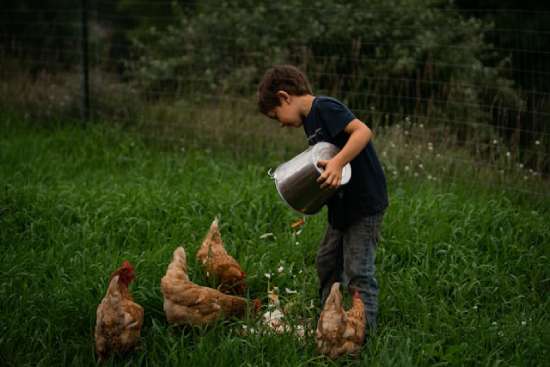
Photo by Laura Ohlman on Unsplash
The Bible does show a few situations when some types of work would need to be done even if it was Sabbath.
Priests worked in the Tabernacle or temple
Priests and sanctuary personnel worked on Sabbath to conduct the sanctuary services (Matthew 12:5; Leviticus 23:1-3). Though the priests worked on the Sabbath, they worked to tend to the responsibilities God had given them. They were in charge of maintaining a holy convocation on the Sabbath. They were also responsible for performing the daily services in the temple.
Daily care for livestock
Though the Israelites did what they could to get non-urgent work out of the way before Sabbath, there were always a few things that had to be done at regular intervals. Livestock, for example, had to be watered every day (Luke 13:15; Matthew 12:11-12).
Responding to emergencies
There was always the chance of an Israelite stumbling upon a life-threatening emergency on the Sabbath (Matthew 12:11; Luke 14:5; Exodus 23:4-5). In situations like these, Israelites would act to save the lives of people and animals, even though it might cause them to do what would otherwise be considered work.
Guards defended the gates of Jerusalem
Nehemiah posted guards at the gate of Jerusalem to keep merchants from entering the city and tempting the Israelites to participate in commerce on the Sabbath day (Nehemiah 13:15-22).
This story demonstrates the difference between necessary work and business work. The guards were stationed to protect the sanctity of the Sabbath for the community while the merchants were trying to earn a profit.
The disciples picked grain
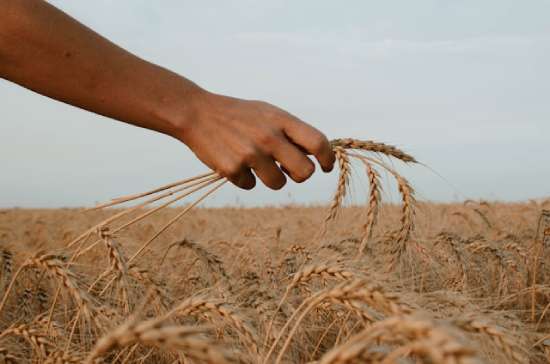
Photo by Paz Arando on Unsplash
The Bible tells us the 12 disciples picked grain on the Sabbath (Matthew 12:1-2). They did this because they were hungry and had no food with them.
They certainly weren’t doing it to sell the grain. And it wasn’t as though they were harvesting the whole field, only a couple pieces of grain here and there, enough for their hunger to be satisfied.
Most importantly, their action of picking the grain didn’t distract them from spending time with God. As a matter of fact, they were walking through the field with Jesus Christ Himself!
And yet, because the act of plucking grain from their stalks fit the description of one of the Pharisees’ rules about work, the Jewish leaders insisted that they were breaking the Sabbath.
But when the Pharisees criticized them for picking the grain, Jesus compared it to the time David was given the holy bread to eat when he was in need even though the law said only priests could eat of the holy bread.
By giving this example, Jesus showed that compassion and the needs of human beings should be the priority. The Law is to protect humans and help them thrive—not make it harder for them.
Jesus healed people on the Sabbath
Jesus healed people on the Sabbath on many different occasions (Matthew 12:10-14; Luke 13:10-17; Luke 14:1-6; John 5:1-18; John 9:1-16).
Though the Pharisees criticized Jesus for doing what they considered work on the Sabbath, Jesus once again highlighted the importance of attending to the needs of others before attending to the requirements of the law.
He pointed out that the Pharisees all watered their animals on the Sabbath, which, while being a type of work, was still done to meet their animals’ needs.
The Jews had a difficult time understanding what it truly meant to keep the Sabbath. Instead of living by the principles of the Sabbath, they had become dependent on the list of Sabbath regulations their Jewish leaders, the Pharisees, had created (Mark 7:5-13).
As a result, they became so preoccupied with their law and traditions that they thought Jesus Christ Himself was breaking the Sabbath when He healed people (Matthew 12:10).
But Jesus explained that it was good to heal on the Sabbath, saying:
“What man is there among you who has one sheep, and if it falls into a pit on the Sabbath, will not lay hold of it and lift it out? Of how much more value then is a man than a sheep? Therefore it is lawful to do good on the Sabbath” (Matthew 12:11-12, NKJV).
In this way, Jesus explained that serving others and tending to the needs of our neighbors does not break the law. The Sabbath’s entire purpose was to benefit mankind (Mark 2:27).
This is why it’s so important that we don’t reduce Sabbath-keeping to a bunch of rules and categorized lists.
This makes it all too easy to reduce the Sabbath to a ritual to complete, rather than a blessing to enjoy. A general list of rules also fails to address the complexities of specific situations we face.
Instead, we have to approach the Sabbath by relying on the Holy Spirit’s leading while studying the Sabbath principles He left for us in His Word.
How has the definition of “work” changed throughout history?

Photo by Teona Swift
People in the 21st century celebrate Sabbath differently than those we read about in the Bible. We face different circumstances than the Israelites of Jesus’ time.
For instance, thanks to modern technology, what was once considered strenuous or time-consuming work is now as easy as pushing a button.
We can consider how the Israelites, when enslaved in Egypt, didn’t get the opportunity to rest from their labor. But when God liberated them from Egyptian slavery, he also liberated them from the work they used to perform on Sabbath. He gave them a day where they could rest, without worrying about cooking, plowing, or lighting a fire.
Lighting a fire in ancient Israel was an exhausting task. It involved splitting, carrying, and kindling raw wood. What a relief it must have been to be released from this tiresome chore on the Sabbath (Exodus 35:3)!
But that was back then.
Today, we can turn on our heaters or light our gas stoves with just a turn of a dial.
Turning a dial isn’t something most Adventists would consider strenuous. More importantly, we don’t feel that turning a dial is something that’s going to keep us from enjoying the fullness of the Sabbath or distract us from communion with God.
So many once-difficult tasks can now be accomplished with hardly a thought about them. Some we do on autopilot.
However, we do acknowledge that what is considered “work” can vary from culture to culture just as it can vary from one century to another. The idea of work might look different for various cultures depending on different connotations, values, and available technology.
This is yet another reason we have to be careful about reducing Sabbath observance to a list of rules.
Rules often depend on context.
When the context of our situation changes, it may affect the application of some rules.
While principles are timeless, the way we apply those principles to our lives will change over time or across different circumstances.
It’s also important to consider that rules can be followed without much thought, while considering principles causes us to use our minds, pray to God, and consult our Bibles.
An excessive list of things to stop or avoid may easily keep us from experiencing the Sabbath as a delight (Isaiah 58:13-14).
On top of that, taking excessive measures to avoid work can become a form of work itself!
Joe A. Webb, DMin, former senior pastor of the Caboolture Seventh-day Adventist Church, explained that:
“How well we keep the Sabbath does not depend on how well we know the rules or how hard we try, or even on how often we rebuke others whom we consider to be Sabbath breakers, but on how well we know the Lord of the Sabbath and connect with Him, particularly on the Sabbath.”1
This is why we can’t rely on man-made rules. We have to accept the timeless principles God gave us to truly receive the blessing of the Lord’s day.2
John Brunt, Ph.D., former vice president of academic administration at Walla Walla University, adds:
“This does not mean that laxity and a lack of concern for Sabbath observance should prevail. It does mean that the community that follows Jesus’ way will be a definite kind of community. It will be a community that thinks about the meaning of the Sabbath. It will be a community that reflects together on how the Sabbath can best be kept in a way that both contributes to its meaning and benefits the people to whom God has given it as a gift.”3
In the end, keeping the Sabbath is all about:
- Turning our minds to God as our Creator
- Focusing on the principles He gave us
- Asking God to show us how to keep the Sabbath in a way that’ll bring us closer to Him
God wants each of us to enjoy the peace and joy that comes with celebrating the Sabbath. He wants us to see how we can use it to spend more time with family or in fellowship with fellow believers.
But above all, He wants us to remember that Sabbath is all about growing in our relationship with Him.
Want some ideas of how you can spend the day God set aside to be with you? Check out
“Rest and Reconnection: What it Really Means to Keep the Sabbath”
for a list of 55 activities you can enjoy on the Sabbath.
Related Articles.


- Webb, A., Joe, “The Sabbath experience,” Ministry Magazine, Seventh-day Adventist World Church [↵]
- Mark 7:7-8; Matthew 23: 1-4; 2 Corinthians 3:5-6; Romans 2: 28-29. [↵]
- Brunt, John, “How shall we keep the sabbath?” Ministry Magazine, Seventh-day Adventist World Church, [↵]
More Answers

The Barren Fig Tree Parable: What It Means to Bear Fruit
Find out what the Parable of the Barren Fig Tree really means.

¿Qué son las reuniones evangelísticas adventistas?
¿Qué son las reuniones evangelísticas adventistas?La Iglesia Adventista del Séptimo Día pone un gran énfasis en compartir el evangelio mediante la evangelización, o compartir el evangelio a través de la predicación, la enseñanza y el testimonio. Una de las formas en...
O que são os Encontros Evangelísticos Adventistas?
O que são os Encontros Evangelísticos Adventistas?A Igreja Adventista do Sétimo Dia dá grande ênfase ao compartilhamento do evangelho por meio da evangelização, ou seja, compartilhar o evangelho através da pregação, ensino e testemunho. Uma das formas de realizarmos...

O Que os Adventistas Acreditam Sobre Fé e Obras?
O Que os Adventistas Acreditam Sobre Fé e Obras?Os adventistas acreditam que somos salvos pela fé, que é a crença e confiança que temos em Jesus Cristo para nos salvar dos nossos pecados. Jesus, então, nos capacita a viver em harmonia com os mandamentos de Deus e a...
¿Qué creen los Adventistas sobre la fe y las obras?
¿Qué creen los Adventistas sobre la fe y las obras?Los adventistas creen que somos salvos por la fe, que es la creencia y confianza que tenemos en Jesucristo para salvarnos de nuestros pecados. Jesús, entonces, nos capacita para vivir en armonía con los mandamientos...
Je, Ninahitaji Kuwa Mwadventista Ili Niokolewe
Je, Ninahitaji Kuwa Mwadventista Ili Niokolewe?Jibu la swali hili ni rahisi, “hapana.” Linapokuja swala la wokovu katika Yesu Kristo, kinachohitajika kwa mtu ni kukiri dhabihu ya Yesu kwa ajili yetu, kuamini kwamba Ametuokoa, na kudai zawadi ya bure ya wokovu ambayo...
¿Necesito ser adventista para ser salvo?
¿Necesito ser adventista para ser salvo?La respuesta a esta pregunta es simplemente, “no.” Cuando se trata de la salvación en Jesucristo, todo lo que se requiere de una persona es reconocer el sacrificio de Jesús por nosotros, creer que Él nos ha salvado y reclamar el...
Preciso ser Adventista para ser salvo?
A resposta para essa pergunta é simplesmente: “não.”

Lo que la Biblia dice sobre la Segunda Venida de Jesucristo
¿Tienes curiosidad sobre lo que la Biblia dice acerca de la Segunda Venida de Jesucristo? Cubriremos los versículos clave y su significado.

¿Quién fue Mateo, el apóstol, en la Biblia?
En el primer libro del Nuevo Testamento, encontramos la historia del Evangelio desde la perspectiva de Mateo.
2 Corinthians: An Overview of Paul’s Most Personal Letter
Discover Paul’s lessons on forgiveness, reconciliation, generosity, and more. It’s all in the book of 2 Corinthians!
Quem Foi Mateus, o Apóstolo, na Bíblia?
Quem Foi Mateus, o Apóstolo, na Bíblia?No primeiro livro do Novo Testamento, encontramos a história do Evangelho sob a perspectiva de Mateus. Ele era um coletor de impostos judeu de Cafarnaum, no primeiro século d.C., e provavelmente era desprezado pelos outros judeus...

The Pharisee and the Tax Collector Parable: Its Meaning Made Simple
The Meaning of the Pharisee and the Tax Collector ParableIn Luke 18:9-14, Jesus told a parable about two men who went to the temple to pray. One was a Pharisee and the other a tax collector. The Pharisee prayed (well, bragged) about his own good works compared to the...
Biblia Inasema Nini Kuhusu Ujio wa Pili wa Yesu Kristo
Unajuliza Biblia inasema nini kuhusu Kurudi kwa Yesu Kristo Mara ya Pili? Tutajadili aya kuu na maana zake.

The Story of the Widow’s Mite—What It Really Means
The Story of the Widow’s Mite—What It Really MeansPeople often assume bigger is better, but the Bible turns this concept on its head with the story of the Widow’s Mite. Of all the donations Jesus sees at the temple, the gift that draws His attention is not the...

Consejo de Elena G. de White sobre la Educación Universitaria
Consejo de Elena G. de White sobre la Educación UniversitariaElena G. de White, una cofundadora importante del Adventismo, es conocida a menudo por su orientación práctica y espiritual para la educación infantil adecuada. Pero también estuvo significativamente...
Mathayo Alikuwa Nani Katika Biblia?
Mathayo Alikuwa Nani Katika Biblia?Katika kitabu cha kwanza cha Agano Jipya, tunapata simulizi la Injili kutoka kwa Mathayo. Alikuwa mtoza ushuru Myahudi kutoka Kapernaumu katika karne ya kwanza MK, na huenda alichukiwa na Wayahudi wenzake kwa kuchagua kazi hiyo....

¿Cuáles son los beneficios de vivir en el campo?
¿Cuáles son los beneficios de vivir en el campo?Visitar el campo puede ofrecer un descanso muy necesario del típico ajetreo y bullicio de la ciudad. Muchos incluso han decidido mudarse a zonas rurales para disfrutar de un ritmo más lento, espacios amplios, aire...
Quais São os Benefícios de Viver no Campo?
Visitar o campo pode oferecer uma pausa muito necessária do típico agito da cidade.

¿Qué significa la parábola de la perla de gran precio?
Esto es lo que Jesús enseñó sobre el reino de los cielos a través de esta breve parábola sobre un comerciante que encuentra una perla invaluable.
O Que Significa a Parábola da Pérola de Grande Valor?
Aqui está o que Jesus ensinou sobre o reino dos céus por meio desta parábola curta sobre um comerciante que encontra uma pérola inestimável.
Por Que Muitos Adventistas Querem Viver no Campo
Por Que Muitos Adventistas Querem Viver no CampoViver em áreas rurais é algo que os adventistas têm valorizado historicamente, embora as necessidades da vida moderna nem sempre tenham tornado isso possível. Convenhamos, as vantagens da vida na cidade são bastante...
Uma Visão Geral de Romanos: Fé, Justiça, Relacionamentos
Uma Visão Geral de Romanos: Fé, Justiça, RelacionamentosO livro de Romanos é uma das 21 epístolas, ou cartas abertas, do Novo Testamento. E embora seja um texto bíblico antigo, ainda tem uma relevância significativa (até surpreendente) para nossas vidas hoje. O...

Jesus é o Mesmo Ser que Miguel, o Arcanjo?
Jesus é o Mesmo Ser que Miguel, o Arcanjo?Muitos cristãos têm se perguntado sobre a misteriosa identidade de Miguel, o Arcanjo. Desde os primórdios do cristianismo, muitos interpretaram Miguel como o Messias identificado com a figura do Anjo do Senhor. O reformador...
Je, Faida za Kuishi Vijijini ni Zipi?
Kutembelea maeneo ya vijijini kunaweza kutoa mapumziko yanayohitajika sana kutoka kwenye pilikapilika za kawaida za mijini.
Je, Mfano wa Lulu ya Thamani Kubwa Unamaanisha Nini?
Hivi ndivyo Yesu alivyofundisha kuhusu ufalme wa mbinguni kupitia mfano huu mfupi wa mfanyabiashara aliyepata lulu ya thamani isiyo na kifani.
Kwa Nini Waadventista Wengi Wanataka Kuishi Vijijini
Kwa Nini Waadventista Wengi Wanataka Kuishi VijijiniKuishi maeneo ya vijijini ni jambo ambalo Waadventista wamekuwa wakilithamini kihistoria, ingawa mahitaji ya maisha ya kisasa hayafanyi iwezekane kila wakati. Tukubali, faida za kuishi mjini zinaonekana wazi: fursa...
Muhtasari wa Kitabu cha Warumi: Imani, Haki, Mahusiano
Hapa kuna muhtasari na historia ya waraka mrefu zaidi wa Paulo.
Sobre o que é a Parábola do Semeador de Jesus?
A parábola do semeador é, em última análise, sobre como as pessoas responderam a Jesus Cristo e Sua mensagem do reino de Deus—o Evangelho.
Didn’t find your answer? Ask us!
We understand your concern of having questions but not knowing who to ask—we’ve felt it ourselves. When you’re ready to learn more about Adventists, send us a question! We know a thing or two about Adventists.