
The key figures and founders of Seventh-day Adventism were a group of people from various Protestant Christian denominations who were committed to studying the Word of God and sharing about Jesus Christ.
Though concentrated on the east coast of the United States, the movement didn’t remain there long. These individuals had a vision for a diverse worldwide movement that would reach across cultures and languages and result in connected congregations across the globe.
The Holy Spirit working through their efforts has done just that.
We’ll learn more about the lives of these ordinary yet devoted figures in the Adventist Movement:
Lots to cover! So, let’s begin with a man who emerged on the scene shortly after the Second Great Awakening of the early 19th century.
William Miller
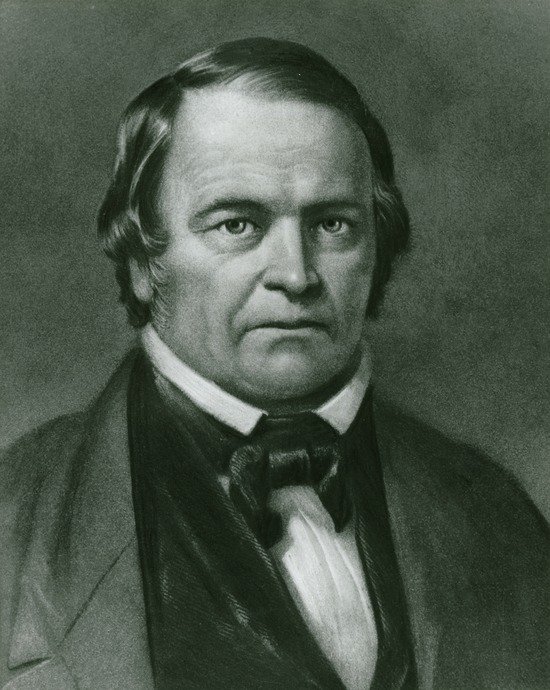
Courtesy of the Ellen G. White Estate, Inc.
Initially known as the man who spurred the curiosity surrounding the second coming of Christ, William Miller was an American Baptist preacher and one of the forerunners of the Seventh-day Adventist Church.
Before becoming a devoted Bible scholar, Miller was a deist. After returning from serving in the War of 1812, however, he became anxious about the concepts of death and the afterlife.
He turned to the Bible for answers.
While studying his Bible, he learned much more than he ever thought he would. His memoir records how he found Scripture to contain “principle so perfectly adapted to the wants of a fallen world” and that “in Jesus I found a friend.”1
As Miller began to preach and publish information about the Second Advent, he and many of his followers, known as Millerites, were mocked openly and became unwelcome in their Christian churches.
So they went on to form the Millerite Movement, which focused on the truths they learned from their studies. They came to believe that Jesus would come in 1843 or 1844, and some of his followers eventually settled on October 22, 1844, as the exact date.
When Jesus didn’t return, the day became known as the Great Disappointment.
This set them back a bit. But they weren’t going to give up easily.
Many of his followers dove back into the Bible, back into the prophecy of Daniel 8:14. They knew the 2,300-day prophecy meant something, just not the coming of Christ.
Though Miller was wrong about the timing of the Second Coming, it spurred his followers (some of whom we’ll cover next) to start the Seventh-day Adventist Church, a movement that would continue to prepare the world for Christ’s return.
Hiram Edson
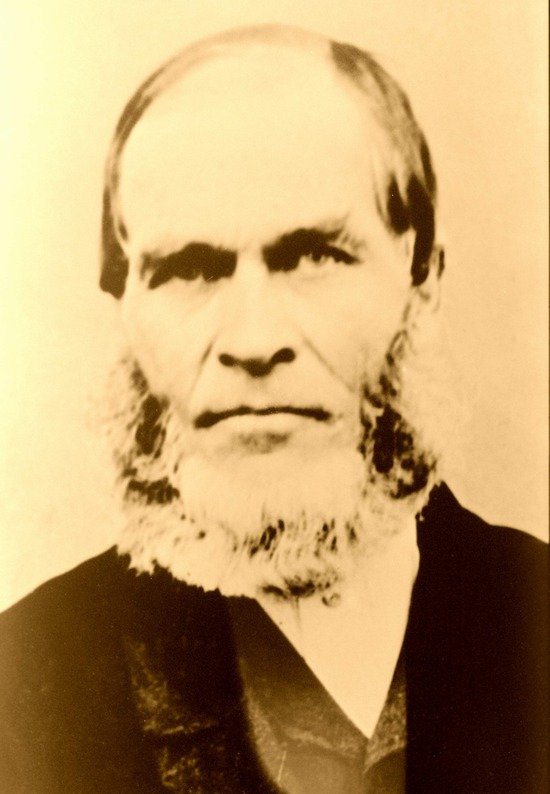
Courtesy of the Ellen G. White Estate, Inc.
Hiram Edson is perhaps best known in the Adventist Movement for his role in uncovering why Jesus didn’t come on October 22, 1844. And throughout the rest of his life, he encouraged and guided others to the truths in the Bible.
So how did he help unravel the Great Disappointment?
On October 23, as believers were reeling from their disappointment, Edson, a Millerite leader in his area, got a distinct impression that he needed to “encourage the brethren.”2
After praying with a small group of believers, he and a fellow Millerite, O.R.L. Crosier, set off through a cornfield to visit his neighbors.
But suddenly, Edson stopped.
“Brother Edson, what are you stopping for?” Crosier called out.
Edson responded, “The Lord was answering our morning prayer.”3
He shared how the Holy Spirit impressed him that Jesus wasn’t supposed to come to the earth on October 22, 1844. Rather, Jesus had begun an important work, known as the Investigative Judgment, in the Most Holy Place of the heavenly sanctuary.
This impression spurred Edson, along with Crosier and another individual named F. B. Hahn, to study the prophecy in Daniel that William Miller had studied. As they did so, they saw its connection to Jesus’ heavenly ministry (Hebrews 8 and 9).4
In 1846, Edson held a conference on his property in New York, where he shared what he had uncovered and met other Millerites who eventually started the Adventist Church.
Though he continued to work as a farmer throughout his life, spreading the gospel was always uppermost in his mind. He financially supported the church in every way he could.5 And he also went on evangelistic tours throughout New York and even up to Canada with other leaders in the Adventist Church, like Joseph Bates and J. N. Andrews.6
He received an honorary ordination to the ministry sometime between 1866 and 1875,7 but his life is truly an example of a layperson who committed to spreading the gospel in whatever ways he could.
Joseph Bates
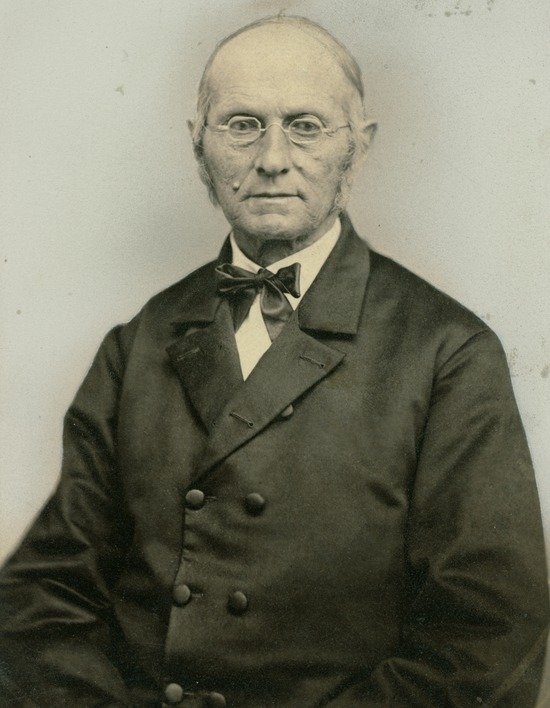
Courtesy of the Ellen G. White Estate, Inc.
Joseph Bates was a powerhouse in the Adventist Church, traveling—often on foot—from city to city to preach. He was involved in many leadership roles within the church and wrote on numerous biblical subjects, including the seventh-day Sabbath.
But before becoming an Adventist preacher, Joseph Bates spent many years out at sea. During this time, he began to read the Bible—a New Testament slipped into his suitcase by his wife. The little book changed his life, and he committed his life to God.
When he retired from the sea at age 35, he had a small fortune of $11,000—worth nearly $328,000 today.
After leaving the sea, Bates learned about William Miller and his teachings. He began working with Miller to educate people on the truths Miller and his followers had discovered. Despite the Great Disappointment, his faith in God didn’t waver.
In fact, he believed in the Advent Movement so much that he ended up putting his entire life’s savings—all $328,000 worth—toward its growth.
In 1846, Bates wrote a piece about the biblical seventh-day Sabbath and how it’s one of the ten commandments that has been forgotten by the Christian world. James and Ellen White read his article and, from it, decided to become “Sabbatarian Adventists.”
Along with James and Ellen White, Joseph Bates is one of the co-founders of the Seventh-day Adventist Church.
We’ll learn about James and Ellen White next.
Ellen G. White
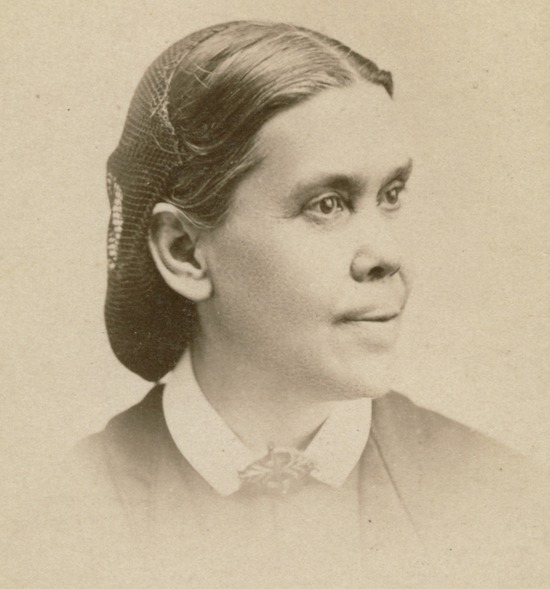
Courtesy of the Ellen G. White Estate, Inc.
Ellen White, recognized as having the biblical gift of prophecy, helped start and organize the Adventist Church. As it grew, she supported and guided its leadership, health and medical work, educational work, and worldwide missions. She was also a prolific writer, writing nearly 100,000 pages during her lifetime.
Without a shadow of a doubt, the Bible is the foundation of the Adventist faith. And everything Ellen White wrote was to make sure church leadership did not stray from the guidance of Scripture.
Through her writings, she provided the great controversy framework, which helped people see the Bible through the lens of a battle between Christ and Satan. She also sought to help people apply God’s Word to their daily lives in a practical way—no matter what denomination a person claimed.
All of Ellen White’s counsels and admonitions were documented and compiled into what is known today as the EGW Writings. These are managed by the trustees of the EGW Estate in Silver Spring, Maryland, and they remain relevant and of great value to the church.
James White
James White—Ellen White’s husband—was active in the Millerite Movement and, after the Great Disappointment, helped start the Adventist Church. He was a key proponent of organizing the General Conference of Seventh-day Adventists and played an integral role in founding other institutions.
The first Adventist school, health center, and publishing house were all started by him.
His personal health issues were what spurred the organization of an Adventist medical system. After receiving medical care while recovering from a stroke, he and his wife realized the help wasn’t what it could be. In response, they established the Battle Creek Sanitarium.
In addition to the health work, James White was involved in publishing, together with his wife. His first publication was The Present Truth, and it quickly became an effective gospel-spreading method. This periodical later became known as the Adventist Review and still circulates today.
The success of the Adventist Church in various witnessing methods—education, healthcare, and literature—can be attributed to James White’s tireless efforts.
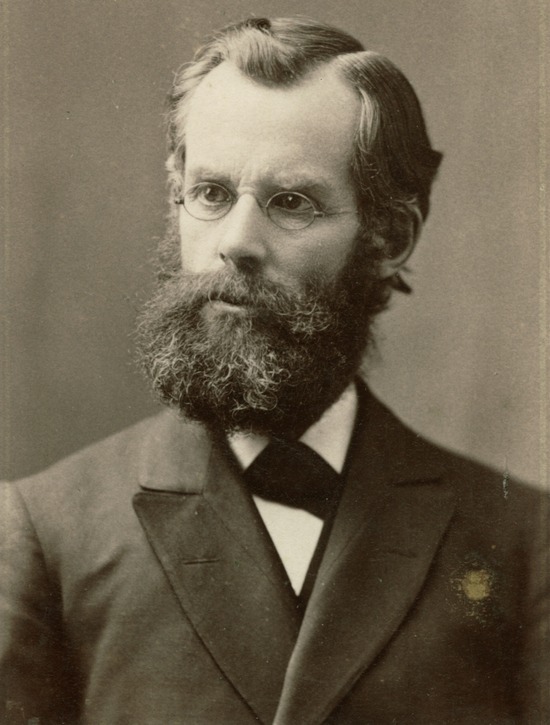
J. N. Andrews
Courtesy of the Ellen G. White Estate, Inc.
John Nevins Andrews was an earnest Bible student who devoted his life to God’s work and contributed in many ways to Adventist theology. He spent many years writing and editing for Adventist publications, eventually taking the publishing work to Europe as the first Adventist missionary.
It all started when at age 12, Andrews learned about the Millerite Movement and excitedly awaited Jesus’ coming. The Great Disappointment was a big blow for him.
While struggling to know how to proceed, he learned about the seventh-day Sabbath and began to keep it. A few years later, in 1849, he met James and Ellen White and Joseph Bates, who directed him to the Bible and helped him understand what had really occurred on the day of the Great Disappointment.
At 20 years of age, he devoted himself to God’s work in numerous ways.
His earnest Bible studies led him to publish books, including an in-depth look at the history of the Sabbath. He also used his writings to support Ellen White’s writings, and together, they worked to spread the good news of Christ.
Later on, when the Adventist Church was officially established, he held the role of president of the General Conference for a time. He was also an editor of the Adventist Review.
As Seventh-day Adventist beliefs spread throughout America, Andrews knew that wasn’t enough.
If Christians were supposed to share the three angels’ messages with the whole world, then he needed to do just that. So he went to Switzerland, helping to lead the church in Europe, provide ministerial training, and establish Adventist publishing there.
Andrews’ mission work not only began the globalization of the Adventist Church but also helped grow the kingdom of God.
Today, Andrews University in Berrien Springs, Michigan—the first Adventist university—is named after J. N. Andrews in recognition of his efforts.
The Adventist Church today
Thanks to the work of Miller, Edson, Bates, the Whites, Andrews, and many others, Adventism flourished all around the world.
In the late 1870s, the church only had 16,000 members.
Twenty years later, in 1901, the worldwide membership count totaled 75,000.
Today, there are more than 20 million local church members, as well as 8,000+ schools, 100+ hospitals, and 50+ publishing houses.
With its fundamental beliefs firmly founded in biblical truth, the Adventist Church continues to grow, learn, and share the gospel with the world. The expansion of the Adventist Church hasn’t stopped…and it won’t until Christ returns to take us home.
Related Articles



- Bliss, Sylvester, Memoirs of William Miller (Joshua V. Himes, Boston, MA, 1853), p. 65. [↵]
- “The Voice of God,” Lest We Forget, vol. 3, p. 2. [↵]
- “Hiram Edson,” Adventist Learning Community. [↵]
- “The Voice of God,” Lest We Forget, vol. 3, p. 2. [↵]
- “Hiram Edson: Chosen instrument,” Lest We Forget, vol. 3, pp. 4–6. [↵]
- “Hiram Edson: The Farmer in the Cornfield,” Lineage. [↵]
- Ibid. [↵]
More Answers

Cómo ven los Adventistas el fin del mundo
El fin del mundo no es algo agradable para pensar. Pero aquí te mostramos cómo podemos encontrar esperanza y consuelo en lo que está por venir.

¿Qué dice la Biblia sobre el cielo?
¿Qué dice la Biblia sobre el cielo?seres humanos tienen un anhelo natural de entender qué viene después. Y casi todas las religiones tienen algún tipo de explicación al respecto. ¿Hay algo más allá de esta vida y sus desafíos? ¿Hay algo que esperar que pueda darnos...

Waadventista Wanaamini Nini Kuhusu Maisha, Kifo, na Ufufuo wa Yesu?
Yesu Kristo, mtu aliyeishi Palestina ya karne ya kwanza, ndiye msingi wa imani ya Waadventista.
O Que os Adventistas Acreditam Sobre a Vida, Morte e Ressurreição de Jesus?
Jesus Cristo, uma pessoa que viveu na Palestina do primeiro século, é o fundamento da fé Adventista.
Jinsi Waadventista Wanavyoutazama Mwisho wa Dunia
Mwisho wa dunia sio jambo la kufurahisha kufikiria. Lakini hivi ndivyo tunavyoweza kupata tumaini na faraja katika yanayokuja.

¿Cómo quiere Dios que use mi dinero?
La Biblia ofrece sabiduría sobre las mejores formas en que podemos usar nuestro dinero. Aprende lo que la Biblia dice sobre el diezmo, las ofrendas, proveer, deudas, ahorros, inversiones y presupuesto.
Como Deus quer que eu use o meu dinheiro?
A Bíblia oferece sabedoria sobre as melhores maneiras de usar o dinheiro. Aprenda o que as Escrituras dizem sobre dízimo, ofertas, provisão para a família, dívidas, poupança, investimentos e orçamento.
Mungu Anataka Nitumie Vipi Pesa Zangu?
Biblia inatoa hekima juu ya namna bora tunavyoweza kutumia pesa zetu. Jifunze Biblia inasemaje kuhusu zaka, sadaka, kutoa, madeni, akiba, uwekezaji, na kupanga bajeti.
Biblia Inasemaje Kuhusu Mbingu?
Maisha baada ya kifo ni jambo linalowasumbua watu wote. Iwe Mkristo au la, binadamu ana shauku ya asili ya kuelewa kinachofuata.
Como os Adventistas Veem o Fim do Mundo
O fim do mundo não é algo agradável de se pensar. Mas aqui está como podemos realmente encontrar esperança e conforto no que está por vir.
O Que a Bíblia Diz Sobre o Céu?
A vida após a morte é algo que está na mente de todos nós. Seja cristão ou não, os seres humanos têm um anseio natural de entender o que vem a seguir.

¿Por qué es tan importante el agua?
Todos sabemos que el agua es una sustancia sin la cual no podemos vivir.

¿Por qué los Adventistas del Séptimo Día Adoran el Sábado?
¿Por qué los Adventistas del Séptimo Día Adoran el Sábado?Aunque la mayoría de las denominaciones cristianas protestantes observan “el Día del Señor” los domingos, o el primer día de la semana, los Adventistas del Séptimo Día observan el sábado, el sábado bíblico,...
Kwa Nini Waadventista wa Sabato Huabudu Siku ya Jumamosi?
Waadventista huabudu siku ya saba ya juma kwa sababu Mungu aliifanya Jumamosi kuwa siku takatifu wakati wa uumbaji. Jifunze ni nini kinachofanya siku hii kuwa maalum kwa Waadventista.
Por que os Adventistas do Sétimo Dia Adoram a Deus no Sábado?
Os adventistas adoram a Deus no sétimo dia da semana porque Deus fez do sábado um dia santo na criação. Saiba o que torna este dia tão especial para os adventistas.

6 maneras de saber si alguien es un verdadero profeta
La Biblia habla tanto de profetas verdaderos como falsos y nos da una guía específica sobre cómo probar a los profetas y sus afirmaciones. La Escritura es nuestra defensa contra el engaño.

6 Maneiras de Saber Se Alguém É Um Verdadeiro Profeta
A Bíblia fala tanto de profetas verdadeiros quanto falsos e nos dá orientações específicas sobre como testar profetas e suas reivindicações. A Escritura é nossa proteção contra o engano.
Njia 6 za Kujua Ikiwa Mtu Ni Nabii wa Kweli
Biblia inazungumzia manabii wa kweli na wa uongo na inatupa mwongozo maalum juu ya jinsi ya kuwajaribu manabii na madai yao. Maandiko ni kinga yetu dhidi ya udanganyifu
Kwa Nini Maji Ni Muhimu Sana?
Sote tunajua kwamba hatuwezi kuishi bila maji.

¿Qué es un campamento Adventista del Séptimo Día?
Aunque los campamentos no comenzaron con la Iglesia Adventista del Séptimo Día, son tan propias de los adventistas como las pilas de heno.

Je, Waadventista Wasabato Wana “Sheria” Kuhusu Kampuni za Nguo?
Dini nyingi zina mwongozo kuhusu mavazi, lakini je, Kanisa la Waadventista wa Sabato lina maoni gani? Gundua jinsi Waadventista wanavyochagua mavazi kulingana na kanuni za Kibiblia.
Os Adventistas do Sétimo Dia têm “regras” para marcas de roupas?
Muitas religiões têm diretrizes sobre vestimenta, mas e a Igreja Adventista? Descubra como os Adventistas escolhem se vestir com base em princípios bíblicos.

What the Parable of the Mustard Seed is All About
This parable shows us how God is always at work, even if we can’t always see it.
O Que É um Encontro de Acampamento Adventista do Sétimo Dia?
Embora as reuniões de acampamento não tenham começado com a Igreja Adventista do Sétimo Dia, são tão característicos dos adventistas quanto o “junta panelas”..
Mkutano wa Kambi wa Waadventista wa Sabato ni Nini?
Ingawa mikutano ya kambi haikuanza na Kanisa la Waadventista wa Sabato, ni jambo la msingi sana katika utamaduni wa Waadventista.

Wanavyoamini Waadventista wa Sabato Kuhusu Tabia ya Kikristo
Wanavyoamini Waadventista wa Sabato Kuhusu Tabia ya KikristoMifano ya matendo na maneno yanayounda tabia ni muhimu katika aina yoyote ya mfumo wa imani kwa sababu yanatokana na imani hizo. Waadventista wa Sabato wanatazama Biblia, pamoja na Yesu kama mfano kamili, kwa...
¿Tienen los Adventistas del Séptimo Día “reglas” para la vestimenta?
Muchas religiones tienen pautas sobre el vestuario, pero ¿qué hay de la Iglesia Adventista? Descubre cómo los adventistas eligen vestirse basados en principios bíblicos.
Lo que los Adventistas del Séptimo Día creen sobre la conducta cristiana
Os padrões de ações e palavras que compõem o comportamento são centrais para qualquer tipo de sistema de crenças, pois fluem dessas crenças.
O Que os Adventistas do Sétimo Dia Acreditam Sobre o Comportamento Cristão
Nossas crenças devem afetar nosso comportamento? Descubra o que a Bíblia diz sobre o comportamento cristão e viver uma vida em amor por Jesus.
Didn’t find your answer? Ask us!
We understand your concern of having questions but not knowing who to ask—we’ve felt it ourselves. When you’re ready to learn more about Adventists, send us a question! We know a thing or two about Adventists.