
Ellen White is an important part of the Seventh-day Adventist Church: she played a significant role in its founding, provided biblical support for several key doctrines, and continues to inspire church members today with her insightful counsel.
But if you’re just becoming familiar with what Adventism is and what it’s all about, it might feel strange to find that so much attention is placed on one particular person of our history.
It might even bring you to wonder, can I still be an Adventist if I don’t “believe” in Ellen White or Ellen White’s teachings?
Simply put, the answer is, “yes!” And we’ll get into why.
Jesus and the Bible have always been, and still are, the foundation of the Adventist Church. No individual or man-made creed will change that.
This page will discuss how Adventists regard Ellen White, answering questions like:
- What does it mean to “believe” in Ellen White
- Can I be an Adventist if I don’t believe in Ellen White?
- Why do Adventists hold Ellen White in such high regard?
Let’s start off by establishing what it even means to believe in Ellen White.
What does “belief” in Ellen White mean?
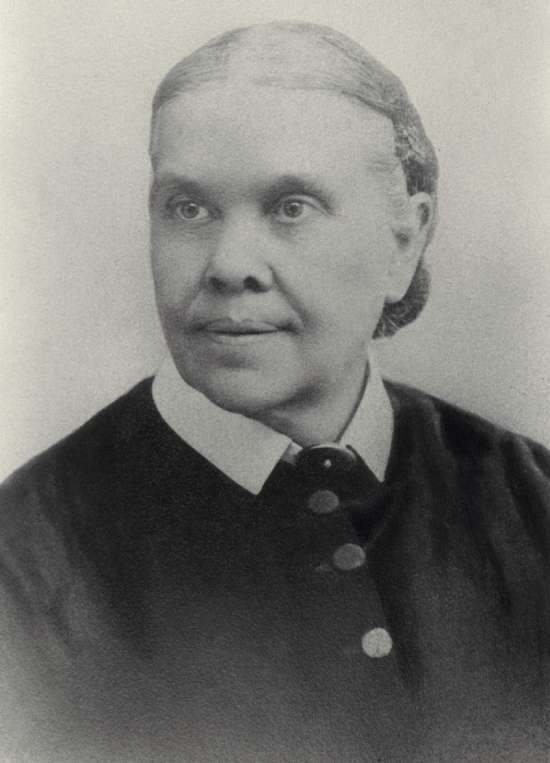
Courtesy of the Ellen G. White Estate, Inc.
When Adventists talk about belief in Ellen White, they aren’t referring to it in the same way that a person would ”believe” in Jesus Christ.
Ellen White is not, and should never be, held in the same regard as God.
So, instead of asking if someone believes in Ellen White, it’s more accurate to ask if someone believes that she had the spiritual gift of prophecy.1
This doesn’t mean unwaveringly adhering to all of her writings, as many of them were written in a specific context to a specific audience. She also wrote ordinary letters about everyday things, just like many people did in those days when they didn’t live in close proximity.
Rather, believing in Ellen White is more about recognizing her as a servant of God and acknowledging her prophetic gift (just as we’d say that we “believe” in the prophets we read about in the Bible).
But how do Adventists know that Ellen White exhibited the gift of prophecy?
Well, she passes the tests of a prophet as outlined in the Bible:
- Glorify God and not themselves (John 16:13)2
- Testify that Jesus became human and is from God (1 John 4:2)3
- Must align with the Bible (Isaiah 8:20)4
- Lives a life that bears good fruit [habits] (Matthew 7:15-16)5
- Prophecies must come true (Jeremiah 28:9)6
Her writings and instructions that concern Adventist doctrine and theology are always compared to biblical instruction. Nothing she wrote contradicts or amends the instructions of the Word of God.
Many Adventists who know Ellen White’s teachings well feel confident that her writings align with the Bible and can supplement their spiritual life.
That being said, Seventh-day Adventism is a global church, so there are certainly varying degrees of knowledge about or application of Ellen White’s teachings from congregation to congregation, and even Adventist to Adventist.
These differences ensure that Adventists are not Adventist simply because they “check the box” of believing in Ellen White’s inspired counsel. Not only that, but an individual’s beliefs shape over time depending on their experiences. Each is on their own unique walk with God.
Now, let’s break down the primary question of this article a little bit more.
Can I be an Adventist if I don’t believe in Ellen White?
There are several reasons why the answer to this question is yes, including:
- Jesus and the Bible are the foundation of the Adventist Church.
- The early Adventist Church pioneers themselves, including Ellen White, would answer this question with a “yes.”
- Ellen White embraced the fact that her special gift was to point people toward Scripture, upholding its importance.
- The Fundamental Beliefs are descriptive and not prescriptive.
By going over each of these reasons, we can gain a better understanding of the Church and why someone can still be an Adventist, even if they don’t fully believe in or know everything about Ellen White’s prophetic gift.
Jesus Christ and the Bible are the foundation of the Adventist Church
From its beginning, the Adventist Church has placed a lot of emphasis on careful Bible study. The Word of God and the life of His Son, Jesus, make up the cornerstone of the Church. Without those things, the Church would not exist.
The Bible is also the foundation of all Adventist doctrines and beliefs, including the Sabbath, the Trinity, Creation, the Great Controversy, and the second coming of Christ.
Furthermore, God is the only being that Adventists worship. Adventist fellowship, then, is dependent on one’s belief in and view of God.
Belief in Jesus, His gift of salvation, and the Bible are far more important than knowing all about Ellen White. Believing in Jesus and His gift of eternal life is actually a salvational issue. In other words, you certainly do not need to believe in Ellen White’s prophetic gift to be saved.
Early church founders’ position on this question
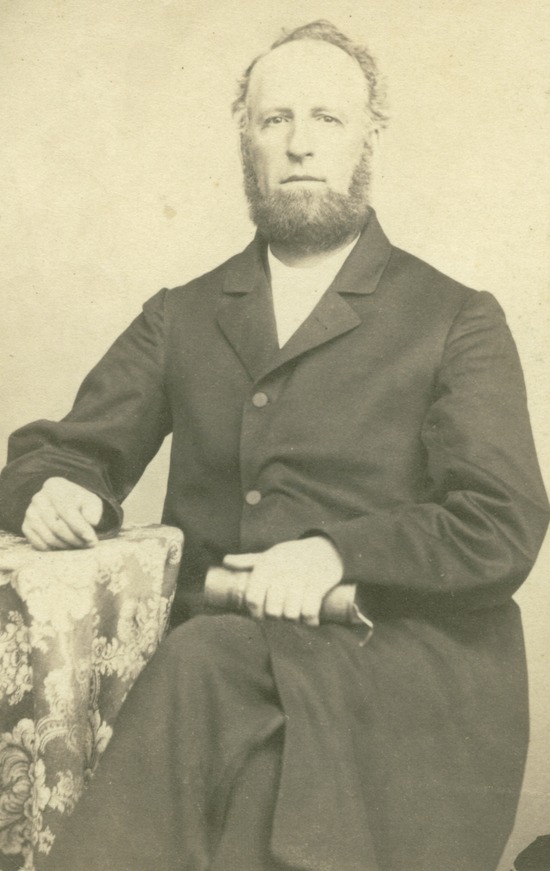
photo to indicate that this is James White, Ellen White’s husband?
The founders of the Adventist Church, including Ellen White herself, denied that belief in her writings and visions should be a necessity for Adventist church membership.
On several occasions, she made it clear that her role is merely that of a servant of God. She is not necessary for salvation, and her writings are reflections on concepts that are already in Scripture.
Her spiritual gift was meant to remind fellow believers of what they should already know, to give them insight on perplexing concepts, to provide insight about the end times, and to encourage her fellow believers to live according to the Bible’s principles.
The clearest example of Ellen White’s opinion on this point comes from the first volume of her book, Testimonies of the Church:
“There were some who were God’s children, and yet doubted the visions…Some were skeptical, and they had sufficient cause to make them so…There should be no trial or labor with those who have never seen the individual having visions, and who have no personal knowledge of the influence of the visions. Such [people] should not be deprived of the benefits and privileges of the church, if their Christian course is otherwise correct, and they have formed a good Christian character.”7
Another founder of the Church—and Ellen White’s husband—James White, similarly opposes the use of Ellen White’s spiritual gift as a test of faith:
“It is well known that we have been charged with testing all men by the visions, and of making them the rule of our faith. This is bold untruth, of which those who uttered it were not ignorant. This I have denied, and deny it still.”8
It’s clear based on these quotes that believing in Ellen White’s visions and writings is not necessary for church membership.
However, because the Adventist Church does accept Ellen White as an inspired messenger, if one joins the Church who actively opposes this belief and seeks to create disunity, that can become a problem that needs to be addressed.
If, however, members and congregations are treated with love and respect, then these differing perspectives don’t have to cause any unrest.9
The fundamental beliefs are descriptive, not prescriptive
The fundamental beliefs are often taken as a check-box of what an Adventist should or should not believe and how an Adventist should or should not live.
This would make the fundamental beliefs prescriptive, meaning that they are prescribing a set of beliefs or lifestyle for members to follow.
However, it’s much more useful and accurate to look at the fundamental beliefs as descriptive instead.
Rather than having the fundamental beliefs be a series of boxes you need to check in order to be an Adventist, they are better seen as describing what the majority of Adventists believe.
However, if someone wishes to join the Adventist Church but disagrees with most of its members’ perspectives of Scripture and its application, one might simply question the reasoning. It may be that “Seventh-day Adventist” isn’t the most accurate description of their faith. (But that still would not make them unwelcome in the faith community, unless they intended to create discord. And that’s a different issue altogether.)
Those wishing to join the Adventist Church are introduced to the 28 fundamental beliefs and to Ellen White and her writings, so that they can judge for themselves why Adventists believe she had the prophetic spiritual gift.
Why do many Adventists hold Ellen White in high regard?
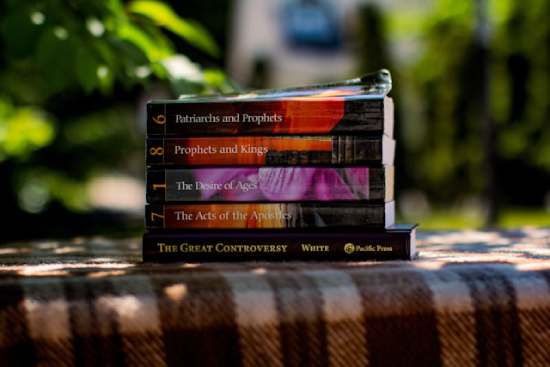
Photo by Emmanuel Phaeton on Unsplash
Ellen White, along with other founding members of the Church, shaped the Church for the better.
Many key Adventist doctrines, which were founded on biblical principles, were confirmed by insights that Ellen White received from God, such as the investigative judgment, righteousness by faith, and the Great Controversy.
Not only that, but many of Ellen White’s writings and lifestyle guidelines have enriched fellow believers’ study of the Bible and their application of it to their lives.
She adds detail and reflection to the story of the Bible in a way that makes studying the Word of God so much more insightful and lovely.
Also, believing in Ellen White’s spiritual gift of prophecy gives church members insight into God’s ability to reveal truth to His children, even today (Acts 2:17-18).
While acceptance of Ellen White’s gift is not a prerequisite for membership in the Adventist Church, getting acquainted with her writings can certainly be helpful in terms of spiritual growth and application.
You can attend and worship in an Adventist church no matter what you believe
Whether or not you are interested in joining the Adventist Church, you are always welcome to attend a church and worship there.
You don’t have to know anything about Adventist doctrine or the Bible, and you certainly won’t be turned away or discriminated against for any belief or lack of knowledge.
At the end of the day, sharing the love and welcoming heart of Jesus is the whole point of the Adventist Church. But we do believe that Ellen White’s writings provide valuable insights into God’s Word and help us to better live out His mission in this world.
Jesus is the essential piece. He is where we can all find eternal life and peace while on this earth.
Read this page about Ellen White’s visions and prophecies if you are interested in learning more about Ellen White, her prophetic gift, or why so many Adventists hold her in high regard.
- Romans 12:6; 1 Corinthians 12:28, 29; 13:1-3, 8; 14:6; Ephesians 4:11 [↵]
- https://ellenwhite.org/faq/18 [↵]
- https://ellenwhite.org/faq/18 [↵]
- https://ellenwhite.org/faq/18 [↵]
- https://ellenwhite.org/faq/18 [↵]
- https://ellenwhite.org/faq/18 [↵]
- https://egwwritings.org/read?panels=p648.867&index=0#highlight=648.852%7C0 [↵]
- White, James. Review and Herald, Feb 14, 1856, pp. 158 [↵]
- White, Ellen. Testimonies of the Church, volume 1, pp 327-329 [↵]
Related Articles



More Answers

Jinsi ya Kuwa na Uhusiano Binafsi na Yesu: Mwongozo
Haijalishi wewe ni nani, umezungukwa na mahusiano.

Vito—Kwanini Waadventista Wasabato Wengi Huchagua Kutovivaa?
Ni kanuni zipi zilizo nyuma ya uamuzi wa Waadventista wengi kutovaa vito? Vito vyenyewe si vibaya, lakini hebu tuone Biblia inasema nini kuhusu kujipamba.

¿Qué son los Evangelios sinópticos? ¿Y Juan?
Aprende qué son los Evangelios Sinópticos y por qué Juan no está incluido.

“Vete y no peques más”, ¿Qué quiso decir Jesús?
Aprende el significado profundamente aplicable del mandato de Jesús al hombre en Juan 5 y a la mujer en Juan 8 de “vete y no peques más.”

Parable of the Wedding Feast: Lessons From a Royal Invitation
Discover the beautiful Gospel invitation behind this parable of Jesus.
Entendiendo el libro de Marcos: Una visión general
Un recorrido por el Evangelio según Marcos, incluyendo información de contexto y referencias.
O Livro de João: Uma Visão Geral
Aqui está um companheiro de estudo para o Evangelho segundo João.
El mensaje del libro de Lucas: Jesús ama a todos
Aprende todo sobre el libro de Lucas: contexto, temas, diferencias y conclusiones.
El Libro de Juan: Una Visión General
Aquí tienes un compañero de estudio para el Evangelio según Juan.
Como Ter um Relacionamento Pessoal com Jesus: Um Guia
No importa quién seas, estás rodeado de relaciones.

Kile Waadventista wa Sabato Wanaamini Kuhusu Uwakili (na Maana Yake)
Kile Waadventista wa Sabato Wanaamini Kuhusu Uwakili (na Maana Yake)Upendo kwa Mungu na kwa wanadamu wenzetu ndiyo kanuni kuu ya imani ya Waadventista wa Sabato. Na tunaonyesha upendo huo kwa njia kuu kupitia jinsi tunavyosimamia mambo—ya kimwili na yasiyo ya...
Cómo Tener una Relación Personal con Jesús
No importa quién seas, estás rodeado de relaciones.
Joyería: ¿Por qué muchos adventistas del séptimo día eligen no usarla?
Joyería: ¿Por qué muchos adventistas del séptimo día eligen no usarla?Si entras a un servicio de la Iglesia Adventista del Séptimo Día, podrías notar que muchas personas no usan aretes, pulseras, collares o a veces ni siquiera anillos de matrimonio. Es común en las...
Joias—Por Que Muitos Adventistas do Sétimo Dia Escolhem Não Usá-las?
Quais são os princípios por trás da escolha de muitos adventistas de não usar joias? As joias em si não são erradas, mas vamos ver o que a Bíblia diz sobre o adorno.

Lo que los Adventistas del Séptimo Día creen sobre la mayordomía (y qué significa)
El amor a Dios y a nuestros semejantes es el principio fundamental de la fe adventista del séptimo día.
O Que os Adventistas do Sétimo Dia Acreditam Sobre Mordomia (e o Que Isso Significa)
O Que os Adventistas do Sétimo Dia Acreditam Sobre Mordomia (e o Que Isso Significa)O amor a Deus e ao próximo é o princípio fundamental da fé Adventista do Sétimo Dia. E expressamos esse amor de forma abrangente através de como administramos as coisas — materiais e...

Oración: ¿Cómo lo hago?
Oración: ¿Cómo lo hago?La oración es comunicación intencional con Dios. Y la forma en que lo haces es muy parecida a cómo te comunicarías con tu mejor amigo. Puedes acercarte en cualquier momento y lugar, de la manera que sea más natural entre ustedes dos. De la misma...
Oração—Como Eu Faço?
Oração é comunicação intencional com Deus.

Wafalme 42 (na Malkia 1) wa Israeli na Yuda katika Biblia
Umewahi kujiuliza ni akina nani wote waliokuwa wafalme wa Israeli na Yuda katika Biblia? Wafahamu wote 42 (pamoja na malkia 1) na ujifunze masomo ya kina na yasiyotarajiwa kutoka kwenye hadithi zao.

The Lamp on a Stand Parable—What Does it Mean?
Going through the main points, major themes, and takeaways for this parable.

Wanavyoamini Waadventista wa Sabato Kuhusu Meza ya Bwana (Ushirika)
Wanavyoamini Waadventista wa Sabato Kuhusu Meza ya Bwana (Ushirika)Kama Wakristo wengi wa Kiprotestanti, Waadventista wa Sabato wanaamini katika tendo linalojulikana kama Meza ya Bwana au Ushirika Mtakatifu. Wanakunywa divai ya zabibu na kula mkate usiotiwa chachu...
Lo que los Adventistas del Séptimo Día creen sobre la Cena del Señor (Comunión)
Lo que los Adventistas del Séptimo Día creen sobre la Cena del Señor (Comunión)Como muchos cristianos protestantes, los Adventistas del Séptimo Día creen en la práctica comúnmente llamada la Cena del Señor o Santa Comunión. Ellos beben jugo de uva y comen pan sin...
O Que os Adventistas do Sétimo Dia Acreditam Sobre a Santa Ceia (Comunhão)
O Que os Adventistas do Sétimo Dia Acreditam Sobre a Santa Ceia (Comunhão)Como muitos cristãos protestantes, os Adventistas do Sétimo Dia acreditam na prática comumente chamada de Santa Ceia ou Santa Comunhão. Eles bebem suco de uva e comem pão ázimo em obediência às...
Maombi—Ninawezaje Kuomba?
Maombi—Ninawezaje Kuomba?Na jinsi unavyofanya ni sawa na vile unavyo wasiliana na rafiki yako wa karibu. Unaweza kuwasiliana naye wakati wowote na mahali popote, kwa namna ya kawaida kati yenu wawili. Vivyo hivyo, unaweza kuomba kwa Mungu wakati wowote, mahali popote,...

Bible Verses That Mention “Heaven” (and How to Tell What They Mean)
Here’s every occurrence of the word “heaven” in the Bible, as well as the root words and original definitions.

Understanding the Parable of the Hidden Treasure (Matthew 13:44)
Here’s what the “Hidden Treasure” parables shows us about God’s love.

The Parable of the Persistent Widow—What it Means for Your Prayer Life
Find out what the Persistent Widow parable actually means.

15 Exemplos de Oração na Bíblia
A oração é a principal forma de mantermos nosso relacionamento com Deus.
Mifano 15 Ya Maombi katika Biblia
Maombi ndiyo njia kuu ambayo kwayo tunadumisha uhusiano wetu na Mungu.
Didn’t find your answer? Ask us!
We understand your concern of having questions but not knowing who to ask—we’ve felt it ourselves. When you’re ready to learn more about Adventists, send us a question! We know a thing or two about Adventists.