
You may have an Adventist friend who is vegetarian, or maybe you’re attending a Seventh-day Adventist Church for the first time and notice the potluck doesn’t have any meat.
This isn’t unusual in Adventism.
In fact, about 36% of Adventists are lacto-ovo vegetarians, meaning they don’t eat meat or fish but may eat eggs or dairy. Another 16% eat fish or meat occasionally, according to Adventist Health Studies done by Loma Linda University.1
At any rate, perhaps you’re wondering what their reasons are.
Vegetarianism is popular within Seventh-day Adventism because we value personal health and believe that a vegetarian diet is a good way to care for our bodies, maintain wellness, and honor God (1 Corinthians 6:20; 10:31; Romans 12:1-2). God originally gave human beings a vegetarian diet, according to Genesis 1:29, and today, research is increasingly showing the benefits of a diet low in animal products and high in fruits, vegetables, grains, and nuts.
However, the desire to serve God in this way is not meant to be a means to become “holier” or to somehow earn salvation. Adventists aim to live this way as a response to what God has done for us as human beings.
To further explain why vegetarianism is popular among Adventists, we’ll look at:
To start off, let’s turn to the Bible’s insights.
What the Bible says about a vegetarian diet
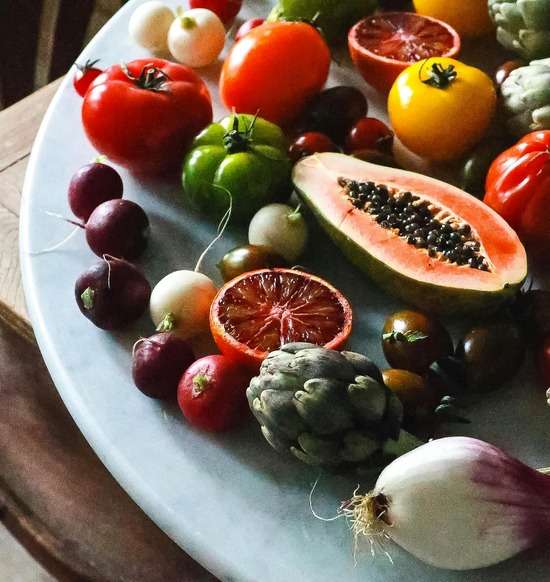
Photo on Pexel
When we read about Adam and Eve living in the Garden of Eden, we find that God’s original plan for humanity included a plant-based diet. He told the new humans:
“See, I have given you every herb that yields seed which is on the face of all the earth, and every tree whose fruit yields seed; to you it shall be for food” (Genesis 1:29, NKJV).
And it makes sense that God would have provided Adam and Eve with food that would sustainably grow for them. And in a perfect world without death of any kind, the slaughter of animals would’ve been incomprehensible.
It wasn’t until after the flood that God directly permitted humans to eat meat (Genesis 9:3-4). After the flood, the earth’s vegetation had been destroyed and would take time to grow back and be able to provide food once again.
For this reason, God instructed Noah to bring on the ark seven of every “clean” animal (Genesis 7:2-3).
(Leviticus 11 and Deuteronomy 14 explain in more detail what is considered “clean” meat.)
After the time of the flood, most people throughout the rest of the Bible ate meat. It was a necessity in a society where fresh food wasn’t always easy to come by and couldn’t be preserved for long periods of time. So to meet their dietary needs, they hunted animals to provide for their families.
In some places today, too, being a vegetarian may not be as practical or provide enough necessary nutrition due to a lack of vegetarian options. But many Adventists who live in places with easy access to fruits, vegetables, grains, and legumes year-round choose a vegetarian diet to eat as closely to the original diet as possible.
And modern science continues to show the benefits of eating this way, as we’ll look at in the next section.
What science says about a vegetarian diet
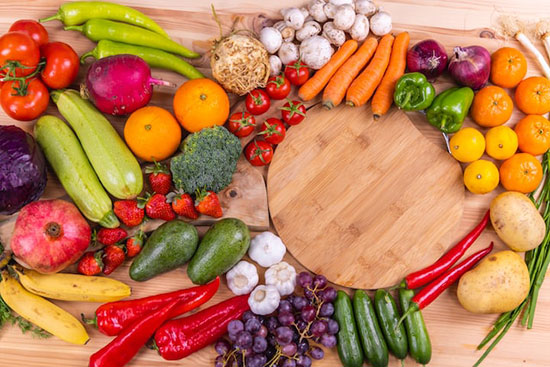
A balanced vegetarian diet, high in fruits, nuts, vegetables, and legumes, has numerous benefits for physical health, as revealed by research done over the past 20 years. Eating vegetarian is associated with:2
- Lower blood pressure, LDL cholesterol, and BMI
- Lower risk of heart disease
- Lower risk of cancer
- Lower risk of type 2 diabetes
- Lower risk of obesity3
Adventist Health Studies, conducted by Loma Linda University, have looked at the connection between lifestyle and health in Seventh-day Adventists. Adventist Health Study-1 surveyed more than 34,000 individuals over a 14-year period and found significant links between a high-fiber vegetarian diet and lower risks of cancer.
Adventist Health Study-2, which involved over 94,000 respondents, provided even more insight. It found that Adventists who did not eat meat had a smaller chance of developing type 2 diabetes.4
Another analysis of the data from the Adventist Health Study-2 found that Adventists who got protein from foods like lentils, nuts, and seeds had a lower risk of cardiovascular death than those who got protein from meat.5
The longevity of Adventists also speaks for their lifestyle and way of eating.
Researchers found that Adventist men in California who were vegetarian lived almost 10 years longer than their counterparts.6
In fact, Loma Linda, California, an area with a high concentration of Adventists, drew the attention of researcher Dan Buettner when he was studying “Blue Zones,” or places in the world where people live significantly longer (often to over 100 years old) and healthier lives than the average population.
He labeled Loma Linda as one of those Blue Zones because of the many Seventh-day Adventists there who are health conscious and eat a vegetarian or vegan diet.
Though diet is not the only factor for health and longevity in the Blue Zones, it’s a significant one. Most Blue Zone residents eat 95% vegetarian, consuming meat rarely and focusing on unprocessed, whole foods like legumes, vegetables, fruits, nuts, and whole grains. If they do eat meat, it’s generally lean meat, like fish, and little to no red meat.7
The health benefits of being vegetarian coincide with Adventists’ desire to honor God by being good stewards of the bodies God gave us, striving to maintain well-being in as many ways as possible. Let’s look at that next.
Spiritual reasons Adventists choose vegetarianism

Photo by Pablo Merchán Montes on Unsplash
Alongside striving toward eco-friendliness and kindness to animals, Adventists find healthy living to be a good way to serve and honor God to the best of our abilities. One passage we turn to in Scripture is 1 Corinthians 6:19-20:
“Or do you not know that your body is the temple of the Holy Spirit who is in you, whom you have from God, and you are not your own? For you were bought at a price; therefore glorify God in your body and in your spirit, which are God’s” (NKJV).
Because our bodies are “the temple of the Holy Spirit”—the means through which God speaks to our minds—we seek to care for our bodies, mentally, spiritually, and physically. So it makes sense for good health to be a priority.
Eating healthy is one aspect of that. It helps to keep our minds clear, making it easier to grow closer to God and serve Him more effectively.
The apostle Paul sums up this idea of honoring God in his letter to the Corinthian church:
“Therefore, whether you eat or drink, or whatever you do, do all to the glory of God” (1 Corinthians 10:31, NKJV).
And that’s really what it’s all about—serving God and orienting our lives toward Him. Making healthy choices supports that ultimate desire.
Choose an Online Bible Study
Want to keep learning? Find out more about Jesus, humanity, the plan of salvation, and how God loves you enough to sacrifice everything, just to give you a chance to choose Him.
Sometimes it can be hard to know where to start, that’s why we offer free, user-friendly, online Bible study options you can do anytime, anywhere, and at your own pace.
This online Bible school will take you through the major themes of Scripture, breaking down the Bible’s complex concepts into bite-sized pieces, which can lead you toward the answers of life’s more challenging questions.
Related Articles.


- “Adventist Health Study–2,” Loma Linda University. [↵]
- “Becoming a vegetarian,” Harvard Health Publishing. [↵]
- “Plant-based nutrition: Exploring Health Benefits for Atherosclerosis, Chronic Diseases, and Metabolic Syndrome—A Comprehensive Review,” Nutrients, July 2023. [↵]
- Sabaté, Joan, et al. “Unscrambling the relations of egg and meat consumption with type 2 diabetes risk,” National Library of Medicine, November 1, 2018. [↵]
- Tharrey, Marion, et al. “Patterns of plant and animal protein intake are strongly associated with cardiovascular mortality: the Adventist Health Study–2 cohort,” National Library of Medicine, October 1, 2018. [↵]
- “Findings for Longevity,” Loma Linda University Health. [↵]
- “Top Reasons Why Blue Zones are the Healthiest Places to Live,” Plant Whys. [↵]
More Answers

Jinsi ya Kuwa na Uhusiano Binafsi na Yesu: Mwongozo
Haijalishi wewe ni nani, umezungukwa na mahusiano.

Vito—Kwanini Waadventista Wasabato Wengi Huchagua Kutovivaa?
Ni kanuni zipi zilizo nyuma ya uamuzi wa Waadventista wengi kutovaa vito? Vito vyenyewe si vibaya, lakini hebu tuone Biblia inasema nini kuhusu kujipamba.

¿Qué son los Evangelios sinópticos? ¿Y Juan?
Aprende qué son los Evangelios Sinópticos y por qué Juan no está incluido.

“Vete y no peques más”, ¿Qué quiso decir Jesús?
Aprende el significado profundamente aplicable del mandato de Jesús al hombre en Juan 5 y a la mujer en Juan 8 de “vete y no peques más.”

Parable of the Wedding Feast: Lessons From a Royal Invitation
Discover the beautiful Gospel invitation behind this parable of Jesus.

Entendiendo el libro de Marcos: Una visión general
Un recorrido por el Evangelio según Marcos, incluyendo información de contexto y referencias.

O Livro de João: Uma Visão Geral
Aqui está um companheiro de estudo para o Evangelho segundo João.
El mensaje del libro de Lucas: Jesús ama a todos
Aprende todo sobre el libro de Lucas: contexto, temas, diferencias y conclusiones.
El Libro de Juan: Una Visión General
Aquí tienes un compañero de estudio para el Evangelio según Juan.
Como Ter um Relacionamento Pessoal com Jesus: Um Guia
No importa quién seas, estás rodeado de relaciones.

Kile Waadventista wa Sabato Wanaamini Kuhusu Uwakili (na Maana Yake)
Kile Waadventista wa Sabato Wanaamini Kuhusu Uwakili (na Maana Yake)Upendo kwa Mungu na kwa wanadamu wenzetu ndiyo kanuni kuu ya imani ya Waadventista wa Sabato. Na tunaonyesha upendo huo kwa njia kuu kupitia jinsi tunavyosimamia mambo—ya kimwili na yasiyo ya...
Cómo Tener una Relación Personal con Jesús
No importa quién seas, estás rodeado de relaciones.
Joyería: ¿Por qué muchos adventistas del séptimo día eligen no usarla?
Joyería: ¿Por qué muchos adventistas del séptimo día eligen no usarla?Si entras a un servicio de la Iglesia Adventista del Séptimo Día, podrías notar que muchas personas no usan aretes, pulseras, collares o a veces ni siquiera anillos de matrimonio. Es común en las...
Joias—Por Que Muitos Adventistas do Sétimo Dia Escolhem Não Usá-las?
Quais são os princípios por trás da escolha de muitos adventistas de não usar joias? As joias em si não são erradas, mas vamos ver o que a Bíblia diz sobre o adorno.

Lo que los Adventistas del Séptimo Día creen sobre la mayordomía (y qué significa)
El amor a Dios y a nuestros semejantes es el principio fundamental de la fe adventista del séptimo día.
O Que os Adventistas do Sétimo Dia Acreditam Sobre Mordomia (e o Que Isso Significa)
O Que os Adventistas do Sétimo Dia Acreditam Sobre Mordomia (e o Que Isso Significa)O amor a Deus e ao próximo é o princípio fundamental da fé Adventista do Sétimo Dia. E expressamos esse amor de forma abrangente através de como administramos as coisas — materiais e...

Oración: ¿Cómo lo hago?
Oración: ¿Cómo lo hago?La oración es comunicación intencional con Dios. Y la forma en que lo haces es muy parecida a cómo te comunicarías con tu mejor amigo. Puedes acercarte en cualquier momento y lugar, de la manera que sea más natural entre ustedes dos. De la misma...
Oração—Como Eu Faço?
Oração é comunicação intencional com Deus.

Wafalme 42 (na Malkia 1) wa Israeli na Yuda katika Biblia
Umewahi kujiuliza ni akina nani wote waliokuwa wafalme wa Israeli na Yuda katika Biblia? Wafahamu wote 42 (pamoja na malkia 1) na ujifunze masomo ya kina na yasiyotarajiwa kutoka kwenye hadithi zao.

The Lamp on a Stand Parable—What Does it Mean?
Going through the main points, major themes, and takeaways for this parable.

Wanavyoamini Waadventista wa Sabato Kuhusu Meza ya Bwana (Ushirika)
Wanavyoamini Waadventista wa Sabato Kuhusu Meza ya Bwana (Ushirika)Kama Wakristo wengi wa Kiprotestanti, Waadventista wa Sabato wanaamini katika tendo linalojulikana kama Meza ya Bwana au Ushirika Mtakatifu. Wanakunywa divai ya zabibu na kula mkate usiotiwa chachu...
Lo que los Adventistas del Séptimo Día creen sobre la Cena del Señor (Comunión)
Lo que los Adventistas del Séptimo Día creen sobre la Cena del Señor (Comunión)Como muchos cristianos protestantes, los Adventistas del Séptimo Día creen en la práctica comúnmente llamada la Cena del Señor o Santa Comunión. Ellos beben jugo de uva y comen pan sin...
O Que os Adventistas do Sétimo Dia Acreditam Sobre a Santa Ceia (Comunhão)
O Que os Adventistas do Sétimo Dia Acreditam Sobre a Santa Ceia (Comunhão)Como muitos cristãos protestantes, os Adventistas do Sétimo Dia acreditam na prática comumente chamada de Santa Ceia ou Santa Comunhão. Eles bebem suco de uva e comem pão ázimo em obediência às...
Maombi—Ninawezaje Kuomba?
Maombi—Ninawezaje Kuomba?Na jinsi unavyofanya ni sawa na vile unavyo wasiliana na rafiki yako wa karibu. Unaweza kuwasiliana naye wakati wowote na mahali popote, kwa namna ya kawaida kati yenu wawili. Vivyo hivyo, unaweza kuomba kwa Mungu wakati wowote, mahali popote,...

Bible Verses That Mention “Heaven” (and How to Tell What They Mean)
Here’s every occurrence of the word “heaven” in the Bible, as well as the root words and original definitions.

Understanding the Parable of the Hidden Treasure (Matthew 13:44)
Here’s what the “Hidden Treasure” parables shows us about God’s love.
The Parable of the Persistent Widow—What it Means for Your Prayer Life
Find out what the Persistent Widow parable actually means.

15 Exemplos de Oração na Bíblia
A oração é a principal forma de mantermos nosso relacionamento com Deus.
Mifano 15 Ya Maombi katika Biblia
Maombi ndiyo njia kuu ambayo kwayo tunadumisha uhusiano wetu na Mungu.
Didn’t find your answer? Ask us!
We understand your concern of having questions but not knowing who to ask—we’ve felt it ourselves. When you’re ready to learn more about Adventists, send us a question! We know a thing or two about Adventists.